
REVIEW · PHOTOGRAPHY SESSIONS
Photo Tour “Jan van Eyck”
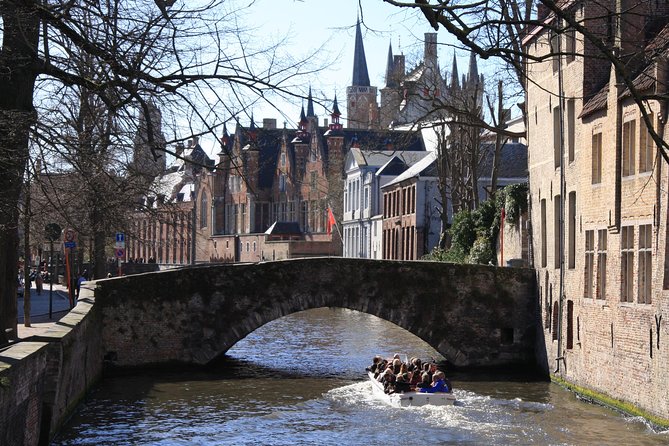
Bruges becomes a photo classroom. This guided walk links Jan van Eyck Square and Rozenhoedkaai with photo tips and a small group pace, so you get shots that look planned, not accidental. You’ll still do real walking, and if the weather is bad the tour can be changed or refunded.
I like how the guide builds local context as you go, with stops like Poorters Loge and the old harbour around Jan van Eyckplein. At quieter corners, you can work the angle and the timing, and Ivan’s personal, funny storytelling adds energy to the photo breaks.
The final payoff is the last photo at Nepomucenus Bridge, then you’re done near the start, about 200 m away. It’s a great way to improve your eye without losing time fighting a map.
In This Review
- Key highlights worth your time
- Why a Jan van Eyck photo route makes Bruges easier
- Start point at Historium BrugesMarkt, and how the timing flows
- Stop-by-stop route: Poorters Loge to Rozenhoedkaai
- Poorters Loge (Burghers’ Lodge): a strong start with included admission
- Jan van Eyckplein: old harbour energy and a medieval setting
- Groenerei: a special standing spot and a guided surprise
- Vismarkt: the old fish market square in miniature
- Huidenvettersplein (Tanners’ Place): texture, craft, and character
- Quai du Rosaire or Rozenhoedkaai: the city’s most photographed view
- Nepomucenusbrug: the last frame for a pro-style look
- What the guide actually adds (beyond pointing and smiling)
- Group size, pace, and how it feels for different travelers
- Price and value: is $47.50 worth it?
- Weather, light, and how to plan your Bruges day
- Who should book this Jan van Eyck photo tour
- Should you book the Jan van Eyck photo tour in Bruges?
- FAQ
- Where does the tour start?
- Where does the tour end, and how far is it from the start?
- What time does the tour begin?
- How long is the photo tour?
- How much does it cost?
- What is the maximum group size?
- Is there a mobile ticket?
- Which parts include admission tickets?
- What if the weather is poor?
- Can I cancel for free?
Key highlights worth your time
- A tight 2-hour route that hits Bruges in smart chunks, not a long slog with no structure
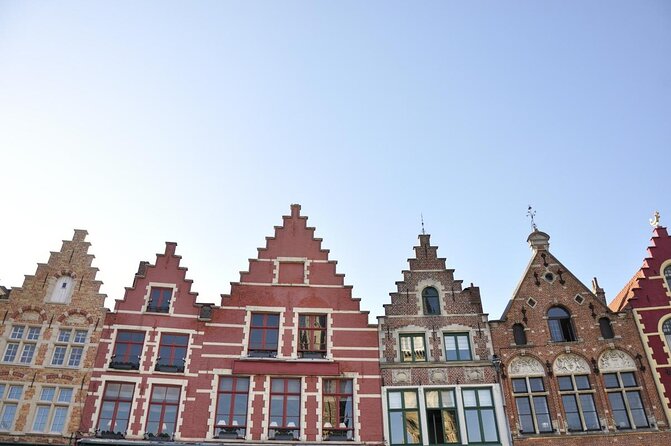
- Jan van Eyck Square and Rozenhoedkaai stop points that reliably deliver classic postcard views
- Poorters Loge (Burghers’ Lodge) for a strong architectural subject and included admission
- Stop-by-stop photo guidance from guide Ivan, including tips for making images look professional
- A small group, up to 12 people, which makes it easier to get one-on-one help when you need it
- A satisfying ending at Nepomucenus Bridge, a final composition moment that the guide calls out as a pro-style shot
Shoots on other Belgian streets
- “Hidden Brugge” Photo Tour – 2hr open city tour & workshop★ 5.0 · 27 reviews
- “Edges of Brugge” Photo Tour – 2hr open city tour & workshop★ 5.0 · 25 reviews
- Bruges : Your private 30min. photoshoot in the medieval city★ 5.0 · 11 reviews
- Bruges : Your private 1 hour photoshoot in the medieval city★ 5.0 · 5 reviews
Why a Jan van Eyck photo route makes Bruges easier
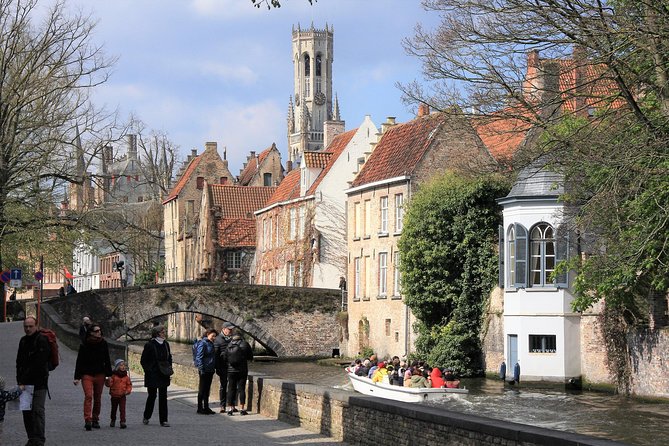
Bruges is one of those cities where your eyes say yes to everything, then your photos look messy. This tour solves that by putting a guide between you and the chaos. You get a focused path through the center and along the canals, with prompts that help you frame, choose vantage points, and shoot with intention.
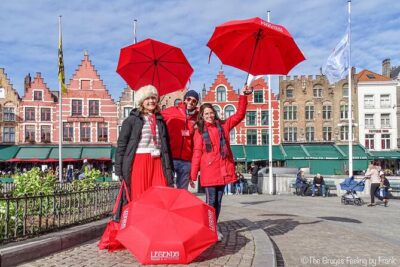
Two things I’d bet you’ll love right away. First, the photo tips are woven into the walk, so you practice while you learn. Second, the small group size (max 12) keeps the tour feeling like a conversation, not a herd moving between monuments.
The one caution is simple: this is a real walk. Even at about 2 hours, you’ll be on your feet, and if you’re not used to cobblestones and canal-side paths, you may feel it. Also, the experience requires good weather, so plan some flexibility.
Start point at Historium BrugesMarkt, and how the timing flows
You meet at Historium BrugesMarkt 1, and the tour starts at 1:30 pm. The end point is Nepomucenus Bridge, and it’s only about 200 m from where you started. That means you can plan an easy follow-up without scrambling across town at the end.
The flow is built like a photo mission with momentum. You leave the busy center first, looking for areas that feel more romantic and picturesque, then you work your way through a set of subjects that are varied enough to keep your camera busy. The included admission stops also break the walking rhythm, so you’re not just moving from viewpoint to viewpoint for two hours.
One practical thing to keep in mind: the tour is listed as requiring good weather. If you’re the type who hates shooting in misty light, keep that in your planning. Bruges can look great in overcast conditions, but the operator may still reschedule if conditions are too rough.
Stop-by-stop route: Poorters Loge to Rozenhoedkaai
This is not a random sightseeing stroll. Each stop is chosen as a distinct visual theme, from building interiors to canal angles to old market squares. Here’s what you can expect at each part, plus where it can be tricky.
Poorters Loge (Burghers’ Lodge): a strong start with included admission
Your first real subject is Poorters Loge, also called the Burghers’ Lodge. It’s described as the first office building in the world, and that detail matters for photography because it signals a place with architectural credibility, not just scenery.
The included admission also means you spend time looking closely instead of just snapping from the street. For your images, focus on lines and repetition, then try at least one wider frame that shows scale. If you’re traveling with a phone only, this is still useful, because you’ll likely get a moment where the light and interior space help you avoid flat, washed-out shots.
Potential drawback: your first stop is early in the 2-hour window, so if you’re slow getting ready with your camera settings, you’ll feel rushed. Give yourself an easy buffer at the start.
Jan van Eyckplein: old harbour energy and a medieval setting
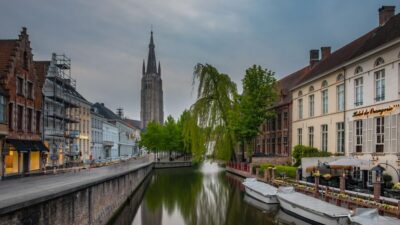
Next is Jan van Eyckplein, framed as an old harbour area with plenty of medieval activity. That kind of background helps you understand why the area looks the way it does, and it gives you a better reason to shoot details, not only full views.
This is a stop where I’d expect you to look for contrast. Think about how old textures meet open space, and how signage, facades, and canal-adjacent layouts create layers. If you like street-level photography, this is also where you can practice working around foreground shapes.
Tip: if you’re chasing symmetry, this is the part where a few small camera adjustments can turn a normal street scene into a composed frame.
Groenerei: a special standing spot and a guided surprise
Groenerei is set up for you to stand in a very specific place, then the guide will surprise you. That phrasing is a clue: the value here is the vantage point. Bruges has many canal edges, but only a few angles make water, buildings, and reflections line up the way you imagine in your head.
So at Groenerei, slow down. Try one wide shot first, then shift your position for a second attempt that includes more water or a stronger line from the canal. If you shoot portraits, this stop also sounds like it could work for gentler framing, because the guide is directing you toward a particular spot rather than letting you wander randomly.
Potential drawback: because this stop is about a specific standing location, you might have to wait for your turn if several people like the same exact angle. The small group helps, but timing still matters.
Vismarkt: the old fish market square in miniature
Then you reach Vismarkt, described as what once was a big fish market. Even if you’re not photographing food itself, market squares create great visual storytelling: compact buildings, open space, and a layout that invites a centered composition.
This is a shorter stop, so treat it like a quick set of shots. Grab one establishing image, then two detail shots, such as textures or architectural features that reflect the market identity. If you’re using a camera with zoom, this is a good moment to test what you can do without moving far.
Huidenvettersplein (Tanners’ Place): texture, craft, and character
At Huidenvettersplein, the stop is labeled as the Tanners Place. You’ll likely notice that this kind of location gives you more than just postcard visuals. It’s about capturing the mood of working Bruges, not only the pretty postcard Bruges.
For photography, places tied to craft often give you surface details: doors, facades, and uneven aging that makes frames feel real. Keep your expectations grounded: the goal is atmosphere and character more than dramatic scale.
Short stop length means quick selection. Don’t overspend time here perfecting one shot. Capture a solid set, then move on.
Quai du Rosaire or Rozenhoedkaai: the city’s most photographed view
Next is Quai du Rosaire, also called Rozenhoedkaai. This is described as without a doubt the most photographed view of the city. That’s big news, because it confirms you’re being pointed at a repeatable composition that photographers have used for years.
If you only take one “serious” canal photo on this tour, this is the spot. It’s popular for a reason, and the guide’s role is to help you shoot it in a way that still looks fresh. Even if you’ve seen this view before, your best shot will depend on timing and your camera angle.
Practical note: popular views can mean competition for the best positions. With a group size up to 12, you should be able to work around other people, but you’ll still want to move quickly when the guide says it’s your turn.
Nepomucenusbrug: the last frame for a pro-style look
Finally, you end at Nepomucenusbrug, where the guide makes the last picture described as one that only professionals see. That’s a fun line, but it also tells you the value is in the angle and the last-minute composition choices.
This stop is short, so be ready. Have your camera out, check your settings quickly, and focus on one frame that you’re confident about. Then take a second variation in the smallest way possible, such as a slightly different crop or a higher or lower viewpoint.
Because you’re ending near the same area you started, you can also keep shooting on your own right after if the light is good.
What the guide actually adds (beyond pointing and smiling)
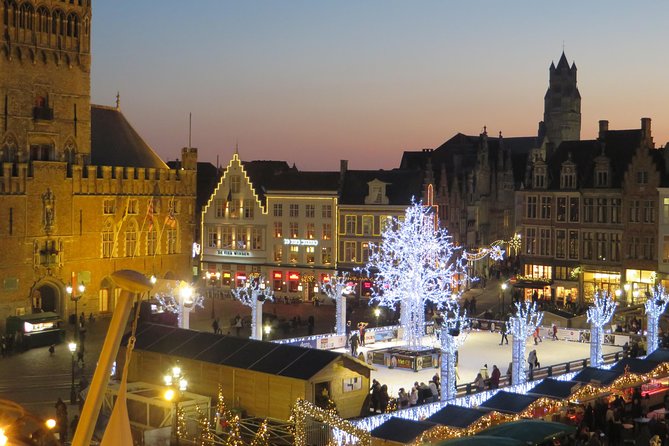
The guide is a big part of the “why” here. Ivan is repeatedly mentioned in positive ways: he’s funny, shares real love for Bruges, and mixes city stories with photo advice. One review even notes that he sends a guidebook by email, which is a nice bonus if you want to keep learning after the walk.
In practice, you’ll get more than a route. You’ll get prompts that nudge you toward better habits. The format helps because you aren’t trying to learn everything at once. You shoot, get a cue, then shoot again with a new mindset.
From the tour description, the big theme is that you don’t need to study a map. That’s not just convenience. In Bruges, distracted walking leads to missed light and missed angles. Here, you keep your attention on the shot.
You also get history commentary while you photograph. That matters because it changes how you look. If you know why Poorters Loge is special, you’re more likely to photograph the right features, not only the most obvious view from the street.
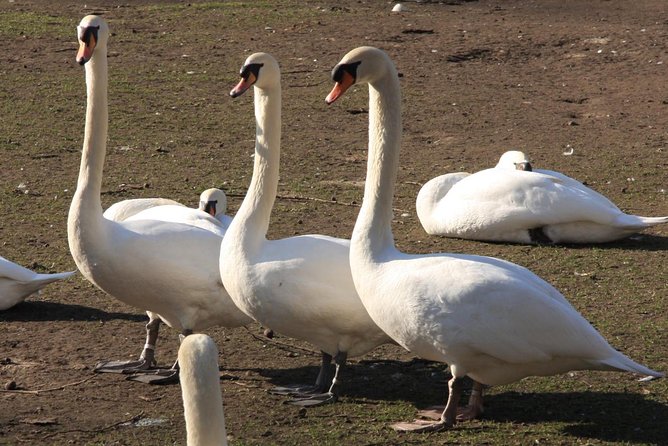
Also, you may hear personal touches, including a swans story. That kind of small detail is easy to dismiss, but it helps your brain remember the scene. When you remember what you’re seeing, your photos get more intentional.
Group size, pace, and how it feels for different travelers
With a maximum of 12 travelers, this is built to stay flexible. Smaller groups usually mean fewer bottlenecks at canal corners and easier conversations when you ask for help with a shot. The “intimate” feel is a major reason this kind of tour works for photographers who want direction, not just sightseeing.
That said, the experience can still feel a bit tiring. One review describes it as exhaustive and a little tiring, even though it was also thorough and educational. This makes sense with a route that covers multiple distinct visual locations in about 2 hours.
So I’d position it for you if you want:
- A compact program that helps you improve quickly
- Clear photography guidance while you walk
- A small-group vibe where you can ask questions
- A classic Bruges photo route with real context, not just random stops
If you’re traveling with kids, it says most travelers can participate, but nothing here suggests a fully stroller-friendly route or slow pacing. If your group includes someone who hates walking, this might feel like too much in a short time.
Price and value: is $47.50 worth it?
$47.50 for about 2 hours can sound like a splurge until you look at what you’re getting. This isn’t just a guide following you around. Several stops have admission tickets included, which changes the math.
Admissions are listed as included for Poorters Loge, Jan van Eyckplein, Groenerei, Vismarkt, Huidenvettersplein, and Quai du Rosaire/Rozenhoedkaai. Nepomucenus Bridge is noted as free for the final photo. That means a chunk of your money goes directly to access and time inside key spots, not just narration.
You’re also buying the guide’s ability to point out angles and camera choices you might not find on your own. In Bruges, you can do a DIY photo walk. But having a planned route with photo cues can save you time, energy, and missed opportunities.
One more value angle: the tour requires good weather, and the operator offers a different date or a full refund if canceled due to poor weather. That reduces risk if you plan ahead and keep your schedule flexible.
Weather, light, and how to plan your Bruges day
This experience requires good weather. If conditions are poor, you can be offered another date or receive a full refund. That matters because canal photos and indoor details both benefit from decent lighting.
If you’re choosing between booking and waiting, I’d lean toward booking with an eye on your schedule. The tour has an average booking time of 41 days in advance, so it can be popular. Earlier planning is often the best way to avoid unpleasant timing surprises.
Also consider your stamina. You’re walking a guided route through the historic center, with multiple short stops. If you plan a long museum day right after, your feet may complain.
For the best “photo payoff,” try to keep your camera batteries topped up and bring whatever you need to stay ready for quick prompts. When a guide calls out a standing spot, you don’t want to be hunting for cables or settings.
Who should book this Jan van Eyck photo tour
Book it if you want a structured photo experience in Bruges, and you like learning as you shoot. It’s ideal if you:
- Want a small-group tour (max 12) with more personal attention
- Like canal views and classic Bruges compositions, especially Rozenhoedkaai
- Appreciate history that connects to what you’re photographing
- Enjoy tips you can reuse on future trips
It may not be perfect if you’re:
- Looking for a slow, minimal-walking tour
- Only interested in one or two big photo spots and nothing else
- Extremely dependent on perfect, controlled shooting conditions, since the tour requires good weather
Should you book the Jan van Eyck photo tour in Bruges?
If you’re the kind of traveler who wants better photos without turning your trip into a photo homework assignment, I think this is a smart booking. The route hits the most iconic canal view areas, then it adds context and architectural stops that give your camera variety. The included admissions also make the price feel more grounded.
I’d book it if you can handle short, frequent stops and you’re okay with a tour that can be adjusted due to weather. And if you’re photo-focused, you’ll likely benefit from Ivan’s approach, including his personal storytelling and the practical guidance that turns a walking tour into a photo lesson.
If you want maximum control over your schedule, you could DIY Bruges. But if you want a plan that improves your eye quickly, this guided format is a strong value.
FAQ
Where does the tour start?
The tour starts at Historium BrugesMarkt 1, 8000 Brugge, Belgium.
Where does the tour end, and how far is it from the start?
The tour ends at Nepomucenus Bridge, Dijver, 8000 Brugge, and the end point is about 200 m from the starting point.
What time does the tour begin?
The start time is 1:30 pm.
How long is the photo tour?
The duration is approximately 2 hours.
How much does it cost?
The price is $47.50 per person.
What is the maximum group size?
The tour has a maximum of 12 travelers.
Is there a mobile ticket?
Yes, the tour uses a mobile ticket.
Which parts include admission tickets?
Admission tickets are included for the following stops: Poorters Loge, Jan Van Eyckplein, Groenerei, Vismarkt, Huidenvettersplein, and Quai du Rosaire/Rozenhoedkaai. The final photo at Nepomucenusbrug is free.
What if the weather is poor?
This experience requires good weather. If it is canceled due to poor weather, you will be offered a different date or a full refund.
Can I cancel for free?
Yes. You can cancel for a full refund up to 24 hours in advance of the experience’s start time. If you cancel less than 24 hours before the start time, the amount paid is not refunded.
Photo Sessions in Belgium
More Belgian Tours
Every Belgium Review
Newer Belgium reviews from the same corner of the country
- Explore the Instaworthy Spots of Bruges with a Local
★ 5.0 · 3 reviews - Best of Brussels Private Tour from Zeebrugge or Bruges
★ 4.0 · 3 reviews - Private taxi Transfer from Bruges to Amsterdam
★ 5.0 · 3 reviews - Bruges Photo Session By a Pro
★ 5.0 · 3 reviews - Private 3-hour walking tour of Bruges with official tour guide
★ 4.0 · 3 reviews
Photography Sessions, side by side.
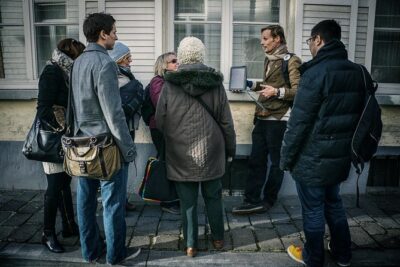
 ★ 5.0“Hidden Brugge” Photo Tour – 2hr open city tour & workshopFrom $8427 reviews
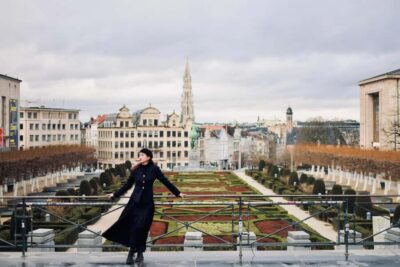
 ★ 5.0“Edges of Brugge” Photo Tour – 2hr open city tour & workshopFrom $9625 reviews
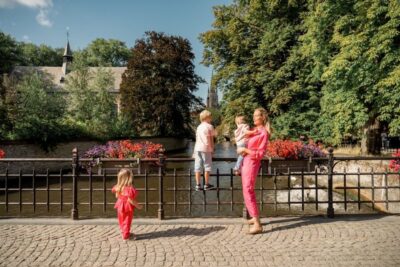
 ★ 5.0Brussels City Photoshoot With a Professional PhotographerFrom $15920 reviews
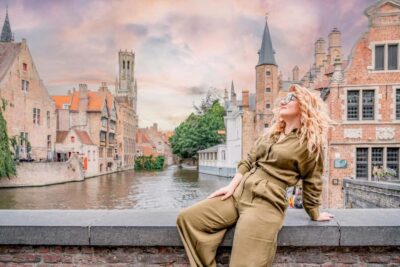
 ★ 5.0Bruges : Your private 30min. photoshoot in the medieval cityFrom $23511 reviews
 ★ 5.0Bruges : Your private 1 hour photoshoot in the medieval cityFrom $3535 reviews
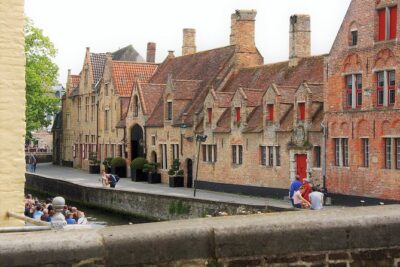 ★ 4.0Photo Tour “Philip the Good” + Boat tripFrom $544 reviews
 ★ 4.4Bruxelles: Photoshoot ExperienceFrom $1753 reviews
 ★ 5.0Bruges Photo Session By a ProFrom $3473 reviews
Browse the lists this tour appears in