
REVIEW · LEUVEN & MECHELEN
e-Scavenger hunt Hasselt: Explore the city at your own pace
Hasselt goes from street sightseeing to a self-paced city trail. You walk the center, solve location-based tasks on your phone, and pick up stories along the way, without waiting for a group schedule. I especially like the flexibility to start whenever you want and keep going at your own speed. One watch-out: it’s more game than guided commentary, so if you want conversation and deeper explanations on every stop, you may feel it’s short on detail.
The format also makes sense for a smaller city. Hasselt’s core is compact, and the trail nudges you between key landmarks while still giving you time to pause, look around, and move on when the route says so. The main drawback is value: it can feel pricey if you’re only two people, and the quality of what you see depends a lot on your phone settings and the language you use.
In This Review
- Key things I’d highlight before you go
- How the e-Scavenger Hunt Works in Hasselt (and why it feels lighter than a guided tour)
- Price, Timing, and Group Size, so you get value
- Start at Diesterstraat 1, then follow the digital trail
- Gin Museum, Virga Jesse, and St. Quintinus Cathedral: early wins
- Modemuseum Hasselt, Stadskantoor, and the Grote Markt stops
- Beguinage ruins, Japanese Garden, and Herkenrode’s 600-year story
- Plopsa Indoor Hasselt, a Congo link, and why the mix is smart
- Father Valentinus Paquay and Minderbroederskerk, then Stadsmus with a seven-year twist
- What you’ll like most, and the one thing to watch
- Should you book the e-Scavenger Hunt Hasselt?
- FAQ
- How long does the e-Scavenger hunt take?
- What’s the group size limit?
- Where does the tour start and end?
- What language is it offered in?
- Do I need a smartphone or data?
- Is it self-guided, and when can I start?
- Can I cancel and get a full refund?
Key things I’d highlight before you go

- Self-guided, choose-your-time pacing (no fixed timing pressure)
- Designed for teams up to 6, so the price per person drops
- Phone-based tasks, with map and GPS options
- A strong mix of culture stops and fun curiosities
- Plan around smartphone and data, which are not included
- Watch translation settings, since automatic translation can mess things up
Leuven and Mechelen, the other Flemish stops
- e-Scavenger hunt Turnhout: Explore the city at your own pace★ 4.5 · 12 reviews
How the e-Scavenger Hunt Works in Hasselt (and why it feels lighter than a guided tour)

This is a digital scavenger hunt you play on your own phone. You get an online app to run the game, and the experience is built as a city trail with games, tasks, and fun facts. The big appeal is that it works like a guided tour’s highlights, but without the fixed rhythm. You can slow down when a church face catches your eye, or speed up when you’re cruising and want to finish strong.
The “game” layer matters, because it gives your walk a reason. Instead of just reading plaques, you’re solving small challenges while you’re standing in front of the building. That makes the time feel organized, even if you’re free to move when you want.
Here’s the reality check: this is offered in English, and it’s framed as a game, not a full lecture. If you enjoy learning through questions and prompts, you’ll likely have a good time. If you want someone to answer your side questions in real time, you’ll probably want a traditional guided tour alongside this.
Price, Timing, and Group Size, so you get value
The price is $37.21 per group, up to 6 people, and the activity typically takes 2 to 4 hours. That structure is important. For a couple, you can feel the cost more strongly. For a group, it becomes much more reasonable because you’re splitting a single group fee.
Timing is also flexible. The activity runs daily from 12:00 AM to 11:59 PM, and you can start when you wish. In practice, that means you can fit it between meals or plan it around indoor stops like museum time.
What you should budget for is your phone setup. You’ll need your smartphone and data, and those are not included. Bring a charged phone, and if your data is shaky, consider downloading what you can before you start, as much as your app setup allows.
Start at Diesterstraat 1, then follow the digital trail
You begin at Diesterstraat 1, 3500 Hasselt, and the game ends back at the meeting point. The trail is private, meaning only your group plays, up to six. That privacy helps if you’re traveling with friends, a small family, or even a couple who wants their own pace.
One practical win is how the route planning is designed. The format supports both map and GPS options, which can reduce stress when streets look similar. If you’re walking without service or your GPS struggles in tight spots, the map option can help keep you oriented.
A small but real tip from experience with city apps: translation matters. I saw a clear warning in user feedback that automatic phone translation can create extra mangling, because you end up with double translation. If you use a browser or device translation feature, turn it off before you start. If the game offers an English option, using the original language can keep things cleaner and more fun.
Gin Museum, Virga Jesse, and St. Quintinus Cathedral: early wins
Your early stops set the tone: Hasselt’s identity shows up in religion, local craft, and the stories buildings carry.
First up, the Gin Museum. Even if you’re not a gin expert, the point is the experience theme: you’re guided through the idea of mind and body, in a museum setting tied to a local product. It’s a good way to break the walk into something more than architecture. If the day is warm or rainy, indoor museum time is also a comfort.
Next, you’ll meet an 18th-century church that has become a basilica. The star here is the statue of Mary of Jesse, called Virga Jesse. The statue is from the 14th century, and it’s tied to a long devotional story that helps you understand why this place matters beyond its looks.
Then comes St. Quintinus Cathedral in the center of Hasselt. It’s dedicated to Quintinus, and it became a cathedral when the Diocese of Hasselt was founded in 1967. That’s the kind of detail the game format can make stick, because you’re not just hearing facts, you’re being asked to notice them while standing there.
Potential drawback for these early religious stops: if you time it badly, you might hit closures or quieter hours. The good news is that your game is self-paced, so you can move through in the order that works best for your day.

Modemuseum Hasselt, Stadskantoor, and the Grote Markt stops
After the older landmarks, the trail adds modern city life and a few “wait, really?” curiosities.
Modemuseum Hasselt sits in a unique seventeenth-century building known as the Oud Gasthuis. That matters because you’re not just looking at displays, you’re in a historic shell. If you like museums that feel grounded in place rather than floating in a generic box, you’ll likely appreciate this setup.
Then you’ll reach the town hall, Stadskantoor. It opened in 2018 and it serves as a replacement for the Old Town Hall. This is a helpful reminder that city centers keep evolving, and not all heritage has to mean medieval stone. It also gives you a contrast moment after older churches and older structures.
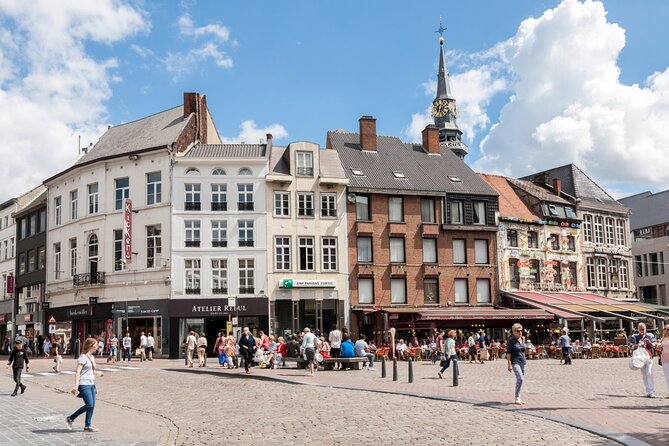
Finally, there’s the Grote Markt. This square is partly surrounded by cozy restaurants, hotels, and shops, and it’s an easy place to reset. Since Hasselt’s city center isn’t huge, the Grote Markt also feels like a natural break point: you can grab a coffee, check your route, and continue when you’re ready.
If you want to get the most out of this section, don’t sprint. Let the tasks pull you forward, then spend a minute or two just looking at the square from different angles. Hasselt is small enough that you can actually do that without losing the whole afternoon.
Beguinage ruins, Japanese Garden, and Herkenrode’s 600-year story

This is where the trail turns thoughtful. You go from “cute city facts” into Europe’s longer rhythms.
You’ll hear about the oldest beguinage, mentioned as early as 1245. The site was outside the ramparts, near Virga Jessecollege on Guffenslaan, and it was destroyed during the Iconoclasm. That’s heavy material, but it gives context for why certain corners of the city look the way they do and why the past still shows up through gaps.
Next comes the Japanese Garden in Hasselt. The game frames it as the largest of its kind in Europe, and it’s the place to fully experience Japanese culture. Even if you only spend a short time there, it’s a nice pacing shift. Instead of constantly moving between buildings, you get a chance to slow down and let a designed space do its job.
Then you’ll follow a chronological trail through the story of Herkenrode, covering 600 years of women. That long timeline is the kind of fact that sounds dry until it’s placed in front of you in small segments. The game format can help you connect the dots because you’re actively “doing” the story as you go.
A consideration here: Japanese Garden and abbey-linked stories are the kind of stops where you may want more time than you think. Since the whole trail can run 2 to 4 hours, consider whether you want to finish the game quickly or give these parts a little extra breathing room.
Plopsa Indoor Hasselt, a Congo link, and why the mix is smart
One of the more surprising parts of the trail is how it includes Plopsa Indoor Hasselt, described as Belgium’s first partially covered theme park. It’s located next to Ethias Arena and Grenslandhallen. You don’t need to be a theme-park person to see why this is useful. It reflects how Hasselt draws families and how modern entertainment slots into a city walk.
After that, you’ll run into a historical thread linked to Dusart. He went to the Royal Military School in Brussels. At age 19 he became a lieutenant, and in 1890 he left for Congo, which was private property of King Leopold II at the time. This isn’t a casual fact, and it’s handled as a story beat in the trail.
So why include it? Because it shows the other side of city identity. Your route is not only about local beauty, it also touches how European lives and institutions connected to colonial history. If you want a lighter day, you might treat this stop as a quick read-and-move moment. If you’re the reflective type, it’s a strong point to linger.
This section’s drawback is mainly emotional, not practical. The Congo link is heavy. If you’d rather keep your trip away from darker history, you might still play the game but spend less time at that station.
Father Valentinus Paquay and Minderbroederskerk, then Stadsmus with a seven-year twist
The trail’s endgame is full of local personality.
In Minderbroederskerk, you’ll find the burial chapel and museum of Father Valentinus Paquay, which attracts thousands of visitors every year. This is a good stop if you like learning about how a single figure becomes part of a place’s story. It’s also a nice counterpoint to the more general “city facts,” because you get a person you can latch onto.
Then you’ll reach Stadsmus. This is where Hasselt gets playful. You discover the streets of Hasselt with famous inhabitants, plus one mysterious citizen who sees the light of day once every seven years. That kind of strange detail is exactly what makes a phone game work. It’s memorable, and it gives you something to talk about long after you finish walking.
Finally, you return to Diesterstraat 1 and close out the trail.
A practical tip for the final stretch: if your phone battery is low, consider finishing the last few tasks quickly and saving any longer reading for when you have a charger or a quiet moment.
What you’ll like most, and the one thing to watch
The highest praise points built into this experience are pretty clear in how it’s designed.
You get major Hasselt stops without fixed scheduling. That’s ideal when your travel day is flexible. You’re not trapped in someone else’s time slots.
The “game” approach makes facts feel personal. You’re not just absorbing information, you’re answering prompts in the places the prompts refer to.
The route feels doable in 2 to 4 hours. Hasselt’s center is compact, so it’s realistic to finish without feeling like you walked for an entire marathon.
The main consideration is depth. Because the format is game-based, some stations may feel like shorter bites rather than full explanations. If you want lots of conversation, and you’re only two people, the cost may feel less justified.
Should you book the e-Scavenger Hunt Hasselt?
Book it if you like hands-on learning, want to explore Hasselt at your own pace, and you’ll have at least three people in your group to make the per-person cost reasonable. It’s also a great choice if you want a structured route but don’t want to commit to a strict walking time.
Skip it, or pair it with something else, if you need deep guided commentary at every stop or if you’re traveling as a couple and budget is tight. Also, do a quick check of your phone settings before you start so you don’t fight confusing translation issues.
If your goal is a fun, efficient Hasselt overview with enough culture to feel real and enough weird facts to stay interesting, this is a smart way to spend a half-day.
FAQ
How long does the e-Scavenger hunt take?
It typically takes about 2 to 4 hours.
What’s the group size limit?
The activity is for a group of up to 6 people.
Where does the tour start and end?
It starts at Diesterstraat 1, 3500 Hasselt, Belgium, and ends back at the same meeting point.
What language is it offered in?
It is offered in English.
Do I need a smartphone or data?
Yes. A smartphone and data are not included.
Is it self-guided, and when can I start?
It’s self-guided, and you can start when you wish. It runs daily from 12:00 AM to 11:59 PM.
Can I cancel and get a full refund?
Yes. You can cancel up to 24 hours in advance for a full refund.
Every Belgium Review
City Games and Trails in Belgium
Leuven and Mechelen
Newer Belgium reviews from the same corner of the country
- e-Scavenger hunt Turnhout: Explore the city at your own pace
★ 4.5 · 12 reviews - Experience Authentic Belgian Cuisine: Cooking Lesson and Meal with a Ghent Local
★ 5.0 · 24 reviews
Leuven & Mechelen Tours, side by side.
 ★ 4.0e-Scavenger hunt Mechelen: Explore the city at your own paceFrom $3734 reviews
 ★ 4.4Mechelen: Planckendael ZOO Entry TicketFrom $4130 reviews
 ★ 4.5Lovely Leuven Highlights Biketour NEDERLANDSFrom $3223 reviews
 ★ 4.5e-Scavenger hunt Leuven: Explore the city at your own paceFrom $3721 reviews
 ★ 4.5e-Scavenger hunt Turnhout: Explore the city at your own paceFrom $3712 reviews
 ★ 4.4Lichtaart: Bobbejaanland Entry TicketFrom $3211 reviews
 ★ 5.0600 Years of History and Heritage: A Self-Guided Walking Tour of LeuvenFrom $117 reviews
 ★ 4.0Discover the secrets of Mechelen while playing! Escape roomFrom $206 reviews
Browse the lists this tour appears in