
REVIEW · LEUVEN & MECHELEN
e-Scavenger hunt Turnhout: Explore the city at your own pace
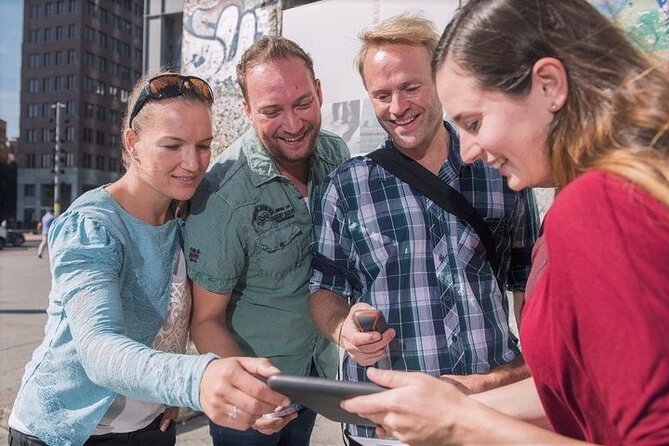
Turnhout reveals itself in clues. This self-paced e-Scavenger hunt turns the city into a playable sightseeing route, using a mobile ticket and an app you run on your phone. I like the way the game nudges you toward major sights without forcing you into a strict timetable.
My favorite part is the mix of stops: the beguinage and St. Peter’s Church for first-class architecture, plus Turnhout’s playing-card and printing story for something you cannot get from a standard walking tour. You also get a clear structure that works well for families and friend groups, with max group size of 6.
One thing to plan for: you will need your own smartphone and data to play. Also, if you lose the phone directions for any reason, some stretches can feel longer than the ideal walking loop.
In This Review
- Key highlights at a glance
- Turnhout at your own speed, not on a tour schedule
- Price and group value for up to 6 people
- Starting at Stationstraat 38 and letting the app do the directing
- Begijnhof Begijnhof, the UNESCO gate that sets the tone
- St. Peter’s Church: austere outside, breathtaking inside
- Philip Jacobus Brepols and the playing-card story that changed everything
- The Taxandria Museum in the House Metten Thoren
- Printing Company paper collections and what you can watch online
- Penge Café, an old stop that feels like a local pause button
- De Warande cultural center for theatre and concert-hall energy
- Timing, walking distance, and why the route feels manageable
- Difficulty level and group dynamics that work for families and friends
- Language and clarity notes to keep your expectations right
- Should you book this e-Scavenger hunt in Turnhout?
Key highlights at a glance

- Self-paced city trail: you control the pace, and you can pause when you need a breather
- Big landmarks, guided by questions: beguinage, St. Peter’s Church, and key cultural stops
- Turnhout’s playing-card history: the story links local makers to a world-famous industry
- Museum and printing connections: Taxandria Museum plus digitised paper material you can watch online
- Built for groups up to 6: private team format for families, friends, or team-building days
Leuven and Mechelen, the other Flemish stops
- e-Scavenger hunt Turnhout: Explore the city at your own pace★ 4.5 · 12 reviews
Turnhout at your own speed, not on a tour schedule
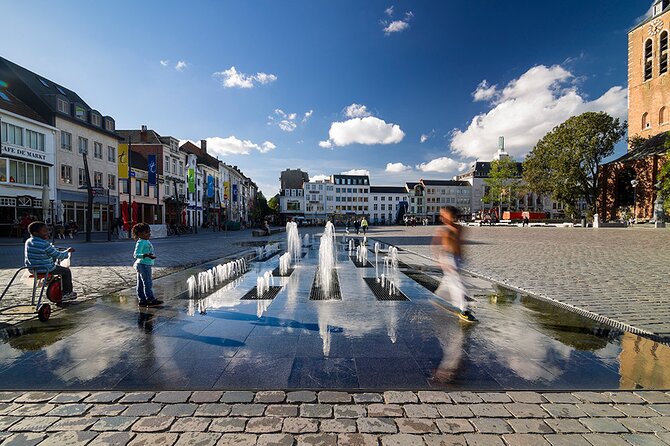
This is a mobile-driven scavenger hunt in Turnhout, Flanders, designed for you to explore on your own time. You buy the experience once for your group (up to 6 people), then play through a series of city checkpoints using the app on your phone. You get instant confirmation at booking, and the game is offered in English.
The real value here is freedom. Instead of listening to a lecture while you shuffle forward, you’ll walk between meaningful places, answer questions at your own pace, and naturally slow down where something catches your eye. If the weather is hot, the format supports breaks between clues, not constant motion.
Price and group value for up to 6 people
The price is $37.33 per group, up to 6 people. That means the cost per person gets much more reasonable when you can fill the group size. For example, if you bring 6 people, you are effectively paying a lot less than if you go as a pair, because the price is not per person.
This also makes sense for families and small teams. If you are traveling with kids, or you are organizing a friend day around a few focused activities, it is easier to justify than a solo-priced guided tour. You also get a private experience, so you are not merged into a larger crowd.
Starting at Stationstraat 38 and letting the app do the directing
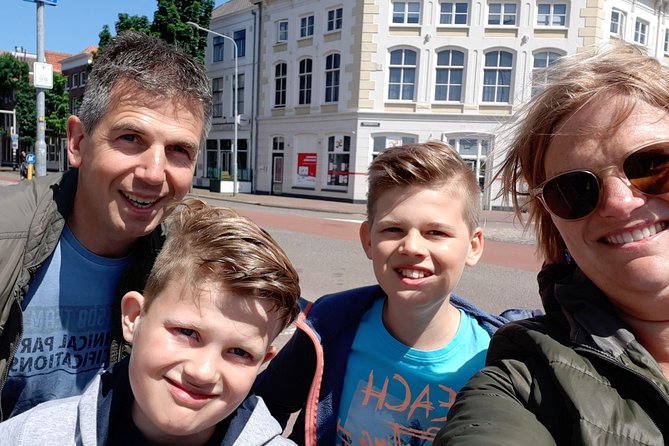
Your hunt starts and ends back at the meeting point on Stationstraat 38, 2300 Turnhout. The experience is near public transportation, so if you are arriving by train or local transit, it should be straightforward to reach your starting point.
You have a wide daily window listed (open every day, 12:00 AM to 11:59 PM during the listed availability dates), so you can pick a time that fits your day. Practically, I suggest choosing daylight if you can, because several stops are best appreciated at street level when details are easier to spot.
Just keep one constraint in mind: the experience does not include a smartphone or data. That means you should plan ahead so your phone has enough battery and a working connection to load the app and any online elements tied to the hunt.
Begijnhof Begijnhof, the UNESCO gate that sets the tone
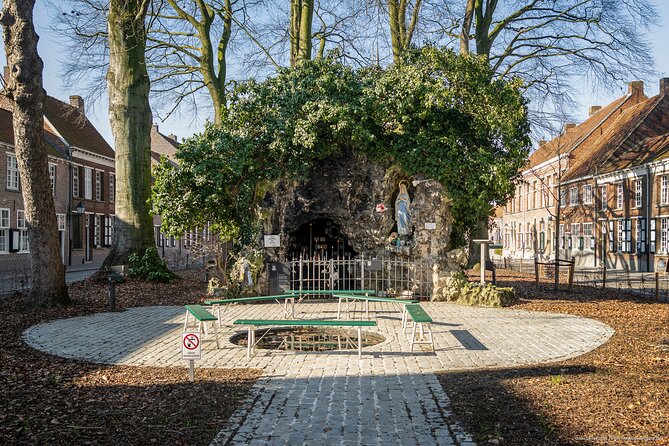
One of your first major moments is the 14th-century beguinage, recognized as a UNESCO World Heritage Site in 1998. The UNESCO label is not just trivia here. It signals that the place matters, so you will likely feel the difference as soon as you step through the gate.
Behind it, you reach Begijnhof, a beautiful square space that works as a quiet reset during a walking game. This stop is ideal for the scavenger-hunt style of discovery because it rewards attention. Instead of just passing by, you can pause, look around, and answer questions that push you to notice details.
Practical tip: take 5 minutes longer than you think you need. Begijnhof is the kind of spot where even a short break improves the rest of your hunt.

St. Peter’s Church: austere outside, breathtaking inside
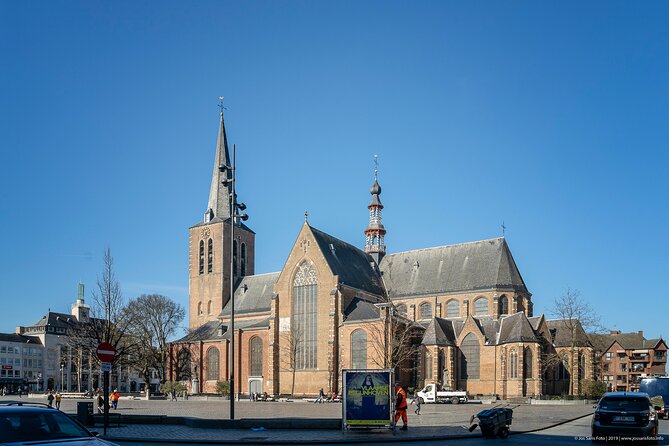
Next comes St. Peter’s Church, and it comes with a built-in contrast that the game seems designed to highlight. The exterior is notably austere, so you might assume it is simple or plain. Then you get the interior experience, which is described as breathtaking.
For you, this is a good example of why a scavenger hunt can be more satisfying than a standard photo stop. The questions guide your eyes, so you are not just taking snapshots. You are comparing what you see outside with what you find inside, and that makes the building feel bigger and more meaningful.
If you like architecture, you’ll probably want a little extra time here. If you are traveling with kids, this is also a strong stop because the contrast helps them understand why the place is worth stepping into.
Philip Jacobus Brepols and the playing-card story that changed everything
Turnhout has a claim to fame that you can practically feel in the city: it is the City of the Playing Card and also part of the Kempen region identity. One clue-leading stop ties directly to that reputation through Philip Jacobus Brepols, who in 1826 helped put Turnhout on the world map by pressing the first playing cards.
This is the kind of local story that turns a city into more than a backdrop. Instead of treating history like a list of dates, the hunt connects a specific person, a specific invention moment, and an entire industry that grew from there. It is a reminder that big cultural goods can start in very normal city streets.
What I like about including this in a scavenger hunt is that you are not just looking at art. You are connecting facts to place, so Turnhout starts to feel like it has a personality, not just scenery.
The Taxandria Museum in the House Metten Thoren
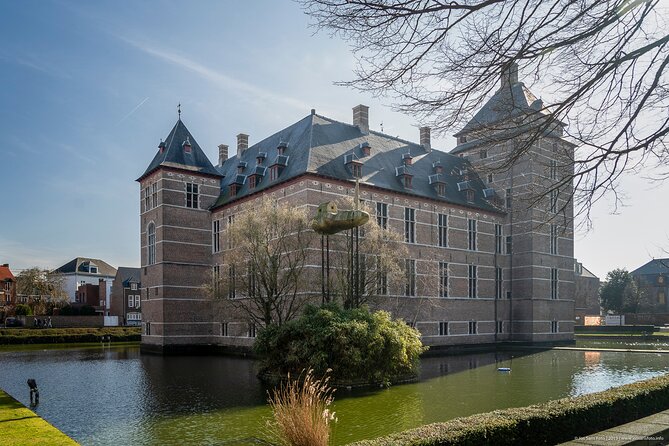
Your route then takes you to Taxandria Museum, housed in a 16th-century building called House Metten Thoren. The museum is dedicated to the past of Turnhout, and that matters because it gives context to what you are seeing outside.
As you walk through the game’s clues, you can treat the museum stop like a grounding point. You are in the city, yes, but now you also have a place where the city’s story is organized. That makes the earlier playing-card and printing clues feel less random and more connected.
The House Metten Thoren setting adds atmosphere too. A 16th-century venue is not just a container, it is part of the mood of the past you are being asked to think about.
Printing Company paper collections and what you can watch online
Another stop focuses on the Historical Printing Company, with an extensive paper collection. The interesting part is that the paper collection was digitised, and you can now also watch it online.
This is a smart twist for a city game. You are not locked into only what you can see on the street. With the online component, the hunt can bring in texture and detail you would not be able to access during a normal walk past a building.
If your phone battery is low, this is the kind of stop where you should make sure you are ready. In practice, I would treat this as your chance to step aside, settle in, and finish that portion of the game without rushing.
Penge Café, an old stop that feels like a local pause button
You will also hit Penge Café, described as 129 years old, making it the oldest café in Turnhout. This stop works well inside a scavenger format because it legitimizes the idea of taking breaks.
I like when an activity helps you plan real downtime. It keeps the hunt from feeling like nonstop walking and question-reading. It also gives your group an easy moment to regroup, compare answers, and get back into sync.
Even if you do not stop for a drink, the existence of a long-running café spot adds authenticity. It signals you are in a lived-in city, not just a collection of postcard stops.
De Warande cultural center for theatre and concert-hall energy
Near the end of your route is De Warande, a provincial cultural center in Turnhout. It includes a theater and concert hall, and it was one of the first cultural centers in Flanders.
This stop feels different from the older, craft-linked stories. It is about how culture continues, not just how it started. For you, it can also be a visual way to mark a change in pace. After museums, churches, and historical industry clues, a cultural center is a natural closing chapter.
If you enjoy performing arts spaces, you will likely find it interesting even if you are not attending a show. The game questions help you look past the obvious facade and notice what makes the building function as a cultural hub.
Timing, walking distance, and why the route feels manageable
The experience lasts 2 to 4 hours (approx.), but in a good way, it is not the kind of activity that punishes you for moving slower. One nice detail is that the format works without a hard time limit, so you can take your time when a stop holds your attention or when your group needs a pause.
Walking is part of the fun, but it is not usually a marathon. In practice, the distance between tasks tends to be fairly short, on the order of a few hundred meters, so you are constantly getting rewarded with a new clue rather than grinding through long stretches.
Still, be realistic about navigation. One common travel mistake is assuming you will follow the route perfectly without using your phone. If you do miss a turn, the walk can grow. My advice is simple: when you are between checkpoints, stay focused on your phone directions so you do not accidentally turn a pleasant loop into an unintended long walk.
Difficulty level and group dynamics that work for families and friends
This hunt is designed to be suitable for large groups of family and friends, and it stays practical because your team stays together. You are answering questions as you go, so people naturally collaborate, argue a little (the fun kind), and learn without it feeling like school.
A helpful thing from the way the experience is described is that question difficulty varies. Some clues will be straightforward, while others can be genuinely challenging, which is great for keeping adults engaged. If you have kids, they can shine on the navigation and spotting details, and that keeps the whole group involved.
If you are doing this as team-building, the format also supports conversation. You are not just walking side by side, you are working a mini-mystery together in public spaces.
Language and clarity notes to keep your expectations right
The experience is offered in English, and it is user-friendly for hearing impaired travelers. Service animals are allowed, and most travelers can participate.
That said, one caution is that language quality can be uneven in some questions. If your group is sensitive to wording mistakes, you might find it mildly distracting, especially if you want a very polished reading experience. Also, since you depend on a phone for the game, having a strong internet connection and a charged device helps keep everything smooth.
Should you book this e-Scavenger hunt in Turnhout?
I would book it if you want a budget-friendly, flexible way to see Turnhout with your own pace and a built-in reason to stop at specific places. The price makes the most sense for groups, and the stop selection is strong: UNESCO beguinage, St. Peter’s Church, the playing-card breakthrough linked to Philip Jacobus Brepols, Taxandria Museum, printing-paper content you can watch online, plus Penge Café and De Warande.
It also has a strong track record, with a 4.6 rating and 100% recommended in the provided feedback set. The only clear reasons not to book are if you do not have a smartphone and data available, or if your group hates walking and prefer a fully seated tour.
If you are the kind of traveler who likes street-level discovery and practical structure, this is an easy yes for Turnhout.
Every Belgium Review
City Games and Trails in Belgium
Leuven and Mechelen
Newer Belgium reviews from the same corner of the country
- e-Scavenger hunt Turnhout: Explore the city at your own pace
★ 4.5 · 12 reviews - Experience Authentic Belgian Cuisine: Cooking Lesson and Meal with a Ghent Local
★ 5.0 · 24 reviews
Leuven & Mechelen Tours, side by side.
 ★ 4.0e-Scavenger hunt Mechelen: Explore the city at your own paceFrom $3734 reviews
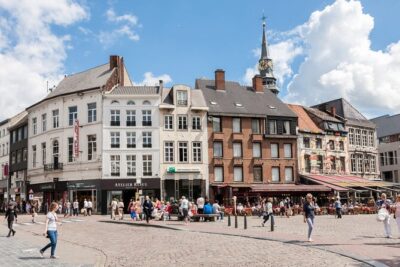 ★ 4.0e-Scavenger hunt Hasselt: Explore the city at your own paceFrom $3731 reviews
 ★ 4.4Mechelen: Planckendael ZOO Entry TicketFrom $4130 reviews
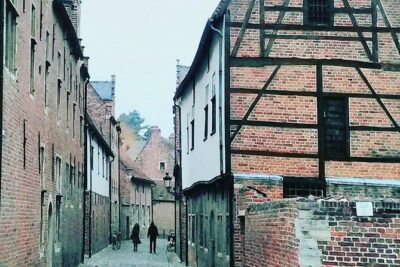 ★ 4.5Lovely Leuven Highlights Biketour NEDERLANDSFrom $3223 reviews
 ★ 4.5e-Scavenger hunt Leuven: Explore the city at your own paceFrom $3721 reviews
 ★ 4.4Lichtaart: Bobbejaanland Entry TicketFrom $3211 reviews
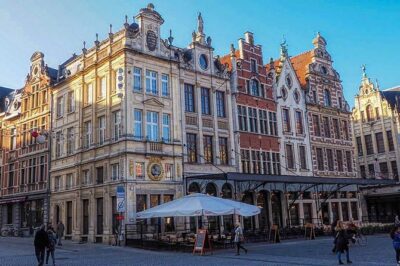 ★ 5.0600 Years of History and Heritage: A Self-Guided Walking Tour of LeuvenFrom $117 reviews
 ★ 4.0Discover the secrets of Mechelen while playing! Escape roomFrom $206 reviews
Browse the lists this tour appears in