
REVIEW · ANTWERP
Private Historical Tour: Legends of Antwerp
Giants and gold made Antwerp unforgettable. This private walking tour threads Antwerp’s most iconic medieval and Baroque landmarks together with the stories that explain the city’s symbols, rise, and fall, from the Grote Markt to the Cathedral. It is designed for one group at a time, so the guide can slow down, speed up, and actually match your curiosity.
I especially like the way you get to the heart of Antwerp fast, starting with the questions behind the giant and the hand, then moving outward into guild life, artists, and printing. I also like the practical pacing and stops that are short enough to stay lively, but long enough for a real story at places like Het Steen and the Cathedral of Our Lady.
One thing to consider is that this is still a walking tour on cobblestones with multiple stops over about two hours. If you want long museum time or minimal walking, you may find the schedule a bit tight.
In This Review
- Key highlights you should care about
- Antwerp’s legends make sense when you walk them in order
- Price and logistics: what $105.82 buys you
- Comfort on cobblestones: short stops that keep the walk from dragging
- The route, stop by stop: Grote Markt, giants, and why Antwerp fell
- 1) Grote Markt: giants, the hand, and Antwerp’s rise
- 2) Het Steen: the oldest building and the giant’s former home
- 3) Museum Vleeshuis (Butcher’s Hall): guild power with a darker edge
- 4) Carolus Borromeus Church: Baroque in the Rubens orbit
- 5) Farmers tower, Meir shopping street, and the Rubens museum stop
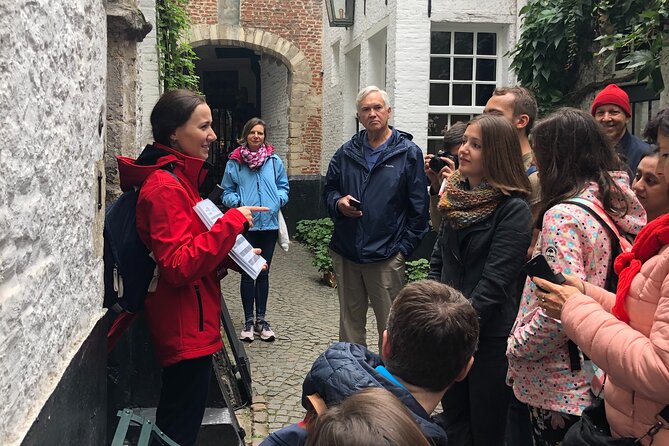
- 6) Vlaeykensgang: Antwerp’s smallest street and a Middle Ages throwback
- 7) Cathedral of Our Lady: the big finish with legends
- 8) Museum Plantin-Moretus: where industrial printing was born
- Why the guide makes or breaks the tour
- Who this tour is perfect for, and who should think twice
- Should you book Legends of Antwerp?
- FAQ
- How long is the Legends of Antwerp private walking tour?
- Where does the tour start?
- Where does the tour end?
- What language is the tour offered in?
- Is this tour private?
- Does the tour include a guide?
- Are there any admission fees at the stops?
- Is cancellation free, and how much notice is needed?
- Are mobile tickets used?
Key highlights you should care about
- Private, only your group, with a real guide guiding the whole time (not a crowd shuffle)
- Legend-first storytelling at the places where Antwerp’s symbols make sense, from the giant to the hand
- Big Antwerp stops in a tight loop, including Grote Markt, Rubens landmarks, and the Cathedral area
- Short, focused segments at each sight, ideal if you like learning without a full-day commitment
- Printing and art show up, not just churches, thanks to Plantin-Moretus and Rubens sites
- Great guide track record, with a 4.9 average rating and 98% recommending the tour
More of Antwerp, north of the Scheldt
- Historical Walking Tour: Legends of Antwerp★ 5.0 · 1,837 reviews
- Antwerp: City Highlights Walking Tour★ 4.7 · 816 reviews
- Antwerp: City Highlights Guided Bike Tour★ 4.7 · 529 reviews
- Antwerp: Historical Walking Tour in the Old City★ 4.8 · 373 reviews
Antwerp’s legends make sense when you walk them in order
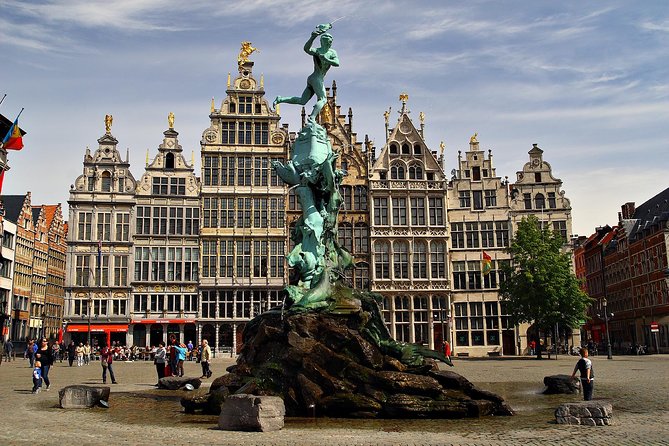
Antwerp can feel like a picture postcard until someone explains the why behind the scenes. This tour uses a simple trick: it walks you through the city center in a logical story path, so the giant and hand at the Grote Markt are not just decoration. They become an entry point into Antwerp’s Golden-Age era, the reasons it rose to wealth in the 16th century, and the factors behind its decline.
You also get a steady mix of eras without feeling lost. The route takes you from medieval themes and old guild life into Baroque art, then right into the world of printing. That blend matters because Antwerp is not only about one style or one century. It is about how different chapters of the city connect, street by street.
The end result is that you leave with more than photos. You leave with answers to the kind of questions you are already wondering when you look at carved symbols, old facades, and places tied to famous names like Rubens.
Price and logistics: what $105.82 buys you
At $105.82 per person for roughly two hours, the value here comes from the format. This is a private tour, so you are not paying for a big group where you get only partial attention. You are paying for a guide who can keep the route coherent and adjust the pace to your group. That matters most on a walking tour, where timing and movement make or break the experience.
A few other practical perks are baked in. The tour is offered in English, you get a mobile ticket, and there is mention of choice of departures. Optional hotel pickup is also included for convenience, which can save time if you are staying a bit outside the main center.
The meeting point is the Grote Markt (2000 Antwerpen). The tour ends at Handsoenmarkt (near the Cathedral area, about 50 meters away from the main square). That means you finish in the same zone where you likely started exploring the city, not in a far-off neighborhood you have to fight your way back from.
Comfort on cobblestones: short stops that keep the walk from dragging
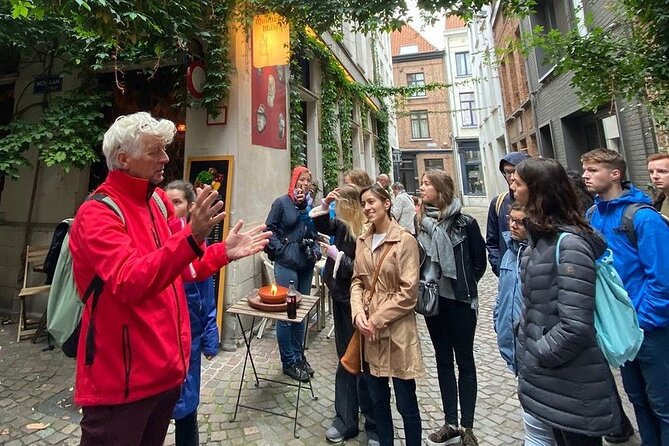
This is an active, urban route. It moves between several historic sites, some of them in close proximity, but you still need to be okay with a steady walking rhythm for about two hours. Cobblestones are part of the Antwerp feel, and one helpful detail from guide feedback is that the tour works best when you are comfortable doing the walk at your group’s pace.
The good news is the stop lengths are designed to keep energy up. You are not stuck in one place for ages. You get a focused burst of story time at each stop, then you move on. That tends to be a smart way to explore historic centers because it reduces the “standing around, waiting for the next explanation” feeling.
Practical notes that can influence your decision:
- Service animals are allowed.
- You are near public transportation.
- Most travelers can participate, which suggests the route is broadly doable for typical visitors who can handle city walking.
The route, stop by stop: Grote Markt, giants, and why Antwerp fell
Below is what the tour experience looks like in real time, with what each stop contributes and what to watch for.
The grimmer half of the same streets
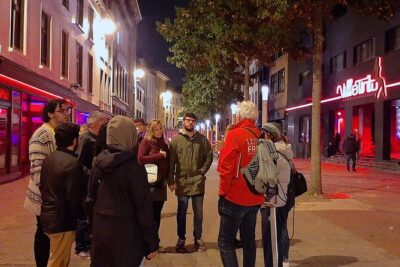
1) Grote Markt: giants, the hand, and Antwerp’s rise
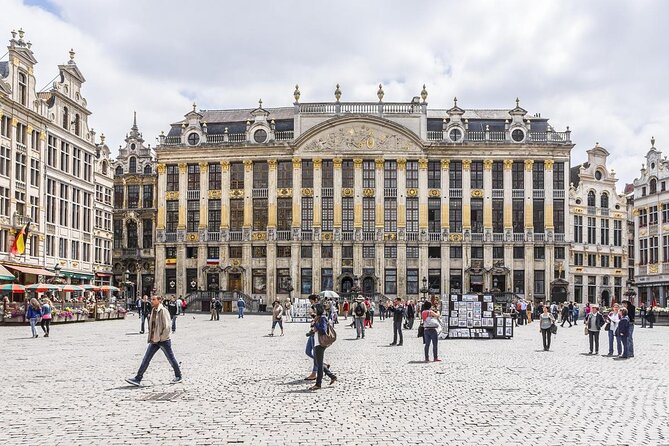
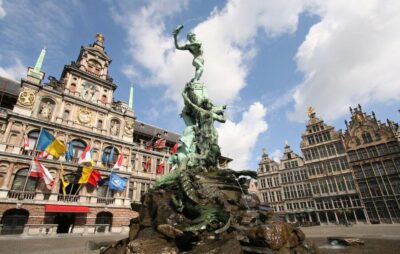
You start at the Grote Markt, and the tour begins by answering the kind of questions that make a city click. Why is Antwerp called the city of giants? Why is the hand the symbol of the city? And how did Antwerp become the richest city in 16th-century Europe, then later decline?
Even with free access and only about 15 minutes here, this stop is the anchor. It sets the theme for everything else. If you only remember one “big idea” from the tour, it is likely that Antwerp’s symbols are tied to real historical turning points.
Small consideration: because this is an opening stop with strong storytelling, it is worth arriving ready to listen. If you show up late, you risk missing the context that makes the later sights land harder.
2) Het Steen: the oldest building and the giant’s former home
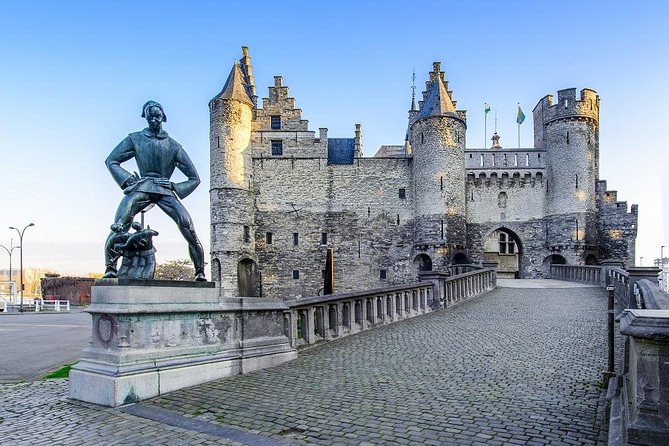
Next you move to Het Steen, described as the Stone Castle and noted as the oldest building in the city. You also learn that it was once home of a famed giant, plus how the building has served many functions over Antwerp’s history.
This is a classic “context stop.” You are not just seeing a landmark. You are learning why it matters, and you get that feeling of layers, with the same structure taking on different roles across time.
The time here is short, about 10 minutes, so the value is in the guide connecting the building’s past uses to the legends you heard at the Grote Markt.
3) Museum Vleeshuis (Butcher’s Hall): guild power with a darker edge
At Museum Vleeshuis, also known as the Butcher’s Hall theme, the tour focuses on guild life. It is presented as the oldest guild house in the city, and the story leans into how often bloody the history could be.
If you like history that is not all statues and sweetness, this stop tends to be memorable. It gives you a glimpse into how trade groups shaped the city, and how their influence shows up in architecture.
Because the stop is around 5 minutes, you should think of it as a spark. You get the core story beat, not a full “spend an hour inside” experience.
4) Carolus Borromeus Church: Baroque in the Rubens orbit
Then you head to Carolus Borromeus Church, a Baroque church tied to Rubens. The tour frames it as once a playground of the famed painter.
This stop works well as a change of pace. The guide helps you connect Antwerp’s visual art identity to real places you can stand in, rather than treating Rubens as only a name on a museum label.
Time is about 10 minutes, so again, it is story-forward. If you are the type who wants to linger and study details for your own pleasure, you might want to add extra time later on a separate visit.
5) Farmers tower, Meir shopping street, and the Rubens museum stop
As you pass the Farmers tower and the Meir shopping street, the tour continues toward the Rubens museum. Here, the story centers on Rubens living and working his whole life.
This segment does two useful things. First, it shows how the city’s present-day flow (shopping streets) sits alongside historic anchors. Second, it keeps the Rubens thread moving from church connection into the museum tie-in, so you get the larger arc rather than one isolated stop.
Small drawback: because this part includes passing through streets, it can feel more “walk and look” than museum time. That is not bad, just be aware if you prefer everything to be inside.
6) Vlaeykensgang: Antwerp’s smallest street and a Middle Ages throwback
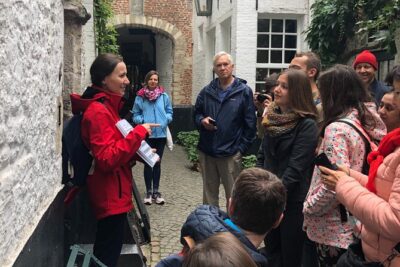
Next comes Vlaeykensgang, described as the smallest street of Antwerp, with a throwback to the Middle Ages. About 10 minutes here helps you slow down and experience the scale that makes a medieval city feel real.
This kind of street stop is great for photos, but the bigger value is feeling the physical contrast. You are moving from major squares and landmark buildings into something tighter and more intimate.
A consideration: street width means you will likely be more aware of crowd movement if other visitors are around, so patience helps.
7) Cathedral of Our Lady: the big finish with legends
The tour ends at the Cathedral of Our Lady, with about 15 minutes to talk about its history and to share legendary stories from long forgotten times. It is a fitting final stop because the cathedral area has the “you are in the center of it all” feeling.
Time at the end can also be a trade-off. You get a satisfying story conclusion, but you might want more time afterward if the cathedral is your top interest. Since the tour ends about 50 meters from the main square, it is easy to extend your exploration at your own pace.
8) Museum Plantin-Moretus: where industrial printing was born
After passing by the fashion quarter and fashion district area, the tour stops in front of Museum Plantin-Moretus, presented as the place where industrial printing was born. This is one of the most distinctive parts of the route because it shifts away from architecture and art into ideas, media, and industry.
The stop is about 10 minutes, so you will not get a full printing-history lecture. But you do get the “why this place matters” context that connects Antwerp to the wider story of how knowledge spread.
Why the guide makes or breaks the tour
A tour like this lives or dies by the guide, and the most praised experiences point to very real strengths. Guides named in feedback include Flip, Luc D, Joske, Beren, and Pearson. The consistent theme is that the guide made Antwerp feel alive and adjusted the pace for the group.
That adjustment is more important than it sounds. A two-hour tour needs timing. If the guide sticks rigidly to a script, you end up rushing people through corners they wanted to linger on, or spending too long where you were already satisfied. When a guide matches your group, the route feels smoother and the stories land better.
One careful note: one guide experience also included an issue with correctness and a lack of coverage on Jewish community stories. If Jewish history in Antwerp is a must for you, I would suggest you message the provider or ask the guide directly what topics they will cover so you can set expectations early.
Who this tour is perfect for, and who should think twice
This tour is a strong fit if you are:
- In Antwerp for the first time and want a tight overview without getting lost
- A history fan who likes legends tied to specific places, not only general background
- Interested in Rubens and in how printing connects to Antwerp’s identity
- The type who enjoys short story stops and moving with a plan
It may be less ideal if you:
- Want lots of museum time inside buildings, because several stops are brief by design
- Have limited mobility or find cobblestones and continuous walking challenging
- Want a very specific niche topic that the guide may not prioritize unless asked
Should you book Legends of Antwerp?

If you want a high-value, private, story-driven walk that hits the medieval core and keeps you connected to Antwerp’s art and printing legacy, I think it is an easy yes. The biggest selling point is the format: a private group with a guide who can tailor pacing, plus a route built to answer the city’s key symbol questions quickly.
At $105.82 per person, I would book when you value attention and structure more than open-ended wandering. It is especially worth it if you would otherwise bounce between sites without understanding why the giant and the hand matter, or how Rubens and Plantin-Moretus connect to the city’s bigger narrative.
If your dream day includes slow museum browsing and long quiet time, then you might pair this with a second, self-guided visit later. Do this first for the context, then come back with your own pace.
FAQ
How long is the Legends of Antwerp private walking tour?
It runs about 2 hours.
Where does the tour start?
The tour starts at Grote Markt, 2000 Antwerpen, Belgium.
Where does the tour end?
It ends at Handsoenmarkt, 2000 Antwerpen, Belgium, near the Cathedral, about 50 meters from the main square.
What language is the tour offered in?
The tour is offered in English.
Is this tour private?
Yes. It is a private tour/activity, and only your group participates.
Does the tour include a guide?
Yes, a tour guide is included.
Are there any admission fees at the stops?
The tour information lists the stops as Admission Ticket Free.
Is cancellation free, and how much notice is needed?
Yes. You can cancel up to 24 hours in advance for a full refund.
Are mobile tickets used?
Yes. The tour uses a mobile ticket.
Every Belgium Review
Belgium After Dark, on Foot
Antwerp, Street by Street
Newer Belgium reviews from the same corner of the country
- Guided E-kickscooter tour: The big five of Antwerp
★ 5.0 · 3 reviews - Antwerp: Help the Lost Boy – Self-Guided Mystery Walk
★ 4.5 · 3 reviews - Surprise tour of Antwerp guided by a Local
★ 5.0 · 3 reviews - Antwerp Private Tour From Brussels
★ 4.7 · 3 reviews - Discover Antwerp while playing! Escape game – The alchemist
★ 4.5 · 4 reviews
Antwerp Tours, side by side.
 ★ 5.0Historical Walking Tour: Legends of AntwerpFrom $31,837 reviews
 ★ 4.6From Brussels: Full-Day Antwerp and Ghent Guided TourFrom $571,019 reviews
 ★ 4.7Antwerp: City Highlights Walking TourFrom $22816 reviews
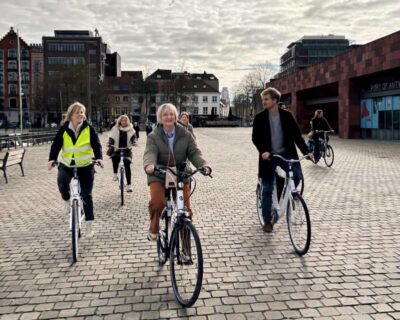 ★ 4.7Antwerp: City Highlights Guided Bike TourFrom $38529 reviews
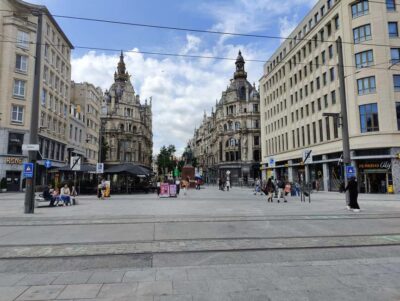 ★ 4.8Antwerp: Historical Walking Tour in the Old CityFrom $3373 reviews
 ★ 5.0Guided Bike Tour: 2 Hours Highlights of AntwerpFrom $39347 reviews
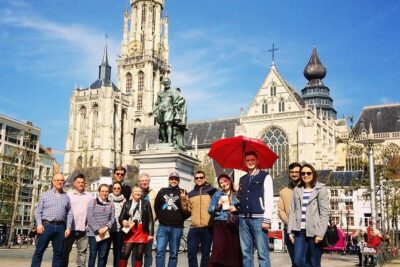 ★ 5.0Private tour: Highlights & History of AntwerpFrom $105299 reviews
 ★ 5.0Historical Walking Tour in Antwerp Old CityFrom $3277 reviews
Browse the lists this tour appears in