
REVIEW · BRUGES
💛 Tell Me About Bruges 🏰 1000 Years of Stories by Locals ⭐
Bruges feels like a movie set. I love the theatrical storytelling that makes medieval life click, and I also like how the route gives fast orientation around the city’s biggest landmarks. In about two hours, you get a clear, human-scale picture of how Bruges went from superstar wealth to serious decline, then back toward thriving again.
One thing to consider: this is a walking tour through busy old streets for two hours on cobbles, so wear comfortable shoes and plan for the weather.
In This Review
- Key highlights I think you should know
- Finding your guide at the Belfry, then getting oriented fast
- Market Square, Markt, and the power of “who ran the city”
- Pieter de Coninck and Jan Breydel, plus the Provincial Court feeling
- The Belfry and the city that counted everything
- Beer Experience and the “break in the centuries”
- Burg Square and Bruges City Hall, where civic pride shows up
- Blinde-Ezelstraat and the fish and leather markets vibe
- Rosary Quay, Rozenhoedkaai, and the Bridge of Love
- Dijver, Bonifacius Bridge, and the old town waterline
- Gruuthusemuseum exterior area, then Church of Our Lady
- Site Oud Sint-Jan and Walplein Square: where care and culture intersect
- Halve Maan area: finish near Huisbrouwerij De Halve Maan
- Price and value: why this costs so little, and what you pay for
- Who should book this Bruges 2-hour storytelling tour
- Booking smart: timing, shoes, and what to do right after
- Should you book this Bruges storytelling tour?
- FAQ
- Where do I meet the guide?
- How long is the tour?
- Is this tour really free?
- Are museum tickets included?
- What language is the tour in, and is it wheelchair accessible?
- What is the group size limit?
Key highlights I think you should know
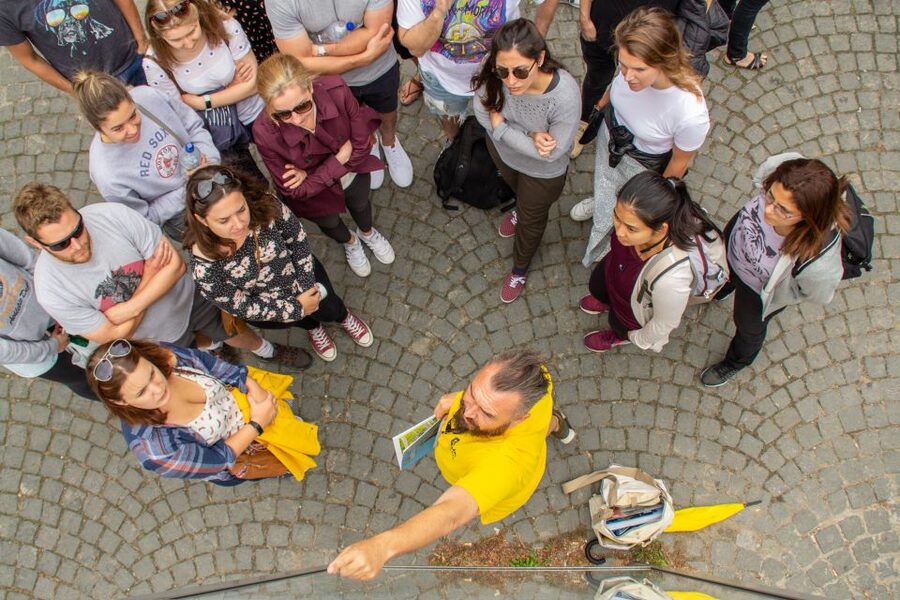
- Local storyteller format: A real person guides the story, and you tip at the end.
- 1,000 years in two hours: Golden Ages, poverty after, then modern flourishing.
- Iconic photo stops: Rozenhoedkaai and the Bridge of Love are built into the flow.
- Beer and chocolate themes: The tour weaves food and drink into the history.
- You’ll cover the medieval core: Market Square, Burg Square, Belfry area, and more.
- Small group limit: Up to 6 people per booking to keep the experience balanced.
Bruges again, from a different angle
- Bruges: Small Group Boat Cruise and Guided Walking Tour★ 4.8 · 4,102 reviews
- Bruges: Walking Tour, Canal Boat Trip w/Beer Tasting Option★ 4.4 · 2,759 reviews
- Historical Walking Tour: Legends of Bruges★ 5.0 · 2,541 reviews
- Bruges: Choco-Story Chocolate Museum Guided Tour w/Tastings★ 4.2 · 1,379 reviews
Finding your guide at the Belfry, then getting oriented fast
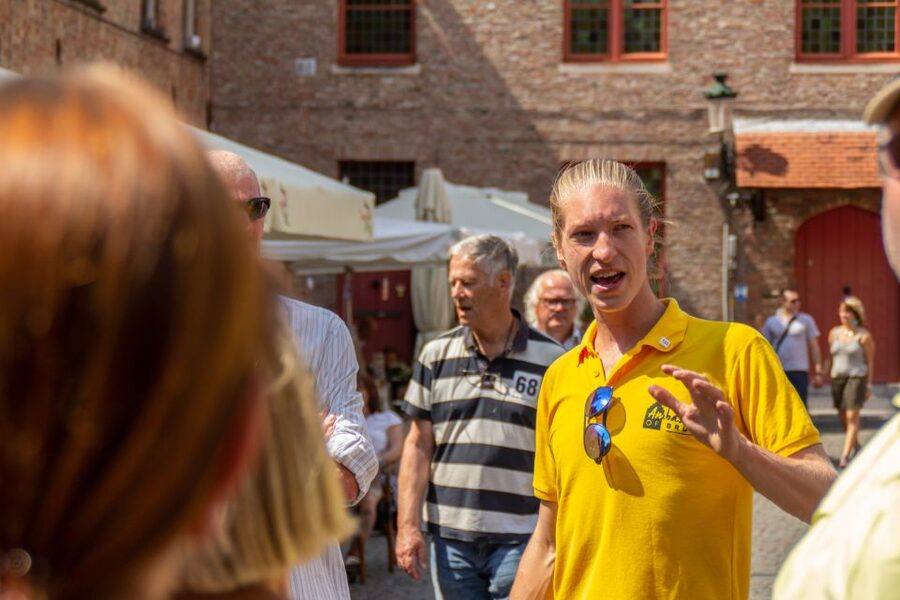
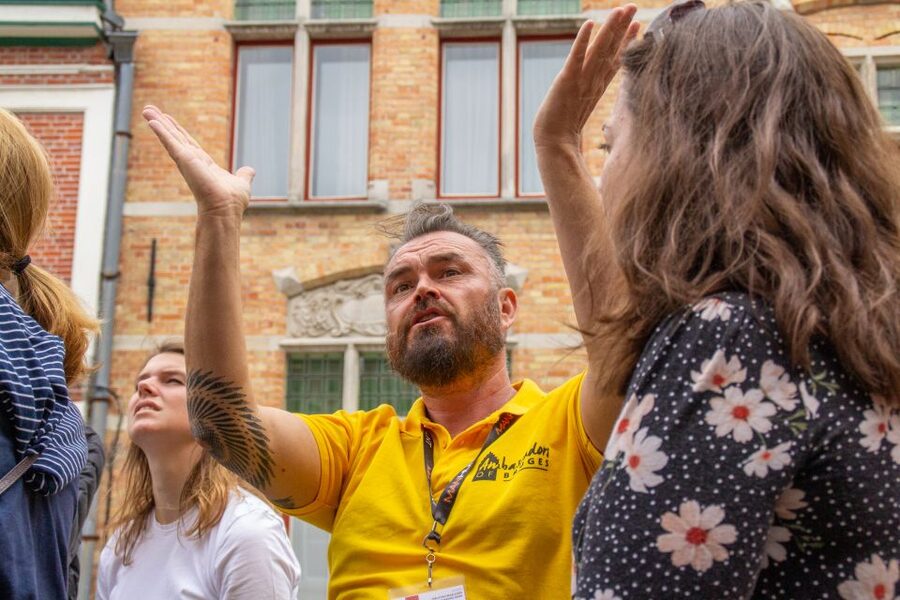
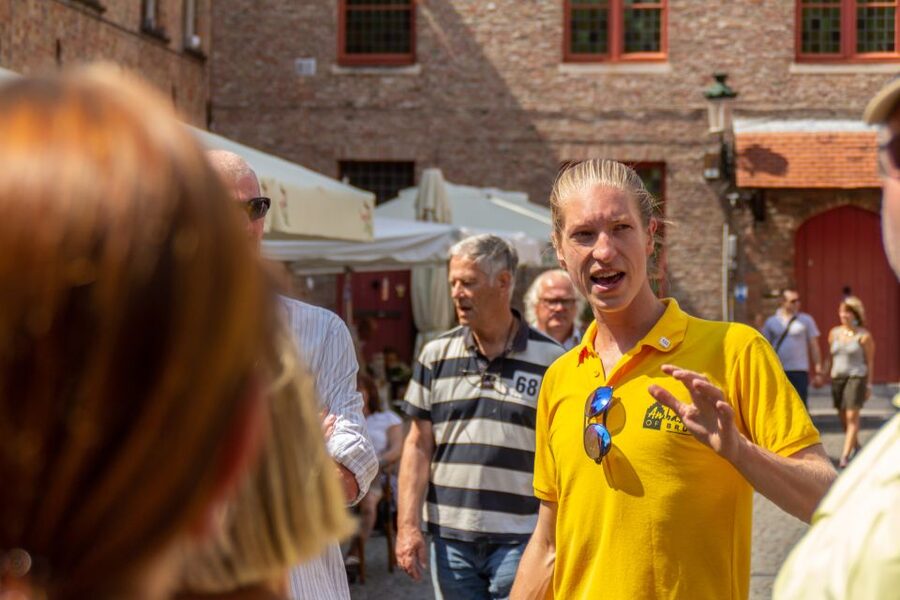
I like tours that do two jobs at once: entertain you and help you navigate. This one does both, starting where most people should begin, in front of the Belfry Tower on Market Square. Your guide looks for you with a yellow Ambassadors umbrella, so it is easy to spot the group even if the square feels chaotic.
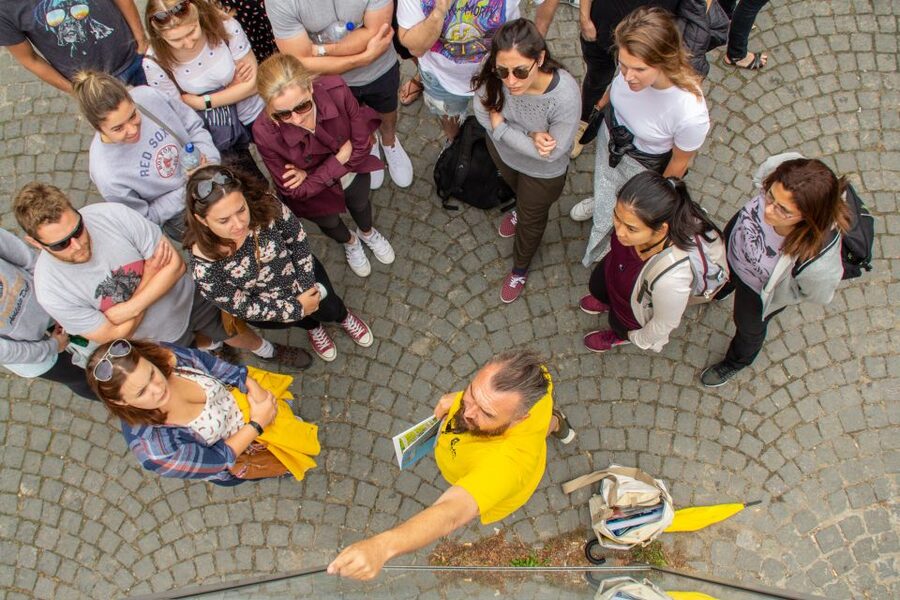
Right away, you set expectations. You are not signing up for a textbook. You are signing up for Middle Ages stories told by a local English-speaking storyteller, with a route that focuses on Bruges’ medieval heart. You will get context for what you are seeing, and you will also learn the “why” behind the city’s layout and symbols, not just the dates.
One practical tip: Bruges can be crowded near the core sights. If you want the best photos, arrive a bit early, and keep your phone charged. The tour is structured so you see the major views without turning it into a frantic sprint, but you still move through peak pedestrian zones.
Market Square, Markt, and the power of “who ran the city”
After that first meeting moment, the walk starts pulling you into the city’s center of gravity. You pass through Markt (Market square area) and then toward the big civic landmarks, where Bruges’ wealth and civic pride are easy to understand. You also get introduced to the kinds of people and tensions that shaped the city, not just the buildings.
What I find useful here is how the tour explains power as something people lived with. Medieval towns were not abstract. They were guilds, finances, rivalries, and public authority. The stories connect architecture to social life, so when you look at a façade later, you can picture who would have stood there, who would have argued there, and what mattered to them that day.
You also get stops that sharpen the “people behind the place” angle. Along the route, you encounter named historical figures and political sites tied to the city’s medieval identity. Even if you only remember one name, it helps you read Bruges like a map of characters.
Pieter de Coninck and Jan Breydel, plus the Provincial Court feeling
A nice part of this tour is how it slows down for key points instead of treating every stop as a quick snapshot. You make time for places like Pieter de Coninck en Jan Breydel and the Provincial Court area, where the guide turns political history into something you can visualize.
Here is the practical value for you: you start to understand why Bruges still feels “organized” in a way many cities do not. The medieval street and civic geometry makes sense when the guide explains how control and community authority worked. You will likely leave with a stronger instinct for where to walk next, and which streets are mainly historical corridors versus everyday routes.
Drawback to keep in mind: like most walking tours, you will be mostly looking from the outside and around public spaces. If you are hoping for a museum-style experience with deep interior access, you will need to add that separately.
The Belfry and the city that counted everything
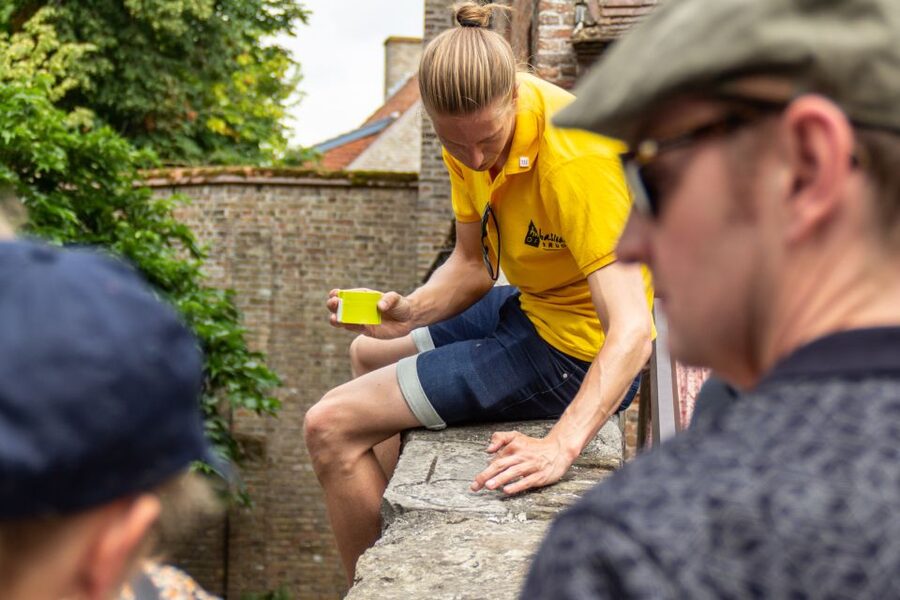
You spend time at the Belfry of Bruges, and this is one of the tour stops that makes the “finance” theme feel real. Even without going deep into museum halls, you get the sense of a city that measured power in walls, symbols, and systems.
This is also where I like how the guide talks about Bruges’ Golden Ages. The story is not just about being rich. It is about what richness meant. It meant trade, influence, architecture, and civic ambition. It also meant conflict and rivalry, and the guide does not shy away from love and conflict in the same breath.
If you are the type who enjoys learning how cities worked day to day, this stop is a turning point. The Belfry is not only a pretty tower. In the tour’s telling, it is a signal flare that the city wanted to be seen as important.
Beer Experience and the “break in the centuries”
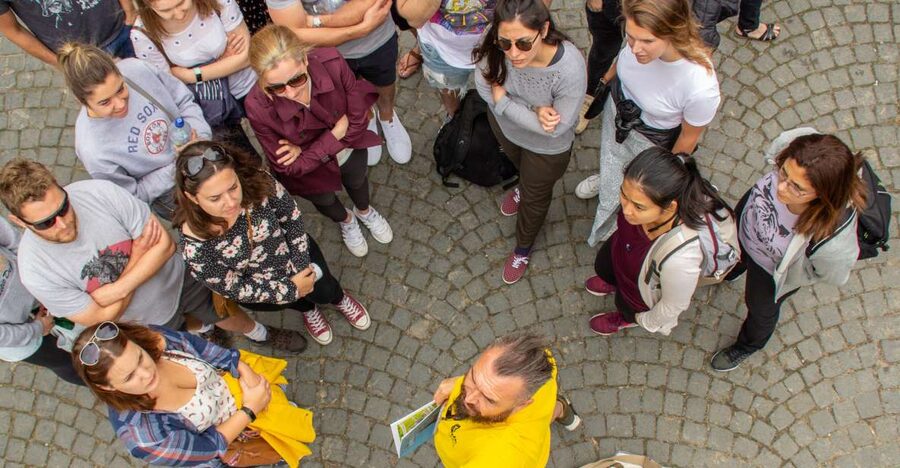
Between major civic squares and landmark photo views, you get a quick detour related to Bruges Beer Experience. It works as a pacing tool. You are not stuck in only political and architectural talk. The guide ties history into culture, and beer becomes a shortcut for thinking about community life.
This matters more than it sounds. A two-hour tour can feel heavy if it is only centuries and dates. Adding food and drink themes keeps the story human. Even if you are not a beer drinker, the way beer and brewing tie into the city helps you see Bruges as a place where daily life mattered, not just monuments.
Also, you might get little extra touches depending on your storyteller. Some guides have been known to incorporate fun food moments, like chocolate or waffles, in their own style. You should not count on it as a guarantee, but the overall approach is that history should taste like something.
Burg Square and Bruges City Hall, where civic pride shows up
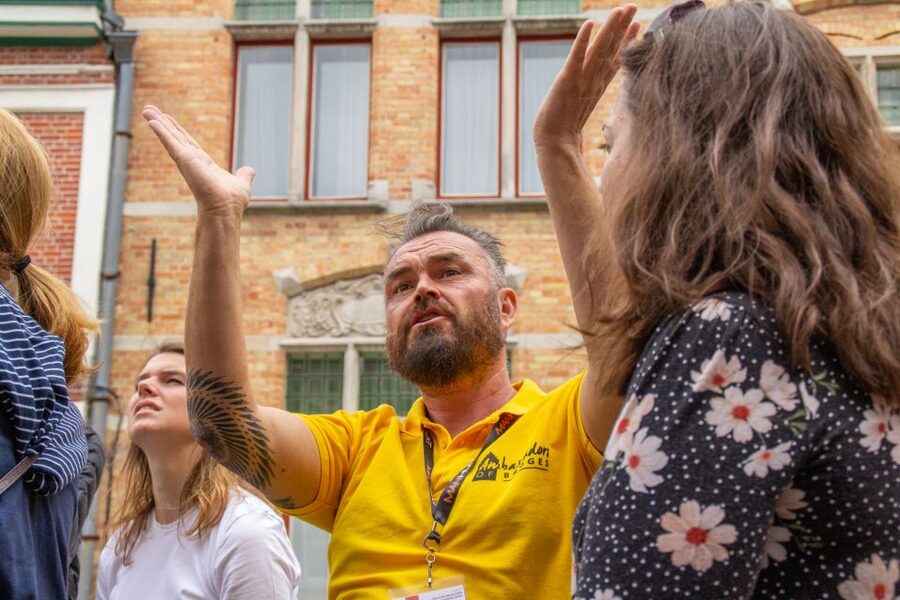
Next comes Burg Square and then Bruges City Hall. These are the kind of spaces where you can feel the city’s self-image. The tour frames them as stages where power was announced, argued, and displayed.
I like this stop because it helps you understand the contrast that drives the tour’s main arc. Bruges becomes “the richest city in the world” in its peak era, then later it becomes the poorest city of Belgium, and finally it starts flourishing again. Burg Square and the City Hall area are where you can hold that contradiction in your head.
Practical note for you: these squares are great for photos, but they are also busy. If someone in your group wants slower walking and more stopping, plan to communicate that early with your guide. The tour moves at a steady pace because it is built to hit a lot of major sights without museums.
Blinde-Ezelstraat and the fish and leather markets vibe
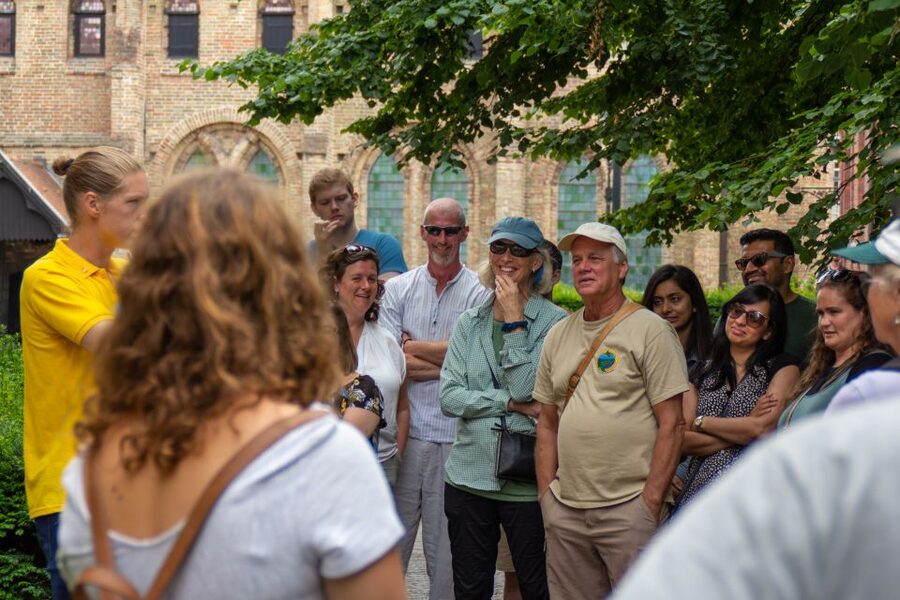
Now the tour starts shifting from “big civic” to “everyday economic life.” You walk through areas such as Blinde-Ezelstraat, then onward to the Fish Market (Vismarkt) and Huidenvettersplein.
This is where Bruges stops feeling like a theme park and starts feeling like a working town. The guide connects wealth to labor and trade. You learn how the city’s money came through markets and industries, not only through rulers and royalty.
A quick reality check: market streets can be lively and sometimes noisy. You will be walking through active public areas. That is normal. It also means you hear the city as a living place, not just a postcard.
This portion is especially good if you like the “how did people actually live?” angle. If you prefer only architecture, you can still enjoy it by paying attention to how the street activity lines up with what the guide says about past commerce.
Rosary Quay, Rozenhoedkaai, and the Bridge of Love
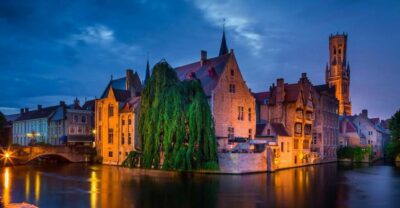
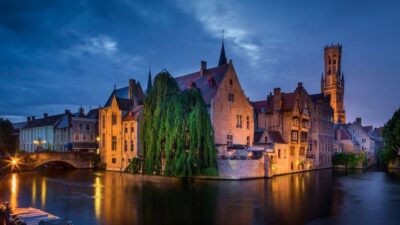
If you only remember one visual from Bruges, make it this zone. The tour includes Rosary Quay and a dedicated photo stop at Rozenhoedkaai, often described as the most photographed viewpoint in Bruges. You then cross to St. Boniface Bridge, also known as the Bridge of Love.
Here is why this stop is worth your attention: the guide does not treat it like a photo op alone. It connects the canal views and bridge symbolism to the city’s medieval narrative, including love stories alongside conflict. That pairing is what makes the scenery feel like more than an Instagram background.
Practical tip: photo stops can feel short when groups are ready to move. If you want a slow, quiet moment, take your photo early during the stop. Then spend the rest of the time listening. You will appreciate the story more when you are not trying to frame the shot.
And yes, the view is the kind you can understand from any direction, so even if the timing feels crowded, you still get the core experience.
Dijver, Bonifacius Bridge, and the old town waterline
From there, you continue along Dijver and more viewpoints around the waterline, including Bonifacius Bridge. Water is a huge part of Bruges’ identity, and this walk segment helps you see how canal geography shaped movement and commerce.
I like how this section links back to the tour’s big themes. Medieval wealth depended on transport and trade. Bridges and canals are not decorations. They were infrastructure for survival, profit, and power.
The only drawback is straightforward: you might stand still briefly for explanations and photos, and the ground and rail areas can be busy. Keep your footing, watch where you step, and keep your bag close if you have one.
Gruuthusemuseum exterior area, then Church of Our Lady
Next, you reach Gruuthusemuseum and then head to Church of Our Lady, Bruges. The tour gives you time in the surrounding areas and uses the church stop to underline the medieval emotional and architectural scale of Bruges.
A key benefit here is context. When you look at a church in Bruges, you are not only looking at a building. You are looking at civic identity, religious power, and community priorities across centuries. The guide helps you connect those dots without requiring you to buy museum tickets.
One caution: since museum admission is not included, you will not be entering everything. If you love interiors, plan separate time later. The tour is designed to orient you and deepen understanding, not replace ticketed visits.
Site Oud Sint-Jan and Walplein Square: where care and culture intersect
The route continues to Site Oud Sint-Jan, tied to the area often associated with St. John’s Hospital, and then toward Walplein Square. This portion is a good reminder that history is not only battles and kings. It is also institutions for care, community organization, and the way cities handled vulnerability.
If you are the type who likes a break from romance and monuments, this stop is a strong shift. It gives the city a more grounded human scale.
The tour does not claim you will explore in museum depth here. Still, you will leave with a clearer sense of why those sites matter in a medieval town.
Halve Maan area: finish near Huisbrouwerij De Halve Maan
To close, you end at Huisbrouwerij De Halve Maan, with a Halve Maan brewery photo stop along the way. This is a smart finish, because it pulls the tour’s beer theme into your real, modern Bruges.
Even if you do not drink beer, finishing near a working brewery helps you connect the medieval story to today. Bruges did not become “Bruges” only through architecture. It survived and changed. The modern flourishing part of the story feels less theoretical when you are near something living.
Also, finishing back at the meeting point area makes it easier to keep exploring right after the tour without getting lost.
Price and value: why this costs so little, and what you pay for
The price shown for this experience is listed at $3.41 per person, but the important value line is the tip-based walking tour concept. The tour itself is built around the storyteller experience: local English explanations, a structured route, and guidance plus recommendations for what to do next. There are also mentions of tips and discounts at local businesses as part of the included value.
So how do you think about value?
- You are paying for a guide to translate 1,000 years into a route you can actually walk.
- You are paying for orientation, so you waste less time wandering aimlessly.
- You are not paying for museum admissions, which means you can choose later based on your interests.
If you budget tight, this format is one of the best ways to get real context early in your trip. If you prefer fixed-price tours that include tickets, you may find the “not included” museum piece means extra planning later. But for first-timers, it is a strong deal.
Who should book this Bruges 2-hour storytelling tour
This is a great choice if you want to see Bruges like a story, not just a checklist.
It is especially well suited for:
- First-time visitors who need quick orientation
- People who like jokes, character, and a guide who acts out stories
- Couples, solo travelers, and small groups who want to move through the medieval core efficiently
In the style department, guides can be energetic and theatrical. For example, names that have shown up in the tour’s storyteller lineup include Pascal, Nikki, Gosha, Steve, Ray, Arthur, Andy, Sophie, Victoria, Nick, and Goycha. The common theme across these different personalities is performance. You should expect the stories to be told with energy, not a flat lecture.
Who might not love it:
- You want long museum visits, because admission is not included.
- You hate walking, because two hours in the center means steady foot movement.
- You are traveling in a larger group. This format is capped at 6 people per group booking, and larger groups are not allowed through that setup.
Booking smart: timing, shoes, and what to do right after
For timing, pick a start when you can still explore afterward. Since it ends back at the meeting area near Market Square, you can keep going without changing neighborhoods.
Wear good shoes. Bruges old-town streets are not built for flip-flops. Bring a light layer too. Even when it is not cold, the day can feel chilly near the canals.
After the tour, use the guide’s recommendations. The experience includes tips and suggestions for the rest of your stay, plus possible discounts at local businesses. This is how you turn a history walk into a whole day of eating, drinking, and choosing the right next stop.
Should you book this Bruges storytelling tour?
Yes, I think you should book it if you want Bruges to make sense quickly. It is one of the best ways to learn how the city became wealthy, why it fell into hardship, and how it is thriving again. You also get the kind of iconic scenes that help you orient yourself, Rozenhoedkaai and the Bridge of Love included.
If you are only interested in museum interiors, skip this and spend your time buying tickets where you can go inside. But if you want a human, character-driven overview of medieval Bruges plus smart photo stops, this is a very good use of two hours.
FAQ
Where do I meet the guide?
Meet in front of the Belfry Tower on Market Square of Bruges. Look for the guide with a yellow umbrella that has Ambassadors on it.
How long is the tour?
The walking tour lasts about 2 hours.
Is this tour really free?
It is a free walking tour concept. You tip your local storyteller at the end.
Are museum tickets included?
No. Admission to museums is not included.
What language is the tour in, and is it wheelchair accessible?
The tour is in English, and it is listed as wheelchair accessible.
What is the group size limit?
A maximum of 6 people are allowed per group booking to keep a balanced mix of guests.
Every Belgium Review
Keep Reading Bruges
Newer Belgium reviews from the same corner of the country
- Explore the Instaworthy Spots of Bruges with a Local
★ 5.0 · 3 reviews - Best of Brussels Private Tour from Zeebrugge or Bruges
★ 4.0 · 3 reviews - Private taxi Transfer from Bruges to Amsterdam
★ 5.0 · 3 reviews - Bruges Photo Session By a Pro
★ 5.0 · 3 reviews - Private 3-hour walking tour of Bruges with official tour guide
★ 4.0 · 3 reviews
Bruges Tours, side by side.
 ★ 4.6From Brussels: Guided Day Trip to Bruges and GhentFrom $558,353 reviews
 ★ 4.7From Brussels: Bruges & Ghent Day Tour – 2 Fairytale CitiesFrom $578,242 reviews
 ★ 4.0Bruges and Ghent – Belgium’s Fairytale Cities – from BrusselsFrom $594,809 reviews
 ★ 4.8Bruges: Small Group Boat Cruise and Guided Walking TourFrom $514,102 reviews
 ★ 4.4Bruges: Walking Tour, Canal Boat Trip w/Beer Tasting OptionFrom $412,759 reviews
 ★ 5.0Historical Walking Tour: Legends of BrugesFrom $32,541 reviews
 ★ 4.4From Amsterdam: Bruges Day Trip in English with Boat OptionFrom $611,989 reviews
 ★ 4.6From Amsterdam: Bruges Day Trip in Spanish with Boat OptionFrom $611,866 reviews
Browse the lists this tour appears in