
REVIEW · BRUSSELS
From Brussels: Bruges & Ghent Day Tour – 2 Fairytale Cities
Two medieval cities, one smooth day. This coach tour is a practical way to hit Ghent and Bruges with guided walking time, smart storytelling, and breathing room to wander on your own. You’ll see big-name sights like Saint Bavo Cathedral and Bruges’ canal views without trying to coordinate trains and timing yourself.
I especially like the art-and-architecture punch. Saint Bavo Cathedral is your first wow moment, home to the Adoration of the Mystic Lamb. Then Bruges slows things down in a good way, with the Lake of Love and the Begijnhof area built for religious women in 1245, plus time to soak in the canals and old streets.
One possible drawback is the pace on foot. This is not a sit-and-watch tour, and the cobblestones add up fast, with long stretches of walking. Also, it is not suitable for wheelchair users or people with mobility impairments, so plan accordingly.
In This Review
- Key points you will care about
- How the day is paced from Brussels
- Getting your bearings in Ghent: Saint Bavo, St. Nicholas, and Gravensteen
- Graslei and the port feeling: watching Ghent from the water
- The best kind of free time in Ghent: terrace breaks and side streets
- Bruges with a plan: Lake of Love, Begijnhof, and beguiling quiet
- The art and church stops: Our Lady’s Church and Michelangelo’s Madonna
- Market Square and the Belfry: views you earn by walking
- Old St. John’s Hospital and the 11th-century feel
- Bruges by water: the canal cruise option
- Lunch, tickets, and the practical stuff you should plan for
- Value check: is 57 per person a fair deal?
- Who this tour suits best (and who should look elsewhere)
- Final call: should you book this Ghent and Bruges day tour?
- FAQ
- Where is the meeting point in Brussels?
- How long is the tour and what time will I be back?
- Which cities are included?
- What languages is the live guide available in?
- Is lunch included?
- Are entry tickets included for attractions?
- Is the tour wheelchair accessible?
Key points you will care about
- Saint Bavo Cathedral in Ghent, including the Adoration of the Mystic Lamb
- Graslei and medieval power in Ghent, from port views to Castle of the Counts (Earl’s Castle)
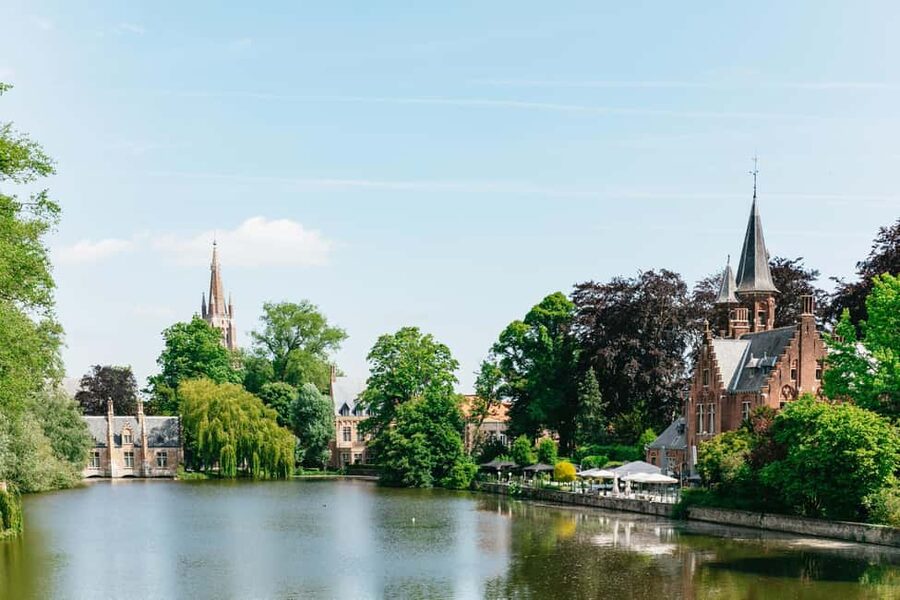
- Begijnhof and Lake of Love in Bruges, a calmer pocket of old-world Belgium
- Our Lady’s Church and Michelangelo’s Madonna, the kind of art stop that changes how you see the city
- Bruges canals and optional boat trip, a satisfying end to a walking-heavy day
- Radios and earphones on the walk, so you can actually hear your multilingual guide
Brussels has more to it than one route
- Brussels: Atomium Entry Ticket with Design Museum Ticket★ 4.4 · 9,254 reviews
- From Brussels: Guided Day Trip to Bruges and Ghent★ 4.6 · 8,353 reviews
- From Brussels: Bruges & Ghent Day Tour – 2 Fairytale Cities★ 4.7 · 8,242 reviews
- Choco-Story Brussels: Chocolate Museum Entrance with Tasting★ 4.3 · 4,883 reviews
How the day is paced from Brussels
You meet near Brussels Central Station area and head out by comfortable coach in air-conditioned comfort. The schedule is designed so you see the main hits in each city, then get a chunk of time to breathe, shop, or simply wander.
Once in Ghent, you start with a guided walking block and then you have a longer break to explore at your own pace. Bruges is similar, just more time on foot up front, then lunch, then free time plus a canal option near the end. Expect roughly 10.5 hours total, with a return to Brussels around 7:30 PM.
If you like a plan but hate rushing, this format fits. You get your bearings from the guide, then you can choose how long you want to linger by a church doorway, a canal corner, or a street-side snack stop.
Getting your bearings in Ghent: Saint Bavo, St. Nicholas, and Gravensteen
Ghent is a strong start because it mixes monumental art with real medieval muscle. Your guided time centers on the biggest anchors: Saint Bavo Cathedral, St. Nicholas’ Church, and the Castle of the Counts, also called Gravensteen or Earl’s Castle.
Saint Bavo is the headline, and it matters. It is where the Adoration of the Mystic Lamb painting is housed, and that alone is enough reason to base part of your day here. Even if you do not consider yourself an art person, the cathedral’s scale and the famous work inside help you understand why Ghent was a serious power center, not just a pretty stop on a map.
From there, St. Nicholas’ Church adds a different angle, more medieval relic energy in a setting that feels lived-in by history. Then Gravensteen brings the story into focus: this is the castle where you can almost feel the everyday tension of medieval rule.
Practical tip: if you are the type who reads signage slowly, build in extra time for these church interiors. They are not quick photo ops unless you keep moving.
Graslei and the port feeling: watching Ghent from the water
After the big sights, you get time to roam around areas connected to Ghent’s historic port life. Graslei is the key visual anchor, with its classic riverfront views that make Ghent feel like a city frozen in time.
This is the part of the day where Ghent shines for casual wandering. You can walk, stop, and look without feeling guilty that you are skipping “the important stuff.” It is also a good moment to regroup from the cathedral crowds and let your brain reset for a bit.
You’ll also pass by or be near notable historic spaces like the Great Butchers’ Hall. Those kinds of buildings make the medieval story feel less abstract. They hint at trade, guild life, and the practical realities behind all the ornate stone.
The best kind of free time in Ghent: terrace breaks and side streets
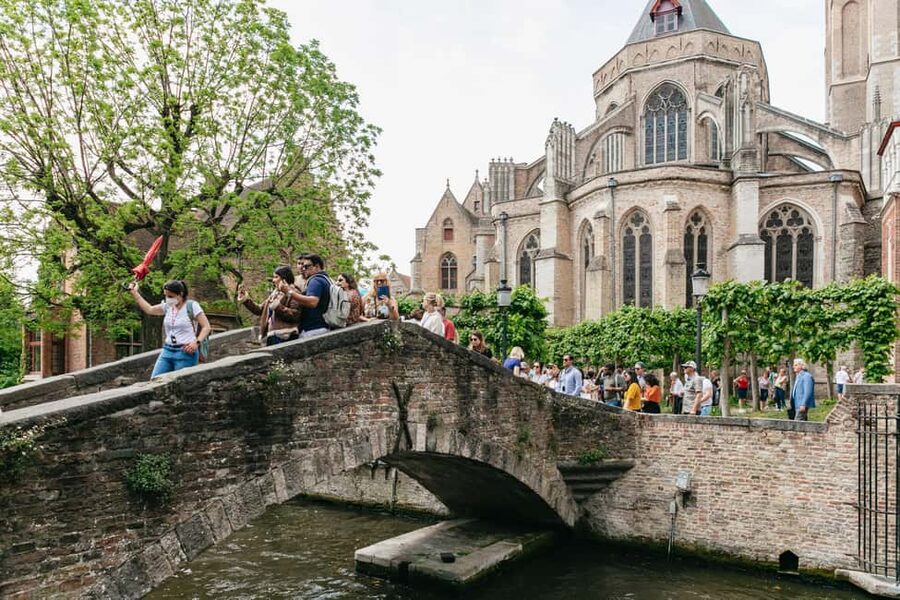
Ghent gives you a longer break, which is the secret sauce of this tour. After your guided walk, you can step into your own rhythm: sit on a terrace, wander side streets, pop into shops, or simply enjoy the river views.
This is where I think the tour earns its value. Two cities in one day can feel like a blur, but the planning here gives you enough space to actually experience each place, not just collect photos. If you are traveling with different interests, this break helps everyone relax at their own pace.
Cobblestones are still cobblestones. Wear shoes you trust. Think sturdy soles, not dress shoes that get slick or sore after an hour.
Bruges again, from a different angle
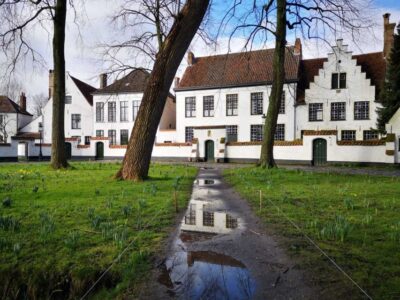
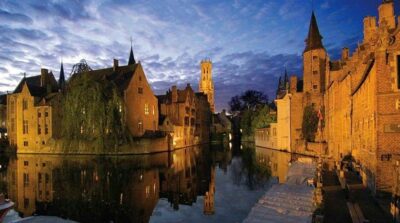
Bruges with a plan: Lake of Love, Begijnhof, and beguiling quiet
Bruges is what most people picture when they imagine medieval Belgium, and it is not just postcard scenery. Your Bruges guided walk starts by leading you through the city’s older soul, including the serene Lake of Love and the Begijnhof complex.
The Lake of Love area sets the mood immediately. It feels calmer than the busier streets, and it gives your feet a moment to slow down. Then the Begijnhof, built in 1245 to house religious women, is one of those stops that makes the city’s culture click. It is not just pretty architecture. It is a window into how communities organized life long before modern conveniences existed.
This part of Bruges is especially good if you like slow, atmospheric sightseeing. You can look at the buildings, notice courtyards, and imagine daily routines rather than just chasing the next big landmark.
The art and church stops: Our Lady’s Church and Michelangelo’s Madonna
Bruges also rewards you for paying attention to churches and what is inside them. You’ll get time around Our Lady’s Church and Michelangelo’s Madonna, one of those famous art connections that turns a building into a story engine.
Michelangelo’s Madonna is not the kind of detail you stumble onto by accident, and that is why it is worth planning. Even if you only know a little about the artist, the presence of this work changes how you look at Bruges’ religious art culture.
If you prefer tours that explain why each stop matters, this is the portion that tends to land well. Your guide’s job here is to connect the dots between Gothic stone, religious purpose, and the wider European art world.
Market Square and the Belfry: views you earn by walking
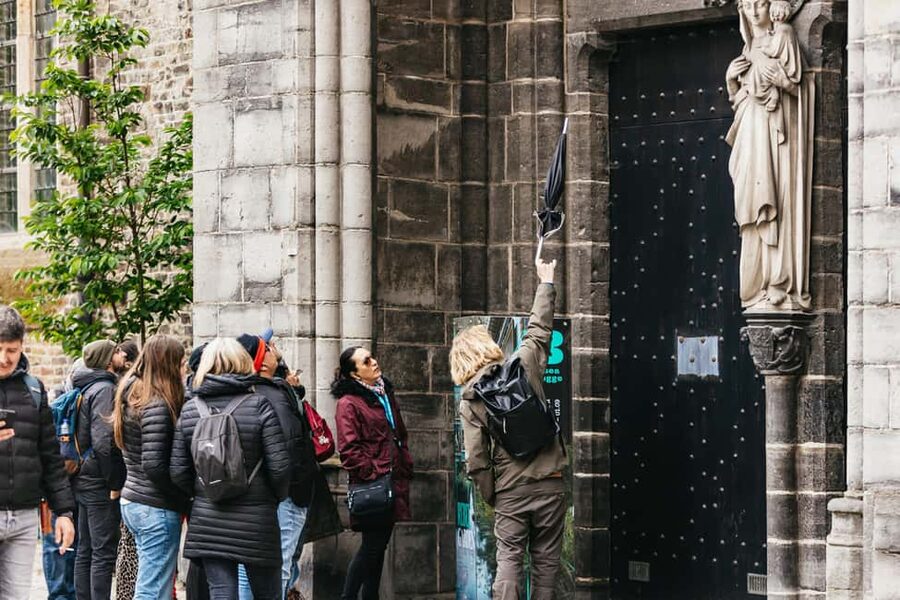
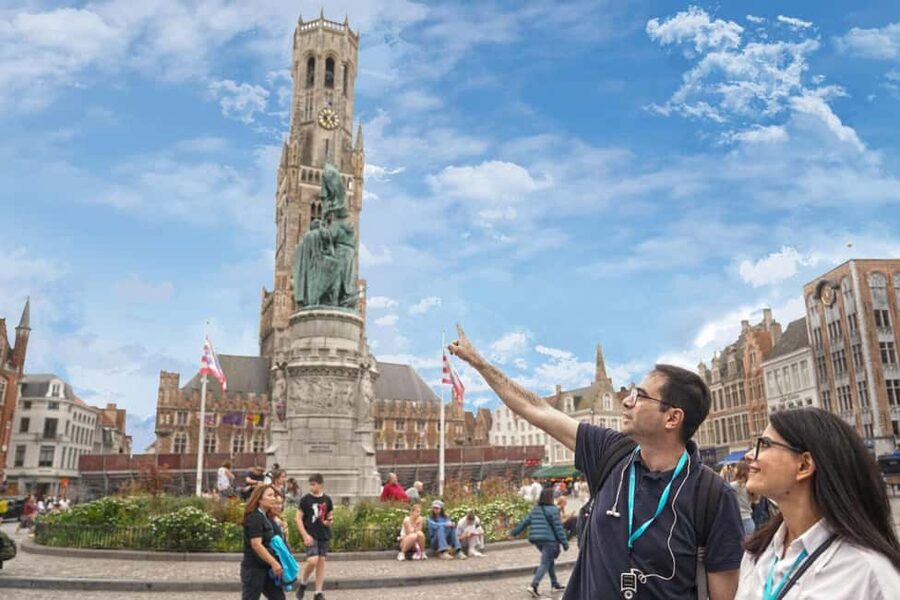
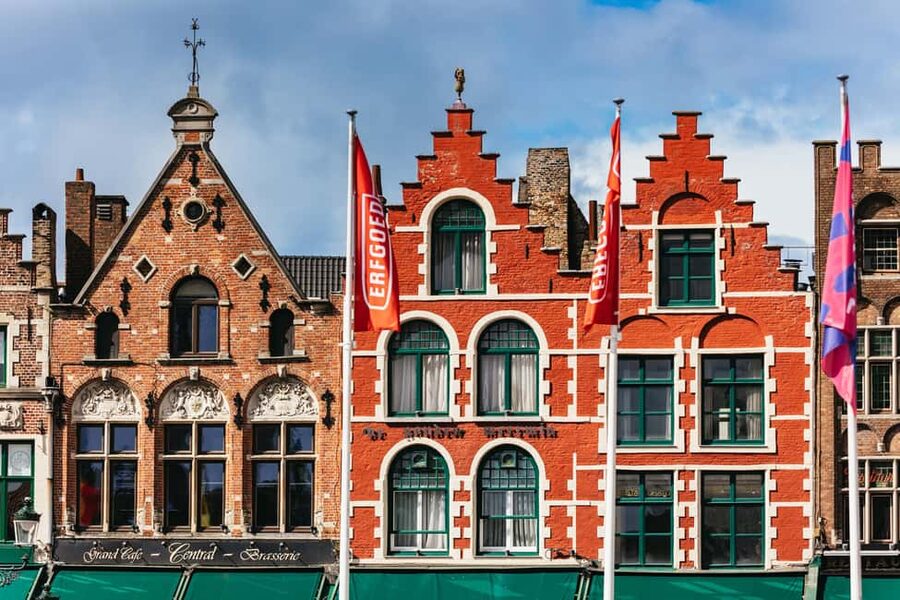
After the quieter Begijnhof moments, you shift into Bruges’ big public landmarks. Market Square, also called Grote Markt, is your central square, and the Belfry tower is the visual prize.
The Belfry is a symbol of civic pride as much as a sightseeing stop. It helps you understand why Bruges is not only a romantic canal city, but also a place that mattered politically and economically. Seeing it from ground level is good, but the best part is how it frames the square and makes your surroundings feel organized.
You’ll also pass through historic points tied to Bruges’ past, including the former Red Light District area. You do not need to make this heavy, but it does add context. Bruges has always had commerce, crowds, and human stories, not just saints and swans.
Old St. John’s Hospital and the 11th-century feel
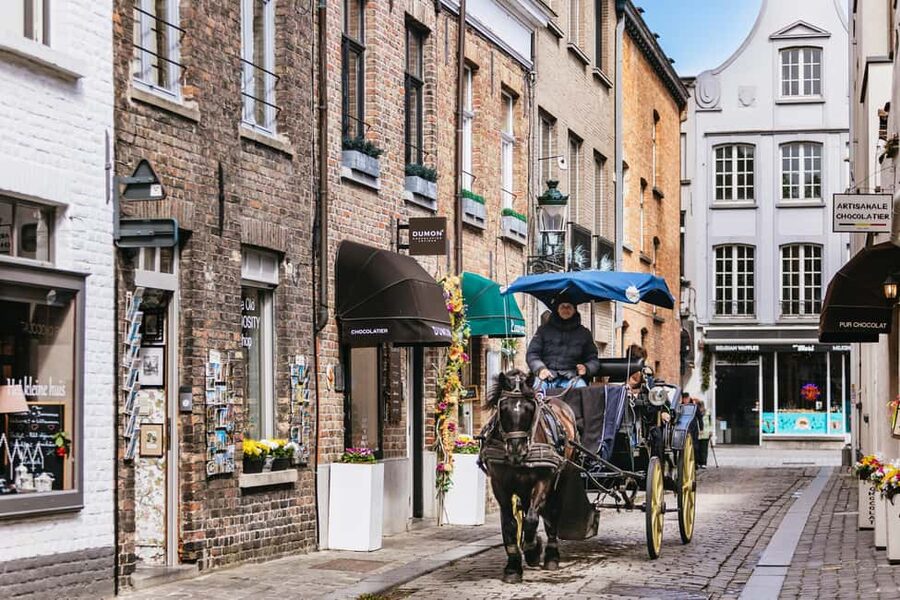
Another meaningful stop is Old St. John’s Hospital, a landmark from the 11th century. It helps balance the day. Instead of focusing only on religious art and defensive castles, you get a glimpse of how cities cared for people.
Even if you do not go deep into the details, buildings like this give you a fuller sense of daily life in earlier centuries. They show that history is not only kings, paintings, and towers. It is also institutions that shaped ordinary routines.
In a one-day schedule, these stops matter because they prevent the experience from becoming purely aesthetic.
Bruges by water: the canal cruise option
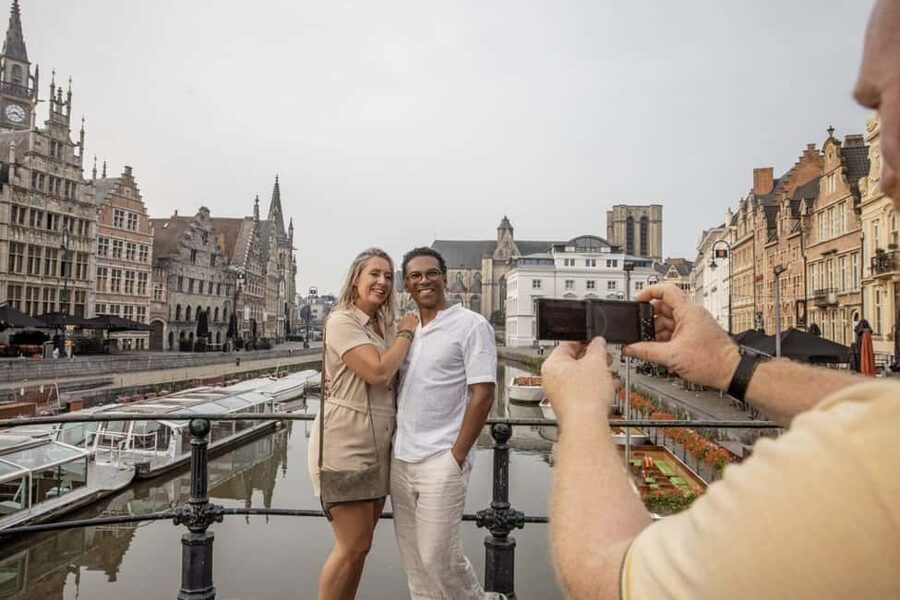
Near the end of the day, you can join an optional boat trip along Bruges’ canals. This is where the city becomes different again. On foot, you notice facades and streets. On water, you notice how the city was built to move people and goods, and how waterways organize space.
The guide organizes this part, so you are not stuck figuring out timing or where to stand. It is a good closer, especially if your feet are starting to protest.
If you are tempted to skip the boat because you want one more church stop, I get it. Still, I think the cruise is worth doing. It gives your brain a new angle and refreshes the day.
Lunch, tickets, and the practical stuff you should plan for
Lunch is not included, and entry tickets are not included either. That means you should expect to budget a little extra if you want to go inside places with paid admission. If a stop looks like it requires a ticket, your guide will help you manage the flow, but you will still be responsible for entry costs.
During your breaks, you can grab quick snacks or follow the guide’s recommendations. A simple strategy: eat something that does not slow you down. You still have a lot of walking ahead, and you do not want a long sit-down meal to steal time from the canal views.
Also, you will likely cover serious walking distance. Some groups report 15,000 to 17,000 steps on a day like this. That is not a problem if you planned for it, but it is a problem if you brought the wrong shoes.
Value check: is 57 per person a fair deal?
At $57 per person, the value is mainly about logistics and guide time. Two cities, guided walking in both, coach transport, and radios so you can hear clearly, all in one day. If you tried to do this yourself by public transit, you would spend time coordinating, plus you would probably still pay for guide-led walking if you wanted good context.
This tour is also value-friendly compared to splitting your day into two separate trips. One ticket gives you two historic cities, major sights, and time to wander. The “mixed” format, guided blocks plus free time, is where you get to feel in control instead of dragged.
Where the price might feel less impressive is if you are dead set on skipping guided time and only doing independent exploring. Even then, the transport and the structured introductions can still save you mental energy.
Who this tour suits best (and who should look elsewhere)
This day trip works best if you want a focused overview with real stops, not just a drive-by tour. It also fits travelers who like to hear explanations and then wander off for a bit. If your group has mixed interests, the breaks help keep everyone happy.
It is not suitable for wheelchair users or people with mobility impairments. It also assumes you can handle cobbled streets and indoor church visiting. If your mobility is limited, you might want to choose a slower, more accessible option instead of a packed schedule.
If you care about cathedral art, medieval architecture, and canal scenery, you will get a lot from the pairing of Ghent and Bruges. You will also get a nice story arc, from medieval power and civic identity in Ghent to Bruges’ mix of quiet courtyards, major churches, and canal views.
Final call: should you book this Ghent and Bruges day tour?
Yes, if you are doing Belgium for a limited number of days and you want to see the must-sees without stress. The best reason to book is the balance: guided time for the big context, plus enough free time to actually enjoy the streets instead of sprinting.
I would book if you like churches with famous art, medieval civic landmarks, and a canal cruise that changes your view of Bruges. If you dislike walking, need step-free access, or hate the idea of planning around a set schedule, then you may want a different format.
If you go, bring comfortable shoes, plan for non-included lunch and possible entry tickets, and treat the day like a guided sampler. You will leave with two cities in your memory, not just two blurred photo stops.
FAQ
Where is the meeting point in Brussels?
You meet outside the National Bank of Belgium, at Keolis coach pickup. The tour listing also points to Bd de Berlaimont 18, Brussels.
How long is the tour and what time will I be back?
The total duration is about 630 minutes, and you return to Brussels around 7:30 PM.
Which cities are included?
The tour includes Ghent and Bruges, with guided walking tours in both.
What languages is the live guide available in?
The live guide is available in Spanish, English, and French.
Is lunch included?
No, lunch is not included.
Are entry tickets included for attractions?
No, entry tickets are not included.
Is the tour wheelchair accessible?
No, it is not suitable for wheelchair users or people with mobility impairments.
Ghent, Continued
Keep Reading Bruges
More Ways to See Brussels
Newer Belgium reviews from the same corner of the country
- Discover the secrets of Brussels while playing
★ 5.0 · 3 reviews - Standard vehicle from Charleroi airport to city of Brussels
★ 4.5 · 3 reviews - Private tour to Ghent from Brussels (5hours walk & drive)
★ 5.0 · 3 reviews - Full day Brugge & Ghent: the gems of Flanders
★ 5.0 · 3 reviews - Private tour : Best of Brussels half day From Brussels
★ 5.0 · 3 reviews
Brussels Tours, side by side.
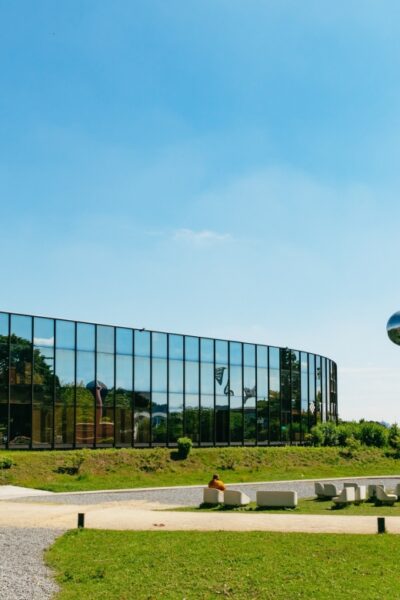 ★ 4.4Brussels: Atomium Entry Ticket with Design Museum TicketFrom $199,254 reviews
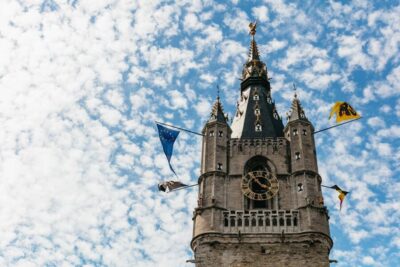 ★ 4.6From Brussels: Guided Day Trip to Bruges and GhentFrom $558,353 reviews
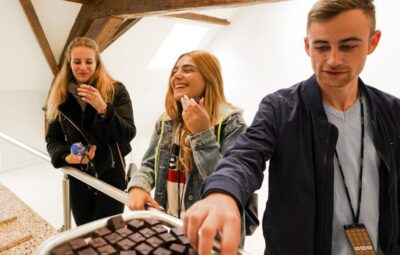 ★ 4.3Choco-Story Brussels: Chocolate Museum Entrance with TastingFrom $184,883 reviews
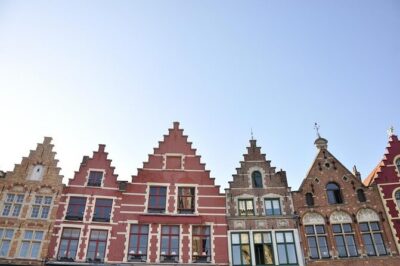 ★ 4.0Bruges and Ghent – Belgium’s Fairytale Cities – from BrusselsFrom $594,809 reviews
 ★ 4.0Brussels: Hop-On Hop-Off Bus TourFrom $294,016 reviews
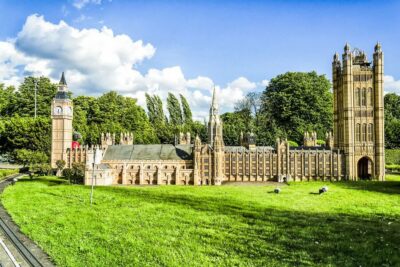 ★ 4.5Brussels: Entry Ticket to Mini-EuropeFrom $232,870 reviews
 ★ 5.0Hungry Mary’s Famous Beer and Chocolate Tour in BrusselsFrom $1192,258 reviews
 ★ 4.7Brussels: Belgian Chocolate Making Workshop with TastingsFrom $821,629 reviews
Browse the lists this tour appears in