
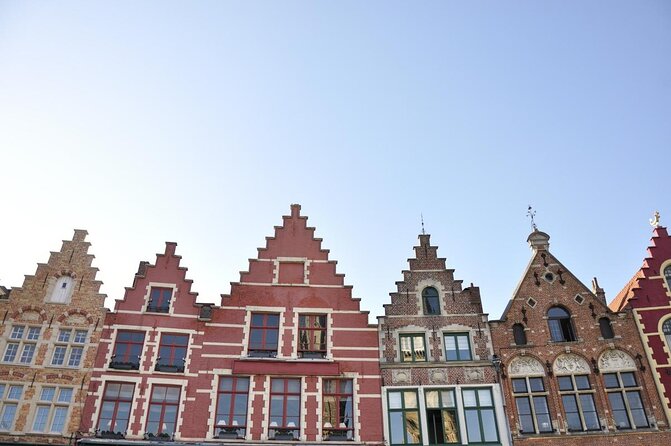
REVIEW · BRUSSELS
Bruges and Ghent – Belgium’s Fairytale Cities – from Brussels
Ghent and Bruges in one day can sound intense, but it works here. I especially like the radios and earphones, which let you hear the guide clearly while you walk at your own pace. You also get a real guided loop through the big landmarks in both cities, not just a quick stop-and-snap routine.
I also love the balance: UNESCO-listed Old Towns plus time to wander. In Ghent you’ll move through signature medieval sights, then in Bruges you’ll get that classic fairytale feeling around Minnewater, Lake of Love, and the Market Square.
The main drawback to plan around is the day can feel like a lot if you dislike multilingual guiding or if you are late. This tour is strict about timing, and some departures switch languages during the day.
In This Review
- Key things to know before you go
- A One-Day Route Built for Two Fairytale Cities
- Price and Value: What $59.13 Buys You
- From Brussels to Ghent: Comfort, Timing, and the Coach Ride
- Ghent Cathedral to the Port Quays: Your Medieval Core Route
- Gravensteen and St. Nicholas: Two Landmarks With Different Personalities
- Riding to Bruges: How the Mood Changes
- Bruges on Foot: City Hall, Market Square, and the Holy Blood Basilica
- The Optional Canal Tour: Worth It, If You Time It Right
- Timing, Free Time, and Lunch: Don’t Let the Day Slip Away
- What to Bring: Shoes, Weather, and One Small Tech Trick
- Group Size, Radios, and Why Your Hearing Matters
- Who This Tour Fits Best
- Should You Book This Bruges and Ghent Day Trip?
- FAQ
- What time does the tour start, and where do I meet?
- Is lunch included, and when is the lunch break?
- Can I book the canal boat tour in Bruges ahead of time?
- What is the issue with St Bavo’s Cathedral access on Sundays?
- Will the guide wait if I’m late to the meeting point?
- What languages is the tour offered in?
Key things to know before you go
- Radios and earphones mean you can step aside for photos and still follow the commentary
- UNESCO Ghent and UNESCO Bruges give you two distinct medieval experiences in one stretch
- Walking time is real on cobbles, so comfy shoes matter more than you think
- Expect optional paid add-ons like a canal boat tour in Bruges
- Language switching can be tiring if you want one consistent language all day
Brussels has more to it than one route
- Brussels: Atomium Entry Ticket with Design Museum Ticket★ 4.4 · 9,254 reviews
- From Brussels: Guided Day Trip to Bruges and Ghent★ 4.6 · 8,353 reviews
- From Brussels: Bruges & Ghent Day Tour – 2 Fairytale Cities★ 4.7 · 8,242 reviews
- Choco-Story Brussels: Chocolate Museum Entrance with Tasting★ 4.3 · 4,883 reviews
A One-Day Route Built for Two Fairytale Cities
This is a classic Belgium two-city day trip: you leave Brussels in an air-conditioned coach, then spend the day in Ghent and Bruges. The best part of this format is that you get context while you’re in the place, not later in a guidebook.
In Ghent, the tour starts with the big spiritual and artistic anchor, St. Bavo’s Cathedral, then moves through the old center landmarks. In Bruges, the rhythm changes to lighter wandering, with highlights like the Basilica of the Holy Blood, the Market Square area, and Minnewater’s lovers’ paths.
If you like your sightseeing structured but not handcuffed, this setup matches that. You’ll have guided stops and walking, plus free time to explore on your own.
Price and Value: What $59.13 Buys You
At about $59.13 per person, the value comes from the way the day is assembled. You are paying for transportation from Brussels, a professional guide, and the radio/earphone system that keeps the experience coherent while you split into small walking clusters.
You are not paying for lunch, and any boat tour in Bruges is extra. Still, for a one-day double-city plan, this price point tends to land well because you’re not arranging buses, tickets, or transfers yourself.
One practical note: the itinerary is packed. If you usually prefer long, slow museum time, you may feel you are doing more “walk and look” than “sit and study.” For first-timers who want the highlights, it’s a strong deal.
From Brussels to Ghent: Comfort, Timing, and the Coach Ride
The tour departs at 9:00 am from Bd de Berlaimont 18, 1000 Bruxelles. You end back in Brussels at Brussel-Centraal, Carr de l’Europe, also near transit. There are no hotel pick-ups, so plan to arrive at the meeting point on your own.
The coach ride matters more than it sounds. Reviewers consistently praise the comfort and the smooth driving, and the buses are air-conditioned. That helps because you’ll likely spend a big chunk of the day walking in historic centers where the streets can be uneven.
Also, a heads-up on punctuality. Some reviews mention that latecomers were not waited for and were directed to take public transit to rejoin. If you want the easiest day, aim to arrive early enough that you are not sweating the meeting point.
Ghent Cathedral to the Port Quays: Your Medieval Core Route
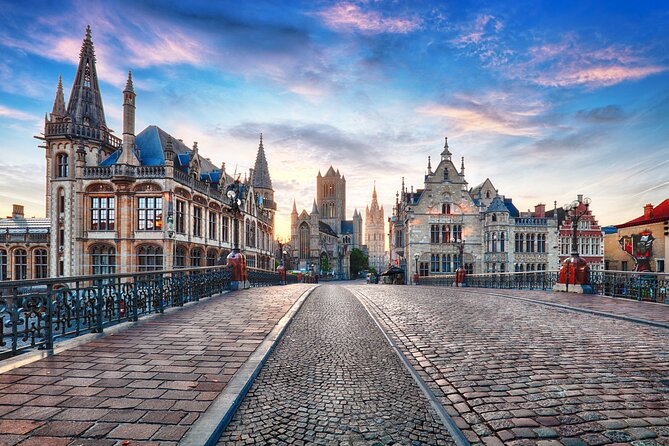
Ghent is quieter than Bruges, and it often feels more lived-in. The tour begins at St. Bavo’s Cathedral, a major Gothic landmark. It’s the place tied to the Ghent Altarpiece, and the popular Mystic Lamb access is noted as not possible on Sundays.
You may also encounter guidance on whether cathedral entry is optional that day. Either way, you’ll get the setting and the stories so the architecture makes sense while you are standing in it.
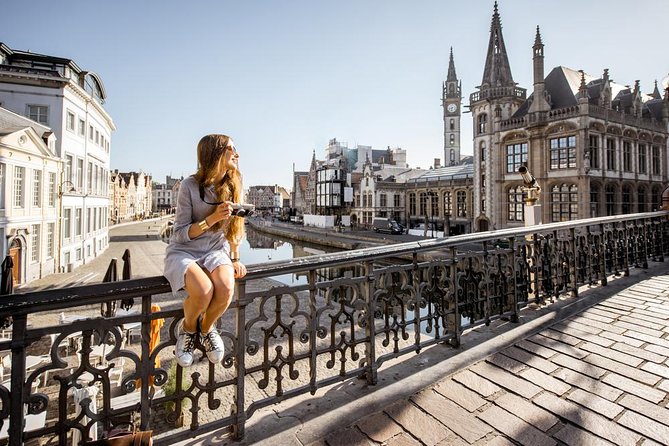
Next comes the wider city loop. You’ll see the belfry of Ghent, one of three medieval towers that overlook the old center. The tour also includes the historic quays in the heart of Ghent along the Leie river, the kind of scene where you immediately understand why this city matters.
A few other Ghent highlights you can expect during the walk:
- Castle of the Counts of Flanders (Gravensteen), currently dating to around 1180, with a long history that includes being a court, prison, mint, and even a cotton factory
- St. Nicholas’ Church, begun in the early 13th century as a replacement for an earlier church
- Local legends and anecdotes as you move from sight to sight
This part of the day is a good match if you like medieval power, religion, and civic life layered together. Ghent gives you those clues fast.
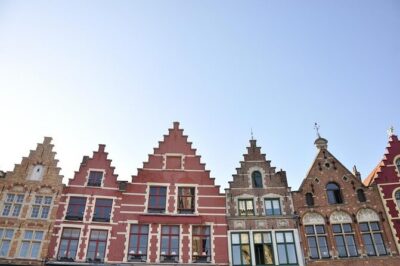
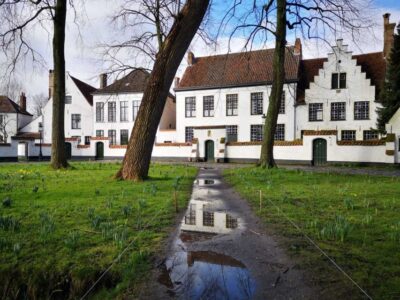
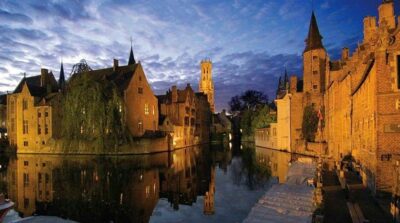
Bruges again, from a different angle
Gravensteen and St. Nicholas: Two Landmarks With Different Personalities
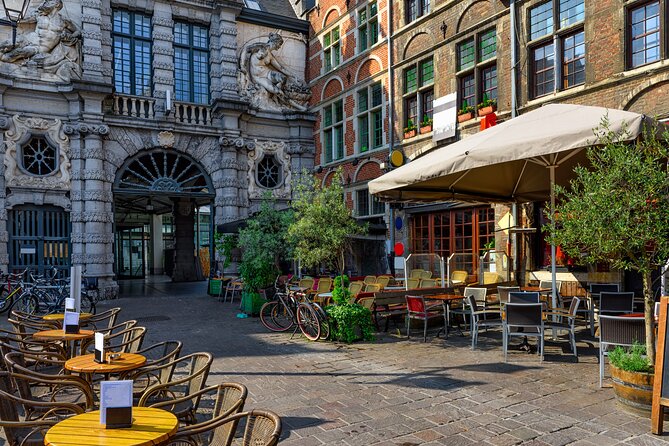
Gravensteen is the “fortress story.” Even if you only glimpse it briefly, the building type signals protection and authority. It’s also one of those sights where you can appreciate the scale better because the streets around it feel built for pedestrians and river life.
Then St. Nicholas’ Church shifts the mood. It’s one of the older and prominent landmarks, and the tour framing gives you a sense of how long this city’s religious footprint has been here. If you’re the type who likes to notice architectural changes over centuries, Ghent is good for that.
One practical consideration: your time at each stop can be short. That’s not a flaw in the idea, it’s the reality of a day trip. If you want slower, deeper interior time, you’ll want a separate visit later. For a first pass, the sequence works.
Riding to Bruges: How the Mood Changes
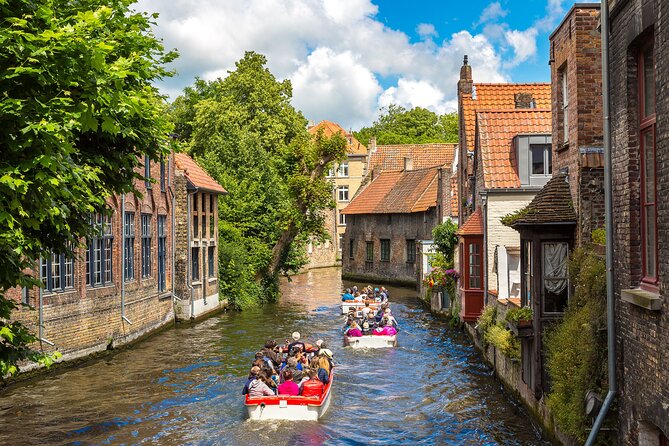
After Ghent, you head by coach into Bruges. The journey through Belgian and Flemish countryside is part of the package, and the coach time becomes a mental reset. You’re leaving behind Ghent’s river-facing stillness and stepping into Bruges, which many people experience as more postcard-like.
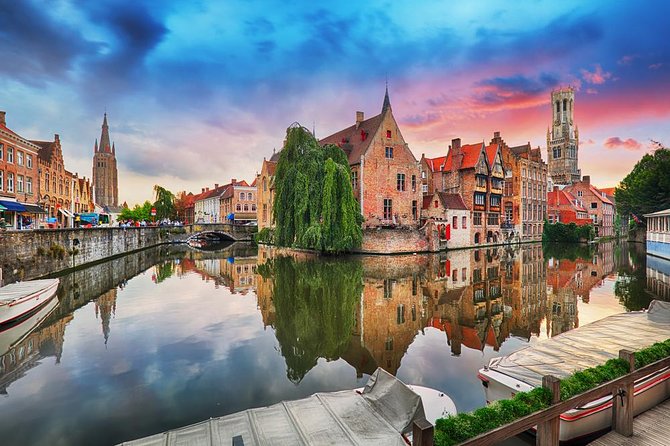
Once you arrive, you start with a stroll around Minnewater (Lake of Love). This is where Bruges shows its softer side. You’ll also hear about the lovers’ bridge area, which is an easy spot to slow down, take photos, and let the city open up at street level.
Then you’ll move toward the historic core highlights on foot.
Bruges on Foot: City Hall, Market Square, and the Holy Blood Basilica
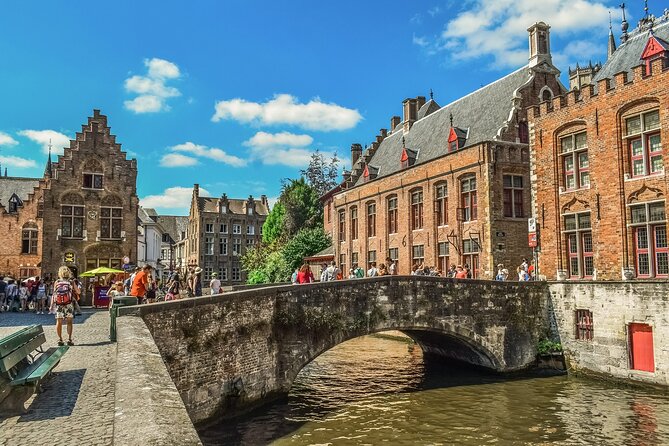
Bruges is built for walking, and the tour reflects that. After Minnewater, you’ll see key landmark clusters, including the political heart around Burg Square and the civic landmark Stadhuis (Bruges City Hall).
You’ll also visit the Basilica of the Holy Blood, a Roman Catholic basilica tied to a venerated relic called the Holy Blood. Even if you’re not religious, the tour framing helps you understand why people care so much about a specific relic connection to the Holy Land.
Other Bruges stops you can expect:
- Onze-Lieve-Vrouwekerk (Church of Our Lady), mainly from the 13th to 15th centuries, with a tower that remains the tallest structure in the city
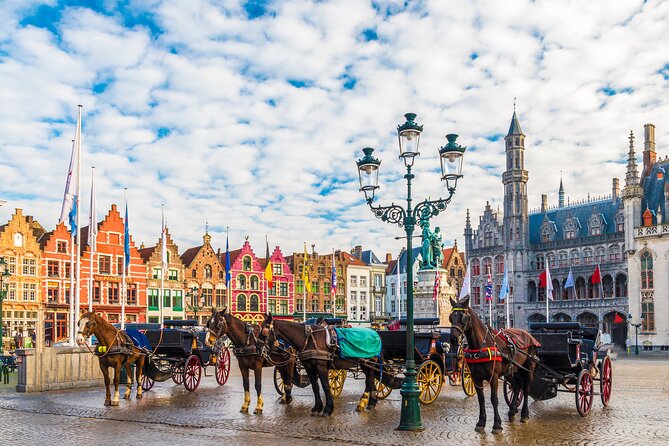
- A look around the Market Square area, where the architecture mix helps you read the city’s past
- Princely Beguinage Ten Wijngaarde, noted as the only preserved beguinage in Bruges, functioning as a convent for Benedictines since 1927
This is the part where Bruges rewards attention to details. The buildings feel designed to make street corners interesting, and the tour cadence gives you enough time to absorb that without you feeling lost.
The Optional Canal Tour: Worth It, If You Time It Right
There is an optional boat tour of Bruges’ waterways at your own expense. If you’ve never seen Bruges from the canals, it’s one of the fastest ways to understand the city layout.
I like this add-on concept for one reason: the canal perspective changes what you notice. On land you focus on facades and towers, on the water you see how the city connects to its river life and moats of history.
However, don’t treat it like a guaranteed bargain. Since it costs extra and depends on what day you’re there, choose it only if you still have energy after the walking stops.
Timing, Free Time, and Lunch: Don’t Let the Day Slip Away
Lunch is not included, and it typically falls between 12:00 pm and 2:00 pm, though the exact time can change. This is where you should be smart. If you’re sensitive to meal timing, bring a snack before you start, or you might end up hungry with limited options.
Some people found the recommended lunch spot overpriced and service disappointing, so my advice is simple: treat lunch as your decision point. Aim for convenience plus value rather than whatever is closest to the tour rhythm.
The free time pattern is important. The day includes guided portions plus time to wander. Reviews describe plenty of freedom for independent exploration, but others note the day can feel tight if you want long breaks or you get stuck waiting due to group timing. If you want downtime for shopping or browsing, I recommend you protect your energy early, then use free time strategically in Bruges.
If you love food and photos, Bruges is where you’ll want your unstructured time. Ghent is great too, just slightly easier to overshoot if you’re tired.
What to Bring: Shoes, Weather, and One Small Tech Trick
Comfortable walking shoes are essential. Even when the pace feels slow, cobbles and old stones add up. I’d also pack for rain, since Belgium weather can shift quickly, and the tour runs regardless of normal weather.
The good news is that the tour includes radios and earphones, so you do not have to stay glued to the guide. One family reported that audio is strong in open areas but can drop signal in narrow alleys. That means you can still follow along, just be ready to pause and reset your position if the sound fades.
Also, bring some cash. The tour suggests having some with you, and it’s a wise idea if you buy small items, snacks, or pay for the canal boat.
Group Size, Radios, and Why Your Hearing Matters
This tour can include up to 200 travelers, which can sound intimidating. But radios and earphones change the experience. You are not forced to stand shoulder-to-shoulder to hear directions, and you can slow down for photos.
Still, think about crowding. Some reviews mention overcrowding concerns, while others say the group was at capacity and handled fine. In practical terms, you should plan to walk in a crowd at the big squares, then step away during free time.
Language is another factor. The guides can lead in English, Spanish, and/or French, and some reviews call out the switching between languages as tiring. If you prefer one language the whole time, this is the one reason to pause and consider. It may depend on the mix of your group and how the guide manages translations.
Who This Tour Fits Best
This works well if you want a first look at medieval Belgium without the stress of self-planning. It’s also a strong option if you like structure but still want time to roam.
It’s especially a good match for:
- First-timers who want the “greatest hits” in Ghent and Bruges
- People who value efficient logistics from Brussels
- Travelers who like walking tours but want audio help
If you want museums only, or you want long free time in one city at the expense of the other, you might find the schedule too packed.
For families, the cobbles can be tough for smaller strollers. One review described it as stroller-friendly overall, but with older uneven streets. If you are traveling with kids in a stroller, bring a sturdy one and expect bumps.
Should You Book This Bruges and Ghent Day Trip?
Yes, if your goal is a fast, guided intro to two UNESCO cities with enough time to stroll on your own. I’d book it if you want the big landmarks in Ghent, the romantic feel around Minnewater in Bruges, and a canal option if you have energy.
I would hesitate if you strongly dislike multilingual narration or if you know you tend to arrive late. This tour rewards punctuality. Also, if you are hoping for major inside access at every stop, remember that at least one key access note is Sunday-specific, and other planned entry sites can vary by day.
Bottom line: if you show up early, wear good shoes, and treat lunch as your flexible choice, this is one of the most practical ways to see Ghent and Bruges in a single day from Brussels.
FAQ
What time does the tour start, and where do I meet?
The tour starts at 9:00 am at Bd de Berlaimont 18, 1000 Bruxelles, Belgium. It ends back in Brussels at Brussel-Centraal, Carr de l’Europe, 1000 Bruxelles.
Is lunch included, and when is the lunch break?
Lunch is not included. Lunch is usually scheduled between 12:00 pm and 2:00 pm, but the exact time can change.
Can I book the canal boat tour in Bruges ahead of time?
No. The canal tour in Bruges can only be booked with your guide on the day of your trip.
What is the issue with St Bavo’s Cathedral access on Sundays?
Access to the Mystic Lamb at St Bavo’s Cathedral is not possible on Sundays.
Will the guide wait if I’m late to the meeting point?
They can wait for 5 minutes if you let them know in advance about your delay. If you expect to be late, call the number listed for the tour.
What languages is the tour offered in?
The tour can be guided in English, French, and/or Spanish, depending on the language needs of guests.
Ghent, Continued
Keep Reading Bruges
More Ways to See Brussels
Newer Belgium reviews from the same corner of the country
- Discover the secrets of Brussels while playing
★ 5.0 · 3 reviews - Standard vehicle from Charleroi airport to city of Brussels
★ 4.5 · 3 reviews - Private tour to Ghent from Brussels (5hours walk & drive)
★ 5.0 · 3 reviews - Full day Brugge & Ghent: the gems of Flanders
★ 5.0 · 3 reviews - Private tour : Best of Brussels half day From Brussels
★ 5.0 · 3 reviews
Brussels Tours, side by side.
 ★ 4.4Brussels: Atomium Entry Ticket with Design Museum TicketFrom $199,254 reviews
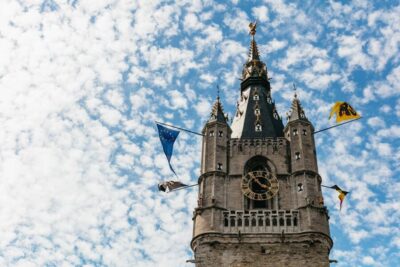 ★ 4.6From Brussels: Guided Day Trip to Bruges and GhentFrom $558,353 reviews
 ★ 4.7From Brussels: Bruges & Ghent Day Tour – 2 Fairytale CitiesFrom $578,242 reviews
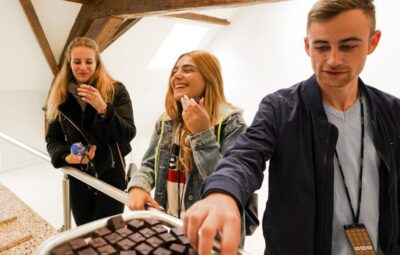 ★ 4.3Choco-Story Brussels: Chocolate Museum Entrance with TastingFrom $184,883 reviews
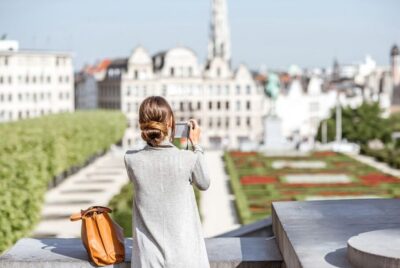 ★ 4.0Brussels: Hop-On Hop-Off Bus TourFrom $294,016 reviews
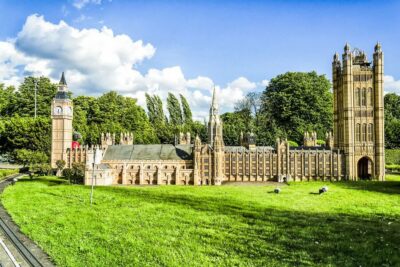 ★ 4.5Brussels: Entry Ticket to Mini-EuropeFrom $232,870 reviews
 ★ 5.0Hungry Mary’s Famous Beer and Chocolate Tour in BrusselsFrom $1192,258 reviews
 ★ 4.7Brussels: Belgian Chocolate Making Workshop with TastingsFrom $821,629 reviews
Browse the lists this tour appears in