
REVIEW · BRUSSELS
From Brussels: Guided Day Trip to Bruges and Ghent
Two fairytale cities in one day. This guided trip links Brussels with Bruges Begijnhof (1245) and Ghent’s Saint Bavo Cathedral, packing UNESCO World Heritage charm, canals, and big-name art talk into one smooth schedule. I also like that you get real photo stops like Rozenhoedkaai plus enough breathing room for lunch on your own. One drawback to plan for: it is a long day with lots of walking, and paid entrances are not included.
You’ll ride about 100 kilometers each way by eco-friendly coach, hear the guide through a radio system, then split time between guided walks and free wandering. It is a solid value for the price, but come ready with comfortable shoes and your own earphones if you have them, since the tour may require extras for group size.
In This Review
- Key Highlights You Will Actually Feel in Your Day
- Brussels to Bruges by Bus, Plus the Little Things That Matter
- Bruges First, UNESCO-Style Without Feeling Like a Museum Tour
- Lake of Love and Begijnhof, Bruges’ Quiet Corner With Big Meaning
- Walplein Square, Stoofstraat, and the Medieval Layers You Can Feel
- Church of Our Lady, Gruuthuse Palace, Dijver Canal, and the World-Class Brick Tower
- Rozenhoedkaai, Castle Square, and Grote Markt With the Belfry
- Bruges Free Time for Lunch and Chocolate Shopping
- Crossing to Ghent, a Different Pace and a Different Feel
- Ghent Guided Tour: Saint Bavo Cathedral, Mystic Lamb, and Civic Power
- Ghent Free Time: Your Best Shot for a Slow Stroll
- Price and Value: What $55 Really Buys You
- Practical Tips Before You Go, So You Do Not Waste Time Later
- Who This Day Trip Fits Best (and Who Might Struggle)
- Should You Book This Brussels Day Trip to Bruges and Ghent?
- FAQ
- Where do I meet the tour in Brussels?
- Which cities are included?
- How long is the day trip?
- What languages are the guided tours offered in?
- Is transportation included?
- Is there a guide during the walking parts?
- Is lunch included?
- Are entrance tickets included?
- Do I need earphones to hear the guide?
- Is the tour suitable for wheelchair users?
Key Highlights You Will Actually Feel in Your Day
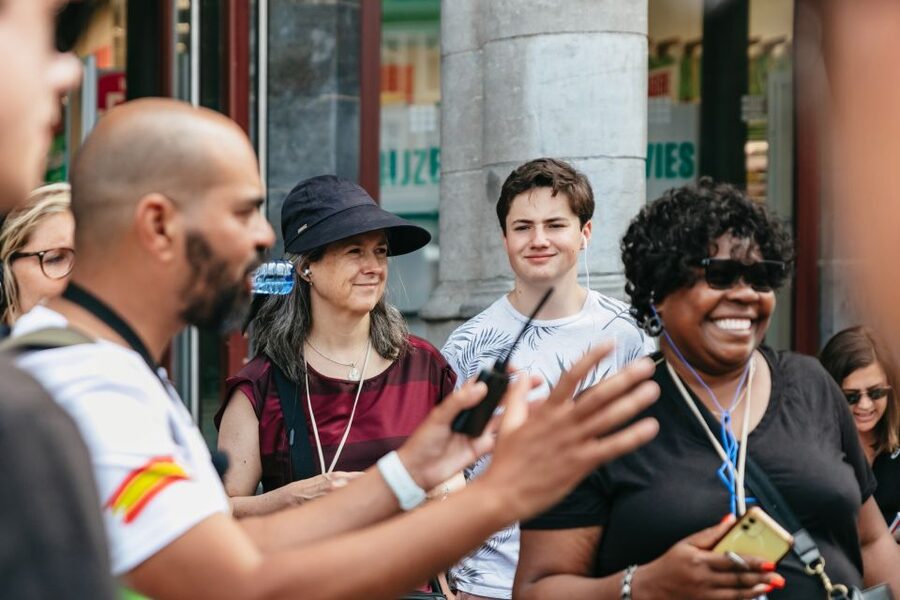
- A well-paced split between guided walking and free time in both Bruges and Ghent
- Big-ticket sights without museum overload, like Lake of Love and Saint Bavo Cathedral
- Photo-ready Bruges stops, from Rozenhoedkaai to Castle Square
- Story-driven Ghent tour, including the Mystic Lamb connection
- Guides with humor and clear instructions, with names like Antonio and Peter showing up often
Brussels has more to it than one route
- Brussels: Atomium Entry Ticket with Design Museum Ticket★ 4.4 · 9,254 reviews
- From Brussels: Guided Day Trip to Bruges and Ghent★ 4.6 · 8,353 reviews
- From Brussels: Bruges & Ghent Day Tour – 2 Fairytale Cities★ 4.7 · 8,242 reviews
- Choco-Story Brussels: Chocolate Museum Entrance with Tasting★ 4.3 · 4,883 reviews
Brussels to Bruges by Bus, Plus the Little Things That Matter
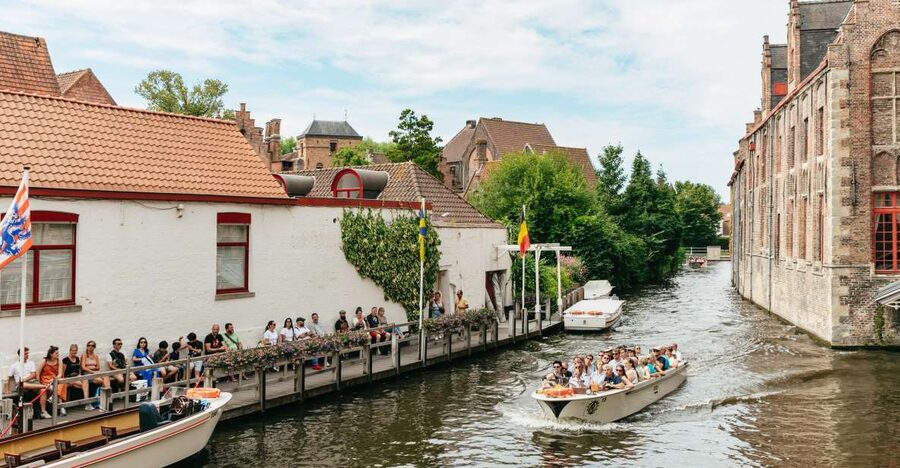
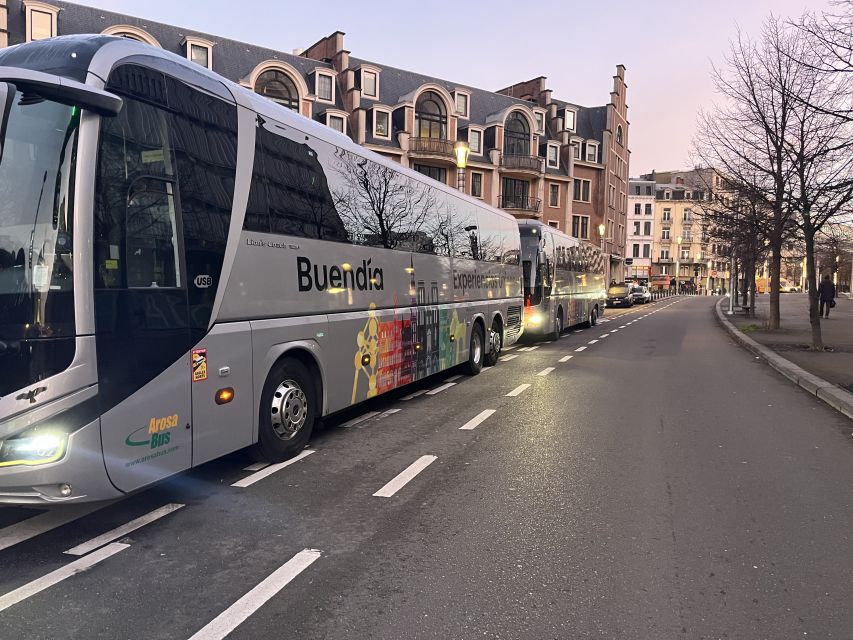
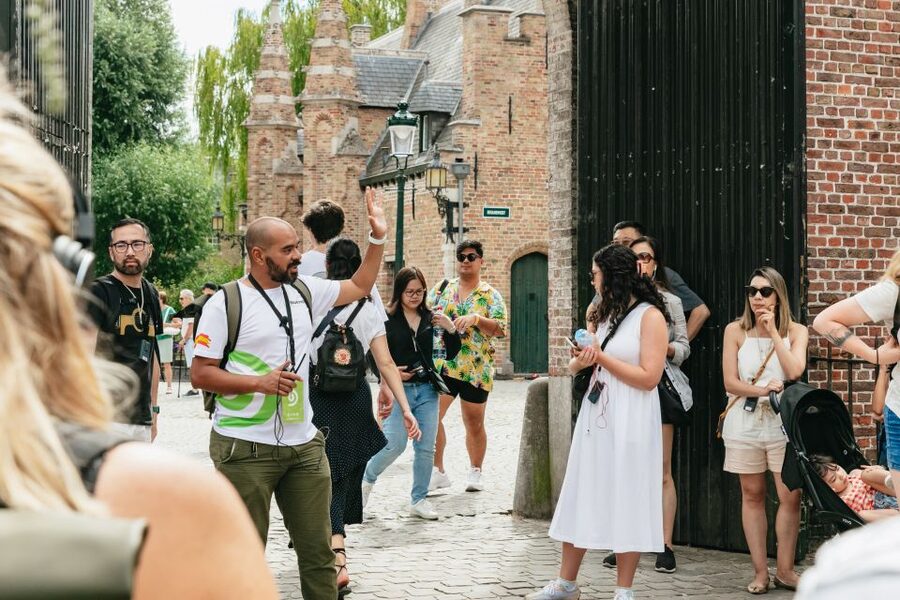
This day trip runs long enough that your comfort on the coach is part of the experience. You start at Carrefour de l’Europe, under the main entrance columns of Brussel-Centraal, in front of the Hilton Grand Place Hotel. The guide is waiting there with Buendia Tours ID, which makes pickup easier than it can be on some group tours.
The ride itself is about 2 hours to Bruges, then later you travel again to Ghent and back. Most groups will do well if they plan like locals: bring a warm layer, keep your water and snacks ready for your breaks, and treat the bus as transit, not a hangout. The good news is that the buses are described as eco-friendly and comfortable, and many guides also keep the day running smoothly with clear regrouping times.
One small but important note, the tour requires you not to eat on the vehicle, and smoking is not allowed on board. If you are the type who always wants a snack “just in case,” save it for your designated free time.
Bruges First, UNESCO-Style Without Feeling Like a Museum Tour
Bruges is the kind of city that makes you walk slower, even when your schedule is tight. You get a guided walk that hits the key medieval beats, but it does not feel like a checklist where you miss the vibe. The tour also frames the whole historic center as UNESCO World Heritage, which helps you understand why these streets and canals have survived so long without turning into one-note tourism.
After arriving, you start seeing Bruges the way people picture it: canal-side views, stone facades, and the feeling that you are inside a preserved storybook. The guide sets context as you go, and that helps the sights click. If you like history but hate long lectures, this is usually a good balance. The walk focuses on recognizable landmarks and “what to look for” details, like the local landmarks that define different neighborhoods.
A practical reality: entrance tickets are not included. So if you want to step into specific interiors (like churches), you may need to handle paid entry separately. That said, the outside views and key points on the route still deliver a lot, especially for first-time Bruges visitors.
Lake of Love and Begijnhof, Bruges’ Quiet Corner With Big Meaning
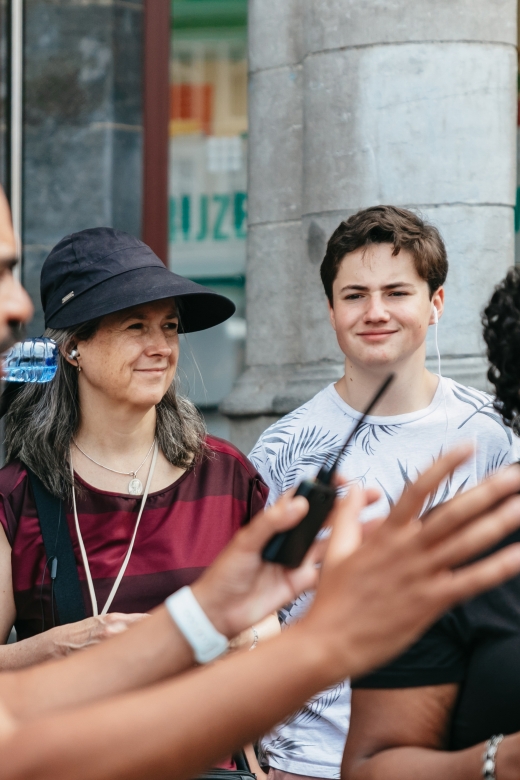
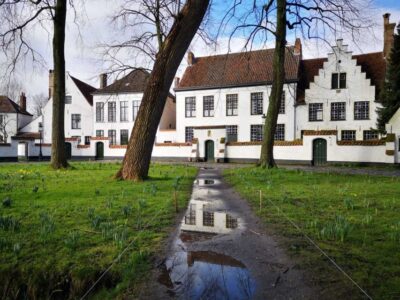
Two of the most meaningful stops in Bruges are Minnewater Lake (Lake of Love) and the Begijnhof complex founded in 1245. This is the part of the day where Bruges slows down, even if your feet are still moving. Minnewater is peaceful, and the calm contrasts nicely with busier squares and shopping streets.
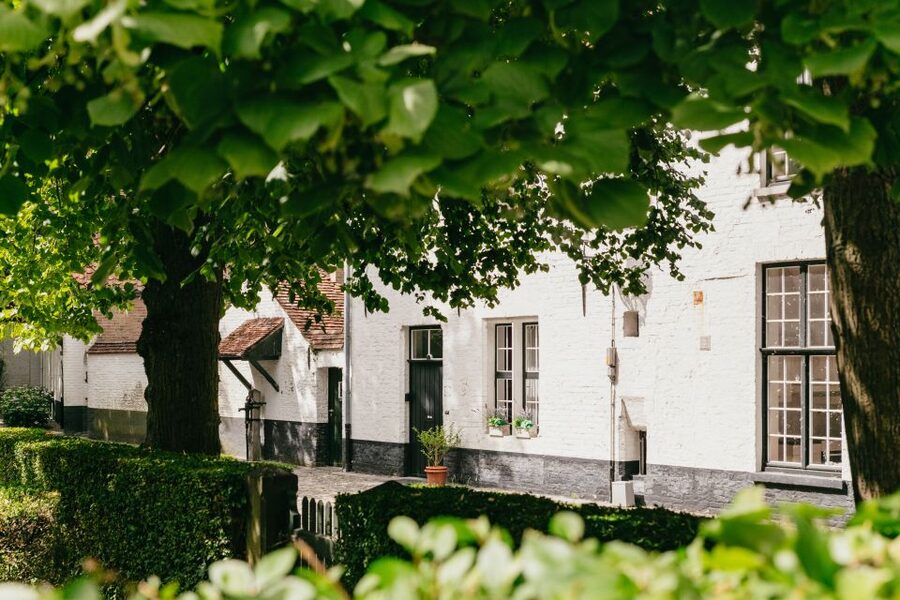
Then you step into the Begijnhof, a complex created for lay religious women, founded in 1245. The guide’s job here is not just to point out buildings. You learn what the Begijnhof represents in the broader story of medieval life, religion, and community organization. It makes the architecture feel more than decorative. It becomes functional and human.
This is also where I think the tour is strongest for value. A lot of “Bruges highlights” tours rush past quieter places, but you get enough time to actually appreciate the atmosphere. If your ideal travel day includes one calm stop you can photograph and mentally breathe in, this is it.
Walplein Square, Stoofstraat, and the Medieval Layers You Can Feel
From Begijnhof, you keep moving through neighborhoods where time piles up. The route includes Walplein Square, known for its shady trees and cafe setting, which is a smart stop because it gives you a natural moment to pause and orient yourself.
Then you pass Stoofstraat, which was on the site of the city’s former Red Light District. That sounds edgy on paper, but the tour approach is useful: it gives you context so you can read the streets as history, not just scenery. Bruges has layers, and this stop makes that clear without turning into shock value.
You also see medieval monuments such as the Old St. John’s Hospital (11th century). Even if you do not go inside, the building form and age matter. It helps you understand why Bruges is so often described through its preservation. You are not just walking around pretty streets, you are moving through long-lived infrastructure.
If you want one takeaway from this section, it is that Bruges is not only canals and lace storefronts. It is a working medieval city with a record of social change written into its streets.
Bruges again, from a different angle
Church of Our Lady, Gruuthuse Palace, Dijver Canal, and the World-Class Brick Tower
Bruges has a “big landmark” feel, and the Church of Our Lady delivers that. The route includes the Church of Our Lady, famous for having the world’s second tallest brickwork tower. Even if you already know it from photos, seeing it in person gives you scale. Brick towers look different up close, and the guide helps you spot why this one mattered.
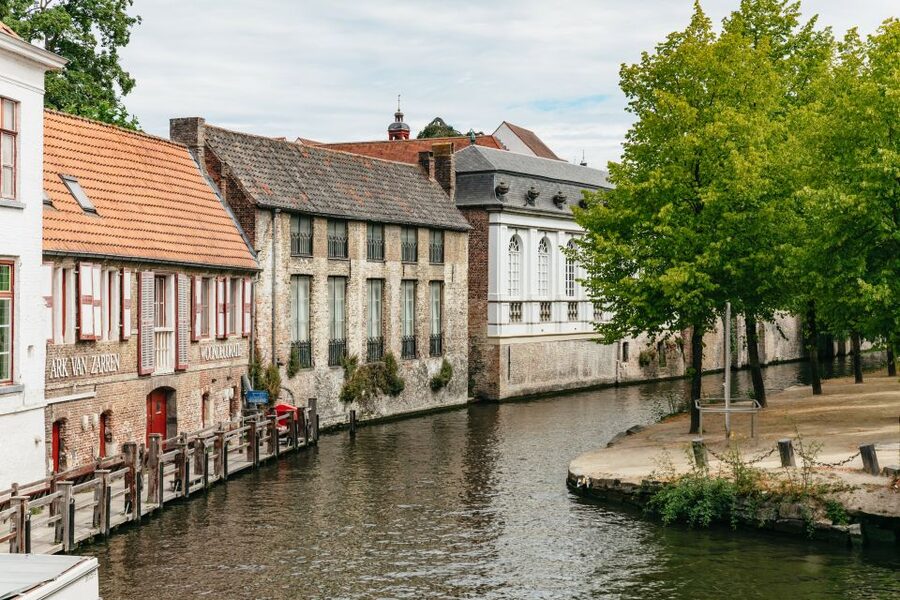
You also pass Gruuthuse Palace and the Dijver Canal. These stops work because they connect architecture to how people lived and traveled. Palaces in a canal city are not random decoration. They point to wealth, trade, and the way the city organized power.
This part of the walk is especially good if you like details. The guide tends to explain what to notice, so you do not feel like you are just following a parade. You get to look, understand, and photograph without needing to speed-run your own research.
Rozenhoedkaai, Castle Square, and Grote Markt With the Belfry
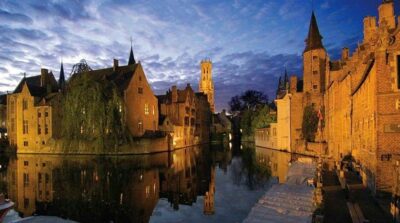
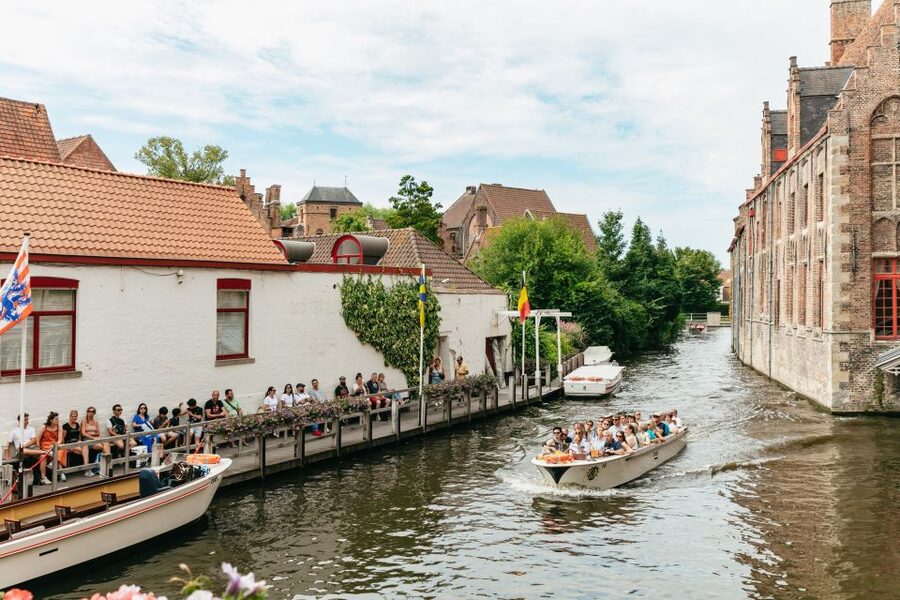
This is where the tour cashes in on Bruges’ best-known postcard angles. You visit Rozenhoedkaai, one of the city’s most photographed spots. The view from here is the kind that makes you stop without planning to. If you care about photos, this is a good moment to pull your camera out and take your time.
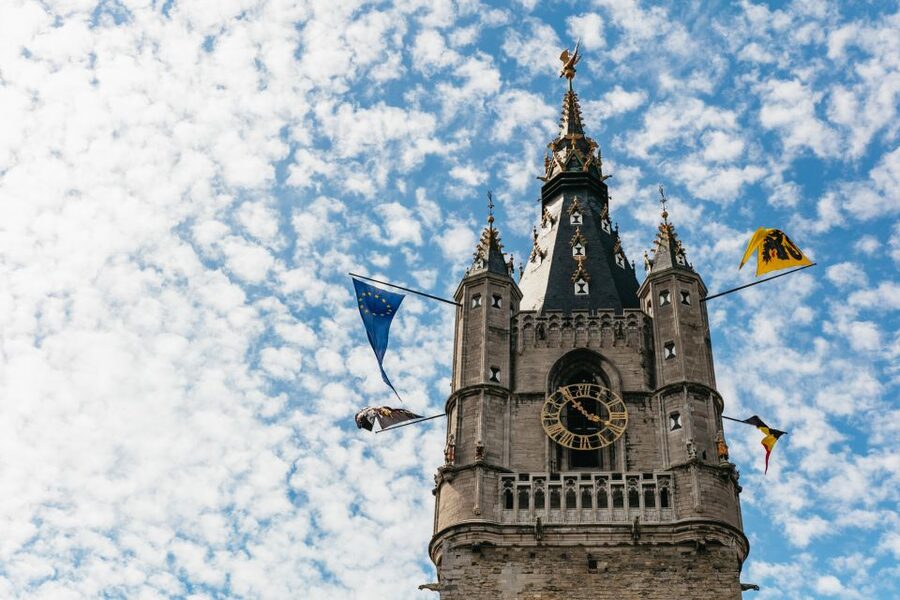
Then you see the Belfry on Castle Square, followed by Market Square (Grote Markt) with the Belfort (Belfry Tower). These are not just pretty towers. They symbolize civic power. The guide’s storytelling usually ties them to how the city measured authority and independence, which makes the structures feel alive.
Between these landmarks, you also get a sense of rhythm. Bruges’ squares are like stage sets, each one with its own “rules” for what matters. The tour guides you through those shifts so you do not miss how the city changes as you move.
Bruges Free Time for Lunch and Chocolate Shopping
After the guided walk, you get about 1.5 hours free time in Bruges, which is a generous window for a first-time visit. Use it for lunch at your own expense, and yes, for chocolate tasting and browsing.
This is also where your tour guide’s instincts can help. In the tour style here, guides often share restaurant and shopping suggestions without pushing. You get the benefit of local knowing, then you decide what fits your mood and budget.
If you want a smarter move: plan a quick “two stop loop.” Pick one place to eat near your walking route, then walk off the meal toward the canals or squares you liked most. That way you are not spending your entire free time hunting down a cafe and losing your best light for photos.
For timing, do not wait until the last 15 minutes to return. Even the best organized group days run on deadlines. Build in buffer time so you are not sprinting back with cold feet and a hungry stomach.
Crossing to Ghent, a Different Pace and a Different Feel
Next comes the drive to Ghent, about 1 hour by coach. Ghent changes the mood quickly. Bruges can feel like a museum outside, while Ghent feels more like a city you could live in. The guide also ties in local nicknames, like the inhabitants being called noose-bearers since the days of Charles V, which gives you a memorable entry point into why Ghent developed its identity the way it did.
You then take a guided tour in Ghent before another free time block. This structure matters. You get orientation first, then you get freedom. It is the easiest way to prevent “I saw it, but I did not understand it” syndrome.
If you love architecture, this is a great day to compare styles. Bruges emphasizes medieval charm and canal scenes, while Ghent leans harder into Gothic and Renaissance mix, plus its historic civic buildings and churches.
Ghent Guided Tour: Saint Bavo Cathedral, Mystic Lamb, and Civic Power
Ghent’s highlight stop is Saint Bavo Cathedral. The tour connects the cathedral to the painting The Adoration of the Mystic Lamb by the Van Eyck brothers. Even when you are not doing a formal museum-style viewing, this context helps you understand why this stop is such a big deal.
The guided route also includes the Belfort (Bell Tower) and mentions town hall architecture, including Gothic and Renaissance-style elements. You are essentially tracing how Ghent displayed authority through towers and civic spaces. The guide’s storytelling is what turns buildings into meaning.
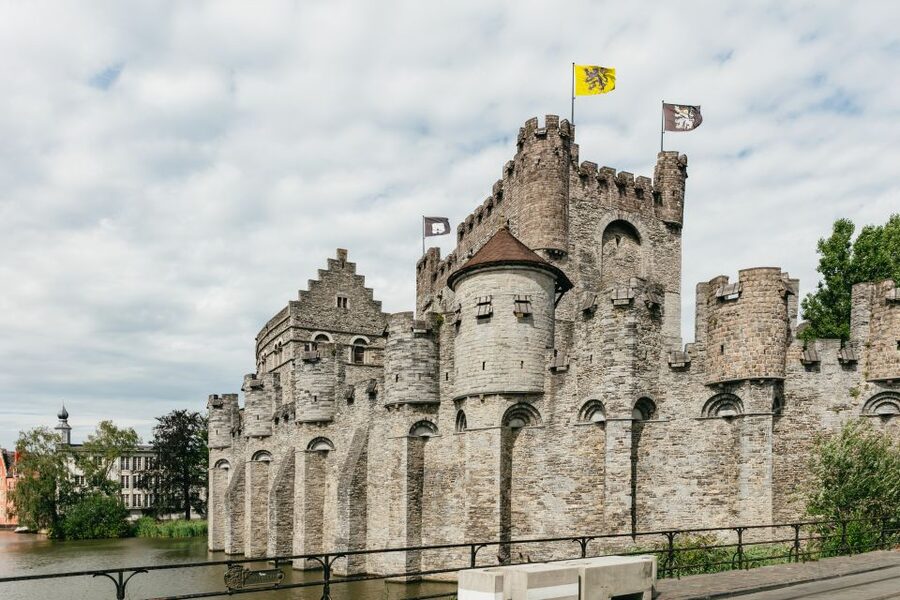
Other sights on the walk include the Castle of Gerald the Devil, plus St. Nicholas’ Church opposite the unusual facade of the Masons’ Guild House. That street pairing is a neat reminder that Ghent’s identity is not only about famous masterpieces. It is also about how different guilds, communities, and neighborhoods shaped the city.
You also walk along the medieval port of Graslei, which is a highlight for people who like riverfront scenes with history baked in. From there the route includes landmarks such as the Castle of the Counts of Flanders, the Great Butchers’ Hall, the Old Fish Market, and Friday Market Square. Together, these stops show you Ghent as a place of trade, food, and governance.
This is the part of the day where you’ll appreciate a guide who can keep the story moving. Names you may hear in the experience include Antonio, Peter, and Julian, and many guests praise how guides balance humor and clear explanations. That combination makes Ghent feel less like random sightseeing and more like a timeline you can follow.
Ghent Free Time: Your Best Shot for a Slow Stroll
After the Ghent guided portion, you get about 1.5 hours free time. This window is perfect for a second round of photos, a relaxed walk through the waterfront areas, or simply sitting down and watching life pass.
If you are visiting in winter, you might find seasonal market energy, and some groups specifically mention Christmas markets when dates line up. Even if you do not catch a market, Ghent’s squares and canals still work for wandering.
One thing I recommend: decide what you want most in your last hour. If you want snacks, do that first. If you want photos, walk earlier while you still have enough energy. If you want a drink, pick a spot and stay put, because the hardest part of a day trip is always the return timing.
Price and Value: What $55 Really Buys You
At around $55 per person, the value is in the structure. You get round-trip coach transport, a live guide, and walking tours in both cities, plus the tour system that uses radios. For a day trip that covers Bruges and Ghent, that is a reasonable package when you compare it to paying for separate guided tours or trying to manage travel and orientation on your own.
What the price does not include is just as important. Lunch and entrance tickets are not included, so plan for those costs. In cities like Bruges and Ghent, the ticket costs can add up if you decide you want every interior, but you can also do the day well with outside views and street-level exploring.
Also, earphones are a factor. The tour uses radio audio, and if your group needs it, you may be asked to use your own earphones or buy them from the provider for 1 EUR. Some guests also note that buying with coins can be easier than with a card, so bring small change if you can.
Bottom line: if you want two cities in one day with guidance that explains what you are seeing, this price is easier to justify than you might think. If you want lots of museum time and paid interiors, you may feel the day is more about highlights than deep ticket-based experiences.
Practical Tips Before You Go, So You Do Not Waste Time Later
Bring comfortable shoes. The walking is the main activity, and your day will feel easier if your feet are ready.
Earphones matter. If you already own wired earphones, bring them. The tour notes that disposable headphone pollution is a concern and you may be asked to use your own. If you do not have them, you can buy them for 1 EUR from the activity provider.
Meeting point clarity helps. You will meet at Carrefour de l’Europe, under the columns of Brussel-Centraal’s main entrance, in front of the Hilton Grand Place Hotel. Have your phone ready with the address and look for the Buendia Tours guide ID.
Keep your expectations realistic about time. The day is long, and even with a balanced schedule, you will not do everything. That is why the combo of guided walking plus free wandering is so important. Follow the guide’s route for the “anchors,” then use free time for what you personally care about most.
Finally, be respectful of the rules on the coach. No smoking, no eating on board. It sounds obvious, but it keeps the day smooth for everyone.
Who This Day Trip Fits Best (and Who Might Struggle)
This tour fits best if you want a classic first-pass into Bruges and Ghent from Brussels, with guided context and enough freedom to eat, shop, and photograph without feeling trapped in a scripted itinerary.
It may be less suitable if you need wheelchair access or have mobility impairments. The tour is stated as not suitable for wheelchair users, so plan an alternate option if that applies to you.
It is also not ideal if you hate group timing. The day runs on meetup points and return deadlines. A few guests mention minor delays when groups are late, so you’ll have a better day if you treat timing as part of the experience.
If you love standout guiding styles, this tour tends to deliver. Many guests highlight guides such as Antonio or Peter for humor, organization, and practical recommendations for where to eat.
Should You Book This Brussels Day Trip to Bruges and Ghent?
I would book it if you want two iconic Flemish cities in one go, and you like the idea of getting your bearings through a guided walk first. The standout reason is the pairing: Bruges gives you the UNESCO streets, Lake of Love, the Begijnhof founded in 1245, and signature squares and towers. Ghent then shifts you into a more layered civic and church story, anchored by Saint Bavo Cathedral and the Mystic Lamb connection, plus the port area of Graslei and major market squares.
I would skip it if you need deep museum access, wheelchair-friendly routes, or lots of long free wandering with minimal walking. Also, if you want an easy day with minimal planning, remember lunch and entrance fees are not included, and earphones may be needed for clear audio.
If you’re the kind of traveler who likes “see the highlights, then explore what you love,” this is a strong, practical day trip choice.
FAQ
Where do I meet the tour in Brussels?
You meet at Carrefour de l’Europe, under the columns of the main entrance of Brussel-Centraal station, in front of the Hilton Grand Place Hotel. The guide will be waiting with Buendia Tours ID.
Which cities are included?
The tour includes a guided visit to Bruges and a guided walk in Ghent, with free time in both cities.
How long is the day trip?
The total duration is 630 minutes, which is about 10.5 hours.
What languages are the guided tours offered in?
The live tour guide is available in Spanish and English.
Is transportation included?
Yes. Transportation to all destinations is included, with eco-friendly and comfortable buses.
Is there a guide during the walking parts?
Yes. You get a guide and walking tours in both Bruges and Ghent.
Is lunch included?
No. Lunch is not included, so you’ll need to plan your own meal during free time.
Are entrance tickets included?
No. Entrance tickets are not included.
Do I need earphones to hear the guide?
The tour uses a radio system. Earphones are mandatory for groups over 24, and they may be available for purchase for 1 EUR. You may also use your own earphones.
Is the tour suitable for wheelchair users?
No. The tour is not suitable for wheelchair users, and it is also listed as not suitable for people with mobility impairments.
Ghent, Continued
Keep Reading Bruges
More Ways to See Brussels
Newer Belgium reviews from the same corner of the country
- Discover the secrets of Brussels while playing
★ 5.0 · 3 reviews - Standard vehicle from Charleroi airport to city of Brussels
★ 4.5 · 3 reviews - Private tour to Ghent from Brussels (5hours walk & drive)
★ 5.0 · 3 reviews - Full day Brugge & Ghent: the gems of Flanders
★ 5.0 · 3 reviews - Private tour : Best of Brussels half day From Brussels
★ 5.0 · 3 reviews
Brussels Tours, side by side.
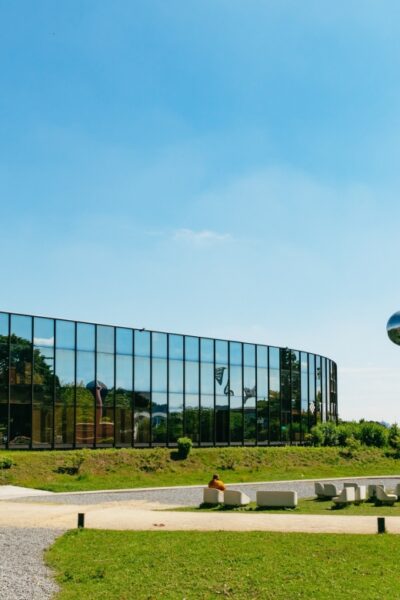 ★ 4.4Brussels: Atomium Entry Ticket with Design Museum TicketFrom $199,254 reviews
 ★ 4.7From Brussels: Bruges & Ghent Day Tour – 2 Fairytale CitiesFrom $578,242 reviews
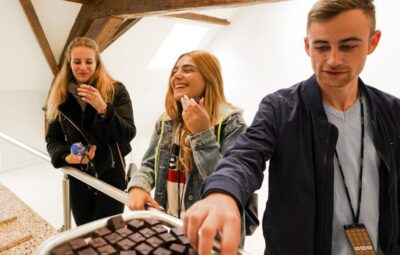 ★ 4.3Choco-Story Brussels: Chocolate Museum Entrance with TastingFrom $184,883 reviews
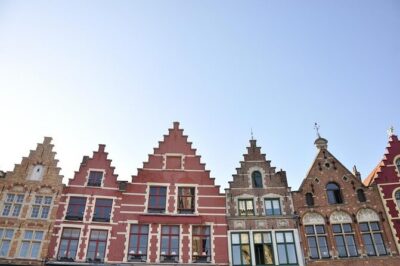 ★ 4.0Bruges and Ghent – Belgium’s Fairytale Cities – from BrusselsFrom $594,809 reviews
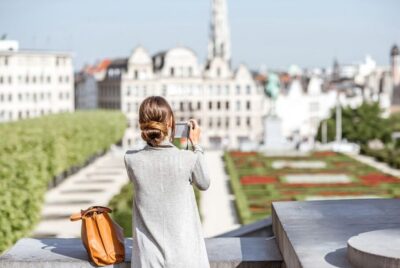 ★ 4.0Brussels: Hop-On Hop-Off Bus TourFrom $294,016 reviews
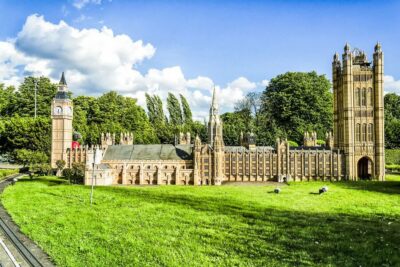 ★ 4.5Brussels: Entry Ticket to Mini-EuropeFrom $232,870 reviews
 ★ 5.0Hungry Mary’s Famous Beer and Chocolate Tour in BrusselsFrom $1192,258 reviews
 ★ 4.7Brussels: Belgian Chocolate Making Workshop with TastingsFrom $821,629 reviews
Browse the lists this tour appears in