
REVIEW · BRUGES
Beyond Bruges – Travel Back to the Middle Ages
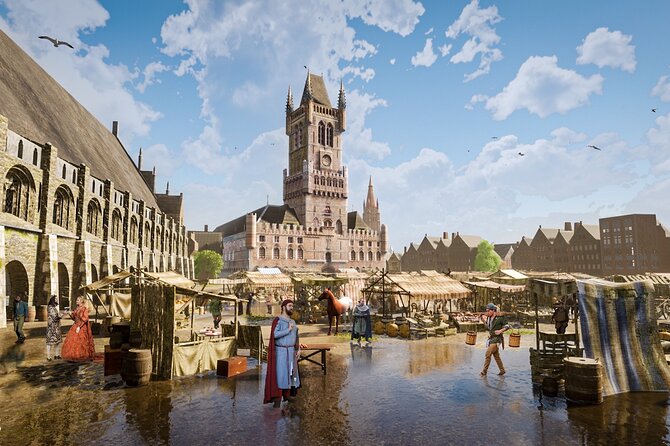
Bruges can feel like a time machine. This experience uses 3D models and Augmented Reality plus 360° views to help you picture what the Golden Age looked like. I like that it is built for both quick orientation and a more planned stroll, but the built-in prompts and questions can feel like too much if you prefer a totally free, slow wander.
You start right at Markt and you are guided through key stops that map cleanly onto Bruges’ medieval layout. I also like the practical payoff: a QR code that triggers 10% cashback at local bars, restaurants, and museums, plus a game mission (TimeQuest) that keeps your brain switched on. The main drawback to consider is usability, it can be a bit heavy on tapping, scanning, and answering, so you may want to go at your own pace.
In This Review
- Key Things to Know Before You Go
- Medieval Bruges, But With Your Phone Doing the Work
- How the 2-Day Format Fits Bruges’ Best Stops
- Starting at Markt: Your Medieval Anchor Point
- Stop-by-Stop: What Each Major Stop Adds
- Historic Centre of Brugge
- The Markt
- Burg Square
- Onze-Lieve-Vrouwekerk
- Apotheek Sint-Janshospitaal (Pharmacy Saint John’s Hospital)
- Windmills of Bruges
- Gruuthusemuseum
- Jan Van Eyckplein
- The QR Cashback and the TimeQuest Mission
- 10% cashback with your QR code
- TimeQuest: saving the duke from the pest
- The 3D and AR Value: What It Really Helps You See
- Price, Duration, and Real-World Value at $15.61
- Practical Tips to Make It Feel Easy, Not Like Homework
- Who This Works Best For
- Should You Book Beyond Bruges?
- FAQ
- Where does the experience start and end?
- How do I access the tour?
- What features are included in Beyond Bruges?
- How long is the experience?
- What stops are included in the route?
- Is there a group size limit?
- Can I get cashback using the QR code?
- Is the experience refundable?
- Are service animals allowed?
- Is it near public transportation?
Key Things to Know Before You Go
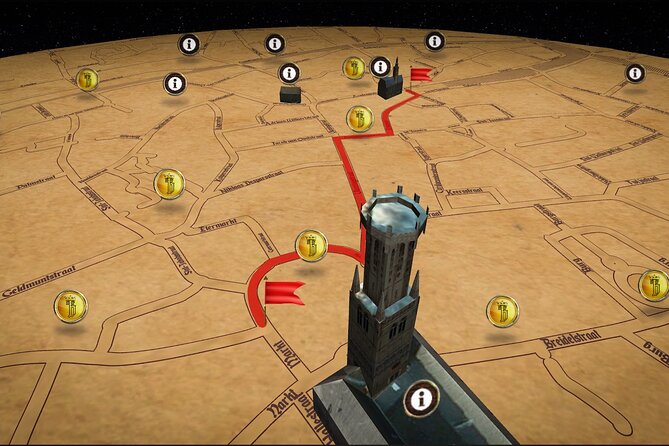
- 3D and Augmented Reality help you visualize monuments instead of just reading about them.
- 360° images and historical descriptions are designed for faster, clearer context at each stop.
- Guided directions can reduce the guesswork while still letting you move through the city.
- QR code cashback (10%) adds a real-world reason to keep going into local spots.
- TimeQuest quiz mission gives you a structured way to engage with medieval Bruges.
- Medieval character photo is included for sharing your own version of the past.
Bruges again, from a different angle
- Bruges: Small Group Boat Cruise and Guided Walking Tour★ 4.8 · 4,102 reviews
- Bruges: Walking Tour, Canal Boat Trip w/Beer Tasting Option★ 4.4 · 2,759 reviews
- Historical Walking Tour: Legends of Bruges★ 5.0 · 2,541 reviews
- Bruges: Choco-Story Chocolate Museum Guided Tour w/Tastings★ 4.2 · 1,379 reviews
Medieval Bruges, But With Your Phone Doing the Work
Bruges is gorgeous, but it is also easy to get lost in the postcard blur. This tour leans into that by using your mobile device to turn landmarks into a more guided experience. You get 3D models and Augmented Reality, so you are not only looking at stonework, you are also seeing how it may have looked in its medieval prime.
I like that this is not just museum-style content. You also get 360° images and historical descriptions tied to specific sights, which makes it easier to understand what you are seeing without hunting down explanations on your own.
There is a tradeoff. If your ideal day is strolling with no guidance and minimal screen time, the quiz and question format can start to feel like a checklist instead of a roam. The upside is that if you enjoy structured “do this next” energy, this setup gives you a clear flow through the city.
How the 2-Day Format Fits Bruges’ Best Stops
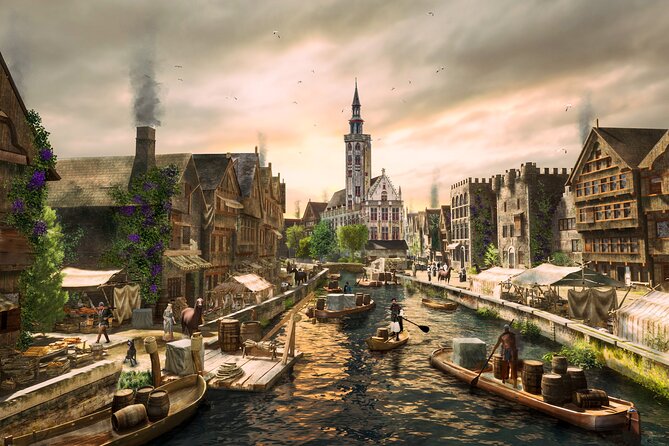
The experience is listed as about 2 days, and that matters in Bruges. Even when you know where you want to go, the city rewards multiple passes, one day for squares and churches, another for museums and viewpoints. With this format, you can pace yourself instead of cramming everything into a single sprint.
Also, your ticket is mobile-based, so you can keep the experience with you as you walk. And because the activity ends back at the meeting point, Markt, you always have a natural “home base” to regroup around.
The group size cap is 99 travelers, which usually means the experience is not designed for tight crowd control. Practically, that supports the self-guided feel, even if parts of it nudge you toward specific sequences.
Starting at Markt: Your Medieval Anchor Point
You begin at Market Square, Markt (8000 Brugge). This is a smart starting choice because Markt is one of Bruges’ strongest medieval anchors. From here, you can orient yourself fast, then branch out into the major squares and buildings that define the city.
In a guided experience like this, the value of Markt is simple: it helps you stop wandering randomly. Once you have this reference point, the rest of Bruges feels more connected, like you are moving through a map that actually makes sense.
If you want a smooth start, plan to arrive with a bit of buffer time. Scanning, loading features, and settling into the app flow can take a few minutes, and you do not want that to turn into a stressful dash at the beginning.
Stop-by-Stop: What Each Major Stop Adds
Below is how the itinerary pieces fit together and what each one is likely to do for your experience, beyond the names.
Historic Centre of Brugge
The tour opens with the Historic Centre, which is the big-picture setup. This is where you benefit most from guided directions and early 360° context, because it frames what you are about to see and why it matters. Even if you later slow down, having a mental map from the start makes the rest of your walk feel more satisfying.
Possible drawback: if you are hoping to skip context and just jump to the prettiest corners, this opening stretch may feel like the “setup phase” before the fun fully kicks in.
The Markt
You then return to the heartbeat of the city at The Markt. This stop is ideal for looking at the square as a whole. With the tour’s historical descriptions and visuals, you can focus on the layout, the monument presence, and what gives the square its medieval character.
If you like photos, this is also a good time to capture the wide angle. The tour structure encourages you to pause, which is helpful in a place where you might otherwise keep moving.
Burg Square
Next is Burg Square, another major stage of medieval Bruges life. This stop works well because it breaks up the route and gives you a new “scene” to compare with Markt. When you shift squares, the city stops looking repetitive and starts looking intentional.
From a practical standpoint, it also helps to build a walking loop. Squares are natural landmarks, so you can navigate without constantly second-guessing your direction.
Onze-Lieve-Vrouwekerk
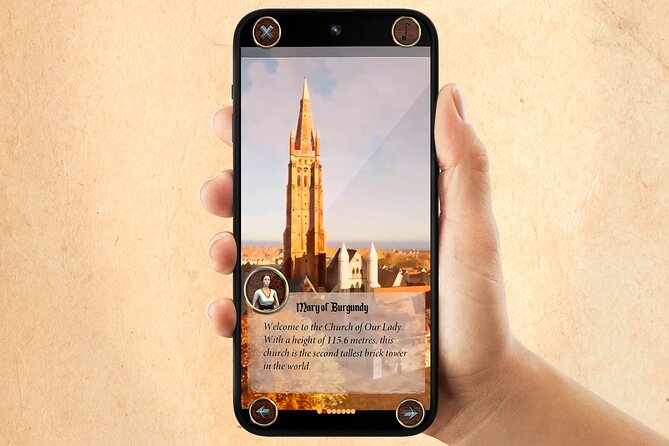
At Onze-Lieve-Vrouwekerk, you are in church territory, where details matter. This is one of those stops where 3D models and Augmented Reality can do real work, because you get extra layers that a quick glance might miss.
The best way to use this kind of stop is patience. Give yourself time to look, then check the phone content for what you should notice. If you try to do everything at once, you risk losing the benefit of the visual explanations.
Apotheek Sint-Janshospitaal (Pharmacy Saint John’s Hospital)
Then you hit Apotheek Sint-Janshospitaal, the Pharmacy Saint John’s Hospital. This is a great contrast stop. Instead of another “big building” moment, you get something tied to care, medicine, and everyday human needs in the medieval world.
Because the tour adds historical descriptions and visuals, this stop can feel less like a random side attraction and more like a meaningful chapter. It also gives variety, which keeps the route from turning into only churches and squares.
Windmills of Bruges
Next come the Windmills of Bruges. This is a different kind of stop, more about views, scenery, and the sense of how Bruges functioned beyond just its core squares. Windmills also fit nicely with the idea of time travel, because they help you picture the city’s practical machinery as part of daily life.
In a self-guided setup, this stop is also a breather. You are not just reading about the past, you can look outward and let your senses do some of the interpretation.
Gruuthusemuseum
At Gruuthusemuseum, the tour shifts toward a more museum-oriented feel. When this kind of stop is paired with the rest of the experience, it helps you connect what you saw outdoors to what you might see indoors.
The big advantage is sequencing. If you reach the museum with the tour’s historical framing already in your head, you are more likely to notice meaningful details instead of treating the visit like a blur of objects.
Jan Van Eyckplein
Finally, you end at Jan Van Eyckplein. This is a strong closing point because it brings your route to a recognizable space after you have touched major squares, religious sites, a pharmacy, windmills, and a museum.
For your last stop, I recommend using the tour for a quick recap rather than trying to max out every feature. If your phone battery is low, focus on the core visuals and directions. You still get a coherent ending.
The QR Cashback and the TimeQuest Mission
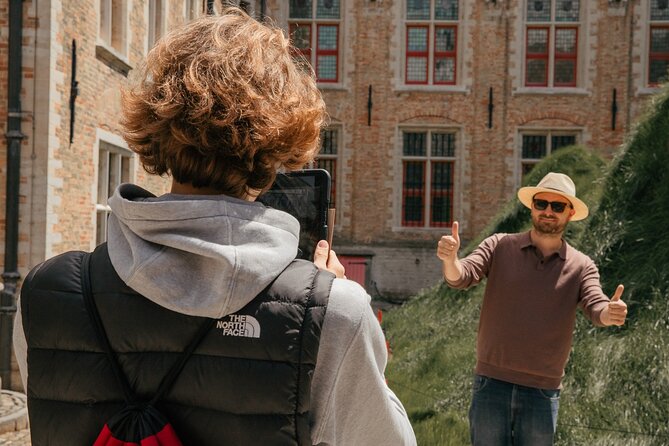
Two features here have a very “practical fun” quality, meaning they tie into real decisions while you walk around.
10% cashback with your QR code
You get a QR code for 10% cashback in local bars, restaurants, and museums. This is one of the few “interactive tour” extras that can actually change what you do that day. Instead of only buying a ticket and walking away, you get a built-in nudge to spend locally.
Just keep your expectations grounded. The cashback depends on participating places, so you might not get a payoff at every single stop. Still, it is a nice add-on, especially for a relatively low-priced tour.
TimeQuest: saving the duke from the pest
Then there is the mission game, TimeQuest, where you play a quiz to help save the duke from the pest. Games work best when they are short and goal-driven, because long quizzes turn into fatigue. In this case, it is designed as part of the tour experience, so you are not expected to sit and study.
If you do prefer quiet sightseeing, you can still manage this. Treat the quiz as a light challenge, not a school exam. If it starts to slow you down, choose to focus on the visual parts first, then return to the game later.
The 3D and AR Value: What It Really Helps You See
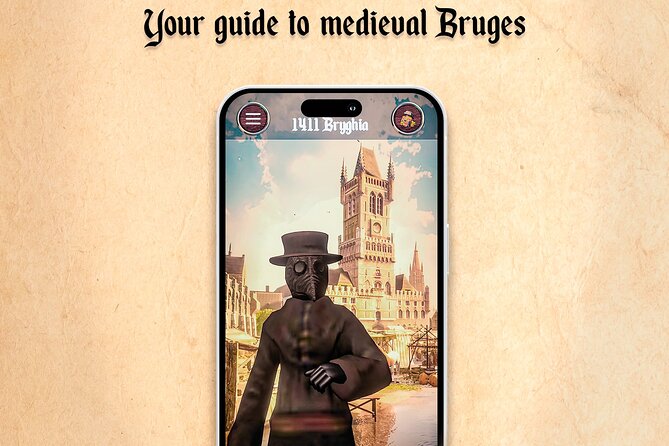
The headline features are 3D models, Augmented Reality, and 360° images, but the real value is how they reduce friction.
Bruges has tons of details, and without guidance, you can walk past important elements because you do not know what to look for. With this tour, the phone content pushes you toward specific monuments and angles. That makes your “looking” time more efficient.
Also, the 3D and AR approach can make architecture feel less abstract. Instead of reading a description and hoping you understand it, you see something you can align with the building in front of you. It is especially helpful for stops like churches and specialized buildings, where the visual complexity is hard to decode in seconds.
Price, Duration, and Real-World Value at $15.61
At $15.61 per person, this is priced like a small add-on rather than a full-blown guided excursion. That is important because you are buying tools, not a guide escort. In practical terms, you should decide if you like tech-based storytelling and self-guided structure.
The value comes from the combination: multi-feature content, a QR cashback incentive, and a game and photo element that make the day feel less like pure sightseeing. If you would normally pay for audio content, museum extras, or a separate walking plan, this bundles several of those needs into one mobile experience.
The reason the rating is strong is probably simple: it gives you a reason to keep moving. But the drawback mentioned in the feedback is equally clear. If your style is slow, minimal, and low-tech, the question-heavy side can feel like it gets in the way.
So judge the price through your own temperament. If you enjoy structured “here’s what to do next,” it is a good deal. If you want to drift freely, you might feel restrained.
Practical Tips to Make It Feel Easy, Not Like Homework
Here are a few ways to keep the experience fun and low-stress, based on the format described.
First, treat it like a flexible plan. Use the guided directions when you want help navigating, and ignore them when you want to detour for photos. The city is full of small moments, and you will enjoy Bruges more if you do not force every step to be identical.
Second, manage your phone battery. You are using AR, 3D models, and 360° content, which can drain power. If you plan a long day, start early and consider a portable charger.
Third, watch for “question overload.” The experience includes a mission game and quiz elements. If you start feeling dragged down by screen steps, switch your priorities to monuments and visuals, then finish the game at a slower moment.
Fourth, make the QR cashback part of your decision-making. If you see a participating bar, restaurant, or museum, it can change what you choose to do next. That turns the tour from “just information” into a day plan.
Who This Works Best For
This experience is a good fit if you like:
- Self-guided walking with built-in structure and prompts
- Visual learning through 3D and AR, not only reading
- A route that hits major monuments plus more specialized stops like the pharmacy and a museum
- Light gamification through TimeQuest
It may not be the best fit if:
- You strongly prefer simple wandering with minimal tech interaction
- You dislike quizzes or frequent questions during your walk
- You want the experience to feel effortless, with no extra steps
In other words, it suits the “planner brain” traveler more than the “no itinerary, no app” traveler.
Should You Book Beyond Bruges?
I think this is worth booking if you want medieval Bruges to feel more explained and more interactive, without paying for a full live guide. The 3D and AR angle plus 360° views help you understand what you are seeing. The price also keeps it from feeling risky.
I would hesitate if you know you hate question-heavy interfaces. If you want to roam freely with almost no screens, the structure can feel more distracting than helpful. In that case, you might prefer a simple walking plan and your own research.
If you do book, go in with the mindset that this is a tool for seeing Bruges with sharper focus. Use the features when they help, and you can still let the city do what it does best, slow you down for the moments you did not plan.
FAQ
Where does the experience start and end?
It starts at Market Square, Markt, 8000 Brugge, Belgium. It ends back at the meeting point.
How do I access the tour?
You use a mobile ticket. A QR code is also part of the experience.
What features are included in Beyond Bruges?
The experience includes 3D models and Augmented Reality, 360° images with historical descriptions, guided directions to top attractions and hidden gems, a QR code for 10% cashback, a historical quiz game called TimeQuest, and a way to take a picture with medieval characters.
How long is the experience?
The duration is listed as approximately 2 days.
What stops are included in the route?
The stops include Historic Centre of Brugge, The Markt, Burg Square, Onze-Lieve-Vrouwekerk, Apotheek Sint-Janshospitaal (Pharmacy Saint John’s Hospital), Windmills of Bruges, Gruuthusemuseum, and Jan Van Eyckplein.
Is there a group size limit?
Yes. The tour/activity has a maximum of 99 travelers.
Can I get cashback using the QR code?
Yes. Your QR code provides 10% cashback in local bars, restaurants, and museums.
Is the experience refundable?
No. It is non-refundable and cannot be changed for any reason.
Are service animals allowed?
Yes, service animals are allowed.
Is it near public transportation?
Yes, it is near public transportation.
Every Belgium Review
Keep Reading Bruges
Newer Belgium reviews from the same corner of the country
- Explore the Instaworthy Spots of Bruges with a Local
★ 5.0 · 3 reviews - Best of Brussels Private Tour from Zeebrugge or Bruges
★ 4.0 · 3 reviews - Private taxi Transfer from Bruges to Amsterdam
★ 5.0 · 3 reviews - Bruges Photo Session By a Pro
★ 5.0 · 3 reviews - Private 3-hour walking tour of Bruges with official tour guide
★ 4.0 · 3 reviews
Bruges Tours, side by side.
 ★ 4.6From Brussels: Guided Day Trip to Bruges and GhentFrom $558,353 reviews
 ★ 4.7From Brussels: Bruges & Ghent Day Tour – 2 Fairytale CitiesFrom $578,242 reviews
 ★ 4.0Bruges and Ghent – Belgium’s Fairytale Cities – from BrusselsFrom $594,809 reviews
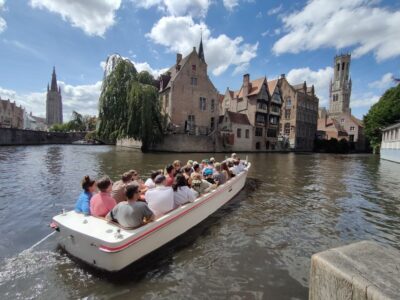 ★ 4.8Bruges: Small Group Boat Cruise and Guided Walking TourFrom $514,102 reviews
 ★ 4.4Bruges: Walking Tour, Canal Boat Trip w/Beer Tasting OptionFrom $412,759 reviews
 ★ 5.0Historical Walking Tour: Legends of BrugesFrom $32,541 reviews
 ★ 4.4From Amsterdam: Bruges Day Trip in English with Boat OptionFrom $611,989 reviews
 ★ 4.6From Amsterdam: Bruges Day Trip in Spanish with Boat OptionFrom $611,866 reviews
Browse the lists this tour appears in