
REVIEW · BRUSSELS
Bruges and Ghent Day Trip from Brussels
Two UNESCO cities in one packed day. I like how this trip strings together Bruges and Ghent with clear stops plus guided walks, so you are not wandering around wondering what to see. I also like the big payoff in Ghent, where you get inside and outside at Saint Bavo Cathedral to see The Adoration of the Mystic Lamb by the Van Eyck brothers. The tradeoff is real: it is a long day with a lot of walking, and the bus may park a bit away from the exact street you want.
You meet at Carrefour de l’Europe at 8:30am, then the day runs on a schedule: short guided moments, quick photo breaks, and two stretches of free time (about 1.5 hours in Bruges and about 1 hour in Ghent, depending on traffic). If radio guidance is required, you may need wired headphones (3.5 mm jack) or a disposable headset for €1.
In This Review
- Key things you should notice before you go
- Getting to Bruges and Ghent: the 8:30am Brussels start
- Bruges walk: Lake of Love, Begijnhof, and artisan chocolate
- Medieval Bruges cues: beer history, house clues, and photo bridges
- Old hospitals, Michelangelo marble, and the power of the Gruuthuse family
- Boniface Bridge and Rozenhoedkaai: legends plus the most photographed Bruges angles
- Grote Markt and Burg Square: the big Bruges monuments before free time
- Ghent from the Town Hall to the Mystic Lamb
- Churches, guild houses, river views, and a covered market feel
- Cuberdon stop at Kleine Vismarkt and final beer/souvenir tips
- Timing, walking, and why the day can feel long
- Price and value: what you get for $56.72
- Comfort tips that make or break a cobblestone day
- Who this day trip fits best
- Should you book this Bruges and Ghent day trip?
- FAQ
- What time does the tour start?
- How much free time do I get in Bruges and in Ghent?
- Is the tour guided in English?
- Are meals included?
- Do I need headphones?
- What is the cancellation policy?
Key things you should notice before you go
- A/C round-trip from central Brussels keeps the day focused on the cities, not transit hassles
- Bruges in a tight loop from Lake of Love and Begijnhof to Rozenhoedkaai and Grote Markt
- Ghent highlights with real icons like Belfort and Saint Bavo Cathedral, home to the Mystic Lamb
- Photo stops are built in, including Boniface Bridge and the rose-pier in Bruges, plus Lys river views in Ghent
- Free time is decent but time-boxed, so plan your lunch and chocolate shopping fast
- Radio guides can affect audio: bring wired headphones if you have them, or buy a €1 option
Brussels has more to it than one route
- Brussels: Atomium Entry Ticket with Design Museum Ticket★ 4.4 · 9,254 reviews
- From Brussels: Guided Day Trip to Bruges and Ghent★ 4.6 · 8,353 reviews
- From Brussels: Bruges & Ghent Day Tour – 2 Fairytale Cities★ 4.7 · 8,242 reviews
- Choco-Story Brussels: Chocolate Museum Entrance with Tasting★ 4.3 · 4,883 reviews
Getting to Bruges and Ghent: the 8:30am Brussels start
This is the kind of day trip that works when you want structure. You start at 8:30am from Carrefour de l’Europe, and the operator uses a mobile ticket plus an English-speaking guide. There is an A/C coach for the round trip, and the maximum group size is capped at 45, which usually makes it easier to hear the guide and regroup when you move on.
One small detail that matters: early in Bruges, the bus drops you at Bargeplein (Katelijnparking) and gives you a short window to get organized and use the bathroom. That is not glamourous, but it saves stress later when your Bruges schedule is already tight. From there, you are in walking mode.
Also pay attention to where you are supposed to be. Even with good organization, your bus might not stop at the exact curb of every stop. Some people report walking about 15 minutes to reach the main meeting areas at both cities, so you will feel the route length more than you might expect.
Bruges walk: Lake of Love, Begijnhof, and artisan chocolate
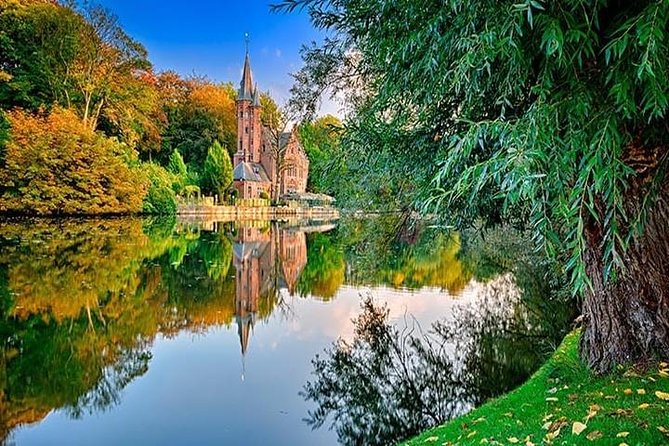
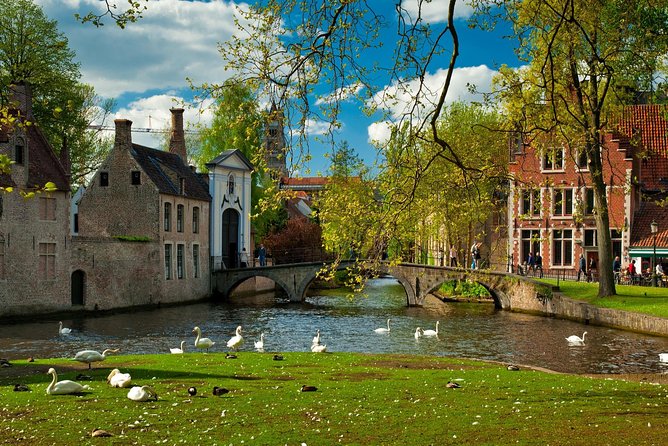
Bruges is where the tour feels most “guided by highlights.” You begin at Minnewater, also called the Lake of Love. It is the sort of spot where the guide does not just point at scenery, they give you the Bruges context, plus the romantic legend tied to the lake. Even if you have seen photos of the lake before, this is still a great first anchoring point, because you quickly understand the city’s tone.
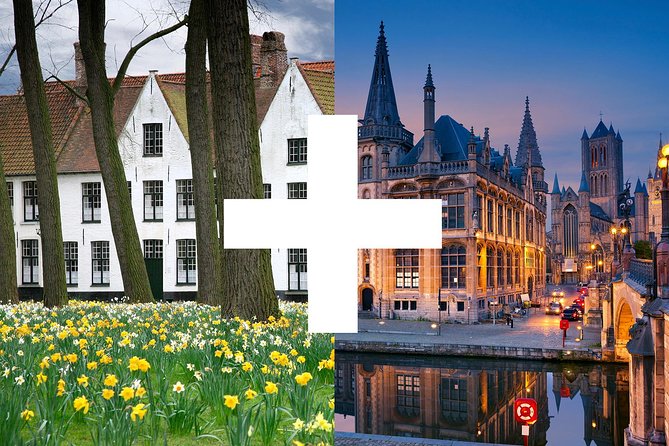
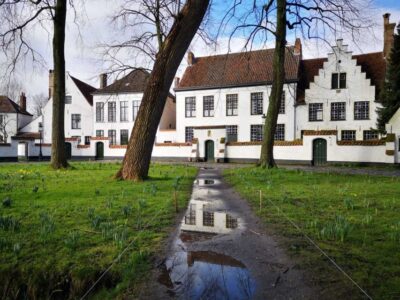
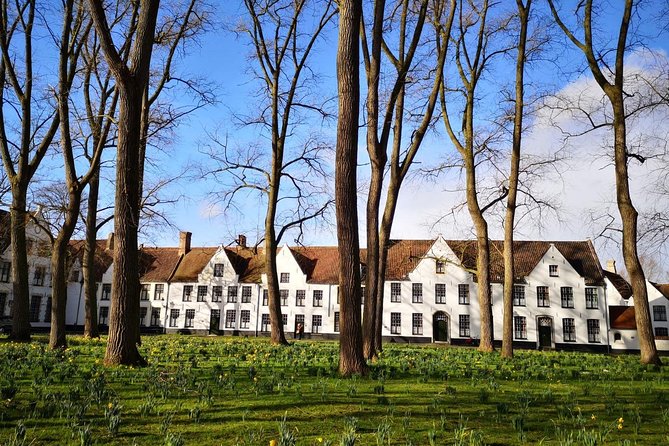
Next comes the Begijnhof, founded in 1245. This is one of those places where the guide’s storytelling turns the streets into a timeline. You learn about a special community of women and why this preserved space mattered. Since the stop is short, it is best to walk at a steady pace, look up, and catch the feel of the courtyards, then move on with your bearings set.
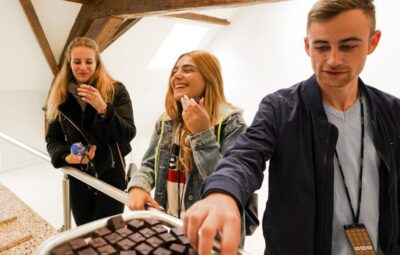
Then you hit the Chocolalino stop. This is not a random chocolate stop. It is framed as a chance to taste artisan chocolate and also learn how to spot the difference between handmade chocolate and industrial versions. If chocolate is your Belgium priority, this is one of the best ways to use a short day trip, because you get both a taste and a trick for buying smarter later.
Medieval Bruges cues: beer history, house clues, and photo bridges
After chocolate, the walk keeps feeding you Bruges-specific “how to read the city” details. At Walplein, the guide talks about the history of Bruges beer. This matters because Bruges is not just canals and lace, it is also a town built on trade and craft. You start seeing how everyday products shaped the city.
At Stoofstraat, you get instructions on identifying original medieval houses. That kind of practical guidance is surprisingly useful when you are short on time. It gives you a way to notice details even when the stops are only a few minutes long.
Then you get a chance for photos from a little bridge. Bruges photo time is not optional here. You will be standing in the perfect angles of old canal life, with time built in for a quick tripod-less shot, or at least a steady phone photo.
Old hospitals, Michelangelo marble, and the power of the Gruuthuse family
Saint John’s Hospital is your next major storytelling stop. Outside the old hospital, the guide explains how medieval healthcare worked. Even in a short visit, you can grasp the practical reality: health care was tied to institutions, religion, and community support, not modern systems.
From there, the tour points you to Onze-Lieve-Vrouwekerk (Church of Our Lady). You mostly experience the church from the outside here, but the guide shares curiosities about the Madonna and Child in white marble by Michelangelo inside the church. If you are the type who likes to plan one or two “must-see” interior moments, this is a gentle nudge. You learn what to look for if you return later.
Then you move to Gruuthusemuseum. The focus is the Gruuthuse family, described as the most famous and powerful Bruges family between the 17th and 18th centuries. It is a good reminder that Bruges had elites with serious influence, and that influence left marks on architecture, collections, and street-level power.
Bruges again, from a different angle
Boniface Bridge and Rozenhoedkaai: legends plus the most photographed Bruges angles
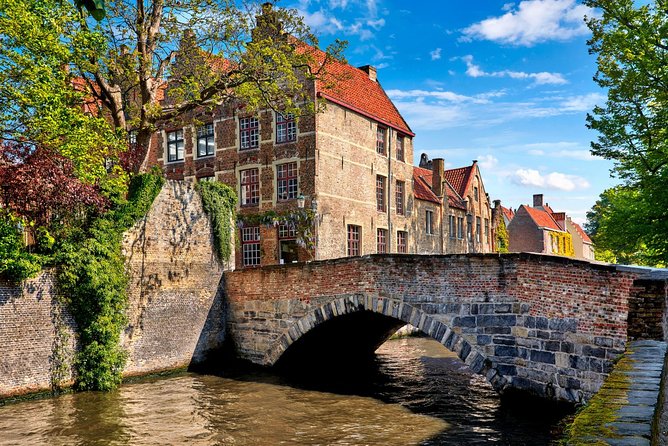
Boniface Bridge is one of the most charming spots in Bruges. The guide shares a legend tied to the bridge and then gives you time to take photos. This stop is short but very “Bruges.” It is all about the look of the setting and the story that makes the setting memorable.
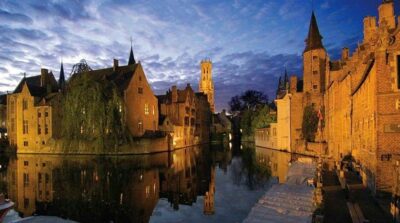
Then comes Quai du Rosaire, also known as Rozenhoedkaai, the Pier of the Roses. This is the city’s most photographed place for a reason, but the value here is that the guide puts the riverfront into a historical frame. You get background, then you get the camera time.
After that, you learn about the tanners at Huidenvettersplein (Tanners’ Square). The stop is brief, but the guide helps you connect the craft to the medieval city layout. It is one of those quick moments that makes you feel like you are walking through a working history rather than just scenery.
Grote Markt and Burg Square: the big Bruges monuments before free time
Two squares anchor the end of the Bruges guided loop. At Burg Square, you are in the thick of Bruges civic power, with the Gothic Town Hall, Old Court House, and the Basilica of the Holy Blood. This is where the guide’s “what this building was for” approach helps. You can glance, notice, and understand why the center looks the way it does.
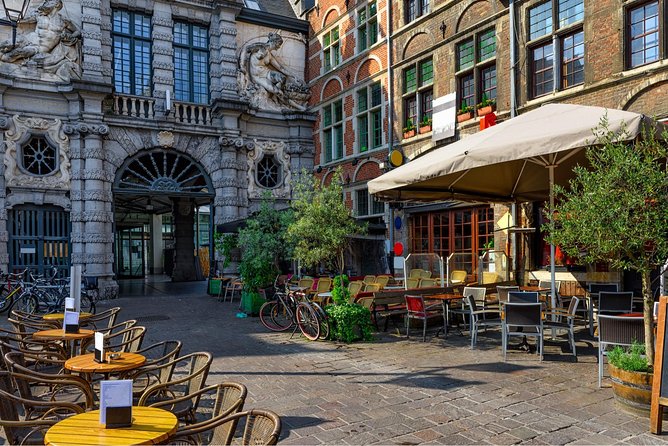
Finally you reach The Markt, also called Grote Markt. This is the last point of the guided walking portion in Bruges, and the guide gives tips on where to eat and where to buy traditional chocolate. Then you get guided reminders about when and where to be for the bus to Ghent.
You finish with about 1.5 hours of free time in Bruges. That sounds generous until you remember cobblestones, queues, and the fact that Bruges is good at making you stop for photos. If you want a real sit-down meal, go in with a plan. If your priority is chocolate shopping and wandering past the crowd, this free time can feel just right.
Ghent from the Town Hall to the Mystic Lamb
Ghent starts with a short walk to the center, where the guided tour begins. The tour starts at the Ghent Town Hall (Stadhuis), focusing on architectural styles. This is a smart move, because Ghent’s center reads differently than Bruges. You are learning the “language” of the city early.
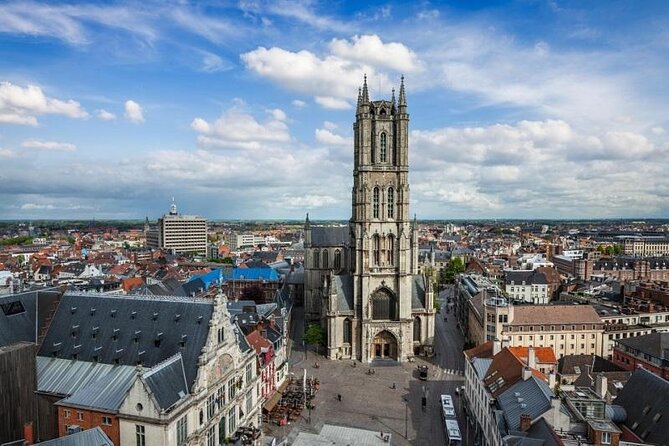
Then you head to the Belfort van Gent. The guide explains the tower and the story around its dragon. If you are looking for a quick legend payoff that feels tied to a real landmark, this is it.
The big centerpiece comes at Saint Bavo’s Cathedral. You get outside and inside access, with a focus on The Adoration of the Mystic Lamb by the Van Eyck brothers. It is also framed as the most stolen painting in history, which adds a little drama to an already stunning monument. Even when you are not a museum person, the cathedral setting gives you a calm moment in a day that is otherwise fast.
Churches, guild houses, river views, and a covered market feel
Next up is Esglesia de Sant Nicolau (Sint-Niklaas). The guide points out that Belgian churches host concerts and other events. It is a good reminder that these buildings still have a living calendar, not just a historic one.
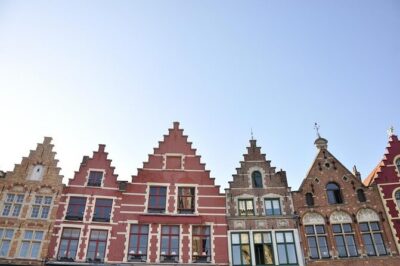
Then you see the Masons’ Guild Hall, focusing on the original facade and explaining what guild houses were. In a short day trip, this is the kind of explanation that makes the architecture click. You start noticing the difference between a random pretty building and a structure with economic power behind it.
At Korenmarkt, the guide talks about the peculiar history of the building where the post office used to be. After that, Saint Michael’s Bridge adds another photo-friendly moment, with a story about the tower of Saint Michael’s Church.
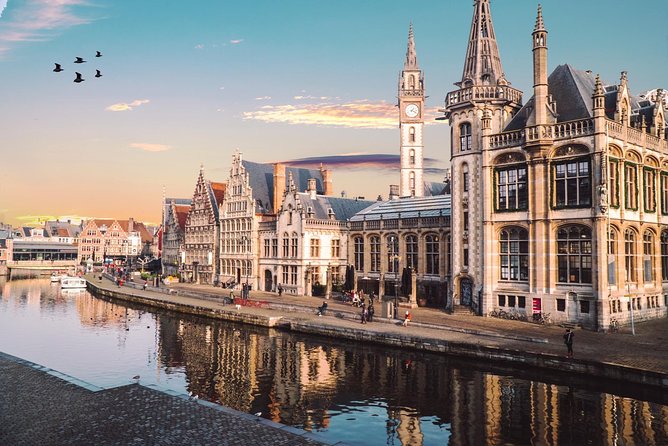
Then the tour follows the Lys riverbanks at Graslei and Korenlei. You get views of the river and the buildings along it, including the Masons’ Guild House and even a modern reference point (the current Marriott Hotel). It is a nice contrast: medieval stone next to modern life.
At OOOST, you see the Great Butchers’ market hall dating back to the 15th century. It is described as originally a covered market. This is where Ghent starts to feel practical, like a city that still trades and still holds everyday life in big historic spaces.
Cuberdon stop at Kleine Vismarkt and final beer/souvenir tips
Near the Great Butchers’, you get a short stop at Kleine Vismarkt. The guide explains the cuberdon candy and includes a traditional market stall moment. Even if you do not buy, it is a fun taste of how Ghent celebrates food culture.
You wrap the guided part at Sint-Veerleplein (St. Veerleplein) square. The guide shares the story of the square, gives tips on where to drink traditional beer, and points out souvenir shops. Then the guide reminds you when and where to be for the bus back to Brussels.
Your Ghent free time is about 1 hour. Some people feel that is perfect for a second walk, a snack, and a final set of photos. Others wish for more time, especially if you want a longer meal. If you are the slow-lunch type, think about what you want most and build your plan around it.
Timing, walking, and why the day can feel long
This is a “see a lot” itinerary. Many stops are 2 to 10 minutes, so you are constantly moving. You will enjoy it more if you treat it like a guided orientation plus a highlight reel, not a replacement for a full day in each city.
A few timing realities to keep in mind:
- Free time is real, but it is time-boxed: about 1.5 hours in Bruges and about 1 hour in Ghent.
- Your bus schedule drives everything, including when you get drop-offs and when you return.
- If you get separated in crowds, regrouping can be harder in old-town lanes, so pick a simple plan: stay within sight of the guide and listen for the stop cues.
Audio matters too. The tour warns that radio guides may be required under Belgian regulations on some occasions. You can use a wired 3.5 mm jack, or buy a disposable headset for €1. If your audio equipment is sensitive to static, bring a backup idea like reading lips when the group is standing still, and do not rely on perfect sound every moment.
Price and value: what you get for $56.72
At $56.72 per person for a 10-hour day trip, the biggest value is the package deal logic. You are paying for:
- A/C round-trip transport from central Brussels
- A professional English-speaking guide
- Guided walking tours in both Bruges and Ghent
- City tips throughout
What you do not get:
- Food and drinks
- Headphones (optional purchase if radios are needed)
- Any meals, so you will either plan a quick bite or use the free time for lunch
This can still be a smart buy if you want an overview quickly, especially on days when you do not want to coordinate trains, parking, or a private guide. The key is matching your expectations. If you want museums, long café time, and slow canal cruising in both cities, this price is not the issue. The time is.
Comfort tips that make or break a cobblestone day
Wear shoes you can trust. Bruges and Ghent are built on cobblestones, and your time on the ground is continuous. Bring a jacket even in mild weather, because the days can turn chilly, and the tour runs in all weather conditions.
Also, handle the headphones issue before you step on the bus. If you have wired 3.5 mm headphones, bring them. If you do not, plan for the €1 disposable option. Keep some euros on hand.
Finally, double-check you are on the correct bus if multiple groups depart from the same meeting area. People do notice that the day can involve more than one coach, so do a quick headcount comparison before you board.
Who this day trip fits best
This tour fits best if you want a fast, structured way to experience two UNESCO-listed cities without doing logistics yourself. It is also great if you enjoy learning through stories tied to buildings, like:
- legends at bridges
- beer and crafts tied to specific streets
- the idea of guild power behind facades
- the Mystic Lamb stop in Saint Bavo
Guides can really affect the feel of the day. Names that come up with strong feedback include Angie, Antonio, Blanca, JC (Harris), Julian, Oscar, and Carlos as a driver. The common thread is organization, clear explanations, and practical recommendations for how to spend free time.
If you have limited walking tolerance, this may feel too much. You might enjoy it more if you treat it as a highlight tour and accept that you will not enter every building you see.
Should you book this Bruges and Ghent day trip?
I think you should book it if your goal is smart orientation plus iconic stops, and you are okay with a long walking day. It is a solid value for combining two major UNESCO cities with an A/C coach and a guide who helps you understand what you are seeing, not just where to stand for photos.
Skip or consider a different plan if your top priority is slow exploring, long lunches, or deep time inside major attractions. In that case, the free time windows can feel tight, and the constant movement may not give you the pace you want.
If you book, pack light, wear good shoes, bring wired headphones if possible, and decide in advance what you want from Bruges free time: chocolate, a harbor-style wander, or a proper meal.
FAQ
What time does the tour start?
The tour starts at 8:30am, meeting at Carrefour de l’Europe in Brussels.
How much free time do I get in Bruges and in Ghent?
You get about 1.5 hours of free time in Bruges, then about 1 hour of free time in Ghent. The exact timing can depend on traffic and the group pace.
Is the tour guided in English?
Yes. The tour is offered in English and includes a professional English-speaking guide.
Are meals included?
No meals are included. The guide can point you toward food spots, but you are responsible for your own lunch and drinks.
Do I need headphones?
Headphones are not included. The tour may require radio-guides, and you can use your own wired 3.5 mm jack headphones. If you do not have any, you can buy disposable headsets for €1.
What is the cancellation policy?
You can cancel for a full refund up to 24 hours before the experience’s start time. If it is canceled due to poor weather, you will be offered another date or a full refund.
Ghent, Continued
Keep Reading Bruges
More Ways to See Brussels
Newer Belgium reviews from the same corner of the country
- Discover the secrets of Brussels while playing
★ 5.0 · 3 reviews - Standard vehicle from Charleroi airport to city of Brussels
★ 4.5 · 3 reviews - Private tour to Ghent from Brussels (5hours walk & drive)
★ 5.0 · 3 reviews - Full day Brugge & Ghent: the gems of Flanders
★ 5.0 · 3 reviews - Private tour : Best of Brussels half day From Brussels
★ 5.0 · 3 reviews
Brussels Tours, side by side.
 ★ 4.4Brussels: Atomium Entry Ticket with Design Museum TicketFrom $199,254 reviews
 ★ 4.6From Brussels: Guided Day Trip to Bruges and GhentFrom $558,353 reviews
 ★ 4.7From Brussels: Bruges & Ghent Day Tour – 2 Fairytale CitiesFrom $578,242 reviews
 ★ 4.3Choco-Story Brussels: Chocolate Museum Entrance with TastingFrom $184,883 reviews
 ★ 4.0Bruges and Ghent – Belgium’s Fairytale Cities – from BrusselsFrom $594,809 reviews
 ★ 4.0Brussels: Hop-On Hop-Off Bus TourFrom $294,016 reviews
 ★ 4.5Brussels: Entry Ticket to Mini-EuropeFrom $232,870 reviews
 ★ 5.0Hungry Mary’s Famous Beer and Chocolate Tour in BrusselsFrom $1192,258 reviews
Browse the lists this tour appears in