
REVIEW · BRUGES
Bruges Private 2-Hour Walking Tour
Bruges makes sense after a good walking guide. This private 2-hour loop gives you the UNESCO core in a focused way, and I especially like how the visit lands on Princely Béguinage with a calm, reflective ending. I also love that the guide turns buildings into stories you can picture, not just names on a map. The only real drawback: two hours can feel tight if you want long indoor time, or if you stop for every photo.
You’ll start near ’t Zand Square by the concert hall area, then work your way toward Market Square and the big visual landmarks. Along the route you pass St. Savior Cathedral, the famous 83-meter belfry, and then keep moving into the commercial heartbeat of medieval Bruges.
By the time you reach Burg and the Dijver canal area, the walk feels like a clear timeline of power, money, and daily life. It is a great way to orient yourself fast, but it is not a full-day art marathon. Think essentials with smart pacing, and you’ll get the best of Bruges without wearing yourself out.
In This Review
- Key things I loved on this Bruges 2-hour private walk
- A 2-hour private loop through Bruges UNESCO core
- Your guide meets you near ’t Zand, the station, or the Tourist Office
- St. Savior Cathedral, Market Square, and the 83-meter belfry
- Jan Van Eyck Square: where trade, money, and power lived
- Burg and the civic heart: City Hall, Holy Blood, and the courthouse days
- Fish Market, Tanners Square, and Dijver canal scenes
- St. John’s Hospital: a quick stop with real age and meaning
- Minnewater and the Princely Béguinage: your walk’s calming payoff
- How much is it, and does the price feel fair?
- What guides like Jan, Theo, Paul, and Dirk add to the city
- A tip to get more out of your 2 hours
- Who this Bruges tour is best for
- Should you book this Bruges Private 2-hour Walking Tour?
- FAQ
- How long is the Bruges Private 2-hour Walking Tour?
- Is this tour private?
- What is included in the price?
- What languages are available for the live guide?
- Where does the tour start?
- Is pickup included?
- Are entrance fees or meals included?
Key things I loved on this Bruges 2-hour private walk
- A true private guide for your group, with the flexibility that comes from not being stuck to a big herd
- Jan Van Eyck Square and the Hanseatic vibe, where you can see why Bruges mattered for trade and finance
- Burg and the Holy Blood Basilica area, a tight cluster of civic pride and medieval religious significance
- Canal and street scenes near Dijver, including the kind of quick photo pause guides know guests appreciate
- A thoughtful ending at Minnewater and the Béguinage, so the walk finishes with atmosphere, not just monuments
Bruges again, from a different angle
- Bruges: Small Group Boat Cruise and Guided Walking Tour★ 4.8 · 4,102 reviews
- Bruges: Walking Tour, Canal Boat Trip w/Beer Tasting Option★ 4.4 · 2,759 reviews
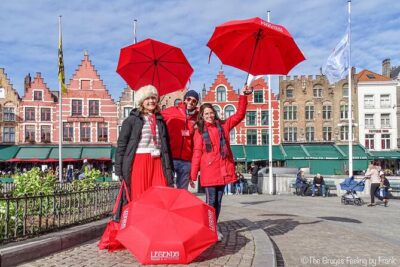
- Historical Walking Tour: Legends of Bruges★ 5.0 · 2,541 reviews
- Bruges: Choco-Story Chocolate Museum Guided Tour w/Tastings★ 4.2 · 1,379 reviews
A 2-hour private loop through Bruges UNESCO core
This is the kind of tour that makes Bruges feel orderly. In two hours, you move through the historic center in a way that connects the dots between squares, churches, and civic buildings. You are not chasing things at random or trying to decode what you are looking at while everyone else moves faster than you do.
I also like that the pacing is built for real sightseeing, not sprinting. Many people start Bruges confused, especially if it is their first time. This walk gives you the basic structure so later, when you wander on your own, you know what you are seeing.
Because it is a private group, the guide can respond to your questions and your pace. That is not just comfort, it changes the entire experience. When your guide slows down to explain why a place mattered, the city stops being scenery and starts being understandable.
Your guide meets you near ’t Zand, the station, or the Tourist Office
The experience starts with a meet-up in central Bruges, in a spot agreed in advance. If you are staying in the historic center, pickup can happen at your hotel lobby. Otherwise, you can meet at Bruges train station or at the Tourist Office In & Out at ’t Zand 34.
Language options are a big practical win: Spanish, Dutch, English, French, and German. If your group includes mixed language comfort levels, you can often breathe easier knowing the guide can handle it.
What matters most here is not the exact door you walk out of, it is that the guide begins you in the right part of town. Bruges is small, but it can still be confusing if you start at the wrong edge of the medieval center. Getting set up near ’t Zand is a smart move.
St. Savior Cathedral, Market Square, and the 83-meter belfry
Your walk heads along the main shopping street toward the Market Square area. The first big landmark stop is St. Savior Cathedral, a classic Bruges focal point that works well early in the tour. I like this placement because it sets a tone: religious and civic Bruges are intertwined here, so you get both worlds from the start.
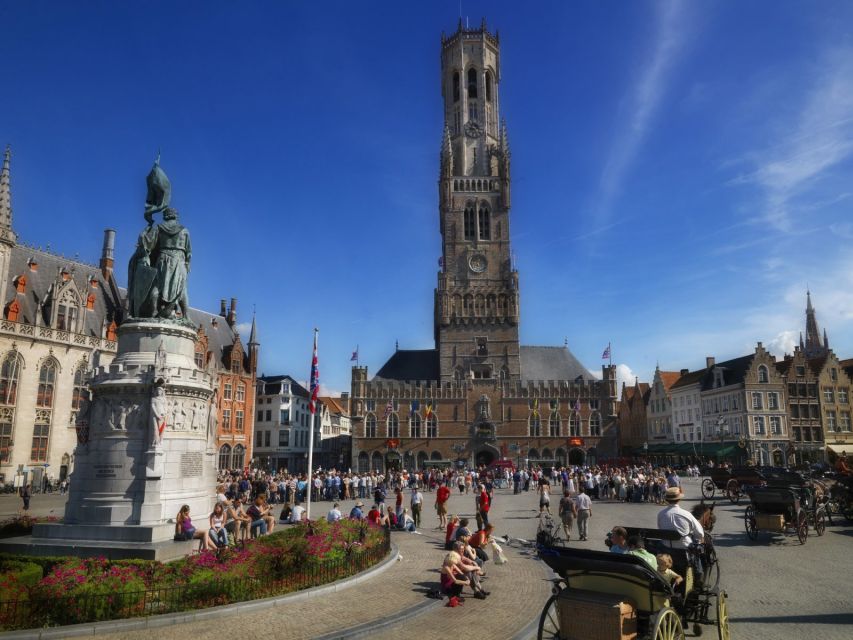
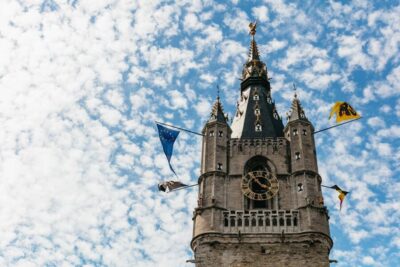
Next comes Market Square, with the towering 83-meter belfry. This is the sort of sight that hits you even if you are not a church-and-tower person. The belfry is tied to the city’s authority and pride, and the sheer height gives you instant orientation. Once you have the belfry in your mental picture, the rest of the medieval center feels more connected.
The practical value is simple: you see Bruges’s signature landmark and get context for what you are looking at while you are still fresh. If you try to do everything later on your own, you often miss the meaning and remember only the photos.
Jan Van Eyck Square: where trade, money, and power lived
After the Market Square area, you shift to Jan Van Eyck Square. This is where the city’s story tightens around commerce. Bruges was a key player in Flanders, and Jan Van Eyck Square was once at the center of Hanseatic Bruges, with major economic and financial activity running from the 13th into the 15th century.
What I like here is the way you get to look at the city like an accountant, not just a tourist. Your guide can point out the kinds of buildings that remind you Bruges was built on trade. Even if you only glance at facades, you start seeing patterns: civic buildings and merchant power were not separate in this city. They were neighbors.
Along the route you also pass sights tied to commercial life, including the Saaihalle (1399), Huis ter Beurze (the first stock exchange), and the Toll House. You might not stop at every single one for long, but you will get enough to understand why they matter.
Belgium reads best on foot, here is more of it
Burg and the civic heart: City Hall, Holy Blood, and the courthouse days
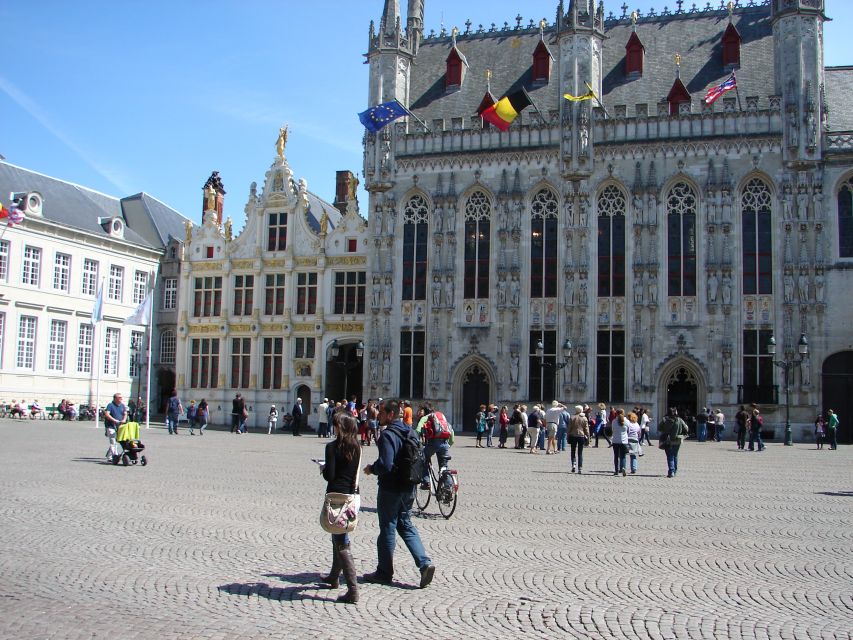
Then you reach Burg, one of Bruges’s most charming squares. This area is where the city shows its serious side. You are not only looking at pretty stones, you are standing in the center of civic identity.
The route includes the Gothic City Hall, the Basilica of the Holy Blood area, and the Liberty of Bruges, which today connects to the Municipal Archives. I like that this section turns Bruges into a story about governance and justice, not just aesthetics.
If you have ever wondered why so many European towns cluster power around a central square, this is your answer in physical form. Burg gives you that “oh, that is why” feeling. You can sense that these were the places where decisions got made, documents got kept, and public life happened.
One of the strongest ways guides add value here is by tailoring their explanations to your group. Some guides, like Jan and Paul, have a way of getting kids and teens engaged by linking the buildings to everyday questions: who worked where, what people traded, what power looked like in real life.
Fish Market, Tanners Square, and Dijver canal scenes
From Burg, you move toward the Fish Market and Tanners Square. These names are doing more work than you might expect. They remind you Bruges was not only about rulers and churches. It was also about the trades that kept the city running.
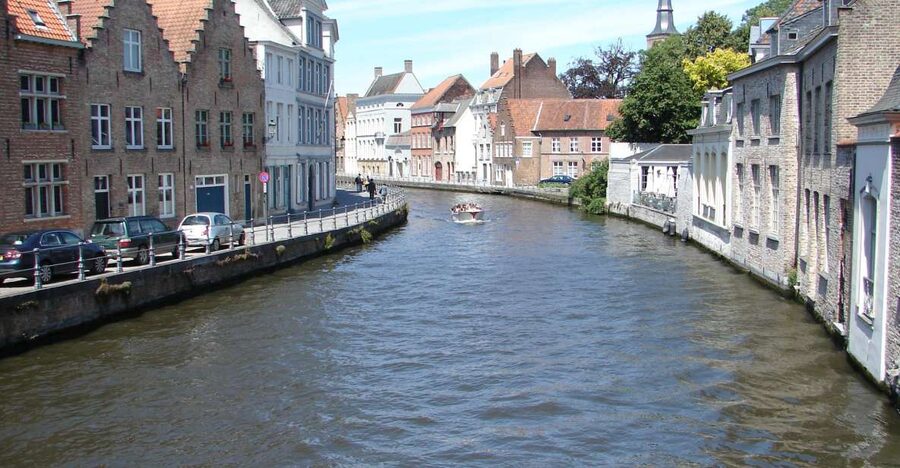
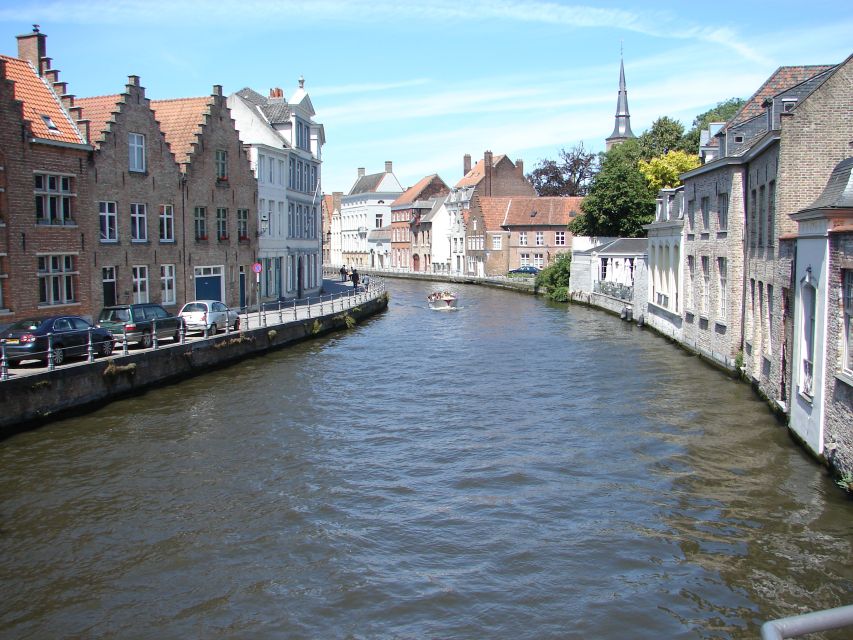
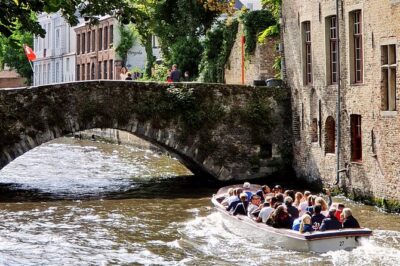
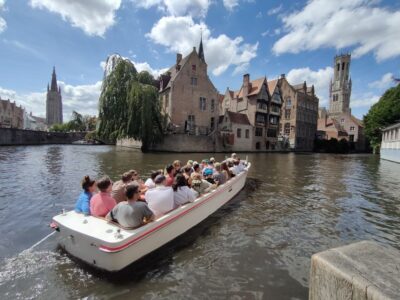
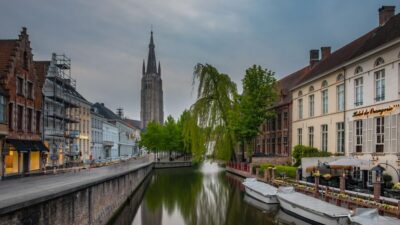
Next comes the Dijver, the picturesque canal area where Bruges’s visual charm becomes very real. This is also a good section for small photo breaks. One guide approach that comes up in bookings is pausing for a moment to catch canal life, like swans, during the walk toward Church of Our Lady, which fits the St. Mary’s area on many Bruges routes.
You pass St. Mary’s Church here as well, and it is a reminder that Bruges’s religious landmarks sit right alongside daily commerce. In a lot of cities, these worlds are separated. Here, they sit next to each other.
If you care about getting a sense of how people actually lived, this middle stretch is where it clicks. You are moving through places that are named for work, food, and materials.
St. John’s Hospital: a quick stop with real age and meaning
A brief stop brings you to St. John’s Hospital, one of the oldest preserved hospital buildings in Europe. Even if you do not go inside, the outside stop matters because it shifts the tone one more time. You are moving from trade and civic power into the caring side of medieval life.
This is a good moment to ask your guide a question. Something like what daily life looked like for patients, or how a place like this fit into the city’s social structure. Guides often make these stops memorable by connecting architecture to how humans used it.
If you have mobility needs, this is also where a flexible guide plan becomes important. There is at least one booking where a guide adapted the walk pace for a wheelchair, which is a useful reassurance that you do not have to “white-knuckle” a rigid route. I would still set expectations early, and let your guide know what pace works best for your group.
Minnewater and the Princely Béguinage: your walk’s calming payoff
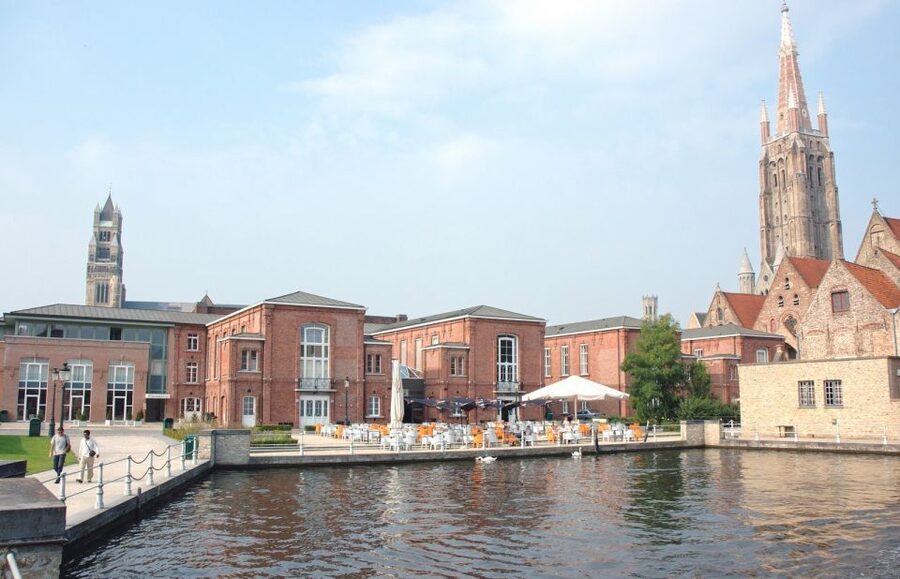
The tour ends at Minnewater and the Princely Béguinage. This is a strong finish for two reasons. First, Minnewater gives you that Bruges water-and-reflection mood. Second, the Béguinage is not just visually pleasing, it is historically distinctive, with a 13th-century legacy.
I like ending here because it breaks the pattern of squares and buildings. You get a quieter, more human-feeling space. After the civic and commercial stops, this is the emotional reset.
If you remember only one thing from the whole walk, make it this: Bruges is not only towers and facades. It is also communities, devotion, and everyday life shaped by faith and social responsibility. This ending makes that theme obvious.
How much is it, and does the price feel fair?
The price is $223 per group, sized for up to 20 people, and you get a private guide for 2 hours. That number is worth thinking about in group math terms.
For individuals or couples, it might feel like a splurge, especially since entrance fees and meals are not included. But for families, friends, or anyone traveling with a group that wants a custom pace, the per-person cost can drop fast. The private format is also not just about comfort. You gain better navigation, targeted explanations, and fewer wasted minutes in the wrong place.
You also get real practical value from the guide’s city fluency. A good guide can point out what is worth your time, what you can safely skip, and where to aim your independent wandering next. Some guides even share food and follow-up suggestions, and that matters more than it sounds after you exit the last square. You want your next step to be easy.
As with most walking tours, plan for possible extra costs if you choose to go inside sites. This tour includes the guiding, not entrance tickets.
What guides like Jan, Theo, Paul, and Dirk add to the city
Even though you book a route, you are really buying the guide. The best bookings highlight a few consistent qualities.
- Jan has been praised for strong knowledge and keeping teenage children engaged. That is a rare mix, and it is a big deal if your group includes teens who would rather be anywhere else.
- Theo has been noted for working smoothly with the group’s needs and pace, which is exactly what you want in a walking tour.
- Paul is described as passionate about history with a personalized approach driven by questions from the group.
- Erik and Dirk come up with the theme of city pride and the ability to adapt, whether it is rain or mobility concerns.
If you get one of these guide styles, you will feel it quickly. The walk becomes a conversation instead of a lecture. Even the small pauses, like taking a moment for photos or pointing out where to head next, make Bruges feel less overwhelming.
A tip to get more out of your 2 hours
Before you start walking, tell your guide what you want most, like history, architecture, canal views, or quick shopping stops. Then pick one or two questions you want answered. Your tour stays focused, and the guide has a clear target.
Who this Bruges tour is best for
This fits best when you want Bruges to be understandable fast.
- Families and groups with mixed ages, especially if you want teens engaged instead of bored.
- First-time visitors who want the essentials in a tight time window.
- Anyone who likes history explained in human terms, not just dates.
- Small groups who would rather pay for a guide than spend extra time figuring things out on their own.
If you are the type who wants hours inside churches and museums, you may feel the time limit. In that case, use this tour as your orientation, then plan a longer second day for indoor spots.
Should you book this Bruges Private 2-hour Walking Tour?
I think this is a smart booking if you want maximum orientation in minimal time. The route hits the big visual anchors, then adds meaning through trade-focused stops like Jan Van Eyck Square and the early finance links around Huis ter Beurze. The ending at Minnewater and the Béguinage keeps the emotional tone gentle, not rushed.
Book it if you have limited time, want a guide in your language, and prefer a personal pace. I would hesitate only if your main goal is long museum time or you need a lot of interior access, since entrance fees are not included and the walk is built for outside sightseeing.
If your group can spare two hours, this is one of the easiest ways to make Bruges feel like a place you understand, not just a pretty postcard.
FAQ
How long is the Bruges Private 2-hour Walking Tour?
The tour lasts 2 hours.
Is this tour private?
Yes, it is a private group tour.
What is included in the price?
The price includes a private guide for the full 2 hours.
What languages are available for the live guide?
The live guide is available in Spanish, Dutch, English, French, and German.
Where does the tour start?
The sample route departs from ’t Zand Square, at the concert hall area.
Is pickup included?
Yes. Pickup is included if your hotel is located in the historic center. If not, you meet at the Bruges train station or at the Tourist Office In & Out at ’t Zand 34, 8000 Brugge.
Are entrance fees or meals included?
Entrance fees and meals are not included.
More Belgian Tours
Every Belgium Review
Keep Reading Bruges
Newer Belgium reviews from the same corner of the country
- Explore the Instaworthy Spots of Bruges with a Local
★ 5.0 · 3 reviews - Best of Brussels Private Tour from Zeebrugge or Bruges
★ 4.0 · 3 reviews - Private taxi Transfer from Bruges to Amsterdam
★ 5.0 · 3 reviews - Bruges Photo Session By a Pro
★ 5.0 · 3 reviews - Private 3-hour walking tour of Bruges with official tour guide
★ 4.0 · 3 reviews
Bruges Tours, side by side.
 ★ 4.6From Brussels: Guided Day Trip to Bruges and GhentFrom $558,353 reviews
 ★ 4.7From Brussels: Bruges & Ghent Day Tour – 2 Fairytale CitiesFrom $578,242 reviews
 ★ 4.0Bruges and Ghent – Belgium’s Fairytale Cities – from BrusselsFrom $594,809 reviews
 ★ 4.8Bruges: Small Group Boat Cruise and Guided Walking TourFrom $514,102 reviews
 ★ 4.4Bruges: Walking Tour, Canal Boat Trip w/Beer Tasting OptionFrom $412,759 reviews
 ★ 5.0Historical Walking Tour: Legends of BrugesFrom $32,541 reviews
 ★ 4.4From Amsterdam: Bruges Day Trip in English with Boat OptionFrom $611,989 reviews
 ★ 4.6From Amsterdam: Bruges Day Trip in Spanish with Boat OptionFrom $611,866 reviews
Browse the lists this tour appears in