
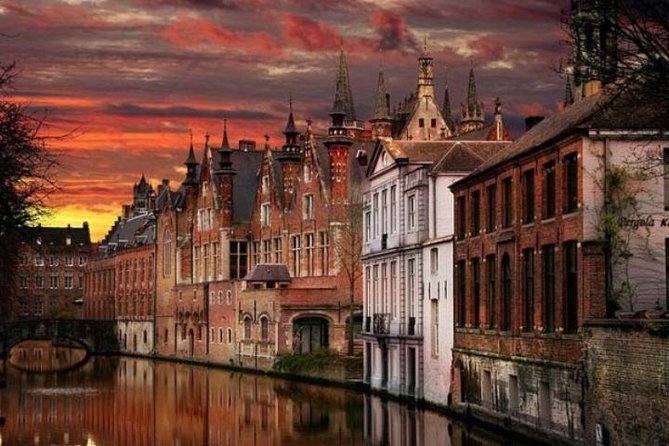
REVIEW · BRUGES
Bruges Walking Tour
Chocolates and canals, in two hours. This walking tour strings together Bruges’ most recognizable stops with a humorous, story-first guide and a real chocolate shop tasting along the way. You also get practical city guidance so you can keep enjoying the city after the walk, not just ticking off photos.
One thing to plan for: the meeting point is near the train station, so you’ll do some extra walking before you reach the densest sights, and sound can be harder in busy streets or rain. For the best experience, bring layers and be ready to focus when the group is moving fast.
In This Review
- Key points before you go
- Getting Your Bearings in Bruges, Without Burning Your Time
- Meeting Point at Carrefour Express Brugge Station, Then Head Toward the Core
- Tour Length and Group Size: About 2 to 2.5 Hours on Foot
- How You’ll Hear the Guide: Radios, Headphones, and Street Noise
- Stop 1: Minnewater Lake, the Love Story and the First Scenic Angle
- Stop 2: Begijnhof Founded in 1245, and a Hidden Social History
- Stop 3: Chocolalino for Artisan Chocolate, Plus Discounts
- Stop 4: Walplein and Bruges Beer History
- Stop 5: Rue de l’Étuve for Medieval House Clues
- Photo Break: The Little Bridge Moment
- Stop 6: Saint John’s Hospital and Medieval Healthcare
- Stop 7: Onze-Lieve-Vrouwekerk and Michelangelo’s Madonna and Child
- Stop 8: Gruuthusemuseum and the Power of a Family
- Stop 9: Boniface Bridge, Legend Included
- Stop 10: Quai du Rosaire (Rozenhoedkaai), Bruges’ Most Photographed Pier
- Stop 11: Huidenvettersplein, How Tanners Worked
- Stop 12: Burg Square, Town Hall, Court House, and Holy Blood
- Stop 13: Grote Markt (The Markt) for Your Food and Chocolate Game Plan
- Value Check: Paying About $26.43 for a Guided City Loop
- Who This Tour Fits Best (and Who Might Want a Different Plan)
- Should You Book This Bruges Walking Tour?
- FAQ
- How long is the Bruges Walking Tour?
- What is included in the price?
- Are any entrance tickets required for the stops?
- Is food or drink included?
- Do I need headphones?
- Where does the tour start and end?
- What if the tour gets canceled due to weather?
Key points before you go
- English-speaking professional guide with city tips throughout the route
- Artisan chocolate stop plus guidance on what makes chocolate truly handmade
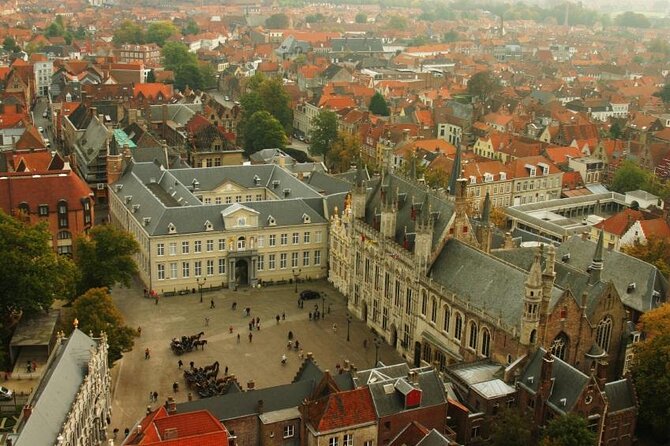
- Multiple photo moments like Boniface Bridge and Rozenhoedkaai
- Free entry for the listed stops, so you’re not juggling ticket lines mid-walk
- Headphones may be needed if radios are used, and the tour does not include them by default
Bruges again, from a different angle
- Bruges: Small Group Boat Cruise and Guided Walking Tour★ 4.8 · 4,102 reviews
- Bruges: Walking Tour, Canal Boat Trip w/Beer Tasting Option★ 4.4 · 2,759 reviews
- Historical Walking Tour: Legends of Bruges★ 5.0 · 2,541 reviews
- Bruges: Choco-Story Chocolate Museum Guided Tour w/Tastings★ 4.2 · 1,379 reviews
Getting Your Bearings in Bruges, Without Burning Your Time
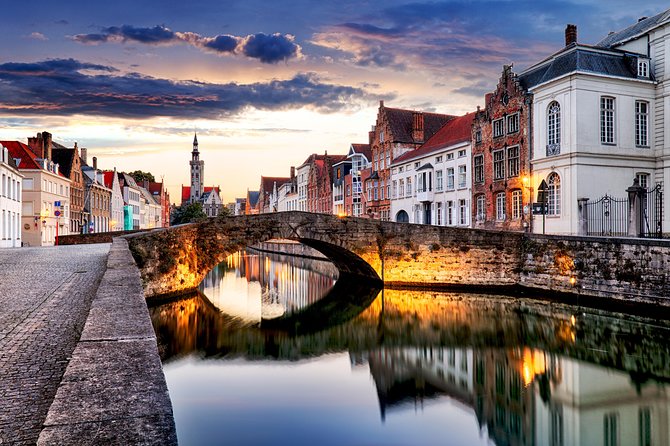
If you only have a short window in Bruges, this kind of walking tour makes the rest of your trip easier. Instead of wandering and guessing, you get a route that hits the city’s major landmarks, then gives you the context to recognize what you’re seeing.
I like that the tour is built around both icons and details. You’re not stuck only at the biggest squares. You also pass smaller lanes where the guide points out what to notice, like how medieval houses read from the street.
Meeting Point at Carrefour Express Brugge Station, Then Head Toward the Core
The tour starts at Carrefour Express Brugge Station (Hendrik Brugmansstraat 6/0002). It’s near public transportation, which is helpful if you’re arriving by train.
Here’s the practical consideration: the station area is not the heart of the medieval center. If you hate “extra miles” before the sightseeing begins, plan your energy accordingly and arrive early enough to settle in before the group departs.
The tour ends at Markt (Grote Markt). That’s a smart finish, since it drops you right where you can pick up dinner, wander side streets, and continue on your own.
Tour Length and Group Size: About 2 to 2.5 Hours on Foot
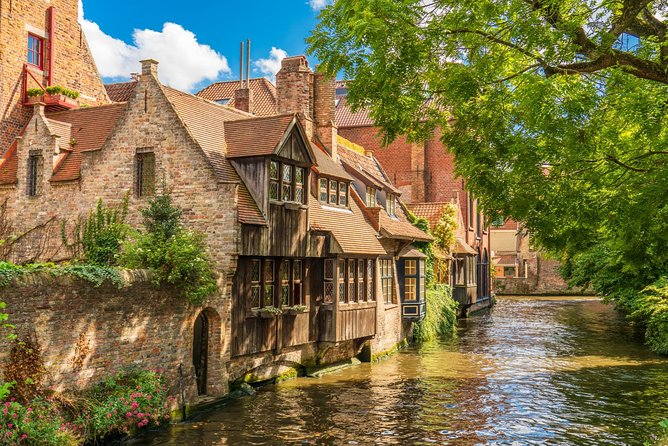
The tour is listed at about 2 hours, and it can run closer to 2.5 hours depending on what the guide thinks is best for your group. You’re walking a lot, and it’s designed for an efficient loop through key areas.
Group size is capped at 24 travelers. That usually keeps things lively but not chaotic, and it gives the guide room to manage questions during the stops.
How You’ll Hear the Guide: Radios, Headphones, and Street Noise
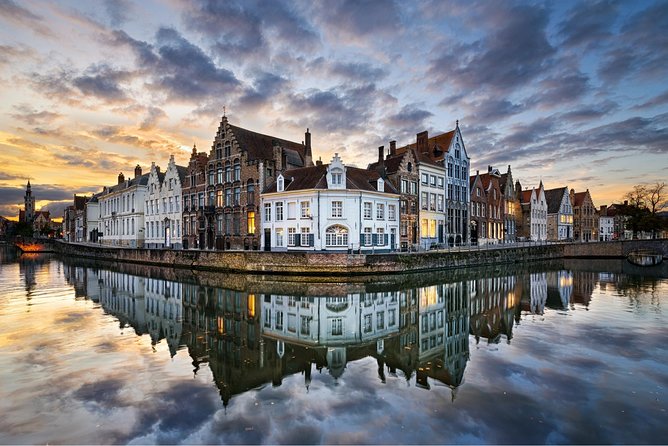
Bruges has a tourist regulation that sometimes means guides use radios with handheld receivers or headphones. The tour does not include headphones, but they offer them for a small fee if you need them.
This matters because some parts of Bruges are narrow and busy, and street sound bounces around. If you know you struggle to hear over crowds, bring your own headphones. If you don’t, at least arrive with the expectation that audio can be a challenge on the go.
Belgium reads best on foot, here is more of it
Stop 1: Minnewater Lake, the Love Story and the First Scenic Angle
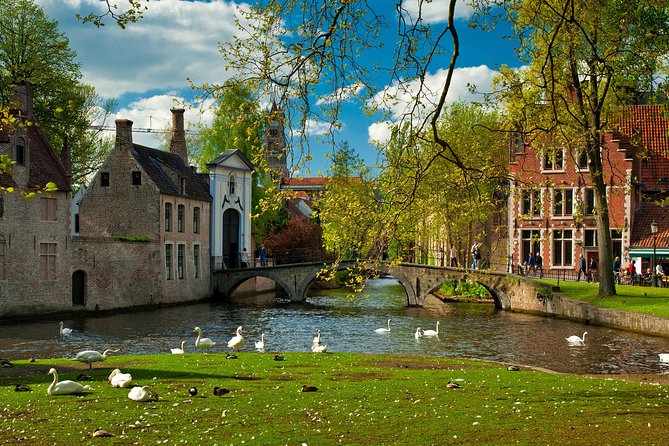
You begin at Minnewater Lake, also called the Lake of Love. This is a great first stop because it instantly sets the mood: calm water, classic Bruges views, and an opening history lesson that helps you connect later sights back to the city’s past.
Time on this stop is short, about 5 minutes, so use it wisely. Quick photos are perfect here, but also pay attention to the story the guide connects to the lake.
Stop 2: Begijnhof Founded in 1245, and a Hidden Social History
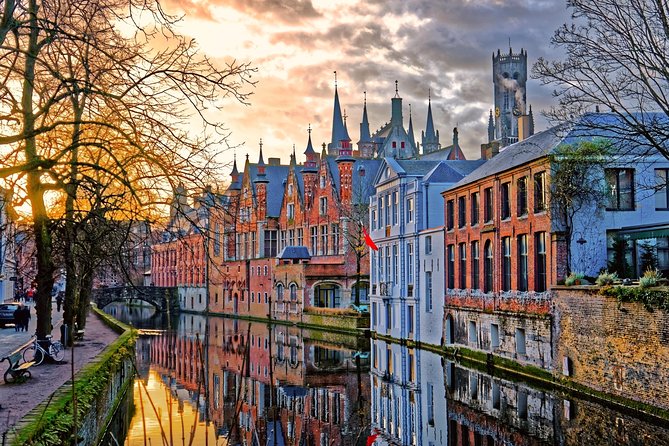
Next is the Begijnhof, founded in 1245. This is one of those Bruges places that feels quiet right after the busier streets. The guide frames it around the history of a group of women and the role this community played long ago.
Even with a brief visit, the Begijnhof gives you a contrast from the grand squares. It’s a reminder that Bruges wasn’t only ruled by nobles and merchants, it also held communities with strong internal life.
Stop 3: Chocolalino for Artisan Chocolate, Plus Discounts
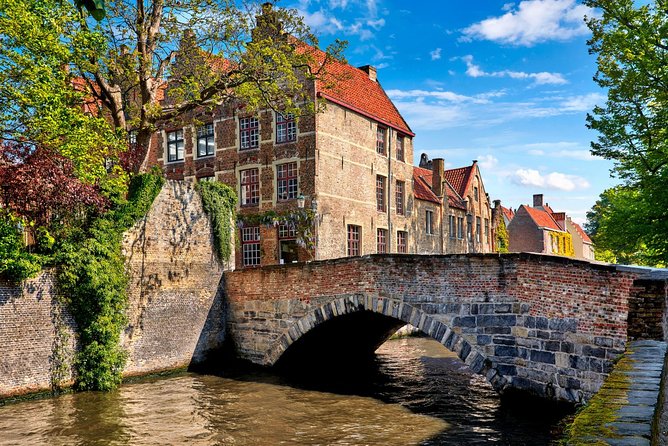
The chocolate stop is Chocolalino, an artisan chocolate shop. You’ll get a chance to taste artisan chocolates, and the guide shares tips for spotting the difference between handmade chocolate and more industrial styles.
This is also where the tour adds real value beyond stories: tour members get exclusive discounts in chocolate shops around Bruges. That can easily turn the tasting into a reason to buy something good after the walk.
Quick practical tip: chocolate tasting is best if you go in with a little room in your stomach. If you eat a huge breakfast right before the tour, the tasting will still be enjoyable, but less impactful.
Stop 4: Walplein and Bruges Beer History
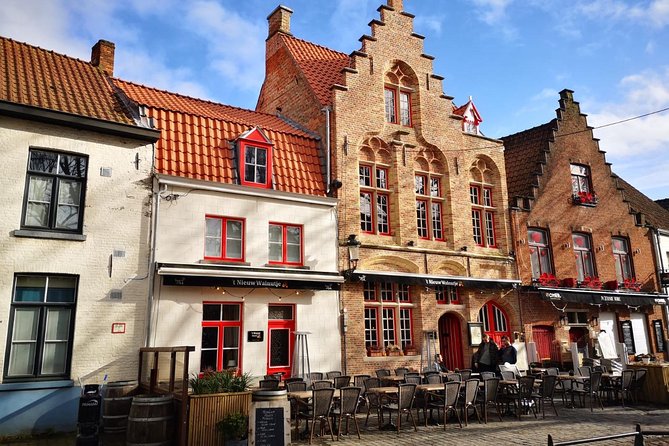
At Walplein, the guide explains beer history in Bruges. This stop is only about 5 minutes, but it’s useful because it broadens your view of the city. Bruges isn’t only medieval churches and canals, it’s also old traditions of brewing and everyday life.
When you later see breweries or beer-related signs on your own, you’ll have a framework for what you’re looking at.
Stop 5: Rue de l’Étuve for Medieval House Clues
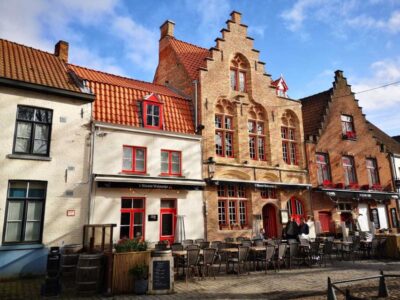
Then it’s Rue de l’Étuve, where you learn how to identify original medieval houses. This kind of street-level skill is one of the best reasons to do a guided walk.
Instead of just admiring buildings, you start reading them. That makes self-guided wandering more satisfying, because you’re no longer looking at a blur of façades.
Photo Break: The Little Bridge Moment
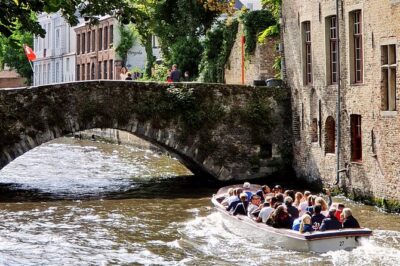
After Rue de l’Étuve, you get a short window for photos from a little bridge. These quick photo breaks are more than a pause. They’re also a chance to catch Bruges from an angle that most people miss if they rush straight to the biggest squares.
If you’re traveling with a camera phone tripod fan, this is the moment to take advantage of it since the stop is specifically timed.
Stop 6: Saint John’s Hospital and Medieval Healthcare
Next comes Saint John’s Hospital (Old St. John’s Hospital). The guide explains how the health system in medieval Bruges worked. This is a thoughtful change from the lighter stops, and it helps explain how communities supported sick and vulnerable people long before modern hospitals.
It’s also a reminder that Bruges history isn’t only royal and religious. It’s built on practical needs, including care.
Stop 7: Onze-Lieve-Vrouwekerk and Michelangelo’s Madonna and Child
You’ll be in front of the Church of Our Lady (Onze-Lieve-Vrouwekerk). From the outside, the guide points out curiosities about the white marble Madonna and Child sculpture by Michelangelo that is inside the church.
Important practical note: what’s guaranteed here is the exterior explanation. If you want to see Michelangelo’s work in person, plan for a separate time to enter the church later.
Even if you don’t step inside during the tour, this stop gives you context so that a later visit feels more meaningful.
Stop 8: Gruuthusemuseum and the Power of a Family
The tour continues to the area in front of Gruuthuse and the Gruuthusemuseum. The guide talks about one of Bruges’ most famous and powerful families between the 17th and 18th centuries.
This stop works well if you like old social structure. It also helps you understand why certain buildings and institutions in Bruges have the weight they do.
Stop 9: Boniface Bridge, Legend Included
At Boniface Bridge, you get a chance to hear the bridge legend and snap a few photos. This is one of those Bruges moments where the city feels like a story you can walk through.
Take a few minutes here even if you think you already saw the bridge in photos online. The real value is the guide’s explanation, not just the postcard angle.
Stop 10: Quai du Rosaire (Rozenhoedkaai), Bruges’ Most Photographed Pier
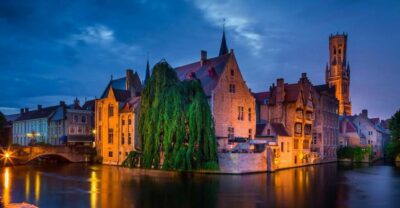
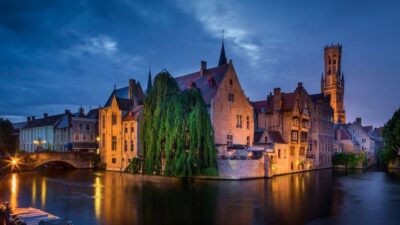
Next is Quai du Rosaire / Rozenhoedkaai, which is described as the most photographed place in Bruges. The guide explains the history around the Pier of the Roses, and you get time to take pictures.
This is a classic “everyone knows the spot” location, but the guided context makes it more than a quick stop. You’ll know what you’re looking at and why the area became iconic.
Stop 11: Huidenvettersplein, How Tanners Worked
At Huidenvettersplein (Tanners square), you learn about how tanners worked in medieval Bruges. This stop keeps the tour grounded in work and craft.
It also helps you see the city’s medieval economy as something that shaped everyday neighborhoods. Even brief stops like this can change how you interpret the city layout later.
Stop 12: Burg Square, Town Hall, Court House, and Holy Blood
Burg Square is one of the big ones. Here you see and hear about the Gothic Town Hall, the Old Court House, and the Basilica of the Holy Blood.
This stop brings together civil and religious power. That combination explains why Burg Square often feels like the political center in photos, even when you’re walking through a city that looks like it’s all leisure.
Stop 13: Grote Markt (The Markt) for Your Food and Chocolate Game Plan
The tour wraps at The Market Square (Grote Markt). The guide explains the buildings around the square and shares tips on where to eat and which shops to use for traditional chocolate.
This is a strong finish because it turns your guided walk into a plan for the rest of your day. If you’re unsure where to go next, this is where you get direct, local suggestions.
Value Check: Paying About $26.43 for a Guided City Loop
At around $26.43 per person, this is priced like a mid-range walking tour, but it can feel like good value because several parts reduce friction for you.
You get:
- A professional English-speaking guide
- A structured walking route through major areas
- City tips to help you keep moving after the tour
- A chocolate tasting moment at an artisan shop, plus member discounts
- Free admission listed for the tour stops you visit
What’s not included is food and drinks, and you may need to buy or rent headphones if radios are used. Still, for many people, the guide plus the chocolate stop plus the targeted sightseeing makes the math work out, especially if Bruges is a one-day stop for you.
Who This Tour Fits Best (and Who Might Want a Different Plan)
This tour is a great match if you:
- Want a fast orientation to Bruges’ most iconic spots
- Love chocolate and appreciate the difference between handmade and industrial
- Like a guide who brings stories and humor into the walk
- Prefer a route that keeps you moving between key sights without getting stuck in crowds
It may be less ideal if you:
- Don’t want extra walking from a station-area meeting point
- Struggle with hearing in loud streets or in rain
- Want a slow, sit-down pace with lots of time to linger
Should You Book This Bruges Walking Tour?
Yes, if you want an efficient Bruges overview tied to standout stops like Minnewater Lake, Begijnhof, and Grote Markt, plus an artisan chocolate tasting with shopping discounts. It’s also a smart idea if you’re traveling in English and want a guide to explain what you’re seeing as you go.
Book with eyes open about two things: you’ll walk a fair amount, and sound can be tricky in crowds or bad weather. If the forecast looks rough, remember the tour requires good weather and may switch dates or refund if it has to cancel.
FAQ
How long is the Bruges Walking Tour?
It lasts about 2 hours on average, and it may vary depending on what the guide thinks is best for the group.
What is included in the price?
The price includes a professional English-speaking guide and city tips, plus the guided walking tour.
Are any entrance tickets required for the stops?
Admission is listed as free for the stops included in the itinerary.
Is food or drink included?
No. Food and drinks are not included, but the guide can point you toward good places to eat.
Do I need headphones?
Headphones are not included, but radios with headphones may be used due to tourist regulations. If you do not have headphones, the tour offers them for a small fee.
Where does the tour start and end?
It starts at Carrefour Express Brugge Station and ends at Market Square, also known as Markt or Grote Markt.
What if the tour gets canceled due to weather?
If it’s canceled due to poor weather, you will be offered a different date or a full refund.
More Belgian Tours
Every Belgium Review
Keep Reading Bruges
Newer Belgium reviews from the same corner of the country
- Explore the Instaworthy Spots of Bruges with a Local
★ 5.0 · 3 reviews - Best of Brussels Private Tour from Zeebrugge or Bruges
★ 4.0 · 3 reviews - Private taxi Transfer from Bruges to Amsterdam
★ 5.0 · 3 reviews - Bruges Photo Session By a Pro
★ 5.0 · 3 reviews - Private 3-hour walking tour of Bruges with official tour guide
★ 4.0 · 3 reviews
Bruges Tours, side by side.
 ★ 4.6From Brussels: Guided Day Trip to Bruges and GhentFrom $558,353 reviews
 ★ 4.7From Brussels: Bruges & Ghent Day Tour – 2 Fairytale CitiesFrom $578,242 reviews
 ★ 4.0Bruges and Ghent – Belgium’s Fairytale Cities – from BrusselsFrom $594,809 reviews
 ★ 4.8Bruges: Small Group Boat Cruise and Guided Walking TourFrom $514,102 reviews
 ★ 4.4Bruges: Walking Tour, Canal Boat Trip w/Beer Tasting OptionFrom $412,759 reviews
 ★ 5.0Historical Walking Tour: Legends of BrugesFrom $32,541 reviews
 ★ 4.4From Amsterdam: Bruges Day Trip in English with Boat OptionFrom $611,989 reviews
 ★ 4.6From Amsterdam: Bruges Day Trip in Spanish with Boat OptionFrom $611,866 reviews
Browse the lists this tour appears in