
REVIEW · BRUSSELS
Excursion to Bruges and Ghent by bus from Brussels
Two medieval cities, one long but smart day. This Brussels bus excursion strings together Bruges canals and Ghent landmarks with a Spanish-speaking guide and lots of photo-friendly stops.
I like the mix of guided walking plus about 1.5 hours free time in each city, so you are not stuck listening the entire day. You also get story time that makes big sights easier to understand, from the Begijnhof founded in 1245 to Ghent’s Saint Bavo’s Cathedral and its Van Eyck painting.
One thing to plan around: this is a 10.5-hour outing with a packed rhythm, so it can feel long. And if the day’s flow shifts, you may end up with less time in Bruges than you hoped.
In This Review
- Key things you’ll notice on this Bruges and Ghent day trip
- How this one-day Bruges and Ghent combo actually feels
- Brussels bus logistics, meeting point, and what to do first
- Bruges on foot: from Minnewater Lake to the Markt square
- Markt Square and Rozenhoedkaai: the stops that sell Bruges
- The Bruges chocolate tasting break, and why it’s worth it
- Getting to Ghent and starting the guided walk in the center
- Ghent civic power: Stadhuis, Belfry, and Saint Bavo’s Cathedral
- Guild houses, bridges, riverfront views, and the Meat House stop
- Ghent free time: when to wander and how to avoid rushing
- Spanish guide quality, radios, and how to make the day smoother
- Price and value at around $54.45 for a full-day route
- Who should book this, and who should think twice
- Should you book this Bruges and Ghent bus tour?
- FAQ
- Is food included on this trip?
- How long is the tour, and how much free time do I get?
- What language is the guide?
- Do I need to bring headphones?
- Where do I meet the group?
- Is hotel pickup included?
- What should I know about cancellations?
Key things you’ll notice on this Bruges and Ghent day trip
- Spanish-speaking guides who tell you what you are looking at, not just where to stand
- Bruges highlights built around the best photo spots like Rozenhoedkaai and Dijver Canal
- Ghent “wow” stops including the Town Hall, the Belfry with the dragon, and Saint Bavo’s Cathedral
- Local treats and small detours such as artisan chocolate tasting and the cuberdon sweet
- Independent time is limited, roughly 1.5 hours per city, so wear comfy shoes
Brussels has more to it than one route
- Brussels: Atomium Entry Ticket with Design Museum Ticket★ 4.4 · 9,254 reviews
- From Brussels: Guided Day Trip to Bruges and Ghent★ 4.6 · 8,353 reviews
- From Brussels: Bruges & Ghent Day Tour – 2 Fairytale Cities★ 4.7 · 8,242 reviews
- Choco-Story Brussels: Chocolate Museum Entrance with Tasting★ 4.3 · 4,883 reviews
How this one-day Bruges and Ghent combo actually feels
Bruges and Ghent are close enough to pair in a day, but they are also different enough that you will want both. Bruges gives you that postcard look, canals, cobblestones, and historic squares. Ghent feels more lived-in, with big church architecture and a cathedral that holds one of the most famous works of Western art.
What makes this trip work is the pacing. You get short, guided stops that point out key details, then you get room to wander on your own. That is important, because once you’re in Bruges, you will want to follow the canals without checking your phone every minute.
The main tradeoff is time. This is not a slow “sit and admire” day, it is a full-day route with lots of quick transitions.
Brussels bus logistics, meeting point, and what to do first
You start at Carrefour de l’Europe in central Brussels, right by public transport. The tour begins at 8:30 am, and you return to the same meeting point at the end of the day.
On the bus, expect an air-conditioned coach and a maximum group size of 45 travelers. That size is big enough to feel efficient, but small enough that the guide can still manage check-in points and walk together time.
At the first Bruges drop-off area, you get a brief moment before walking into the main historic core. There is also a short built-in bathroom break right after the bus parks, and the guide gives you a specific return time. That small detail matters, because Bruges tours can get tight fast once you start moving.
Bruges on foot: from Minnewater Lake to the Markt square
The Bruges portion is packed with “anchor sights,” the ones that make the city look the way photos do. You begin with canal-side and lakeside scenery, then you step into charming interior lanes and squares.
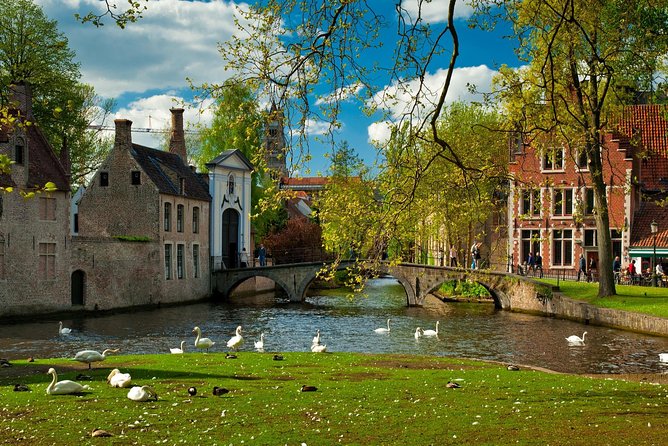
Minnewater Lake, the Lake of Love is a great opener because it helps you settle into the mood immediately. The guide ties what you see to local storytelling, so the calm water and the swans do more than look pretty.
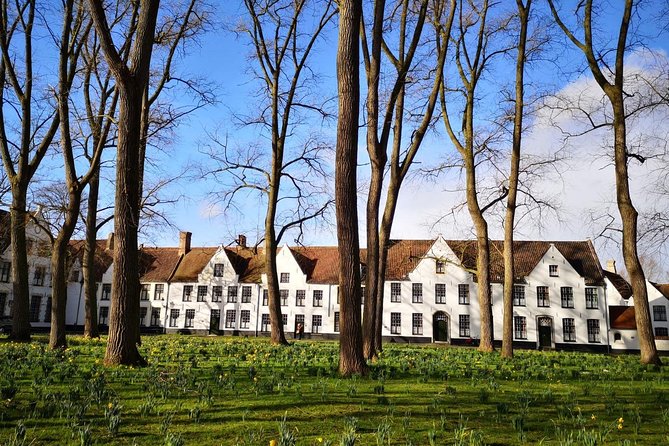
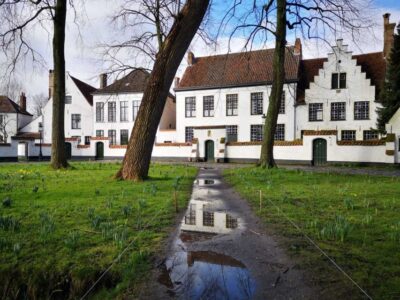
Next comes the Begijnhof (Beguinario), founded in 1245. This is one of those stops where the setting looks simple, but the history is the point. If you like religious and social history, you will likely appreciate the guide’s explanation of how this unusual community worked.
Then you move through smaller “readable” parts of Bruges, places that are easy to miss if you are just trying to get from A to B. You pass spots like Stoofstraat, where the guide shows you how to spot original medieval houses. And you stop at Walplein, where you hear how Bruges beer ties into the city’s past.
Even the quirky legends get time. For example, St Bonifacius Bridge comes with a story and a quick chance for photos. It’s one of the moments where the tour feels less like a checklist and more like a guided walk with personality.
You also get a classic Bruges landmark circuit. The stops include Saint John’s Hospital, and Onze-Lieve-Vrouwekerk (Church of Our Lady), with a special note about the white marble Virgin and Child sculpture created by Michelangelo that is found inside.
Markt Square and Rozenhoedkaai: the stops that sell Bruges
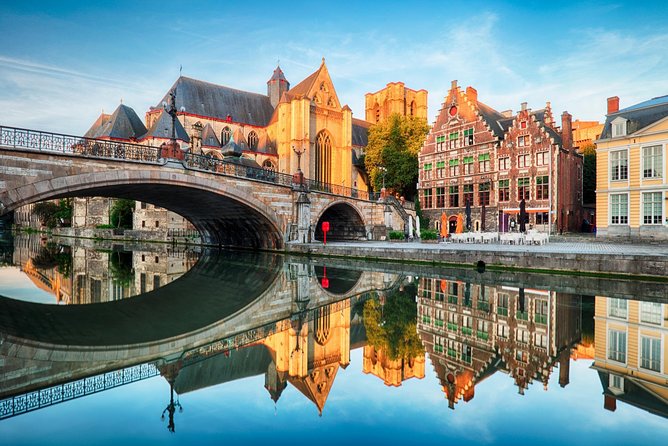
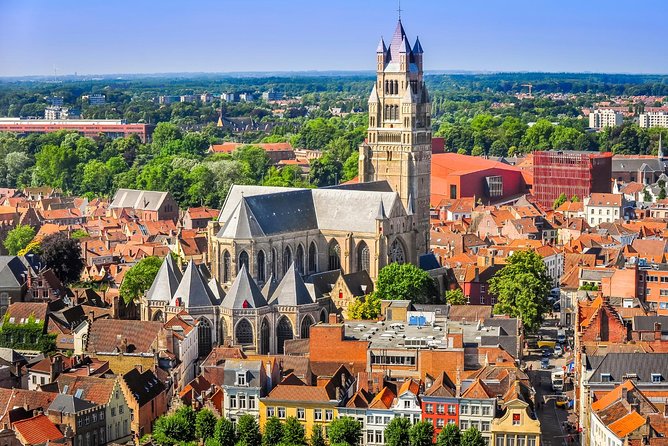
In Bruges, Burg Square is where you get the big civic look. You see the Gothic town hall, the old courthouse area, and the Basilica of the Holy Blood. The guide’s job here is to connect architecture to the city’s medieval power, which makes you notice more than just the façade.
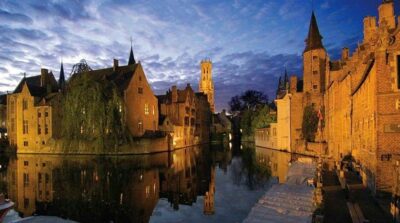
Then it’s time for Rozenhoedkaai, the city’s most photographed canal spot. The guide explains the history behind it and gives you time for photos. This is one of those areas where if you arrive with patience, you can catch good light and a clean view before the crowd thickens.
After that, you walk through more working-life details like Huidenvettersplein (Tanners Square), where the guide explains how tanners worked in medieval Bruges. That kind of stop is surprisingly memorable, because it reminds you Bruges was once an active economy, not just a museum.
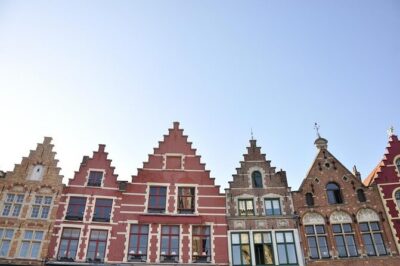
Finally, you reach the Grote Markt (the Markt) for a rounded-off explanation of the buildings around the square, plus practical tips on what to eat and where to shop for traditional chocolate. The guide also flags when to meet for the bus to Ghent, which is key because free time starts after this point.
Bruges again, from a different angle
The Bruges chocolate tasting break, and why it’s worth it
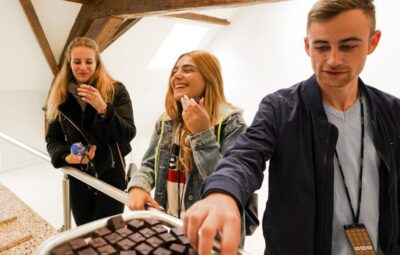
You get a short stop at Chocolalino, described as a certified artisan chocolate shop. The value here is not that it is a “museum chocolate store,” it’s that you get a guided sense for what makes chocolate different.
There is a tasting, and the guide also shares tips for how to distinguish handmade chocolate from industrial chocolate. Even if you are not a serious chocoholic, it helps you shop smarter later. If you are planning to bring chocolate home, this stop can turn into a practical shopping advantage.
One more smart point: the tasting stop is short, so it does not eat your entire free-time block.
Getting to Ghent and starting the guided walk in the center
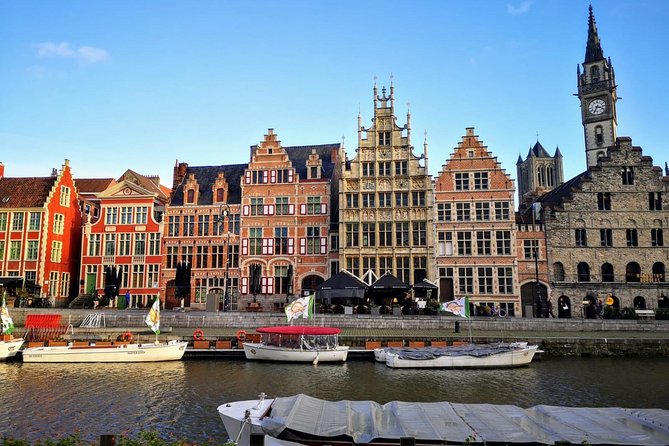
After Bruges free time, you meet the guide and return to the bus. The transfer to Ghent is part of the day, and then you arrive in a city that feels equally historic but with a different energy.
Ghent is set up so the center is walkable, and your guided portion begins right away. There is a quick orientation moment, then the walk starts with the Civic core.
If you want to make the most of Ghent, arrive ready to slow down your camera. Ghent has fewer “perfect single-photo angles” than Bruges, but it makes up for it with architecture you can actually notice at walking pace.
Ghent civic power: Stadhuis, Belfry, and Saint Bavo’s Cathedral
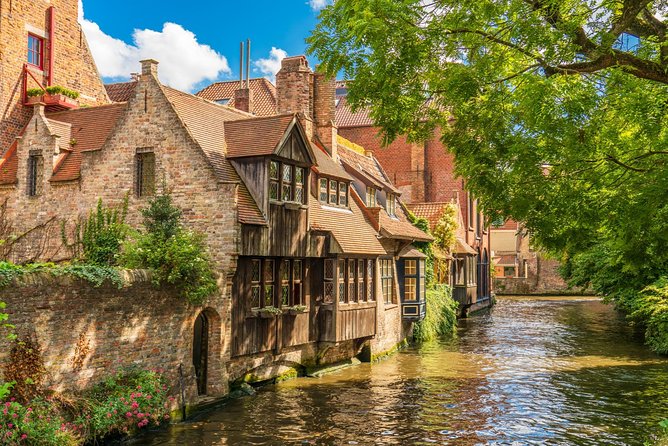
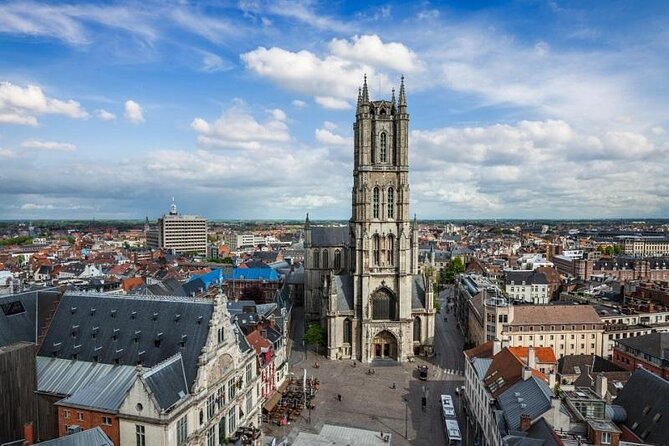
Your Ghent tour begins at the Ghent Town Hall (Stadhuis). The guide explains the different architectural styles you see on the building, so you know what you are looking at instead of just admiring stonework.
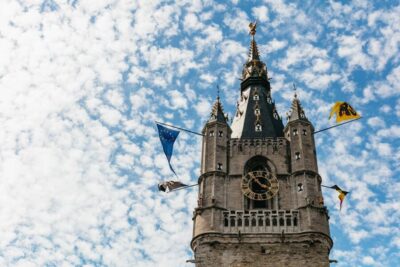
Then you reach Het Belfort van Gent, the Belfry tower. The guide talks about the iconic dragon and the tower’s history. It’s one of those moments where the legend gives you a mental map for the city’s identity.
The biggest visual and cultural anchor is Saint Bavo’s Cathedral. You spend time on the exterior and also inside the cathedral. The highlight here is the famous Van Eyck work The Adoration of the Mystic Lamb, which is kept in the church. Even if you know almost nothing about religious art, the guide’s framing helps you understand why this matters.
This is a good time in the day to take a breath. The cathedral gives you a reset from all the outdoor walking, and the stories are easier to absorb when you are not trying to keep moving.
Guild houses, bridges, riverfront views, and the Meat House stop
After the cathedral, the route continues through smaller but characterful stops. Saint Nicholas Church appears as a quick “churches do more than stand there” moment, since Belgian churches often host concerts and events.
You also get a stop at the Masons’ Guild Hall, where the guide explains what guild houses are and what is special about their original façades. Guild architecture can look like decoration until someone explains what the buildings were for.
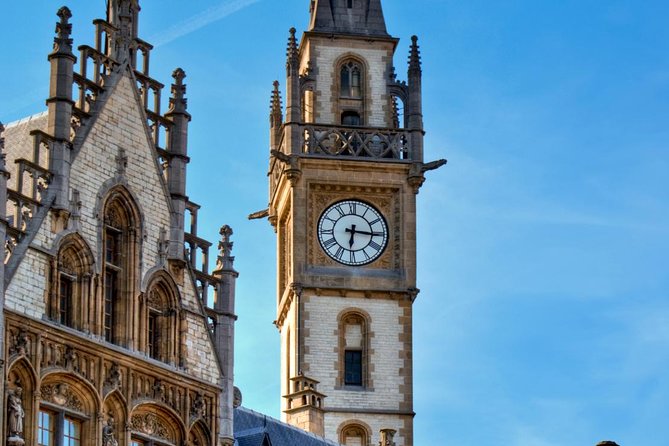
At Korenmarkt, you learn about the history connected to the post office location. Then it’s over to St Michael’s Bridge, where you get photo time and hear about the tower connected to the Church of San Miguel.
Next is one of Ghent’s best sightseeing stretches: the riverfront banks of the Lys, including Graslei and Korenlei. The guide points out buildings along the water, including grain house history and a sense of how modern landmarks fit into the older fabric. Even if you skip taking a ton of photos, walking this part slows you down in a good way.
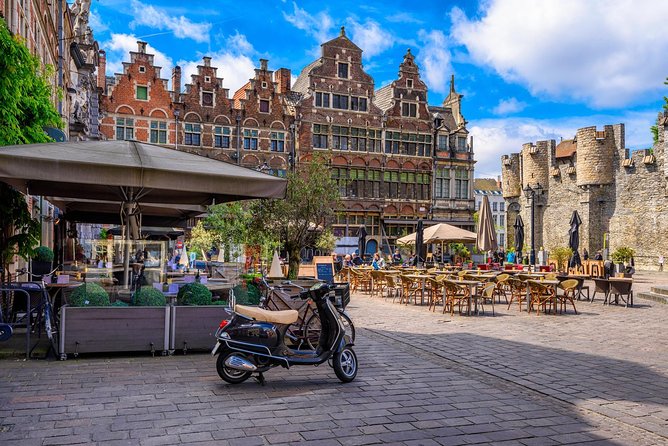
Then you arrive at the Meat House at OOOST, with history reaching back to the 15th century. It was originally a covered market, and you can see why it mattered: it was a central place for everyday life.
Right near there is a quick street-stall stop for a sweet called cuberdon. It’s a tiny pause, but it’s the kind of local food detail that makes the day feel more personal.
Ghent free time: when to wander and how to avoid rushing
You end the guided portion at Sint-Veerleplein, where the guide finishes with practical tips on where to eat and which souvenir shops are best. You also get reminders about when and where to catch the bus back to Brussels.
Then you get about 1.5 hours free time in Ghent. That window is long enough to walk the river again, duck into a café, or revisit a sight you liked more than you expected.
This is also where you can fix any timing mismatch. A couple of guides adjustments can happen in real life, and Ghent tends to absorb extra walking better than Bruges. If your Bruges time felt short, you will likely appreciate having a solid chunk in Ghent.
Spanish guide quality, radios, and how to make the day smoother
The guides are the standout strength in the feedback. Names that show up repeatedly include Guiomara, Eduardo, Irene, Ana, Carlos, Lucía, and Unai. What they have in common is active attention, clear explanations, and a practical, friendly approach.
Because this is a popular, regulated area in Bruges, you may use radios with headphones at times. You can use headphones you already have if they have a 3.5 mm jack and are not wireless. If you do not have your own, you can buy headphones for €1.
This matters for comfort and focus. If you forget headphones, you may end up borrowing or buying last minute, and the day is tight already. I’d treat headphones as a must-pack item.
One more practical note: there are mixed comments about the bus. Most people highlight comfortable seats and a clean coach, but there are a couple complaints about comfort and even about a driver’s routing knowledge. That’s not the average experience, but it’s a reminder that bus performance can vary day to day.
Price and value at around $54.45 for a full-day route
For about $54.45 per person, you are paying for a lot of structure: round-trip air-conditioned bus, Spanish-speaking guidance, guided walking time in both cities, and short breaks plus free time blocks.
A day like this would cost you more if you tried to do it alone by transit and paid separate tour guides for two UNESCO-level cities. Here, the value is in not having to plan the order, navigate transport between cities, and track where to meet next.
The tradeoff is that you are not getting a leisurely pace. You are paying for efficiency, so you need to show up with the right expectations. If you want lots of downtime, consider a slower city-by-city plan.
Also, meals are not included. Luckily, the guide offers tips, and the route includes practical moments where you can grab snacks and refuel during free time.
Who should book this, and who should think twice
I’d recommend this tour if you:
- Want a first-time overview of both Bruges and Ghent without doing heavy logistics
- Like walking tours but still want time to wander on your own
- Prefer a Spanish-speaking guide and clear storytelling at each key stop
- Can handle a full day of transitions, and you enjoy photo stops even when they are quick
I’d think twice if:
- You are looking for a slow, museum-like day with long sits and minimal walking
- You are extremely sensitive to schedule changes. Some people reported that the order and timing felt different than expected, leading to less time in Bruges and more time in Ghent
- You have mobility limitations that make frequent short stops and walking tough
If you are traveling with very young kids, there is a specific rule: children under 2 years need a safety seat on the bus, and you should bring the proper chair.
Should you book this Bruges and Ghent bus tour?
Book it if you want the best parts of both cities in one day, with guided context and enough free time to still feel like you experienced the places, not just passed through them. The strong guide feedback, plus the mix of major sights and smaller details like artisan chocolate tasting and cuberdon, makes it feel like more than a basic sightseeing bus loop.
Skip it, or adjust your expectations, if your top priority is extended free time in Bruges. This trip is efficient by design, so even though Bruges is famous and gorgeous, the day can feel packed. Bring a good attitude, comfy shoes, and a pair of wired 3.5 mm headphones if you have them, and you’ll set yourself up for a smoother day.
If you do go, use the free-time blocks on purpose. In Bruges, follow the canals from Rozenhoedkaai and drift back toward the Markt area. In Ghent, focus on the riverfront stretch and then pick one café stop to make the day feel like yours, not just a schedule.
FAQ
Is food included on this trip?
No. Food and drink are not included, but the guide will point you to good places to eat during free time.
How long is the tour, and how much free time do I get?
The tour is approximately 10 hours 30 minutes. You get about 1.5 hours of free time in Bruges and about 1.5 hours of free time in Ghent (timing can depend on traffic and the group pace).
What language is the guide?
The tour is led by a Spanish-speaking guide.
Do I need to bring headphones?
Sometimes Bruges regulations require radios with headphones. If you have your own, you can use wired 3.5 mm headphones. If you do not have any, you can buy headphones for €1.
Where do I meet the group?
The meeting point is Carrefour de l’Europe, 1000 Bruxelles, Belgium, and the tour ends back at the same meeting point.
Is hotel pickup included?
No. Pick up and return to the hotel are not included.
What should I know about cancellations?
You can cancel for a full refund up to 24 hours before the experience starts. The tour also depends on good weather, and if it’s canceled due to poor weather, you’ll be offered a different date or a full refund.
Ghent, Continued
Keep Reading Bruges
More Ways to See Brussels
Newer Belgium reviews from the same corner of the country
- Discover the secrets of Brussels while playing
★ 5.0 · 3 reviews - Standard vehicle from Charleroi airport to city of Brussels
★ 4.5 · 3 reviews - Private tour to Ghent from Brussels (5hours walk & drive)
★ 5.0 · 3 reviews - Full day Brugge & Ghent: the gems of Flanders
★ 5.0 · 3 reviews - Private tour : Best of Brussels half day From Brussels
★ 5.0 · 3 reviews
Brussels Tours, side by side.
 ★ 4.4Brussels: Atomium Entry Ticket with Design Museum TicketFrom $199,254 reviews
 ★ 4.6From Brussels: Guided Day Trip to Bruges and GhentFrom $558,353 reviews
 ★ 4.7From Brussels: Bruges & Ghent Day Tour – 2 Fairytale CitiesFrom $578,242 reviews
 ★ 4.3Choco-Story Brussels: Chocolate Museum Entrance with TastingFrom $184,883 reviews
 ★ 4.0Bruges and Ghent – Belgium’s Fairytale Cities – from BrusselsFrom $594,809 reviews
 ★ 4.0Brussels: Hop-On Hop-Off Bus TourFrom $294,016 reviews
 ★ 4.5Brussels: Entry Ticket to Mini-EuropeFrom $232,870 reviews
 ★ 5.0Hungry Mary’s Famous Beer and Chocolate Tour in BrusselsFrom $1192,258 reviews
Browse the lists this tour appears in