
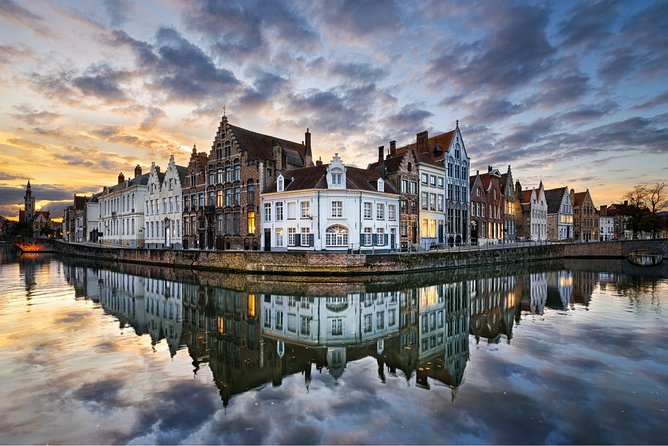
REVIEW · BRUGES
Guided tour of Bruges
Bruges gets better with a script in Spanish. This guided walk strings together the city’s medieval sights with clear stories in Spanish-language, plus a mobile ticket you can pull up on your phone. It’s a tight, practical route that helps you understand what you’re looking at fast, without turning your day into a self-guided scavenger hunt.
I especially like the way the tour hits big mood-makers early, with Minnewater and the Beguinage setting the tone. I also like the ending at Chocolalino, where you get a real tasting and guidance on what makes chocolate artisan versus industrial.
One thing to plan for: Bruges can require radios and headphones depending on crowd levels. If you end up without them, the guide can sell you a pair for €1, and you will want to arrive at the meeting point on time.
In This Review
- Key highlights you will feel on the street
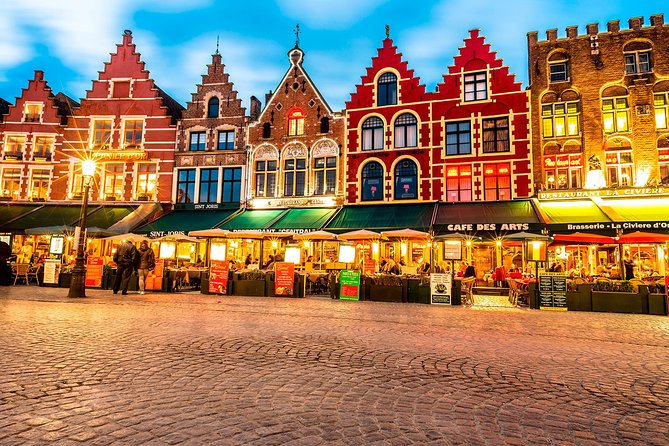
- Starting at Bargeplein, then ending at Markt (a smart loop)
- Minnewater and Ten Wijngaarde: the calm start with a name lesson
- Walplein and Stoofstraat: beer history and how to spot older houses
- Gruuthusemuseum and St John’s Hospital: power and health in medieval Bruges
- Onze-Lieve-Vrouwekerk and Huidenvettersplein: Michelangelo detail, guild square context
- St Bonifacius Bridge and Rozenhoedkaai: legends plus that fairy tale canal moment
- Burg Square: Bruges political center and architecture that spans eras
- Chocolalino: certified artisan chocolate tasting with a real lesson
- Price and value: why $22.51 can make sense
- Headphones, radios, and how to make the tour easier
- A note on meeting point and the one thing that can go wrong
- Who should book this Bruges guided tour
- Should you book this Spanish-language Bruges tour?
- FAQ
- Is the Bruges tour offered in Spanish
- How long is the guided tour
- Where does the tour start and end
- What is included in the price
- Do I need to pay for the stops along the route
- Is food included
- Will I get a chocolate tasting
- Do I need headphones
- Is there a limit on group size
- What is the cancellation policy
Key highlights you will feel on the street
- Spanish-speaking guide so the medieval context actually lands
- Beguinage plus canal views for that calm, timeless Bruges feeling
- Beer, guilds, and medieval homes stories that go beyond postcard descriptions
- Church and hospital stops that explain how the city worked, not just what it looked like
- Certified artisan chocolate tasting with tips you can use back home
Bruges again, from a different angle
- Bruges: Small Group Boat Cruise and Guided Walking Tour★ 4.8 · 4,102 reviews
- Bruges: Walking Tour, Canal Boat Trip w/Beer Tasting Option★ 4.4 · 2,759 reviews
- Historical Walking Tour: Legends of Bruges★ 5.0 · 2,541 reviews
- Bruges: Choco-Story Chocolate Museum Guided Tour w/Tastings★ 4.2 · 1,379 reviews
Starting at Bargeplein, then ending at Markt (a smart loop)
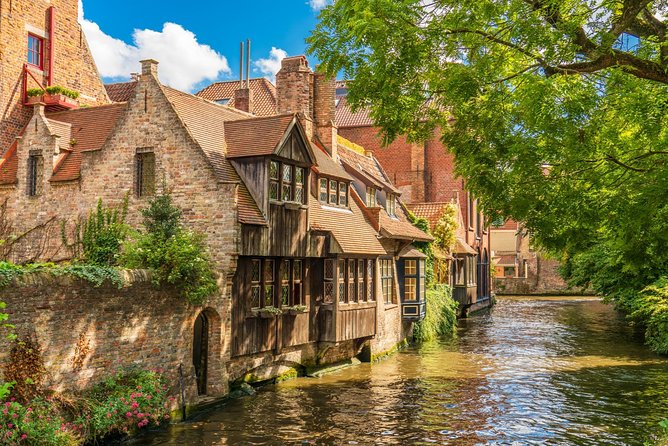
This tour is built as a simple loop through central Bruges. You start at Bargeplein (Katelijnparking), Bargeweg, which is a solid launch point for walking. The route keeps you in the heart of the action and finishes at Markt 20, near the densest cluster of restaurants and bars.
The practical value here is time. You do not need to spend your first day figuring out which neighborhoods connect best. In about two hours (often around two and a half depending on the guide’s pacing), you cover the kind of highlights that usually take multiple half-days to stitch together.
Also, the tour is small, with a maximum group size of 24 travelers. That helps for asking questions and staying oriented as you move from stop to stop.
Minnewater and Ten Wijngaarde: the calm start with a name lesson
The tour kicks off at Minnewater, the lake area tied to Bruges’s old port life. You get a neat language detail right away: the Dutch word minne can mean both love and common, and water is water. The guide’s explanation frames Minnewater as “common waters” tied to shared community life, not just romantic scenery.
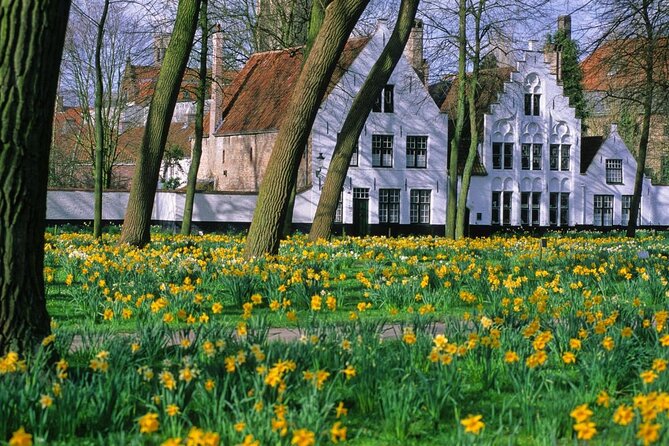
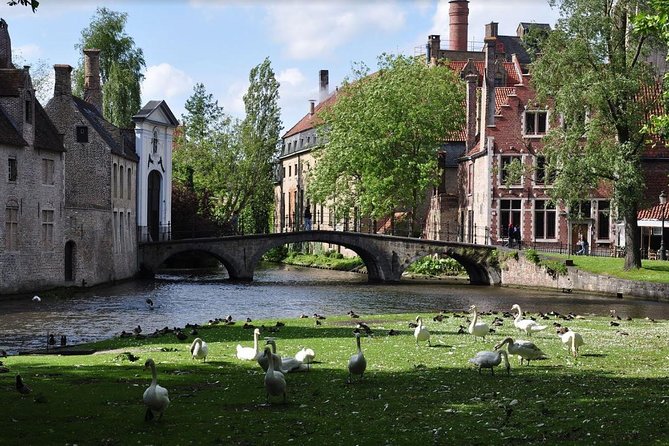
Then you move to The Princely Beguinage Ten Wijngaarde, a standout stop for anyone who wants Bruges at its quietest. The beguinage complex is anchored in the Middle Ages, and it is recognized as a UNESCO World Heritage Site. Even if you are not a hardcore history person, you can feel the difference in the space, and that matters. It is one of those places where the city’s story becomes easier to picture.
You also get a small, very usable photo moment, including time to take pictures from a small bridge. That kind of pause sounds minor, but it helps you avoid the “always walking, no photos” problem.
Walplein and Stoofstraat: beer history and how to spot older houses
Next up is Walplein, where the guide explains the history of Bruges beer. This works well because it connects the city’s medieval economy to something you can still experience today. Beer might seem like a casual topic, but it is a smart way to talk about daily life, trade, and what people relied on.
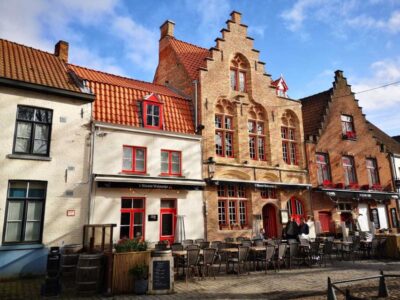
Right after that, you head to Stoofstraat. Here, the focus shifts from big civic ideas to street-level observation. The guide teaches you how to recognize the original medieval houses, basically giving you a visual checklist. You stop treating old buildings like vague “old stuff” and start seeing details that actually identify time periods.
If you like photo walks, this is one of the most rewarding segments because it changes how you look at facades, not just what you pass by.
Gruuthusemuseum and St John’s Hospital: power and health in medieval Bruges
At Gruuthusemuseum, you meet the story of one of Bruges’s most famous and powerful families between the 17th and 18th centuries. Being in front of Gruuthuse helps because the setting matches the narrative. You are not just hearing about status, you are seeing the kind of place where status made sense.
Then the tour turns to Saint John’s Hospital (outside the old St. John Hospital). This stop is great if you want the Middle Ages to feel human. The guide explains how the health system in medieval Bruges worked, which is exactly the sort of detail most sightseeing tours skip.
Even from the outside, this kind of explanation changes the way you think about the city. Bruges stops being only churches, canals, and chocolate, and starts feeling like a full society with institutions, roles, and systems.
Other tours with a guide out front
Onze-Lieve-Vrouwekerk and Huidenvettersplein: Michelangelo detail, guild square context
Outside Onze-Lieve-Vrouwekerk (Church of Our Lady), the guide shares curiosities about the white marble sculpture of the Virgin and Child created by Michelangelo, located inside the church. You get the wow factor framed from the exterior, and it gives you a reason to care once you are inside later on your own.
After that, you visit Huidenvettersplein, also known as Tanners’ Square. The guide connects the square to the medieval complex and the old trade guilds. This stop is valuable because it helps you understand Bruges as a place built by occupations and communities, not just by royalty or wealthy patrons.
It is also a nice rhythm change. After hospital and church themes, a guild-focused square brings you back to everyday power and work.
St Bonifacius Bridge and Rozenhoedkaai: legends plus that fairy tale canal moment
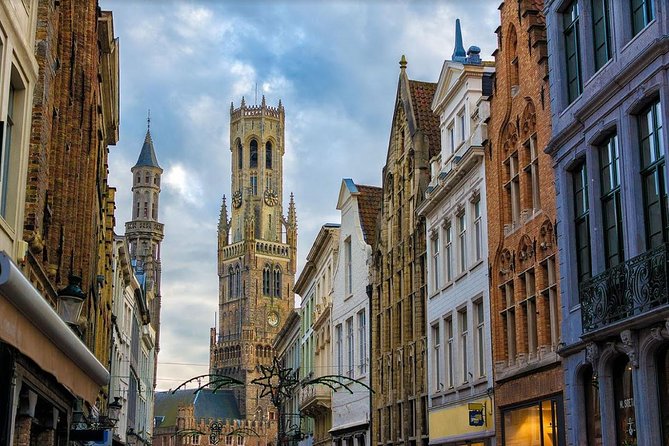
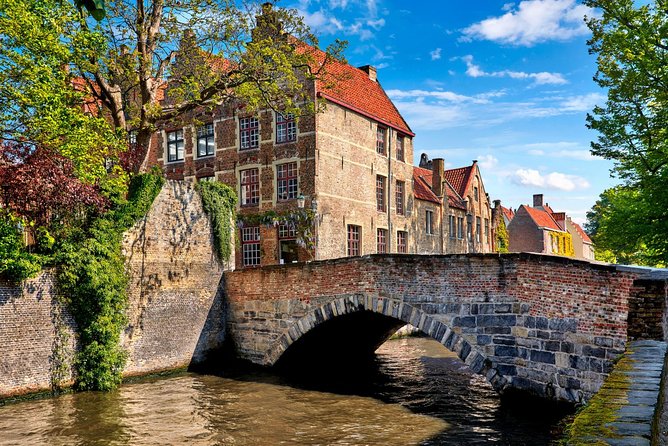
At St Bonifacius Bridge, you get an interesting legend tied to the bridge. The guide also builds in time for photos. This is a good example of why guided time can help: you get a story that makes the view mean something, not just “pretty.”
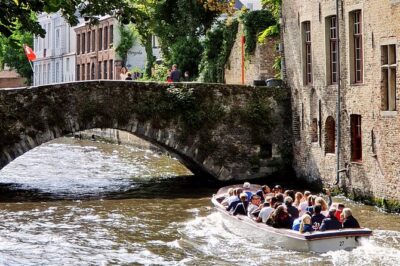
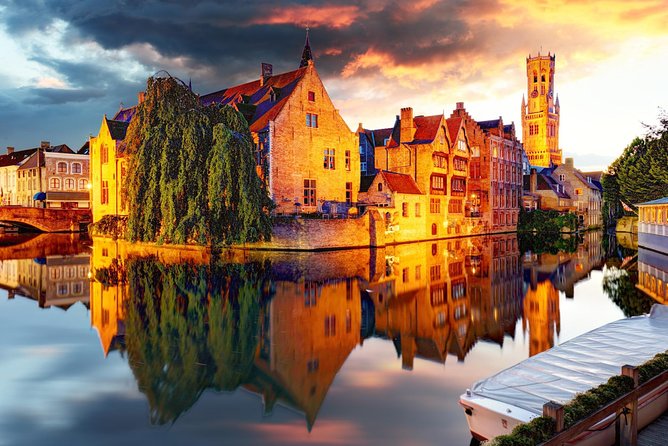
Then you reach Quai du Rosaire / Rozenhoedkaai. This is the canal-side scene that feels straight out of a fairy tale. The tour gives you time here to take it in, including the temptation to hop on a boat if that is your style. The guidance specifically suggests you would enjoy this area late afternoon or after dinner, when the light and atmosphere tend to make the reflections even more magical.
Even if you skip the boat, plan to slow down. Rozenhoedkaai is one of those places where rushing ruins the effect.
Burg Square: Bruges political center and architecture that spans eras
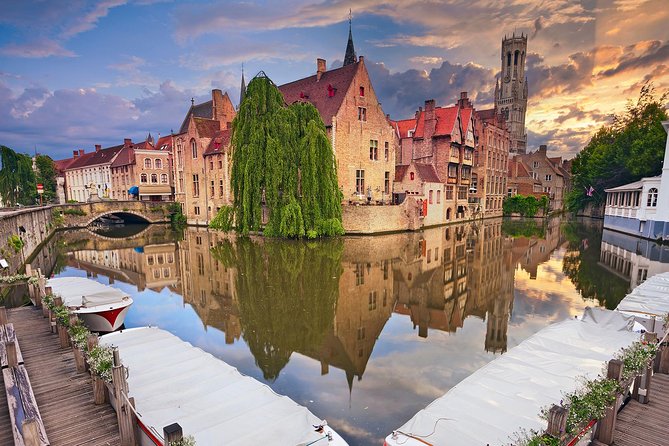
You finish at Burg Square, described as the political center of Bruges. This stop is meant for people who like to read a city through buildings. The square brings together architecture styles over more than a thousand years of history, and your guide points out what you are actually looking at.
This is a smart finale before chocolate because it wraps the theme of the day. You started with a shared-water origin story, moved through religious and civic sites, learned about guilds and institutions, and end at a space tied to governance.
You also gain time at the end point because it is close to restaurants and bars, so you can continue your Bruges day without extra travel.
Chocolalino: certified artisan chocolate tasting with a real lesson
The last stop is Chocolalino, a certified artisan chocolate shop. This is more than a random sweet break. You get chocolate tasting, plus the guide explains famous Bruges chocolate and gives tips for how to distinguish handmade from industrial chocolate.
That distinction matters because it changes what you buy later. Without that guidance, you can end up with a “chocolate souvenir” that is mostly marketing. With it, you start learning what to look for in texture, ingredients, and style of production, at least in the way your guide explains it.
If you care about food value, this ending is one of the best parts of the entire route. You are not just consuming a snack, you are learning how to shop.
Price and value: why $22.51 can make sense
At $22.51 per person, this tour sits in the value zone for Bruges. You pay for a Spanish local professional guide, plus a structured route that covers multiple major points without needing navigation skills. You also get city and Belgium recommendations, and the tour includes the chocolate tasting at the certified artisan shop.
What you do not get is food and drink. That is normal for a sightseeing tour, and you are dropped near the Markt area where meals and drinks are easy to find.
So where is the value? It is in two places:
- You compress a lot of “important sights” into one walk so you are not zigzagging all day.
- You get context at each stop, including themes like beer history, medieval houses, healthcare, and guild life.
If you only want photos, a self-guided route might be cheaper. If you want the stories to make Bruges click, the guided price can feel fair.
Headphones, radios, and how to make the tour easier
Bruges tourist regulations can mean the guide sometimes uses radios with headphones. If that happens, you can use your own headphones. If you do not have any, the operator offers headphones for €1.
Also, the rules mention groups of more than 24 and radio use. Either way, the takeaway is simple: bring earbuds if you have them. It saves money and makes the audio experience more comfortable.
This is the sort of detail that affects enjoyment more than people think. In a city full of church bells, crowds, and street noise, hearing the guide clearly is part of the value you are paying for.
A note on meeting point and the one thing that can go wrong
The tour’s start is at Bargeplein (Katelijnparking), and the end is at Markt 20. Most issues with walking tours come down to missing the guide at the start. If you are arriving from the station, give yourself extra time so you are at the meeting spot early and ready.
There is at least one unhappy experience reported about not finding the local guide, which turned the help into confusion. That is not a reason to skip the tour, but it is a reason to be on time and not assume the guide will always find you.
Who should book this Bruges guided tour
This tour is a good match if:
- You want Spanish interpretation for Bruges highlights and stories
- You like walking, but you also want the route planned for you
- You care about more than just landmarks, like guild life, medieval healthcare, and beer history
- You want a chocolate stop that teaches you what you are tasting
It might be less ideal if you hate guided groups, dislike structured time, or want long free time at a single sight. This is a moving, story-driven walk, not a museum day.
Should you book this Spanish-language Bruges tour?
I would book it if you want an easy way to connect the dots in Bruges. The combination of major medieval stops, clear explanations in Spanish, and a finished chocolate tasting makes the day feel “earned,” not random. The small group size and the time spent on recognizable photo points also help.
I would think twice only if you are likely to show up late or you do not want any chance of audio equipment. If you keep that in mind, you can make the most of the route and end your day with a tasty, practical Bruges souvenir.
FAQ
Is the Bruges tour offered in Spanish
Yes. The tour is described as a Spanish-language guided experience with a Spanish local professional guide.
How long is the guided tour
The tour duration is listed as about 2 hours. It also notes that the tour generally lasts about 2.5 hours, and the timing may vary depending on the guide’s choice for the group.
Where does the tour start and end
It starts at Bargeplein (Katelijnparking), Bargeweg, 8000 Brugge, Belgium. It ends at Markt 20, 8000 Brugge, Belgium.
What is included in the price
Included are the Spanish local professional guide, city and Belgium recommendations, and the guided tour of Bruges.
Do I need to pay for the stops along the route
The itinerary lists admission tickets for the stops as free, including Minnewater, the Beguinage, and the other listed viewpoints and churches.
Is food included
No. Food and drink are not included, and the guide can point you to good places to eat.
Will I get a chocolate tasting
Yes. The tour finishes at a certified chocolate shop (Chocolalino) for an artisan Belgian chocolate tasting.
Do I need headphones
The information says radios with headphones are sometimes used due to Bruges tourist regulation. You can use your own headphones, and if you do not have them, headphones are available for €1. It also mentions headphones for groups of more than 24.
Is there a limit on group size
Yes. The tour has a maximum of 24 travelers.
What is the cancellation policy
You can cancel for a full refund if you do so at least 24 hours before the experience’s start time. The policy also notes weather can affect the tour, and if canceled due to poor weather you can choose a different date or receive a full refund. There is also a minimum number of travelers requirement.
More Belgian Tours
Every Belgium Review
Keep Reading Bruges
Newer Belgium reviews from the same corner of the country
- Explore the Instaworthy Spots of Bruges with a Local
★ 5.0 · 3 reviews - Best of Brussels Private Tour from Zeebrugge or Bruges
★ 4.0 · 3 reviews - Private taxi Transfer from Bruges to Amsterdam
★ 5.0 · 3 reviews - Bruges Photo Session By a Pro
★ 5.0 · 3 reviews - Private 3-hour walking tour of Bruges with official tour guide
★ 4.0 · 3 reviews
Bruges Tours, side by side.
 ★ 4.6From Brussels: Guided Day Trip to Bruges and GhentFrom $558,353 reviews
 ★ 4.7From Brussels: Bruges & Ghent Day Tour – 2 Fairytale CitiesFrom $578,242 reviews
 ★ 4.0Bruges and Ghent – Belgium’s Fairytale Cities – from BrusselsFrom $594,809 reviews
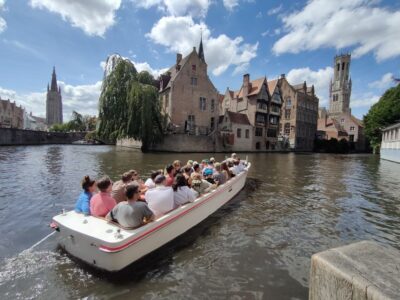 ★ 4.8Bruges: Small Group Boat Cruise and Guided Walking TourFrom $514,102 reviews
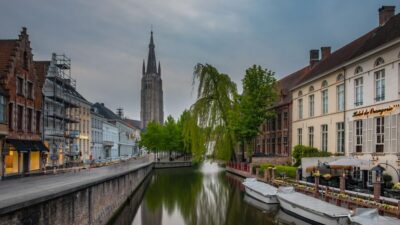 ★ 4.4Bruges: Walking Tour, Canal Boat Trip w/Beer Tasting OptionFrom $412,759 reviews
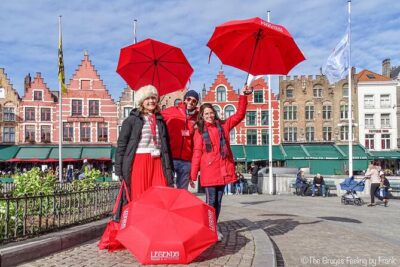 ★ 5.0Historical Walking Tour: Legends of BrugesFrom $32,541 reviews
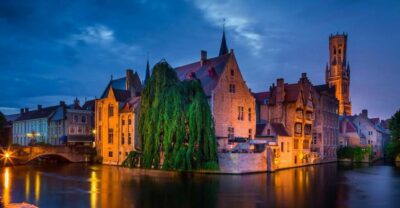 ★ 4.4From Amsterdam: Bruges Day Trip in English with Boat OptionFrom $611,989 reviews
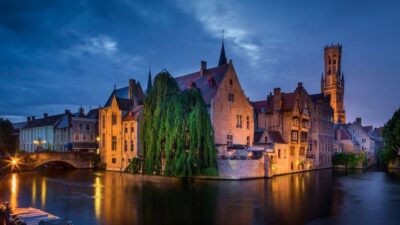 ★ 4.6From Amsterdam: Bruges Day Trip in Spanish with Boat OptionFrom $611,866 reviews
Browse the lists this tour appears in