
REVIEW · BRUSSELS
Brussels: 2-hours “Art Nouveau” Walking Tour
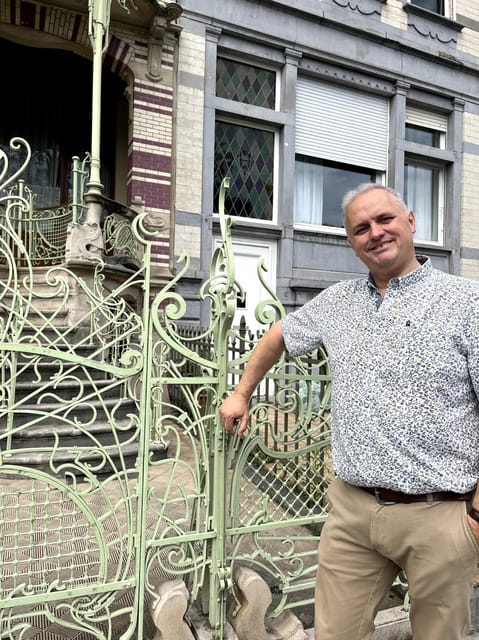
Art Nouveau in Brussels is a street spectacle. In just two hours, this guided walk connects the movement’s beginnings to real, named buildings, including Horta’s work and other famous facades. I like that it is not only pretty architecture, it is also a short lesson you can actually use while you’re looking at the streets.
Two things make this tour especially worth your time. First, you get specific addresses you can later look up again, like Maison Cauchie and Palais Stoclet. Second, the guides are praised for clear explanations that turn a random-looking facade into something you understand, even if you knew almost nothing before. One thing to plan for: the program can change based on availability, so you should expect slight route shifts rather than a guaranteed perfect hit list every time.
In This Review
- Key things to know before you go
- Why Brussels Art Nouveau feels different on foot
- Meeting at Merode: the start point that saves your time
- Cinquantenaire orientation: getting the style context fast
- Maison Cauchie and the Art Nouveau face at street level
- Palais Stoclet and the idea of modern taste
- Horta’s signature, from Hôtel Tassel to Hôtel van Eetvelde
- The “other houses” stretch: Maison Saint Cyr, Van Dyck, Roosenboom, and more
- Hôtel Ciamberlani and the way the tour finishes in Saint-Gilles
- Price and value: what $136 really buys you
- Who should book this Art Nouveau walking tour
- Should you book it or skip it?
- FAQ
- Where does the tour meet?
- How long is the Art Nouveau walking tour?
- What language is the live guide?
- Is this a private group or shared group?
- What’s included in the price?
- What is not included?
- Is it suitable for wheelchair users?
- Can the itinerary change?
Key things to know before you go
- A guided route built around named Art Nouveau buildings, not vague neighborhoods
- Horta-focused stops such as Hôtel Tassel and Hôtel van Eetvelde
- A short theory kickoff that explains how Art Nouveau got going and what to look for
- A longer middle segment that includes a lesser-known Art Nouveau stop, so you see more than the usual postcards
- Private group, English live guide, so you can ask questions and move at a human pace
Brussels has more to it than one route
- Brussels: Atomium Entry Ticket with Design Museum Ticket★ 4.4 · 9,254 reviews
- From Brussels: Guided Day Trip to Bruges and Ghent★ 4.6 · 8,353 reviews
- From Brussels: Bruges & Ghent Day Tour – 2 Fairytale Cities★ 4.7 · 8,242 reviews
- Choco-Story Brussels: Chocolate Museum Entrance with Tasting★ 4.3 · 4,883 reviews
Why Brussels Art Nouveau feels different on foot
Brussels has a way of making Art Nouveau feel like a living idea. Instead of seeing the style in one room, you see it stretched across streets, doorways, balconies, and ironwork details, all in the context of a real city. The big advantage of a walking format is speed with focus. You cover ground quickly, but you are still close enough to notice what makes each building different.
This tour is built around that closeness. You start near Mérode and end in Saint-Gilles, with a route that moves between several Art Nouveau landmarks. You are also not stuck with only the best-known highlights. The tour plan includes a longer guided stretch for a less obvious stop, which is exactly where many people start learning the most, because the architecture is not already famous everywhere.
The “why” matters too. You do get an introduction to the birth of the movement and a quick portrait of different Art Nouveau trends. That helps you stop treating every facade like random ornament and start seeing how the style evolves. When you walk out, you do not just remember what it looked like. You remember what the guide wanted you to notice.
Meeting at Merode: the start point that saves your time
The tour meets in front of Brasserie Carpe Diem, right by the Metro station Merode. The key detail here is the station exit. The guidance you’re given points you to the Merode exit that lines up with that brasserie, with the reminder that the metro has three different exits.
This sounds small, but for a short two-hour tour, it can matter a lot. If you end up at the wrong exit, you spend your best minutes hunting instead of looking at buildings. I recommend arriving a few minutes early, and if you have to, check that you’re standing in front of the correct brasserie before you message anyone or start walking.
After you find the group, the first chunk of time is a guided introduction around the Cinquantenaire area. From there, you move into the architecture itself. That setup is helpful because it gives you a framework for what you will see next, especially if Art Nouveau is new to you.
Cinquantenaire orientation: getting the style context fast
One of the smartest parts of this tour is the early reset. You get about 15 minutes at the Cinquantenaire area with a guide-led explanation of how Art Nouveau emerged and why it felt modern at the time. That short primer matters because Brussels Art Nouveau can look like lots of decorative choices if you have not been taught a lens.
Then comes the other piece you’ll feel on the street: the guide gives a quick portrait of different Art Nouveau trends and the characteristics of the style. That means when you spot certain design choices later, you can connect them back to what the guide already labeled. It turns the walk into an ongoing checklist in your head, not just a series of pretty stops.
Also, you start close to transit. That is practical if you’re bouncing between sights in a busy day. Art Nouveau can be surprisingly time-intensive if you try to DIY it. A guided start keeps the momentum.
Maison Cauchie and the Art Nouveau face at street level
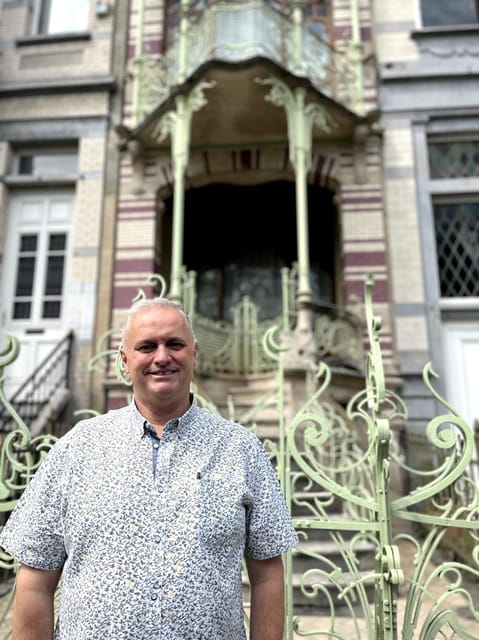
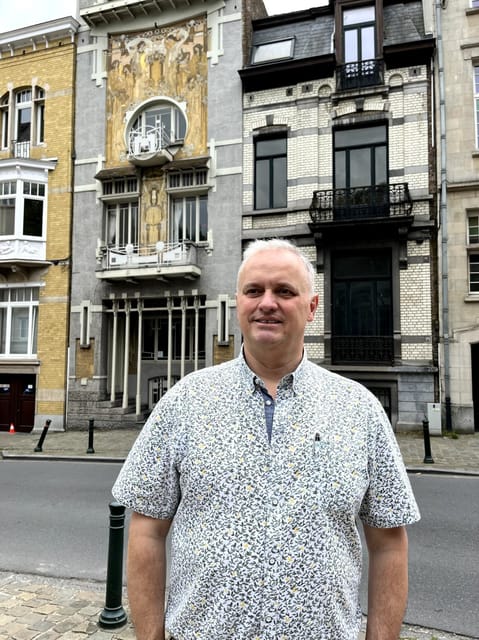
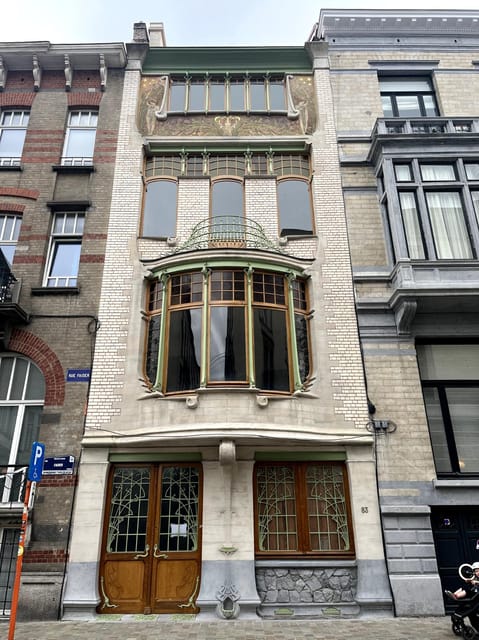
The tour name-checks several of Brussels’ biggest Art Nouveau names, and Maison Cauchie is one of the ones you will likely be excited to see in person. Buildings like this are where Art Nouveau stops being an art book subject and becomes a street-level experience.
Why it works on foot: the guide can point out what makes the building feel like Art Nouveau rather than just “decorated.” You also get a sense of how the movement shows up in everyday city fabric, not only in grand museum settings. Even if you are not reading every architectural term, you can still learn the visual logic, because the walk is structured around interpretation.
A practical mindset helps here. When you arrive at a facade, take ten seconds to scan big shapes first, then look for the smaller details the guide highlights. The guide’s job is to steer your eyes toward what to compare between buildings, so you do not waste time staring at something beautiful but irrelevant.
Horta staircases, comic walls, the Atomium
Palais Stoclet and the idea of modern taste
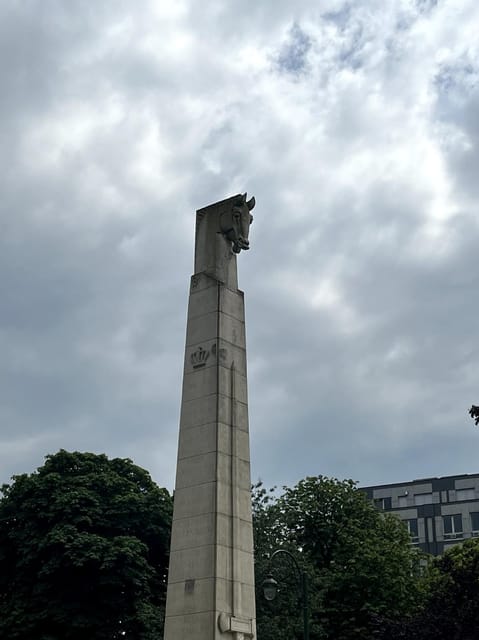
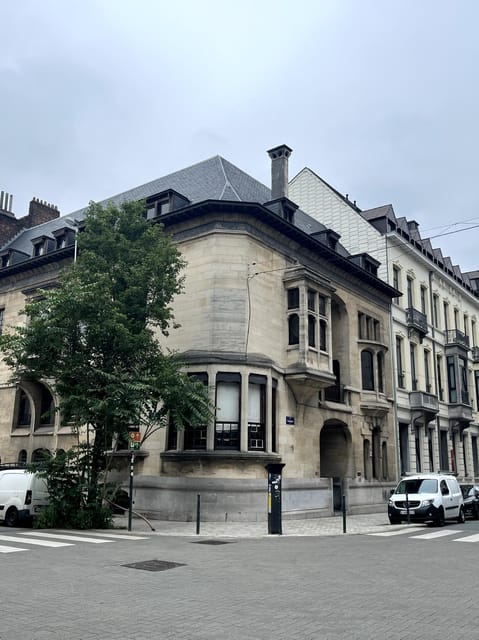
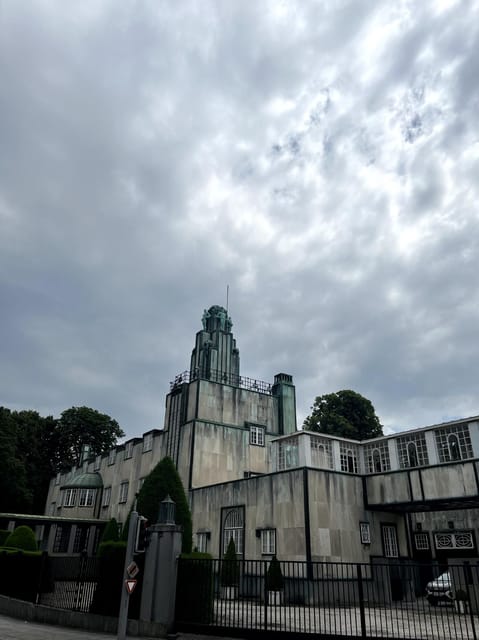
Palais Stoclet is the kind of stop that makes people say, okay, I get it, Art Nouveau wasn’t only about aesthetics. It was also about new taste, new ambition, and different ways of thinking about art and design in a single project.
On a short tour, you might wonder if there is time to absorb a place like this. The answer is yes, if you use the guide’s context. You’ll hear the origin and trend explanation early, then the buildings become examples. Palais Stoclet fits that role well. It helps you see the movement’s broader impact on art and architecture, not just surface decoration.
One drawback to be aware of is that some famous addresses can be tricky to view depending on exact access and conditions. The tour notes that the program is subject to availability and can be changed. So if you show up with the expectation that everything will look exactly like a perfect postcard photo, you may be surprised. The upside is that you’re still getting the same core learning, just routed a bit differently when needed.
Horta’s signature, from Hôtel Tassel to Hôtel van Eetvelde
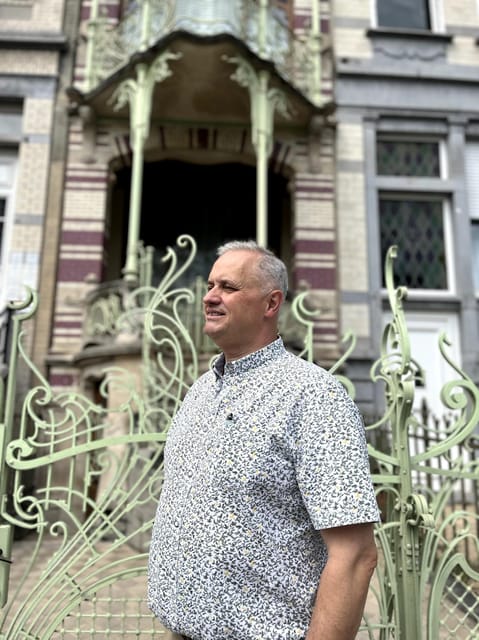
If you care about Art Nouveau in Brussels, you have to meet Victor Horta at least once, and this tour builds that into the heart of the experience. Names like Hôtel Tassel and Hôtel van Eetvelde are on the route, and they are the type of buildings that reward close looking.
Horta’s work is often the easiest way to see how the style behaves across multiple elements of a building, not only the facade. You get the kind of comparisons that make the “trends” part of the tour click. The guide can link what you’re seeing back to the earlier explanation of Art Nouveau characteristics, so you start recognizing patterns instead of memorizing names.
Also, this is one of those tours where the guide’s delivery really matters. When the explanation lands, you stop thinking, I just saw another ornate building, and you start thinking, I understand why this building feels connected to the movement’s beginning.
If you’re a repeat Brussels visitor, this section can also deepen a visit you make later to a dedicated Horta site. The walk primes your eye first. Then other exhibitions and interiors tend to feel more meaningful.
The “other houses” stretch: Maison Saint Cyr, Van Dyck, Roosenboom, and more
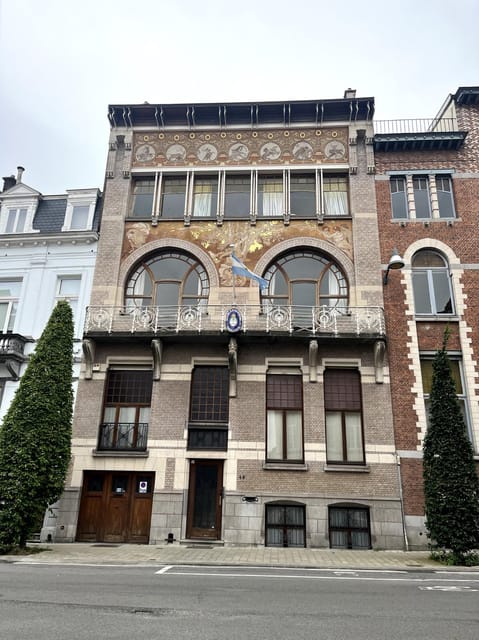
A big selling point of this tour is that it does not try to cram everything into a single block. The middle portion includes a longer guided stretch of about 1.5 hours at a lesser-known Art Nouveau stop. That structure is smart, because you need time for your eyes to adjust and your brain to start comparing details.
Along the way, the route can include addresses such as Maison Saint Cyr and Maison Van Dyck, as well as Maison Roosenboom. It also lists other Horta-related houses and projects, including Maison Hankar, Maison et Atelier Horta, and Maison Hannon. There’s even Maison de son frère, which you’ll hear placed within this wider Horta universe.
The value here is variety. Two buildings can both be Art Nouveau, yet feel different because of the specific trend and design language the guide is helping you recognize. If you only visit the most famous buildings, it’s easy to assume Art Nouveau is one look. This tour pushes past that. It makes the style feel like a movement with branches.
My advice: during this middle stretch, don’t try to photograph everything. Instead, pick one building to document closely, then let the other stops be about seeing and absorbing what the guide points out.
Hôtel Ciamberlani and the way the tour finishes in Saint-Gilles
The tour includes a guided stop around Hôtel Ciamberlani as well, with about 15 minutes built in. Finishing around Av. de la Jonction in Saint-Gilles gives you a practical exit from the route, which is helpful if you want to keep walking on your own afterward or connect to transit.
This final segment is where you get to consolidate what you learned. The guide’s earlier explanations about how the style emerged and how trends differ turns the closing buildings into more than a final checklist. They become confirmation, the moment you recognize similar ideas repeating with variation.
If you have time after the tour, I’d use it to revisit one building you cared about the most while your eye is still tuned. Fresh impressions work well right after a guided architecture walk, because you are still in that comparison mindset.
Price and value: what $136 really buys you
At $136 per person for a two-hour private guided walk, the cost is not “impulse cheap.” You’re paying for the combination of a professional guide, a focused route, and time you do not have to spend figuring out where to go and what to notice.
Here’s how to judge value. You’re getting named stops across multiple areas, plus a planned explanation of the movement’s emergence and Art Nouveau trends. You also get an English live guide, and the experience is structured so you walk and learn rather than wander.
This can be good value if:
- Art Nouveau is a priority for your Brussels trip
- You want Horta context without doing a full day planning exercise
- You like architecture walks where the guide tells you what to look for
It may feel pricey if:
- You only want a quick photo loop
- You’re not interested in learning the differences between trends
- You’d rather spend your time on museums over street facades
Also, the tour is subject to availability and can be changed. That is normal, but it means you should treat the cost as for the guided learning approach, not for a guaranteed order or perfect matching of every address.
Who should book this Art Nouveau walking tour
Book it if you want a tight, guided introduction to Art Nouveau in Brussels that actually helps you understand what you’re seeing. It is a strong choice for architecture lovers, for first-time visitors who want the big names like Maison Cauchie and Palais Stoclet, and for anyone planning to see more Horta afterward and wants a head start.
It is also a good fit if you like expert explanations paired with real buildings. One of the tour’s most praised aspects is the guide quality, with departures led by people described as passionate and articulate, including names like Yves, Davit, David, and Eric. That kind of communication matters on a walking tour, because your time on the sidewalk is short.
One more practical point: this is not suitable for wheelchair users, and the tour is walking-focused. If mobility is an issue, you’ll want to consider an alternative format.
Should you book it or skip it?
I think this tour is worth booking if Art Nouveau is one of your must-see themes. Two hours is long enough to learn how to look, and short enough to fit into a normal Brussels day without turning into a marathon. The route emphasizes major names such as Horta buildings, Maison Cauchie, and Palais Stoclet, and it adds other addresses so the style feels like a real movement rather than a single postcard facade.
Skip it if you want a self-paced architecture walk with total control over every stop. This experience is guided, paced, and may adjust due to availability. If that flexibility sounds annoying, you might prefer a museum-focused plan instead.
If you do book, go with curiosity, bring your best looking shoes, and be ready to let the guide teach your eye.
FAQ
Where does the tour meet?
It meets in front of Brasserie Carpe Diem, which is in front of Metro Station Merode. You should use the correct Merode metro exit, since the station has three different exits.
How long is the Art Nouveau walking tour?
The tour lasts 2 hours.
What language is the live guide?
The tour has a live guide in English.
Is this a private group or shared group?
This experience is a private group.
What’s included in the price?
The price includes a professional guide and a walking tour of Art Nouveau buildings.
What is not included?
Transport tickets are not included if you need to take transit.
Is it suitable for wheelchair users?
No, it is not suitable for wheelchair users.
Can the itinerary change?
Yes. The program is subject to availabilities and can be changed at any moment.
Every Belgium Review
Brussels Landmarks, Comics and Art Nouveau
More Ways to See Brussels
Newer Belgium reviews from the same corner of the country
- Discover the secrets of Brussels while playing
★ 5.0 · 3 reviews - Standard vehicle from Charleroi airport to city of Brussels
★ 4.5 · 3 reviews - Private tour to Ghent from Brussels (5hours walk & drive)
★ 5.0 · 3 reviews - Full day Brugge & Ghent: the gems of Flanders
★ 5.0 · 3 reviews - Private tour : Best of Brussels half day From Brussels
★ 5.0 · 3 reviews
Brussels Tours, side by side.
 ★ 4.4Brussels: Atomium Entry Ticket with Design Museum TicketFrom $199,254 reviews
 ★ 4.6From Brussels: Guided Day Trip to Bruges and GhentFrom $558,353 reviews
 ★ 4.7From Brussels: Bruges & Ghent Day Tour – 2 Fairytale CitiesFrom $578,242 reviews
 ★ 4.3Choco-Story Brussels: Chocolate Museum Entrance with TastingFrom $184,883 reviews
 ★ 4.0Bruges and Ghent – Belgium’s Fairytale Cities – from BrusselsFrom $594,809 reviews
 ★ 4.0Brussels: Hop-On Hop-Off Bus TourFrom $294,016 reviews
 ★ 4.5Brussels: Entry Ticket to Mini-EuropeFrom $232,870 reviews
 ★ 5.0Hungry Mary’s Famous Beer and Chocolate Tour in BrusselsFrom $1192,258 reviews
Browse the lists this tour appears in