
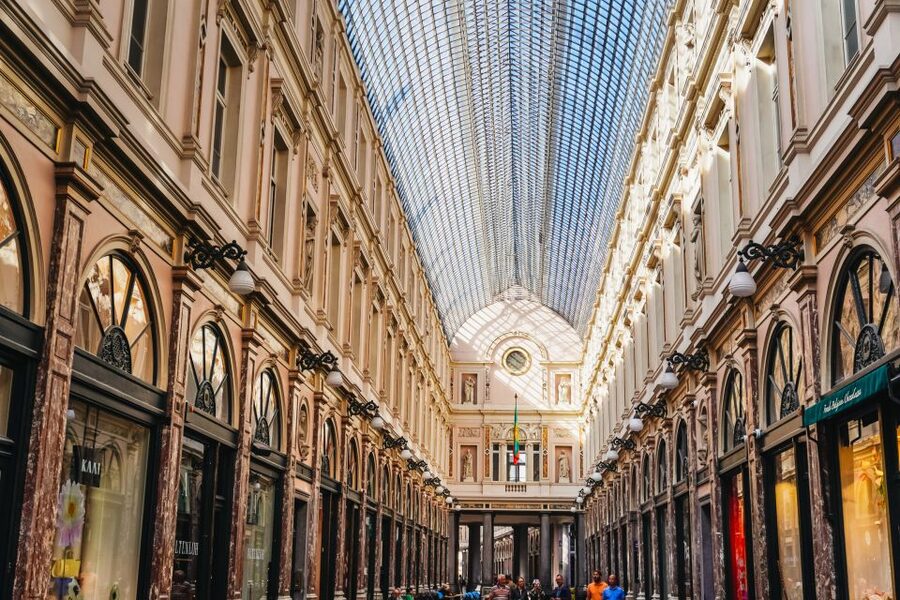
REVIEW · BRUSSELS
Brussels 3-Hour Guided Art Nouveau Tour
Art Nouveau in Brussels is more than pretty facades. This guided walk helps you read the buildings like a story, from ironwork curves to glass and stone, all tied to the inventors and designers who shaped the style. I like the high concentration of key houses and the way the guide’s explanations connect design to the era you’re standing in.
Two practical things make this tour easy to enjoy. You start in the historic core at Grand-Place, then move into the Bailli area where Art Nouveau is thick on the ground. The other win is the ending at the Victor Horta Museum, so your architecture “aha” moment has a place to land.
One thing to keep in mind: this is mainly an outside-looking tour. Many stops are viewed from the street, and you’ll rely on the guide’s photos for interiors, so if you’re hoping for lots of inside access, plan accordingly.
In This Review
- Key things that make this Art Nouveau tour work
- Grand-Place start, then the Bailli district shift
- The design language you learn fast: iron, glass, wood, stone
- Hotel Tassel and the Victor Horta effect
- Old England House (Music Instrument Museum): a bridge to design craft
- Villas and townhouses that show the style’s range
- Hotel Otlet, plus Henry van de Velde collaboration
- Hotel Goblet d’Alviella: early Art Nouveau energy
- Hotel Ciamberlani and Paul Hankar’s expressive lines
- The house of painter René Janssens
- Armand Van Waesberghe house and Beukman house
- The private home of Paul Hankar
- How the tour handles interiors, and what that means for you
- Finishing in front of the Victor Horta Museum
- Tram ride, walking time, and why logistics matter
- Price and value at about $35 for 3 hours
- Who should book this tour, and who should skip it
- Should you book the Brussels 3-Hour Art Nouveau Guided Tour?
- FAQ
- Where does the Art Nouveau tour start?
- How do I find the guide at the meeting point?
- How long is the tour?
- Which district does the tour visit?
- Does the tour include entry to Victor Horta Museum?
- Are the buildings entered during the tour?
- What is included in the price?
- Is transportation included?
- What languages are offered?
- What should I bring?
Key things that make this Art Nouveau tour work
- Grand-Place meetup with a white umbrella, simple to find
- Tram to Bailli district, getting you into the densest Art Nouveau pocket
- A focused run of landmark houses, including Hotel Tassel and Hotel Otlet
- Stop-by-stop design clues, so you learn what to notice on your own
- Finishes at Victor Horta Museum, a logical wrap-up point for the style
Brussels has more to it than one route
- Brussels: Atomium Entry Ticket with Design Museum Ticket★ 4.4 · 9,254 reviews
- From Brussels: Guided Day Trip to Bruges and Ghent★ 4.6 · 8,353 reviews
- From Brussels: Bruges & Ghent Day Tour – 2 Fairytale Cities★ 4.7 · 8,242 reviews
- Choco-Story Brussels: Chocolate Museum Entrance with Tasting★ 4.3 · 4,883 reviews
Grand-Place start, then the Bailli district shift
You meet at the Grand-Place at 10:00, looking for the guide holding a white umbrella. It’s a solid choice for a starting point because you’re already in Brussels’ postcard zone, so you can orient fast before the tour starts its real work.
After the opening, you’ll take a tram toward the Bailli district, a famous Brussels neighborhood that acts like a village inside the city. This matters because Art Nouveau in Brussels is not evenly spread. By heading where the buildings cluster, you get more payoff in your three hours, and you spend less time chasing addresses.
The pace is walk-heavy. One past participant flagged that the start can feel uphill. I’d bring that in mind when you pick shoes, because comfortable soles are the difference between enjoying the details and rushing past them.
The design language you learn fast: iron, glass, wood, stone
The tour’s core idea is simple: Art Nouveau is not just decoration. You learn how architects and craftsmen combined materials into a style that can look different on every building, yet still feel instantly related.
You’ll hear how designers used iron and glass to create flowing lines and airy effects, while wood and stone help ground those shapes in real structure. When your guide points out these material choices, your eyes start catching patterns: curved balconies that feel almost botanical, window groupings that read like rhythmic panels, and facades where structure and ornament feel like one system.
This is where the guide quality shows. Multiple guides have been described as enthusiastic and well prepared, and several groups highlighted that the explanations come with extra support like photo printouts. That’s huge for an outside tour, because it helps you “see” interior layouts and finishes you can’t access on the sidewalk.
Hotel Tassel and the Victor Horta effect
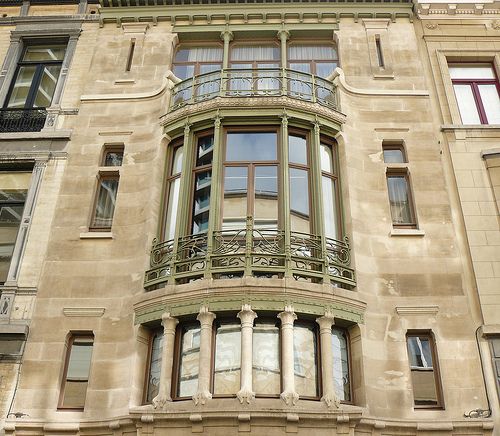
One of the first major stops is Hotel Tassel, built by Victor Horta in 1893 to 1894. This is the kind of building that makes Art Nouveau feel like a breakthrough rather than a fad. Horta’s work helped define what people now associate with the style: sweeping forms, strong sense of movement, and a relationship between metalwork and architectural structure.
From the street, the real trick is to slow down and look for the building’s logic. Your guide can help you spot where the ironwork line continues elsewhere in the facade. That continuity is what separates Art Nouveau from later looks where ornament can feel like a separate layer.
And because the tour keeps moving, you get a chance to compare. In a few hours, you’ll see how different architects took similar material ideas and made them behave in different ways.
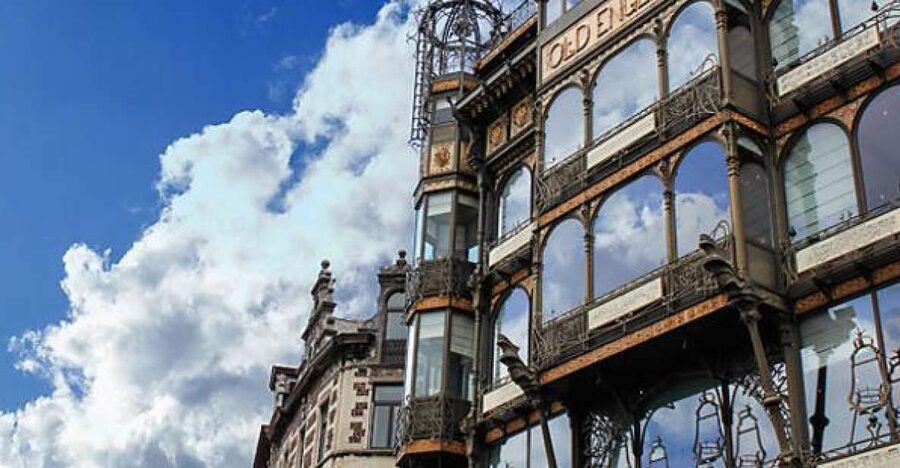
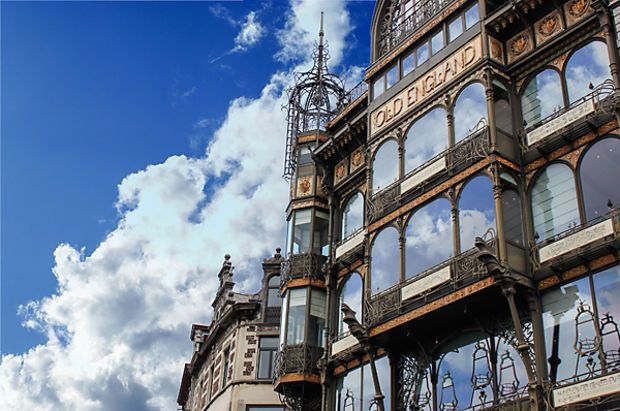
Old England House (Music Instrument Museum): a bridge to design craft
Another stop is the Old England House, also known as the Music Instrument Museum. Even if you’re not going inside, the building gives context for how this era thought about public life, display, and craftsmanship.
Art Nouveau doesn’t only belong to private homes. Buildings tied to culture and commerce helped normalize the style in everyday city spaces. That’s part of why this stop feels useful. It’s not just another facade, it adds the sense that design was moving into more kinds of buildings than before.
If you’re the type who likes architecture that hints at how people lived and gathered, you’ll probably appreciate this segment.
Horta staircases, comic walls, the Atomium
Villas and townhouses that show the style’s range
The tour then strings together a run of important houses, including work by Victor Horta, Octave Van Rysselberghe, Henry van de Velde, Paul Hankar, Albert Roosenboom, and Armand Van Waesberghe. This is a big value point because you’re not only seeing one architect’s signature. You’re seeing the style evolve across designers.
Here are the specific stops, and why they’re worth attention:
Hotel Otlet, plus Henry van de Velde collaboration
Hotel Otlet was built by Octave Van Rysselberghe and Henry van de Velde from 1894 to 1898. This building is often used to show how Art Nouveau could fuse refined taste with bold structural expression.
When your guide talks about materials here, you can start noticing a theme: the facade does not just decorate. It communicates. The way stone frames the overall mass and how glass elements break up the plan creates a sense of controlled complexity.
Hotel Goblet d’Alviella: early Art Nouveau energy
Hotel Goblet d’Alviella, built by Octave Van Rysselberghe in 1882, is an earlier anchor. Starting with a slightly earlier building helps you understand the style’s growth, not just its finished look.
Look for how the building signals refinement without turning into stiff formality. This helps you spot the Art Nouveau shift from older, more rigid design habits.
Hotel Ciamberlani and Paul Hankar’s expressive lines
Next comes Hotel Ciamberlani, built by Paul Hankar in 1897. Hankar’s contribution is about expressive form and decorative clarity. Your guide should help you identify where ornament supports structure rather than competing with it.
The house of painter René Janssens
There’s also the house of painter René Janssens, built by Paul Hankar in 1898. This is one of those stops that adds human scale. You’re not just touring architecture, you’re looking at how creative professionals shaped their environment.
Even from outside, the idea can click: Art Nouveau was tied to modern identity, including how artists wanted space to feel and function.
Armand Van Waesberghe house and Beukman house
You’ll see the home of architect Armand Van Waesberghe, plus the Beukman house, built by Albert Roosenboom in 1900. These stops reinforce that Art Nouveau is not a single look. It’s a shared language with different accents.
If you enjoy comparing, this part is fun because each building adds another way to use iron, glass, wood, and stone together.
The private home of Paul Hankar
Finally in the run, the tour includes the private home of architect Paul Hankar. Private homes can feel more intimate and personal than bigger statement buildings. Even without entry access, outside observation plus your guide’s photos can help you connect the facade to the lived-in intent.
How the tour handles interiors, and what that means for you
A key expectation check: this experience is built around seeing the outside of houses. Some groups have noted that you do not actually go inside the buildings.
So what do you get instead? You get guided framing. The guide can point out what matters on the exterior and use photo printouts to show interior details you can’t otherwise view. That’s a fair workaround, and it explains why the guide’s preparation matters so much.
If your dream is to walk through every doorway and see original interiors in person, you’ll likely want to pair this tour with an extra museum visit. The good news is that the tour ends in exactly the right place for doing that.
Finishing in front of the Victor Horta Museum
The program ends in front of the Victor Horta Museum. This is a smart ending because it ties the earlier street stops back to the main figure associated with Brussels Art Nouveau.
You’ll be standing near the style’s best-known legacy point, which makes your notes and new “design vocabulary” feel more meaningful. One tip that comes up often is to plan your museum entry right after the tour ends. If you leave it to later, you can run into missed timing, since museum admission is not included in the tour price.
Even if you do not have time for a long visit, stopping at the museum can help you connect the dots. You’ll walk away with a clearer sense of what Horta contributed and why his name matters to the story of Art Nouveau in Brussels.
Tram ride, walking time, and why logistics matter
This is a three-hour experience, and it’s designed as a concentrated route. That means you should expect real walking, plus one tram transfer into the Bailli district.
Also note what the price covers. The guided tour is included, but museum admission is not. Transportation is described as not included for train, and since the route uses a tram segment, it’s wise to budget for your local transit needs.
None of this is hard, but it does affect how you should plan your day. If you’ve got limited mobility or you’re tight on energy, build in a slower afternoon after the tour. The architecture is worth it, but your legs will know you did it.
Price and value at about $35 for 3 hours
At $35 per person for a three-hour guided walk, the value is mainly in interpretation, not in access. You’re paying for a local guide to help you notice what makes Art Nouveau work: the material combinations, the design goals, and the way different architects approached similar themes.
If you were to wander on your own, you’d likely spot beautiful facades, then move on. The tour pushes you into the second layer, where you start recognizing the recurring traits and the differences between houses.
That’s especially valuable here because you’re not just looking at one architect. You’re seeing Victor Horta plus major names like Paul Hankar, Octave Van Rysselberghe, Henry van de Velde, Albert Roosenboom, and more. The guide’s job is to make those comparisons feel clear in a short time window.
The only way the price can feel less fair is if you hoped for lots of interior access. Since the tour is built around outside viewing, treat it as the best way to learn what to look for on the street, then add a museum or separate interior visit if that’s your priority.
Who should book this tour, and who should skip it
This tour fits you if you want:
- A structured route through Brussels Art Nouveau neighborhoods
- A guide who can point out details that you might miss alone
- A quick, concentrated way to learn the style and end near Victor Horta Museum
You might want to skip or adjust your expectations if you:
- Want frequent indoor access to multiple private homes
- Have very limited time for museum entry right afterward
- Strongly dislike uphill walks and transit segments
Language is also a factor. The tour runs in Spanish, English, and French, which is helpful. If you’re sensitive to group translation timing, it can affect how fast you move through stops.
Should you book the Brussels 3-Hour Art Nouveau Guided Tour?
Yes, I think you should book it if your goal is to see the core Brussels Art Nouveau landmarks and learn how to recognize the style on your own. The combination of a tight route, a guided focus on how materials work together, and an ending at the Victor Horta Museum makes this a practical first step.
Book it with one smart add-on: plan your Victor Horta Museum visit right after the tour if you want interiors and original context. If you do that, this experience becomes more than a street walk. It becomes a full design lesson, with a satisfying place to continue.
FAQ
Where does the Art Nouveau tour start?
The tour starts at the Grand-Place in Brussels at 10:00.
How do I find the guide at the meeting point?
You’ll find the guide holding a white umbrella.
How long is the tour?
The tour lasts 3 hours.
Which district does the tour visit?
After starting at the Grand-Place, the tour takes the tram to the Bailli district, then continues through the Art Nouveau area and ends in front of the Victor Horta Museum.
Does the tour include entry to Victor Horta Museum?
No. Museum admission is not included.
Are the buildings entered during the tour?
The tour is structured around viewing buildings from the outside, with interior context provided through the guide’s explanations and photos. Interior visits are not included.
What is included in the price?
What’s included is the guided tour.
Is transportation included?
Transportation by train is not included. The route does include a tram segment as part of the plan.
What languages are offered?
The live guide offers tours in Spanish, English, and French.
What should I bring?
Bring comfortable shoes for walking.
Every Belgium Review
Brussels Landmarks, Comics and Art Nouveau
More Ways to See Brussels
Newer Belgium reviews from the same corner of the country
- Discover the secrets of Brussels while playing
★ 5.0 · 3 reviews - Standard vehicle from Charleroi airport to city of Brussels
★ 4.5 · 3 reviews - Private tour to Ghent from Brussels (5hours walk & drive)
★ 5.0 · 3 reviews - Full day Brugge & Ghent: the gems of Flanders
★ 5.0 · 3 reviews - Private tour : Best of Brussels half day From Brussels
★ 5.0 · 3 reviews
Brussels Tours, side by side.
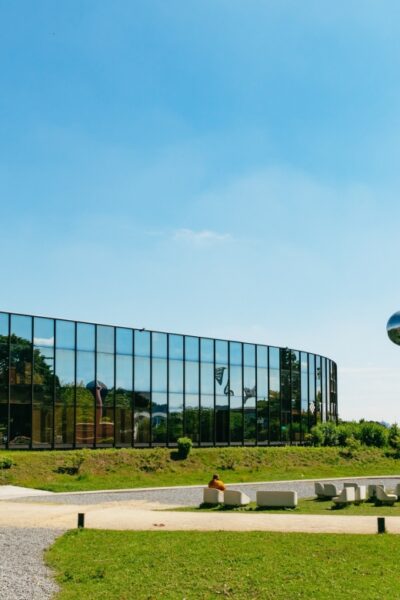 ★ 4.4Brussels: Atomium Entry Ticket with Design Museum TicketFrom $199,254 reviews
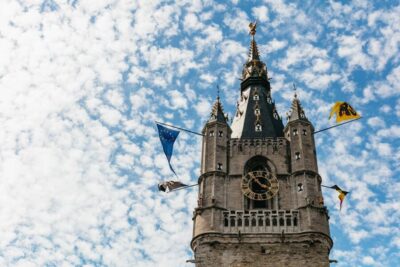 ★ 4.6From Brussels: Guided Day Trip to Bruges and GhentFrom $558,353 reviews
 ★ 4.7From Brussels: Bruges & Ghent Day Tour – 2 Fairytale CitiesFrom $578,242 reviews
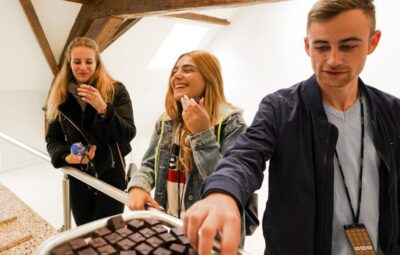 ★ 4.3Choco-Story Brussels: Chocolate Museum Entrance with TastingFrom $184,883 reviews
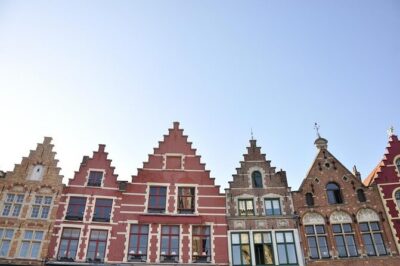 ★ 4.0Bruges and Ghent – Belgium’s Fairytale Cities – from BrusselsFrom $594,809 reviews
 ★ 4.0Brussels: Hop-On Hop-Off Bus TourFrom $294,016 reviews
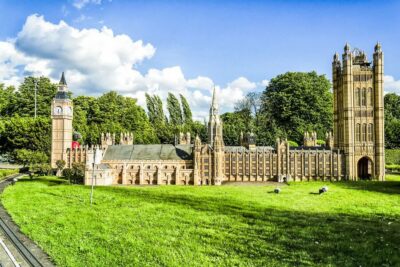 ★ 4.5Brussels: Entry Ticket to Mini-EuropeFrom $232,870 reviews
 ★ 5.0Hungry Mary’s Famous Beer and Chocolate Tour in BrusselsFrom $1192,258 reviews
Browse the lists this tour appears in