
REVIEW · LIEGE, NAMUR & THE ARDENNES
e-Scavenger hunt Liège: Explore the city at your own pace
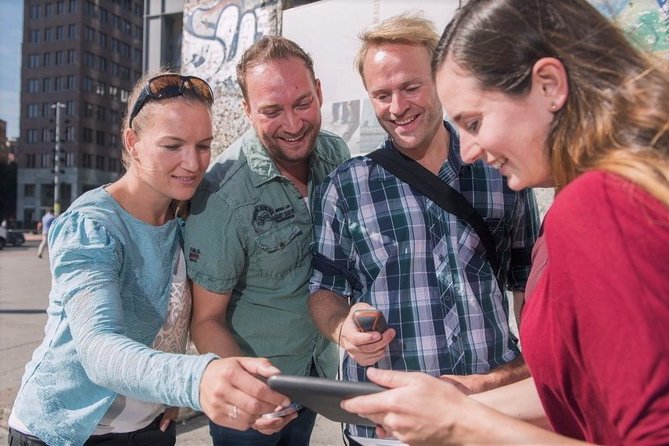
Liège gets fun when you hunt with your phone. This self-guided e-Scavenger hunt turns major stops into a GPS-led game, and you can start, pause, or stop whenever your pace needs adjusting. I love the smartphone challenges that keep you moving, and the way the route strings together big Liège highlights. The main consideration is simple: you bring your own smartphone and data, and since it is self-guided, you are in charge of timing once you start.
You begin at Place Saint-Paul and loop through a mix of civic, religious, and cultural places, including St. Paul’s Cathedral, the Curtius Museum, and market areas like Marche de la Batte. It is designed for groups up to 6, which makes the price feel reasonable fast.
In This Review
- Key Highlights You’ll Feel Right Away
- Liège by Phone: How the e-Scavenger Hunt Actually Plays
- Price and Value for Groups Up to 6
- Where to Start: Finding Place Saint-Paul Without Stress
- Your 3-Hour Route Through Liège Highlights
- Place Saint-Lambert and the City’s Official Faces
- Churches and Curtius: A Break That Feels Like Progress
- Gare de Liège-Guillemins, Brasserie C, and the Market Energy
- La Boverie, Parc de la Boverie, and the Relaxed Middle of the Game
- Palais des Princes-Évêques, Pont de Fragnée, and Big-Name Liège
- Final Stops: Georges Simenon, Le Carré, and the Church Sweep
- What’s Special About the Stops in a Game Format
- Best Time to Play, and How to Keep the Pace Comfortable
- Accessibility and Practical Comfort Notes
- The Main Trade-Offs to Know Before You Book
- Should You Book This e-Scavenger Hunt in Liège?
Key Highlights You’ll Feel Right Away
- A self-guided city trail you can play on your schedule, not on a fixed tour time
- GPS-based questions and search tasks that turn sightseeing into a game
- Landmarks grouped into one walkable loop, including St. Paul’s Cathedral and Liège City Hall
- Family-friendly pacing that works well for mixed ages and groups
- Small group value, priced per group for up to 6 people
The Meuse, the Ardennes and the towns between
- e-Scavenger hunt Liège: Explore the city at your own pace★ 4.0 · 16 reviews
- Discover Durbuy by playing! Escape game – The alchemist★ 3.5 · 14 reviews
- Discover Dinant while playing! Escape game – The alchemist★ 4.5 · 12 reviews
- Liege Private Walking Tour★ 4.3 · 10 reviews
Liège by Phone: How the e-Scavenger Hunt Actually Plays

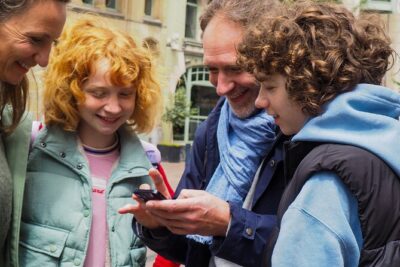
This is not a live guide walking next to you and talking the whole time. Instead, you use a free city game app on your smartphone, then follow prompts that mix navigation with mini challenges. You answer questions tied to where you are and complete search assignments that pull you off the beaten path a bit, just enough to keep things interesting.
What I like about this format is that it changes the rhythm of a city visit. You stop when the app tells you to stop, but you are not stuck for the rest of the hour. That makes the experience feel more like exploring with a plan than following a lecture.
The game uses GPS to help you find squares, streets, and monuments. That matters in Liège because even when you know you want to see certain sights, it is easy to wander too far in the wrong direction. Here, you get a structure that nudges you forward while still letting you breathe.
Price and Value for Groups Up to 6
The ticket is $36.93 per group, good for up to 6 people. For a private experience, that is the kind of pricing that works if you are traveling with family or friends rather than solo.
Think of it like this: if you are two or four people, your cost per person drops quickly. If you are a solo traveler, it is still playable, but you are basically paying for the privilege of having your own game route, not splitting a group price.
Also, because the activity is self-guided, you avoid the common cost trap where you end up paying for a time slot you do not want. This one is built around a roughly 3-hour walk at your pace.
Where to Start: Finding Place Saint-Paul Without Stress
Your starting point is Place Saint-Paul (Pl. Saint-Paul, 4000 Liège). From there, the activity ends back at the meeting point, so you are not left figuring out how to get home after your final question.
One practical tip: treat the first few minutes as your setup time. Get your phone ready, confirm you have the instructions after booking, and make sure your GPS is behaving. If your battery is low, this is where you recharge or shift to a power bank before you start hunting clues.
If you rely on public transportation, the start is listed as near it, which is helpful. You do not need a car, and you can approach the route like a normal city walk.
Your 3-Hour Route Through Liège Highlights

The route is built around 20+ stops, starting with Place Saint-Lambert and moving through civic buildings, churches, museums, viewpoints and stairways, major transit, markets, and public spaces. You will see St. Paul’s Cathedral more than once too, which is useful. Returning to a big landmark helps you remember what you noticed earlier and often makes the later questions feel easier.
Here is how the walk feels in real life, in chunks.
Puzzle walks in other Belgian towns


Place Saint-Lambert and the City’s Official Faces
You kick off at Place Saint-Lambert, which sets the tone fast. Places like this are where cities show you their “main story,” the part that locals feel daily even if you only pass through once. Then you move toward Liege City Hall, a good second stop because it keeps the route anchored in the civic side of Liège.
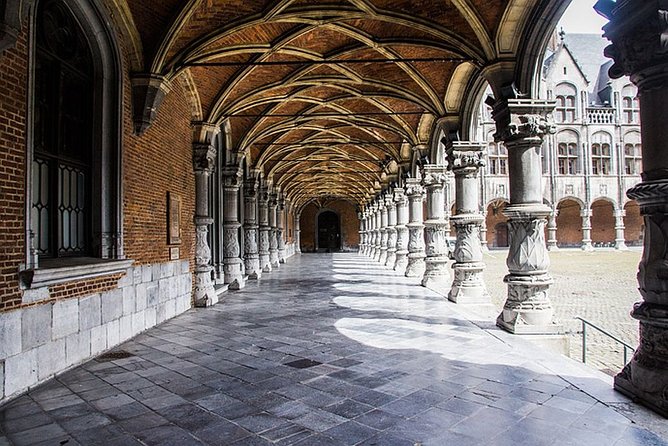
Next up, you hit St. Paul’s Cathedral. Even if you are not a cathedral person, this is the kind of landmark that gives you a clear visual target. The game questions here tend to reward attention, so take a slow look around before you speed to the next clue.
You then continue to Opera Royal de Wallonie-Liege. This helps balance the early route so you are not only dealing with stone and ceremony. It is also a nice reminder that Liège has a living arts scene, not just monuments.
Churches and Curtius: A Break That Feels Like Progress
After the opera stop, you go past Eglise Saint-Antoine et Sainte-Catherine, then into Musee Curtius (Curtius Museum). Even when museums are not the goal of a quick trip, this stop is valuable because it provides a mental reset. You go from open squares and streets into something more focused and reflective.
Then you head toward Coteaux de la Citadelle, which shifts the mood again. The name alone signals a change in terrain, and the route here can feel like you are moving toward higher ground and back down again.
You also reach Eglise St-Jacques and Montagne De Bueren in this early-to-mid stretch. This is the part of the route where your legs start to notice you chose a walkable city game. If you want an easier pace, plan to slow down on the stairs and let the app pacing work for you, not against you.
You finish the chunk at Eglise St-Barthelemy (Church of St. Bartholomew). That church stop keeps you in the historic rhythm before you transition to transit and markets.
Gare de Liège-Guillemins, Brasserie C, and the Market Energy
Then comes Gare de Liege-Guillemins, which is a clever waypoint. A train station on a walking game route means you are near a major hub. It is also a natural moment to slow down, check your surroundings, and decide whether you want a snack or a quick rest.
Next is Brasserie C, which reads like a built-in chance to pause for food or drink. Since your smartphone and data are not included, this is also a good time to check that your connection is still steady and your battery is holding up.
Then you land at Marche de la Batte and later La Place du Marche. Market stops are where games can feel extra fun because there is usually so much going on around you. Even if you are just scanning for the right location for your next clue, the atmosphere makes the wait between tasks less boring.
La Boverie, Parc de la Boverie, and the Relaxed Middle of the Game
You then reach La Boverie, followed by Parc de la Boverie. This pairing is smart because it breaks up the more “architectural” parts of the route with a park and open air. It also gives you a moment to breathe between longer sightseeing stretches.
If your group includes different energy levels, this is a good stretch to regroup. The game keeps you moving, but a park stop offers an easy place to pause, check photos, or simply recover before the next set of questions.
Palais des Princes-Évêques, Pont de Fragnée, and Big-Name Liège
After the park, you visit Palacio de Los Principes-Obispos and then Pont de Fragnee. These stops are the kind of city power points that make your walk feel like more than a casual stroll.
The bridge area is a nice transition too. It often functions as a natural “you’ve come a long way” marker, even if you are not thinking about distance.
Then you get to Le Pot au Lait, which is a fun stop name and a nice chance to grab something or reset before you head into the last third of your route.
Final Stops: Georges Simenon, Le Carré, and the Church Sweep
In the final stretch you reach Statue de Georges Simenon, then Le Carre, and then Eglise Notre-Dame-de-l’Immaculee-Conception. The game uses these final stops to cap the loop with a mix of public space, cultural venue, and religious landmarks.
You also return to St. Paul’s Cathedral again, before closing out back near the meeting area. That second cathedral stop can feel like the wrap-up moment of the game, where you connect the dots between what you saw earlier and what you learned from the prompts.
What’s Special About the Stops in a Game Format
On a normal walking day, it is easy to treat each landmark like a checkbox. This format nudges you to treat each stop like a clue. The app asks you questions about the locations and makes you complete search tasks, so you have to actually notice details instead of just passing by.
You also get something that is hard to replicate with a traditional tour: control. You decide when to start and pause. That turns the 3-hour window into something you can shape around your group, not something that shapes you.
That is especially helpful for families. The game approach gives kids a reason to walk with focus, while adults get enough structure to feel like the route means something.
Best Time to Play, and How to Keep the Pace Comfortable
The listed hours are basically full-day availability, from 12:00 AM to 11:59 PM. So the bigger question is not scheduling, it is comfort.
If you are going in warmer months, consider starting earlier so you are not doing the tougher uphill bits in peak heat. If you prefer evening city light, the route still works, but you may want to watch where you pause and rest so the game does not become annoying.
A simple planning strategy that works with GPS games:
- Start with good lighting and a full battery
- Take short breaks between clusters of stops
- Keep an eye on your phone for GPS drift so you do not waste time
Because the game can be paused, you can also use small breaks to calm things down if the group gets spread out.
Accessibility and Practical Comfort Notes

This activity is described as user-friendly for hearing impaired, and service animals are allowed. It is also noted as being near public transportation, which is a plus in a city walk plan.
The one item you should treat as non-negotiable is smartphone readiness. The activity does not include a phone or data, so you want your own device charged, GPS enabled, and enough battery for the whole loop.
The Main Trade-Offs to Know Before You Book
I think this experience is strongest when you like independent travel with a built-in structure. You get to explore at your leisure, but you still have to show up with the tech you need.
One potential drawback is when plans change mid-trip. Since it is self-guided, you might find yourself handling timing and routing yourself rather than relying on a responsive in-person host. If you are traveling with tight connections or a moving schedule, build a little buffer so you are not stressed about adjusting your walk.
Also, the route is full, with many stops. If your group wants a slow, sit-down heavy day, you might feel like it is too much. If your group likes walking and quick discoveries, it feels just about right for a half-day stretch.
Should You Book This e-Scavenger Hunt in Liège?
If you want a fun, affordable way to see Liège without committing to a live guide, I would book it. The pricing for up to 6 people makes it a smart group activity, and the phone-based game approach keeps sightseeing from turning into monotony.
Book it if:
- You like discovering a city at your own pace
- You have a smartphone with GPS and you can manage battery life
- You are traveling as a group and want one shared plan
- Your group includes kids or people who do not love long guided explanations
Skip it or reconsider if:
- You hate relying on a smartphone for navigation and tasks
- Your schedule is so strict that any delay would ruin the day
- You want long museum time or lots of sitting between stops
One last check before you go: the overall rating sits at 3.8 out of 5 based on 16 reviews, so you will find plenty of people who genuinely enjoyed the game format, plus some who felt it was harder than expected to manage without extra support. If you go in knowing it is tech-led and self-managed, you are setting yourself up for the best outcome.
If you want, tell me your travel month and your group size and ages, and I’ll suggest a pacing plan for the 3-hour loop.
Every Belgium Review
City Games and Trails in Belgium
Liege, Namur and the Ardennes
Newer Belgium reviews from the same corner of the country
- Discover Liège while playing! Escape game – The Walter case
★ 4.5 · 5 reviews - Namur: Escape Game in the city – The Alchemist
★ 4.0 · 5 reviews - e-Scavenger hunt Namur: Explore the city at your own pace
★ 3.5 · 5 reviews - Discover the secrets of Namur while playing! Escape room
★ 4.0 · 5 reviews - Liege Scavenger Hunt and Highlights Self Guided Audio Tour
★ 4.0 · 9 reviews
Liege, Namur & the Ardennes, side by side.
 ★ 4.0Luxembourg and Dinant Day Trip from BrusselsFrom $791,474 reviews
 ★ 4.0Bus day trip to Luxembourg and Dinant from BrusselsFrom $7572 reviews
 ★ 5.0Remembrance Tour: The Battle of the Bulge in the ArdennesFrom $10751 reviews
 ★ 4.5Liege Walking ToursFrom $650 reviews
 ★ 5.0Small Group Dinant’s, Castle and Beer Monastery ExpeditionFrom $53942 reviews
 ★ 5.0Private Beer Bike Tour in Hotton in the Belgian ArdennesFrom $4338 reviews
 ★ 5.0Small Group Liège to Aachen to Maastricht Border Crossing TourFrom $48026 reviews
 ★ 3.5Discover Durbuy by playing! Escape game – The alchemistFrom $2314 reviews
Browse the lists this tour appears in