
REVIEW · LIEGE, NAMUR & THE ARDENNES
Liege Private Walking Tour
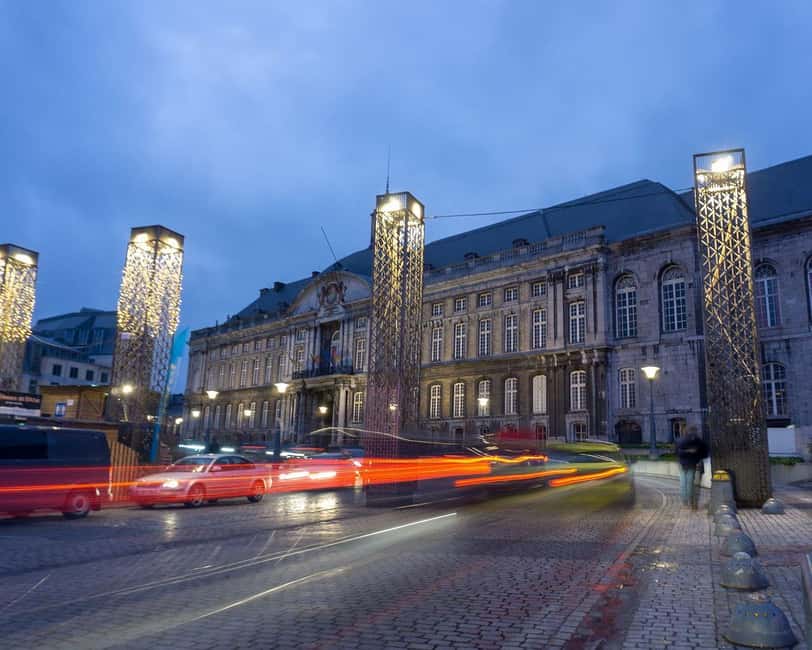
Liège has fought its way through centuries. This private walking tour threads Pre-Roman roots to the city’s later shifts under Habsburg and French rule, using landmarks you can actually see. I especially liked the way the guide turns big events into street-level meaning, and the focus on architecture, including the 12th-century Romanesque Church of St. Bartholomew. One thing to consider, based on real booking experiences, is language setup: you may not always get the language you expect, so it is worth checking your confirmation closely.
You start in the old-town orbit of the Meuse River and move through pedestrian streets like the Carré, where the city still feels like a place you can walk through at human speed. It is also genuinely flexible, because the guide is with your group only and can adjust as you go. For a 90-minute visit, the payoff is that you leave with a clear timeline in your head, not just a list of sights.
In This Review
- Key things that make this Liège tour worth your time
- Liège, Wallonia’s battle-worn crossroads
- Starting at Quai de la Goffe, then getting oriented fast
- From Pre-Roman roots to medieval Liège in one connected story
- Liège Wars and the Thirty Years’ War, what conflict changed
- Counter-Reformation era, reading religion in the streets
- Habsburg to French rule, power changes you can feel
- The Carré pedestrian streets, atmosphere you can use after the tour
- Price and what $309 per group really means
- Who this tour suits best
- Should you book this Liege Private Walking Tour?
- FAQ
- How long is the Liege Private Walking Tour?
- What does the tour cost, and how many people can be in a group?
- Is this a private tour?
- What languages are available?
- Where is the meeting point?
- Are entrance fees included?
Key things that make this Liège tour worth your time
- A tight 90-minute timeline that connects Pre-Roman beginnings to later political control
- St. Bartholomew as your architectural anchor for the medieval story
- War history you can picture because it is tied to the city’s strategic location
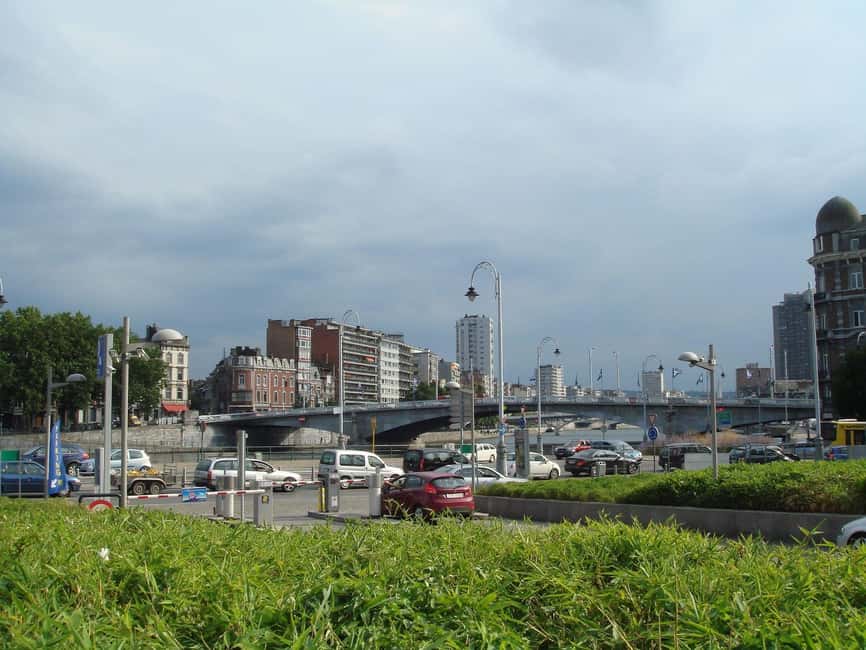
- Meuse River orientation early so the rest of the walk makes sense
- Guides who adapt in real time, including strong performance from Joseph Gerkens, Hilbert, and Karl
- The Carré pedestrian streets so you get atmosphere, not just monuments
The Meuse, the Ardennes and the towns between
- e-Scavenger hunt Liège: Explore the city at your own pace★ 4.0 · 16 reviews
- Discover Durbuy by playing! Escape game – The alchemist★ 3.5 · 14 reviews
- Discover Dinant while playing! Escape game – The alchemist★ 4.5 · 12 reviews
- Liege Private Walking Tour★ 4.3 · 10 reviews
Liège, Wallonia’s battle-worn crossroads
Liège, in Wallonia, has a built-in dramatic storyline. The city sits along the Meuse River, and that mattered. Long before the modern borders you see on maps, the location made Liège strategic, and strategics tend to get targeted. That is why the tour themes keep circling back to conflict, revolts, and power changes.
I like how this walk does not treat history like a lecture. It treats it like cause and effect. When you hear about the Liège Wars or the impact of the Thirty Years’ War, you are not just memorizing dates. You are learning why certain buildings, religious shifts, and political turns happened when they did. That makes the city feel more coherent, even if the centuries sound messy on paper.
If you want a city visit that is equal parts architecture and context, this is a good match. You get to appreciate the old center, while also understanding why the “old” mattered so much.
Starting at Quai de la Goffe, then getting oriented fast
You meet at Visitez Liège, Quai de la Goffe 13, 4000 Liège. Getting orientation right away is a big deal for a short, 90-minute tour. This is the kind of walk where the first minutes matter because they set the map in your mind.
From the start, you are guided to see Liège as a river city and a city of old routes. That makes later stops feel less random. You will notice how the walk naturally leads you toward the historic center, where medieval-era landmarks cluster, including the Romanesque church featured on the tour.
Because it is a private group, you do not have to “race” with strangers to keep up. The guide stays with your group only, and that also means questions land immediately instead of getting delayed until the end.
If you are the type who loves getting bearings fast, this structure works. If you like to wander without any schedule, you can still use the tour as your starting compass and then keep going afterward on your own.
From Pre-Roman roots to medieval Liège in one connected story
The tour’s opening arc is about deep roots, reaching back to Pre-Roman times. Even if you do not picture exact sites from that period right away, the point is to explain how Liège developed over time into a place worth fighting for. Once you hear that origin idea, the rest of the walk stops feeling like separate chapters.
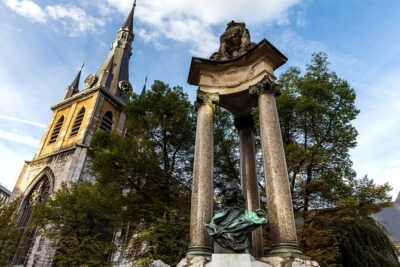
Then the story tightens into the medieval world, where the city’s architecture becomes a kind of evidence. You spend time with the medieval feel of the old town and the landmarks that still define its look today. The big highlight here is the 12th-century Romanesque Church of St. Bartholomew.
Romanesque architecture is not just style, it is timing. When you see thick stone forms and the calm solidity of Romanesque design, it helps you understand why medieval Liège had a different rhythm than later eras. This is one of the moments where you can slow down. You get a visual anchor for what the guide is saying about earlier centuries.
Practical tip: if you enjoy looking at stonework and building forms, give yourself a few extra seconds per stop. A private guide can point out details, but it is still on you to pause and absorb them.
Liège Wars and the Thirty Years’ War, what conflict changed
Liège’s history is not shy about violence. The tour specifically tackles tales of the Liège Wars, then moves to how the Thirty Years’ War echoed through the region. The value here is that you learn the city’s “why” before you try to memorize the “what.”
Here is the useful angle for your visit: conflict reshapes cities. It changes loyalties. It alters religious power. It influences what gets rebuilt and what gets emphasized. So when your guide frames these wars, you are looking at Liège with a new question in mind: what might have survived, what might have been reinforced, and what might have been transformed?
You may also notice how the guide talks about the city’s strategic position over and over. That repetition is not filler. It is the key to connecting wars that seem unrelated at first glance. Liège keeps reappearing in European history because its geography made it hard to ignore.
One more plus from real-guide feedback: people highlighted that the guide made the stories feel interesting and sympathetic, not dry. Joseph Gerkens was singled out for incredible knowledge and an engaging approach that made Liège feel like a real place, not a textbook. That is exactly what you want when you are facing heavy subject matter.
Counter-Reformation era, reading religion in the streets
A big theme on this walk is the Counter-Reformation era. In plain terms, that period helps explain how religious life and church power evolved in response to major shifts happening across Europe.
This is where architecture and storytelling meet. You are not just hearing the name of an era. You are learning what kind of cultural energy built the city’s later identity. For many travelers, the Counter-Reformation can sound abstract. On a walking tour, it becomes less abstract because you are physically in the space where those ideas mattered.
What you will get from this part of the tour is a sense of continuity. The medieval roots get connected to later church influence. You start seeing religious change as something that leaves marks, not just something that happened somewhere else.
The best way to make this segment land is to ask the guide one simple follow-up question during the walk. Something like, what would a person in that era have noticed first here? A good guide will point you toward the kind of details you would otherwise miss.
Habsburg to French rule, power changes you can feel
The tour also covers Liège’s evolution from Habsburg rule to French control. That is a crucial storyline because it explains why a city can be both deeply local and constantly entangled in larger European politics.
The practical benefit for you is that it untangles modern confusion. A lot of travelers arrive in Belgium thinking of history as tidy lines. Liège history does not follow tidy lines. Once you learn that political control shifted, you start understanding why the city’s character developed with influences from different directions.
On foot, this theme becomes more than dates. You can think of it like layers. Each political shift nudges how institutions operate, how religion is positioned, and how the city presents itself. Your guide helps you connect those layers to the landmarks you are seeing along the way.
This is another spot where strong guides make the difference. Karl, for example, was praised for taking a lot of time. That matters in a part of the tour where nuance counts. If you only get rushed through political context, it can feel like extra reading. If you get patient pacing, it becomes a story you actually remember.
The Carré pedestrian streets, atmosphere you can use after the tour
The walk does not stop at older buildings. You also get the feel of the city through the Carré, a pedestrian zone lined with shops. The Carré is not just a pleasant stroll. It is where the historic core meets everyday life, which is how you turn a tour from “information received” into “place experienced.”
I like adding one simple strategy here: plan to return to the Carré after the tour, when you already know what you are looking for. You can turn your knowledge into choices, like where to linger, what sights to re-check, and which streets feel most meaningful based on the story you just heard.
If your itinerary includes dinner or a later evening, this part sets you up. You will know how to orient yourself before you start hunting for food. And if your pace is slower, the Carré gives you a comfortable wind-down zone instead of forcing you back into a faster route.
Price and what $309 per group really means
The price is $309 per group for up to 15 people, for a 90-minute private tour. That structure changes the value depending on your group size.
- If you fill the group near 15 people, the cost can be surprisingly efficient per person.
- If you are just two or three, it becomes a premium, but you pay for privacy, pace control, and the guide being able to customize on the spot.
I think this tour represents good value when you care about context, not just seeing a church from the outside. A well-told history walk can be worth more than a single attraction ticket because you leave with a mental map. Also, entrance fees are not included, so you should budget separately if you plan to go inside any church or site that charges.
One more practical note from booking experiences: language can affect the experience. In at least one case, a traveler expected German but got English instead, and the guide still handled it well. That flexibility is a plus, but it is another reason to confirm your language preference so you can get the experience you want.
Who this tour suits best
This Liège Private Walking Tour fits best if you want:
- A guided historical timeline that covers wars, religion, and political shifts
- Architecture context tied to what the city had to overcome
- A short, efficient visit that still feels thoughtful, not rushed
It is also a strong pick for groups who like to ask questions. Because the guide is with your group only, you can steer the walk. The activity even mentions possible customization with your local guide on the spot, which is ideal if you are more interested in medieval church life, or more focused on the European war story.
If you mostly want scenic photos with minimal storytelling, you might find the historical themes heavier than you need for 90 minutes. But if you enjoy connecting buildings to the forces that shaped them, you will probably love it.
Should you book this Liege Private Walking Tour?
Yes, if you want Liège to make sense quickly. The combination of deep historical themes and real, see-it architecture landmarks is exactly what you need for a short stay. The private format also helps, because you can keep the pace comfortable and ask follow-ups without waiting.
Book it especially if your group includes history-minded people, architecture lovers, or anyone who wants a guided path through the old town that includes the Meuse area and the Carré. I would book it with confidence when language clarity is important to you, because your experience will depend on whether English or German is confirmed properly.
If you are flexible, enjoy walking, and like stories tied to places, this is a smart use of 90 minutes in Liège.
FAQ
How long is the Liege Private Walking Tour?
The tour lasts 90 minutes.
What does the tour cost, and how many people can be in a group?
It costs $309 per group, with up to 15 people.
Is this a private tour?
Yes, it is a private group tour with your local guide only.
What languages are available?
The live tour guide is available in English and German.
Where is the meeting point?
You meet at Visitez Liège, Quai de la Goffe 13, 4000 Liège, Belgium.
Are entrance fees included?
No, entrance fees are not included.
More Belgian Tours
Every Belgium Review
Liege, Namur and the Ardennes
Newer Belgium reviews from the same corner of the country
- Discover Liège while playing! Escape game – The Walter case
★ 4.5 · 5 reviews - Namur: Escape Game in the city – The Alchemist
★ 4.0 · 5 reviews - e-Scavenger hunt Namur: Explore the city at your own pace
★ 3.5 · 5 reviews - Discover the secrets of Namur while playing! Escape room
★ 4.0 · 5 reviews - Liege Scavenger Hunt and Highlights Self Guided Audio Tour
★ 4.0 · 9 reviews
Liege, Namur & the Ardennes, side by side.
 ★ 4.0Luxembourg and Dinant Day Trip from BrusselsFrom $791,474 reviews
 ★ 4.0Bus day trip to Luxembourg and Dinant from BrusselsFrom $7572 reviews
 ★ 5.0Remembrance Tour: The Battle of the Bulge in the ArdennesFrom $10751 reviews
 ★ 4.5Liege Walking ToursFrom $650 reviews
 ★ 5.0Small Group Dinant’s, Castle and Beer Monastery ExpeditionFrom $53942 reviews
 ★ 5.0Private Beer Bike Tour in Hotton in the Belgian ArdennesFrom $4338 reviews
 ★ 5.0Small Group Liège to Aachen to Maastricht Border Crossing TourFrom $48026 reviews
 ★ 4.0e-Scavenger hunt Liège: Explore the city at your own paceFrom $3616 reviews
Browse the lists this tour appears in