
REVIEW · LIEGE, NAMUR & THE ARDENNES
Remembrance Tour: The Battle of the Bulge in the Ardennes
Bastogne is history you can stand on. This remembrance tour from Brussels strings together U.S. and German memorials, real foxholes at Bois Jacques, and the Bastogne War Museum with an English-speaking guide who keeps the day moving.
I love two things most. First, I like that you get round-trip bus transport and a ready-made route, so you can focus on the sites instead of planning your own driving and timing. Second, the Bastogne War Museum admission is built in, which makes the day feel purposeful, not random.
One possible drawback: it is a long day with stops packed in, so if you crave lots of free time outdoors, you may feel the schedule. If you’re sensitive to nonstop talk, consider earplugs, since some guides run very lecture-style.
In This Review
- Key things to know before you go
- Entering the Ardennes Remembrance, with meaning built in
- The long Brussels-to-Bastogne day: timing, pacing, and comfort
- Ardennes American Cemetery and Memorial: where the story begins
- McAuliffe Square: a quick reset in the middle of memory
- Mardasson Memorial: the American star you can’t miss
- Bastogne War Museum: two hours that usually feel like the best use of your time
- Bois Jacques foxholes: the moment that makes it real
- Foy and the broader Ardennes battle context
- German War Cemetery: the other side, properly remembered
- Guides, narration style, and how to get the best day
- Price and value: what you get for around $107
- Who should book this Battle of the Bulge memorial tour
- Final verdict: should you book this tour?
- FAQ
- What time does the tour start in Brussels?
- How long is the Battle of the Bulge remembrance tour?
- Is the Bastogne War Museum ticket included?
- Is the Bois Jacques stop included in the ticket price?
- Are food and drinks included?
- What language is the tour offered in?
- Where do I meet and where does the tour end?
Key things to know before you go
- US and German memorials side by side, so you see the human cost from both directions
- Bastogne War Museum included, with time set aside to actually absorb it
- Bois Jacques foxholes are a hands-on moment, not just a viewpoint
- A tight route from Brussels, starting at 9:15 am and ending back in the city
- Some guides go heavy on WWII storytelling, which is great if you love it, less ideal if you want quiet
The Meuse, the Ardennes and the towns between
- Luxembourg and Dinant Day Trip from Brussels★ 4.0 · 1,474 reviews
- Bus day trip to Luxembourg and Dinant from Brussels★ 4.0 · 72 reviews
- Excursion to Luxembourg and Dinant from Brussels★ 5.0 · 5 reviews
Entering the Ardennes Remembrance, with meaning built in
This tour is built around remembrance, not sightseeing for sightseeing’s sake. You’re not just looking at monuments. You’re standing where people died, where families have kept memory alive, and where the landscape still shows the scars of war.
That’s why the day feels intense in a good way. The stops are chosen to create a clear story: soldiers who advanced into Germany, battles around Bastogne, the places where men dug in and waited, and the cemetery that gathers remains long after the fighting ended. It’s the kind of travel that makes you slow down without being emotionally chaotic.
And you’ll do it with real structure. Round-trip transport from Brussels means less stress. A professional multilingual guide means you get context as you go, so the monuments do not stay as “nice photo spots.”
The long Brussels-to-Bastogne day: timing, pacing, and comfort
Plan for a full day. It runs about 11 hours total, and the start time is 9:15 am from Bd de Berlaimont 18 in Brussels. You return to Brussels near Brussel-Centraal, Carr de l’Europe.
That pacing matters because the Ardennes sites are not all next door. You’re trading flexibility for convenience, and that trade usually works. The bus ride also gives your guide room to set up the next stop, which is how you end up understanding why a specific field, road, or memorial mattered.
Transport is air-conditioned, and the group is limited to a maximum of 200 travelers. That number is big in theory, but the day does not feel like a theme park. You’re doing guided stopovers plus museum time, not roaming at random.
Bring a little strategy. Wear comfortable shoes, because you’ll be walking around cemeteries and memorial grounds. The tour calls for moderate physical fitness, and that usually means you should be fine with walking and standing for longer stretches, not that you need hiking skills.
Ardennes American Cemetery and Memorial: where the story begins
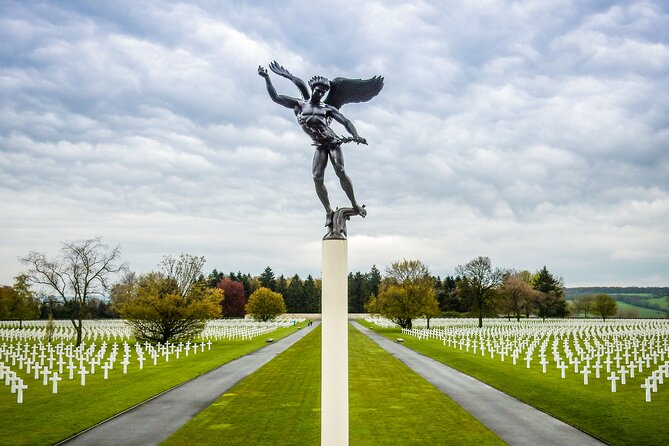
The first stop is the Ardennes American Cemetery and Memorial. This is where thousands of US service members rest after losing their lives during the push of the U.S. Army into Germany.
What I like about starting here is the emotional anchor. When you see thousands of graves, you instantly understand that the Battle of the Bulge was not abstract strategy. It was bodies, names, dates, and consequences.
The stop is about 40 minutes, and admission is free. That timing is useful. It gives you enough minutes to find key memorial areas without making you feel rushed. If you tend to get overwhelmed in cemeteries, you might use the first visit to focus on a small task, like reading a few inscriptions carefully rather than trying to take everything in at once.
Also, look closely at the way the grounds are kept. In Belgium, that kind of care is not casual. It is a continuing act of remembrance.
McAuliffe Square: a quick reset in the middle of memory
Next comes McAuliffe Square, in the center of Bastogne, with about 15 minutes on the ground. The point here is simple: you break up the heavy emotional stops with a town square that has options for dining and shopping.
This is one of those moments where you decide how you want your day to feel. If you need to switch gears, this is a good place to do it. Grab water, check your bearings, and use the tiny buffer to reduce stress later when the countryside parts start to blur together.
Admission here is free, and that makes sense, since the purpose is orientation, not ticketed attraction.
Other battlefield tours at Waterloo and in the Ardennes

Mardasson Memorial: the American star you can’t miss
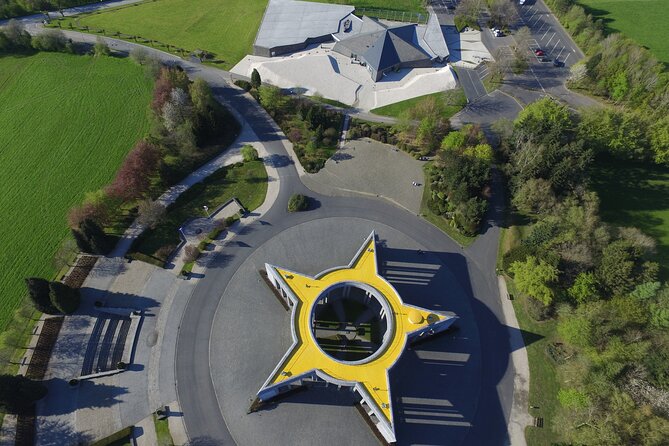
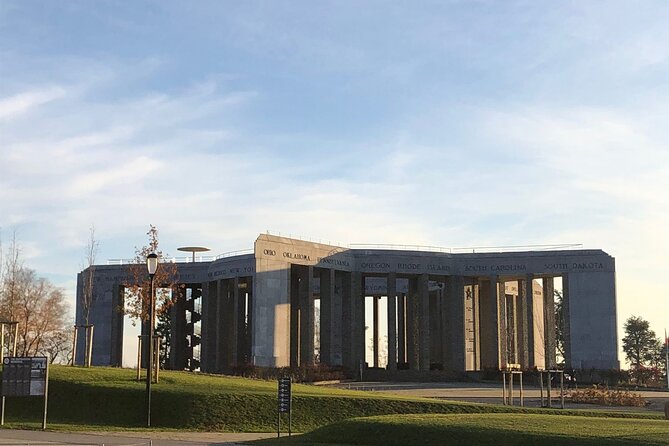
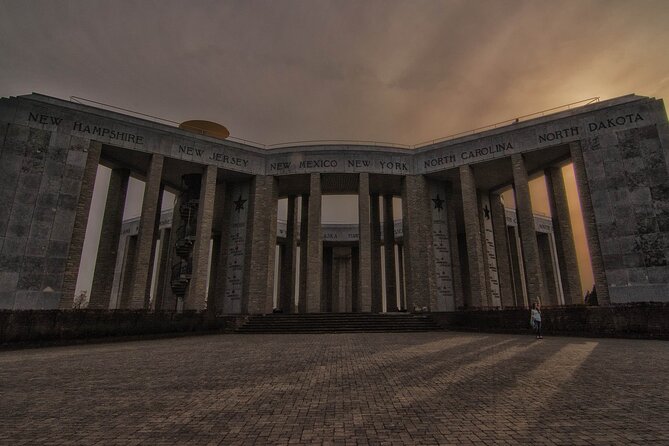
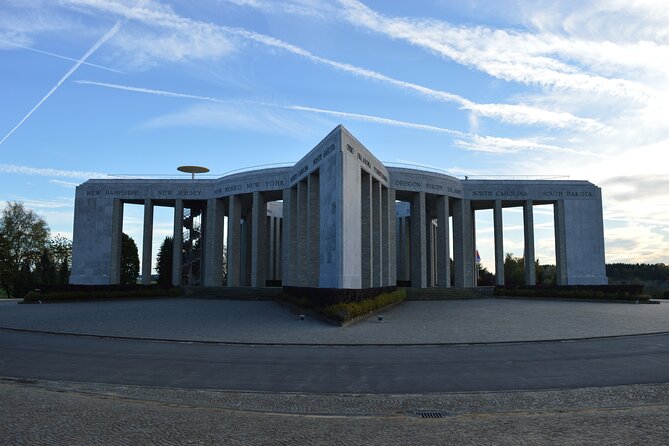
The Mardasson Memorial is near Bastogne, in Luxembourg province. It honors American soldiers wounded or killed during World War II’s Battle of the Bulge.
The design is striking: it’s shaped like a five-pointed American star. For first-time visitors, that shape does more than look cool on a postcard. It gives you a visual shortcut for what this place stands for: an American silhouette rising out of the Ardennes.
You’ll have around 40 minutes here, and admission is free. I like that it is not a drive-by. It’s enough time to move around the monument area and actually take in the scale.
If you’re the type who likes to understand symbols, this is a great stop. Monuments like this are built for the long term. They are meant to be read by people who come later, not just by those who were there.
Bastogne War Museum: two hours that usually feel like the best use of your time
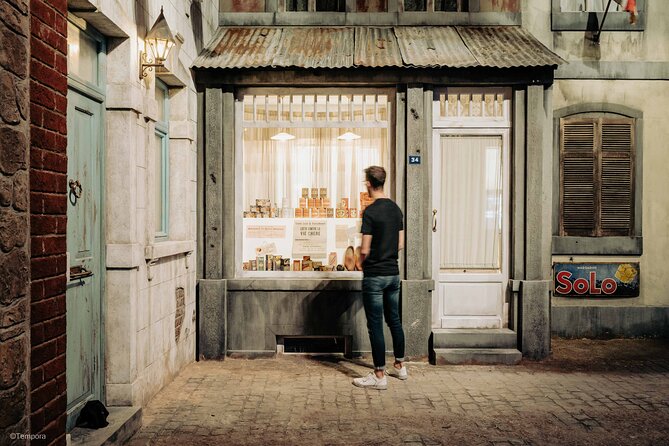
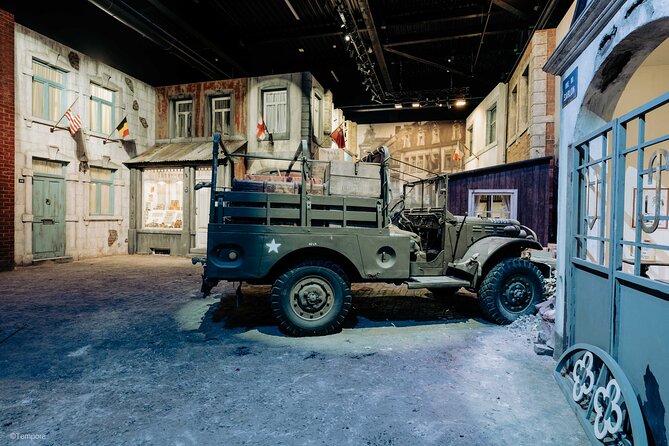
Then you hit the main event, the Bastogne War Museum. Admission is included, and you’ll spend about 2 hours inside.
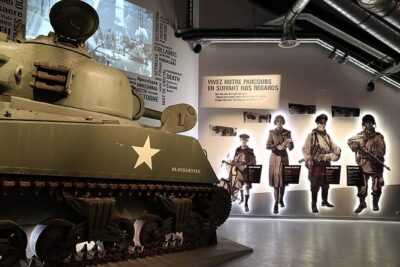
This is where the day stops being mostly outside. The museum wraps the battle into physical detail: artifacts, exhibits, and a larger explanation of what happened at Bastogne and why it mattered. For many people, this is the part that ties the rest together.
Here’s a practical tip: two hours is long enough to do more than the highlights, but not enough to wander without direction. Plan to pick a couple of themes before you enter, such as the flow of the battle, daily life for soldiers, or how the terrain affected tactics. Your guide can usually steer you toward what to pay attention to.
Many guides also connect the museum to what you’ll see next, especially at foxhole sites. That is a smart teaching method. It prevents museum time from becoming disconnected from the rest of the day.
And yes, it helps that the museum is not only about the Battle of the Bulge alone. Some people feel it can cover more war themes than they expected, but that broader framing can also help you understand the big picture without needing to do homework first.
Bois Jacques foxholes: the moment that makes it real
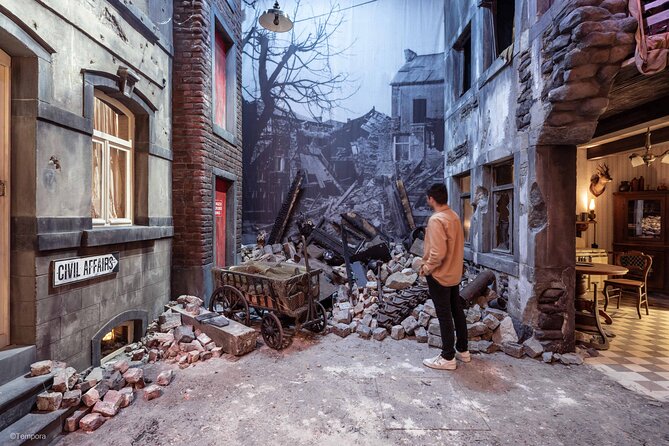
Bois Jacques is where you see foxholes and cavities dug into the ground to protect American soldiers from hostile fire.
You’ll have about 20 minutes here. Admission is listed as not included, so expect there may be an extra fee at the site. This is one of those places where ticket details matter, so don’t assume it’s free just because the other stops are.
What makes Bois Jacques powerful is simple: you’re not looking at a diagram. You’re looking at the work. The earth shapes, the dug-out protection, and the way the terrain forced hard choices.
Several people have singled out foxholes as a standout, especially if you like firsthand battle details from popular WWII accounts. Even if you’re not a hardcore WWII fan, it tends to hit the same way, because the idea is physical and immediate.
If you want a tip that helps you get more from it: slow down. Spend more time staring at the ground than trying to photograph the entire site. The war was experienced on hands, knees, and in cramped spaces. You’ll feel that better if you let your brain catch up to the scale.
Foy and the broader Ardennes battle context
Next you’ll visit Foy, a village tied to the Battle of the Bulge. It is known from Stephen Ambrose’s writing and the TV series Band of Brothers.
You’ll have about 15 minutes, and admission is free. This stop works best if you enjoy connecting history to stories you’ve read or watched. A good guide can place Foy in the larger movement of armies and the surrounding towns, so it becomes more than a named location.
Because the time is short, I recommend using it for orientation. Ask your guide what to look for in the village area and how it fits the battle timeline. Even a brief stop can be informative if you have the right lens.
If you want downtime, this is also a decent moment to breathe, stretch, and reset before the final cemetery segment.
German War Cemetery: the other side, properly remembered
The German War Cemetery gathers the remains of more than 6,800 German soldiers, including those who died at ages 17 to 52, from the period 1940 to 1945.
You’ll spend about 20 minutes, and admission is free. This is one of the most important stops on the day because it balances the remembrance. The tour is centered on the American experience, but it doesn’t erase the other side. It treats the dead with equal care.
It can be emotionally heavy, even if you came for the battle story. That’s normal. For many people, this cemetery is where the day feels most solemn and least about entertainment.
A practical mindset helps. Rather than trying to read everything, choose a couple of things to focus on, like the symbolism of headstones and the structure of the grounds. Then take a quiet minute to look away. You’ll get more out of it that way.
Guides, narration style, and how to get the best day
The tour runs with a professional guide, and different groups have been led by historians and storytellers such as Martin King and Stephan. Some departures also mention guides named Johan or Johann, and the common theme is strong WWII storytelling.
This is where your expectations matter. Many people praise the guide as an engaging lecturer who answers questions and builds connections between places. That can be amazing if you love history.
But there’s also a real consideration. One guide style might be very talk-heavy for hours. If you get overstimulated easily, plan to manage it with small breaks, like taking a few minutes to step away from the group at each stop. And yes, earplugs can be a smart move.
If you want to prepare, bring a small notebook on your phone. Write down one question you care about, like how Bastogne held out or why the terrain mattered. When your guide talks, you can translate their story into your question. That keeps it from feeling like a nonstop stream.
Price and value: what you get for around $107
At about $107.41 per person, you’re paying for a full day that includes transport, a guide, and one key ticket, Bastogne War Museum.
On a value level, that works because museum admission alone often costs a meaningful chunk of what you pay, and the transport removes the biggest hassle of a day like this, the drive and timing from Brussels. You also get a structured route that hits multiple memorial sites without you having to stitch them together on your own.
What’s not included is also clear: food and drinks. Plan to buy water and snacks along the way or during the short town-square pause. Also note that Bois Jacques admission is not included, so you may want to keep a little extra cash or card available.
If you’re doing this trip because you want a guided interpretation of the Battle of the Bulge, this is a practical price. If you are the type who prefers self-guided stops and quiet time, you might find the guided narration less your style. Still, even then, the museum ticket and transport make it hard to beat.
Who should book this Battle of the Bulge memorial tour
This works best if you want to:
- remember and honor the people involved, with respectful stop choices
- visit the Bastogne War Museum without having to figure out timing
- see foxholes and memorials where the ground itself is part of the story
- get context from an expert guide, especially if you like WWII books or TV tie-ins
It might not be ideal if you hate guided lectures, since the day can include long stretches of narration. If quiet is your priority, you can still do it, just come prepared with earplugs and a plan to take short pauses outdoors.
It’s also a good fit for couples and solo travelers who want a structured day with minimal logistics. With mobile ticketing and a clear start point in central Brussels, it’s straightforward.
Final verdict: should you book this tour?
If you want a respectful, structured day that connects key memorials, a top museum stop, and the foxholes at Bois Jacques, I think you’ll like this. The included Bastogne War Museum ticket plus the hassle-free round trip from Brussels are the big value drivers.
My main caution is the time and narration style. It’s a full day with limited breathing room, and some guides speak constantly for long stretches. If that sounds exhausting, bring earplugs and treat the town-square stop as your reset button.
FAQ
What time does the tour start in Brussels?
The tour starts at 9:15 am at Bd de Berlaimont 18, 1000 Bruxelles.
How long is the Battle of the Bulge remembrance tour?
It lasts about 11 hours.
Is the Bastogne War Museum ticket included?
Yes. Entrance to the Bastogne War Museum is included, and you get about 2 hours there.
Is the Bois Jacques stop included in the ticket price?
No. Bois Jacques admission is not included, so you may need to pay at the site. The stop is about 20 minutes.
Are food and drinks included?
No. Food and drinks are not included. You’ll need to plan snacks and meals on your own.
What language is the tour offered in?
The tour is offered in English, and it includes a professional multilingual guide.
Where do I meet and where does the tour end?
Meet at Bd de Berlaimont 18, 1000 Bruxelles and the tour ends at Brussel-Centraal, Carr de l’Europe, 1000 Bruxelles.
Every Belgium Review
Waterloo and the Battle of the Bulge
Liege, Namur and the Ardennes
Newer Belgium reviews from the same corner of the country
- Discover the secrets of Brussels while playing
★ 5.0 · 3 reviews - Standard vehicle from Charleroi airport to city of Brussels
★ 4.5 · 3 reviews - Private tour to Ghent from Brussels (5hours walk & drive)
★ 5.0 · 3 reviews - Full day Brugge & Ghent: the gems of Flanders
★ 5.0 · 3 reviews - Private tour : Best of Brussels half day From Brussels
★ 5.0 · 3 reviews
Liege, Namur & the Ardennes, side by side.
 ★ 4.0Luxembourg and Dinant Day Trip from BrusselsFrom $791,474 reviews
 ★ 4.0Bus day trip to Luxembourg and Dinant from BrusselsFrom $7572 reviews
 ★ 4.5Liege Walking ToursFrom $650 reviews
 ★ 5.0Small Group Dinant’s, Castle and Beer Monastery ExpeditionFrom $53942 reviews
 ★ 5.0Private Beer Bike Tour in Hotton in the Belgian ArdennesFrom $4338 reviews
 ★ 5.0Small Group Liège to Aachen to Maastricht Border Crossing TourFrom $48026 reviews
 ★ 4.0e-Scavenger hunt Liège: Explore the city at your own paceFrom $3616 reviews
 ★ 3.5Discover Durbuy by playing! Escape game – The alchemistFrom $2314 reviews
Browse the lists this tour appears in