
REVIEW · BRUSSELS
Luxembourg and Dinant Day Trip from Brussels
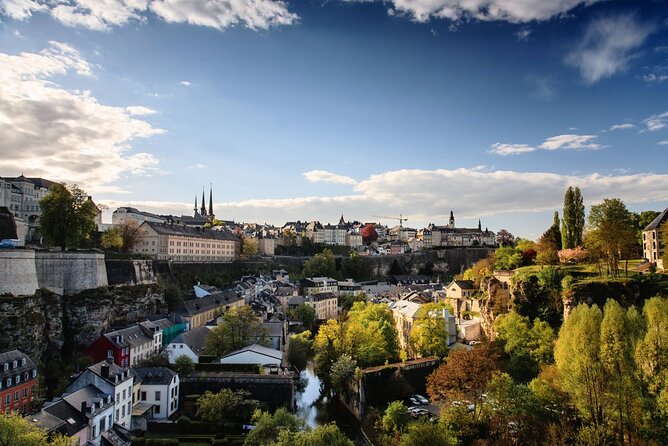
Two countries in one long day. This Brussels trip strings together Luxembourg City and Dinant, with coach time through the Ardennes and guided walks that help you understand what you are seeing fast. It also gives you enough freedom to slow down in Luxembourg after the main orientation.
I love the mix of old and official Luxembourg, from the Grand Ducal Palace area to the Baroque and Renaissance Notre-Dame Cathedral with Gothic touches. I also like that you get a formal look at the EU center on Kirchberg, then you switch to a personal stroll moment in the Old Town. The main drawback is simple: it is a packed schedule, and if you dislike bilingual narration, it can feel like the same points land twice.
You should also plan for the “real world” parts of a day like this. The coach ride is long, the stops are timed, and not every optional sight will be open when you arrive, especially in peak periods or if repairs happen. If you want slow travel, this is not it.
In This Review
- Key things to know before you go
- From Brussels, a long but well-structured day trip
- Coach ride, meeting point, and how not to lose time
- Luxembourg City orientation: royal palace views to Notre-Dame Cathedral
- Neumünster Abbey and the “cultural pause” in the Grund
- Kirchberg and EU architecture: a fast look with real context
- Old Town free time, where to eat, and how to use your window well
- Dinant on the Meuse: cathedral views and the Citadelle decision
- Maison de Monsieur Sax: a quick museum stop that adds a story
- Price and value: what you pay for, what you still need money for
- What the best days look like, and what can go wrong
- Who should book this Brussels to Luxembourg and Dinant day trip
- Should you book it?
- FAQ
- How long is the Luxembourg and Dinant day trip from Brussels?
- What time does the tour start, and where do I meet?
- Is lunch included?
- Are entrance fees included?
- What languages are available for the tour?
- How much free time do I get in Luxembourg and Dinant?
- Do I need hotel pickup?
- Is the coach air-conditioned, and do we get audio equipment?
- Can I stay in Luxembourg after the tour?
- What if I cancel close to the trip?
Key things to know before you go
- Luxembourg City orientation plus Old Town time gives you both context and freedom.
- Kirchberg and EU buildings are quick but memorable, especially if you like modern architecture.
- Dinant timing is tight, so decide early if you want the Citadelle views.
- Your money is mostly for the bus and guide, while entrances and lunch are on you.
- Bilingual commentary can stretch the walking stops, even when the information is good.
- Punctuality matters because the bus does not wait for latecomers.
Brussels has more to it than one route
- Brussels: Atomium Entry Ticket with Design Museum Ticket★ 4.4 · 9,254 reviews
- From Brussels: Guided Day Trip to Bruges and Ghent★ 4.6 · 8,353 reviews
- From Brussels: Bruges & Ghent Day Tour – 2 Fairytale Cities★ 4.7 · 8,242 reviews
- Choco-Story Brussels: Chocolate Museum Entrance with Tasting★ 4.3 · 4,883 reviews
From Brussels, a long but well-structured day trip
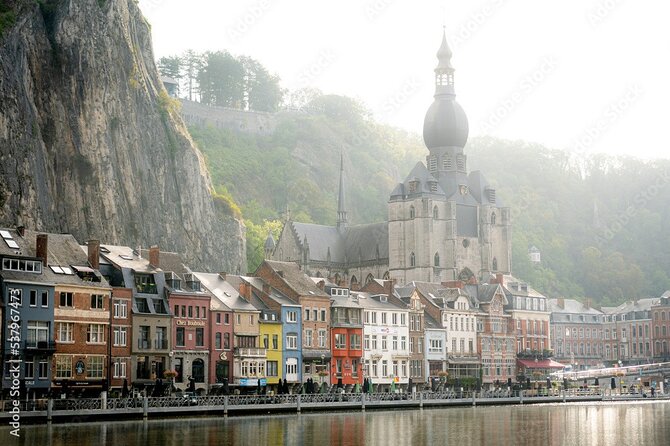
This tour is the kind of day that feels efficient in the best way. You start early, then you spend most of the day in two very different places: Luxembourg City’s layered mix of royal, religious, and European power, and Dinant’s river-town drama along the Meuse.
Expect a full day that centers on guided storytelling, not museum deep-dives. In Luxembourg you get a sightseeing flow that moves from historic core sights to the modern EU quarter. Then you head to Dinant for scenic highlights and a quick museum visit connected to Adolphe Sax, the inventor of the saxophone.
If you are short on time in Belgium, this is a practical use of it. If you hate bus rides, bring patience. A day like this only works if you treat it as a “big-picture tour” plus a little wandering.
Coach ride, meeting point, and how not to lose time
You meet at Bd de Berlaimont 18, 1000 Bruxelles, and the start time is 8:30 am. The tour ends back at the meeting point. The drive to Luxembourg City is about 3 hours each way, so you should expect a lot of time on the coach and a need to be ready to go when you arrive.
A few details make the day smoother:
- Be on time. Latecomers are not accommodated, and the bus can depart exactly on schedule.
- Wear comfortable shoes. You do not just sit. There is enough walking for a day-trip crowding effect.
- Bring layers. Even with air-conditioning on board, you can get temperature swings between coach, old streets, and cathedral interiors.
Also, the bus can be crowded on peak dates. Some people found seating tight and legroom limited, so if you are tall or you have back or neck issues, plan for an uncomfortable segment or two. On the plus side, the coach is air-conditioned, and you get radios and earphones so the guide’s voice stays clear during stops.
Luxembourg City orientation: royal palace views to Notre-Dame Cathedral
Luxembourg City is easiest to enjoy when you know what to look for. That is why the guided portion matters. The tour starts with Luxembourg City and then moves through a sequence that gives you landmarks plus the story behind them.
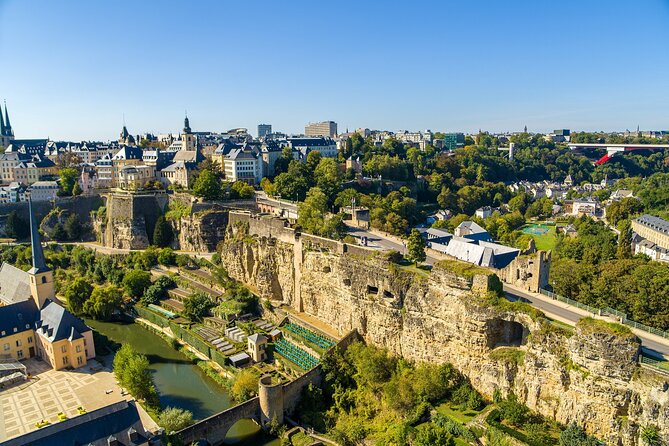
You pass the Grand Ducal Palace, the official residence tied to the Grand Duke’s role as head of state. The palace area also helps you understand why Luxembourg feels both grand and small at the same time. You get a quick sense of how buildings evolved over time through different architectural eras, including Renaissance and Baroque and later additions tied to parliamentary functions.
Next comes Cathedrale Notre-Dame, described as a former Jesuit church with Baroque and Renaissance styling and Gothic elements. This matters because it helps you read the building instead of just snapping photos. You also visit the space where there is a forum dedicated to the Grand Ducal family. Another neat context point is that adjacent Jesuit college spaces became the National Library, which links religious history to modern public culture.
The key value here is pacing. These are short visits, but they are not random. The guide’s job is to give you landmarks plus enough background to make the rest of your walk in Luxembourg make sense.
Neumünster Abbey and the “cultural pause” in the Grund
After the cathedral focus, the itinerary includes Neumünster Abbey, set in the Grund district in southern Luxembourg. The timing is brief, but it acts like a reset. You are moving away from royal and church power and into a cultural meeting and exhibition type space.
What makes Neumünster interesting is how the site evolved. The original Benedictine abbey on the Altmünster Plateau was destroyed in 1542, and then monks rebuilt the abbey in 1606. Even if you only have a short window, this kind of detail helps you see the place as layered, not stuck in one era.
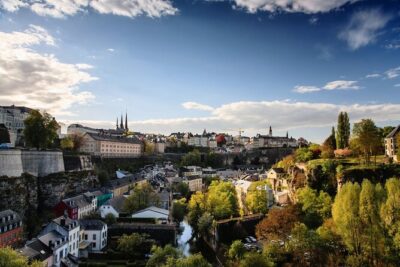
The Grund area also helps you understand Luxembourg’s geography. It is not just “a pretty town.” It is built around valleys and viewpoints, so this stop fits the way the city actually moves and reveals itself. If you like atmospheric walking, you will appreciate this break before the guide swings you toward the modern EU district.
The Meuse, the Ardennes and the towns between


Kirchberg and EU architecture: a fast look with real context
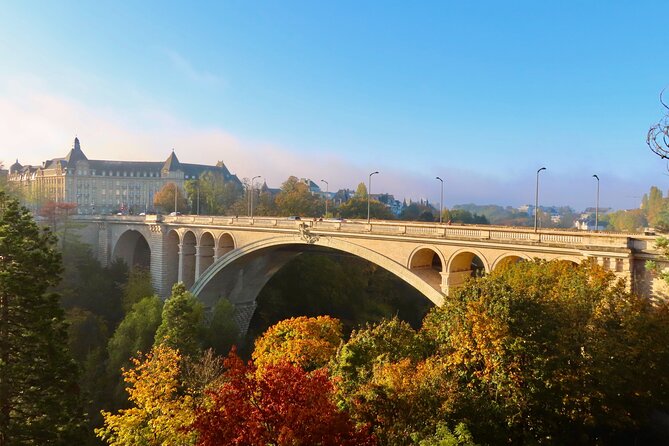
Then the tour shifts into the modern side of Luxembourg. From the bridge area you pass major reference points, including the Grand Duchess Charlotte Bridge in red painted steel (1966), and you see spots tied to civic and European themes.
The highlight here is Kirchberg, the district where the European Parliament sits. The plan is not to tour every chamber. Instead, it gives you an orientation view so the European institutions feel real, not abstract. You also pass the Schuman Center headquarters of the Council of Ministers, which helps you place the European governance story in physical space.
This is a good stop for non-experts. Even if you do not follow EU politics closely, the architecture and location make it easier to connect the institutional names to where decisions are made.
If you love architecture and you like “what’s behind the headline,” you will get a lot from this segment even with limited time.
Old Town free time, where to eat, and how to use your window well
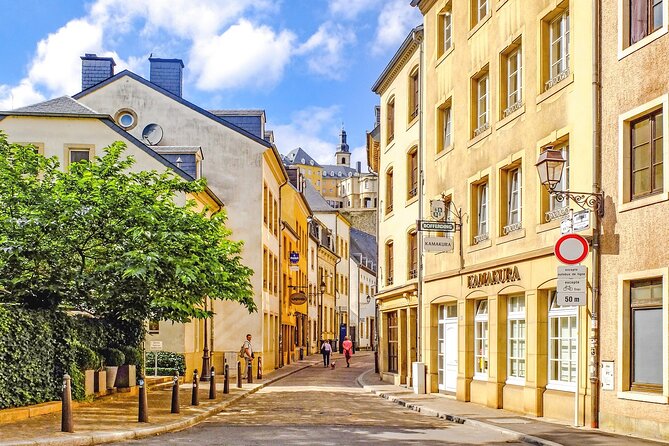
Once the guided portion finishes, you get free time to wander Luxembourg’s Old Town. This is the moment that turns a bus tour into a travel day.
A few practical thoughts to help you use the time smartly:
- Aim to walk early in the free window, not at the end. You want your best light for the streets and viewpoints.
- Have lunch at your own pace. Lunch is not included. You will find local restaurant options, but you can also look for quick bites if you want more wandering time.
- Plan for optional sights with a little caution. Some people mention trying to fit in Luxembourg tunnel or underground options, only to discover limited hours. If underground or caves are on your list, check last entry times so you do not lose your slot.
There is also value in doing a simple “orientation loop.” After you have seen the palace and cathedral areas, it is easier to understand where the Old Town sections sit relative to bridges and viewpoints.
If you end up with questions while you stroll, this is when you can usually get answers by reading plaques, looking at maps, and comparing what you saw with what you now see on foot.
Dinant on the Meuse: cathedral views and the Citadelle decision
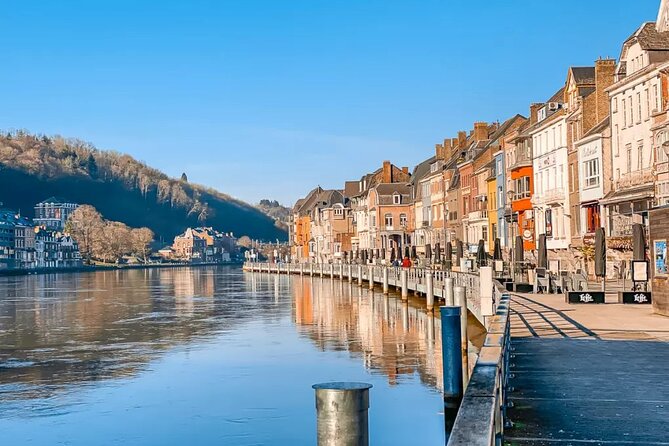
Dinant comes on the way back to Brussels, which helps the day feel less like a straight “two hours here, two hours there” slog. You stop on the banks of the Meuse River and get time that is enough to see the key photo lines.
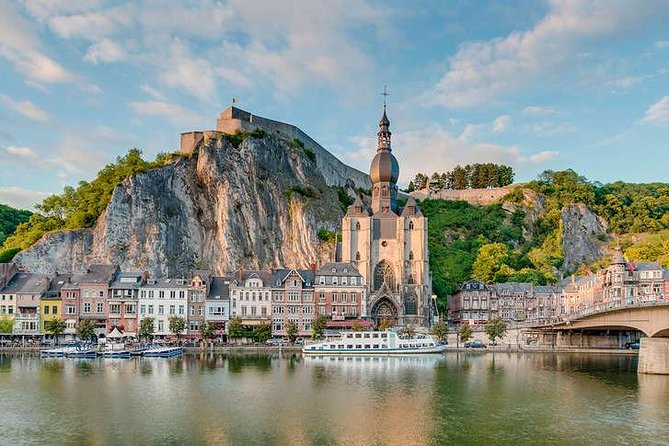
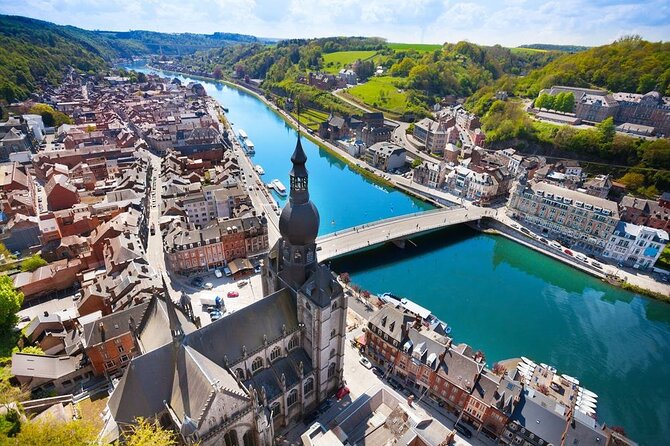
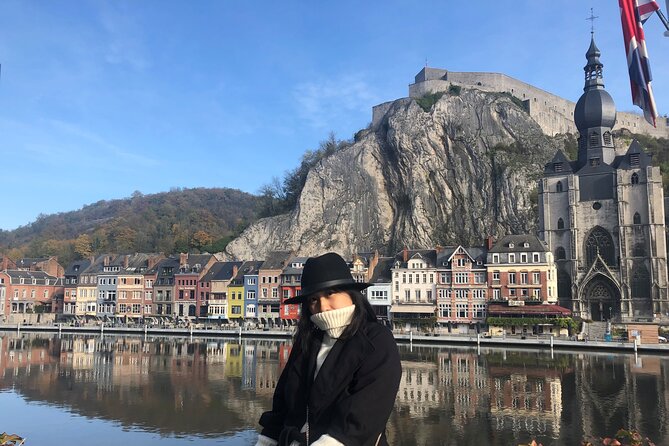
You get a chance to look toward the Citadelle and the onion-domed tower of the Collegiate church, framed by the ribbon of houses and shops along the river. This town layout is built for pictures. The river front is where the atmosphere hits you.
You also get a viewpoint-orientation type walk. The tour references Dinant’s Gothic cathedral and its 13th-century Citadelle context, plus Dinant’s historic link to brasswork, with copper and brass items associated with the town.
Here is the real decision point: the Citadelle area can require stairs. Some people note that if the funicular is not working, you may face a climb with very large step counts. So if you want the top, plan like this:
- If you are unsure about climbing speed, consider saving your energy for lower viewpoints and riverfront streets.
- If you are comfortable with walking uphill and stairs, you can aim higher for those big views.
Your Dinant time is not designed for long detours. It is timed. That is why being decisive pays off.
Maison de Monsieur Sax: a quick museum stop that adds a story
After the main Dinant viewing, the tour includes Maison de Monsieur Sax, a museum connected to Adolphe Sax, the 1814 inventor of the saxophone. The time is short, so it is more of a “hit” than a long sit-down museum visit.
This stop adds personality to Dinant. It reminds you that the town is not only about scenic postcards and fort views. It also contributes to European music history.
If you are passing through on a day trip, this museum stop gives you a different kind of souvenir, one that is tied to a person and a clear idea. Even with limited time, the concept works.
Price and value: what you pay for, what you still need money for
The price is $79.30 per person for an approximately 12-hour day. That price buys you the major parts that are hard to manage alone: a professional guide with radios and earphones, plus a full-day coach itinerary connecting two destinations with minimal stress.
You still pay for the two biggest “extra” categories:
- Food and drinks, since lunch is not included.
- Entrance fees, since entrances are at your own expense.
So the value depends on your style. If you are happy with a guided orientation plus a bit of self-guided wandering, this is good value. If you want to pay your way into multiple paid attractions and spend long hours inside them, you may find you need extra cash beyond the tour price.
Also consider that the tour includes a guided segment in Luxembourg that focuses on landmarks like Notre-Dame Cathedral, Neumünster Abbey, and the EU buildings. That is a lot of “what to see and why it matters” for one ticket.
In other words, you are paying for time saved and context gained. Use your free time well, and the money makes sense.
What the best days look like, and what can go wrong
The tour experience can swing based on guide energy, group rhythm, and day conditions. Some people highlight guides like Veronica, Bruno, Paolo, Jan, and Stefan as especially effective, friendly, and fun, with humor and strong explanations. That is not a guarantee, but it is a clue about what works best on these tours.
A few issues you should be aware of so you do not get disappointed:
- Bilingual narration can stretch things. When the guide repeats the same explanation in English and Spanish, it can feel like a second lap that slows you down.
- Volume and clarity vary. Some people report difficulty hearing if a guide speaks softly, even with equipment.
- Dinant can feel rushed. If you want a long citadel visit or a long meal, you might feel short-changed.
- Closures can happen. Some optional sights, like underground tunnels or fort access, may be closed for repairs or have last entry limits without much warning.
If you go in with the right expectations, the tour can still be a strong day. Think orientation and key sights, then personal exploring during free time.
Who should book this Brussels to Luxembourg and Dinant day trip
Book it if you want:
- A fast, guided introduction to Luxembourg City’s royal sites, church architecture, and EU district.
- A scenic river-town stop in Dinant without needing to plan transit across borders.
- A day trip that is friendly for first-timers who want an organized outline.
Consider skipping or choosing a different format if you:
- Want long museum time and deep entry tickets.
- Get irritated by bilingual repetition.
- Need a lot of cafe time and slower pacing in Dinant or Luxembourg.
This tour also asks for moderate physical fitness. You should expect walking and stairs at some points, especially if you decide to go up to higher views.
Should you book it?
If you want a one-day taste of Luxembourg City plus Dinant, I think this is a solid pick. The guided route gives you a reason for each stop, and the free Old Town time is where you convert information into real memories.
But do it with a smart mindset. Treat it as a structured highlights tour, not a slow travel day. If you are comfortable walking a bit, you can handle a long coach ride, and you are okay paying for lunch and entrances, you are likely to enjoy it.
FAQ
How long is the Luxembourg and Dinant day trip from Brussels?
It runs about 12 hours.
What time does the tour start, and where do I meet?
It starts at 8:30 am. The meeting point is Bd de Berlaimont 18, 1000 Bruxelles, Belgium.
Is lunch included?
No. Food and drinks are not included, and lunch is an own-expense stop.
Are entrance fees included?
No. Entrance fees are at your own expense.
What languages are available for the tour?
The tour can be done in English, French, or Spanish.
How much free time do I get in Luxembourg and Dinant?
You will have free time on every excursion (except inside Brussels). Free time can range from 45 minutes to 3 hours depending on the excursion.
Do I need hotel pickup?
No. There is no hotel pickup. You meet at the location listed on your voucher.
Is the coach air-conditioned, and do we get audio equipment?
Yes, the coach has air-conditioning. You also receive radios and earphones for the guide.
Can I stay in Luxembourg after the tour?
Most of the times this is possible, but it needs to be discussed and confirmed by the guide on the day of the tour.
What if I cancel close to the trip?
You can cancel for free up to 24 hours in advance for a full refund. After that, the amount paid is not refunded.
Days Out From Brussels
Liege, Namur and the Ardennes
More Ways to See Brussels
Newer Belgium reviews from the same corner of the country
- Discover the secrets of Brussels while playing
★ 5.0 · 3 reviews - Standard vehicle from Charleroi airport to city of Brussels
★ 4.5 · 3 reviews - Private tour to Ghent from Brussels (5hours walk & drive)
★ 5.0 · 3 reviews - Full day Brugge & Ghent: the gems of Flanders
★ 5.0 · 3 reviews - Private tour : Best of Brussels half day From Brussels
★ 5.0 · 3 reviews
Brussels Tours, side by side.
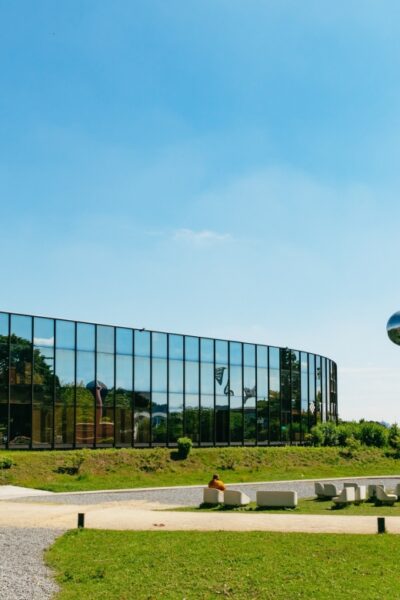 ★ 4.4Brussels: Atomium Entry Ticket with Design Museum TicketFrom $199,254 reviews
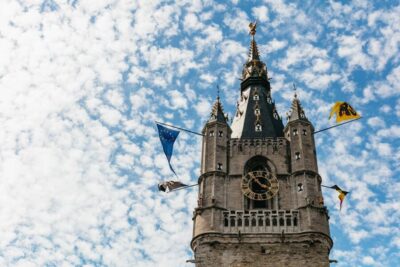 ★ 4.6From Brussels: Guided Day Trip to Bruges and GhentFrom $558,353 reviews
 ★ 4.7From Brussels: Bruges & Ghent Day Tour – 2 Fairytale CitiesFrom $578,242 reviews
 ★ 4.3Choco-Story Brussels: Chocolate Museum Entrance with TastingFrom $184,883 reviews
 ★ 4.0Bruges and Ghent – Belgium’s Fairytale Cities – from BrusselsFrom $594,809 reviews
 ★ 4.0Brussels: Hop-On Hop-Off Bus TourFrom $294,016 reviews
 ★ 4.5Brussels: Entry Ticket to Mini-EuropeFrom $232,870 reviews
 ★ 5.0Hungry Mary’s Famous Beer and Chocolate Tour in BrusselsFrom $1192,258 reviews
Browse the lists this tour appears in