
REVIEW · BRUSSELS
Evening Tour: The Dark Side of Brussels
That title sounds darker than the route really is.
You still get a night-time Brussels story with real place names, good pacing, and enough shade in the past to make the city feel different. I like how the walk links big monuments with small street corners, and you finish in the Marolles area instead of looping back too early. One thing to consider, though, is that this is more night history than guaranteed horror, so if you want nonstop grizzly tales, you might feel slightly let down.
What I really love is the way the guide brings the city to life through the mix of architecture and human stories, from the gothic church lights in Sablon to the courthouse on its hill. I also like the practical format: a 2-hour walk that is easy to fit into dinner plans, with an ending that drops you right in a livelier neighborhood. The possible drawback is logistics, this is a popular central meeting spot and it can get crowded, so you need to show up on time and look in the right place.
In This Review
- Key Things to Know Before You Go
- Evening at Grand Place, and what Brussels means by Dark Side
- Sablon squares and side streets: Grand Marché to Place Saint-Jean (Stops 1 to 2)
- Tour Anneessens and Rue de Rollebeek: how the city’s edges explain its history (Stops 3 to 4)
- Notre Dame du Sablon: gothic beauty with a story you’ll remember (Stop 5)
- Palace of Justice on the hill: authority, architecture, and the bigger story (Stop 6)
- Petit Sablon statues and the quieter side of the Sablon (Stop 7)
- Place du Jeu de Balle and Kapellekerk: Marolles at night (Stops 8 to 9)
- Price and value: a low booking fee, a high-quality walking night
- How to pick the right expectations for this tour
- Pacing, meeting point, and the one logistics issue to avoid
- Should you book this Dark Side of Brussels evening walk?
- FAQ
- How long is the Dark Side of Brussels evening tour?
- Where does the tour start and end?
- What language is the tour offered in?
- What is included in the price?
- How many people are on the tour?
- What is the cancellation policy?
Key Things to Know Before You Go
- Grand Place start in the evening: you begin at Grote Markt, then move out toward the Sablon and Marolles neighborhoods.
- English guided storytelling: the tour runs in English with a professional guide.
- A mix of gothic, civic, and street life: you see Notre Dame du Sablon, the Palace of Justice, and the Marolles flea market area.
- Not all of it is truly grim: the focus is darker history and lesser known facts, but the tone is often friendly.
- Tip-based energy: it’s set up as a low booking fee, and guides rely on tips for their work.
- Bring your walking shoes: the route is described as walk-heavy and may feel a bit more strenuous than the label suggests.
Brussels has more to it than one route
- Brussels: Atomium Entry Ticket with Design Museum Ticket★ 4.4 · 9,254 reviews
- From Brussels: Guided Day Trip to Bruges and Ghent★ 4.6 · 8,353 reviews
- From Brussels: Bruges & Ghent Day Tour – 2 Fairytale Cities★ 4.7 · 8,242 reviews
- Choco-Story Brussels: Chocolate Museum Entrance with Tasting★ 4.3 · 4,883 reviews
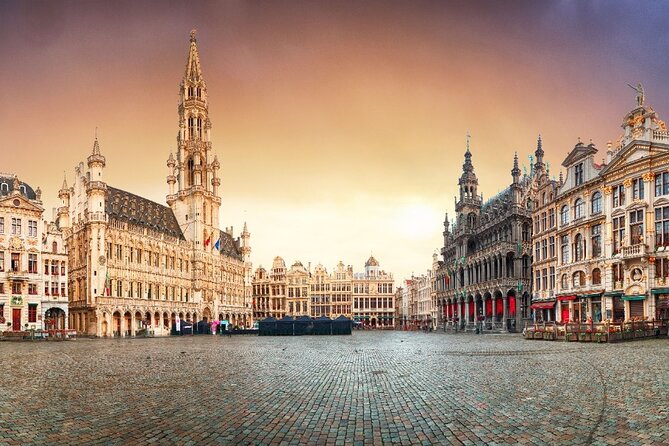
Evening at Grand Place, and what Brussels means by Dark Side
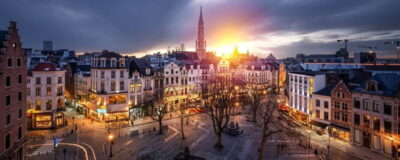
This is the kind of tour that changes the temperature of a city. Daytime Brussels can feel formal and orderly, but at night the details show up differently, the stone looks older, and the streets feel less like postcards and more like lived-in places.
You start at Grand Place (Grote Markt), 1000 Brussels. The walk then rolls outward into the Sablon area, then crosses into the Marolles side where daily life is louder and messier in a good way. If the guide includes a strong dose of political and legal context, the “dark” theme clicks into place fast, because you’re seeing how power has shaped streets, buildings, and neighborhoods.
The vibe is usually more “mysterious city stories” than “horror movie.” Several guides are praised for making it dark without turning it into shock value. If you’re okay with the past being unsettling in parts, but still handled with humor and storytelling, this can be a great fit.
Sablon squares and side streets: Grand Marché to Place Saint-Jean (Stops 1 to 2)

Your first stop is in the Sablon area, at Place du Grand Sablon, where you get a look at the market life described as the Grand Marché. Even if you don’t shop, this is where you understand how Brussels feeds itself and how everyday culture sits right beside famous landmarks.
Next you move to Place Saint-Jean, a small historic square with café energy and classic Brussels architecture. The anchor here is St. John the Baptist Church, and it’s a good early stop because it gives you a calm moment before the route becomes more story-driven. If you like people-watching, this square helps you slow down for a moment and let the guide set the tone.
Practical note: because you are starting in central Brussels, your timing matters. Show up early, and then stand where the guide can easily spot you.
Tour Anneessens and Rue de Rollebeek: how the city’s edges explain its history (Stops 3 to 4)
From Place Saint-Jean, the route turns into a more neighborhood-focused phase with Tour Anneessens and then Rue de Rollebeek.
Tour Anneessens is presented as a district with a mix of architectural styles and a lively, community-based feel. This stop matters because it gives you context that big monuments don’t. You learn how Brussels isn’t just a set of pretty facades, it’s also a patchwork of communities shaped by change over time.
Then you get Rue de Rollebeek, a street with cobblestones, cafés, and boutique-style storefronts. This is one of those walk-and-look streets where the guide can point out contrasts, like how an upscale-looking street still sits on top of older city patterns. If you’re the kind of traveler who likes to connect what you see in front of you to what the guide is saying, this stop is a sweet spot.
Notre Dame du Sablon: gothic beauty with a story you’ll remember (Stop 5)
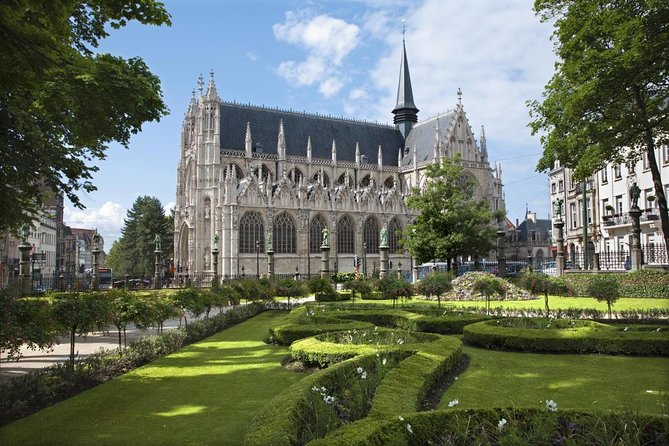
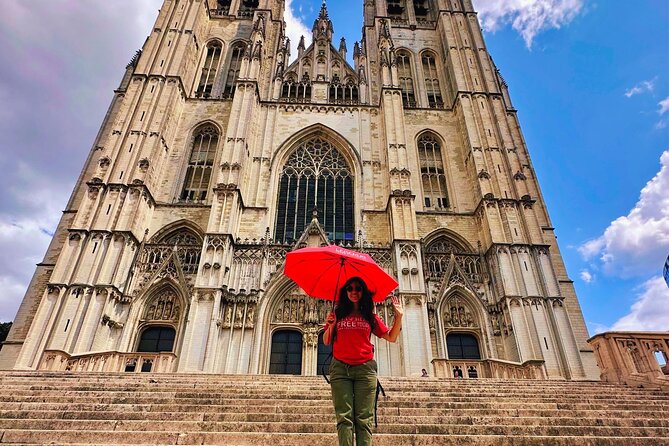
At Notre Dame du Sablon, you get the gothic church moment that makes this tour feel special even for people who have seen a lot of churches in Europe. The details that stand out are the stained glass and the church’s intricate design work.
Why it works in this tour order: after streets and squares, a church gives you a clear visual anchor. It’s also a natural “pause” where you can look up, notice light through glass, and reset your attention before the tour jumps to heavier civic themes.
If you like architecture, you’ll appreciate that the stop is not just a photo break. It’s used as a storytelling platform, and the “dark side” part lands more smoothly when you’ve seen how beautiful and carefully made the city’s older structures really are.
The grimmer half of the same streets
Palace of Justice on the hill: authority, architecture, and the bigger story (Stop 6)
Then the tour shifts to one of Brussels’s most imposing landmarks, the Palace of Justice. This courthouse is described as one of the largest in the world and famous for its grand neoclassical architecture.
This stop is a must if you want the tour’s theme to feel real. It’s hard to talk about dark history without talking about systems, law, and power. The guide can tie those ideas back to what you’ve been walking through. Also, the courthouse sits on a hill, so you get the bonus of broad city views that feel a bit different from the flat street corners earlier in the walk.
One consideration: this is not a quick “peek and go.” You’ll likely linger long enough to take in the scale, and that can slow the group down. If you have a very tight dinner reservation, you might want to time that carefully.
Petit Sablon statues and the quieter side of the Sablon (Stop 7)
After the courthouse, you head to Square du Petit Sablon, a garden square with 48 small bronze statues representing medieval guilds. This is one of those places where the tour title makes sense in a surprising way, because guilds connect craft, money, and influence. The past is not just personal tragedy, it’s also organized power.
This stop feels like a reset after the courthouse. You get green space and a slower pace, and the statues give your eyes something to do without forcing you to read a thousand facts. If you’re traveling with someone who loves photos, you’ll both enjoy this stop.
Place du Jeu de Balle and Kapellekerk: Marolles at night (Stops 8 to 9)
Now you move into Marolles, and the tour ends in a neighborhood that feels lived in rather than curated for visitors. Your penultimate stop is Place du Jeu de Balle, known for its daily flea market. Here you’re likely to see the kind of mix that makes Marolles fun: second-hand clothing, older photos, vintage items, and all sorts of odds and ends.
This is where the “night history” theme often feels most human. Market life is messy and real, and it gives the guide room to talk about how neighborhoods change over time, what gets kept, and what gets replaced.
The tour ends at Église Notre-Dame de la Chapelle, also associated with the Kapellekerk in the Marolles area, with the chapel origin dated to 1134. The ending church stop is useful because it ties the walk back to deep time, not only civic power. It’s a final chance to ground everything you learned in something old, stone-built, and still standing.
If you want a practical takeaway, the ending location is convenient for continuing the night. You’ll have options nearby for drinks and snacks, and you are out of the immediate tourist crush.
Price and value: a low booking fee, a high-quality walking night
The listed price is $3.62 per group (up to 6), for about 2 hours, with a guide in English and a mobile ticket.
On paper, that number looks almost unreal, and that’s because this is one of those tours that functions like a low-cost booking fee while the guide is paid through tips and support. Multiple guides have been praised for turning this into real teaching time, not just a casual stroll. If you appreciate a guide who explains the political and social background, you’ll feel you’re getting your money’s worth even before you consider the tip.
Two tips for value:
- Plan to bring cash for tipping, in euros, since guides depend on it.
- Don’t judge the tour only by the title. Judge it by the storytelling, the pacing, and whether you enjoy “less-known Brussels” more than the headline sights.
Also keep in mind that the experience has a maximum of 35 travelers. That size keeps it manageable for questions and for hearing the guide, especially on night walks where streets can get noisy.
How to pick the right expectations for this tour
If you come expecting constant “dark side” shock, you might end up disappointed. The tour’s tone often lands closer to night history and lesser known facts, sometimes with disturbing topics, but usually framed in a way that keeps the walk enjoyable.
If you come expecting a smart, city-focused walk where the guide connects buildings to politics and social change, you’ll probably love it. This is where the best guides make a difference. People have singled out guides like Rahim and Sebastian for storytelling and humor, Gunny for helpful clarity, and Den and Ann Marie for attention to detail and question-friendly pacing.
It’s also worth noting that the itinerary can feel flexible in practice. One guide might emphasize certain corners more than another, depending on group size and the flow of the walk. That flexibility can be good, as long as you’re not treating it like a rigid checklist.
Pacing, meeting point, and the one logistics issue to avoid
Meeting at Grand Place sounds easy. In reality, it can be tricky because the square gets packed. The safest move is to arrive early and stand where the guide is most likely to be visible.
There’s a helpful detail here: one guide was reported as being positioned in front of City Hall on the main square. If you don’t see the guide near the City Hall side, don’t panic, but do take a few minutes to scan the area before you assume you’re in the wrong place.
Also, bring comfy shoes. The walk is described as doable but sometimes more strenuous than expected. You’re covering multiple stops over about two hours, and night streets plus cobblestones can add up.
Should you book this Dark Side of Brussels evening walk?
Book it if you want:
- A night walk with a clear structure and real stops
- Sablon and Marolles in one evening, plus a big civic landmark
- A guide-led explanation that connects buildings to what people did, built, and fought over
Skip it (or at least lower your expectations) if you want:
- A strictly “grizzly” horror-style tour with non-stop shock
- A hyper-rigid itinerary that never changes depending on the group
- Easy logistics with no need to find a guide in a crowded square
If you’re flexible and you like city stories that make the architecture mean something, this is a strong way to spend an evening in Brussels. You’ll leave with a different mental map of the city, not just photos.
FAQ
How long is the Dark Side of Brussels evening tour?
The tour is listed as about 2 hours.
Where does the tour start and end?
It starts at Grand Place (Grote Markt), 1000 Brussels. It ends at Kapellekerk on Rue des Ursulines, 1000 Brussels.
What language is the tour offered in?
The tour is offered in English.
What is included in the price?
The tour includes a professional guide and uses a mobile ticket.
How many people are on the tour?
The tour has a maximum of 35 travelers.
What is the cancellation policy?
Free cancellation is available up to 24 hours in advance for a full refund. If you cancel less than 24 hours before the start time, the amount paid is not refunded.
Every Belgium Review
Belgium After Dark, on Foot
More Ways to See Brussels
Newer Belgium reviews from the same corner of the country
- Discover the secrets of Brussels while playing
★ 5.0 · 3 reviews - Standard vehicle from Charleroi airport to city of Brussels
★ 4.5 · 3 reviews - Private tour to Ghent from Brussels (5hours walk & drive)
★ 5.0 · 3 reviews - Full day Brugge & Ghent: the gems of Flanders
★ 5.0 · 3 reviews - Private tour : Best of Brussels half day From Brussels
★ 5.0 · 3 reviews
Brussels Tours, side by side.
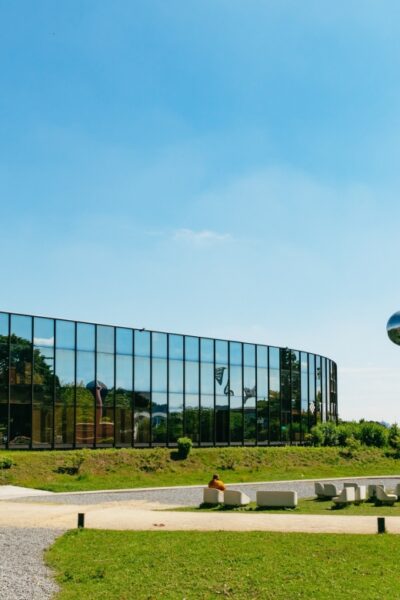 ★ 4.4Brussels: Atomium Entry Ticket with Design Museum TicketFrom $199,254 reviews
 ★ 4.6From Brussels: Guided Day Trip to Bruges and GhentFrom $558,353 reviews
 ★ 4.7From Brussels: Bruges & Ghent Day Tour – 2 Fairytale CitiesFrom $578,242 reviews
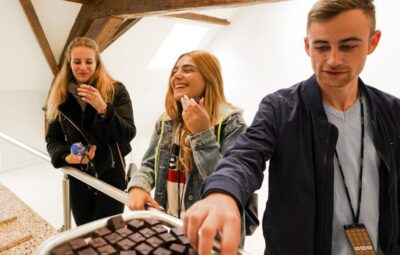 ★ 4.3Choco-Story Brussels: Chocolate Museum Entrance with TastingFrom $184,883 reviews
 ★ 4.0Bruges and Ghent – Belgium’s Fairytale Cities – from BrusselsFrom $594,809 reviews
 ★ 4.0Brussels: Hop-On Hop-Off Bus TourFrom $294,016 reviews
 ★ 4.5Brussels: Entry Ticket to Mini-EuropeFrom $232,870 reviews
 ★ 5.0Hungry Mary’s Famous Beer and Chocolate Tour in BrusselsFrom $1192,258 reviews
Browse the lists this tour appears in