
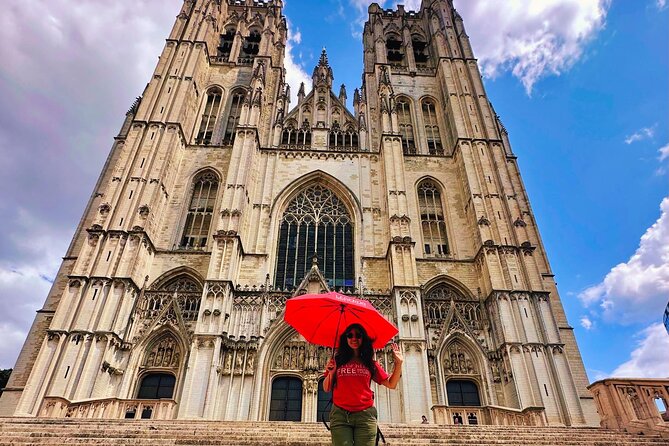
REVIEW · BRUSSELS
Private Tour: The Dark Side of Brussels
Courts, churches, and gruesome stories in two hours. This private Dark Side of Brussels tour strings together Sablon squares, the Palais de Justice, and the Marolles market scene, with a guide turning each stop into a human story, including mentions like beheadings. I especially like the storytelling pace and the fact that the route mixes major landmarks with small street moments. One thing to consider: most stops are exterior or quick look-ins, so plan for short photo stops rather than long museum time.
You get a professional guide in English, a mobile ticket, and a true private format, meaning your group sets the rhythm. You start at Grand Place (Grote Markt) and finish at Kapellekerk in Rue des Ursulines, so you end in a different part of town than you began. At $105.02 per person for about two hours, it is a solid value if you want guidance and context without paying extra entry fees at each stop.
In This Review
- Key things to know before you go
- Entering the Dark Side route: what this tour really does
- Your guide matters: what the reviews reveal about the best part
- Start at Grand Place, then work your way through Sablon
- Stop 1: Place du Grand Sablon and the market-life feel
- Stop 2: Place Saint-Jean, cafes, and St. John the Baptist Church
- Stop 3: Tour Anneessens, a modern-meets-old Brussels pocket
- Stop 4: Rue de Rollebeek, cobbles, cafes, and small shops
- Stop 5: Notre Dame du Sablon, stained glass and gothic details
- Palais de Justice and Petit Sablon: where the theme sharpens
- Stop 6: Justice Palace, the courthouse that changes your perspective
- Stop 7: Square du Petit Sablon and the 48 bronze statues
- From Place du Jeu de Balle to Kapellekerk: the Marolles finale
- Stop 8: Place du Jeu de Balle, daily flea market energy
- Stop 9: Church of Our Lady of the Chapel, Kapellekerk
- Price and value: is $105.02 per person fair?
- Who should book The Dark Side of Brussels
- Practical tips to get the most from the 2-hour walk
- Should you book this tour?
- FAQ
- How long is The Dark Side of Brussels private tour?
- Is this a private tour or a group tour?
- What language is the tour offered in?
- Where does the tour start and end?
- Is a mobile ticket included?
- What is the cancellation policy?
Key things to know before you go
- Private and small-feel: only your group, with a guide who can shape the walk to your questions.
- Short stops, sharp sights: about 10 minutes per stop, plus a shorter finale.
- Power and punishment theme: you connect Brussels landmarks to darker public stories like beheadings.
- Sablon to Marolles flow: neat-to-wild contrast from church and courthouse to the daily flea market.
- Two big hits in one walk: Palais de Justice and Petit Sablon, both hard to appreciate without context.
- English tour with a mobile ticket: easy to manage even if your schedule is tight.
Brussels has more to it than one route
- Brussels: Atomium Entry Ticket with Design Museum Ticket★ 4.4 · 9,254 reviews
- From Brussels: Guided Day Trip to Bruges and Ghent★ 4.6 · 8,353 reviews
- From Brussels: Bruges & Ghent Day Tour – 2 Fairytale Cities★ 4.7 · 8,242 reviews
- Choco-Story Brussels: Chocolate Museum Entrance with Tasting★ 4.3 · 4,883 reviews
Entering the Dark Side route: what this tour really does

This is not a typical highlight walk where everything feels the same at the end. The theme is the “dark side” of Brussels, and that is more than a clever name. You move through places tied to authority, public life, and the kinds of dramatic events cities record over centuries, with your guide adding story connections as you go.
The practical magic is the structure. In roughly two hours, you hit a chain of recognizable spots that you could technically wander to yourself, but you would miss the meaning. Instead, you get a guided explanation of what you are seeing, why it matters, and how the streets around it fit into the bigger picture. If you like walking tours that feel like a guided conversation, this one has that rhythm.
You will also like the ending. Finishing at Kapellekerk (Church of Our Lady of the Chapel) drops you in the Marolles neighborhood, a very different vibe from the elegant Sablon area where you start. That “morning-to-afternoon” feeling happens in a single afternoon, which is handy when you have limited time.
Your guide matters: what the reviews reveal about the best part
The standout theme is the guide experience. The strongest praise centers on a guide who is friendly, quick with facts, and genuinely fun to listen to. One name that appears in the feedback is Sebastian, described as extremely knowledgeable and full of energy, with stories that range from gothic cathedrals to beheadings. Another guide name that shows up is Dan, praised for an informational, solid visit and tailoring the tour when the standard option did not work with schedules.
That tells you what to expect in the best version of this tour. You are not only seeing places. You are getting the human angle, the why-behind-the-stone angle. If you enjoy hearing how cities work, how power shows up in buildings, and how punishment and justice shaped public life, you will feel “locked in” from stop one.
Also, because it is private, you can ask follow-ups. If something clicks, you can lean in, and if you want a faster pace between stops, you can set that tone. That is not a small thing. Two hours goes fast when you are stuck waiting for a group that moves at a different speed than you do.
Start at Grand Place, then work your way through Sablon
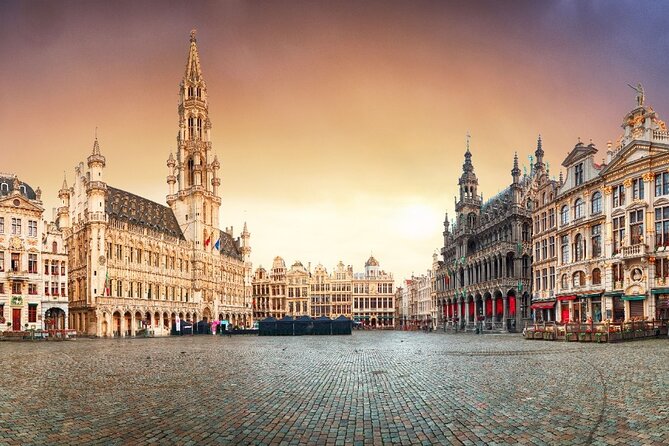
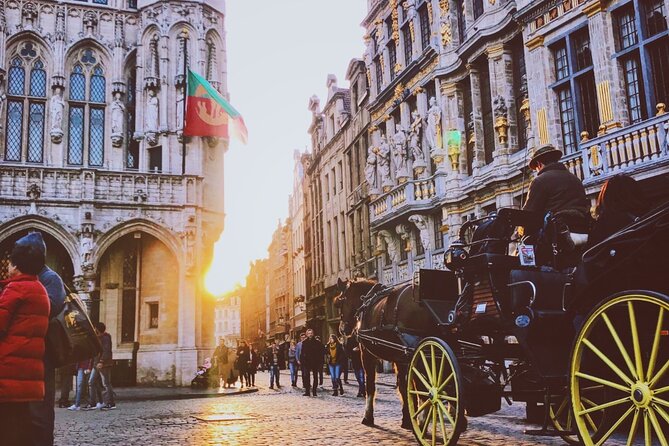
The tour begins at Grand Place (Grote Markt) in central Brussels. This is a strong starting point because it is a recognizable anchor for first-timers, and it gives your guide a natural place to set context. From there, you head toward the Sablon area, where the walk turns from pure city grandeur into details you would otherwise skim past.
Stop 1: Place du Grand Sablon and the market-life feel
Your first stop is Place du Grand Sablon, framed by the market area known for fresh produce, artisanal items, and local browsing. The time here is short, about 10 minutes, but it is a good “warm up” stop. It helps you shift from sightseeing mode to street-level mode.
Even if you are not shopping, take a quick look at the mix of stalls and goods. It is one of those places where Brussels shows its daily rhythm. And because this is a thematic tour, the guide can use the market setting to talk about how public spaces function in the city, not just how buildings look.
The grimmer half of the same streets

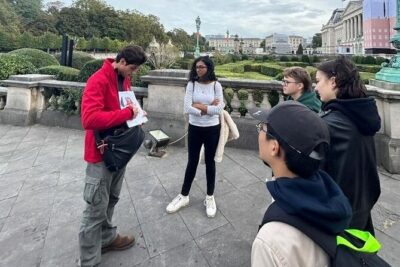
Stop 2: Place Saint-Jean, cafes, and St. John the Baptist Church
Next is Place Saint-Jean, a historic square with surrounding architecture and small places to sit and people-watch. The centerpiece here is St. John the Baptist Church, and you get a brief look while the guide ties it into the tour’s broader story angle.
The best use of your minutes in this square is to slow down for one minute. Watch how the square frames the church, then notice how the surrounding buildings shape the street. That kind of visual reading makes the later stops, especially the courthouse, feel more connected.
Stop 3: Tour Anneessens, a modern-meets-old Brussels pocket
Then you move into Tour Anneessens, described as a district with a lively mix of people, markets, and architectural styles. Again, 10 minutes is enough to get a sense of the area’s character, not enough to “master” it. But it does something valuable: it keeps the tour from becoming only monuments. You are also seeing the city as a living neighborhood.
If your goal is authenticity, this stop helps. It is less about one single landmark and more about the street-level texture that makes Brussels feel like a real place, not a postcard.
Stop 4: Rue de Rollebeek, cobbles, cafes, and small shops
Rue de Rollebeek is next, a cobblestone street with cafes and boutique-style shops. The description highlights a blend of old-world charm and contemporary street life. This stop works well if you like photographing small details, like doorways, window shapes, and the feel of the street underfoot.
Quick tip: wear shoes you can walk in without regret. Brussels cobbles look great in photos, but they can punish your ankles after an hour.
Stop 5: Notre Dame du Sablon, stained glass and gothic details
The tour then brings you to Notre Dame du Sablon, a gothic church at the Sablon end of the route. The big visual payoff is the stained glass and intricate detailing, and this is also where a dark-side theme can land well. Gothic churches often carried intense symbolism, and a good guide can connect that style to the kind of dramatic, story-heavy city life you will hear about.
You get about 10 minutes here. That is enough to appreciate the major features, but you should not expect a long, deep church visit. If you want extra time inside, you can always return later, but the tour is designed to keep moving.
Palais de Justice and Petit Sablon: where the theme sharpens
If you are doing this tour for one reason, it is the courthouse stop. Justice Palace (Palais de Justice) is not shy about making an impression. You are looking at commanding neoclassical architecture and a huge building associated with the legal world. The location on a hill also matters, because you can get sweeping views of Brussels from that elevated stance.
The “dark side” framing makes sense here. Even if you are not into legal history, you cannot look at a place like this without thinking about power, procedure, and public judgment. That is the kind of storytelling that turns a building into a narrative, and it is exactly the kind of contrast that makes the rest of the route feel intentional.
Stop 6: Justice Palace, the courthouse that changes your perspective
Plan for photos and a few minutes of quiet looking. The scale is the point. You will hear why it is such a major landmark, and the guide can translate the building’s size and structure into a story you can actually remember.
If you like architecture, pay attention to the symmetry and the formal feeling of the facade. If you like stories, pay attention to how the guide links it to darker public moments, including the beheading references that came up in the tour feedback.
Stop 7: Square du Petit Sablon and the 48 bronze statues
After the courthouse, the walk relaxes slightly with Square du Petit Sablon. This is the garden square with 48 small bronze statues representing medieval guilds. That detail is a huge clue about what you are being guided toward: you are seeing how power and craft lived side-by-side in Brussels.
This stop is about atmosphere plus symbolism. You get manicured gardens and a ring of figures that invite you to look at craft, trade, and civic identity. The guide can help you interpret why those statues are here and what they were meant to represent.
If you are tired from walking, this is also a nice break. Sit for a minute, check out the statues, then let your guide move you on.
From Place du Jeu de Balle to Kapellekerk: the Marolles finale
The final stretch pushes you into Marolles, a neighborhood vibe that feels more rough-and-real than the Sablon end. The tour ends up here on purpose, because it gives you a strong emotional contrast: elegant church and courthouse on one side, everyday secondhand life on the other.
Stop 8: Place du Jeu de Balle, daily flea market energy
At Place du Jeu de Balle, the highlight is the flea market. It is described as happening every day, and you can find secondhand clothing, vintage furniture, old photographs, and all sorts of trinkets. The atmosphere is welcoming, and it is one of the easiest places on the route to understand the city’s personality.
This is a stop where your guide can help you slow down. Look at what people are selling. Notice how the market turns history into objects you can touch, even if only for the price of a coffee afterward.
Stop 9: Church of Our Lady of the Chapel, Kapellekerk
The tour ends at Kapellekerk, also called the Church of Our Lady of the Chapel. The name connects to a chapel founded here in 1134, which is a wonderfully specific anchor for the finale. The church is in the vernacular Marolles neighborhood, so it feels less like a museum stop and more like part of everyday street life.
This final stop is shorter, about 5 minutes, but it lands the message of the entire tour. You started with formal centers of power and public space, and you end with a church tied to the neighborhood’s long continuity.
Price and value: is $105.02 per person fair?
At $105.02 per person for an about 2-hour private, English-guided walk, the value depends on what you want out of your day. If you are the type who reads plaques and likes to interpret buildings on your own, you could self-wander. But you would likely miss the through-line that makes this route memorable, especially the darker story connections.
What you are paying for:
- A professional guide who frames the places with narrative.
- A private experience, meaning you are not locked into a rigid group pace.
- A route that hits multiple major sights, including Palais de Justice and Petit Sablon, plus the market streets of Marolles.
- Stops are listed with free admission notes, so you are not stacking entry fees for the routine sightseeing.
It also helps that this one is typically booked in advance, with an average booking window of 34 days. That is a sign it is popular, and it is a practical reminder to lock it in if your trip dates are set.
Who should book The Dark Side of Brussels
This tour is a great fit if you:
- Want a private guide instead of a big group.
- Like history presented as real stories, including darker public events like beheadings.
- Prefer walking tours that mix big landmarks with smaller street moments.
- Enjoy architecture, especially gothic church details and the formal scale of the courthouse.
It might be less ideal if you:
- Want long indoor museum-style time at each site.
- Get impatient with short stops and quick transitions.
- Are looking for a food tour, because this walk is more about sights and stories than meal planning.
Practical tips to get the most from the 2-hour walk
Keep it simple. Bring comfortable shoes, and expect cobblestones at least once. Also, go into it ready to listen. This is the kind of tour where the details come from the guide’s explanations, not just from what you can read on a wall.
If you care about photos, plan for quick shots at each stop rather than long sessions. The schedule is built on short segments, and the best strategy is to grab your key angles early, then let the guide lead the rest.
If you have questions, ask them early. In a private format, your guide can steer the story toward your interests, like architecture, public life, or why power buildings are designed the way they are.
Should you book this tour?
I’d book it if you want a tight, guided route that turns Brussels landmarks into a single narrative, with the payoff of major sights like Palais de Justice and the memorable ending at Kapellekerk. It is especially good value if you prefer not to spend half a day doing guesswork and map-reading on your own.
Skip it if you are seeking lots of indoor time or a purely visual tour where you can safely ignore context. In that case, you might be better off with a self-guided route and a few well-chosen stops.
FAQ
How long is The Dark Side of Brussels private tour?
It runs for about 2 hours.
Is this a private tour or a group tour?
It is a private tour, with only your group participating.
What language is the tour offered in?
The tour is offered in English.
Where does the tour start and end?
It starts at Grand Place (Grote Markt), 1000 Brussel, Belgium, and ends at Kapellekerk, Rue des Ursulines, 1000 Bruxelles, Belgium.
Is a mobile ticket included?
Yes, the tour includes a mobile ticket.
What is the cancellation policy?
You can cancel for a full refund up to 24 hours in advance. If you cancel less than 24 hours before the start time, the amount you paid is not refunded.
Every Belgium Review
Belgium After Dark, on Foot
More Ways to See Brussels
Newer Belgium reviews from the same corner of the country
- Discover the secrets of Brussels while playing
★ 5.0 · 3 reviews - Standard vehicle from Charleroi airport to city of Brussels
★ 4.5 · 3 reviews - Private tour to Ghent from Brussels (5hours walk & drive)
★ 5.0 · 3 reviews - Full day Brugge & Ghent: the gems of Flanders
★ 5.0 · 3 reviews - Private tour : Best of Brussels half day From Brussels
★ 5.0 · 3 reviews
Brussels Tours, side by side.
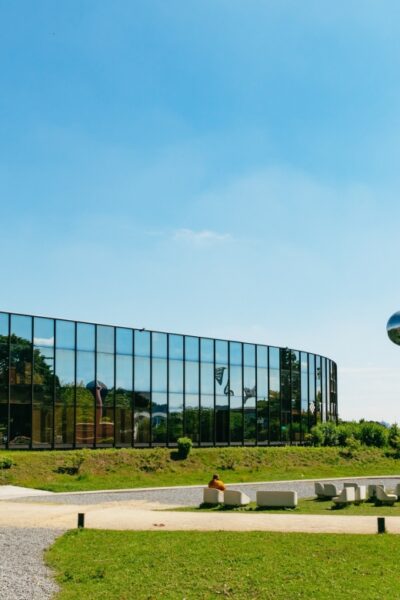 ★ 4.4Brussels: Atomium Entry Ticket with Design Museum TicketFrom $199,254 reviews
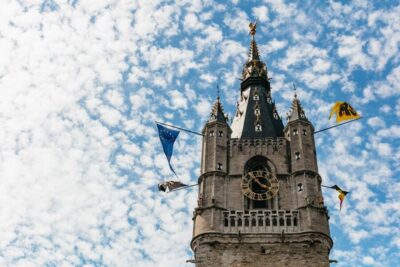 ★ 4.6From Brussels: Guided Day Trip to Bruges and GhentFrom $558,353 reviews
 ★ 4.7From Brussels: Bruges & Ghent Day Tour – 2 Fairytale CitiesFrom $578,242 reviews
 ★ 4.3Choco-Story Brussels: Chocolate Museum Entrance with TastingFrom $184,883 reviews
 ★ 4.0Bruges and Ghent – Belgium’s Fairytale Cities – from BrusselsFrom $594,809 reviews
 ★ 4.0Brussels: Hop-On Hop-Off Bus TourFrom $294,016 reviews
 ★ 4.5Brussels: Entry Ticket to Mini-EuropeFrom $232,870 reviews
 ★ 5.0Hungry Mary’s Famous Beer and Chocolate Tour in BrusselsFrom $1192,258 reviews
Browse the lists this tour appears in