
REVIEW · BRUSSELS
Flanders Fields Remembrance Tour from Brussels
WWI sites can feel heavy fast, but this route adds meaning. I love the stop sequence, because it moves from mourning to context to names and then to ritual. I also like how the day is led with strong on-the-ground storytelling, with guides such as Dietrich and Stefan often singled out for making details stick. Just know it is a long day in a coach, and a couple parts can feel rushed if you are hoping for lots of slow wandering.
What makes this tour worth your time is the balance: you get peace and scale at memorials, then you get the human timeline at the Flanders Fields Museum, and finally you witness the daily Last Post at Menin Gate. The group size is capped at 100, so it generally keeps a manageable feel on busy roads. Still, lunch is not included, so plan ahead for what you will eat during the breaks.
If you are coming from Brussels and want one day that covers the Ypres Salient in a structured way, this does the job. The price is $113.72, and when admission is marked free at the stops, you are mostly paying for transport, a professional multilingual guide, and the moving evening ceremony.
In This Review
- Key moments that make this tour click
- The WWI route from Brussels that keeps the story straight
- Vladslo German Military Cemetery and Käthe Kollwitz’s Grieving Parents
- Diksmuide and the Brooding Soldier monument for Canadian sacrifice
- Flanders Fields Museum: where the trenches start to make sense
- Passchendaele and Tyne Cot: mourning at scale
- Essex Farm Field Hospital and John McCrae’s In Flanders Fields
- Hill 60 tunnels and Ypres free time to reset your mind
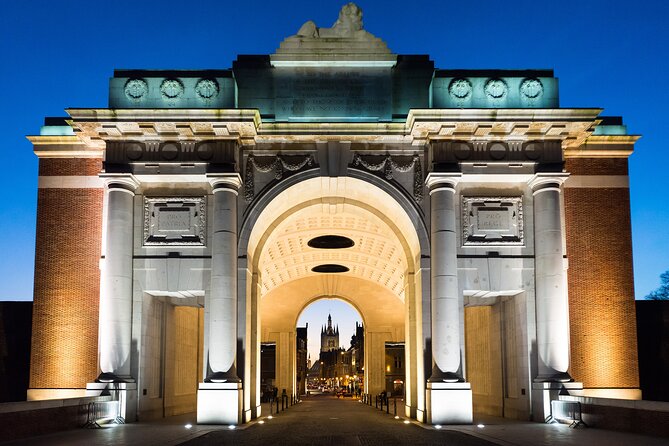
- Menin Gate at 8 pm: Last Post ceremony done right
- Price, pacing, and who should book this WWI remembrance day
- Should you book this Brussels WWI remembrance tour?
- FAQ
- What is the tour duration and start time?
- Where does the tour start and end?
- Is lunch included in the price?
- What is the meeting point for the tour?
- What languages are available?
- Is the coach air-conditioned?
- Is there free time during the day?
- Are admission tickets included for the stops?
- Can I bring a pet on the coach?
- What should I bring for the day?
Key moments that make this tour click
- Vladslo German Military Cemetery with Käthe Kollwitz’s Grieving Parents, one of the most direct visual reminders of grief.
- The Western Front markers around Diksmuide, including the “Brooding Soldier” tribute to Canadian sacrifice in the first gas attack.
- Flanders Fields Museum, where the fighting comes with context and the conditions behind the maps become real.
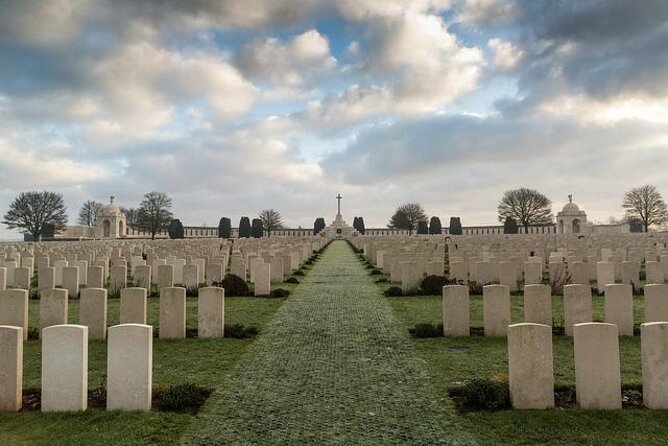
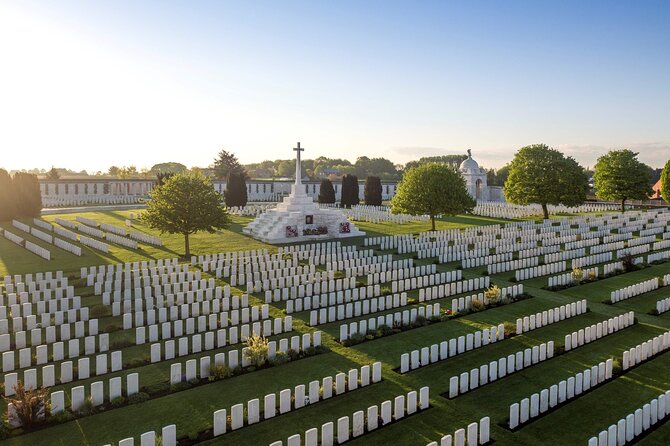
- Tyne Cot Commonwealth War Graves Cemetery, with the scale of 35,000 graves you cannot forget once you see it.
- Essex Farm Field Hospital and John McCrae’s In Flanders Fields connection, linking literature to place.
- Ypres Menin Gate Last Post ceremony at 8 pm, a short service that lands hard.
Brussels has more to it than one route
- Brussels: Atomium Entry Ticket with Design Museum Ticket★ 4.4 · 9,254 reviews
- From Brussels: Guided Day Trip to Bruges and Ghent★ 4.6 · 8,353 reviews
- From Brussels: Bruges & Ghent Day Tour – 2 Fairytale Cities★ 4.7 · 8,242 reviews
- Choco-Story Brussels: Chocolate Museum Entrance with Tasting★ 4.3 · 4,883 reviews
The WWI route from Brussels that keeps the story straight
This is built as a full-day coach tour, starting at 9:15 am at Bd de Berlaimont 18, 1000 Bruxelles and ending back in central Brussels at Brussel-Centraal, Carr de l’Europe. The ride time is part of the experience, because you are traveling the same roads that connect cemeteries, memorials, and key front areas of the Ypres Salient.
One reason the route works is the logic of it. You first see a German military cemetery and its famous sculpture, then you shift to Belgian courage and Western Front symbolism at Diksmuide, then you anchor everything with museum context, and only after that do you spend the more time-dense moments at the major Commonwealth cemeteries and battlefield sites. It prevents the day from turning into a checklist of names with no thread.
The big practical note is pacing. The day runs about 13 hours, so you should treat it as an all-day commitment. People who want long, quiet wandering at every stop may feel time pressure at a couple sites, but the overall sequencing is designed to keep you oriented.
Vladslo German Military Cemetery and Käthe Kollwitz’s Grieving Parents
The first stop, Vladslo German Military Cemetery in Vladslo, is where the tone changes from travel to remembrance. This cemetery is not about spectacle. It is about silence, order, and the weight of loss.
The standout is Käthe Kollwitz’s sculpture, Grieving Parents. It is powerful because it is so simple and human. You are not just looking at a memorial plaque. You are facing grief that was made into art, and that difference hits fast. If you are the kind of person who needs a minute to stand in place before moving on, this is the stop where you will want it most.
Admission for this stop is listed as free, so you are paying only for the guide’s framing and the coach ride. That matters, because the value here is not a ticket counter experience. It is the moment-to-moment setting.
Diksmuide and the Brooding Soldier monument for Canadian sacrifice
After Vladslo, you head toward Diksmuide. This stop is brief but purposeful, focused on a very specific remembrance marker: the monument of the “Brooding Soldier,” dedicated to the sacrifice of 2,000 Canadian soldiers during the first German gas attack.
What I like about adding Diksmuide is that it broadens the day beyond one national story. The WWI landscape in your head can get stuck in one narrative if you only chase Commonwealth cemeteries. This monument adds another angle, a reminder that these battle choices had international costs and that chemical warfare is part of the timeline you are being taught.
This stop is also marked as free admission. That helps keep the day grounded in meaning rather than museum-style add-ons.
Flanders Fields Museum: where the trenches start to make sense
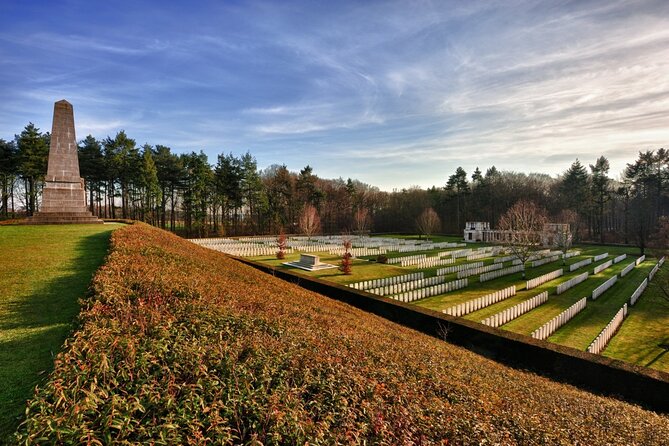
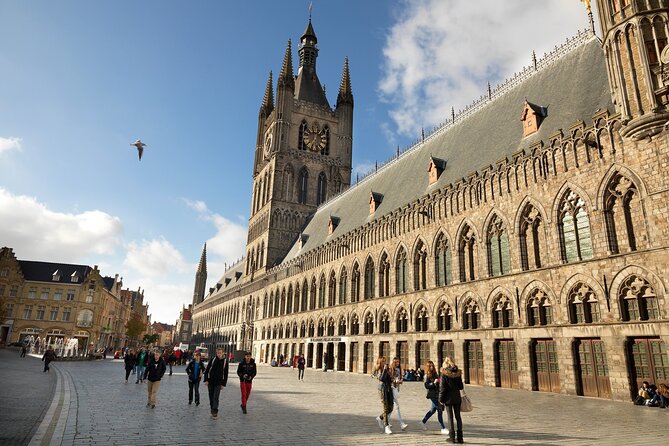
Next comes Flanders Fields Museum, with time set aside after a lunch break. This is the point where the tour stops being only about places and becomes about how the catastrophe unfolded.
The museum visit is guided, and that is a big deal. Without interpretation, WWI exhibits can feel like dates and artifacts. With a guide, you can connect what you see at later cemeteries and battlefield sites to the larger sequence of the war, including the harsh conditions soldiers lived in.
I also like that this is one of the few moments in the day with a clear indoor structure. Outdoor memorials can blur together when the schedule is full. A museum stop gives your brain a chance to sort and label the story.
One practical caution: lunch is not included in the tour price. If you rely on the breaks to buy food with no plan, the day can get frustrating. Bring snacks if you know you get hungry between stops, or budget for lunch during the provided pause.
Other days out that start in Brussels

Passchendaele and Tyne Cot: mourning at scale
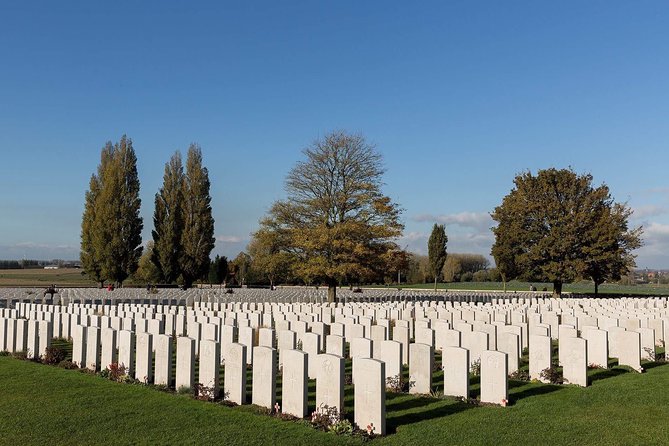
Then the day pivots to two of the most emotionally demanding parts: Passchendaele and Tyne Cot Commonwealth War Graves Cemetery.
At Passchendaele, you get about 30 minutes on site. That is not much time in a place that carries so much grief, but it is enough to understand why the area became infamous and why the name matters. You also get a sense that a battlefield is not frozen in time, even though the memory stays sharp. When you leave, you should feel a bit unsettled, which is exactly the point.
After that, the tour heads to Tyne Cot, described as the largest Commonwealth cemetery in the world, with 35,000 graves. This is where the day becomes bigger than individual stories. The scale is what stays with you.
Tyne Cot matters for value too. Admission is listed as free, and the cemetery is not something you can replicate back home. Even if you have read about the Western Front, there is a difference between knowing and witnessing.
If you are sensitive to the emotional weight of war cemeteries, plan for it now. Wear comfortable shoes, set expectations that you will want a few pauses, and do not rush your time here.
Essex Farm Field Hospital and John McCrae’s In Flanders Fields

One of the most “how did I not know that?” stops is Essex Farm Field Hospital. This is linked to Dr. John McCrae, who wrote In Flanders Fields.
The reason this stop hits is that literature becomes geography. When you visit the place connected to the poem, it changes how the words feel. The poem is famous, but the stop gives you a physical sense of where the memories came from, and why those lines traveled so far.
The time here is shorter, about 15 minutes, so treat it as a focused stop rather than a long reflection. Still, it is a strong anchor in the day because it bridges mourning and meaning, not just dates and troop movements.
Hill 60 tunnels and Ypres free time to reset your mind
After you move through the major memorial moments, you go toward Hill 60, where you can see strategic tunnels. Even with limited time, this kind of stop can help you understand what made WWI so different from earlier wars. It was not only about open fields. It was also about hidden space, movement underground, and the constant effort to survive.
Then the tour disembarks in Ypres for independent exploration and dinner on your own. This matters more than people think. After so many memorial stops, your eyes and emotions need a break from formal remembrance settings.
Ypres itself gives you the chance to shift from “guided history” mode to “local town” mode. You can also use this time to find something warm and filling, because the evening ceremony comes later.
Menin Gate at 8 pm: Last Post ceremony done right
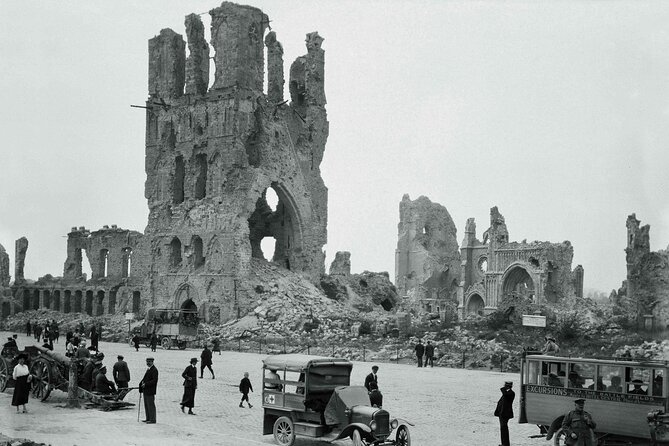
The evening piece is the Last Post ceremony at Menin Gate. It starts at 8 pm and lasts about 30 minutes in the tour plan. The ceremony itself is short, and one detail that shows up in the experience is that it can feel like a brief moment in a long day, even when you are seated and listening.
This is the kind of event where the guide’s earlier framing matters. By the time you stand at Menin Gate, you are not just watching a tradition. You understand what the names and missing soldiers represent, and why the Commonwealth focus is so personal for many families.
A practical tip: dress for night air and plan your patience. Even if the service is only around seven minutes, you will still be in the area with a slow flow of people before and after. Keep your coat handy and be ready to stand or move in a crowd.
Many people come away feeling it is the emotional peak of the day. If you only have a limited time in the Ypres area, this portion alone can justify the long coach ride, because it is a unique daily ritual that is hard to recreate on your own.
Price, pacing, and who should book this WWI remembrance day
Let’s talk value. At $113.72 per person for about 13 hours, you are not just buying transportation. You are buying a guided day that strings together key locations around the Ypres Salient, with air-conditioned coach and a professional multilingual guide. The itinerary also lists free admission tickets for each scheduled stop, so your money largely supports the human part of the experience, plus logistics.
What you get for the price:
- A structured, full-day route that connects multiple sites instead of isolating them.
- Guided interpretation at the most complex sites, especially the museum.
- A coordinated evening ceremony at Menin Gate.
- A group size capped at 100, which helps keep the experience from turning into chaos.
What could be a mismatch:
- If you hate long coach days, you may find the schedule exhausting. People often describe it as long, and the tour plan includes a late finish.
- If you want less memorial time and more battle details, you may wish there were more room for fewer stops. Some people feel a couple locations are rushed simply because there is so much included.
This tour fits best if you:
- Want one day that covers the key WWI remembrance points around Brussels.
- Like a guided narrative that helps you connect museums, monuments, cemeteries, and ceremonies.
- Are especially interested in Commonwealth sites like Tyne Cot and the Last Post at Menin Gate.
Should you book this Brussels WWI remembrance tour?
I think you should book this if you want a guided, full-day route that ends with something genuinely moving at Menin Gate. The strongest reasons are the emotional clarity of the stops, the way the day builds from mourning to context to names, and the fact that the day includes guided moments where the history can actually click.
Skip it if you want a lighter day with lots of free time to linger at fewer places, or if you strongly prefer not to spend most of your day on a coach. Otherwise, this is the kind of outing that stays with you, because it takes remembrance seriously and then gives you a ceremony to close the loop.
FAQ
What is the tour duration and start time?
The tour is about 13 hours and starts at 9:15 am.
Where does the tour start and end?
It starts at Bd de Berlaimont 18, 1000 Bruxelles and ends at Brussel-Centraal, Carr de l’Europe, 1000 Bruxelles.
Is lunch included in the price?
No. Lunch is not included.
What is the meeting point for the tour?
The meeting point is Bd de Berlaimont 18, 1000 Bruxelles, Belgium.
What languages are available?
The tour can be done in English, French, or Spanish.
Is the coach air-conditioned?
Yes, the coach has air-conditioning.
Is there free time during the day?
Yes. You get free time on each excursion, and there is also time in Ypres for independent exploration and dinner (at your own expense).
Are admission tickets included for the stops?
The itinerary lists free admission tickets for the scheduled stops.
Can I bring a pet on the coach?
No, pets are not allowed on board.
What should I bring for the day?
Wear comfortable shoes and dress for the weather. A raincoat or umbrella can help, and it is advised to carry some cash.
Flanders Fields and the Ypres Salient
Days Out From Brussels
More Ways to See Brussels
Newer Belgium reviews from the same corner of the country
- Discover the secrets of Brussels while playing
★ 5.0 · 3 reviews - Standard vehicle from Charleroi airport to city of Brussels
★ 4.5 · 3 reviews - Private tour to Ghent from Brussels (5hours walk & drive)
★ 5.0 · 3 reviews - Full day Brugge & Ghent: the gems of Flanders
★ 5.0 · 3 reviews - Private tour : Best of Brussels half day From Brussels
★ 5.0 · 3 reviews
Brussels Tours, side by side.
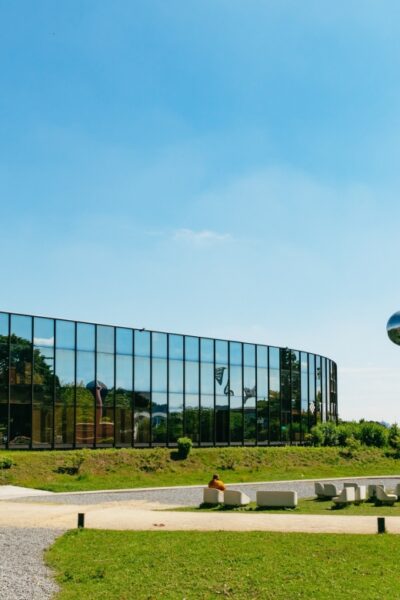 ★ 4.4Brussels: Atomium Entry Ticket with Design Museum TicketFrom $199,254 reviews
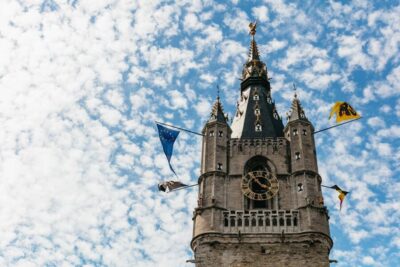 ★ 4.6From Brussels: Guided Day Trip to Bruges and GhentFrom $558,353 reviews
 ★ 4.7From Brussels: Bruges & Ghent Day Tour – 2 Fairytale CitiesFrom $578,242 reviews
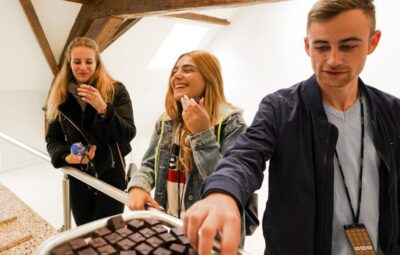 ★ 4.3Choco-Story Brussels: Chocolate Museum Entrance with TastingFrom $184,883 reviews
 ★ 4.0Bruges and Ghent – Belgium’s Fairytale Cities – from BrusselsFrom $594,809 reviews
 ★ 4.0Brussels: Hop-On Hop-Off Bus TourFrom $294,016 reviews
 ★ 4.5Brussels: Entry Ticket to Mini-EuropeFrom $232,870 reviews
 ★ 5.0Hungry Mary’s Famous Beer and Chocolate Tour in BrusselsFrom $1192,258 reviews
Browse the lists this tour appears in