

REVIEW · HISTORICAL
Historic Highlights, by a local guide
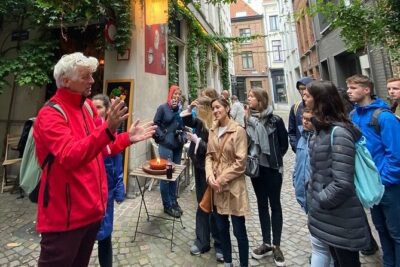
Two hours in Ghent, history that talks back. What makes this tour so fun is the mix of big landmarks and street-level stories, explained by Jürgen, a history professor who connects buildings to real life. I especially like how you learn Ghent’s origins at the river confluence, then move forward into later eras without it feeling like a textbook.
I also love the pace. The walk stays tight and practical, and you actually get time to look at details like the cathedral interior and the city palaces, instead of just passing them by. One thing to consider: several stops have admission not included, so if you want to spend extra time inside (like at St. Bavo’s), factor in those ticket costs and a little flexibility.
In This Review
- Key Highlights You’ll Notice Right Away
- Why This 2-Hour Ghent Walk Works So Well
- Meet Jürgen, the History Professor Who Can Read a City
- Enter Agelandkaai, Then Follow Ghent’s Origins by the Water
- Stop 2: Bisdomkaai and the river confluence
- St. Bavo’s Cathedral and the Lam Gods: Worth Your Time, Even If You Skip
- Kouter: Feeling the 18th and 19th Century Mood
- Hotel d’Hane Steenhuyse: A Palace Moment Without the Big Crowds
- Gravensteen: The Castle of the Flemish Counts
- Patershol: Old Streets, Old Stories, Real Neighborhood Energy
- The Restaurant Tip at Enzo and How It Might Save You Money
- Vrijdagmarkt: A Strong Finish with Socialist History
- Tickets, Price, and the Value Equation (Is It Worth $40.33?)
- Timing, Weather, and How to Prepare for a Comfort-Wise Walk
- Who This Tour Suits Best, and Who Might Want to Skip It
- Should You Book This Ghent Walking Tour?
- FAQ
- Where does the tour start and where does it end?
- What time does the tour begin?
- How long is the walking tour?
- What is the price per person?
- Is a mobile ticket used?
- Are admission tickets included for the main sights?
- How large is the group?
- Is it suitable for most travelers?
- Are service animals allowed?
- Is free cancellation available?
Key Highlights You’ll Notice Right Away
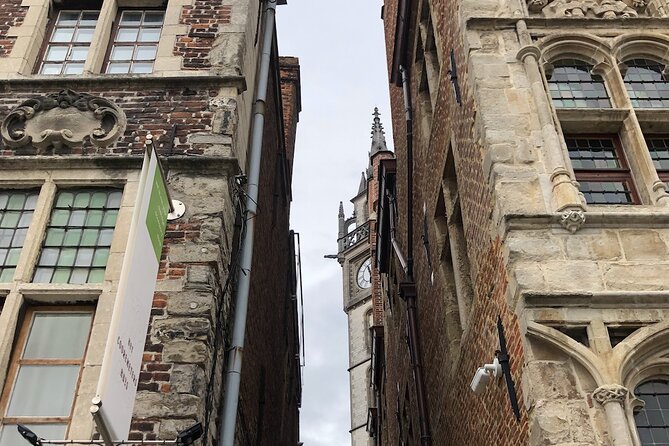
- Jürgen’s professor-level storytelling that makes street corners and facades feel meaningful
- A well-chosen route that moves from river origins to medieval power to neighborhood life
- St. Bavo’s Cathedral and the Lam Gods area, plus mention of a virtual tour inside
- Patershol, one of Ghent’s oldest neighborhoods, with plenty of atmosphere for a breather
- Vrijdagmarkt, where the end of the walk ties into the Socialist movement
- A local food tip, including a possible 10 percent discount at Enzo if you have the guide’s card
Other tours with a guide out front
- Ghent: 50-Minute Medieval Center Guided Boat Trip★ 4.5 · 5,637 reviews
- Ghent: 40 Minute Medieval Center Guided Boat Tour★ 4.4 · 884 reviews
- Ghent: Guided Urban Bike Tour★ 4.9 · 297 reviews
- Ghent: Guided City Tour with Food Tastings★ 4.8 · 228 reviews
Why This 2-Hour Ghent Walk Works So Well
Ghent is one of those cities where history is literally in the stones. You can wander on your own, sure, but you end up with lots of “pretty building” moments and fewer “oh wow, that’s why it matters” moments.
This tour is designed for fast comprehension. In about two hours, you get a clear timeline of how Ghent formed, grew, and changed. You also cover areas that feel different from each other, like the older river-adjacent core, the cathedral zone, the artisan and old-quarter feel of Patershol, and the broader public square energy at Vrijdagmarkt.
The other practical win is group size. It’s capped at a maximum of 20, which helps keep things moving and keeps Q and A realistic.
Meet Jürgen, the History Professor Who Can Read a City
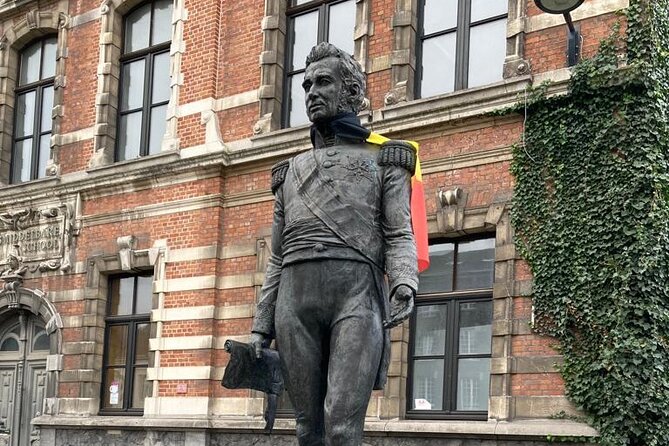
The biggest reason this experience gets high marks is simple: your guide, Jürgen, brings real passion and real expertise. Multiple people highlight that he’s thoughtful, answers questions, and has a knack for sharing stories behind the stories. In other words, he doesn’t just list facts. He gives you context you can use later as you keep exploring on your own.
What I find especially useful for first-time visitors is how he adapts to the group. Even if someone is more curious about architecture, and someone else wants political history, the tour still seems to land well. One reason is the way the itinerary is structured around Ghent’s “big ideas,” so different interests have something to latch onto.
And yes, he seems to be the kind of local who actually loves where he lives. That matters more than people think, because it turns the walk into a conversation, not a lecture.
Enter Agelandkaai, Then Follow Ghent’s Origins by the Water
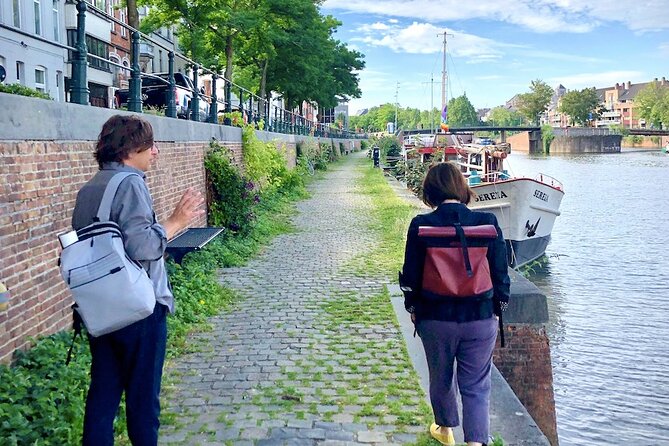
Your route starts at Hagelandkaai 53. From there, the first stop is Agelandkaai, where the guide sets the scene around the waterways and early fortifications. This area ties into the Napoleon De Pauw lock, and the fact that in the 16th century there was a mote around the Spanish Castle.
If you’re the type who likes understanding why a city looks the way it does, this is a smart opener. River edges and castle logic explain a lot about early urban planning, and it gives you something to watch for as you move.
Stop 2: Bisdomkaai and the river confluence
Next is Bisdomkaai. The emphasis here is on the confluence of the Leie and Schelde rivers, since Ghent’s origin is connected to that meeting point. The feel changes here because you’re thinking about geography, not just monuments.
Practical note: this is still walking-time, so wear shoes you can trust. Cobblestones and uneven pavement are part of the deal in old European cities.
Belgian history told on other streets

St. Bavo’s Cathedral and the Lam Gods: Worth Your Time, Even If You Skip
At St. Bavo’s Cathedral, you’ll be close to the famous Lam Gods by Van Eyck. The tour also mentions a new virtual tour about the inside of the cathedral, which is presented as worth your attention.
Here’s the realistic way to plan it: the cathedral admission is listed as not included, so you should decide in advance whether you want to go inside during the tour window. If you do, give yourself a little buffer because virtual components can take time, and you don’t want to rush through it while everyone else is moving on.
What I like about including this stop is that it gives you an anchor point. St. Bavo’s is not just a “look at it from outside” moment, it’s a gateway to understanding why Ghent became a major cultural center.
Kouter: Feeling the 18th and 19th Century Mood
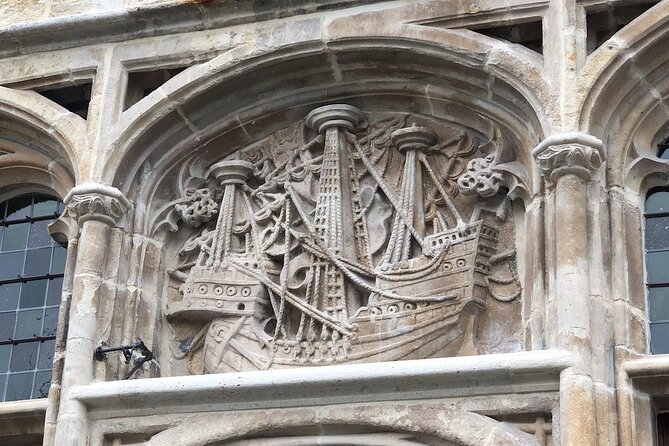
After the cathedral area, the walk shifts to Kouter. This section is used for a different kind of storytelling: the guide uses it to capture the atmosphere of the 18th and 19th centuries.
That matters because it prevents the tour from staying stuck in the medieval past. Even if your highlights are older structures, you’ll appreciate how later eras shaped what you see today, from the city’s street life to its built environment.
This stop is also a good “catch your breath” moment in the route. You’re still learning, but it’s less about one single monument and more about the feel of the neighborhood.
Hotel d’Hane Steenhuyse: A Palace Moment Without the Big Crowds

Another not-to-miss stop is Hotel d’Hane Steenhuyse, an 18th century city palace with magnificent ceilings and ornamentation. There’s also a garden mentioned as a beautiful hidden secret.
Because admission is listed as not included here, your experience may vary based on what you choose to do during that time. Even if you don’t go in, the idea is clear: Ghent has layers, and some of the most interesting ones are not the loudest tourist stops.
I like palace visits on foot because they teach you how wealth, art, and design were displayed. If you’re the kind of traveler who enjoys ceilings, doorways, and detailed trim, you’ll probably slow down naturally around this area.
Gravensteen: The Castle of the Flemish Counts
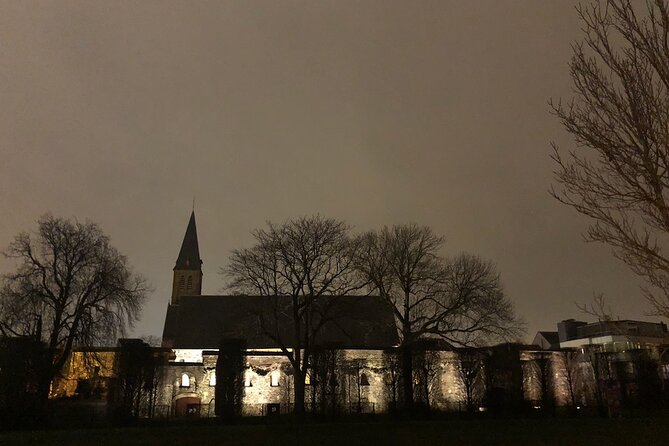
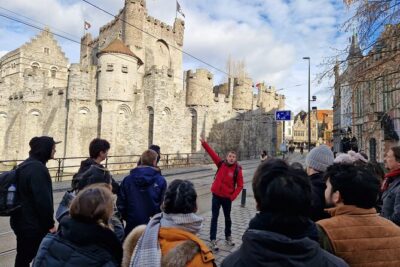
Next up is Gravensteen, the Castle of the Flemish counts. This is the kind of stop that instantly gives you scale, because castles change how you visualize the city’s power structure.
Admission is not included, so again, you’ll need to decide whether to add entry time. If you’re only doing one paid attraction in Ghent, you might choose based on your priorities. But even without entering, being told the role of a place like this helps you see why other locations along the route exist.
One more practical consideration: castles can involve extra walking or stairs. So if you’re traveling with older legs, keep that in mind and pace yourself.
Patershol: Old Streets, Old Stories, Real Neighborhood Energy
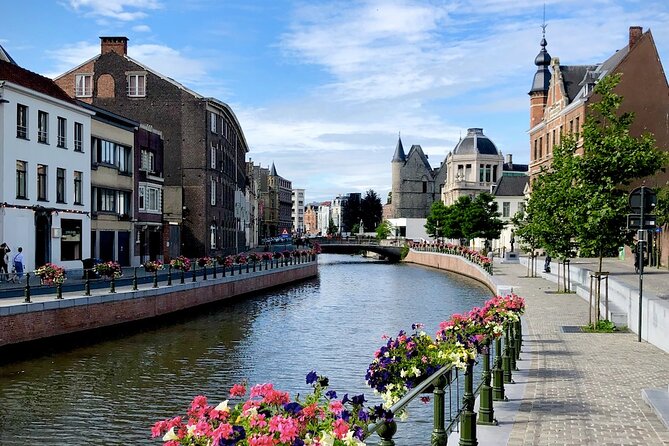
Then comes Patershol, one of the oldest parts of Ghent. This is where the tour turns toward lived-in history, not just monuments.
Patershol’s value on a walking tour is that it’s easy to connect the stories you hear to what you see. Narrow streets, old textures, and that tucked-away feeling help you remember what you just learned, because the neighborhood look makes it tangible.
It’s also a great place to pause mentally. You’ve had cathedral and palace moments. Now you get something that feels like a real district you could return to for coffee, dessert, or a long sit-down meal.
The Restaurant Tip at Enzo and How It Might Save You Money
Near the end, the route points out a street with lots of little restaurants. Then there’s a specific suggestion: if you go to Enzo, and you have one of the guide’s business cards (the tour mentions receiving them), you get 10 percent off your food.
This is the kind of small local add-on that can actually help. A discount isn’t huge, but in a city where you might eat several times over a few days, it’s a nice bonus.
Tip for using it: take a moment after the tour to check whether you were given the card. Then you can decide on the spot if Enzo fits your mood.
Vrijdagmarkt: A Strong Finish with Socialist History
The tour ends at Oudburg 17 after a final stop at Vrijdagmarkt. This square is used as the wrap-up point, with an explanation of the Socialist movement.
This ending works well because it anchors what you learned earlier into later social change. It’s not just “old things.” You see how ideas shaped the city’s public spaces and civic life.
Also, Vrijdagmarkt is practical for a post-walk drink or meal. The tour notes there are nice restaurants and bars, so you can keep the momentum going without hunting for something nearby.
Tickets, Price, and the Value Equation (Is It Worth $40.33?)
The price is $40.33 per person, and the tour lasts about 2 hours, with a mobile ticket. For a walking tour in a major European city, that’s a reasonable rate, especially when you’re getting a guide with deep local context.
Here’s the value math to do honestly: several stops list admission as not included, including St. Bavo’s Cathedral, Hotel d’Hane Steenhuyse, and Gravensteen. If you plan to enter every major site, your total spend will rise.
But if your goal is to get the stories and see the key areas, without buying multiple entrances, the tour still delivers. The guide’s job is interpretation, and that part is included in the base price. You can always choose one site to enter and skip the rest based on your budget and time.
If you’re a first-time visitor, this can be one of the smartest uses of paid time in Ghent. You come away with a mental map, and later you navigate the city faster and more confidently.
Timing, Weather, and How to Prepare for a Comfort-Wise Walk
The start time is 3:00 pm, and you’re on foot for roughly two hours. That means weather matters. Ghent rain can happen fast, and the best move is to prepare like a local: light rain layer, umbrella you can manage one-handed, and shoes that handle wet pavement.
Also, the itinerary includes a mix of short segments and stops that may involve standing and looking. So bring a bottle of water if you’re doing this on a warm day. If you’re deciding whether to go inside for tickets, wear clothing that makes it easy to switch plans.
Who This Tour Suits Best, and Who Might Want to Skip It
This tour is a great match if you want:
- A history-heavy Ghent introduction that connects buildings to people and events
- A walk that helps you explore later without feeling lost
- A guide who is comfortable with questions and keeps the group engaged
It may be less ideal if:
- You hate walking outdoors for about two hours
- You want a tour where every major stop is included with ticket prices already handled
- You only want “photo spots” with minimal explanations, because the point here is learning
That said, even travelers who are mostly there for atmosphere tend to appreciate it, because the stories make the streets more memorable.
Should You Book This Ghent Walking Tour?
I think you should book this tour if you’re in Ghent for the first time, and you want a guided path that gives you context quickly. The combination of Jürgen’s history professor style, a route that covers origins, culture, and civic change, and a price that doesn’t feel out of line makes it a smart start.
I’d book it even if you only plan to enter one paid site. The guide’s explanations help you enjoy what you see, and you can decide later what to pay for.
If your schedule allows it, do this early in your trip. It helps everything after it make more sense, and it makes spontaneous detours easier.
FAQ
Where does the tour start and where does it end?
The tour starts at Hagelandkaai 53, 9000 Gent, Belgium, and it ends at Oudburg 17, 9000 Gent, Belgium.
What time does the tour begin?
The start time listed is 3:00 pm.
How long is the walking tour?
It lasts about 2 hours.
What is the price per person?
The price is $40.33 per person.
Is a mobile ticket used?
Yes, the tour includes a mobile ticket.
Are admission tickets included for the main sights?
Admission is not included for several stops, including St. Bavo’s Cathedral, Hotel d’Hane Steenhuyse, and Gravensteen. Some stops are listed as free.
How large is the group?
The tour has a maximum of 20 travelers.
Is it suitable for most travelers?
The tour notes that most travelers can participate.
Are service animals allowed?
Yes, service animals are allowed.
Is free cancellation available?
Yes, you can cancel for a full refund up to 24 hours in advance of the experience’s start time.
History Walks Across Belgium
Guided Tours in Belgium
Every Belgium Review
Newer Belgium reviews from the same corner of the country
- Ghent Walking Tour – City Highlights and Beyond Tradition
★ 4.5 · 3 reviews - Ghent: City Walk with Audio Guide in 7 Languages on your Phone
★ 4.5 · 3 reviews - Children’s escape game in the city of Ghent Marsupilami
★ 5.0 · 3 reviews - Ghent Running and Sightseeing Tour
★ 5.0 · 3 reviews - Ghent: Walking Tour from Friday Market to the Cathedral
★ 4.8 · 3 reviews
Historical Tours, side by side.
 ★ 5.0Historical Walking Tour: Legends of BrugesFrom $32,541 reviews
 ★ 5.0Historical Walking Tour: Legends of AntwerpFrom $31,837 reviews
 ★ 5.0Historical Walking Tour: Legends of GentFrom $31,761 reviews
 ★ 5.0Brussels: Historical Walking Tour with Chocolate & Waffle TastingFrom $421,165 reviews
 ★ 5.0THE Storytelling Tour of Bruges | First Day Must | History & TipsFrom $3925 reviews
 ★ 4.8Brussels: Historical Tour with Chocolate & Waffle TastingFrom $40642 reviews
 ★ 4.7Historical Walking Tour: The Story of Bruges – by LegendsFrom $2483 reviews
 ★ 4.3Ghent: 40-Minute Historical Boat Tour of City CenterFrom $12430 reviews
Browse the lists this tour appears in