
REVIEW · GHENT
Historical Walking Tour: Legends of Gent
Ghent tells better stories when you walk them. This Legends of Gent tour strings together canals, churches, and landmarks with local legends, for a low upfront cost and a pay-what-you-want finale. I especially liked the St Michael’s Bridge tower views and the Graslei and Korenlei port-side canal stops, and the biggest drawback is simple: you are on your feet for about 2 hours, with some major sights not including entry.
One more reason I’d send you: the guides are consistently praised for lively, story-driven commentary. Names like Tatiana, Ksenia, Kasia, Robin, Kenny, Florian, Sophia, and Camilla show up again and again in the feedback, and that matters because this is the kind of tour where the details make the city click fast.
In This Review
- Key Points I’d Plan Around
- Price and What You Actually Pay for
- Meeting Point, Route Pace, and Practical Tips
- St Michael’s Bridge to Graslei and Korenlei: Port Views First
- Design Museum Gent Stop: The Rebel-Mindset Story
- Het Groot Vleeshuis: Butchers’ Hall With Darker Notes
- Gravensteen and St Veerleplein: Power in the Middle of Town
- Huis van Alijn: A Hospital That Became Something Else
- Vrijdagmarkt and Werregarenstraat: Squares, Symbols, and Street Art
- Ghent Town Hall: Why the Facade Looks Confused
- St Bavo’s Cathedral and the Van Eyck Connection
- The Belfry: People’s Tower and a Prison Legend
- Eglise de Sant Nicolau: A Merchant’s Patron Saint Finale
- What I’d Use This Tour For During Your Ghent Trip
- Small Caveat: When Stories Become Shopping Mentions
- Should You Book Legends of Gent?
- FAQ
- How long is the Legends of Gent walking tour?
- Where does the tour start and end?
- Is the tour offered in English?
- Do I need an admission ticket for every stop?
- Is there a pay-what-you-want moment?
- What is the maximum group size?
- Is a mobile ticket used?
- Is the tour canceled if the weather is poor?
- What is the cancellation window?
Key Points I’d Plan Around
- Pay-what-you-want at the end, so your total value depends on your tip, not a fixed surcharge.
- St Michael’s Bridge is a smart first move, giving you quick orientation to the Ghent skyline.
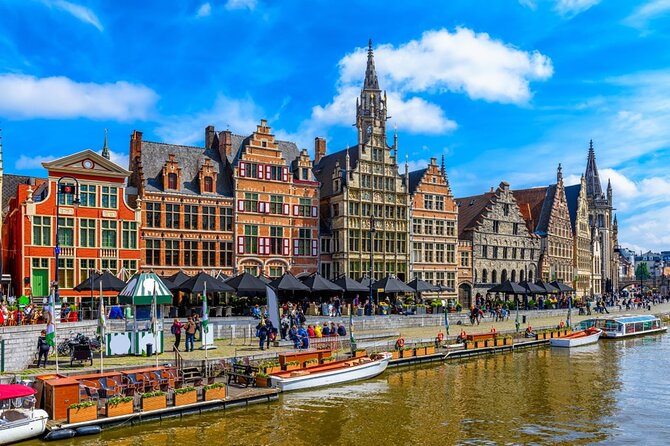
- Graslei and Korenlei explain how this canal pocket worked as a medieval trading port.
- Gravensteen in the city center shows why Ghent’s power was never far from everyday streets.
- St Bavo’s Cathedral and the Van Eyck legacy give context before you ever buy a ticket for more.
- Max group size 35 helps you hear the guide and stay on pace.
Ghent keeps going, and so do we
- Ghent: 50-Minute Medieval Center Guided Boat Trip★ 4.5 · 5,637 reviews
- Historical Walking Tour: Legends of Gent★ 5.0 · 1,761 reviews
- Ghent: 40 Minute Medieval Center Guided Boat Tour★ 4.4 · 884 reviews
- Evening Tour of the Dark Side of Gent★ 5.0 · 646 reviews
Price and What You Actually Pay for
This tour costs $3.62 per person to book, and then it uses a pay-what-you-want model at the end. In plain terms, that makes it a budget-friendly way to get a guided overview, as long as you treat the final tip as part of the deal.
If you want a fixed-price “no surprises” experience, this might feel a little different because the final amount is based on your experience. But that same setup is why so many people like it: you are not locked into paying more if the guide is great, and you can adjust based on how much you learned and enjoyed.
Meeting Point, Route Pace, and Practical Tips
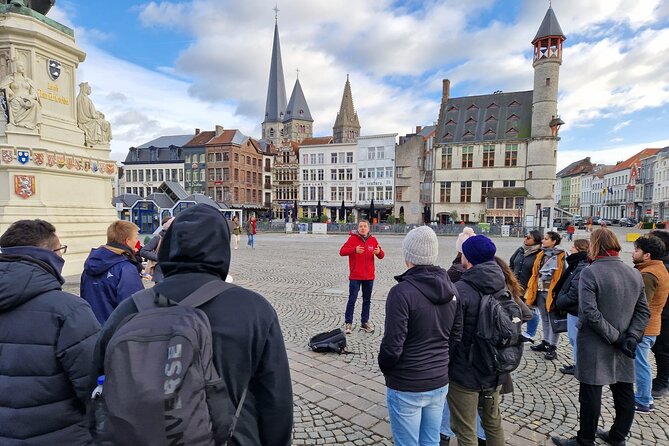
The tour starts at Hostel Uppelink, Sint-Michielsplein 21 (9000 Gent) and finishes at the Belfry of Ghent on Sint-Baafsplein. It runs about 2 hours and is in English, with a mobile ticket. The group size tops out at 35, which is large enough to be lively but small enough that you should not feel lost.
Wear comfortable shoes. The walk is not described as difficult, but you do stand and walk between 13 stops over roughly 2 hours. Also, the tour needs good weather, so if rain hits, plan on a schedule change.
St Michael’s Bridge to Graslei and Korenlei: Port Views First
You begin at St Michael’s Bridge, and it is a strong starting point because it sets the tone fast. The guide introduces Ghent’s medieval trading role and points out the three towers you can spot from here, so you get immediate skyline orientation before you move deeper into the historic center.
Next comes Graslei and Korenlei, the canal-edge heart of the old city. This is where the tour shifts from “pretty views” to “how the city worked.” You’ll see which buildings lined up with port activity when this area functioned as a medieval trading spot. Even if you only remember one thing, it should be this: those canal facades were business addresses, not just postcard backgrounds.
What I like for your first hour: you get context early, so later landmarks like the castle and cathedral feel like parts of one system, not random stops.
Design Museum Gent Stop: The Rebel-Mindset Story
The tour includes a stop at the Design Museum Gent. Entry is not included here, so you are likely focusing on the meaning of what you see rather than paying to go in.
The guide uses this spot to talk about why a particular design element symbolises the stubborn, rebellious mindset of Gentenaars. If you like history that includes attitudes, not just dates and rulers, this is a fun intermission. If you are expecting a museum-style interior visit, adjust your expectations, since the admission ticket here is listed as not included.
The grimmer half of the same streets
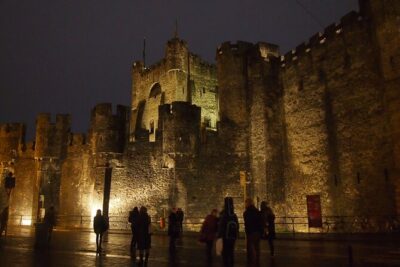
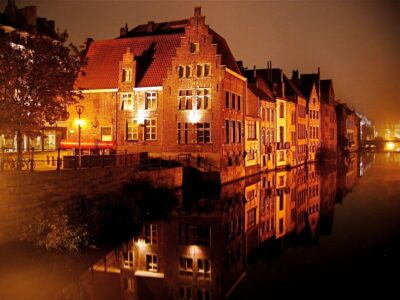
Het Groot Vleeshuis: Butchers’ Hall With Darker Notes
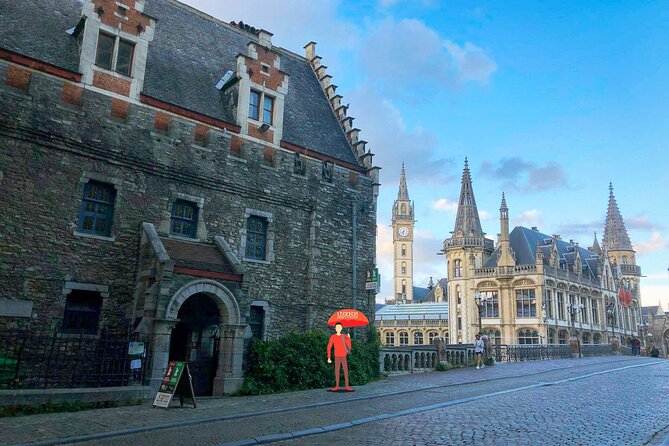
Then you cross to Het Groot Vleeshuis, the medieval covered Great Butchers’ Hall area. The setting helps because you get views across the water toward the building, and the guide shares some darker facts connected to the place.
This stop is valuable because it balances the “clean and grand” side of medieval Ghent with the reality behind the architecture. It also breaks up the route, so you are not just processing churches and castles back-to-back.
Gravensteen and St Veerleplein: Power in the Middle of Town
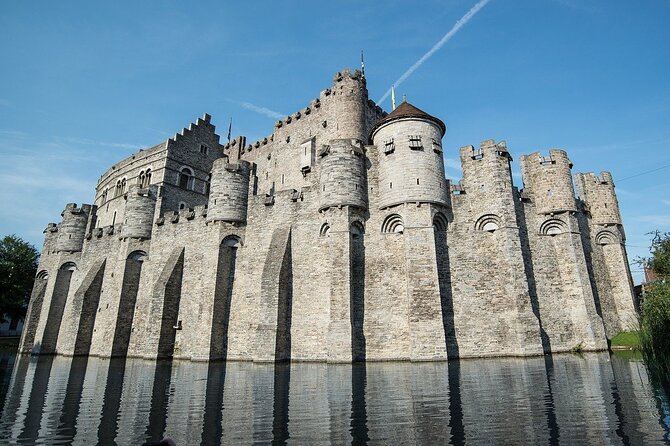
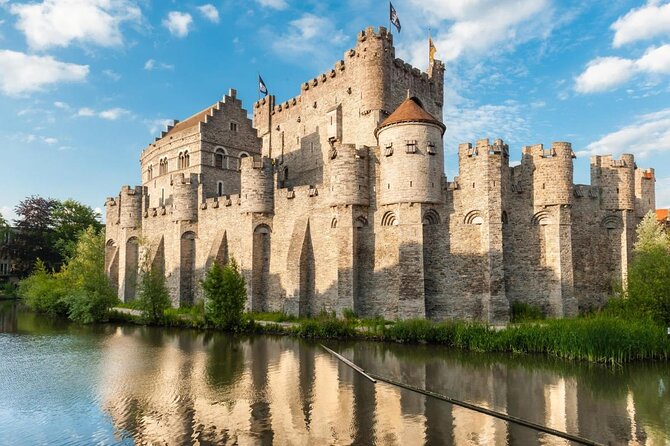
Gravensteen is one of the tour’s headline moments. Unlike many castles that sit outside the city, this one is right in the middle and is very well preserved. The admission ticket is not included, so you should treat this as an exterior orientation stop unless you decide later to pay for deeper access on your own.
What makes Gravensteen work on a walking tour is how it anchors the theme of civic power. You learn why Ghent’s medieval counts mattered, and you see how the fortress fits into streets people still use today.
St Veerleplein comes next, a square known as both the square of death and the square of life. The guide explains why it earned those names, and that storytelling approach is the whole point here. The walk gives you a moment where the city’s nickname culture makes sense, instead of sounding random.
Huis van Alijn: A Hospital That Became Something Else
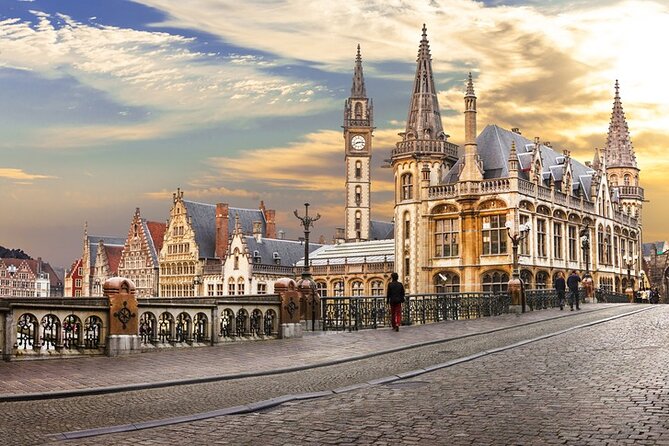
At Huis van Alijn, the tour shifts into a more human-scale story. This building was once a hospital, and it’s described as the only remaining “god house” in Ghent. Again, the stop is about context, not a ticketed visit, since admission is listed as free.
I like this stop because it reminds you that city history includes care, institutions, and daily survival. When your route later hits grand religious buildings, you will understand better how Ghent organized help and authority in different forms.
Vrijdagmarkt and Werregarenstraat: Squares, Symbols, and Street Art
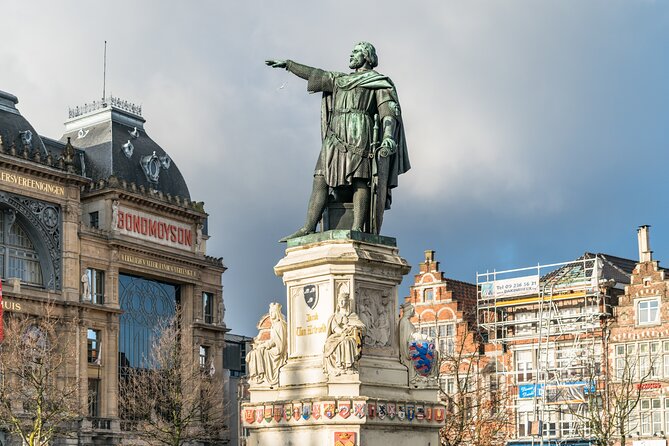
Vrijdagmarkt is a famous square in the city, and the guide connects it to Ghent’s history and to a statue located in the middle. This is one of those stops where you get a quick “what am I looking at?” upgrade, so the square stops being a generic open space and becomes a named stage in the city’s story.
Then you head to Werregarenstraat, which the city designates as a specific street art area to protect monumental buildings from graffiti. You walk through the space and the guide explains the idea behind controlling street art in a way that still lets artists work.
This pairing is smart. You get a traditional civic square, then you get a modern policy solution for public art. It’s a good reminder that city identity is not only medieval.
Ghent Town Hall: Why the Facade Looks Confused
Next up is Ghent Town Hall (Stadhuis). Admission is not included, so you get the exterior and the interpretation from the guide rather than an indoor visit. The tour’s focus here is the facade and what it is hinting at.
The guide explains the most significant conflict in Ghent’s history and why the building’s look feels a little “confused.” That sentence matters because it tells you the tour is not just about beauty. It is about how power struggles leave visible scars, even on civic architecture.
St Bavo’s Cathedral and the Van Eyck Connection
St Bavo’s Cathedral is a major capstone for art history in Ghent. The tour frames the cathedral’s rich past and explains that it houses major art treasures, most notably the world-famous Ghent Altarpiece by the brothers Van Eyck.
Here, you benefit even if you do not go inside with a ticket right away. You get the story thread first, so any later visit feels guided rather than random. Admission is listed as free on this stop, so expect an orientation stop with information while you’re in the area.
If you plan to spend more time in the cathedral later, this tour is a great “set the stage” option.
The Belfry: People’s Tower and a Prison Legend
The Belfry of Ghent (Het Belfort van Gent) is the people’s tower, tied to the city’s stubbornness, power, and independence. Like the town hall, admission is not included at this stop, so you focus on what the exterior communicates.
The tour also points out that the Belfry used to serve as a prison, and the façade tells a story tied to a bizarre legend the guide shares. Even without climbing or entering, the explanation helps you read the building as a symbol, not just a landmark you take a photo of.
Because the tour ends at the Belfry area, this last thematic stop is a satisfying closer: independence, punishment, and civic identity all wrapped into one structure.
Eglise de Sant Nicolau: A Merchant’s Patron Saint Finale
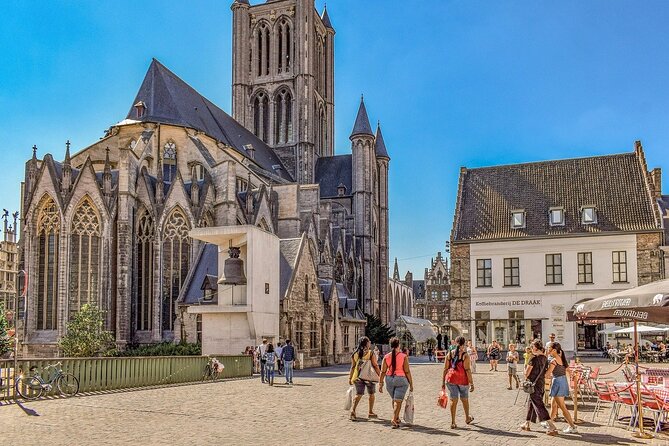
You finish with Esglesia de Sant Nicolau, an early 12th-century church that looks out over Korenmarkt. The stop connects the patron saint, St Nicholas, to merchants and sailors, which fits Ghent’s long relationship with trade.
The guide also explains a legend shown on the façade and uses that as a perfect ending to the tour’s trading-and-identity thread. Admission is listed as free, so you are not likely asked to pay to enjoy the meaning here.
What I’d Use This Tour For During Your Ghent Trip
If this is your first visit to Ghent, I’d use Legends of Gent to get your bearings fast. You get a corridor of major sights connected by the same themes: commerce, civic power, art, and how people told stories about authority.
If you already plan museum time or cathedral time, this tour helps you choose what to prioritize later. You will know which stops are worth paying extra for, like Gravensteen interiors or any ticketed art viewing, because the guide gives you the “why it matters” before you commit.
Small Caveat: When Stories Become Shopping Mentions
One downside I’d keep in mind is that some tours can overemphasize shopping and specific purchase ideas. In the feedback I saw at least one complaint about too many chocolate shop mentions, where the shopper talk crowded out what people wanted more of, like history.
My advice to you: if you are there for stories, use the food and drink tips selectively. You can always ask for one or two “where do locals go” recommendations and then steer the rest of your time toward the monuments and squares.
Also, one person reported a payment dispute connected to being asked to pay again at the meeting point. I cannot verify what happened, so do this instead: screenshot your booking confirmation and check what your payment includes before you start walking. When the pay-what-you-want model is involved, clarity at the start saves stress.
Should You Book Legends of Gent?
Yes, if you want a compact 2-hour way to understand Ghent instead of just ticking off landmarks. The strongest reason to book is the structure: tower views, trading canal context, civic power buildings, then cathedral and Belfry symbolism, all in one easy loop.
Skip it if you only want ticketed interior access, or if you strongly dislike any pay-what-you-want component because you prefer a locked price experience. Also, if you want a lot of museum time, remember several stops list admission as not included, so you will likely view from outside unless you add extra entries on your own.
If you love walking tours with stories and you want your first day in Ghent to make sense, this one is a very practical choice.
FAQ
How long is the Legends of Gent walking tour?
It runs about 2 hours.
Where does the tour start and end?
It starts at Hostel Uppelink, Sint-Michielsplein 21, 9000 Gent, Belgium, and ends at the Belfry of Ghent, Sint-Baafsplein, 9000 Gent, Belgium.
Is the tour offered in English?
Yes, it is offered in English.
Do I need an admission ticket for every stop?
No. Some stops are listed as free, while others like the Design Museum Gent, Gravensteen, Ghent Town Hall, and the Belfry are listed as not included.
Is there a pay-what-you-want moment?
Yes, the tour is pay what you want at the end based on your experience.
What is the maximum group size?
The tour has a maximum of 35 travelers.
Is a mobile ticket used?
Yes, the tour uses a mobile ticket.
Is the tour canceled if the weather is poor?
The tour requires good weather. If it is canceled due to poor weather, you will be offered a different date or a full refund.
What is the cancellation window?
You can cancel for free up to 24 hours in advance for a full refund.
Every Belgium Review
Belgium After Dark, on Foot
Ghent, Continued
Newer Belgium reviews from the same corner of the country
- Ghent Walking Tour – City Highlights and Beyond Tradition
★ 4.5 · 3 reviews - Ghent: City Walk with Audio Guide in 7 Languages on your Phone
★ 4.5 · 3 reviews - Children’s escape game in the city of Ghent Marsupilami
★ 5.0 · 3 reviews - Ghent Running and Sightseeing Tour
★ 5.0 · 3 reviews - Ghent: Walking Tour from Friday Market to the Cathedral
★ 4.8 · 3 reviews
Ghent Tours, side by side.
 ★ 4.6From Brussels: Guided Day Trip to Bruges and GhentFrom $558,353 reviews
 ★ 4.7From Brussels: Bruges & Ghent Day Tour – 2 Fairytale CitiesFrom $578,242 reviews
 ★ 4.5Ghent: 50-Minute Medieval Center Guided Boat TripFrom $125,637 reviews
 ★ 4.0Bruges and Ghent – Belgium’s Fairytale Cities – from BrusselsFrom $594,809 reviews
 ★ 4.6From Brussels: Full-Day Antwerp and Ghent Guided TourFrom $571,019 reviews
 ★ 4.4Ghent: 40 Minute Medieval Center Guided Boat TourFrom $12884 reviews
 ★ 4.5Bruges and Ghent Day Trip from BrusselsFrom $56784 reviews
 ★ 5.0Evening Tour of the Dark Side of GentFrom $3646 reviews
Browse the lists this tour appears in