
REVIEW · GHENT
Private Historical Tour: The Best of Ghent
Ghent’s power story is hiding in plain sight. This private Historical Tour of the Best of Ghent turns the city’s big landmarks into a clear medieval story, from trade and civic clashes to prison legends and merchant saints. I especially love how the guide works the route so you understand not just what you see, but why Ghent looked the way it did. I also like the private format, restricted to your group, so questions feel easy and you can move at a calm pace.
What you should consider is value for money. At $105.82 per person for about two hours, you are paying for guiding and context, and the stops are listed as admission ticket free, so you should expect mostly exterior viewing unless your guide plans additional time for anything inside.
Still, the overall experience is a strong one, with a high rating and lots of praise for guides who keep the walk fun, focused, and easy to follow.
In This Review
- Key Highlights You Will Actually Care About
- A Private Ghent Walk That Teaches You How to Look
- Price and What You Really Get for $105.82
- Getting Oriented at St Michael’s Bridge (The Skyline Starts Here)
- Graslei and Korenlei: The Medieval Port Beat
- The Design Museum Detail That Signals Rebellion
- Het Groot Vleeshuis: Big Hall, Dark Stories
- Gravensteen and St Veerleplein: Castle Power Inside the City
- Huis van Alijn: When a Hospital Becomes a Memory of Place
- Vrijdagmarkt: A Square and the Person in the Middle
- Werregarenstraat: Graffiti Control Meets Street Art Freedom
- Ghent Town Hall: Why It Looks Confused
- St Bavo’s Cathedral, the Van Eyck Moment, and the Belfry
- Ending at Esglesia de Sant Nicolau: Merchants’ Saint and a Legend
- What the Best Guides Do (And Why You’ll Feel It)
- When This Tour Might Not Match Your Style
- Should You Book the Best of Ghent Private Historical Tour?
- FAQ
- How long is the Private Historical Tour: The Best of Ghent?
- Is this tour private?
- Where does the tour start and where does it end?
- What landmarks are included on the route?
- What is included in the price?
- Are food and drinks included?
- What languages are available?
- Can I cancel for a full refund?
Key Highlights You Will Actually Care About
- Private, restricted to your group, which makes asking questions feel natural
- Local professional guidance that connects medieval trade, politics, and legends
- A tight 2-hour route built around Ghent’s best-known viewpoints and civic sites
- Stop-by-stop storytelling, including darker episodes tied to major buildings
- People’s power themes, from the Belfry to the Town Hall conflict
- Street-art reality check at Werregarenstraat, where creativity is allowed in a designated zone
Ghent keeps going, and so do we
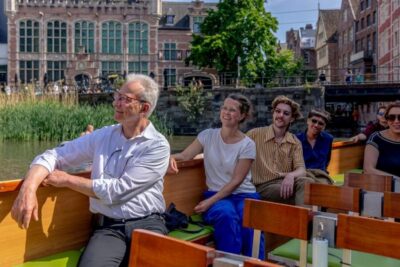
- Ghent: 50-Minute Medieval Center Guided Boat Trip★ 4.5 · 5,637 reviews
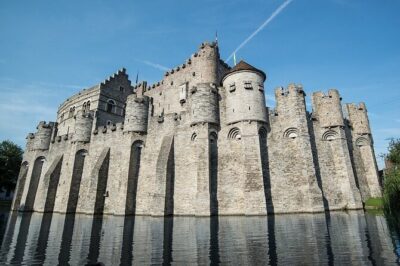
- Historical Walking Tour: Legends of Gent★ 5.0 · 1,761 reviews
- Ghent: 40 Minute Medieval Center Guided Boat Tour★ 4.4 · 884 reviews
- Evening Tour of the Dark Side of Gent★ 5.0 · 646 reviews
A Private Ghent Walk That Teaches You How to Look
Ghent can feel like a postcard city, but it is also a city of arguments. The Best of Ghent tour is designed to help you look past the pretty facades and notice the clues: port geography near the water, the stubborn civic identity in public buildings, and the heavy symbolism in churches and towers.
I like that the tour does not treat the city as a list. It works like a story you can walk through, starting with skyline views, then moving to the places where money and power moved, and finally ending with the iconic religious and civic landmarks.
You will also get a sense of what locals mean when they talk about the Gentenaars mindset, because the route includes an intentional nod to that rebellious streak. In one stop, your guide explains why a specific aspect linked to the Design Museum symbolizes that stubborn, independent attitude.
Price and What You Really Get for $105.82
Let’s talk value in plain terms. For $105.82 per person, you are buying guided time, a private experience, and interpretation at major sights, not a “wandering alone” sightseeing day.
The tour lists all fees and taxes and marks each stop with admission ticket free, which strongly suggests you should not plan on paying extra entry costs during the walk. That is good, but it also means you will likely spend your time observing, learning, and photographing rather than waiting in lines for paid interiors.
Where the money can feel extra is if you were hoping for more ticketed access. One past guest called out the idea of needing a historical pass to go inside more places, so if your top priority is museum time, you may want to pair this tour with targeted entry tickets afterward.
Getting Oriented at St Michael’s Bridge (The Skyline Starts Here)
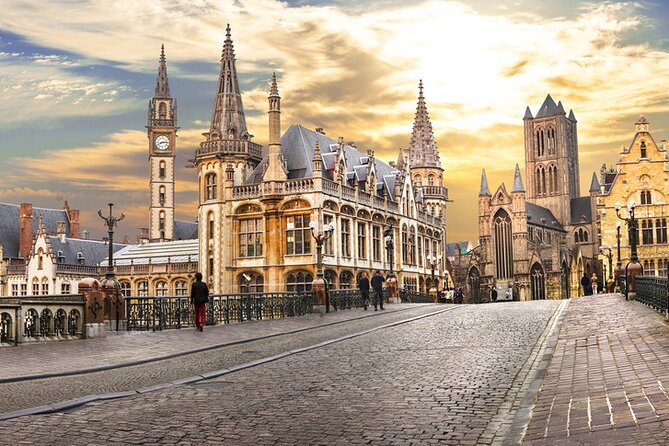
The tour begins at Hostel Uppelink, right by St Michael’s Bridge, and that choice is smart. From here, you get an immediate sense of Ghent’s medieval skyline, including the three towers that define the view.
Your guide also frames Ghent as a trading hub, so you start with the big idea before you walk into the details. This is the moment where you learn what to notice later, because many of the next stops make more sense once you understand how the city’s water and trade routes shaped its layout.
Practical tip: if it is windy or chilly, this opening area can feel exposed. Bring a layer and do your first photos quickly, then settle in for the rest of the walk.
Graslei and Korenlei: The Medieval Port Beat
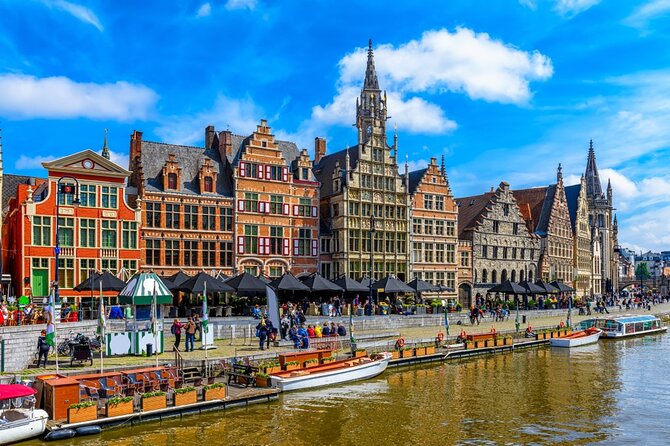
Next come Graslei and Korenlei, the heart of the historic center by the water. This is where your guide connects the buildings along the quay to the actual trade activity that once happened here, turning the canal-side scene into something that feels functional instead of just scenic.
Two small details make this stop land. First, you learn how the water edges acted like a port. Second, your guide points out which buildings were involved in the trading work, which helps you spot patterns instead of staring at random windows.
If you like visual geography, this is one of the strongest parts of the route. You will see the water, feel how narrow the corridor is, and understand why Ghent built power where the goods came in.
The same ground, just your own group
The Design Museum Detail That Signals Rebellion
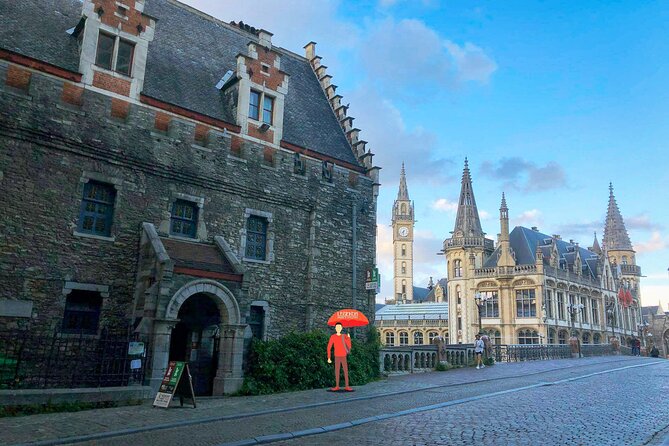
There is a short stop linked to the Design Museum where your guide explains why a particular design aspect represents the stubborn, rebellious mindset of the Gentenaars.
Because the specific detail is not spelled out in the tour outline, treat this moment like a storytelling checkpoint. You are meant to look at something and then hear the explanation, which is a fun change of pace after the heavy trade and civic themes.
If you are the type who likes learning what a symbol means, you will probably enjoy this stop more than you expect.
Het Groot Vleeshuis: Big Hall, Dark Stories
Crossing to Het Groot Vleeshuis, you get a view across the water toward the medieval covered Great Butchers’ Hall. The tour highlights how impressive the building looks, and then your guide turns the light toward the darker side.
This is one of those “looks one way, meant another” stops. You are not just learning architecture, you are learning how prosperity and power can come with hard edges. In a city shaped by trade, even the landmark food economy has a story behind it.
Practical note: if you are worried about topics that feel grim, this stop is where the tour explicitly points you toward that side of Ghent’s past. It is still framed as history, not shock value, but it is not all sunshine.
Gravensteen and St Veerleplein: Castle Power Inside the City
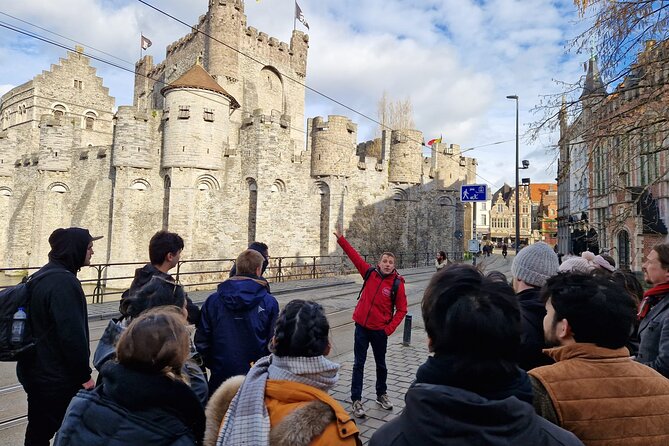
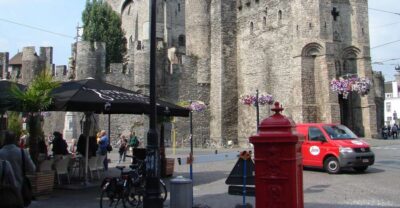
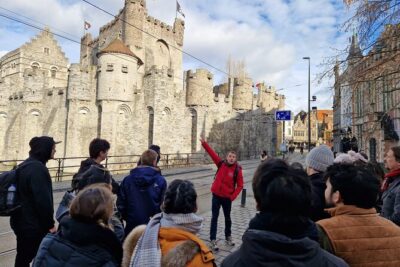
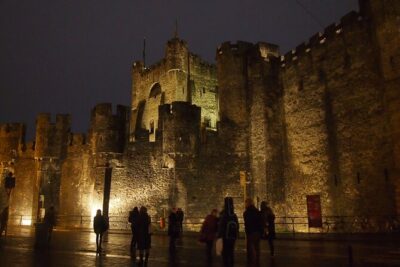
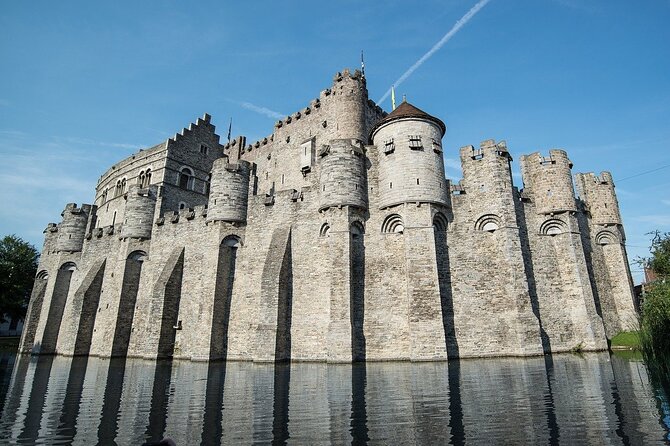
One of the best surprises in Ghent is Gravensteen, the Castle of the Counts. Unlike many castles that sit outside the city, this one is in the middle, and it is very well preserved, which makes it easy for your guide to explain its impressive past without needing imagination.
From there, you reach St. Veerleplein, a square known as the square of death and the square of life. Your guide explains why those labels exist, and it is a good reminder that public spaces often held multiple roles: civic life on one hand, punishment or fear on the other.
If you only see Ghent once and want the strongest sense of “power made visible,” these two stops do that job quickly. You will leave with a clearer sense of how Ghent organized authority in everyday spaces.
Huis van Alijn: When a Hospital Becomes a Memory of Place
Next is Huis van Alijn, which your guide frames as a hospital and notes its place in local heritage as the only remaining “god house” in Ghent.
This stop works because it gives you the human scale behind the city’s stone and symbols. Medieval and early modern Ghent was not only trade and politics. It also had systems for care, and the building’s long story helps you understand what survived and what changed.
One thing I like about the way this tour is paced is that it breaks up the heavy civic themes with something more personal. You do not have to be into medical history for this stop to feel meaningful.
Vrijdagmarkt: A Square and the Person in the Middle
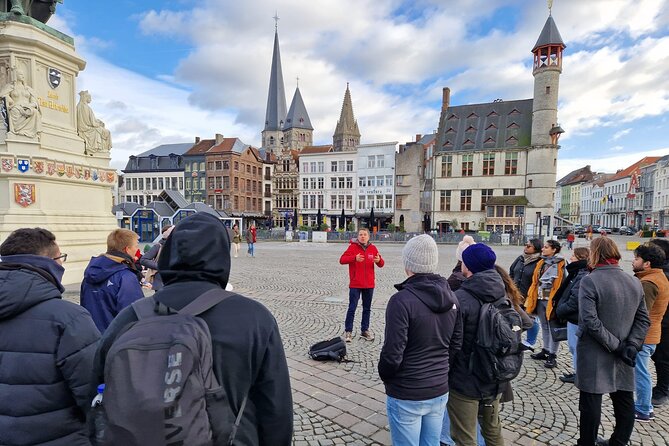
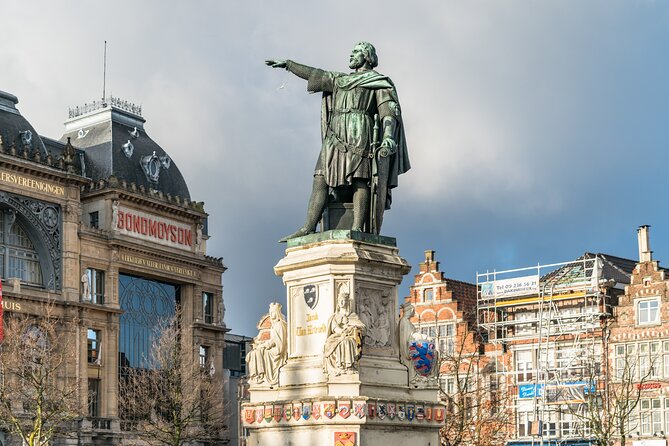
At Vrijdagmarkt, your guide brings history to the square and focuses on the statue located in the middle. This is one of those “public art as public storytelling” moments.
Instead of treating the statue as decoration, you learn why it matters to Ghent’s identity. It also helps you connect the earlier trade theme with later civic pride, because squares like this were where people gathered, argued, and celebrated.
If you enjoy photo stops where you can frame the entire scene, this one is good for that. It is open and legible, so you can actually capture the idea your guide is explaining.
Werregarenstraat: Graffiti Control Meets Street Art Freedom
The tour then heads to Werregarenstraat, a designated area for street artists, created to keep monumental buildings from being sprayed by graffiti.
This is a refreshingly modern ending to a medieval story. You learn how the city balances protection of heritage with allowing creative expression, and the walking route helps you see how policy shapes the street you are standing in.
If you are a street art fan, you will probably like that this is not just a “look at the art” stop. It comes with the background on why the area exists.
Ghent Town Hall: Why It Looks Confused
Next up is Ghent Town Hall (Stadhuis). Your guide explains why it looks a bit “confused,” and ties that visual complexity to a major conflict in Ghent’s history.
This is an especially good stop if you like architecture that makes a point. Buildings here are not neutral. They show political tension, decisions made by people in power, and the results of civic fights that shaped what Ghent became.
You only get a short time at the Town Hall, so listen closely. This is one where the guide’s explanation turns a quick look into something you can remember later.
St Bavo’s Cathedral, the Van Eyck Moment, and the Belfry
At St Bavo’s Cathedral, your guide highlights its rich history and points out that it houses major art treasures, most notably the world-famous Ghent Altarpiece by the brothers Van Eyck.
Even if you are not going inside, this stop gives you context that makes the cathedral more than another pretty church. You learn why it matters to art history, which is helpful if you plan any later museum or cathedral visits during your trip.
Then comes Het Belfort van Gent, the Belfry. Your guide frames it as the people’s tower and emphasizes stubbornness, power, and independence. Your tour also connects the tower to the fact that it once served as a prison, and your guide explains a bizarre legend tied to the façade.
This is one of the most “Ghent in one object” moments. A belfry is never just a tower. It is an idea in stone, and your guide makes that idea feel clear.
Ending at Esglesia de Sant Nicolau: Merchants’ Saint and a Legend
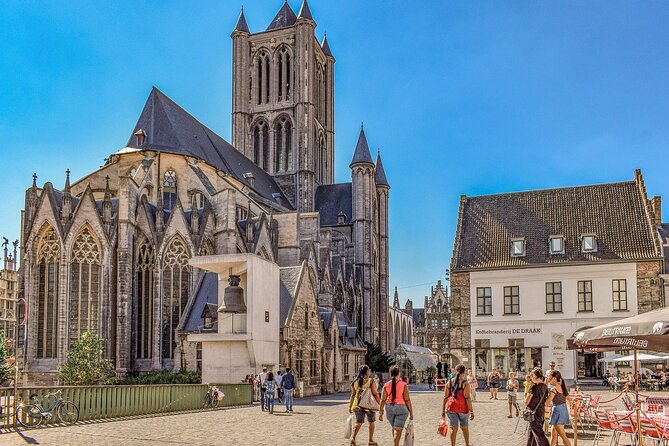
The final stop is Esglesia de Sant Nicolau, an early 12th-century church with St Nicholas as patron saint of merchants and sailors. Your guide ends the tour by connecting the façade to the legend tied to his story.
This ending is well chosen because it circles back to the tour’s trade theme. Before you leave, you get the spiritual label for the same commercial world the route started with near the bridge and port areas.
If you still have time after the tour, you will probably want to keep walking toward the surrounding squares for atmosphere, because you now understand how those spaces link together.
What the Best Guides Do (And Why You’ll Feel It)
A big reason this tour earns such high scores is the human factor. The tour’s local guide style shows up in small, practical ways: humor during explanations, clear pacing, and a willingness to answer questions without making you feel rushed.
I noticed several guide names tied to different kinds of energy, such as Kenny, Sophia, Camila, Hans, Martin, Onur, Arn, Julien, Alex, Kasia, Sonia, and Sebastian. Different personalities, same goal: make Ghent’s story feel like something you can grasp quickly.
Some guides even add fun elements, like a knowledge challenge and even waffle testing mentioned in one experience. That kind of light touch matters on a history walk, because it keeps your attention working instead of nodding off.
Also, if the weather changes, a good guide adjusts. One experience notes that a guide avoided rain and that another rearranged the tour to end near a lunch plan. That flexibility is the difference between a rigid checklist and an actually satisfying outing.
When This Tour Might Not Match Your Style
This tour is built for people who want context fast. If you already know Ghent’s medieval story and you want long interior time, you may feel boxed in by the short stop lengths.
Also consider expectations around duration. A few experiences reported timing issues, including shortened walking time or changes to the planned start. That is not something you can control, so keep your schedule a bit flexible and check any day-of message carefully.
Finally, if you are hoping for a tour that always includes museum entries, the “admission ticket free” stop notes suggest you should plan for mostly exterior viewing. You can always add entry stops on your own after the walk.
Should You Book the Best of Ghent Private Historical Tour?
Book it if you:
- Want the fastest way to understand Ghent’s medieval trade power and civic identity
- Prefer a private, question-friendly walk over group logistics
- Like guides who turn landmarks into stories, not just photographs
Skip or rethink it if you:
- Want a lot of paid interior access during the tour itself
- Are very strict about exact start times and minute-by-minute scheduling
If you are spending one day in Ghent and want to get your bearings fast, this is a strong choice. You will finish at the Belfry with a lot more meaning in your head than you started with, and you will know what to look for as you keep exploring on your own.
FAQ
How long is the Private Historical Tour: The Best of Ghent?
It lasts about 2 hours.
Is this tour private?
Yes. It is a private tour restricted to your group only.
Where does the tour start and where does it end?
You start at Hostel Uppelink, Sint-Michielsplein 21, 9000 Gent, Belgium. The tour ends in front of the Belfry of Ghent on Sint-Baafsplein, 9000 Gent, Belgium.
What landmarks are included on the route?
The route includes St Michael’s Bridge, Graslei and Korenlei, Het Groot Vleeshuis, Gravensteen, St. Veerleplein, Huis van Alijn, Vrijdagmarkt, Werregarenstraat, Ghent Town Hall (Stadhuis), St Bavo’s Cathedral, Het Belfort van Gent, and Esglesia de Sant Nicolau.
What is included in the price?
You get all fees and taxes, a local professional guide, professional guidance, hotel pick up and drop off, and the private tour.
Are food and drinks included?
No. Food and drinks are not included unless specified.
What languages are available?
The tour is offered in multiple languages, and English is available.
Can I cancel for a full refund?
Yes. You can cancel up to 24 hours in advance for a full refund. Canceling less than 24 hours before start time is not refundable.
More Belgian Tours
Every Belgium Review
Ghent, Continued
Newer Belgium reviews from the same corner of the country
- Ghent Walking Tour – City Highlights and Beyond Tradition
★ 4.5 · 3 reviews - Ghent: City Walk with Audio Guide in 7 Languages on your Phone
★ 4.5 · 3 reviews - Children’s escape game in the city of Ghent Marsupilami
★ 5.0 · 3 reviews - Ghent Running and Sightseeing Tour
★ 5.0 · 3 reviews - Ghent: Walking Tour from Friday Market to the Cathedral
★ 4.8 · 3 reviews
Ghent Tours, side by side.
 ★ 4.6From Brussels: Guided Day Trip to Bruges and GhentFrom $558,353 reviews
 ★ 4.7From Brussels: Bruges & Ghent Day Tour – 2 Fairytale CitiesFrom $578,242 reviews
 ★ 4.5Ghent: 50-Minute Medieval Center Guided Boat TripFrom $125,637 reviews
 ★ 4.0Bruges and Ghent – Belgium’s Fairytale Cities – from BrusselsFrom $594,809 reviews
 ★ 5.0Historical Walking Tour: Legends of GentFrom $31,761 reviews
 ★ 4.6From Brussels: Full-Day Antwerp and Ghent Guided TourFrom $571,019 reviews
 ★ 4.4Ghent: 40 Minute Medieval Center Guided Boat TourFrom $12884 reviews
 ★ 4.5Bruges and Ghent Day Trip from BrusselsFrom $56784 reviews
Browse the lists this tour appears in