
REVIEW · GHENT
Evening Tour of the Dark Side of Gent
Ghent gets dark fast, even in good weather. This evening walk mixes medieval trading power with grim legends, so the city feels more like a storybook than a museum. You start near St Michael’s Bridge, where the skyline and city history line up perfectly for night photos.
I especially like the guide style this tour seems to attract, with guides such as Kenny, Isabel, Ben, and Julian using humor to keep the tone moving. I also like the pacing, since it stays a mostly level stroll with frequent short stops instead of one long lecture. One thing to consider: the theme is genuinely morbid, with execution and torture stories, so if you prefer light sightseeing, this may feel heavy.
In This Review
- Key highlights before you go
- A 1h45 Ghent Night Walk With Medieval Horror Stories
- Meeting at Hostel Uppelink, Ending in Patershol for Drinks
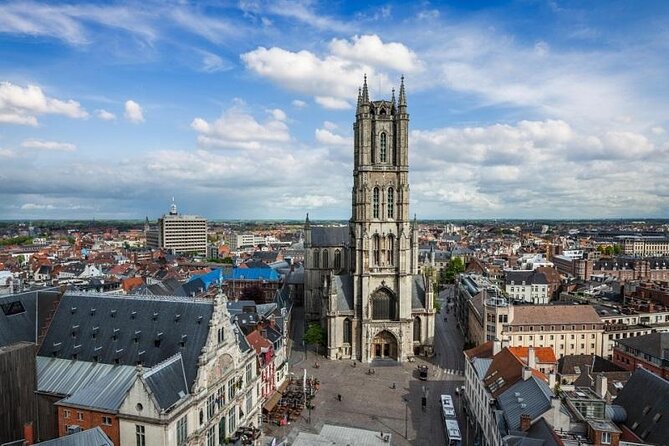
- Stop 1: St Michael’s Bridge and Ghent’s Skyline Towers
- The Cathedral’s Dark Nickname: Why It’s Called Devil’s Tower
- Graslei and Korenlei: Medieval Harbour Wealth You Can Still See
- Appelbrugparkje and Butchers’ Hall Views: A Father and Son Legend
- Castle of the Counts: Viking Fears and the Start of City Development
- Prince’s Court and Rabot Sluice: From Power to City Walls
- Keizer Karel V Sculptures and Religious Wars: Charles V Through Stone
- Patershol, the Monk’s Hole Quarter, and the Industrial Revival
- Price, Group Size, and Guide Style: What Makes It Such Value
- Should You Book the Dark Side of Gent Tour?
- FAQ
- How long is the Dark Side of Gent evening tour?
- What is the price per person?
- Is the tour in English?
- Where does the tour start and where does it end?
- Do I need a paper ticket?
- Is the group size limited?
- Is the tour affected by weather?
Key highlights before you go
- St Michael’s Bridge orientation: a smart start point to understand Ghent’s skyline and medieval trading role.
- Devil’s Tower-style cathedral story: the “beautiful cathedral” angle comes with a dark nickname and grim explanation.
- Harbour sights at Graslei and Korenlei: you get context for why this area mattered for money, power, and ships.
- A legend from Appelbrugparkje: Butchers’ Hall views plus a father and son story with a miraculous twist.
- City defenses at Rabot Sluice: the only remaining tower of a long wall circuit, tied to Viking-era anxiety.
Ghent keeps going, and so do we
- Ghent: 50-Minute Medieval Center Guided Boat Trip★ 4.5 · 5,637 reviews
- Historical Walking Tour: Legends of Gent★ 5.0 · 1,761 reviews
- Ghent: 40 Minute Medieval Center Guided Boat Tour★ 4.4 · 884 reviews
- Evening Tour of the Dark Side of Gent★ 5.0 · 646 reviews
A 1h45 Ghent Night Walk With Medieval Horror Stories
This is the kind of tour that changes how you look at street corners. You’re not just seeing monuments, you’re getting reasons, rumors, and cause-and-effect for why people lived the way they did in medieval Ghent. The title Dark Side of Gent is not marketing fluff. The stories lean into murders, executions, harsh punishments, religious conflict, and the way power shows up in stone.
The best part is the rhythm. Stops are short and timed, so you keep moving, but you also get enough time at each point to actually process what you’re seeing. At night, Ghent’s architecture reads differently, and these particular locations help you connect the dots between trade, rule, warfare, and punishment.
On the content side, you’ll get both history and legend. Some people love that mix because it turns the city into a living narrative. If you’re the type who hates anything that sounds myth-like, you might find parts less convincing. That said, the guide performance is usually a strong match for the theme, with animated storytelling and plenty of humor to keep it from turning into pure gloom.
Meeting at Hostel Uppelink, Ending in Patershol for Drinks
The tour begins at Hostel Uppelink at Sint-Michielsplein 21 in Ghent and ends in the Patershol area of the city center. Ending in Patershol matters because it’s close to places where you can keep the evening going after the walk, without needing extra transit plans.
You’ll want to arrive with a little time buffer. One issue that came up for some people was missing the correct start timing because they did not show up early enough. Since the walk is only about 1 hour 45 minutes, there isn’t much slack if you’re running late.
Logistics are straightforward on paper. You get a mobile ticket, the tour is offered in English, and the group size tops out at 35 people. It also runs near public transportation and allows service animals. From the pace described, it’s mostly level and doable for many people, as long as you’re comfortable with evening walking.
Weather is a real factor. The experience requires good conditions, and if it gets canceled due to poor weather, you’re offered a different date or a full refund. In practice, that means you should check the forecast the same day and plan for a quick change if needed.
Stop 1: St Michael’s Bridge and Ghent’s Skyline Towers
The walk starts at St Michael’s Bridge, and that first step is smart. This spot gives you a “big picture” view of Ghent while anchoring the city’s medieval role as a trading hub. If you’ve ever looked at a skyline and wondered what mattered historically, this is where the tour begins answering that.
You also get a focused introduction to the three towers of the Ghent skyline, which is great for orienting yourself. Even if you later forget the exact dates, you’ll remember the silhouettes. That’s useful during the rest of the walk because you can visually connect what you hear about power and trade to what you see in front of you.
Practical tip: this is a strong place for night photos because the bridge location tends to give you multiple angles. Keep your phone ready, but don’t rush through the explanation. If you want the “why” behind the skyline, you have to listen for a few minutes before you shoot.
Potential drawback here is minor: since it’s the first stop, the tour also sets the tone. If you want a quieter intro, you might feel the stories start immediately. On the other hand, that’s also why the tour works well for people who want evening sightseeing that feels more alive.
The Cathedral’s Dark Nickname: Why It’s Called Devil’s Tower
After the bridge orientation, the next highlight is the story around a cathedral known as Devil’s Tower. The tour uses this to show how beauty and fear can share the same space. You’ll hear the gruesome reason behind that nickname, and it becomes a kind of theme statement for the rest of the walk.
This stop is valuable because it teaches you to read the city’s symbolism. In Ghent, a building can look ceremonial while history underneath can be violent. The guide’s job is to connect the visual (a striking cathedral) with the emotional (why people in the past feared it or linked it to punishment). That connection is what makes the tour feel different from a basic “look and move on” route.
One consideration: if you’re squeamish about violent stories, this is the kind of stop that can set your mood. Reviews point out that the tour leans into gruesome details, including torture methods and execution stories. That doesn’t mean it’s one long shock-fest, but it does mean you should mentally prepare for the darker medieval side.
If you enjoy medieval myths paired with real sites, this works especially well. The cathedral nickname is memorable precisely because it sounds contradictory, and that contradiction is the hook.
The grimmer half of the same streets
Graslei and Korenlei: Medieval Harbour Wealth You Can Still See
Next you shift from skyline overview to Graslei and Korenlei, the heart of Ghent’s medieval harbor. Here the tour explains why this area was an economic powerhouse in Europe. The guide ties the setting to trading activities that brought money, ships, and political influence into the city.
This stop also helps you understand a practical reality of medieval life: power didn’t just come from kings and castles. It came from who controlled commerce, and who could tax, protect, or punish people who touched the money flow. You’ll walk away with a clearer idea of how the city’s wealth shaped its layout and built environment.
From a sightseeing standpoint, this is one of the best places to enjoy Ghent’s night atmosphere while still learning. You get the “look” of the harbor district, plus the “why” behind its importance. If you like photography, this is usually where photos feel easier because you have water-adjacent scenery and strong architectural lines.
A drawback for some people is that this part can feel a bit touristy in general areas of the center. The tour doesn’t avoid that entirely, but it uses the context to turn familiar streets into something new. You’re not just passing through; you’re being taught how to interpret what you see.
Appelbrugparkje and Butchers’ Hall Views: A Father and Son Legend
At Appelbrugparkje, you’ll look out over the giant Butchers’ Hall. The tour pairs the physical presence of the building with a legend about the execution of a father and son, plus a miraculous event that saved them.
This stop stands out because it blends three elements: location, story, and moral punch. The story is not only about violence, it’s about what happened afterward, and why the miracle or intervention matters. That’s a common pattern in dark legends: fear is real, but the story also offers hope or surprise to keep people talking.
In terms of value, this is one of the places where the tour feels the most like narrative theater. You’re standing at a landmark that instantly sounds serious, and the guide uses it to frame what the city’s power could do to ordinary families.
What to consider: the subject matter is heavy. Even if you enjoy legends, you might not want to sit with execution stories right after a long day of sightseeing. If you’re bringing kids, some families do enjoy it because the tour is paced and humorous, but you should judge your comfort level with violence-themed material.
Castle of the Counts: Viking Fears and the Start of City Development
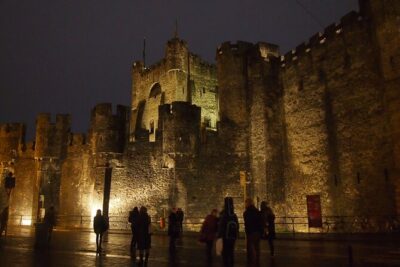
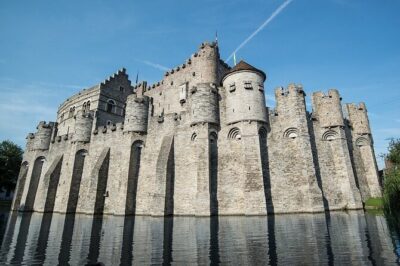
Then you head to the Castle of the Counts, a site built by Count Baldwin in the 9th century to protect inhabitants from Viking raids. This is where the tour shifts from trade and legends into defense and city growth.
The tour’s framing is smart: instead of treating the castle like a standalone attraction, it explains how an impressive fortification encouraged the city to develop around it. That’s how you learn history that sticks. You see a wall or tower, then understand the reason people gathered nearby. Defense created settlement. Settlement created economy. Economy created power structures that later showed up in harsher forms.
The stop also helps you think about Ghent’s timeline. Even if you don’t remember dates, you’ll remember the pattern: threats from the north, then the city consolidating. It’s a clear explanation that matches what you see.
One small caution: because this is a walking tour with several short stops, you won’t get an in-depth museum-style explanation here. If you want deep architecture analysis, you’ll still need a separate visit. But for a night walk centered on story and context, it works well.
Prince’s Court and Rabot Sluice: From Power to City Walls
After the Counts’ castle, you’ll hear about what was once a gigantic palace called the Prince’s Court. Today you need a bit of imagination to picture its scale, but the guide will help you “reconstruct” it with storytelling. This is one of the more satisfying parts if you like thinking in layers. You’re seeing what’s left, but you’re also guided to picture what used to be there.
Next comes Rabot Sluice, where you’ll see the only remaining tower of the 14 km long defense wall built around Ghent in the Middle Ages. That fact alone gives you scale. Fourteen kilometers is not a casual detail. It tells you Ghent didn’t just have a castle. It had a whole defensive perimeter mindset.
This combined section is valuable because it explains how rulers protected resources and people. You can connect the earlier trade story to later defense. Wealth attracts enemies. Defense follows wealth. And when you understand that chain, the “dark side” theme makes more sense because control and punishment are often part of the same system.
Potential drawback: for some people, the shift from palace imagination to strict defense facts can feel like changing gears. But if you enjoy historical cause-and-effect, it actually reads as a smooth progression.
Keizer Karel V Sculptures and Religious Wars: Charles V Through Stone
At Keizer Karel V, you’ll walk near the Bridge of Imperial Delights, flanked by four sculptures depicting legendary scenes from the life of Charles V. The guide explains what those scenes represent, which is useful because sculptures are easy to overlook when you’re just passing by.
This stop works well for two reasons. First, it gives you a visual reference point for Charles V that you can remember. Second, it connects imperial imagery to the darker political context that comes right after.
The tour then tells you about the Religious Wars and the effect Calvinist rule had on the city. This is where Ghent’s “dark side” stops being only about legends and starts touching major social conflict. It helps explain why the city’s history isn’t just romantic medieval charm. It includes real power struggles that reshaped communities.
If you like historical nuance, this section is likely where you’ll feel the most learning payoff. You get religion as governance and conflict as a force that changes daily life. The guide’s job is to make that understandable in a walking-tour format, and the short stop times mean you should focus on the story the guide is telling rather than trying to absorb everything on your own.
Consideration: this is not a soft-themed tour. If religious conflict and punishment stories make you uncomfortable, plan your mood before starting.
Patershol, the Monk’s Hole Quarter, and the Industrial Revival
To finish, the tour reaches Patershol, known as Monks hole. This ending is more hopeful than you might expect, even if the earlier stops are grim. The tour explains the social impact of the Industrial Revolution and how it played a role in reviving the city’s economy.
I like this finish because it doesn’t trap you in only medieval darkness. The “dark side” theme is still present, but you end with people and economic change instead of only fear and violence. Patershol also feels charming at night, so it’s a good final note after the darker stories.
Another practical plus: since the tour ends here, you’re positioned in an area with cozy bars and restaurants. You can keep your evening going without needing to figure out transit from a far-away location.
One consideration: because you end in a nightlife-friendly area, it can get busy right after the tour. If you want the calmest reflection time, take a few minutes, grab a drink, and then slowly work your way deeper into the neighborhood rather than stopping at the first spot with noise.
Price, Group Size, and Guide Style: What Makes It Such Value
At about $3.62 per person, this is an extremely low-cost way to get a structured evening in Ghent. The value comes from the combination: you’re paying for a curated route through major sights plus narrative context, not just walking time. For most people, that’s the real cost of the experience, even when it’s budget-friendly.
Group size also helps. With a maximum of 35 people, you’re less likely to get lost in a crowd. That tends to make Q&A and interaction smoother, and reviews often mention guides keeping things engaging and funny without turning it into chaos.
Guide style seems to be a big part of why this tour lands so well. People mention animated storytelling, humor, and strong city familiarity. Names that show up in guides people talk about include Kenny, Isabel, Ben, and Julian. Even when the exact guide varies, the pattern is consistent: stories are delivered with energy, and the walk includes enough small details that you’d probably miss them on your own.
The trade-off is that the content can feel intense. The title promises the dark side, and the stories can include gruesome methods and execution-related material. Also, a few comments suggest that some people wished for more “juicy” darkness, implying that different guides may emphasize the mix of legend versus history differently.
So the value is there, but you should choose it on theme, not just sightseeing.
Should You Book the Dark Side of Gent Tour?
Book it if you want an evening walk that feels like a guided story, not a checklist. It’s a great fit for people who enjoy medieval atmosphere, enjoy legends alongside facts, and like learning in short, practical stops. The route makes sense: start at St Michael’s Bridge for orientation, move through cathedral, harbor, defenses, and political conflict, and end in Patershol where you can relax after.
Skip it or go cautiously if you hate violent stories, want only upbeat history, or dislike anything that leans into myth. Also, if you’re sensitive to the idea of “credibility” in legends, be aware that the tour includes myth and gruesome lore mixed in with historical explanation.
One final practical tip: wear comfy shoes. It’s about 1 hour 45 minutes of walking, and the route includes multiple stops. If you do that, you’ll get the full benefit of the night views, the stories, and the sense of Ghent as a living medieval city.
FAQ
How long is the Dark Side of Gent evening tour?
It lasts about 1 hour 45 minutes.
What is the price per person?
The price is $3.62 per person.
Is the tour in English?
Yes. The tour is offered in English.
Where does the tour start and where does it end?
It starts at Hostel Uppelink, Sint-Michielsplein 21, 9000 Gent and ends in the Patershol area in Ghent.
Do I need a paper ticket?
No. You get a mobile ticket.
Is the group size limited?
Yes. The tour has a maximum size of 35 people.
Is the tour affected by weather?
Yes. It requires good weather, and if it is canceled due to poor weather, you are offered a different date or a full refund.
Every Belgium Review
Belgium After Dark, on Foot
Ghent, Continued
Newer Belgium reviews from the same corner of the country
- Ghent Walking Tour – City Highlights and Beyond Tradition
★ 4.5 · 3 reviews - Ghent: City Walk with Audio Guide in 7 Languages on your Phone
★ 4.5 · 3 reviews - Children’s escape game in the city of Ghent Marsupilami
★ 5.0 · 3 reviews - Ghent Running and Sightseeing Tour
★ 5.0 · 3 reviews - Ghent: Walking Tour from Friday Market to the Cathedral
★ 4.8 · 3 reviews
Ghent Tours, side by side.
 ★ 4.6From Brussels: Guided Day Trip to Bruges and GhentFrom $558,353 reviews
 ★ 4.7From Brussels: Bruges & Ghent Day Tour – 2 Fairytale CitiesFrom $578,242 reviews
 ★ 4.5Ghent: 50-Minute Medieval Center Guided Boat TripFrom $125,637 reviews
 ★ 4.0Bruges and Ghent – Belgium’s Fairytale Cities – from BrusselsFrom $594,809 reviews
 ★ 5.0Historical Walking Tour: Legends of GentFrom $31,761 reviews
 ★ 4.6From Brussels: Full-Day Antwerp and Ghent Guided TourFrom $571,019 reviews
 ★ 4.4Ghent: 40 Minute Medieval Center Guided Boat TourFrom $12884 reviews
 ★ 4.5Bruges and Ghent Day Trip from BrusselsFrom $56784 reviews
Browse the lists this tour appears in