
REVIEW · GHENT
Ghent Running and Sightseeing Tour
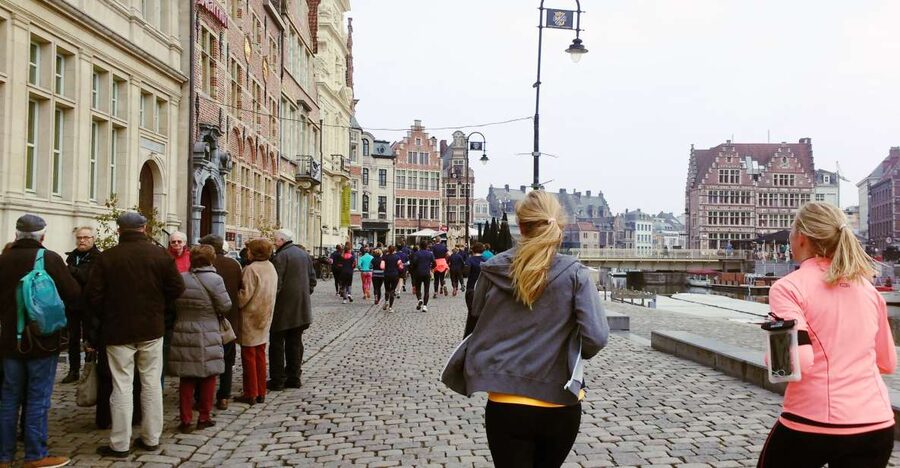
Waking up to Ghent can feel magical early. This 45-minute running and sightseeing tour lets you cover big sights fast, with photo stops and history explained in a way that actually sticks. I especially liked the easy pace that stays group-friendly, and the mix of famous towers plus lesser-seen streets. The main drawback is simple: this is still a run, so it is not a fit if you have back issues, mobility limits, or any pre-existing condition that makes light jogging risky.
You start at the Ghent Opera area and the city is just beginning to wake up. You run, you pause, you learn, and you keep moving, so you see more than a standard city-center walk without turning it into a workout bootcamp. Reviews also highlight that guides can tailor the tempo, and one traveler even clocked about 6 km, with the route paced perfectly for the group.
If you want a feel-good morning with real orientation in under an hour, this is a great bet. If you prefer all-sitting, fully accessible sightseeing, you may want to pick a walking option instead.
In This Review
- Key things you will notice on this Ghent run
- Starting at Ghent Opera, then easing into the morning
- Kouter to World Expo links, and why the start matters
- Korenlei and Graslei, the Middle Ages trade story
- Portus Ganda and Ghent’s birth connection
- Graffiti Street photo stop, and going beyond tourist lanes
- The three towers you cannot miss: St. Bavo, the Belfry, St. Nicholas
- Opera and Handelsbeurs, seeing why Ghent has personality
- Pace, distance, and what “leisurely run” really means
- Price and what you actually get for $53
- Practical tips so you feel good during the run
- Who this Ghent running tour suits best
- Should you book it? My straight answer
Key things you will notice on this Ghent run
- Start near the Ghent Opera (Kouter) so you get a smart entry point to the day
- Leisurely run with frequent stops, not a race, so sightseeing stays central
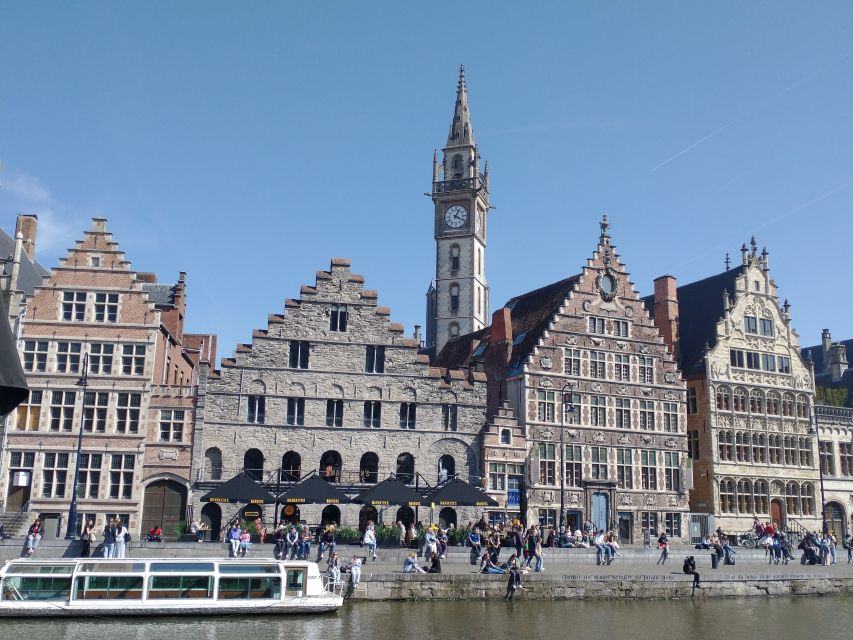
- Korenlei and Graslei get explained with the trade story from the Middle Ages
- Portus Ganda is used to connect the dots on Ghent’s origins
- Three landmark towers show up on the route, including St. Bavo Cathedral, the Ghent Belfry, and St. Nicholas Church
- Photo opportunities built into the stops, so you are not just jogging past views
Ghent keeps going, and so do we
- Ghent: 50-Minute Medieval Center Guided Boat Trip★ 4.5 · 5,637 reviews
- Historical Walking Tour: Legends of Gent★ 5.0 · 1,761 reviews
- Ghent: 40 Minute Medieval Center Guided Boat Tour★ 4.4 · 884 reviews
- Evening Tour of the Dark Side of Gent★ 5.0 · 646 reviews
Starting at Ghent Opera, then easing into the morning
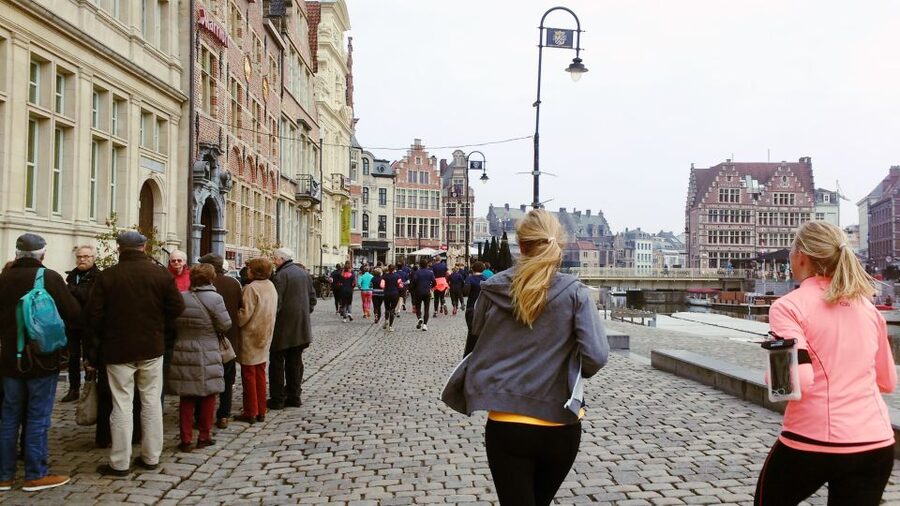
The meeting point is outside the main entrance of the Ghent Opera, near Kouter, the big square that anchors this part of the city. That matters because you are not hunting for a start point deep in the old streets. It is easy to find, and it gives you an immediate sense of where you are in the city.
Your guide welcomes you and does a brief warm-up before you head out. Then it is off at a leisurely jogging pace. You are not expected to sprint or compete. The plan is to keep you moving enough to cover ground, while still making time for the history stops that actually turn sights into context.
One practical note: you are told to bring sports shoes and sportswear. If you show up in stiff walking shoes, you will feel it once you switch into a run rhythm. Also, Belgium requires you to carry ID at all times, so bring your passport or ID card and you will avoid that last-minute scramble.
Kouter to World Expo links, and why the start matters
Kouter is your launchpad, and the guide uses the square to connect Ghent to a bigger story. You will stop there to learn how Kouter relates to the World Expo. Even if you only vaguely know the Expo story, hearing it framed where it happened changes how you see the space.
This is also where the tour’s whole vibe clicks. Early morning means quieter streets, softer light for photos, and fewer crowds. The tour is designed for that “before everyone else” feeling, so you get Ghent at the moment it turns on: people opening shops, small movements replacing the nighttime stillness.
For your planning, remember this is short. A 45-minute tour means you will not get a slow, wandering pace. Instead, it is fast orientation with stops that keep the key stories clear.
Korenlei and Graslei, the Middle Ages trade story
One of the most memorable parts is the riverside area at Korenlei and Graslei. The guide talks about trade there in the Middle Ages, and that is the kind of information that makes the place feel real, not just scenic.
Here is why this stop is worth your time. Ghent’s center can look like a postcard of old buildings, but the tour gives you the human engine behind it. Trade along the water helps you understand why certain streets, buildings, and vantage points mattered. Once you hear the story, you start spotting patterns as you move, rather than treating each view as random.
You also learn what to look for while you run. That is a big value in a quick tour. It is not just “see the river.” It is “see the river and understand the role it played,” so you carry that knowledge into the rest of your day.
Portus Ganda and Ghent’s birth connection
After you take in the river trade context, the tour brings in Portus Ganda and connects it to the birth of Ghent. This is one of those history threads that can sound abstract until you hear it framed around a real place.
The way this helps you as a visitor is that Ghent stops being only a medieval city center to browse. It becomes a city with an origin story tied to waterways and settlement patterns. Once you grasp the Portus Ganda link, you will likely notice more “why” behind the city layout when you walk around later.
Also, this stop is timed in the flow of the route, so you do not lose momentum. You learn, you get a quick reset, then you keep moving. That rhythm is what makes the tour feel more efficient than a typical walking loop.
Graffiti Street photo stop, and going beyond tourist lanes
A fun part of this route is the stop at Graffiti Street. You run through it, then pause for some cool picture moments. This is the tour’s way of showing you that Ghent is not stuck in the past. Street art and modern city expression sit right alongside historic architecture.
Why I like this in a sightseeing run: it gives you a change of texture. After towers and classic civic history, Graffiti Street breaks the pattern and makes your photos feel less generic. It also serves as a reminder that you are seeing Ghent as it is lived today.
Just keep in mind the tour includes running, so you should expect brief stops that are focused on landmarks and pictures, not long hangouts. If you want to linger, you will need to plan your own time after the tour.
The three towers you cannot miss: St. Bavo, the Belfry, St. Nicholas
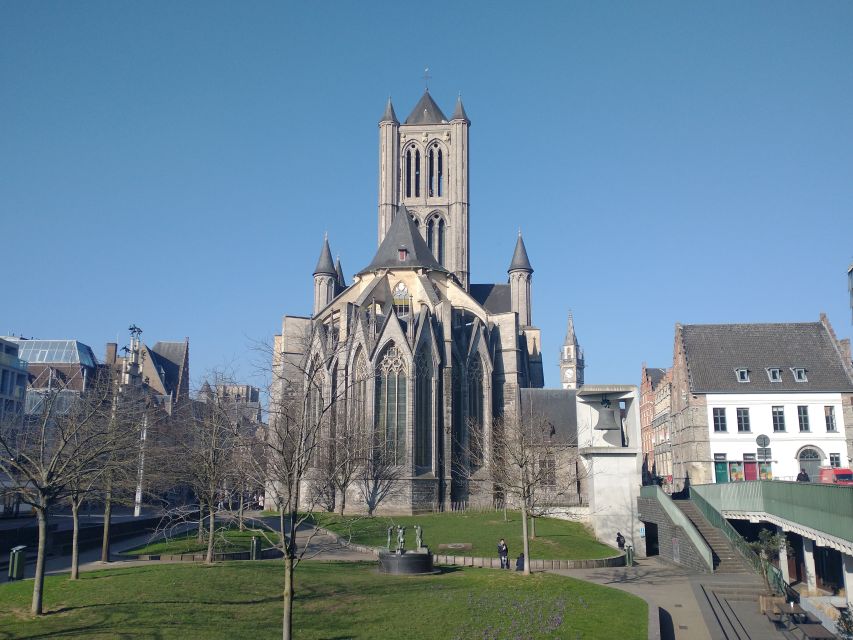
The big landmark section is built around three famous Ghent towers: St. Bavo Cathedral, the Ghent Belfry, and St. Nicholas Church. If you are new to Ghent, this is a smart concentration of “go see that” structures into a single short outing.
Here is what you gain from hitting all three in one go:
- St. Bavo Cathedral helps you connect to Ghent’s major religious and cultural identity.
- The Ghent Belfry is the civic statement. You start to see how Ghent expressed power and pride through its skyline.
- St. Nicholas Church rounds out the picture, so the city reads as more than one story.
The tour stops at each tower to explain context, but you are still running between points. That balance is important for value. In one morning you can get a mental map of where the skyline landmarks sit relative to each other. Later, when you return on your own, you will understand why they belong together.
One caution: towers and church areas often mean you will be on your feet a lot, standing around for photos and views. Bring shoes with grip and give yourself a little patience, especially if it is slick outside.
Opera and Handelsbeurs, seeing why Ghent has personality
The tour also covers the importance of the Opera and the Handelsbeurs area. These stops are useful because they add another layer to Ghent’s identity. Yes, Ghent has medieval roots. But it also has a city that grew into modern civic life and cultural expression.
When you hear about the Opera in its local context, you start to understand why this area is such a natural starting point at Kouter. And when Handelsbeurs comes up, the story helps you read the city’s architecture as intentional, not random.
This matters if you like to explore with understanding. After this tour, you should feel more confident walking around and spotting connections, not just chasing iconic buildings.
Pace, distance, and what “leisurely run” really means
This tour is a leisurely run or jog. That wording is not marketing fluff. The guide adjusts the pace to the group, with regular stops at landmarks. That means your progress comes in bursts, not in a constant sprint.
A traveler mentioned walking off with about 6 km after the tour, and the key point was that the guide adjusted the run to the group rather than forcing a single pace. That is exactly what you want if you are middle-of-the-road on fitness.
Still, be honest with yourself. If you cannot comfortably jog for short stretches, this may feel like more effort than you want. The tour is short, but it is not fully sedentary.
If you are deciding between this and a walking tour, think about your goal:
- Want orientation and quick energy, and you can jog lightly, this makes sense.
- Want slow strolling with minimal impact, you may prefer a walking option.
Price and what you actually get for $53
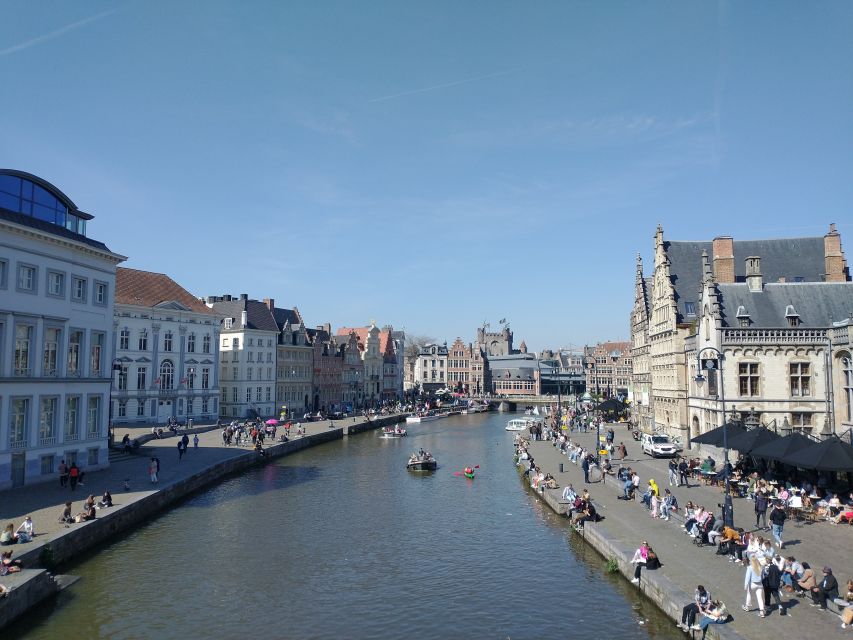
At $53 per person for a 45-minute guided experience, you are paying for more than movement. You are paying for a local guide who connects landmark sightseeing to specific historical threads, plus the built-in photo stops that help you capture the moments.
What is included also raises the value:
- A personal local tour guide
- Sightseeing of Ghent landmarks
- Discovery of non-touristy spots
- Photo opportunities
- Ghent history explained on the route
What is not included is pretty standard for this type of activity: water and snacks. I recommend bringing water anyway. Not because you are running a marathon, but because a short morning effort plus standing and listening can still make you thirsty.
Also, English is the guide language. If you prefer English explanations, this removes one layer of friction, especially when discussing historical details like Korenlei and Graslei trade or the Portus Ganda connection.
Practical tips so you feel good during the run
Before you go, do a small prep check and you will have a smoother tour.
- Wear sports shoes. If you only have casual sneakers, use them only if they have good grip.
- Bring sportswear. The activity expects you to move.
- Carry ID. Belgium requires ID at all times.
- Bring your photo-ready mindset, the tour is designed around picture stops.
- Plan not to record audio. Audio recording is not allowed.
If you are sensitive to crowds or noise early in the day, this is still usually a calmer experience than later sightseeing. The tour is also designed around city waking-up energy, which makes the whole run feel lighter.
Who this Ghent running tour suits best
This tour seems best for you if you want:
- A quick introduction to Ghent before a bigger day of exploring
- Landmark concentration without spending hours walking
- A guide who explains history in small, stop-by-stop pieces
- A morning that feels upbeat and active, without being competitive
It is not suitable for pregnant women, people with back problems, people with mobility impairments, children under 18, or anyone with pre-existing medical conditions. If that includes you, respect that limit and choose a different tour format.
Also, this is for people who can handle a guided activity on foot. It is not a sit-and-watch option.
Should you book it? My straight answer
Book this Ghent Running and Sightseeing Tour if you want an efficient, feel-good way to learn the city while still getting a little movement. The combination of Kouter, river stories at Korenlei and Graslei, the Portus Ganda origin link, Graffiti Street photo time, and the three tower stops makes the 45 minutes feel packed with meaning, not just motion.
Skip it if jogging is not your comfort zone, or if you want a fully accessible, low-impact sightseeing day. The price is fair for what you get, but it only makes sense if you can participate in the running style of the experience.
If you are planning your first morning in Ghent, this is the kind of tour that helps you get your bearings fast, then gives you the confidence to wander the rest of the day with better context.
More Belgian Tours
Every Belgium Review
Ghent, Continued
Newer Belgium reviews from the same corner of the country
- Ghent Walking Tour – City Highlights and Beyond Tradition
★ 4.5 · 3 reviews - Ghent: City Walk with Audio Guide in 7 Languages on your Phone
★ 4.5 · 3 reviews - Children’s escape game in the city of Ghent Marsupilami
★ 5.0 · 3 reviews - Ghent Running and Sightseeing Tour
★ 5.0 · 3 reviews - Ghent: Walking Tour from Friday Market to the Cathedral
★ 4.8 · 3 reviews
Ghent Tours, side by side.
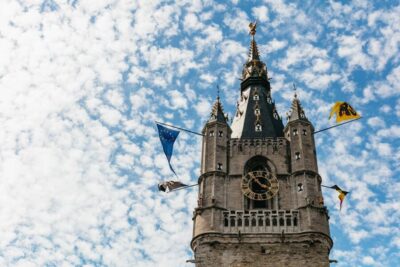 ★ 4.6From Brussels: Guided Day Trip to Bruges and GhentFrom $558,353 reviews
 ★ 4.7From Brussels: Bruges & Ghent Day Tour – 2 Fairytale CitiesFrom $578,242 reviews
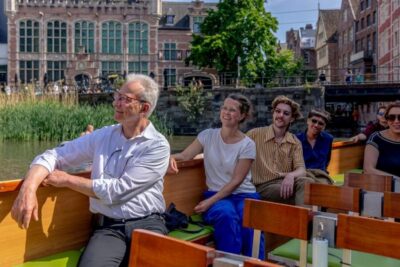 ★ 4.5Ghent: 50-Minute Medieval Center Guided Boat TripFrom $125,637 reviews
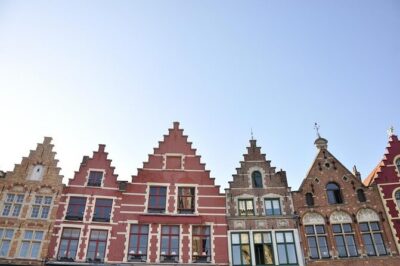 ★ 4.0Bruges and Ghent – Belgium’s Fairytale Cities – from BrusselsFrom $594,809 reviews
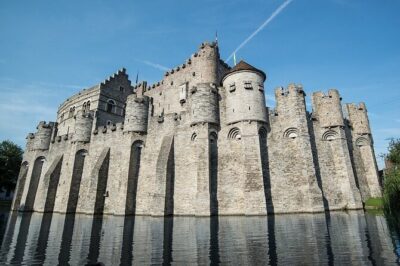 ★ 5.0Historical Walking Tour: Legends of GentFrom $31,761 reviews
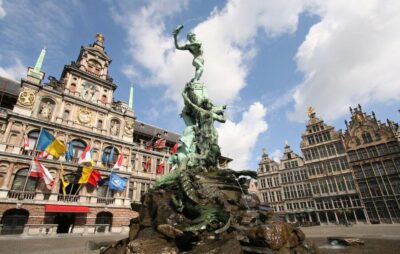 ★ 4.6From Brussels: Full-Day Antwerp and Ghent Guided TourFrom $571,019 reviews
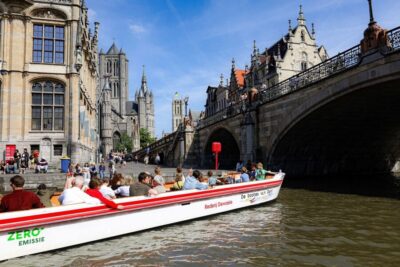 ★ 4.4Ghent: 40 Minute Medieval Center Guided Boat TourFrom $12884 reviews
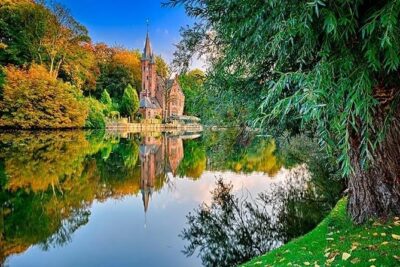 ★ 4.5Bruges and Ghent Day Trip from BrusselsFrom $56784 reviews
Browse the lists this tour appears in