
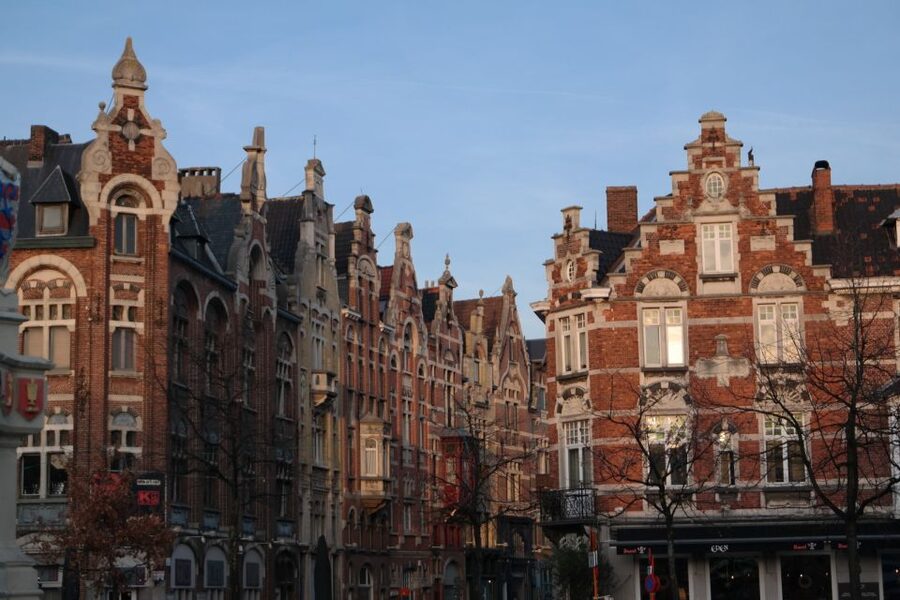
REVIEW · GHENT
Ghent: Walking Tour from Friday Market to the Cathedral
Ghent rewards quick planning, especially from a great starting point. This private tour strings together the Friday Market and St-Bavo’s cathedral, plus a walk through Patershol and the old Fish Market. You also get bus sights like the Millionaires’ Quarter, the Parliament buildings, and the Art Nouveau and Art Deco streets.
What I like most is the way the route builds to the skyline view of Ghent’s three towers, then turns into real art time at St-Bavo’s. The other big win is seeing the Mystic Lamb by Jan Van Eyck inside the cathedral, instead of just hearing the name in passing. One consideration: it is 150 minutes, so you will move at a brisk pace, and entrance fees are not included.
In This Review
- Quick reasons this Ghent tour is a smart use of 150 minutes
- Starting in the right spot: Saint-Jacobskerk and the coach drop-off
- The bus segment that sets the scene: Millionaires’ Quarter to Art Nouveau streets
- 1913 renovations and Count’s Castle: why Ghent looks polished in places
- Walking the core from Woodrow Wilson square into historic Ghent
- Belfry and Town Hall: civic Ghent at walking speed
- Friday Market, Patershol, and the canal-side vibe you came for
- Old harbor viewpoints: St. Michael’s church and the famous three towers
- St-Bavo’s cathedral: Jan Van Eyck’s Mystic Lamb and Rubens paintings
- European Parliament buildings: Commission and Council in the city mix
- Time, pace, and group size: what $388 per group really means
- Who this tour suits best
- Should you book this Ghent walking tour from Friday Market to the Cathedral?
- FAQ
- How long is the Ghent walking tour?
- Where does the tour meet?
- Is this a private group?
- What is included in the tour?
- What is not included?
- What languages are available for the live guide?
Quick reasons this Ghent tour is a smart use of 150 minutes
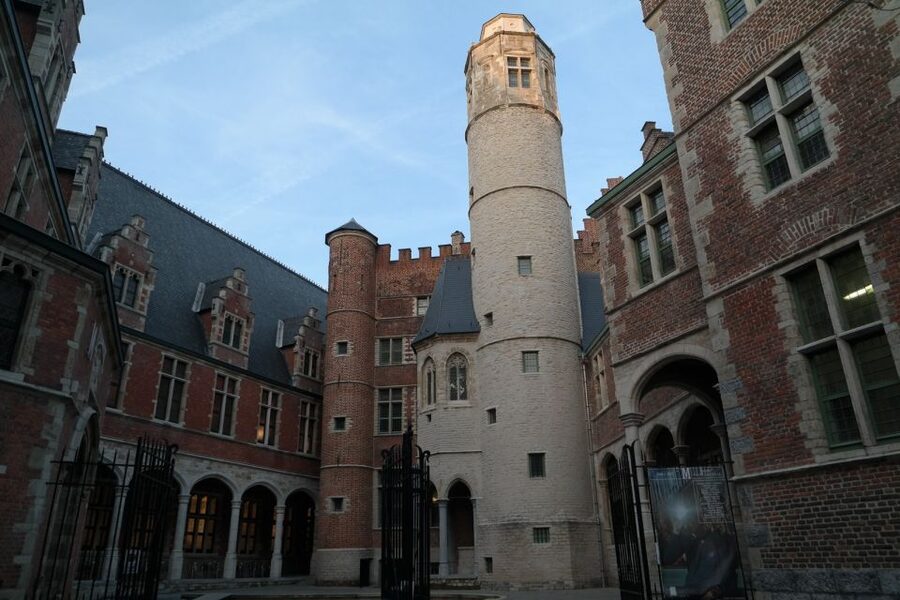
- Three-towers viewpoints in one loop, including the old harbor view toward St. Michael’s church
- St-Bavo’s cathedral with Jan Van Eyck and Peter Paul Rubens, not just exterior photo stops
- Friday Market, Patershol, and the old Fish Market, so you get both shopping streets and canal-side corners
- Bus intro sights that set context fast, like the Millionaires’ Quarter and the Parliament area
- A guide who points you to food and drink ideas, including chocolate, waffles, beer, restaurants, bars, and museums
- Multilingual live guide, available in Dutch, English, French, and German
Ghent keeps going, and so do we
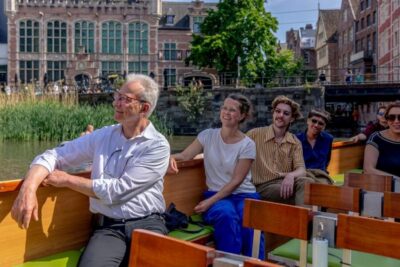
- Ghent: 50-Minute Medieval Center Guided Boat Trip★ 4.5 · 5,637 reviews
- Historical Walking Tour: Legends of Gent★ 5.0 · 1,761 reviews
- Ghent: 40 Minute Medieval Center Guided Boat Tour★ 4.4 · 884 reviews
- Evening Tour of the Dark Side of Gent★ 5.0 · 646 reviews
Starting in the right spot: Saint-Jacobskerk and the coach drop-off
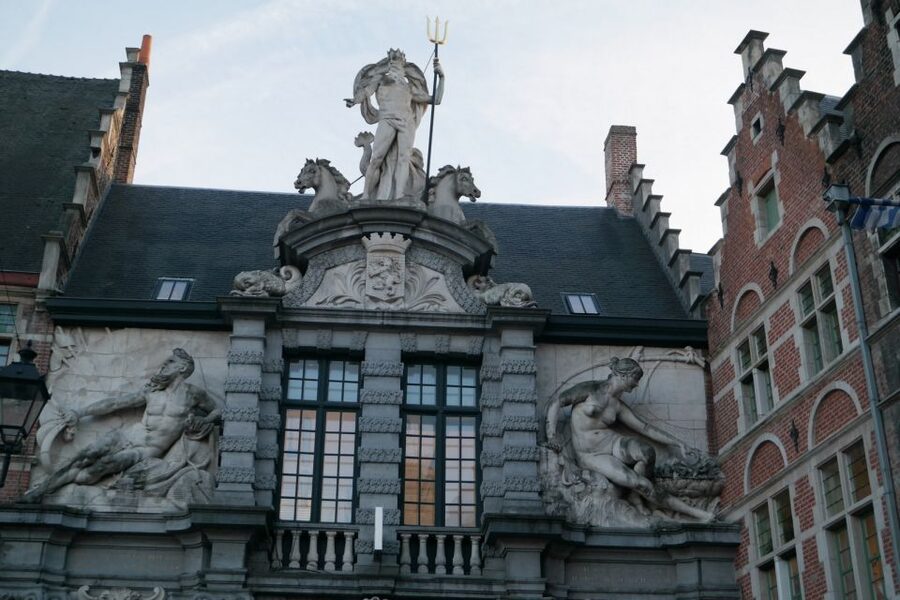
The meeting point is Saint-Jacobskerk, in Dutch Sint-Jakobskerk. The practical part: it is where you can leave the coach, so the whole group stays organized from the start. This matters more than it sounds. Ghent’s center is a mix of canals, bridges, and narrow streets, and an organized start helps you avoid wasted time hunting for the right meeting corner.
From there, the tour uses a bus segment plus a walking segment. That blend is a big reason the experience works for limited time. You get the broad “map view” of the city, then you zoom in on the historic core on foot.
The bus segment that sets the scene: Millionaires’ Quarter to Art Nouveau streets
Before the main walking starts, you will see a handful of Ghent landmarks that make the center feel less random. The route includes the Millionaires’ Quarter and St. Peter’s station, then runs by avenues with Art Nouveau and Art Deco exteriors. You also pass St. Peter’s square, with St. Peter’s church and Vooruit.
If you are the type who likes your photos to mean something, this intro helps. Ghent is not only medieval stone and church towers. It also has a modern European-city side, and these stops show how the city grew into the 1900s.
You will also hear about the socialist trade union building, and you will connect it to the larger story of how Ghent organized itself socially and politically. I like that the tour does not treat these sites as just backdrops. It gives you a reason they are there.
1913 renovations and Count’s Castle: why Ghent looks polished in places
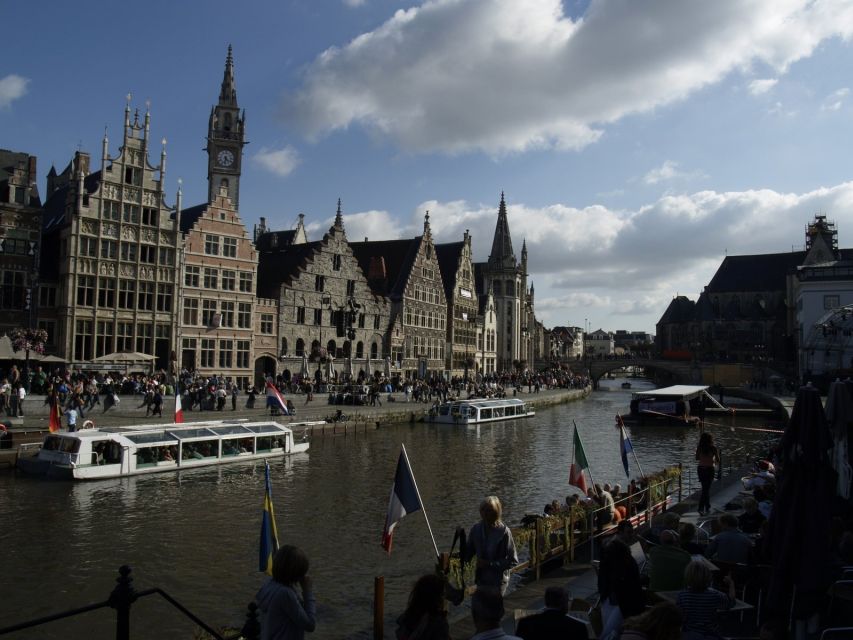
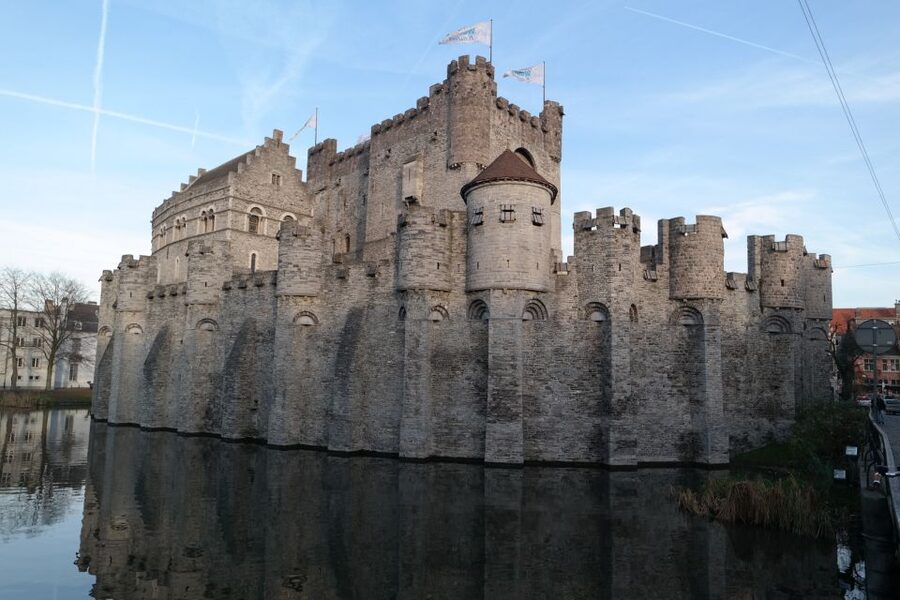
One of the more interesting context points is the universal exhibition planning around 1913. Ghent renovated squares and buildings in preparation, including the 1000-year-old Count’s Castle. Even if you are not an architecture nerd, this helps you notice something: some of what looks “old” in Ghent also has layers of later restoration.
It is a good way to avoid the common trap of thinking everything you see is medieval. Ghent’s identity is historical and contemporary at the same time, and that renovation story explains why you will spot different building styles standing next to each other.
Walking the core from Woodrow Wilson square into historic Ghent
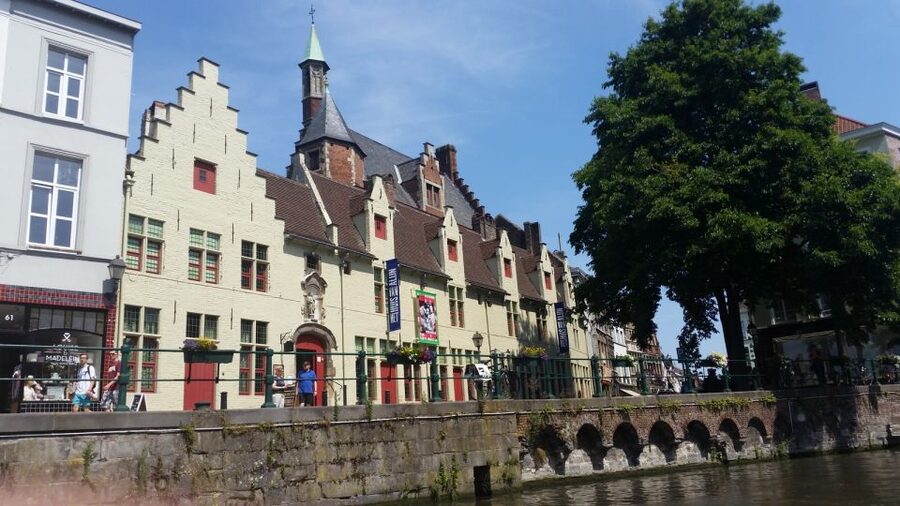
The walk in the old town center begins at Woodrow Wilson square. From there, you move into streets and canal corners that feel made for slow looking. Ghent is crossed by canals and two rivers, Scheldt and Leie. When you are on foot, you start to understand how water shapes the city’s layout and views.
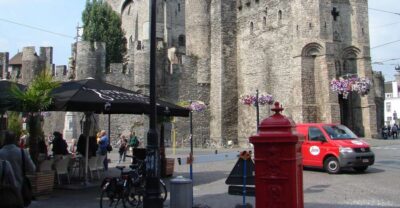
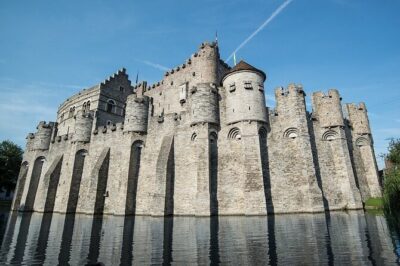
You will see the fortress Gerard de Duivelsteen and then head toward St-Bavo’s cathedral. The fortress stop gives you a quick “Ghent defense and power” anchor. It is the kind of building that makes the medieval part of the city feel real, not just decorative.
From here, the day turns toward the big civic and landmark buildings.
Belgium reads best on foot, here is more of it
Belfry and Town Hall: civic Ghent at walking speed
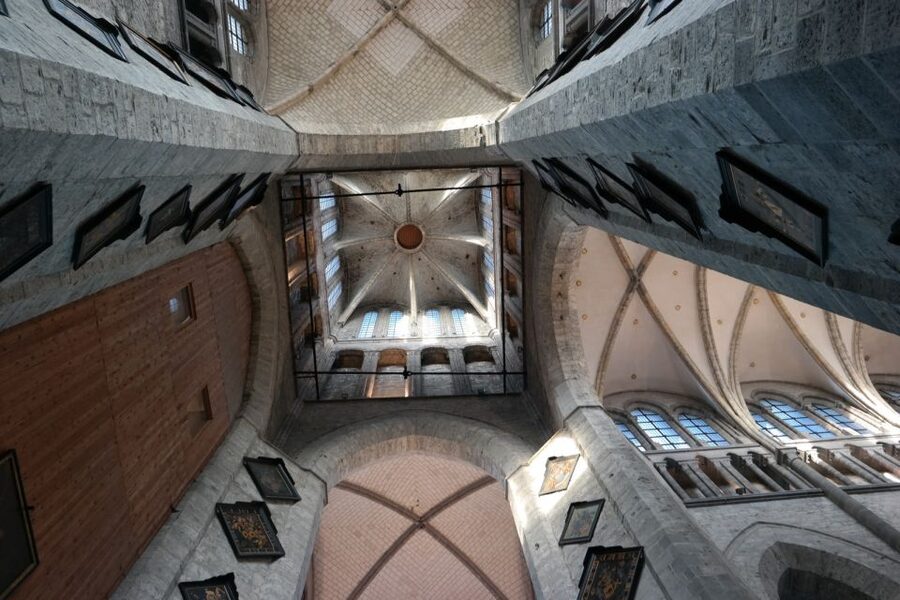
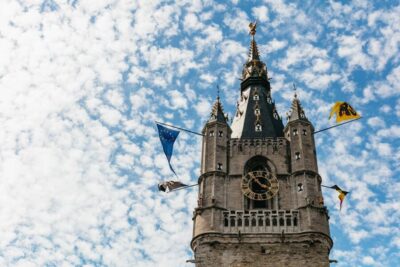
This tour’s approach to Ghent’s famous structures is practical. You see the Belfry and the Town Hall as part of the flow, not as distant “please climb this hill” missions. That matters because Ghent’s center rewards repetition. When you get the key landmarks in a logical order, you start to piece together the city’s layout in your head.
Then you hit two market areas that are easy to enjoy even with limited time:
- the Friday market
- the old Fish Market
These spots are where Ghent feels local and working. The Friday Market gives you a classic scene of daily commerce, while the Fish Market helps you understand how the city used water and trade to thrive. In other words, you get the economic logic behind the beauty.
Friday Market, Patershol, and the canal-side vibe you came for
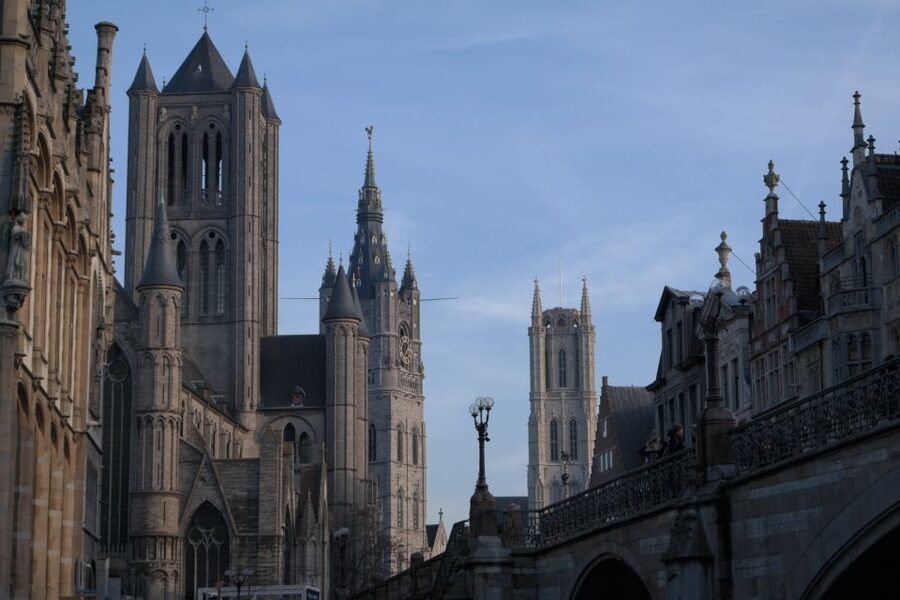
Patershol is a highlight for a reason. It is a picturesque area you can actually experience on foot, with the kind of street-and-canal feel that makes Ghent photos look better than your average city snapshot.
This is where the tour’s pacing pays off. The market buildings and nearby corners are close enough that you can keep moving without missing the mood shifts: civic power, trade spaces, then a more intimate canal neighborhood feel.
And since the tour includes lots of recommendations to enjoy chocolate, waffles, beer, restaurants, bars, and museums, you can turn these stops into a real plan for your evening. I like that the guide does not just rattle off names. The guidance gives you options tied to what you are seeing.
Old harbor viewpoints: St. Michael’s church and the famous three towers
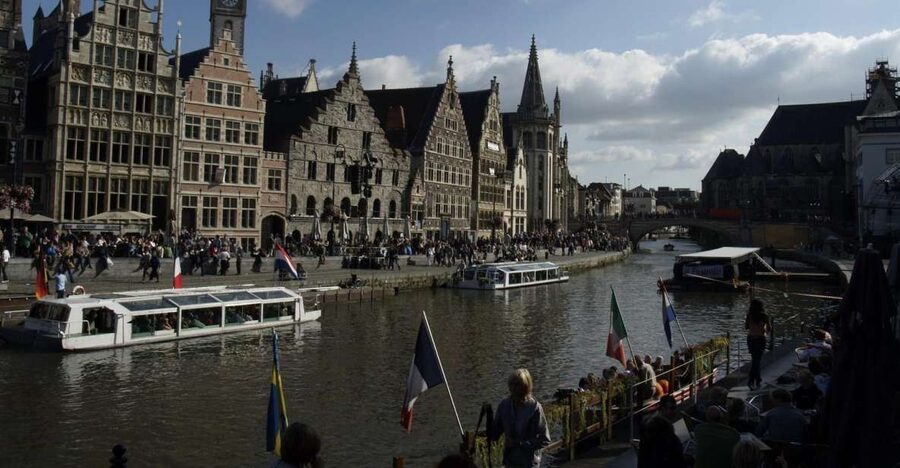
The walk finishes with one of Ghent’s strongest visual rewards: the old harbor. This is where you get the finest views of St. Michael’s church. More importantly, the harbor area sets up the skyline moment the tour is known for.
You will view Ghent’s famous three towers:
- the tower of St. Nicholas’ church
- the Belfry
- the tower of St. Bavo’s cathedral
That three-tower lineup is the kind of sight that changes your mental map of the city. Instead of seeing random church towers, you see how Ghent “composes” its skyline around major landmarks. If you like architecture but hate museum lines, this is a nice trade. You get the payoff outdoors.
St-Bavo’s cathedral: Jan Van Eyck’s Mystic Lamb and Rubens paintings
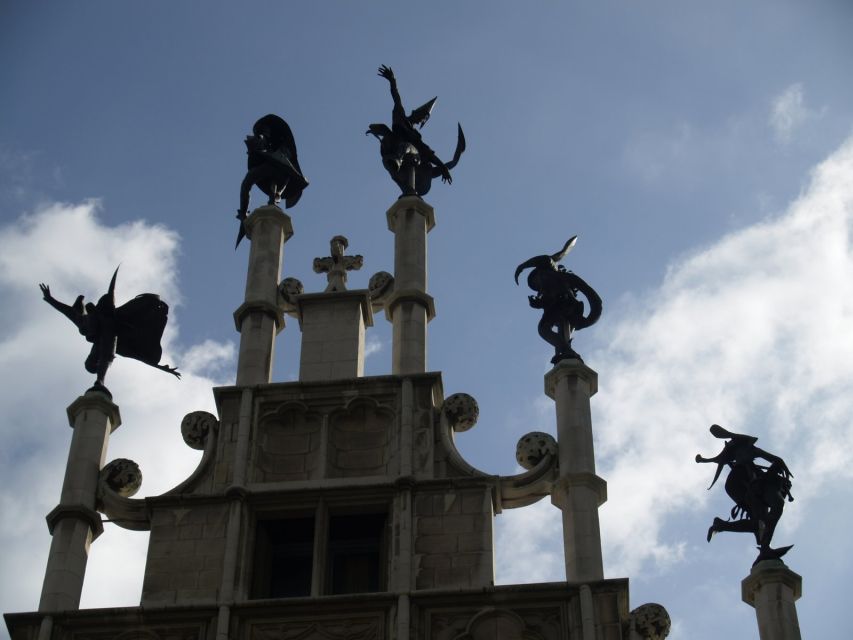
Now for the art stop you do not want to rush. St-Bavo’s cathedral houses paintings by Jan Van Eyck and Peter Paul Rubens. The tour specifically points you to the Mystic Lamb by Jan Van Eyck. This is the moment when the tour stops being a walk through streets and becomes a walk through major European art.
Why it is valuable: Ghent is famous for art, but it is easy to spend a day “around” art and not really see it. Here, the cathedral visit is part of the core route, so you get a concentrated experience that feels worth the time.
One practical note: entrance fees are not included, so you may want to budget for any ticketing that applies when you are inside. Also, because the tour is 150 minutes total, keep your expectations realistic. You will see the key sights and move on. Plan to come back later if you want longer study time.
European Parliament buildings: Commission and Council in the city mix
Between the medieval core and the big cathedral moment, you also learn about the buildings of the European Parliament, including the Commission and Council. That contrast is part of why this tour feels contemporary even though you are focused on the historic center.
If you only ever visit old town centers, Ghent can start to feel like a theme park of stone and towers. The Parliament-area knowledge keeps it grounded. It reminds you that Ghent is also an active hub in modern Europe.
Time, pace, and group size: what $388 per group really means
Price is listed as $388 per group, up to 20 people, for 150 minutes. Because it is a private group, you are not stuck with strangers and you get a live guide during your time window.
The value math depends on how full your group is:
- If you fill close to 20 people, the cost per person drops a lot.
- If you travel as a smaller group, it costs more per person, but you gain comfort and flexibility.
Either way, you are paying for the structure: bus orientation, a curated walking loop, and multilingual guiding in Dutch, English, French, and German. The “included” part matters too. You also get recommendations for food and museums, which can save you hours of planning and help you eat better than you would by guessing.
Not included: entrance fees, tastings, and lunch. So if you want tastings or a long meal, you will need to add that yourself.
Who this tour suits best
This works well if you want:
- a tight 2.5 hour plan that hits big Ghent landmarks
- an art stop that focuses on specific masters at St-Bavo’s
- skyline views without a long climb or complicated logistics
- a guide who can explain what you are seeing in multiple languages
It is especially good for first-time visitors who need an efficient orientation, and it is also good for return visitors who want a sharper route through the same top sights.
Should you book this Ghent walking tour from Friday Market to the Cathedral?
Yes, if you want a guided loop that connects Ghent’s civic core, markets, canal neighborhoods, and the big art stop at St-Bavo’s, all within 150 minutes. I also think it is a strong choice when your group wants a private format, since the price is per group and up to 20 people can share it.
I would pause and reconsider only if you want a long, unhurried cathedral visit, or if you expect entrance fees and tastings to be included. With this tour, the goal is smart coverage and clear storytelling, not a slow, museum-style day.
If you do book it, wear comfortable shoes and plan to use the guide’s food and museum recommendations right after the tour. That is where the “walking tour” turns into a full Ghent day.
FAQ
How long is the Ghent walking tour?
The duration is 150 minutes.
Where does the tour meet?
The meeting point is Saint-Jacobskerk (Sint-Jakobskerk), where guests can leave the coach.
Is this a private group?
Yes. It is a private group, up to 20 people.
What is included in the tour?
The tour includes recommendations for chocolate, waffles, beer, restaurants, bars, and museums, plus a live tour guide.
What is not included?
Entrance fees, tastings, and lunch are not included.
What languages are available for the live guide?
The guide is available in Dutch, English, French, and German.
More Belgian Tours
Every Belgium Review
Ghent, Continued
Newer Belgium reviews from the same corner of the country
- Ghent Walking Tour – City Highlights and Beyond Tradition
★ 4.5 · 3 reviews - Ghent: City Walk with Audio Guide in 7 Languages on your Phone
★ 4.5 · 3 reviews - Children’s escape game in the city of Ghent Marsupilami
★ 5.0 · 3 reviews - Ghent Running and Sightseeing Tour
★ 5.0 · 3 reviews - Ghent: Walking Tour from Friday Market to the Cathedral
★ 4.8 · 3 reviews
Ghent Tours, side by side.
 ★ 4.6From Brussels: Guided Day Trip to Bruges and GhentFrom $558,353 reviews
 ★ 4.7From Brussels: Bruges & Ghent Day Tour – 2 Fairytale CitiesFrom $578,242 reviews
 ★ 4.5Ghent: 50-Minute Medieval Center Guided Boat TripFrom $125,637 reviews
 ★ 4.0Bruges and Ghent – Belgium’s Fairytale Cities – from BrusselsFrom $594,809 reviews
 ★ 5.0Historical Walking Tour: Legends of GentFrom $31,761 reviews
 ★ 4.6From Brussels: Full-Day Antwerp and Ghent Guided TourFrom $571,019 reviews
 ★ 4.4Ghent: 40 Minute Medieval Center Guided Boat TourFrom $12884 reviews
 ★ 4.5Bruges and Ghent Day Trip from BrusselsFrom $56784 reviews
Browse the lists this tour appears in