
REVIEW · BRUGES
Australian Battlefields Private Tour in Flanders from Bruges
World War I feels close here. This day trip links Australian WWI sites in Flanders with quiet cemeteries, major memorials, and the emotional weight of the Menin Gate Last Post ceremony. I especially love how the driver-guide, Claude, brings the geography to life, not just the dates.
Two things I really liked are the small, private feel (you are not crammed into a tour stampede), and the mix of stops that range from museums to open-air memorial parks. The lunch break at Brothers in Arms is also a welcome reset on a long day. One possible drawback: it is a full 12-hour day, and much of it is outdoors, so you will want warm layers and comfortable shoes.
In This Review
- Key things that make this tour work
- Why Flanders is the right place for an Australian WWI day trip
- The 9:00 am to late afternoon reality: a full 12-hour circuit
- Fromelles Museum: where the story starts with names and evidence
- Pheasant Wood and the cemetery pauses that make you look twice
- Australian Memorial Park, VC Corner, and Rue Pettilon: orienting yourself in the lines
- The drive through Armentières and the human textures in a heavy day
- Ploegsteert and Hill 63 area: battlefield context without the museum walls
- Messines Ridge: June 1917 and the feeling of holding and striking
- Hill 60 and the Caterpillar Mine Crater: seeing the earth changes
- Polygon Wood and the ANZAC Day dawn service tradition
- Passchendaele Museum and Tyne Cot: big scale, heavy emotion
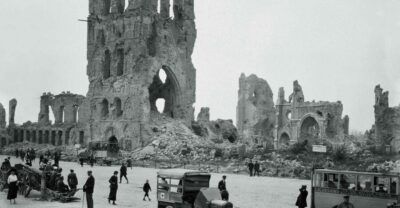
- Ypres Cloth Hall and time in town before the ceremony
- Menin Gate Last Post: the emotional payoff
- Price and value: is $545.94 per person a smart buy?
- Who this tour fits best
- Should you book the Australian Battlefields private tour from Bruges?
- FAQ
- What time does the tour start?
- How long is the Australian Battlefields Private Tour in Flanders?
- Where does the tour take place?
- Does the tour include hotel pickup and drop-off?
- Is lunch included?
- Are museum and site entrance fees included?
- Is this a private tour?
- Is bottled water provided?
- What is included and not included regarding meals and drinks?
- What is the cancellation policy?
Key things that make this tour work
- Claude’s on-the-ground explanations make the battlefield layout make sense fast
- Menin Gate Last Post gives a powerful finish to the day
- A tight route through major Australian-linked sites in a single circuit
- Lunch and key admission fees included, so you are not constantly digging for extras
- Multiple cemeteries and memorial parks where you can orient yourself in the terrain
Bruges again, from a different angle
- Bruges: Small Group Boat Cruise and Guided Walking Tour★ 4.8 · 4,102 reviews
- Bruges: Walking Tour, Canal Boat Trip w/Beer Tasting Option★ 4.4 · 2,759 reviews
- Historical Walking Tour: Legends of Bruges★ 5.0 · 2,541 reviews
- Bruges: Choco-Story Chocolate Museum Guided Tour w/Tastings★ 4.2 · 1,379 reviews
Why Flanders is the right place for an Australian WWI day trip
If you are looking for Australian World War I history that is more than names on a page, Flanders delivers. This region is where Australians fought, held lines, dug, attacked, and paid a very high price. The best part of doing it by guided tour is that you are not left guessing what you are looking at.
What I like most is the way the day connects the bigger turning points to human-scale places. You start with a focused museum stop, then you move into burial grounds and memorial parks where the terrain is part of the story. And then, at the end, you return to Ypres and stand at Menin Gate for the Last Post, which lands differently after you have spent the day seeing what these places mean.
The 9:00 am to late afternoon reality: a full 12-hour circuit
This tour starts at 9:00 am with pickup from your hotel in Bruges, and it runs for about 12 hours. You ride in an air-conditioned minivan, with bottled water included. In practice, that means you get long-distance comfort without the stress of renting a car and learning unfamiliar roads.
The schedule is packed, but it is not a nonstop sprint. Each major stop includes a set amount of time, giving you enough minutes to read the key information and pause for photos without feeling rushed every five minutes. Still, you should assume a lot of standing and walking on uneven ground, especially around cemeteries and memorial areas.
If you get cold easily, plan for it. One of the most repeated themes from real-world feedback is that the day can be chilly, and you will appreciate being able to layer up without turning your sightseeing into an endurance event.
Fromelles Museum: where the story starts with names and evidence

Your first major stop is the Museum of the Battle of Fromelles. This is the kind of place that helps you understand why later sites feel so specific. You spend about 45 minutes inside, with admission included, and you leave with a clearer picture of the Battle of Fromelles and the later exhumation and reburial of soldiers.
This museum stop matters because it sets expectations. Without that context, the next cemetery pauses can feel like background scenery. With it, you recognize what you are seeing and why people rebuilt these locations into places of remembrance.
Pheasant Wood and the cemetery pauses that make you look twice
After Fromelles, you move into a sequence of cemetery and memorial stops that are short, reflective, and very grounded. Pheasant Wood Military Cemetery is one of the first, with about 30 minutes there, and admission is free.
I love these cemetery stops because they force you to slow down. You can look for names, take in the order of graves, and start to connect the written history to physical locations. The guide’s job here is huge. When Claude talks through the battlefield layout, you start to see how the ground shaped movement, defense, and attack.
Other Flanders Fields and Ypres Salient tours we have reviewed

Australian Memorial Park, VC Corner, and Rue Pettilon: orienting yourself in the lines
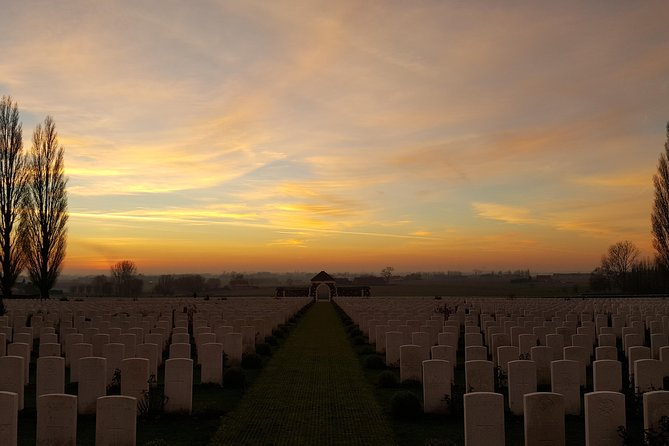
Next comes Australian Memorial Park, then VC Corner Australian Cemetery, and then Rue Pettilon Military Cemetery. Each gets around 30 minutes, and all admissions are free.
A few details make these stops especially meaningful:
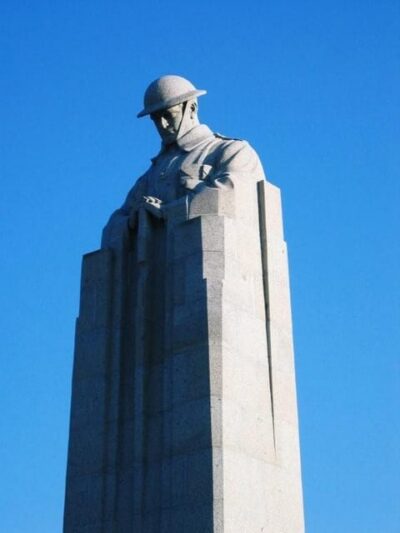
- At Australian Memorial Park, you stand facing the direction of no mans land and the Australian attack on 19 July 1916. Even without special equipment, that directional viewpoint helps you picture how assaults had to be launched into exposed ground.
- VC Corner is the only exclusive Australian cemetery in France. That matters because you are not just visiting a burial ground, you are standing in a place set aside specifically for Australian remembrance.
- Rue Pettilon Military Cemetery is another important resting place for Australian soldiers. Even with brief time here, you can still read, reflect, and understand that the war is stored in many locations, not just one famous memorial.
One practical tip: for cemeteries and memorial parks, give yourself a little time to read at least one section fully. With constant to-and-fro movement, it is easy to skim. These stops reward patience.
The drive through Armentières and the human textures in a heavy day
Between the major battlefield sites, you also travel through the region and pass key areas tied to the wider local story. You will drive through Armentières and see where the pub connected to Mlle from Armentières was.
That kind of stop is not about WWI tactics. It is about remembering that the war happened in towns and streets that kept going, even when the ground nearby turned deadly. It helps you reset from the technical battlefield details back into a sense of everyday life.
Ploegsteert and Hill 63 area: battlefield context without the museum walls
You will also pass near Ploegsteert Memorial and Hill 63. This is a classic reminder that not all battlefield learning happens inside buildings.
What you gain here is orientation. By the time you reach later stops like Messines and Hill 60, you are already thinking like the soldiers did: lines, ridges, and the tactical importance of specific ground features.
If your interest is strongly battlefield-focused, this “on the way” framing is valuable. It helps you understand why certain places get so much attention later in the day.
Messines Ridge: June 1917 and the feeling of holding and striking
Messines Ridge is next, with about 30 minutes spent on site and no admission cost. Standing here with a guide can help you understand why ridges mattered so much in WWI. Higher ground gave observation, shaping, and defensive leverage. It also created targets.
The tour keeps building momentum. By the time you are moving from one Australian-linked point to the next, the theme becomes clearer: actions were connected, not isolated. The guide’s explanations are what make that connection stick.
Hill 60 and the Caterpillar Mine Crater: seeing the earth changes
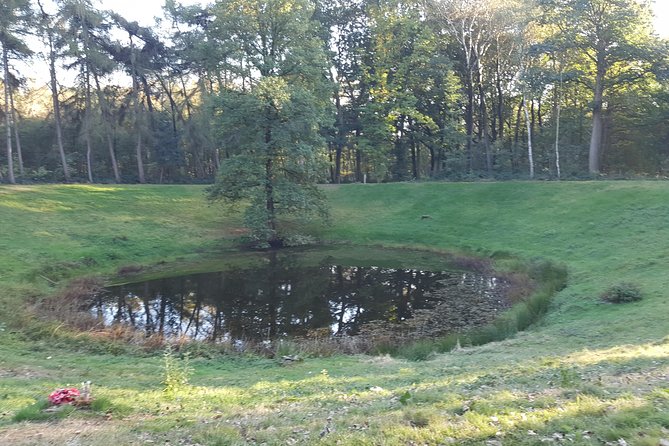
Hill 60 is a highlight if you like tangible battlefield features. You get about 45 minutes here, and admission is free. The tour focuses on where the Caterpillar Mine Crater is found, plus a memorial dedicated to the 1st Australian Cie.
This is one of those “how did humans do this” moments. Instead of relying only on text descriptions, you can look at the crater area and connect it to what mining and tunnelling meant in real terms. You are also seeing memorialization tied to the tunnelling effort, which is a key part of the Australian story in this region.
If you enjoy details, this stop rewards quiet observation. Take a minute to look at the area from multiple viewpoints, then let Claude’s explanation anchor what you are seeing.
Polygon Wood and the ANZAC Day dawn service tradition
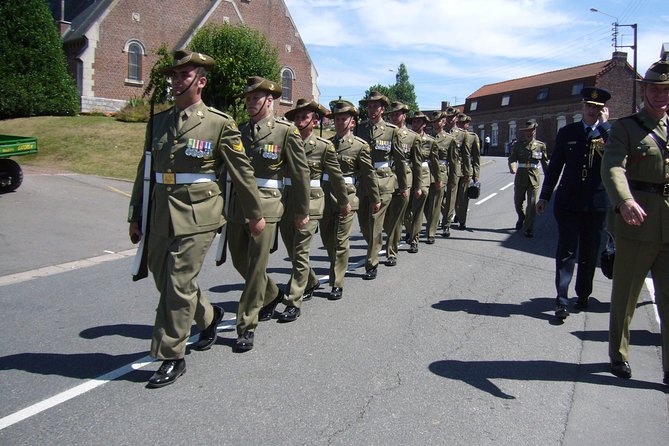
At Battle of Polygon Wood, you visit the Memorial to the 5th Australian Division and the NZ Memorial. This stop also includes the famous connection to the ANZAC Day dawn service, where people gather there.
You get about 30 minutes here, no admission required. Even if you do not attend the dawn service yourself, it helps to know that this site is used for living remembrance. The memorials turn the location into more than a historical stop. You are part of a continuum of people showing up to mark the day.
If you are photographing, be mindful that this is a remembrance place. Keep your time efficient and respectful, and prioritize reading the memorial text.
Passchendaele Museum and Tyne Cot: big scale, heavy emotion
Passchendaele Museum is one of the longer indoor stops, with about 1 hour and admission included. The tour positions it as the most interesting WWI museum in Belgium, and it functions as a bridge between the battlefield walk-throughs and the large cemetery sites that follow.
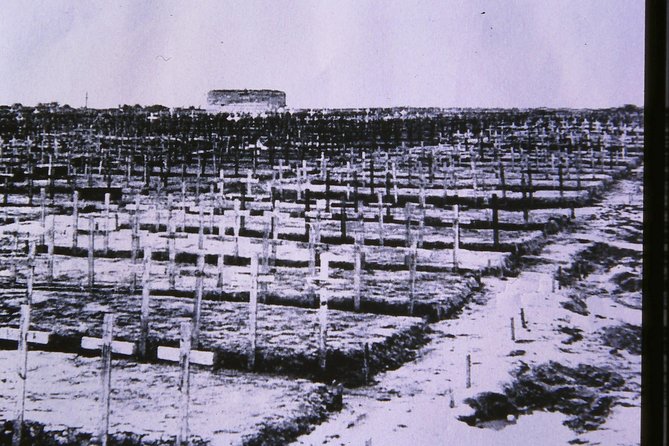
Then you head to Tyne Cot Cemetery. This is one of the most significant CWGC cemeteries you can visit, and it includes a memorial bearing the names of 35,000 soldiers who have no known grave. You spend about 30 minutes here.
I like Tyne Cot because it gives you perspective. It is easy to think of WWI losses as a single battlefield event. Tyne Cot makes you see the scale, then brings you back to the reality that every name represents a family story.
If you are easily overwhelmed, give yourself permission to stand still longer than the time on paper suggests. These sites are meant to be felt, not rushed.
Ypres Cloth Hall and time in town before the ceremony
After the major battlefield and cemetery moments, the tour includes time in Ypres, with Ypres Cloth Hall and the Cathedral area plus about an hour of free time. This is not just a sightseeing break. It is a chance to reset your brain.
Cloth Hall is in Ypres’ main square, so it gives you a visual reference for the town you will return to for the ceremony at Menin Gate. That short pacing change helps the day feel like a story with a beginning, middle, and finish, rather than one long sequence of somber stops.
Use the free time to buy water or a warm drink if the weather is acting up. Bottled water is included, but you might still want something cozy for the evening mood.
Menin Gate Last Post: the emotional payoff
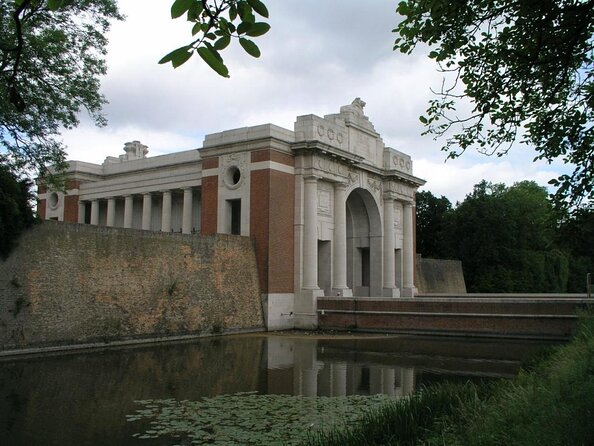
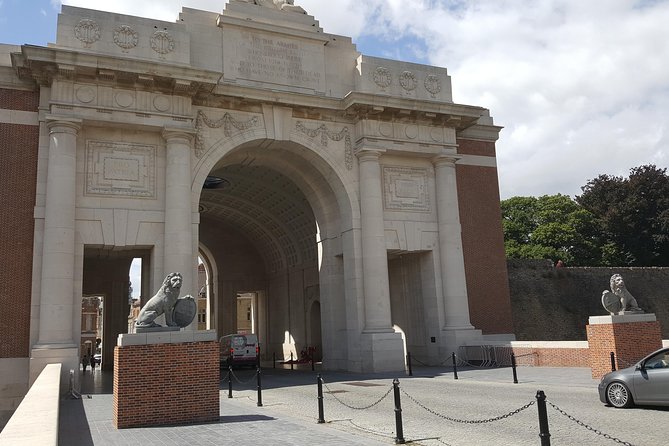
You finish with the Last Post ceremony at Menin Gate. You spend about 1 hour here, and admission is free. After the service, you are brought back to your hotel in Bruges.
This is the moment that people remember because it shifts your understanding from what happened to what is remembered today. After walking past memorials tied to specific attacks and losses, the ceremony becomes more than a tradition. It feels like a thread pulling everything together.
From the feedback I saw, this part of the day is described as profoundly poignant, and you should treat it as a sit-and-take-it-in event. Dress warm and plan to be patient.
Price and value: is $545.94 per person a smart buy?
At $545.94 per person, this is not a budget day trip. But it does include several things that reduce the hidden costs that often surprise people: lunch, bottled water, hotel pickup and drop-off, a private tour experience, and entrance fees at the museum stops.
You also get transportation by air-conditioned minivan and the benefit of a dedicated driver-guide for the day. That matters because World War I sites are not always intuitive. The value is in how Claude explains the terrain and connects each stop to what happened.
Another value point is timing. The tour starts early and runs a long, organized route, so you spend less time planning and more time actually seeing key sites. If you are traveling without a car, that convenience has real cost savings in stress alone.
Who this tour fits best
This tour is ideal if:
- You want Australian WWI battlefield sites in one day from Bruges, without car logistics
- You care about the real geography of battles, not just dates
- You want a private, smaller group feel with a guide who answers questions
It may feel heavy if you are not ready for emotional cemetery and memorial stops. But if you can handle reflective travel, this day has a strong sense of purpose from museum to ceremony.
Should you book the Australian Battlefields private tour from Bruges?
Book it if you want a guided, Australia-focused path through Flanders, and you want the Last Post ceremony as a meaningful end point. The combination of guided battlefield context, cemetery pauses, and museum time makes it far more than a checklist of places.
I would think twice only if you cannot handle a long day or extended time outdoors. If you can manage that, this is the kind of tour that leaves you with clearer understanding and a lasting emotional imprint.
FAQ
What time does the tour start?
The tour starts at 9:00 am.
How long is the Australian Battlefields Private Tour in Flanders?
It runs for about 12 hours.
Where does the tour take place?
The tour is based in Bruges and focuses on World War I battlefield sites in the Flanders region.
Does the tour include hotel pickup and drop-off?
Yes. Hotel pickup and drop-off are included.
Is lunch included?
Yes. Lunch is included.
Are museum and site entrance fees included?
Yes. Entrance fees are included, including for stops with admission tickets.
Is this a private tour?
Yes. It is private, and only your group participates.
Is bottled water provided?
Yes. Bottled water is included.
What is included and not included regarding meals and drinks?
Lunch is included. Alcoholic drinks are not included and can be purchased.
What is the cancellation policy?
Free cancellation is available up to 24 hours in advance for a full refund.
Every Belgium Review
Flanders Fields and the Ypres Salient
Keep Reading Bruges
Newer Belgium reviews from the same corner of the country
- Explore the Instaworthy Spots of Bruges with a Local
★ 5.0 · 3 reviews - Best of Brussels Private Tour from Zeebrugge or Bruges
★ 4.0 · 3 reviews - Private taxi Transfer from Bruges to Amsterdam
★ 5.0 · 3 reviews - Bruges Photo Session By a Pro
★ 5.0 · 3 reviews - Private 3-hour walking tour of Bruges with official tour guide
★ 4.0 · 3 reviews
Bruges Tours, side by side.
 ★ 4.6From Brussels: Guided Day Trip to Bruges and GhentFrom $558,353 reviews
 ★ 4.7From Brussels: Bruges & Ghent Day Tour – 2 Fairytale CitiesFrom $578,242 reviews
 ★ 4.0Bruges and Ghent – Belgium’s Fairytale Cities – from BrusselsFrom $594,809 reviews
 ★ 4.8Bruges: Small Group Boat Cruise and Guided Walking TourFrom $514,102 reviews
 ★ 4.4Bruges: Walking Tour, Canal Boat Trip w/Beer Tasting OptionFrom $412,759 reviews
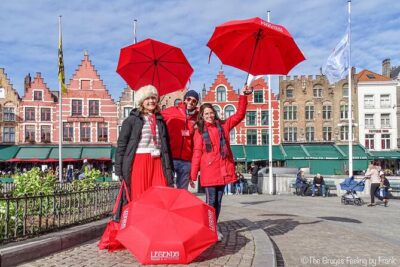 ★ 5.0Historical Walking Tour: Legends of BrugesFrom $32,541 reviews
 ★ 4.4From Amsterdam: Bruges Day Trip in English with Boat OptionFrom $611,989 reviews
 ★ 4.6From Amsterdam: Bruges Day Trip in Spanish with Boat OptionFrom $611,866 reviews
Browse the lists this tour appears in