
REVIEW · BRUGES
From Bruges: Flanders Fields Remembrance Full-Day Trip
WWI sites, then a daily silence ritual. This full-day Bruges trip strings together Flanders WWI history with the moving Menin Gate Last Post at 8:00pm. I like that you get big-picture context first, then you walk among the cemeteries and memorials where the story becomes personal and specific.
Two things I really value here: you visit the In Flanders Fields Museum with a guided setup that turns names and dates into real human experience, and you end with the daily tribute at Menin Gate. The tradeoff is simple, the day is long, and some parts involve walking and standing, so it is not a great match if you have mobility limits.
In This Review
- Key Things That Make This WWI Trip Work
- From Bruges to WWI Flanders, in One Tight 10 Hours
- Your Coach-Guide Setup: Context Before the Cemeteries
- Monument of the Brooding Soldier and Hill 60, Canada’s Story in the Trenches
- Lunch in Ypres: Use the Break to Reset Your Brain
- In Flanders Fields Museum: Where the Names Become Stories
- Passchendaele Battlefield and Tyne Cot Cemetery: The Scale of Loss
- Essex Farm and Dr. John McCrae: The Poem’s Real Setting
- Ypres Again, Then Menin Gate at 8:00pm
- Price and Value: Is $91 Worth It?
- Who This Tour Fits Best (and Who Might Want Something Else)
- Final Call: Should You Book This Bruges to Flanders WWI Day Trip?
- FAQ
- How long is the Flanders Fields Remembrance full-day trip from Bruges?
- Where do I meet the tour in Bruges?
- What is included in the price?
- Is lunch included?
- Is the Menin Gate Last Post Ceremony included?
- Is this tour suitable for wheelchair users or limited mobility?
- What should I bring?
Key Things That Make This WWI Trip Work
- A coach day that is structured for understanding, not just sightseeing
- In Flanders Fields Museum time (guided entry) to connect the dots between battles and aftermath
- Monument of the Brooding Soldier and Hill 60, focused on the Canadian role and gas warfare
- Passchendaele battlefield + Tyne Cot Cemetery, where the scale of loss becomes visible
- Essex Farm and Dr. John McCrae’s writing location, giving you the poem’s real setting
- Menin Gate Last Post at 8:00pm, a solemn close that many people remember for years
Bruges again, from a different angle
- Bruges: Small Group Boat Cruise and Guided Walking Tour★ 4.8 · 4,102 reviews
- Bruges: Walking Tour, Canal Boat Trip w/Beer Tasting Option★ 4.4 · 2,759 reviews
- Historical Walking Tour: Legends of Bruges★ 5.0 · 2,541 reviews
- Bruges: Choco-Story Chocolate Museum Guided Tour w/Tastings★ 4.2 · 1,379 reviews
From Bruges to WWI Flanders, in One Tight 10 Hours
This trip is built for people who want to understand the First World War in this specific corner of Belgium, without the stress of renting a car or figuring out public transport schedules across battlefields and cemeteries. You are on a coach for about 1 hour each way, and the rest of the day is staged around meaningful stops, with a guide talking as you move.
What makes it hit hardest is the pattern. You start with the “why” and “how it unfolded,” then you visit physical sites: trenches, memorials, and cemeteries. By the time you reach Ypres again and get to the Menin Gate ceremony, the day feels like it has a spine.
The practical reality: you will be moving for most of the day, and you have limited time at each location. If you want to linger with a slow-reading pace, you might leave wanting more.
Your Coach-Guide Setup: Context Before the Cemeteries
Before you even reach the Flanders Fields area, your guide explains the events that led to the First World War and how the disaster developed. That matters more than you might think. These sites are powerful even when you know nothing, but with a clear timeline in your head, you spend your time looking, not guessing.
One early stop is a very moving German Cemetery. It is a reminder that the war killed people on all sides, not just the armies we usually focus on. Then you drive to a section of WW1 trenches, where the ground itself teaches you something about how fighting actually worked: the long lines, the defensive mindset, and the grim reality of life in dug-out earth.
A guide also helps you notice what you would otherwise overlook. For example, you are not just seeing objects at random. You are being told what they are tied to and why they were built where they are.
Monument of the Brooding Soldier and Hill 60, Canada’s Story in the Trenches
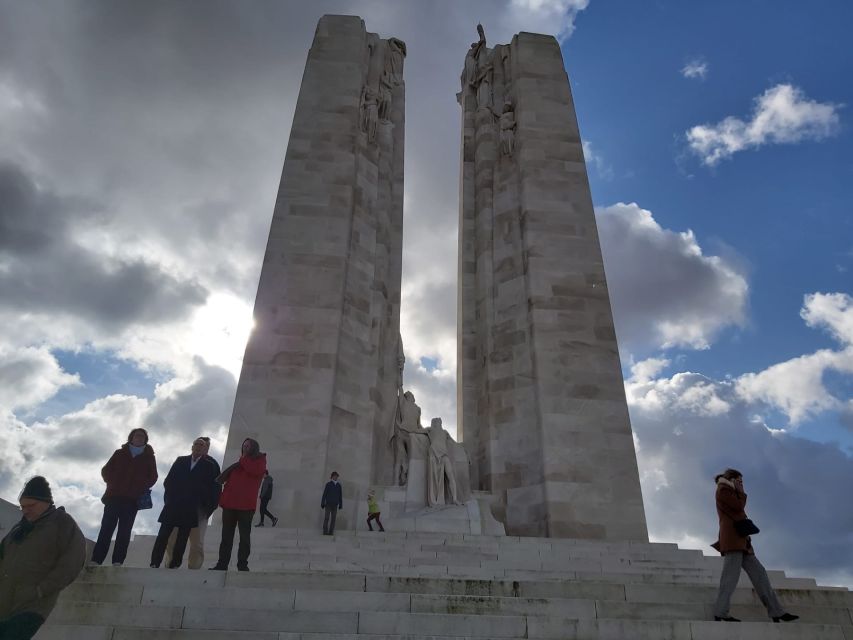
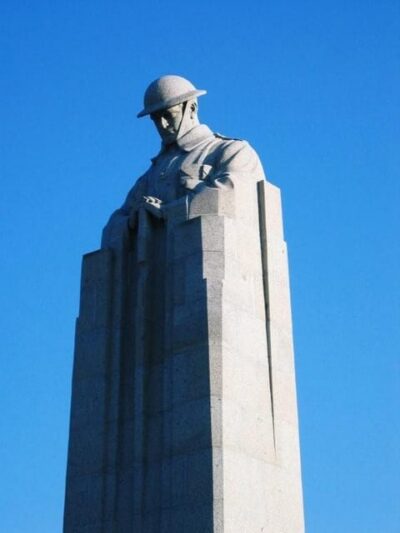
This is one of the tour’s most direct “this is why it mattered” stops. You visit the Monument of the Brooding Soldier, which commemorates the sacrifice of 2,000 Canadian soldiers during the first German gas attack. The monument is a marker, but the meaning is what stays with you: gas warfare was not a distant concept. It was a specific horror that changed the rules of battle.
Close by is Hill 60, a place that had fallen into German hands but was mined by tunnelling companies of the Royal Engineers. It is a technical detail, and you might wonder why it matters on a memorial-focused day. But it does, because trench warfare was not only about who held ground above. It was also about what armies could do under it, through tunnels and engineering work. The guide’s explanations make those layers click.
If you like your history grounded in particular places, this is the kind of stop you will appreciate most. You are not just hearing about Canada in general. You are learning how a specific event connects to a specific patch of landscape.
Lunch in Ypres: Use the Break to Reset Your Brain
After the morning sites, you have lunch time in Ypres. This is not a huge meal break, so treat it like a reset. Grab something that keeps you comfortable for more walking and cemetery time afterward.
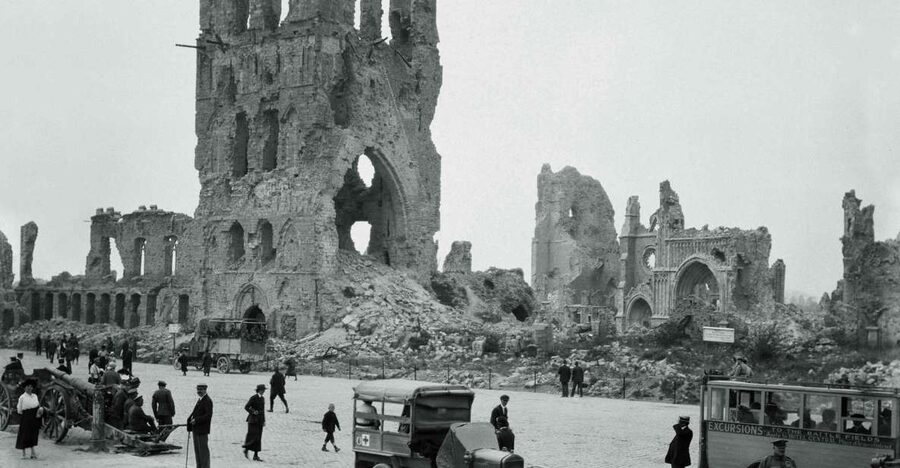
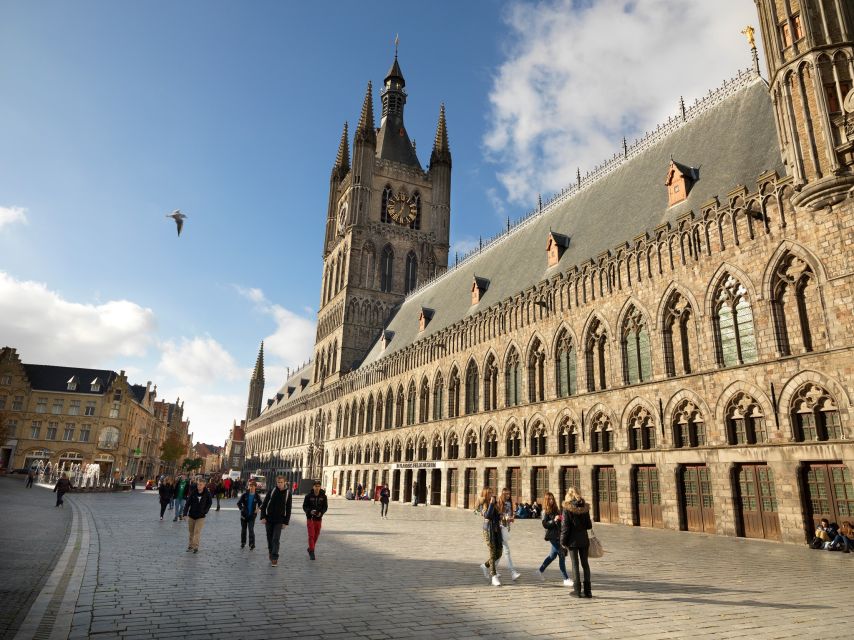
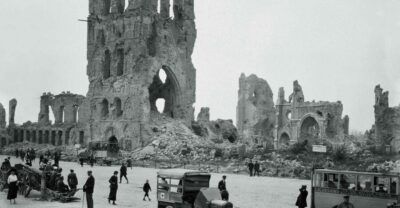
Ypres also gives you an important mood shift. This city is tied to the war, but it is not only a museum town. It is one of the places that had to be rebuilt after the fighting and destruction. Even a short pause in Ypres helps you picture the war’s aftermath, not just its battles.
One tip: if you know you get tired with long days, eat a bit slower than you think you should, then save your energy for the afternoon.
Other Flanders Fields and Ypres Salient tours we have reviewed

In Flanders Fields Museum: Where the Names Become Stories
The museum visit is one of the strongest parts of the day because it sits at the right time. You have already visited trench lines and memorial points, so the museum does not feel random. Instead, it gives you stories that connect “what happened” to “how it felt” for people trapped inside years of trench war.
You get guided time at In Flanders Fields Museum (about 70 minutes on the schedule). The focus is on trench war across four years, with touching stories meant to humanize what you just saw outside.
Here is the best way to use your time: don’t try to read everything. Look for a few themes the guide highlights. Then, when you move back outdoors, you will recognize those themes on the ground. That is when a day like this stops being a checklist and starts becoming understanding.
If you are a museum power-reader, you may wish you had more minutes. But for a full-day coach itinerary, the balance is solid.
Passchendaele Battlefield and Tyne Cot Cemetery: The Scale of Loss
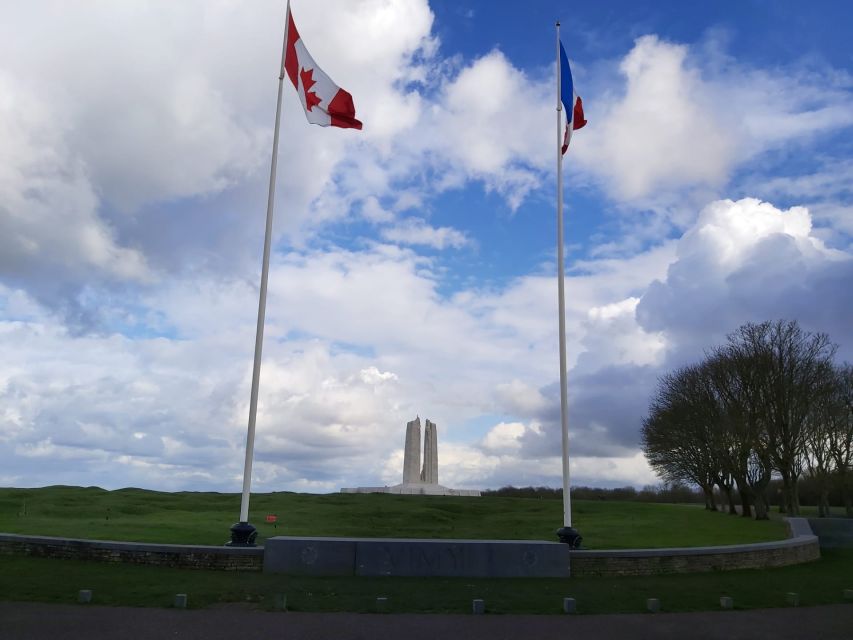
Next up is the Passchendaele battlefield. Battlefield visits can be tricky on guided days because the terrain can look quiet. Your guide helps by placing the landscape in context, so you can understand what you are looking at, even if you cannot see trenches in the same way you might in a movie.
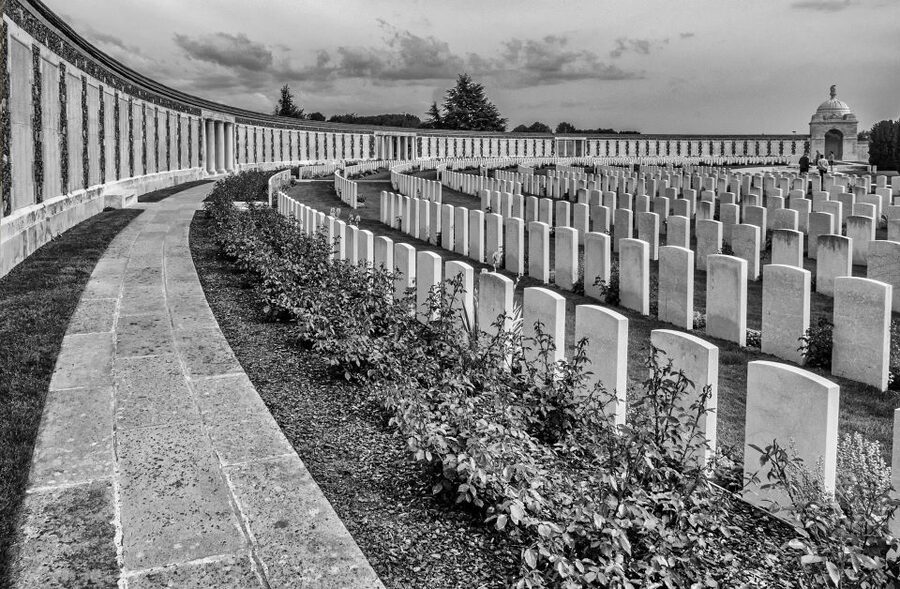
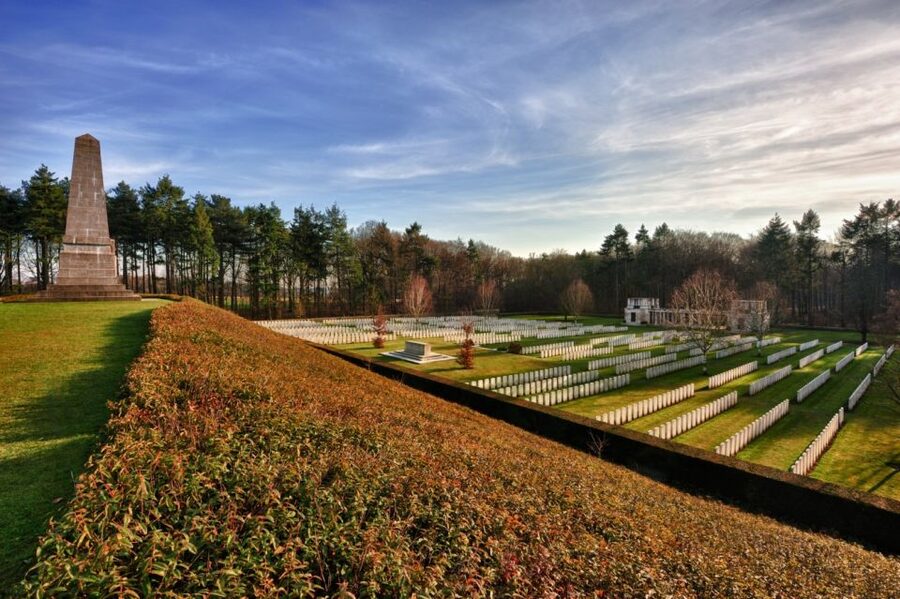
Then comes Tyne Cot Cemetery, described as the largest Commonwealth cemetery in the world. You will see British, Irish, Australian, and Canadian soldiers resting there. What makes Tyne Cot so powerful is the sheer presence of many headstones in orderly rows. It does not feel like one dramatic moment. It feels like the war’s long, grinding toll.
A good guide will also help you notice that cemeteries are not only for the dead. They are for the living who come looking for meaning, family connections, or a deeper understanding of what war leaves behind.
If you want photos, this is one of your best chances, but do not treat it like a sightseeing stop. A cemetery rewards quieter attention.
Essex Farm and Dr. John McCrae: The Poem’s Real Setting
After Tyne Cot, the tour heads to Essex Farm, a field hospital site connected with Canadian field surgeon Dr. John McCrae. This is where he wrote the famous poem In Flanders Fields.
Why it matters: poems can turn into trivia when you meet them far from their setting. Here, you are at a place tied to the hospital reality of the war, which makes the poem’s imagery feel less like literature and more like something written with shaken hands.
Even if poetry is not your thing, this stop gives you a “human output” from the war. It reminds you that people kept writing, thinking, and grieving even when the world felt stuck in mud and smoke.
And it gives you a natural emotional bridge back toward Ypres, before the evening ceremony.
Ypres Again, Then Menin Gate at 8:00pm
You return to Ypres for a quick snack before heading to Menin Gate. The schedule matters here. The ceremony happens at 8:00pm every day as a tribute to Commonwealth soldiers and officers missing after battle.
One more detail to know: Menin Gate may be under restoration works until mid-2025, which means the ceremony area could look different depending on timing. The core ritual is what you are coming for, but the setting might not be identical to photos you’ve seen online.
When you arrive, expect a respectful, solemn atmosphere. This is not the kind of memorial that asks you to “perform” emotion. It simply gives you a daily moment of remembrance, and most people find themselves slowing down without realizing it.
Price and Value: Is $91 Worth It?

At $91 per person for a roughly 10-hour day, this tour looks expensive on paper only if you compare it to buying a tram ticket and winging it. The real question is what you get for the money.
You get:
- Roundtrip transportation by bus from Bruges
- A live English guide
- Entry to In Flanders Museum
Given how far these sites are spread out across battlefields and cemeteries, the bus alone is doing real work. Also, a guide adds value that you cannot easily replicate on your own, especially for trench warfare context and for connecting memorials like the Brooding Soldier and Hill 60 to the specific events they reference.
Where the “value” can feel less great is pacing. The itinerary is packed. If you want long museum browsing, huge breaks, and time for deep reading at each cemetery, this is a day trip with strong structure, not a slow, wander-your-own-way experience.
Who This Tour Fits Best (and Who Might Want Something Else)
This is a good fit if you:
- Want a guided, structured WWI overview in one day
- Prefer to see major sites like Tyne Cot and Menin Gate without planning the route yourself
- Like history explained with specific places and events, not only general facts
- Care about Commonwealth remembrance and want the Last Post included
You should think twice if you:
- Have limited mobility or use a wheelchair, because the tour is not recommended for people with mobility impairments
- Get worn out by long days with several walking and standing moments
- Want extra time inside museums or at cemeteries to read slowly and photograph without time pressure
One more real-world tip: coach audio can be tough, especially from farther back. If you struggle hearing a guide, aim for a seat closer to the front so you catch the key points during the drive.
Final Call: Should You Book This Bruges to Flanders WWI Day Trip?
I’d book it if you want a high-impact WWI day that combines the big story, the physical sites, and the emotional finish at 8:00pm. The guide-led context is the glue that makes the cemeteries and memorials hit harder, and the inclusion of In Flanders Fields Museum plus Menin Gate gives you both understanding and closure.
Skip it if you are mobility limited, need lots of quiet time to read slowly, or you do not do well with long, tightly scheduled days. In that case, you might be happier with something shorter or more flexible.
If you can handle a full day and you care about remembrance, this trip is a strong use of your time in Bruges and a deeply affecting way to learn what happened in Flanders.
FAQ
How long is the Flanders Fields Remembrance full-day trip from Bruges?
The tour runs for about 10 hours.
Where do I meet the tour in Bruges?
You meet at Bargesquare (or Bargeplein in Dutch), a bus parking spot. You can wait under the large red canopy/roof next to the public bathroom.
What is included in the price?
The price includes roundtrip bus transportation, a live English guide, and entry to In Flanders Fields Museum.
Is lunch included?
Lunch is not listed as included. The schedule includes a lunch stop around 45 minutes, but you should plan to pay for your own meal.
Is the Menin Gate Last Post Ceremony included?
Yes. The tour includes the Last Post Ceremony at Menin Gate with an arrival time of about 8:00pm.
Is this tour suitable for wheelchair users or limited mobility?
No. The tour is not recommended for people with limited mobility and is not suitable for wheelchair users.
What should I bring?
Wear comfortable shoes, since you will be walking at several stops.
Every Belgium Review
Flanders Fields and the Ypres Salient
Keep Reading Bruges
Newer Belgium reviews from the same corner of the country
- Explore the Instaworthy Spots of Bruges with a Local
★ 5.0 · 3 reviews - Best of Brussels Private Tour from Zeebrugge or Bruges
★ 4.0 · 3 reviews - Private taxi Transfer from Bruges to Amsterdam
★ 5.0 · 3 reviews - Bruges Photo Session By a Pro
★ 5.0 · 3 reviews - Private 3-hour walking tour of Bruges with official tour guide
★ 4.0 · 3 reviews
Bruges Tours, side by side.
 ★ 4.6From Brussels: Guided Day Trip to Bruges and GhentFrom $558,353 reviews
 ★ 4.7From Brussels: Bruges & Ghent Day Tour – 2 Fairytale CitiesFrom $578,242 reviews
 ★ 4.0Bruges and Ghent – Belgium’s Fairytale Cities – from BrusselsFrom $594,809 reviews
 ★ 4.8Bruges: Small Group Boat Cruise and Guided Walking TourFrom $514,102 reviews
 ★ 4.4Bruges: Walking Tour, Canal Boat Trip w/Beer Tasting OptionFrom $412,759 reviews
 ★ 5.0Historical Walking Tour: Legends of BrugesFrom $32,541 reviews
 ★ 4.4From Amsterdam: Bruges Day Trip in English with Boat OptionFrom $611,989 reviews
 ★ 4.6From Amsterdam: Bruges Day Trip in Spanish with Boat OptionFrom $611,866 reviews
Browse the lists this tour appears in