
REVIEW · BRUGES
Private Vimy and Belgium Canadian Battlefield Tour from Bruges
A WWI day that feels personal. This private Flanders tour traces the path of Canadian troops from the Vimy tunnels and trenches to the quiet weight of CWGC cemeteries, ending with the Last Post at Menin Gate. I love how the day is shaped around Canadian front-line moments, not just big monuments, and I also like that you get a true private format with a guide who can slow down when details matter.
You spend real time at key sites like the Grange Tunnel and Vimy Ridge, then you get breathing space in Ypres before walking into the ceremony. One possible drawback to plan around: the drive time from Bruges is long, so if you want constant commentary, it helps to ask your guide early to share context along the way.
In This Review
- Key Points That Make This Tour Worth Your Time
- Private Flanders From Bruges: A WWI Day Built for Focus
- Getting Under Vimy Ridge: Trenches, Tunnels, and the View Over Douai
- Ploegsteert and the Idea of Missing Names
- Hill 62 and Sanctuary Wood: Spring 1916 in One Key High Point
- Princess Patricia’s Canadian Light Infantry Memorial at Frezenberg
- Tyne Cot Cemetery: The Largest CWGC Scale You Can Really Feel
- Saint Julien and Langemark: Gas Attack Memory and Different Burial Styles
- Essex Farm and John McCrae’s In Flanders Fields
- Ypres Cloth Hall Square: Free Time in the Town Between Memory Stops
- Menin Gate and the Last Post Ceremony: A Moment That Holds Its Weight
- Lunch, Transport, and Tour Flow: The Practical Stuff That Actually Matters
- Price and Value: Is $535 Per Person Reasonable?
- Who This Tour Suits, and Who Might Want to Rethink It
- Should You Book This Canadian Battlefield Tour From Bruges?
- FAQ
- What time does the tour start?
- How long is the tour?
- Is pickup and drop-off included?
- Is lunch included?
- Is the tour private?
- Are tickets or admissions included?
- Are alcoholic drinks included?
- Is there a minimum number of people required?
Key Points That Make This Tour Worth Your Time
- Grange Tunnel plus preserved trenches at Vimy Ridge gives you the rare, underground perspective on how the assault was staged
- Hill 62, Sanctuary Wood, and smaller regimental memorial stops add detail beyond the headline sites
- Tyne Cot Cemetery and the CWGC name lists help you understand scale, not just locations
- Stops at both allied and German burial grounds make the differences easy to notice
- Ypres free time and the Last Post at Menin Gate balance reflection with structure
- Private minivan with hotel pickup and drop-off means you are not wrestling buses for a full day
Bruges again, from a different angle
- Bruges: Small Group Boat Cruise and Guided Walking Tour★ 4.8 · 4,102 reviews
- Bruges: Walking Tour, Canal Boat Trip w/Beer Tasting Option★ 4.4 · 2,759 reviews
- Historical Walking Tour: Legends of Bruges★ 5.0 · 2,541 reviews
- Bruges: Choco-Story Chocolate Museum Guided Tour w/Tastings★ 4.2 · 1,379 reviews
Private Flanders From Bruges: A WWI Day Built for Focus
This is a full-day outing that turns a distant war into something you can actually picture. You start in Bruges, then the day flows through Canadian battle terrain, memorials, and cemeteries across Flanders. The private format matters here because you are not stuck waiting for a big group to catch up, and you can spend longer where your questions land.
What I like most is the way the route follows Canadian units and Canadian losses, not a generic WWI greatest-hits trail. The Grange subways and tunnels at Vimy are the kind of place that rewards a guided explanation, and you still get time to look around on your own. If you are the type of traveler who likes to connect dots, this tour is built for you.
Timing is also part of the value. You depart at 8:30 am and you are out for about 10 hours total, which is a solid length for doing multiple major memorial sites without feeling rushed. Also, because it is booked often (on average, a bit over three months in advance), you will want to reserve early if your dates are fixed.
Getting Under Vimy Ridge: Trenches, Tunnels, and the View Over Douai
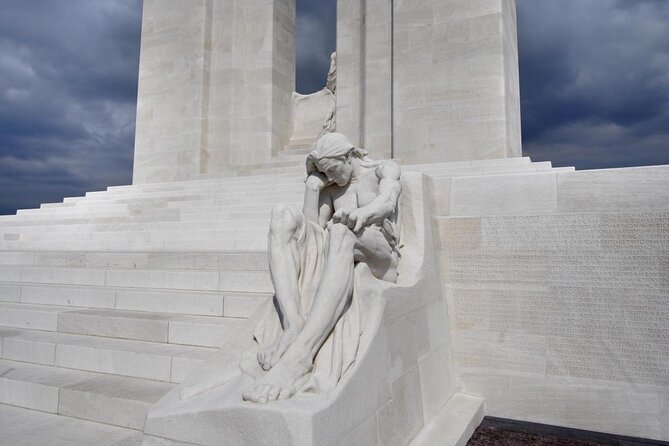
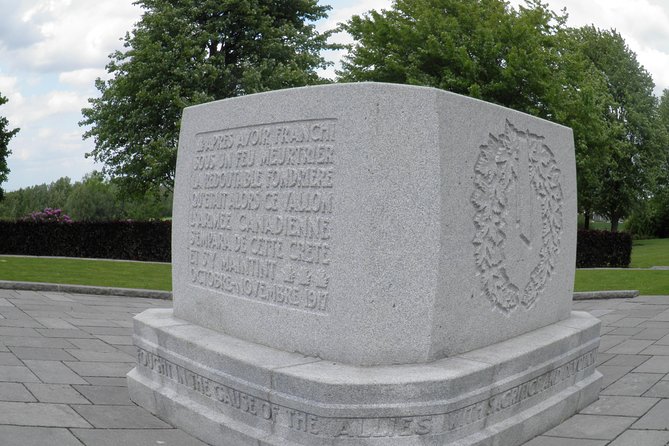
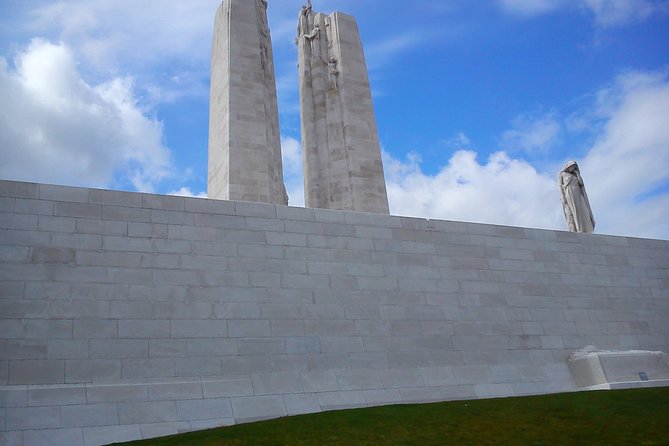
Vimy Ridge is the centerpiece of the Canadian WWI story, and this tour gives it the time it deserves. You head out toward Vimy Ridge, where you stand near the Canadian National Vimy Memorial with views over the Douai plain. That view is not just scenery. It helps you connect what you learn to why the ridge mattered.
Then you walk through preserved trenches, including both Canadian and German-held areas preserved for visitors. It is one of those rare experiences where you see how close opposing forces were, and how the ground itself shaped what happened during the fighting. You are not just reading names. You are learning the terrain.
The most distinctive part is going down into the Grange Tunnel. This is where Canadian troops were stationed in the hours before the battle. You also see the newly built visitor centre, which helps you frame what you are looking at. In a good tour, this stop turns Vimy from a landmark into a place with timing and purpose.
Practical note: Vimy Ridge has a lot to take in visually and emotionally, so pace yourself. If your guide offers a narrative run-through, let it happen, then take a second pass at your own speed.
Ploegsteert and the Idea of Missing Names
After Vimy, the day broadens a bit while staying grounded in the Canadian experience. You stop to see the Ploegsteert Memorial to the missing. Even if you do not study every name, the concept lands quickly: many soldiers were never recovered or identified in a way that left a known grave.
This is the sort of memorial that changes how you read the rest of the cemeteries. When you move from a tunnel and trenches to a memorial for the missing, you start thinking in terms of absence, not just battle lines.
If you care about doing this day in the right order, this stop helps. It prepares you for the CWGC sites later, where the scale of recorded names becomes impossible to ignore.
Hill 62 and Sanctuary Wood: Spring 1916 in One Key High Point
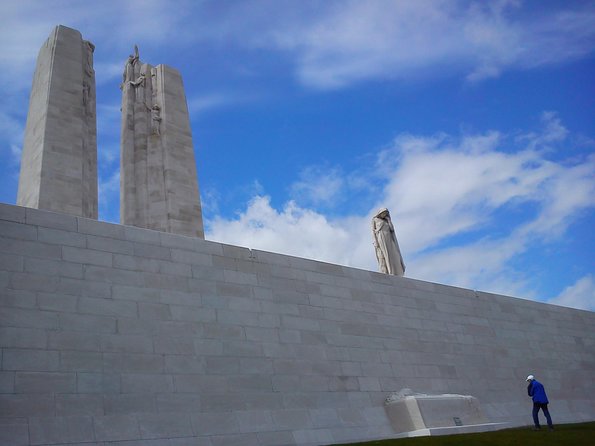
Hill 62 is a short stop but it punches above its weight. You stand on Hill 62, also known as Sanctuary Wood, and you focus on what Canadian soldiers fought for during the spring of 1916. Even in limited time, this kind of stop works because it is tied to a specific season and purpose, not just a general reference to the Western Front.
At a battlefield site like this, context is everything. Without it, you might see a hill and move on. With the right explanation, you start understanding why a small change in elevation could carry strategic meaning.
Spend a moment looking outward from the hill. Then let your guide’s story anchor what you are seeing. It is a good way to learn without turning it into a lecture marathon.
Other Flanders Fields and Ypres Salient tours we have reviewed

Princess Patricia’s Canadian Light Infantry Memorial at Frezenberg
Next, you stand at the place called Frezenberg, where Princess Patricia’s Canadian Light Infantry was nearly wiped out in May 1915. This stop is brief, but it is important because it brings in a regimental story instead of keeping everything at the level of armies and divisions.
This is one of the reasons I think a private guide is worth it. When you connect a memorial spot to a specific unit and a specific time, the names and locations become sharper. You are no longer just touring. You are recognizing the people behind the map pins.
If your interest is family history, unit history, or Canadian WWI details, you will likely appreciate how the route does not treat every site as interchangeable.
Tyne Cot Cemetery: The Largest CWGC Scale You Can Really Feel
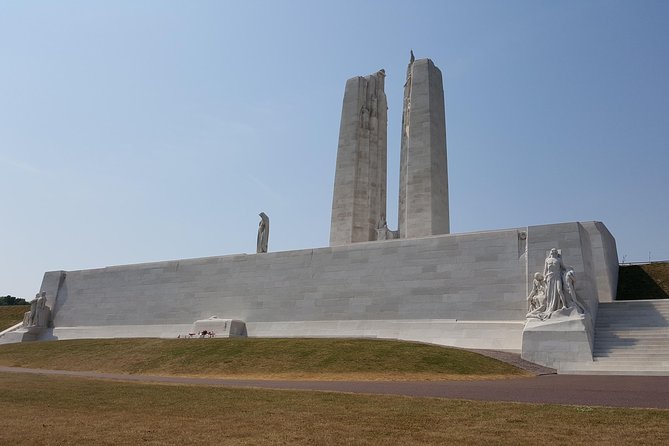
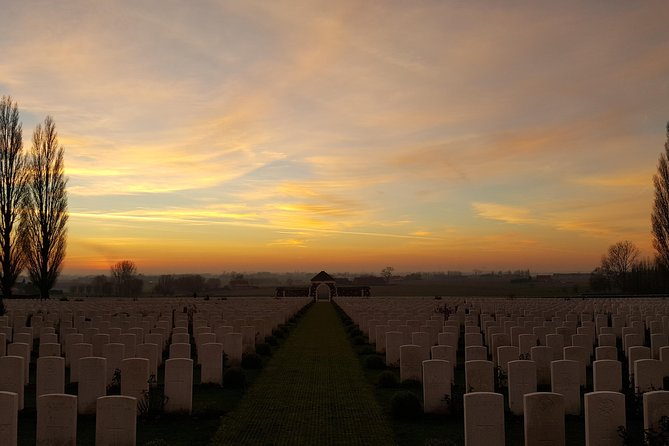
Tyne Cot Cemetery is the big CWGC cemetery stop on this day, and it is built for scale. You visit the cemetery, which has 12,000 burials, and you also see the Memorial bearing the names of 35,000 soldiers who have no known grave.
Even if you only read a few lines, the numbers do work on your brain. It is one thing to learn that the war was massive. It is another to stand in a place where the memorial system has recorded thousands of missing men by name.
I also like how this stop balances structure with time. You get time to move at your own pace, not just pass through. If you want to focus, try this simple approach: pick one part of the memorial wall and read carefully, then walk away and look at the cemetery layout. The shift from names to space helps you understand what the site is doing.
If you are sensitive to cemeteries, go gently. Tyne Cot is heavy, and it is also exceptionally well kept, which means it can feel even more direct.
Saint Julien and Langemark: Gas Attack Memory and Different Burial Styles
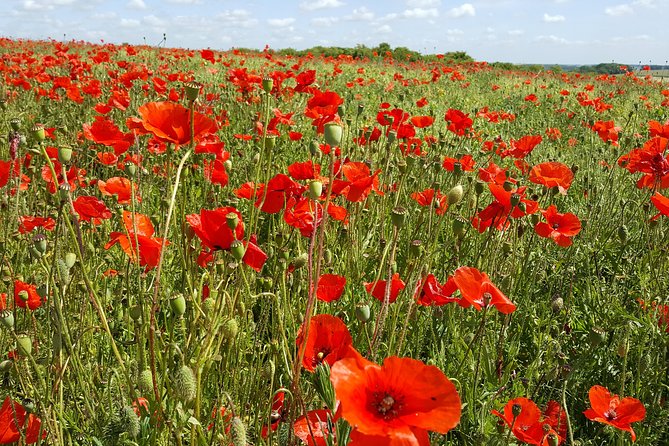
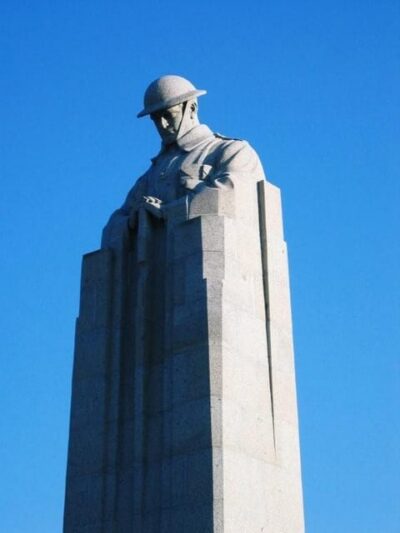
From Tyne Cot, the tour continues toward other memorials that shape how you understand WWI in Flanders. At Saint Julien Memorial, you see the Brooding Soldier, erected where the first gas attack took place in spring 1915. This is a reminder that the war changed, not just the geography.
Then you visit Langemark Cemetery. Here, you can see a German cemetery and feel the difference between it and the allied cemeteries. That contrast is useful. It keeps the day from becoming one-note, and it gives you a fuller view of how different communities commemorated their dead.
This is where a good guide helps most. If you are used to thinking in terms of Canadian or Allied remembrance only, your perspective can broaden quickly. You still respect the sites, but you also notice how presentation communicates meaning.
If you want to make the most of these memorial style differences, take an extra minute at each cemetery edge to look around before you read anything. The layout often tells a story before you even get to the text.
Essex Farm and John McCrae’s In Flanders Fields
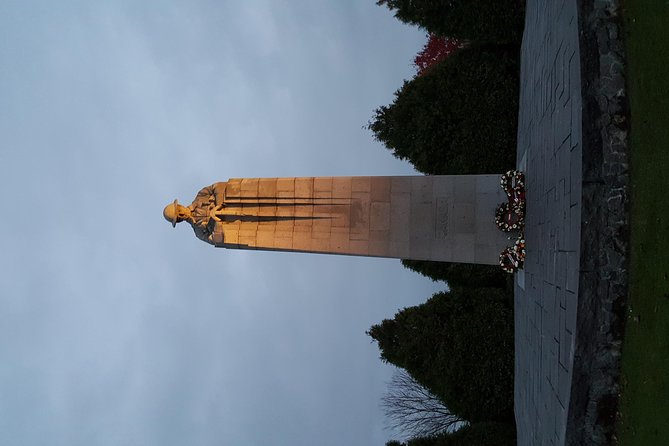
Another brief stop is Essex Farm Cemetery, where John McRae wrote In Flanders Fields. Even if you know the poem already, it helps to stand near where it was inspired. This stop often shifts the day from battlefield terrain to the words people carried out of the war.
I find this is one of the best moments for travelers who want emotional connection, not just historical markers. A place tied to literature helps you process what happened without getting stuck in technical details.
Take a slow breath here. You are allowed to just stand and think. This day is built for remembrance, not speed.
Ypres Cloth Hall Square: Free Time in the Town Between Memory Stops
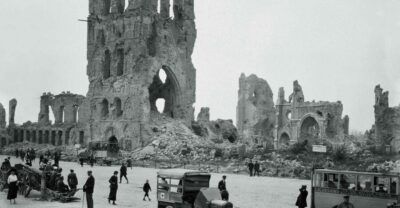
After the battlefield and cemetery sequence, you get a change of pace in Ypres. You visit the Cloth Hall on the main square, and you can see the cathedral and other buildings around the central area. Then you get free time to wander in town.
I like this break because it gives your brain room to reset. After all the names, tunnels, and memorial stone, you need something normal to re-anchor yourself. Ypres also gives you a chance to eat on your schedule and stretch your legs.
Lunch is included earlier in the day, so during this free time you can focus on browsing and walking rather than searching for a place to sit. If you have mobility needs, it is also a good moment to plan your next steps with less pressure.
Menin Gate and the Last Post Ceremony: A Moment That Holds Its Weight
This is where the tour’s structure turns into something unforgettable. You stand under the Menin Gate to attend the Last Post ceremony. You are there with the memorial setting, which makes the event feel rooted in place.
The timing is set: the ceremony is about an hour, and after it ends, the driver brings you back to your hotel. That matters because you do not have to navigate crowds or transit while you are still emotionally switched on.
What to expect from this part of the day is simple: it is quiet, formal, and deeply focused on remembrance. If you are the type who likes to watch how rituals work, you will appreciate how the Menin Gate setting makes the ceremony feel both public and intimate.
If you want one practical tip, plan to stand comfortably. This is not a sit-and-watch situation you can easily control once you are in place, so wear shoes you trust.
Lunch, Transport, and Tour Flow: The Practical Stuff That Actually Matters
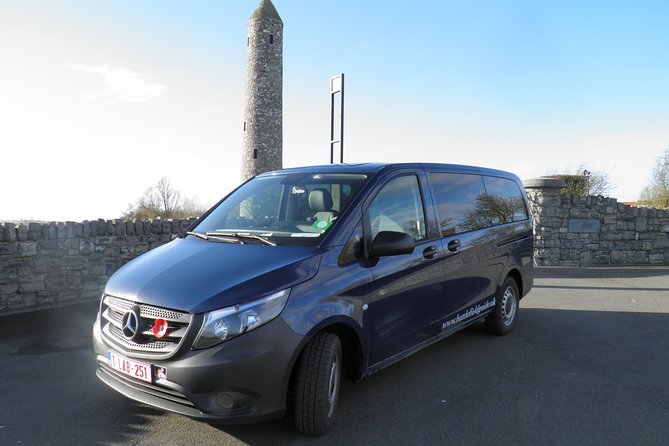
Let’s talk about why this tour runs well for a full day. You get air-conditioned transport by private minivan, plus hotel pickup and drop-off. That reduces the biggest time sink on a day like this, which is figuring out how to get yourself across Flanders with enough buffer to still enjoy the sites.
Lunch is included. That sounds basic, but on a 10-hour day it is a big deal because it keeps you from losing time hunting for food, and it prevents hunger from hijacking your attention at the memorial stops.
Admissions are listed as free for the sites on your route, so you are not layering extra entry costs onto the day. Alcohol is not included, but you can purchase drinks, which is useful if you want a small celebration after the ceremony.
One more practical point: this tour is private, meaning only your group participates. If you travel with family or a mix of ages, or if you want to ask questions without speaking over a large group, the setup helps.
As for guide quality, the reviews point to one recurring strength: when Claude Verhaeghe is your guide, he brings a passionate focus on the Canadian experience and connects what you see to the battle story. If you prefer history talk during the drive, ask for it early so the van time becomes part of the learning, not just transit.
Price and Value: Is $535 Per Person Reasonable?
At $535.86 per person, this is not the cheapest way to do WWI sites. But private tours are usually about trade-offs: you pay more so you spend less time managing logistics and more time actually absorbing the sites.
Here, the value case comes from several combined items:
- Private transport with hotel pickup and drop-off
- Professional guide and a day organized around Canadian memorial locations
- Lunch included
- Admission listed as free for the stops on the route
- Last Post ceremony attendance with a structured return to your hotel
Also, the average booking window of 103 days in advance suggests people plan carefully for a reason. This is one of those day trips that sells out when dates are popular, especially in high season.
If you are traveling solo, the minimum group size of two per booking is worth noting. If you can get two people together, you typically get a better value feel. If you are a group of four or five, it often becomes easier to justify because the cost per person stays in the same range while you add flexibility.
Who This Tour Suits, and Who Might Want to Rethink It
This tour is ideal if you want a Canadian-focused WWI day with a guide who can explain where the front lines were and why each site matters. It also fits well if you like structured reflection, since the day ends with the Last Post and the Menin Gate setting.
You might want to rethink if you want a lot of extra time for deep museum wandering, because the day is built around moving between several major sites. You do get time at each stop, but it is not an all-day single site approach.
You also might want to reconsider if you are the type who needs nonstop narration from the driver seat. The route includes a long travel block from Bruges, and your experience will depend on your guide’s style. Your best move is to set expectations at the start: ask for historical context on the road, and ask questions as they come up.
Should You Book This Canadian Battlefield Tour From Bruges?
I think this is a strong booking if your heart is set on the Canadian WWI story and you want the day to feel organized, personal, and meaningful. The standout ingredients are the Vimy Ridge trench and Grange Tunnel experience, the Tyne Cot scale of remembrance, and the built-in rhythm that brings you into Ypres and then to the Last Post ceremony at Menin Gate.
If you book, do it with two mindsets. First, plan for emotional weight at the cemeteries, especially Tyne Cot. Second, use the private format to get what you want out of the day, ask questions early, and don’t wait until you feel lost.
In short: if you want a respectful, Canadian-centered day that combines terrain, memorials, and ceremony without the hassle of DIY planning, this tour makes a lot of sense.
FAQ
What time does the tour start?
The tour starts at 8:30 am.
How long is the tour?
It is about 10 hours long (approx.).
Is pickup and drop-off included?
Yes, the tour includes hotel pickup and drop-off.
Is lunch included?
Yes, lunch is included.
Is the tour private?
Yes. It is a private tour, and only your group will participate.
Are tickets or admissions included?
The admission ticket is listed as free for the stops on the route.
Are alcoholic drinks included?
No. Alcoholic drinks are available to purchase, but they are not included.
Is there a minimum number of people required?
Yes. A minimum of 2 people per booking is required.
Every Belgium Review
Flanders Fields and the Ypres Salient
Keep Reading Bruges
Newer Belgium reviews from the same corner of the country
- Explore the Instaworthy Spots of Bruges with a Local
★ 5.0 · 3 reviews - Best of Brussels Private Tour from Zeebrugge or Bruges
★ 4.0 · 3 reviews - Private taxi Transfer from Bruges to Amsterdam
★ 5.0 · 3 reviews - Bruges Photo Session By a Pro
★ 5.0 · 3 reviews - Private 3-hour walking tour of Bruges with official tour guide
★ 4.0 · 3 reviews
Bruges Tours, side by side.
 ★ 4.6From Brussels: Guided Day Trip to Bruges and GhentFrom $558,353 reviews
 ★ 4.7From Brussels: Bruges & Ghent Day Tour – 2 Fairytale CitiesFrom $578,242 reviews
 ★ 4.0Bruges and Ghent – Belgium’s Fairytale Cities – from BrusselsFrom $594,809 reviews
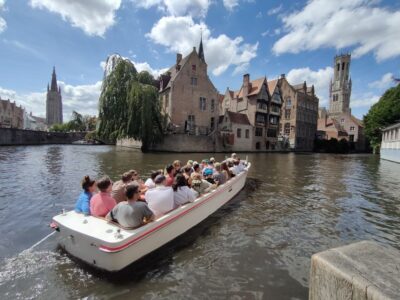 ★ 4.8Bruges: Small Group Boat Cruise and Guided Walking TourFrom $514,102 reviews
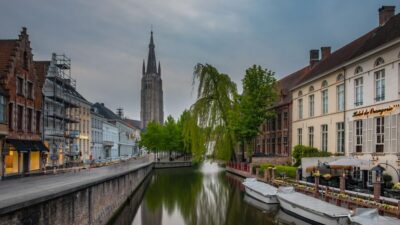 ★ 4.4Bruges: Walking Tour, Canal Boat Trip w/Beer Tasting OptionFrom $412,759 reviews
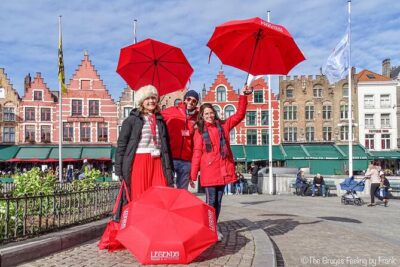 ★ 5.0Historical Walking Tour: Legends of BrugesFrom $32,541 reviews
 ★ 4.4From Amsterdam: Bruges Day Trip in English with Boat OptionFrom $611,989 reviews
 ★ 4.6From Amsterdam: Bruges Day Trip in Spanish with Boat OptionFrom $611,866 reviews
Browse the lists this tour appears in