
REVIEW · BRUGES
Flanders Fields Remembrance Tour from Bruges
WWI in Flanders is one long, moving story. This tour strings together the places where battles happened, where soldiers were buried, and where remembrance is practiced daily. You get an all-day route that makes the Western Front feel close, not abstract.
I especially love the way the day is built around cemeteries and memorials, not just battlefields. And I like that you are guided by an expert interpreter who can connect names on headstones to what was happening nearby, with guides such as Stephen, Diederik, Diedrich, Dedrick, Stefan, and Diedericke mentioned across the experience.
One thing to consider: the itinerary is packed, so if your group is larger on the day, you may have a harder time hearing every detail at every stop, and you will do plenty of walking around uneven ground and memorial spaces.
In This Review
- Key moments you should care about
- Bruges to the Western Front, and why this route hits
- Vladslo’s Germany Military Cemetery and Käthe Kollwitz’s Grieving Parents
- Diksmuide’s Trench of Death and the Brooding Soldier for Canadian sacrifice
- Ypres: where lunch, Flanders Fields Museum, and audio help you understand before you go underground
- Hill 60 tunnels and the Passchendaele area, from above ground to the harsh reality underneath
- Essex Farm Cemetery and the John McCrae connection
- The Commonwealth scale of loss, and why Tyne Cot and Menin Gate are different
- Menin Gate Last Post Ceremony: simple, public, and moving
- Price and value: what $95.34 buys for a 10.5-hour remembrance day
- Who this tour suits, and who might want a different format
- Should you book the Bruges Flanders Fields Remembrance Tour?
- FAQ
- What time does the tour start in Bruges?
- Where is the meeting point in Bruges?
- Do I need to bring a paper ticket?
- Is lunch included?
- Is the tour in English?
- How long is the full tour day?
Key moments you should care about
- Germany Military Cemetery at Vladslo and the Grieving Parents sculpture for a direct emotional start
- Trench of Death in Diksmuide plus the Brooding Soldier tribute tied to the Canadian gas attack
- Ypres and the Flanders Fields Museum for context before you step deeper into the sites
- Hill 60 and its tunnels for a sense of how close combat really was underground
- Tyne Cot and other Commonwealth cemeteries at a scale that hits hard
- Menin Gate Last Post Ceremony where the simplicity is the whole point
Bruges again, from a different angle
- Bruges: Small Group Boat Cruise and Guided Walking Tour★ 4.8 · 4,102 reviews
- Bruges: Walking Tour, Canal Boat Trip w/Beer Tasting Option★ 4.4 · 2,759 reviews
- Historical Walking Tour: Legends of Bruges★ 5.0 · 2,541 reviews
- Bruges: Choco-Story Chocolate Museum Guided Tour w/Tastings★ 4.2 · 1,379 reviews
Bruges to the Western Front, and why this route hits
The tour leaves from central Bruges at 11:00 am at Bargeplein Bargeweg (8000 Bruges). After that, you are out on the road for a long day, traveling by an air-conditioned vehicle. One review noted the vehicle felt more like a large coach than a small minivan, so mentally plan for bus-seat comfort and bring layers, since the morning can feel cooler and the day moves between outdoor sites.
What makes this route especially effective is the order of the day. It starts with graves and memorials, then moves to battlefield lines and trench areas, and then ends with a daily public ritual at Ypres Menin Gate. That arc matters. You do not just learn facts. You also build a feeling for scale, loss, and what remembrance looks like in real time.
If you want WWI to make sense, this is the kind of day that turns geography into meaning. You see a place, you hear why it mattered, and then you stand somewhere quieter to process it.
Vladslo’s Germany Military Cemetery and Käthe Kollwitz’s Grieving Parents
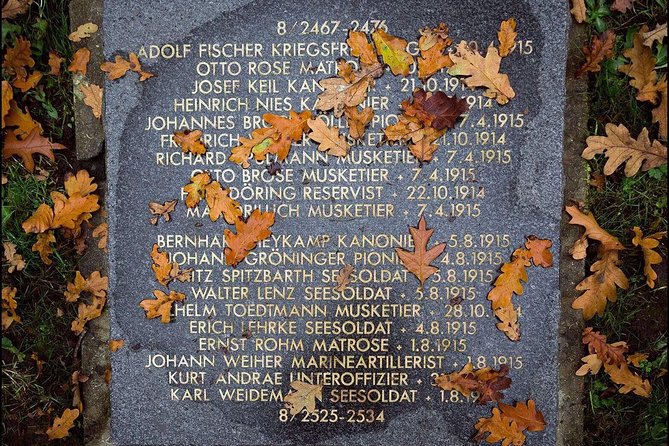
One of the strongest early stops is the visit to Vladslo (Germany Military Cemetery). This is where the day shifts from “places on a map” to a cemetery you can actually read with your eyes. You are looking at thousands of burials, and the guide’s job is to help you connect what you see with what was happening during the war.
Then comes a standout artistic moment: the Grieving Parents sculpture by Käthe Kollwitz. Even if you do not know Kollwitz’s work, you will get the point fast. It is not a statue for decoration. It is a memorial for anguish, aimed straight at the fact that war does not only take soldiers. It devastates families.
Practical note: plan on slow walking here. This is a place where you will likely want a minute alone. The tour is structured, but the atmosphere tends to pull you into quieter attention.
Diksmuide’s Trench of Death and the Brooding Soldier for Canadian sacrifice
Next, you head toward Diksmuide for the Trench of Death, described as a grim stretch of the Western Front where many soldiers met their end. Standing near trench-area sites is one of those experiences that can feel strangely hard to process, because your brain keeps trying to compare it to modern streets. That comparison is part of the impact. You start understanding why WWI is often described as industrial-scale suffering.
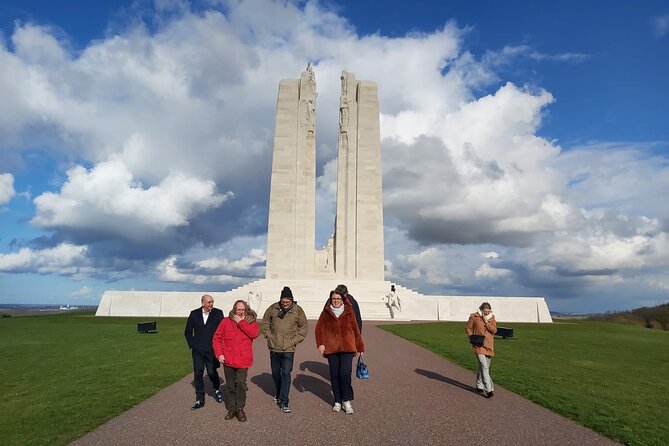
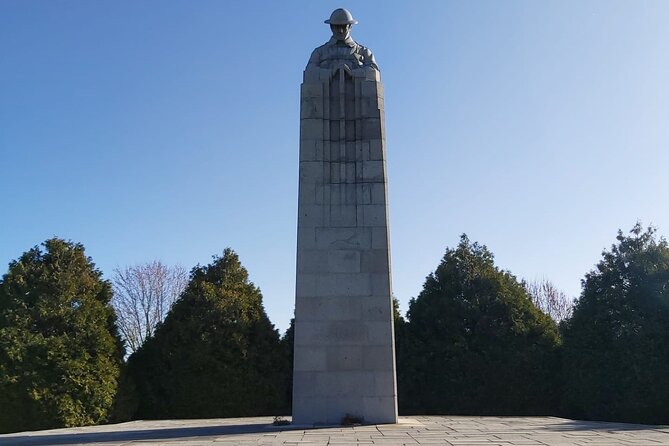
A nearby tribute you will see is the Brooding Soldier statue, which commemorates the sacrifice of 2,000 Canadian soldiers during the first German gas attack. This is a good example of why the tour’s stops are not just sightseeing. It is picking specific moments tied to specific national stories, and it gives you a visual anchor for concepts you may have heard before, like gas warfare and first uses.
If you are sensitive to heavy subject matter, this is where the day may feel emotionally intense. On the upside, guides in this tour style tend to keep their storytelling respectful and grounded, and you are not left with only spectacle.
Ypres: where lunch, Flanders Fields Museum, and audio help you understand before you go underground
At some point in the day, you eat in the Ypres area. The experience is described as a plowman’s lunch at a local restaurant, and reviews also mention lunch being part of the day. At the same time, the tour info lists Lunch as not included, so treat this as a “check what your booking includes” moment. Either way, you should plan for a proper meal break during the day, because the rest of the day is long and standing-heavy.
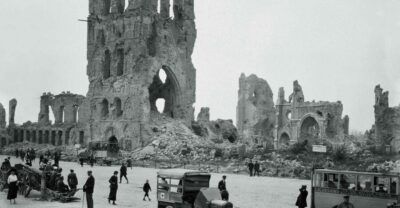
After lunch, you visit Ypres and spend time with the Flanders Fields Museum. The tour includes time to use an audio guided story about the war. That audio component is useful because the museum can get dense fast. Hearing the war explained in an organized way helps you later when you are outside walking the real sites.
You also get to see Ypres itself. A couple of reviews pointed out that the town feels historic in a different way than the battlefield sites do, which helps balance the day. You are reminded there were civilians and communities here before the fighting.
Practical tip: wear comfortable shoes. Museums are easy, but soon after you will be outside again. Also, if you are sensitive to crowds, remember the late-day ceremony draws people, so keep your patience for the final stretch.
Other Flanders Fields and Ypres Salient tours we have reviewed

Hill 60 tunnels and the Passchendaele area, from above ground to the harsh reality underneath
The tour includes Hill 60 in the Zillebeke area. Hill 60 is known for its tunnels, and you will be ascending a hill to see the tunnel sites. Even without technical detail, you get a clear idea: the war was not only fought on the surface. Planning, movement, and survival depended on underground space.
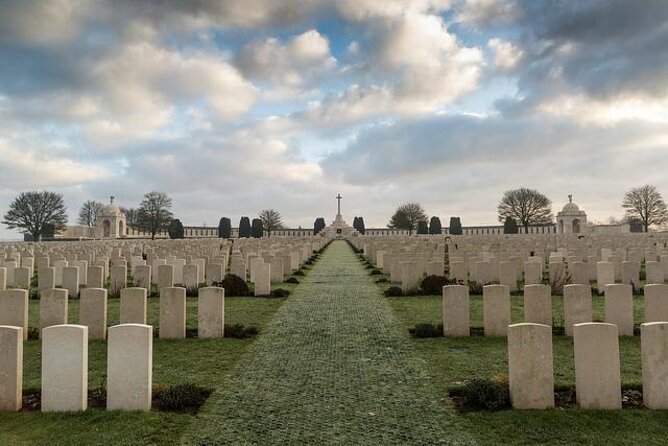
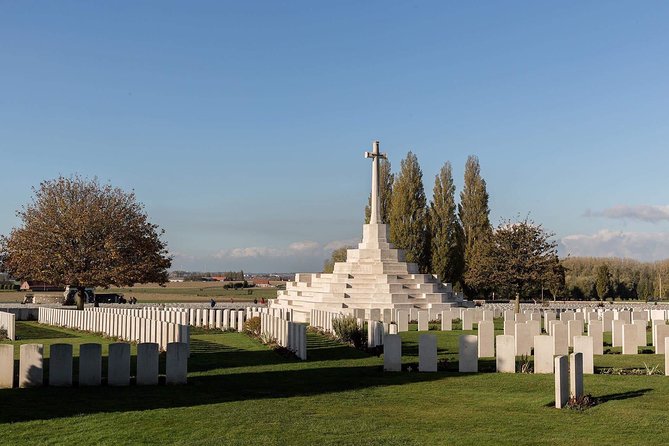
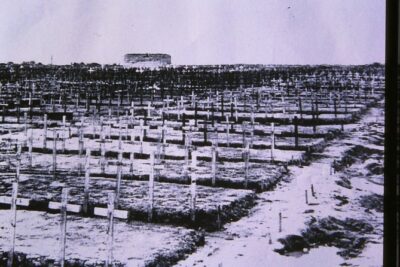
Then you move into the Passchendaele region. One stop listed is Passchendaele New British Cemetery, and you will also call at Tyne Cot, described as the world’s largest Commonwealth cemetery. This is not a quick photo stop. With cemeteries at Tyne Cot’s scale, your attention starts doing something different. Your eyes keep finding the pattern of headstones, and the repetition becomes part of the emotional weight.
Reviews also praised the contrast of present-day calm with trench warfare nearby. That contrast is real here. You may feel like you are in a quiet place, but the ground has a different story.
At this stage, the tour’s structure is helpful. You are seeing a sequence of burial grounds after trench areas and memorial markers. That helps you build a full picture. You are not only learning about where people died. You are learning where the world decided to remember them.
Essex Farm Cemetery and the John McCrae connection
Later in the day, you head to Essex Farm Field Hospital, where John McCrae wrote the poem In Flanders Fields. The stop is listed as Essex Farm Cemetery, with a shorter visit time, so you will want to use your focus wisely.
This site matters for one reason: it turns a famous line into a place. When you associate the poem with a specific hospital area on the Western Front, the words become harder to dismiss as something distant or “only literature.” You see the kind of environment where medical work and frontline pressure collided.
This is also where you may notice the day’s pacing. The stops are not equally long, but the guide commentary is what makes the shorter stops feel worthwhile.
The Commonwealth scale of loss, and why Tyne Cot and Menin Gate are different
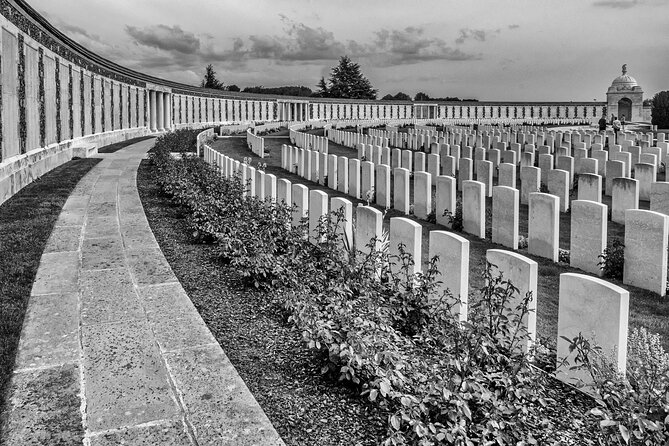
A key part of the experience is the Commonwealth cemetery focus: you will visit multiple burial and memorial sites tied to Commonwealth forces, including the huge headstone grounds at Tyne Cot and the broader remembrance atmosphere around Ypres.
It is important to understand the difference in emotional mechanics. At cemeteries like Tyne Cot, the scale makes you feel small and overwhelmed. At the Menin Gate, the feeling is different. It is communal, ritual, and daily.
You will spend time at places that help you understand the “why” of remembrance. One part is reading and reflecting at graves. Another part is watching a ceremony that has been repeated for more than a hundred years.
Menin Gate Last Post Ceremony: simple, public, and moving
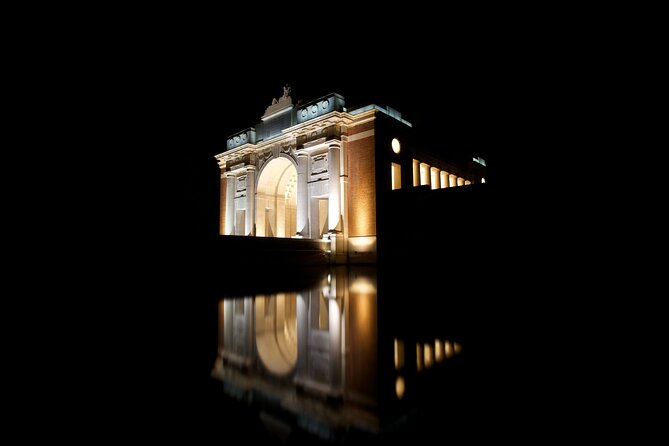
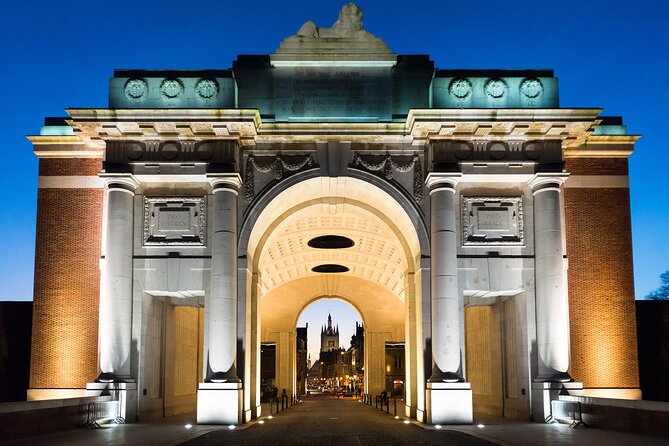
The tour’s emotional climax is the Last Post Ceremony at Ypres Menin Gate, scheduled for about 30 minutes. The tour description is clear: you attend a daily tribute to Commonwealth soldiers and officers who were missing after battle.
This moment tends to land for most people because it is not complicated. There is no need to explain why it matters. You are there for a ritual of remembrance that people show up for day after day. Even if you think you already know what it will feel like, the setting changes things. Menin Gate is stone and names, and the ceremony turns that into something shared.
A couple of reviews also noted that refurbishment or scaffolding can affect the visual experience. You cannot control that. If you are the type who hates construction in your photos, you might consider checking for current conditions before you go. But even with visual distractions, the core of the ceremony remains the same: a quiet tribute with real purpose.
Timing matters here. Since the ceremony ends the day, you are likely to arrive with a full schedule behind you. That is good. The fatigue can make the moment feel even more real.
Price and value: what $95.34 buys for a 10.5-hour remembrance day
At $95.34 per person for about 10 hours 30 minutes, you are buying more than transportation. You are buying a full-day route that links major sites, plus a professional multilingual guide and time for key stops.
Here is the value logic I look for in a tour like this:
- You get expert interpretation to connect what you see, instead of walking a battlefield and guessing.
- You get an organized, long route so you spend less time planning and more time on the sites that matter.
- You get the one experience that is difficult to replicate on your own at the right moment, the Last Post Ceremony.
The main value trade-off is that it is a long day with limited flexible wandering. You will be moving between stops with a schedule in mind. Also, confirm what your booking includes for lunch, since the tour description mentions a lunch stop but the listing info says lunch is not included.
Still, for a first-time WWI visitor to Flanders, this price can feel fair if you want the “bigger picture” without hiring a private car and building the route yourself.
Who this tour suits, and who might want a different format
This tour fits best if you:
- Want to cover multiple WWI sites in one go, including trenches, major cemeteries, and the Menin Gate ceremony.
- Appreciate structured guidance, especially when topics are heavy.
- Have moderate physical fitness, since you will spend time walking outdoors and moving between sites.
It might be less ideal if you:
- Need lots of quiet time without any schedule pressure.
- Get motion sick easily, and prefer a smaller vehicle. Air-conditioned transport helps, but one report said the day used a larger bus than expected.
- Struggle with very large groups where it is harder to hear commentary at all stops.
If you are traveling with a group that needs a calmer pace, you might consider a smaller private tour of fewer sites. But if your goal is to see the key places in a single day, this is built for that.
Should you book the Bruges Flanders Fields Remembrance Tour?
If you want WWI to feel real, not like a chapter you skimmed, I think this is a strong booking. The combination of trenches and memorials, the scale of places like Tyne Cot, and the daily ritual at Menin Gate is a powerful mix. You also get the kind of guidance that names and dates turn into something you can actually hold in your mind.
Before you book, do two quick checks: confirm what your ticket includes for lunch, and be ready for a very full day with plenty of outdoor time. If you can handle that, you will likely leave with a deeper, more human understanding of the people behind the history.
FAQ
What time does the tour start in Bruges?
The tour starts at 11:00 am.
Where is the meeting point in Bruges?
You meet at Bargeplein Bargeweg, 8000 Brugge, Belgium.
Do I need to bring a paper ticket?
The tour uses a mobile ticket.
Is lunch included?
Lunch is listed as not included, though the day includes a lunch stop in the Ypres area.
Is the tour in English?
Yes, the tour is offered in English.
How long is the full tour day?
The duration is listed as about 10 hours 30 minutes.
Every Belgium Review
Flanders Fields and the Ypres Salient
Keep Reading Bruges
Newer Belgium reviews from the same corner of the country
- Explore the Instaworthy Spots of Bruges with a Local
★ 5.0 · 3 reviews - Best of Brussels Private Tour from Zeebrugge or Bruges
★ 4.0 · 3 reviews - Private taxi Transfer from Bruges to Amsterdam
★ 5.0 · 3 reviews - Bruges Photo Session By a Pro
★ 5.0 · 3 reviews - Private 3-hour walking tour of Bruges with official tour guide
★ 4.0 · 3 reviews
Bruges Tours, side by side.
 ★ 4.6From Brussels: Guided Day Trip to Bruges and GhentFrom $558,353 reviews
 ★ 4.7From Brussels: Bruges & Ghent Day Tour – 2 Fairytale CitiesFrom $578,242 reviews
 ★ 4.0Bruges and Ghent – Belgium’s Fairytale Cities – from BrusselsFrom $594,809 reviews
 ★ 4.8Bruges: Small Group Boat Cruise and Guided Walking TourFrom $514,102 reviews
 ★ 4.4Bruges: Walking Tour, Canal Boat Trip w/Beer Tasting OptionFrom $412,759 reviews
 ★ 5.0Historical Walking Tour: Legends of BrugesFrom $32,541 reviews
 ★ 4.4From Amsterdam: Bruges Day Trip in English with Boat OptionFrom $611,989 reviews
 ★ 4.6From Amsterdam: Bruges Day Trip in Spanish with Boat OptionFrom $611,866 reviews
Browse the lists this tour appears in