
REVIEW · GHENT
2 Hours Private Historical Walking in Ghent
Ghent’s best stories start at the water. This private historical walking tour turns ordinary streets into a living map of trade, power, and everyday life. I especially love the stop at the old harbour area, where you get practical trade secrets and sailor and merchant stories, and I also love your guide Yves, a local with a history degree plus humor that keeps things moving. The one drawback is simple: it is still a walk, so wear comfy shoes and don’t expect long pauses.
You’ll book this for your group of up to 10 people, and the tour runs about 2 to 3 hours in English. Pickup is offered if you message the hotel details, and you’ll start at Gent Korenmarkt and finish near Hoogpoort, where you can hop straight into pubs and restaurants.
In This Review
- Key things I’d plan around
- Why this private walk works in Ghent
- A note on pacing
- Starting at Gent Korenmarkt, ending near Hoogpoort
- Pickup: handy if you want to start without friction
- Stop 1: The old harbour and the stories behind trade
- What makes this stop valuable
- The “medieval facade” moment
- Stop 2: A famous landmark and why it mattered beyond Ghent
- What to look for during this part
- Stop 3: The trade that made Ghent great, and the trouble it caused
- Why I like this approach
- Stop 4: The multi-purpose building that showed power of the people
- How to get more from this stop
- Stop 5: How the wealthy of Old Ghent lived
- What you can learn even without fancy architecture knowledge
- Stop 6: The extra famous and unknown places
- Price and value: what $336.82 buys you
- When the price might feel steep
- Timing, tickets, and your day plan
- Weather and shoes
- Belgian beer: not included, but easy to add
- Who this tour is best for
- Should you book this private historical walk?
Key things I’d plan around
- Old harbour trade stories: Learn how merchants and sailors shaped Ghent, not just what buildings look like
- A guide with local roots: Yves is history trained and keeps the pace fun, not lecture heavy
- Power and politics in plain language: You’ll connect local trade to European leaders
- People-first landmarks: The tour explains how a multi-purpose building represented town power
- A look at different social classes: You’ll see how the wealthy in Old Ghent lived
- Private group flexibility: It’s only your group, with a guide who can adjust walking when needed
Ghent keeps going, and so do we
- Ghent: 50-Minute Medieval Center Guided Boat Trip★ 4.5 · 5,637 reviews
- Historical Walking Tour: Legends of Gent★ 5.0 · 1,761 reviews
- Ghent: 40 Minute Medieval Center Guided Boat Tour★ 4.4 · 884 reviews
- Evening Tour of the Dark Side of Gent★ 5.0 · 646 reviews
Why this private walk works in Ghent
Ghent can feel like two towns at once. You have the big postcard views, and then you have the smaller passages where the real clues hide. This tour is built for that second part. In a short time window, you get a coherent story line: who made Ghent money, what made them enemies, and how the city’s buildings reflected who held the power.
The private format matters. Up to 10 people means you can ask questions as you go, and the guide can shape the pace. You also get a focused arc instead of random sightseeing. I like that because Ghent’s sights are dense. If you arrive and start wandering without context, it is easy to miss the “why.”
This also suits travelers who want something human. The tour isn’t just dates and facades. You hear about merchants and sailors, and you get small “how it worked” explanations that make the old streets feel logical.
A note on pacing
Even with stops and stories, this is a walking tour. If you have a hard time with long distances, you can tell the guide ahead of time so you’ll walk past places where you can sit and rest. If you’re traveling with anyone who needs frequent breaks, still bring patience and plan for slower movement.
Starting at Gent Korenmarkt, ending near Hoogpoort
Where you start affects how fast you get oriented. The meeting point is Gent Korenmarkt perron 29000 Ghent, Belgium. From there, you’re positioned near central sights and easy connections to the rest of the city.
You end at Hoogpoort 56, 9000 Gent, Belgium. That matters because it’s close to pubs and restaurants. In practical terms, it means you don’t have to invent a plan at the end of the tour. If you want a Belgian beer after the walking part, you can ask the guide for recommendations right where you’re finishing.
Pickup: handy if you want to start without friction
Pickup is offered. You communicate by phone or email the hotel where you are staying, and then the guide can arrange pickup details. If you’re juggling luggage, kids, or multiple tours in a day, this reduces stress a lot.
Belgium reads best on foot, here is more of it
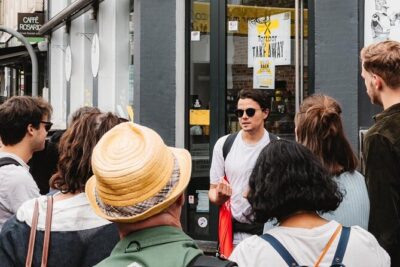
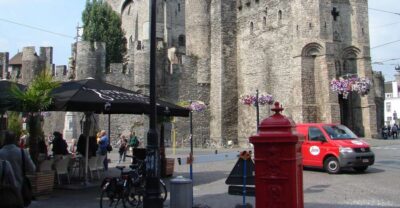
Stop 1: The old harbour and the stories behind trade
The tour kicks off with the old harbour. This is one of those places where your brain wants to label it as scenery, but the guide pushes you to see it as an engine.
You’ll learn old trade secrets and hear experiences of sailors and merchants. That is the key idea. You are not just looking at water and old buildings. You’re learning how goods moved, why certain people mattered, and how daily commerce shaped the city’s fortunes.
What makes this stop valuable
Trade sites teach you patterns. When you understand who depended on what, Ghent stops feeling like a museum and starts feeling like a workplace from long ago. The explanation also helps you read the city’s layout. Even if you only remember a few key points, those points make future sightseeing easier because you start noticing why places are where they are.
The “medieval facade” moment
The description promises you’ll look behind the medieval facade of the town. In practice, that means the guide connects pretty exteriors to real economic motives. I find that payoff is strongest when you ask at least one question, even a simple one like how people made money there.
Stop 2: A famous landmark and why it mattered beyond Ghent
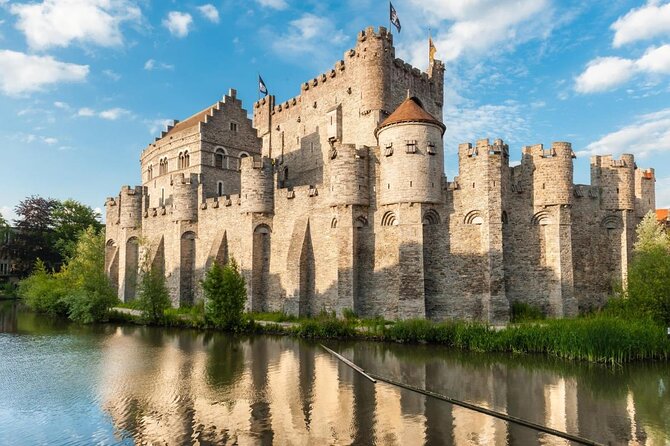
Next comes one of Ghent’s best known landmarks. The tour focuses on how its creation and evolution changed the history of the surroundings.
That framing is smart. It nudges you to think like a planner. Instead of just asking what the landmark is, you ask what it did. Was it tied to authority? Trade? Community identity? The guide’s role here is to connect that landmark to the wider story, so when you see it from different angles later, you interpret it differently.
What to look for during this part
Even when the guide is doing most of the explaining, you can help your own memory with quick observation.
- Notice what the landmark controls visually, entrances, routes, or squares
- Notice what surrounds it, especially if the surrounding streets feel like they were built for movement
If you do that, you’ll keep the story longer.
Stop 3: The trade that made Ghent great, and the trouble it caused
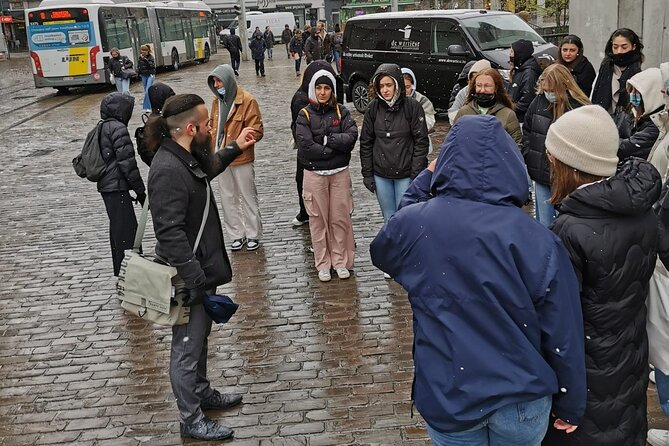
Then you get to one of the most compelling parts: the trade that made Ghent and Flanders great, and how it got the town into trouble with some of Europe’s powerful leaders.
This is where the tour stops being just local and turns into political history, but without getting too heavy. The idea is straightforward. When a city becomes wealthy through trade, other people pay attention. That attention can mean alliances, but it can also mean pressure, conflict, or interference.
Why I like this approach
A lot of walking tours in Europe stay safe. They focus on what people built, not what they risked. Here you get both. The guide’s humor and clear explanations keep the topic grounded, so you understand cause and effect instead of collecting random facts.
If you like history that explains motives, this stop is a highlight. It helps you make sense of why a town like Ghent could be both prosperous and targeted.
Stop 4: The multi-purpose building that showed power of the people
Next, the tour talks about a multi-purpose building that represented the power of the people living in the town.
That detail is important, because it reframes “power” away from only kings and armies. It suggests local civic strength. When buildings serve multiple roles, it often signals that ordinary civic life had weight. The guide’s job here is to connect that building’s functions to what it meant for the community.
How to get more from this stop
As you listen, try to track two questions:
- Who used the building for what purposes?
- What does that tell you about how Ghent’s citizens viewed their own influence?
If you keep those questions in mind, the explanation feels less like trivia and more like a lens for understanding the town.
Stop 5: How the wealthy of Old Ghent lived

After the civic power discussion, you shift to class and daily life. You’ll see how the wealthy of Old Ghent lived.
This is one of the most practical benefits of a guided walk. Buildings don’t just look old. They show hierarchy if you know what to notice. The guide helps you spot the differences that might be invisible when you’re just walking by.
What you can learn even without fancy architecture knowledge
You do not need an art degree. The tour gives you context so you can understand what you’re seeing, and that context turns architecture into information. It’s also useful for photos. When you know what mattered, you frame pictures differently.
Stop 6: The extra famous and unknown places
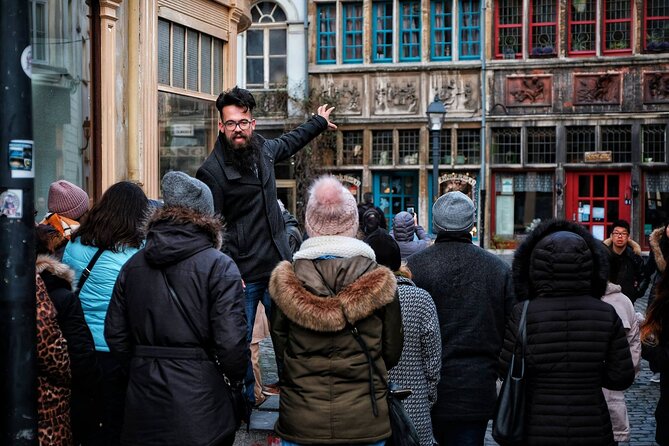
The itinerary hints at many more famous and unknown places of Ghent. That is one of the underrated strengths of private walking tours. A guide can move you between major sights and the side corners where the story continues.
In a group tour, you might get whisked along with minimal context. Here, the private setup makes the small detours worth it. You’ll likely get quick explanations that connect back to the larger themes: trade, power, and how everyday life reflected those forces.
Price and value: what $336.82 buys you
The price is listed as $336.82 per group, up to 10 people. That matters because you are not paying per head. If you travel with family, friends, or a small group, the cost can become very reasonable compared with per-person pricing models.
It’s also a value play for people who want fewer meetings and more meaning. You get:
- A private guide for 2 to 3 hours
- English language service
- A structured route with multiple stops and connected themes
- Pickup offered if you coordinate hotel details
- All fees and taxes included
The tour is short enough for a day schedule, but long enough to cover several story “chapters.” If you’ve only got a limited time window in Ghent, this kind of guided narrative often helps you see more than a longer, unstructured wandering session.
When the price might feel steep
If you are traveling solo or as a couple with no interest in splitting costs, $336.82 per group can feel like a lot. In that case, you might compare it to what you’d spend on other guided options. The “best fit” is easiest when you have 3 to 10 people who want the same focus.
Timing, tickets, and your day plan
The tour runs about 2 to 3 hours. That’s an ideal block in a European city day, especially if you want to fit in museums, canals, or food stops later.
You’ll receive a mobile ticket. That’s a small thing, but it reduces friction. Less paperwork means you start walking sooner.
Weather and shoes
No one wants to rain-walk in poor footwear. Since it’s a walking tour, bring shoes you trust. If the weather turns, you’ll still be able to enjoy the story if you can stay comfortable.
Belgian beer: not included, but easy to add
The tour explicitly notes that a stop for Belgian Beer is not included, and alcoholic beverages are not included. That doesn’t mean you cannot drink during your day. It just means you’ll need to pay for beer separately if you choose to.
Also, because you end at Hoogpoort near pubs and restaurants, you’re in a great position to decide after the walk. If you want beer, ask the guide for recommendations at the end, right where you’ll be going next.
Who this tour is best for
This is a great pick if you:
- Want a private historical walk in Ghent with real narrative flow
- Like trade and politics, not just monuments
- Prefer a guide who balances facts with humor, and who grew up locally
- Enjoy seeing how different social groups lived, not only what the city looks like
It also works well for travelers who don’t want to commit to a full day. In 2 to 3 hours, you can connect multiple sights and leave with a mental map.
Should you book this private historical walk?
Yes, if you want Ghent to make sense quickly. Book it if you like the idea of hearing how trade built the city, how that wealth created conflicts with Europe’s powerful leaders, and how civic power showed up in buildings. The private format and the guide style stand out here, especially with Yves, a local guide with a history degree and a sense of humor that keeps the walk enjoyable.
Skip it only if you dislike walking, or if your group is too small to make the group price feel worth it. Even then, consider it if you can share the booking and you value a guided story over solo sightseeing.
If you’re aiming for an authentic Ghent experience without getting lost in details, this is one of the more practical ways to do it.
More Belgium on Foot
Every Belgium Review
Ghent, Continued
Newer Belgium reviews from the same corner of the country
- Ghent Walking Tour – City Highlights and Beyond Tradition
★ 4.5 · 3 reviews - Ghent: City Walk with Audio Guide in 7 Languages on your Phone
★ 4.5 · 3 reviews - Children’s escape game in the city of Ghent Marsupilami
★ 5.0 · 3 reviews - Ghent Running and Sightseeing Tour
★ 5.0 · 3 reviews - Ghent: Walking Tour from Friday Market to the Cathedral
★ 4.8 · 3 reviews
Ghent Tours, side by side.
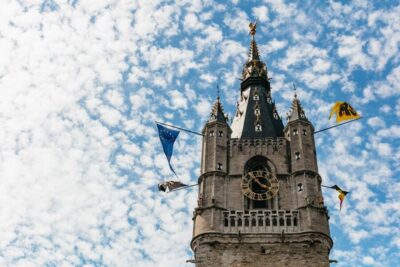 ★ 4.6From Brussels: Guided Day Trip to Bruges and GhentFrom $558,353 reviews
 ★ 4.7From Brussels: Bruges & Ghent Day Tour – 2 Fairytale CitiesFrom $578,242 reviews
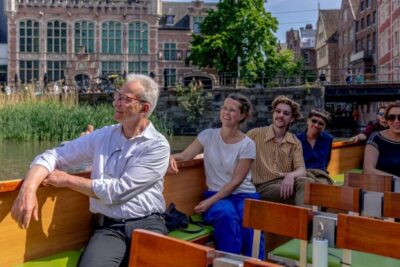 ★ 4.5Ghent: 50-Minute Medieval Center Guided Boat TripFrom $125,637 reviews
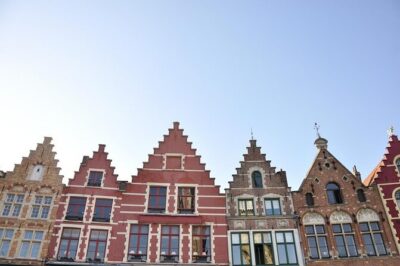 ★ 4.0Bruges and Ghent – Belgium’s Fairytale Cities – from BrusselsFrom $594,809 reviews
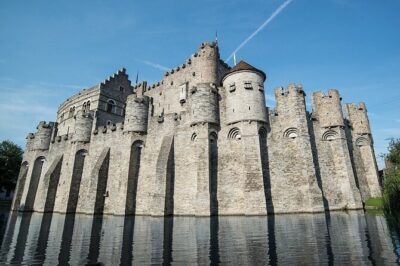 ★ 5.0Historical Walking Tour: Legends of GentFrom $31,761 reviews
 ★ 4.6From Brussels: Full-Day Antwerp and Ghent Guided TourFrom $571,019 reviews
 ★ 4.4Ghent: 40 Minute Medieval Center Guided Boat TourFrom $12884 reviews
 ★ 4.5Bruges and Ghent Day Trip from BrusselsFrom $56784 reviews
Browse the lists this tour appears in