
REVIEW · GHENT
Discover authentic Ghent with historian & taste the best chocolate
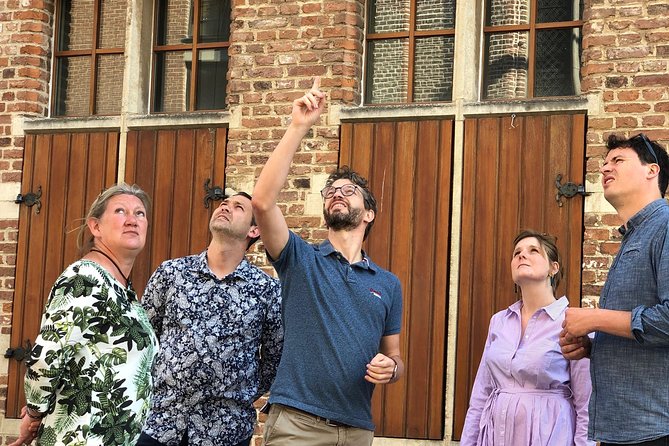
Ghent tells stories best on foot. In this guided 2-hour stroll, you get medieval landmarks plus a historian who reads the city like a page-turner, starting right at Sint-Baafsplein. I like that the guide uses the city’s own squares as clues, so you quickly understand why Ghent became such a power in Europe.
Next, I really like the pace and focus: you spend just enough time at major stops to grasp what matters, like the art and architecture at St. Bavo’s Cathedral, before moving on to the next chapter. Even with the short time at each location, the walk stays coherent, so it feels like a guided story instead of a random sightseeing list.
One consideration: the chocolate stop is real, but it is not a long chocolate feast. If your main goal is to eat chocolate for an hour straight, plan to add extra time before or after this tour, because the tasting is more of a well-timed break than a full-on dessert session.
In This Review
- Key highlights you’ll care about
- Walking Ghent with a historian, not a script
- Meet at Sint-Baafsplein, then unlock the city’s big themes
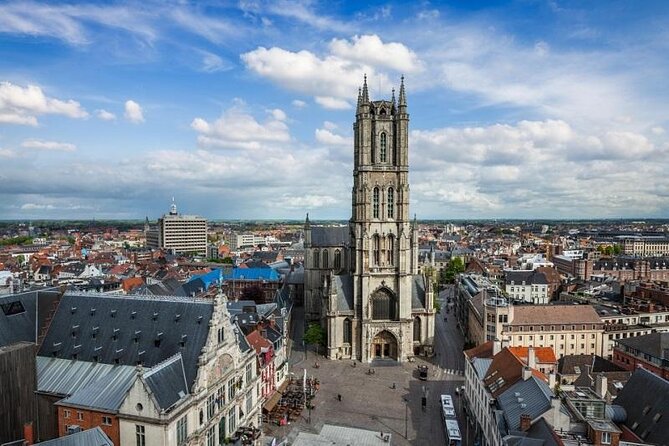
- St. Bavo’s Cathedral: architecture and art, in the right order
- Maaseikplein and the Van Eyck connection
- Geeraard de Duivelsteen: when a castle becomes a story
- Hoogpoort and Korenmarkt: 13th-century streets and 800 years of clues
- Ghent Town Hall and Stadshal: politics, power, and nicknames
- Het Groot Vleeshuis: how butchers worked together before refrigeration
- Gravensteen: the count’s message to the city
- St. Veerleplein and the sea symbols
- Graslei and Korenlei: the harbor that explains the city’s wealth
- The chocolate tasting: a short break that keeps the story moving
- Value check: $42.05 for a guided, story-driven 2-hour walk
- Who this tour is best for
- Quick timing and what to expect on the ground
- Should you book the Ghent historian and chocolate walk?
- FAQ
- How long is the Ghent historian and chocolate tour?
- Where does the tour start and end?
- Is the tour offered in English?
- How big is the group?
- What ticket do I get?
- What is the cancellation policy?
Key highlights you’ll care about
- Start at Sint-Baafsplein, meeting in front of the white statue to get your bearings fast
- St. Bavo’s Cathedral gets explained with a building-and-art approach, not just quick glances
- Ghent legends and villains show up literally, with stops tied to local folklore and symbolism
- Old-town architecture in short bursts, including 13th-century streets and 800-year-old squares
- A dedicated chocolate tasting that fits the route, even if it is not a long dessert marathon
Ghent keeps going, and so do we
- Ghent: 50-Minute Medieval Center Guided Boat Trip★ 4.5 · 5,637 reviews
- Historical Walking Tour: Legends of Gent★ 5.0 · 1,761 reviews
- Ghent: 40 Minute Medieval Center Guided Boat Tour★ 4.4 · 884 reviews
- Evening Tour of the Dark Side of Gent★ 5.0 · 646 reviews
Walking Ghent with a historian, not a script
Ghent can look like a postcard, but it is also a working city of layers. This tour is designed for that reality. You walk, you pause, and the guide connects what you see to the reasons Ghent turned out the way it did: politics, economics, religion, and the everyday life of people who lived here before cars and phones.
The best part is how the guide organizes the city in your mind. Instead of hitting every building equally, the route keeps returning to themes. So after a couple of stops, you start recognizing patterns: who held power, where money mattered, and why certain symbols appear on buildings and facades.
And yes, there is chocolate. But think of it as a short, delicious interlude that keeps the walk fun, not the main event.
Meet at Sint-Baafsplein, then unlock the city’s big themes
Your tour begins at Sint-Baafsplein in the heart of Ghent, meeting in front of the white statue in the middle of the square. That sounds small, but it matters. A clear meeting point means you do not waste your limited time hunting for the group, and the square itself becomes your first classroom.
From the start, the guide gives you a city overview, then zooms in on how Ghent grew and changed. The square is treated like a map. You learn how economic power, political conflict, cultural identity, and religious influence all overlap in the same place. If you have only a day or two in Belgium, this kind of orientation helps everything else you do make more sense.
Two extra reasons this opening works well:
- You are already in the center of the old city, so the walking feels natural rather than a long commute.
- The stories are not just dates. They explain why you would notice certain details once you know what to look for.
St. Bavo’s Cathedral: architecture and art, in the right order
Next comes St. Bavo’s Cathedral, where you do a walk-around and get the building history plus the key art treasures. This stop is brief, so the guide has to choose what matters. The result is a quick route to understanding what you are seeing, not a lecture that runs long.
Even if you have visited other cathedrals in Europe, this one is still worth the time because the tour frames it as part of Ghent’s identity. Religion here is not abstract. It connects to power, wealth, and culture in a city where different forces competed for influence.
Practical tip: wear shoes you can stand in. You are not just peeking at the exterior. You will get close enough to appreciate how the cathedral fits into the surrounding old-city rhythm.
Maaseikplein and the Van Eyck connection
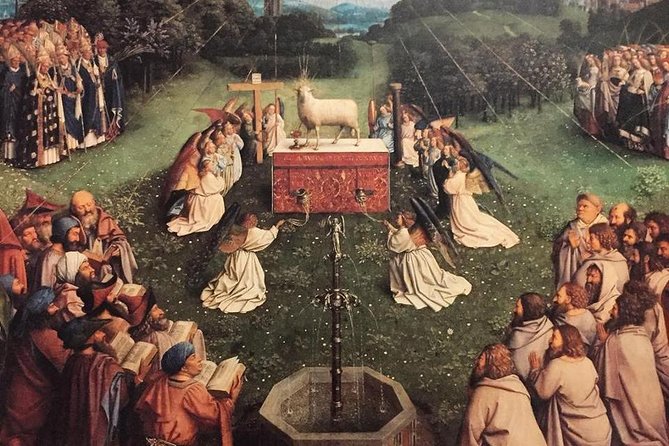
At Maaseikplein, the tour plays with a simple prompt: do the image of the Van Eyck brothers look familiar? It is a quick stop, but it works because it ties Ghent to one of Belgium’s art names you probably already associate with the region.
What you get here is context. You are not asked to memorize art history trivia. You are nudged to recognize how the city celebrates its connection to the Van Eyck brothers and why those names matter to Ghent’s reputation.
If you have even a basic interest in Flemish art, this stop can spark curiosity for museums or churches you might visit later.
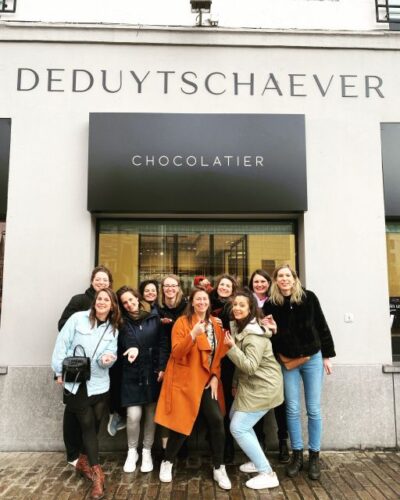
Still hungry? Other chocolate rooms we sat down in

Geeraard de Duivelsteen: when a castle becomes a story
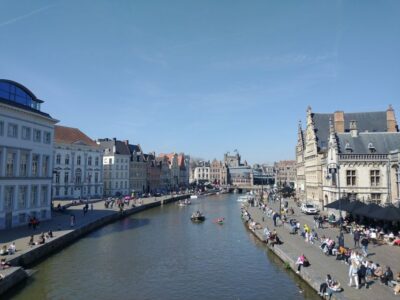
Then you shift to Geeraard de Duivelsteen, often called the Castle of Gerald the Devil. This one is fun because it blends fortress architecture with local mythology. The guide points out the Scheldt area and how the city’s “villains” show up in the story world, including Vikings and Geeraard De Duivel.
It is a short stop, but it changes how you see the building. Instead of thinking castle, you start thinking meaning, fear, symbolism, and the way power gets performed.
If you like playful history, this is a good moment. It is not just stern medieval tones. It is people making stories to explain conflict and control.
Hoogpoort and Korenmarkt: 13th-century streets and 800 years of clues
From there, the tour moves into the smaller-scale details that make old Ghent feel alive. At Hoogpoort, you reflect on ancient buildings reaching back to the 13th century. This is brief, but it sets up the next stop nicely: at Korenmarkt, you get an 800-year-history perspective and learn that some houses include mysterious inscriptions.
You do not need to read the inscriptions yourself to get value from this. The guide helps you understand why they are worth noticing at all. This is how you start traveling smarter in historic cities: you stop treating facades as scenery and start treating them as evidence.
When you leave Korenmarkt, you usually feel something simple: you want to walk those lanes again without a guide, just to test your new instincts.
Ghent Town Hall and Stadshal: politics, power, and nicknames
The tour then heads to Ghent Town Hall (Stadhuis) and the surrounding civic area. Here the guide brings in the most famous Gentenaar connection in this story: Emperor Charles V and the revolt by the Gentenaars. You also hear the nickname story, tied to why locals are called noose bearers.
That nickname may sound odd at first, but the tour explains it in a way that makes it memorable. It helps you see the town hall not as a pretty building, but as a place connected to real conflict and real consequences for everyday people.
Next is Stadshal, described as the most contested building in Ghent, with a nickname you can learn during the walk. This stop is short but it adds drama to the civic story. It reinforces that Ghent’s “civic pride” has always been mixed with conflict.
Het Groot Vleeshuis: how butchers worked together before refrigeration
At Het Groot Vleeshuis, the tour turns to daily life and commerce. The big idea is simple: how do you guarantee quality meat in a time without refrigeration? The answer, in this building, is cooperation. Butchers work together in one place, and the system makes quality checks more manageable.
It is a smart stop because it gives you a concrete example of economic organization. This is not abstract “history.” It is a practical solution to a real problem.
If you like food-related history, this is one of the more satisfying parts of the walk. You start thinking about the city as an infrastructure machine, not just a museum.
Gravensteen: the count’s message to the city
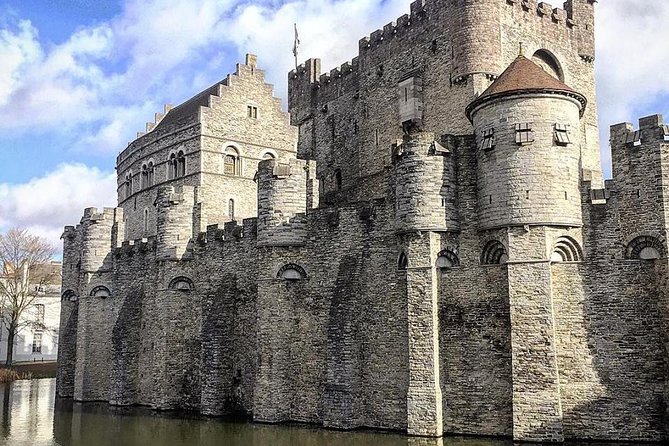
Then you reach Gravensteen, a castle built by the count of Flanders. The tour frames it as showing a fist to the inhabitants of Ghent. In other words, this is not only a fortress. It is a statement.
You get the quick meaning first, which helps you appreciate the structure after. You can also feel why people in medieval cities wanted defensive power nearby. Your mind connects the castle to the civic tensions the guide already introduced earlier in the walk.
St. Veerleplein and the sea symbols
At St. Veerleplein, the tour hunts for Neptune, seahorses, and strange dolphins. It is a small stop, but it is a reminder that European city art is often full of symbols that outsiders miss.
This is the kind of detail that makes a walk memorable. If you are the type who likes noticing the tiny stuff, this part will feel rewarding. If you are in a hurry, you may feel like it is just a quick pause, but even then it adds variety and a bit of whimsy.
Graslei and Korenlei: the harbor that explains the city’s wealth
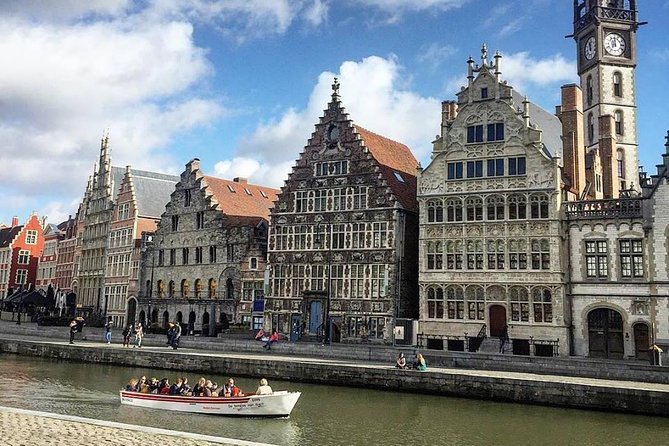
For many people, the highlight is the harbor area: Graslei and Korenlei. This is where you see the beauty of the waterfront and learn how skippers worked here for centuries and sought entertainment along the same stretch.
This is more than pretty views. The tour connects the harbor to why Ghent mattered economically. Ships mean goods, goods mean money, and money means politics. It all circles back to the themes the guide introduced at Sint-Baafsplein.
If you want a photo, wait for the right moment. Even when it is not busy, light can shift quickly along the water. A quick reposition helps.
The chocolate tasting: a short break that keeps the story moving
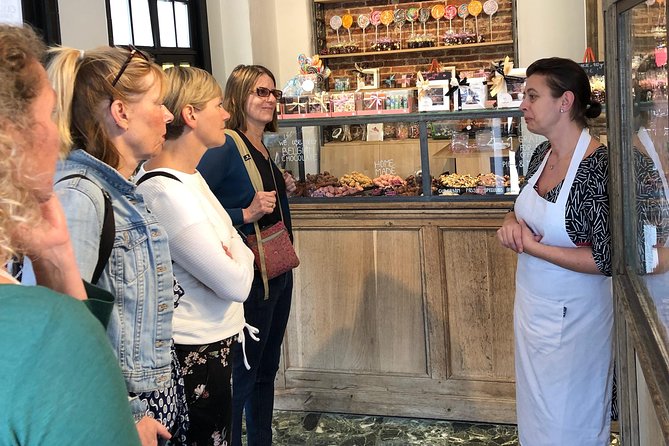
The experience is billed around discovering authentic Ghent with historian storytelling and tasting chocolate. Based on how the walk is structured, the chocolate is a focused stop rather than a long, slow afternoon.
That is good news if you want a balanced tour, not a sugar-only detour. It is also worth knowing the trade-off. One of the most common feedback themes is that people enjoy the chocolate, but some wish they had more time there.
So use this tour like a sampler. Let the tasting refresh you, then, if you have time, buy an extra bar or two from a chocolate shop afterward. That way you get both: story during the walk, and more chocolate on your own schedule.
Value check: $42.05 for a guided, story-driven 2-hour walk
At $42.05 per person for about 2 hours, this tour is priced like a solid city-orientation experience. You are paying for two things that matter in Ghent: a guided narrative that ties multiple sights together, and access to a structured tasting moment.
The value gets stronger because many stops do not require paid entry during the walk. The time at each place is also intentional, around 5 to 20 minutes, which helps you cover a lot without feeling trapped in one location too long.
Also, the group size stays small, with a maximum of 15 travelers, which typically helps keep the tour moving at a human pace. It is the kind of tour where you can ask questions and actually get answers.
Language is English, and you can use a mobile ticket, which is handy if you hate paper confirmations.
Who this tour is best for
This is a great fit if you want:
- A fast, meaningful overview of Ghent’s medieval identity
- A guide who can explain why buildings matter, not only what they look like
- A light chocolate tasting paired with walking and story stops
It may be less ideal if:
- You want a long, dedicated chocolate experience
- You are hoping for a deep art museum visit beyond quick cathedral context
If you like history with a sense of humor, or if you enjoy the feeling of learning while wandering, you will likely have a good time.
Quick timing and what to expect on the ground
The walk is designed for about 2 hours. That means you should expect steady walking and short pauses. You will cover a lot of central Ghent landmarks, so comfortable shoes are non-negotiable.
The meeting point is Sint-Baafsplein, and the end point is Saint Michael’s Bridge on Sint-Michielshelling. That ending matters if you want to continue walking or transition into a meal nearby without retracing your steps.
You also have a practical advantage: it is near public transportation, and service animals are allowed. The experience says most people can participate, so it is not framed as a specialized activity.
Should you book the Ghent historian and chocolate walk?
I think it is a strong choice for anyone who wants to understand Ghent quickly and enjoy it while doing so. The standout strength is the storytelling approach, with locals-and-power themes that connect multiple sights instead of listing them one by one. St. Bavo’s Cathedral and the harbor stops give you the big-ticket visuals, while the civic and food-history stops add surprises that make the day feel earned.
Book it if:
- You want a guided orientation walk that makes medieval Ghent click
- You like chocolate as a fun bonus, not a full-day obsession
- You prefer a small group format that keeps momentum
Skip it or add extra time elsewhere if:
- You are chasing maximum time at a chocolatier, not a quick tasting
- You want a slower pace with lots of inside museum time
If you are doing a first visit, this tour can be your shortcut to understanding why Ghent feels different from other Belgian cities.
FAQ
How long is the Ghent historian and chocolate tour?
It lasts about 2 hours.
Where does the tour start and end?
It starts at Sint-Baafsplein, 9000 Gent in front of the white statue in the middle of the square. It ends at Saint Michael’s Bridge, Sint-Michielshelling, 9000 Gent.
Is the tour offered in English?
Yes, the tour is offered in English.
How big is the group?
The tour has a maximum of 15 travelers.
What ticket do I get?
You receive a mobile ticket.
What is the cancellation policy?
You can cancel for free up to 24 hours in advance for a full refund. If you cancel less than 24 hours before the start time, the amount paid is not refunded.
Every Belgium Review
More Chocolate Rooms in Belgium
Ghent, Continued
Newer Belgium reviews from the same corner of the country
- Ghent Walking Tour – City Highlights and Beyond Tradition
★ 4.5 · 3 reviews - Ghent: City Walk with Audio Guide in 7 Languages on your Phone
★ 4.5 · 3 reviews - Children’s escape game in the city of Ghent Marsupilami
★ 5.0 · 3 reviews - Ghent Running and Sightseeing Tour
★ 5.0 · 3 reviews - Ghent: Walking Tour from Friday Market to the Cathedral
★ 4.8 · 3 reviews
Ghent Tours, side by side.
 ★ 4.6From Brussels: Guided Day Trip to Bruges and GhentFrom $558,353 reviews
 ★ 4.7From Brussels: Bruges & Ghent Day Tour – 2 Fairytale CitiesFrom $578,242 reviews
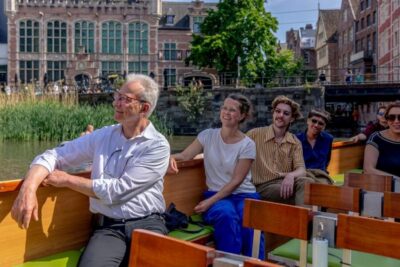 ★ 4.5Ghent: 50-Minute Medieval Center Guided Boat TripFrom $125,637 reviews
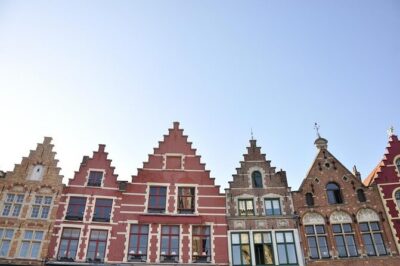 ★ 4.0Bruges and Ghent – Belgium’s Fairytale Cities – from BrusselsFrom $594,809 reviews
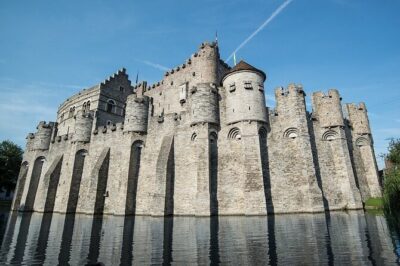 ★ 5.0Historical Walking Tour: Legends of GentFrom $31,761 reviews
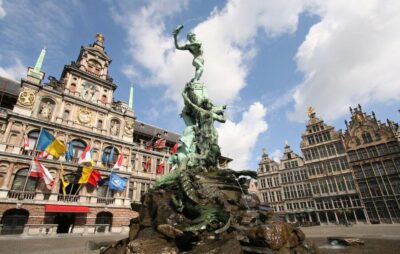 ★ 4.6From Brussels: Full-Day Antwerp and Ghent Guided TourFrom $571,019 reviews
 ★ 4.4Ghent: 40 Minute Medieval Center Guided Boat TourFrom $12884 reviews
 ★ 4.5Bruges and Ghent Day Trip from BrusselsFrom $56784 reviews
Browse the lists this tour appears in