

REVIEW · ESCAPE GAMES & CITY TRAILS
e-Scavenger hunt Kortrijk: Explore the city at your own pace
A city game that turns walking into learning. This e-scavenger hunt in Kortrijk pairs sightseeing with a smartphone trail, so you can chase facts at your own rhythm. You will hit landmark stops like the Beguinage and St. Martin’s Church area while answering interactive questions.
I love how easy the format feels, even if you just want something fun instead of a lecture. I also like the mix of sights, from UNESCO-level medieval places to museums and even inner-city stops you might normally skip. One drawback to plan for is that the trail depends on finding each location on your phone, so if your GPS is flaky or construction blocks a clue, you may need to double-check where you are.
In This Review
- Quick Hits Before You Start
- Why This E-Scavenger Hunt Feels Better Than a Usual Walking Tour
- Price and Time: What You Actually Get for $37.33 Per Group
- Starting at Stationsplein 6, and What to Expect From the Trail Setup
- How the Smartphone Game Works (and How to Stay Calm If It Glitches)
- Beguinage UNESCO and St. Martin’s Church Area: Where the Trail Finds Real Quiet Corners
- If you like slow strolling, this section is your reward
- Lys Valley Details: The Speytorre and Why Stone and Water Matter
- Texture Museum and the Flax-to-Linen Story: A Regional Theme You Can Walk Through
- Church of Our Lady, Count Baldwin IX, and 12th Century Ambition
- Kortrijk 1302, Groeninge Abbey, and Golden Spurs Myth-Making
- Belfry and the Cloth Hall Connection: Built for Trade, Still a Center Marker
- Baggaertshof: Joossine Baggaert, 13 Cottages, and Compassion at a Human Scale
- Hospital Courtyard: Hospitality, Not Illness
- Groeningepoort, Groeninge Gate, and Groeningemonument: Golden Spurs Commemoration in Stone
- Kortrijk Theatre and the 1920 “Théâtre à l’italienne” Plan
- Castle ‘t Hooghe and the International Rose Garden: A Pause That Feels Like Part of the Day
- Shopping Centres on the Trail: K in Kortrijk and Ring Shopping
- Armorie Tower and Philip the Fair: Fortification With a Clear Date
- Passionists Church (1874): Popular Devotion, Not Just Architecture
- Who This Self-Guided Kortrijk Trail Suits Best
- Should You Book This Kortrijk E-Scavenger Hunt?
- FAQ
- How long is the e-scavenger hunt in Kortrijk?
- What is the price?
- Where does the trail start?
- Is it self-guided?
- What languages is the app offered in?
- Do I need a smartphone and data?
- What’s included in the activity?
- Is cancellation free?
- Are service animals allowed and is it suitable for hearing impairment?
Quick Hits Before You Start
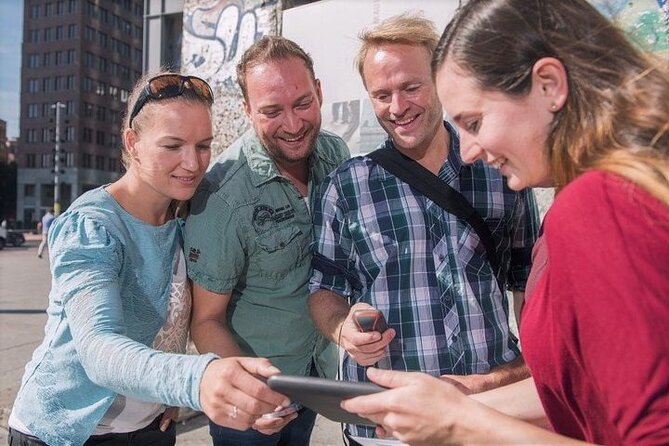
- Self-guided, private, and flexible: your group of up to 6 plays together and chooses the order
- Landmarks plus question prompts: you get facts tied to spots like the Beguinage and Belfry
- A Lys Valley themed route: flax and linen stories show up through places like the Texture museum
- History you can walk through: Golden Spurs sites like the Groeningepoort, Groeninge Gate, and Groeningemonument are part of the trail
- Bring your own phone (and data): smartphone and data are not included
- Expect real-city conditions: if the city has works in progress, some answers may be harder to see
Puzzle walks in other Belgian towns
- e-Scavenger hunt Ghent: Explore the city at your own pace★ 4.5 · 41 reviews
- Discover Ostend while playing! Escape game – The Walter case★ 4.0 · 16 reviews
- e-Scavenger hunt Ostend: Explore the city at your own pace★ 4.5 · 10 reviews
- Discover Ghent with a self-guided Outside Escape city game tour!★ 4.0 · 10 reviews
Why This E-Scavenger Hunt Feels Better Than a Usual Walking Tour
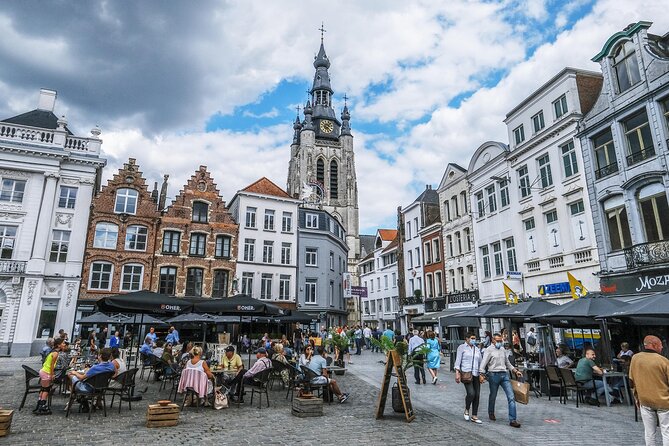
I like guided tours, but they can be slow when your group moves at different speeds. This kind of trail flips that. You start at Stationsplein 6 and then you are on your own timer. If you want a quick look at St. Martin’s Church area, you can do that. If you want to linger near the Beguinage courtyards, you can.
What makes it work well is the game structure. You are not just strolling and hoping to notice details. You are hunting for answers, and the trail points you toward specific stories. One stop can be about medieval daily life, another about a tower built to control traffic on the Lys, and another about how flax became linen in the region. That question format helps the facts stick.
It is also great for mixed groups. Reviews point out that the questions can work for kids, and playing in teams can make it feel like a shared adventure rather than an adult-only history class. If your group includes people who normally hate museums, this format often wins them over because the learning is baked into the walk.
Price and Time: What You Actually Get for $37.33 Per Group
The price is $37.33 per group, capped at up to 6 people. For me, the value comes from two things: time efficiency and group pricing. Instead of paying per person for a guided service, you get one game that your whole team runs together.
The duration is about 2 to 4 hours, which is a sweet spot in a city like Kortrijk. It is long enough to feel like you saw more than just the main square, but short enough to fit between other plans. If you are only here for a day or you want an easy activity that still feels meaningful, this works well.
Also, it is typically booked around 8 days in advance. That does not mean you will always need to book early, but it is a sign this is popular with people who like planning light, not last minute.
Starting at Stationsplein 6, and What to Expect From the Trail Setup
You meet at Stationsplein 6, 8500 Kortrijk, Belgium. The activity ends back at the same meeting point. So you are not stuck figuring out a new drop-off location.
You receive a mobile ticket, and the trail is designed for a private group, meaning only your team plays. That matters because you are not competing with other groups for the same views or trying to hear instructions from someone else’s device.
The trail runs on a wide daily window listed as 12:00 AM to 11:59 PM, and confirmation is received at booking time. In plain terms, it is built for flexibility. You can choose a time that matches your energy level and the day’s weather.
Two practical items you should plan for:
- You need your own smartphone.
- You need data, since smartphone and data are not included.
How the Smartphone Game Works (and How to Stay Calm If It Glitches)
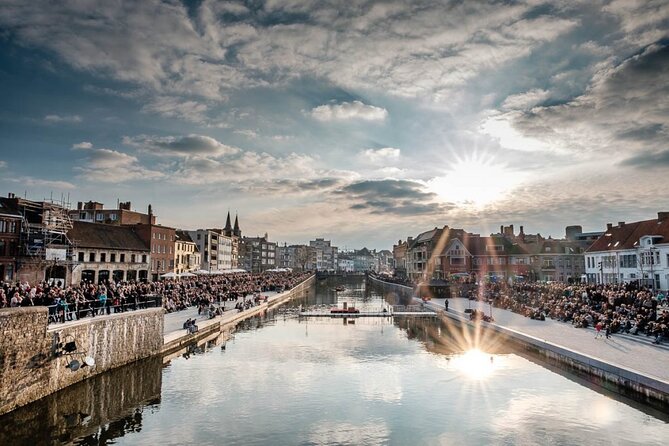
The core idea is simple: you use the online app on your phone, it directs you to locations, and you answer questions at each stop. The trail is meant to let you explore at your own pace, take breaks where you want, and even decide your own order.
From real-world experience with this style of product, the only thing that can make it frustrating is navigation. One review specifically mentioned that the Qula GPS function did not work for their day, so they had to trace locations via Google. It cost them time and affected how they scored. If you want the smoothest experience, I suggest you:
- Make sure your phone has enough battery.
- Confirm you have enough signal or plan to use your phone’s maps if GPS seems off.
- Watch for construction around the city. If a clue is placed at a spot that is temporarily blocked, you might need to look around slightly rather than assume the question is broken.
Good news: the app format is described as user-friendly, and there is a note that it works for hearing-impaired users. There is also a note that service animals are allowed, which is helpful if you travel with one.
Other Belgian cities done end to end
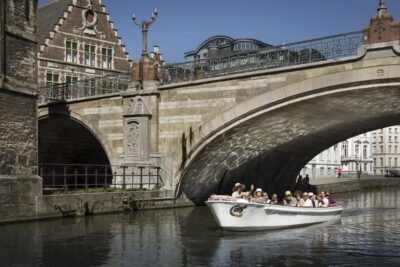

Beguinage UNESCO and St. Martin’s Church Area: Where the Trail Finds Real Quiet Corners
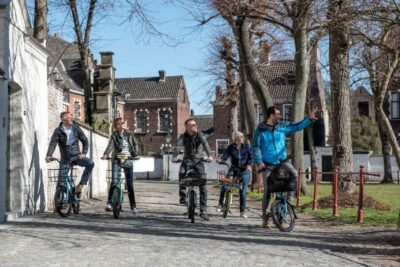
You start building your Kortrijk story fast with the Beguinage. Since 1998 it has been a UNESCO World Heritage Site, and it dates back to the 13th century. On the trail, you are not just told that the Beguinage is important. You are guided to stroll past the small houses and, if you want, visit the courtyard or the Mattheuskapel.
This part is where I like the self-guided approach most. The Beguinage feels like a calm pocket inside a bigger city. When you are not following a loud group, it is easier to notice the scale of the cottages and the way the place is designed for daily life. Even if you do not go deep into every building, the setting alone makes the facts more memorable.
The trail also includes details around the Beguinage’s past setbacks. The Beguinage was destroyed several times, including in 1302 during the Battle of the Golden Spurs, in 1382 after the Battle of Westrozebeke, and again by the French in 1684. The current 41 cottages date back to the 17th century. That timeline can sound abstract until you are standing among the houses.
Staying near that medieval layer, you also get the site of St. Martin’s Church (Sint-Maartenskerk), where a place of worship existed around 650 AD. That kind of detail helps you understand Kortrijk as a city with long roots, not just a modern center.
If you like slow strolling, this section is your reward
You can take your time here. This is a good place to pause, split the team to compare answers, and then reunite before moving on.
Lys Valley Details: The Speytorre and Why Stone and Water Matter
Kortrijk is tied to the Lys River, and the trail makes that connection feel concrete with the Speytorre. The towers are described as built of limestone and sandstone. The southern Speytorre was built in 1385 to help control traffic on the Lys.
I love these kinds of facts because they change what you see. Instead of treating towers as pretty architecture, you understand their job. Control of river traffic mattered for trade, movement, and power. Once you know that, the stone stops feeling like decoration and starts feeling like infrastructure.
If your group enjoys architecture, this is a satisfying stop because it combines building materials with a specific purpose and a date.
Texture Museum and the Flax-to-Linen Story: A Regional Theme You Can Walk Through
One of the most distinctive parts of the trail is Texture, the museum in Kortrijk. It tells the evolution of flax cultivation, processing, and turning flax into linen fabric, linked to the development of the Lys Valley in and around Kortrijk.
You might not think a walking scavenger hunt would connect you to textile history, but it does here. This is where the trail’s “game” style becomes practical. The questions nudge you to pay attention to how a region’s economy and daily life are shaped by what grows nearby.
If you want a Kortrijk souvenir that is not just a postcard, this is the type of stop that gives you something to talk about later. You can share the simple story of how linen ties to the river and the valley, and it feels grounded in place.
Church of Our Lady, Count Baldwin IX, and 12th Century Ambition
The trail includes the Church of Our Lady, with construction started in 1199 on the initiative of Count Baldwin IX. The church was located within the grave domain of Kortrijk.
It is the kind of detail that makes a church feel more like a civic decision than a random building. A date, a name, and a reason for the location are exactly what you want when you are walking and learning at the same time. The self-guided trail helps you connect those facts to what you see.
If your group likes older Christianity sites, this stop can also set the tone for the later churches on the route.
Kortrijk 1302, Groeninge Abbey, and Golden Spurs Myth-Making
A big theme in Kortrijk is the Battle of the Golden Spurs, and the trail feeds you that theme through the Kortrijk 1302 museum. It is located in the Beguinage Park in Kortrijk, and it is a multimedia museum in the Groeninge Abbey.
The museum deals with myth-making around the Golden Spurs. I like this because it does not treat history as just dates. It makes you think about how stories grow into legends, and why that matters.
If you are the type who enjoys a museum but hates feeling rushed, the multimedia format can be a good fit. And with a trail format, you can decide how much time you want at each stop.
Belfry and the Cloth Hall Connection: Built for Trade, Still a Center Marker
On the route you will reach the belfry (Belfort), located in the center of the Grote Markt. It was part of the former cloth hall, and the earliest mention of the cloth hall dates back to 1248.
This is a stop where I recommend you look up. When you know it once served cloth trading, you read the square differently. Grote Markt is not just a nice place to pause. It is part of the city’s economic engine.
If you like “what was this place used for” answers, this is where the trail delivers.
Baggaertshof: Joossine Baggaert, 13 Cottages, and Compassion at a Human Scale
The trail includes the Baggaertshof, founded in 1638 by Joossine Baggaert. She set up 13 cottages for needy women.
This is the kind of fact that sticks because it is so human. The numbers are specific, and the purpose is clear. When you stand by a place like that, it is easier to understand how charity and community support worked in the past.
Also, it is a nice contrast in tone. After castles, battles, and towers, you get a reminder that Kortrijk’s story also includes care systems that affected real lives.
Hospital Courtyard: Hospitality, Not Illness
Another thoughtful stop is the hospital’s inner courtyard. It is described as one of the best preserved 17th century sites in Kortrijk. The note is especially interesting: “hospital” (Latin hospitalis) refers to hospitality, not illness.
That little language detail changes your interpretation. It helps you see how the concept of care could be broader than sickness. This is one of those places where a quick pause works. The courtyard setting invites you to look around and let the quiet do its job while your phone asks the next question.
Groeningepoort, Groeninge Gate, and Groeningemonument: Golden Spurs Commemoration in Stone
The trail weaves in multiple commemorative sites tied to the Battle of the Golden Spurs.
You will find:
- Groeningepoort, a memorial in Kortrijk, a triumphal arch built for the 600th anniversary of the battle
- The Groeninge Gate (Groeningepoort) and the Groeninge monument (Groeningemonument), also connected to the 600th anniversary commemoration
I group these together because they are all about memory made visible. Even if you do not know every detail of the battle beforehand, you can get something out of standing in front of the commemorations and reading what the city decided to emphasize.
If you like photos, this is where you can take them. And if you like the game approach, it is perfect for getting answers that make you look at carvings and structures more carefully than you would on a normal walk.
Kortrijk Theatre and the 1920 “Théâtre à l’italienne” Plan
The trail includes Kortrijk Theatre, described as one of the largest performing arts centers in South-West Flanders. The building dates from 1920 and is conceived as a théâtre à l’italienne.
That term matters because it hints at the design logic behind opera and drama houses. Even if you do not go inside, the fact you learn about its theater style can help you understand why the building looks the way it does.
It is also a good change of pace in a route full of medieval and commemorative stops. A theatre gives you a different kind of energy: public gathering for performances.
Castle ‘t Hooghe and the International Rose Garden: A Pause That Feels Like Part of the Day
You also get the International Rose Garden, dating back to 1959. It is located in the gardens of the castle ’t Hooghe, along Doorniksesteenweg.
A rose garden is a practical gift when you are doing a timed walking game. You can slow down, regroup, and handle the phone task without feeling like you are rushing through another “quick photo and go” stop.
There is also a note that a park was given its name after a visit by Queen Astrid on 5 April 1935. If your route passes that park area, it is another moment where a single line of context makes the space more interesting.
Shopping Centres on the Trail: K in Kortrijk and Ring Shopping
Yes, the trail even touches modern shopping districts. It includes K in Kortrijk, with more than 80 shops and restaurants across 34,000 m2. It also includes Ring Shopping, an indoor center on the outskirts with 90 shops.
This might sound odd at first for a history-themed trail, but I get why it happens. A scavenger hunt needs movement, and shopping corridors are often where you can cover distance comfortably, especially if the weather turns.
If you are hoping for strictly historic architecture the entire time, you might feel the mix. But if your group is happy with a varied route, these stops can make the trail easier to run smoothly on foot.
Armorie Tower and Philip the Fair: Fortification With a Clear Date
The trail includes the Artillery Tower, also called the Armorie Tower. It was built together with the castle in 1301-1302 by French King Philip the Fair, as part of the Franco-Flemish war against the Count of Vlaandere.
This is an excellent example of why I like the question-driven approach. You are not just seeing a tower. You have a date, a builder, and a conflict. That gives the structure a purpose you can explain to someone later.
Passionists Church (1874): Popular Devotion, Not Just Architecture
Finally, the trail includes the church of the Passionists (1874), described as the archetypal church of popular devotion.
That phrase matters because it suggests the church’s role in everyday belief and community practice. If your group likes religious architecture, this is a gentle closing stop that shifts from medieval power and fortifications to more modern devotion patterns.
Who This Self-Guided Kortrijk Trail Suits Best
I think this is a strong match for you if:
- You want a 2 to 4 hour activity that feels playful but still teaches you real facts
- You prefer moving at your own speed, not waiting for a guide’s pace
- You like team activities. Reviews mention two teams can make it more exciting
- You travel with family. The questions are described as child-friendly for many stops
- You want a route that includes both famous highlights and less touristy corners
You might want to reconsider if:
- You expect the trail to work perfectly without any phone navigation. One GPS failure example is enough to remind you that you need a Plan B (like using Google maps)
- Your group hates uneven city conditions. If works in Kortrijk make signage or answer locations harder to see, your experience may slow down
Should You Book This Kortrijk E-Scavenger Hunt?
If you like walking tours but want more agency, I would book it. The value per group is solid, the format is easy, and the route hits a good spread of Kortrijk: UNESCO Beguinage, Golden Spurs memorials, the belfry and cloth hall link, textile history through Texture, plus towers, churches, and a few practical city corridors.
My biggest advice is simple: bring your phone with working battery and data. If your GPS acts weird, you are not stuck, you just switch to a manual map approach. Do that, and you can keep the game feeling fun instead of frustrating.
If your goal is to see Kortrijk in a way that feels like an adventure rather than a checklist, this is a smart choice.
FAQ
How long is the e-scavenger hunt in Kortrijk?
It takes about 2 to 4 hours.
What is the price?
It is $37.33 per group, for up to 6 people.
Where does the trail start?
The meeting point is Stationsplein 6, 8500 Kortrijk, Belgium.
Is it self-guided?
Yes. It is a private, self-guided city trail you play on your phone, with your group deciding the order and pace.
What languages is the app offered in?
The experience is offered in English.
Do I need a smartphone and data?
Yes. A smartphone and data are not included.
What’s included in the activity?
You get an online app to play the game on your phone, plus the city trail for a team of max 6 people.
Is cancellation free?
Cancellation is free if you cancel up to 24 hours in advance for a full refund.
Are service animals allowed and is it suitable for hearing impairment?
Service animals are allowed, and the experience is noted as user-friendly for hearing impaired participants.
City Routes Across Belgium
Every Belgium Review
City Games and Trails in Belgium
Newer Belgium reviews from the same corner of the country
- Ghent Walking Tour – City Highlights and Beyond Tradition
★ 4.5 · 3 reviews - Ghent: City Walk with Audio Guide in 7 Languages on your Phone
★ 4.5 · 3 reviews - Children’s escape game in the city of Ghent Marsupilami
★ 5.0 · 3 reviews - Ghent Running and Sightseeing Tour
★ 5.0 · 3 reviews - Ghent: Walking Tour from Friday Market to the Cathedral
★ 4.8 · 3 reviews
Escape Games & City Trails, side by side.
 ★ 4.5e-Scavenger hunt Antwerp: Explore the city at your own paceFrom $3767 reviews
 ★ 4.5e-Scavenger hunt Bruges: Explore the city at your own paceFrom $3758 reviews
 ★ 4.0Bruges Scavenger Hunt and Highlights Self Guided Audio TourFrom $954 reviews
 ★ 4.5e-Scavenger hunt Ghent: Explore the city at your own paceFrom $3741 reviews
 ★ 4.5Beer Tasting and Scavenger Hunt in Brussels – About 3 HoursFrom $4035 reviews
 ★ 4.0e-Scavenger hunt Mechelen: Explore the city at your own paceFrom $3734 reviews
 ★ 4.5Romantic Bruges: Love Between the Canals Exploration GameFrom $732 reviews
 ★ 4.0e-Scavenger hunt Hasselt: Explore the city at your own paceFrom $3731 reviews
Browse the lists this tour appears in