
REVIEW · ZEEBRUGGE, OSTEND & THE BELGIAN COAST
e-Scavenger hunt Ostend: Explore the city at your own pace
Ostend gets fun when you chase clues. I like how this self-guided mobile scavenger hunt turns a walk into a game, with clues that keep you moving without worrying about matching a tour group’s pace. You can start when it fits your day, then follow a route through standout sights on foot.
I especially enjoy how the questions point you to places you might otherwise skip, like the famous moored ship Mercator and key church stops tied to Ostend’s deeper story. It is a practical way to get your bearings, then enjoy the city on your terms.
One thing to plan for: it lives on your phone, so battery and signal matter. If your phone runs low, you may lose time and have to restart parts of the game.
In This Review
- Key highlights worth knowing before you go
- Why this Ostend hunt feels easier than a normal walk
- Price and value: $37.33 per group up to 6
- Starting at Ostend Station, then letting the clues guide your day
- Stop 1: Mercator in the harbor, where history is close and physical
- Stop 2: Church of Saint Peter and Saint Paul, neo-Gothic on older ashes
- Stop 3: The spirit of James Ensor at the renovated Ensor House
- Stop 4: Zeeheldenplein and Arne Quinze’s red sculptures
- Stop 5: A small baroque fishermen and seamen church
- Stop 6: The pier, 300m out for skyline views
- Stop 7: Casino-Kursaal (Kursaal Oostende), white stone by the sea
- Stop 8: The bronze equestrian statue of King Leopold I
- Stop 9: Ostend Station again, as a city hub marker
- Stop 10: Heilig Hartkerk, plus a modern sea-dance sculpture
- Beach time: use the hunt to justify a slow seaside break
- Quick practical tips so the phone game does not trip you up
- Should you book the e-Scavenger hunt Ostend?
- FAQ
- Where does the e-Scavenger hunt in Ostend start and end?
- How long does the hunt take?
- Is this experience guided by a person?
- What language is the game offered in?
- Do I need to bring a smartphone?
- What places will we visit during the walk?
- Is the activity open all day?
Key highlights worth knowing before you go

- Start any time, no fixed schedule for a true self-paced city walk
- Smart clues at real landmarks, from Mercator to the Kursaal Oostende
- A route built for walking, including the 300m pier for sea-and-skyline views
- English mobile ticket for easy reading on the go
- Pause-friendly pacing, so you can stop for a snack or drink without stress
- Private group format, priced per group up to 6
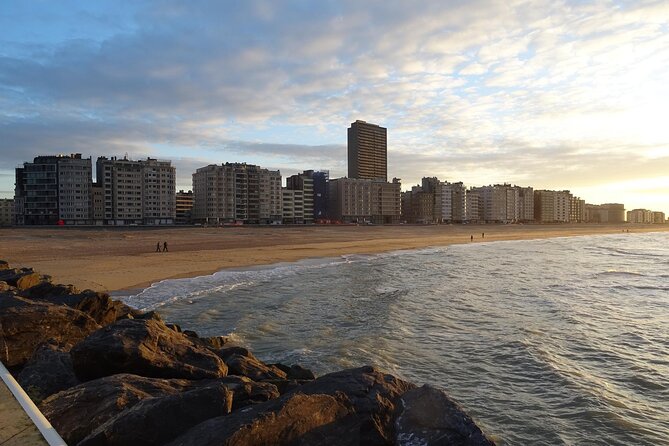
The North Sea end of the country
- Unforgettable sea trip to the wind farms in the North Sea★ 4.5 · 44 reviews
- e-Scavenger hunt Ostend: Explore the city at your own pace★ 4.5 · 10 reviews
Why this Ostend hunt feels easier than a normal walk
Ostend is a seaside city, but it can be surprisingly easy to wander past interesting details. This hunt fixes that. Instead of reading a guidebook for hours, you get a phone game that nudges you from stop to stop with quick, real-world questions.
The biggest benefit is that you control the tempo. No waiting around. No sprinting after strangers. If you want to linger at a church façade, you can. If you want to move on quickly, you can. That makes it a good fit for mixed groups, including people who like structure and people who just want time outdoors.
I also like that the hunt is designed as a city walk, not a sit-and-stare museum task. It is meant for seeing the city at street level, while still learning enough to feel like the walk meant something.
Price and value: $37.33 per group up to 6
The price is $37.33 per group, for up to 6 people. That is a big deal for value, because you are not paying per person. If you travel with a full group, the cost per person drops sharply.
You also get something you would normally pay extra for: a ready-made route and question prompts. Instead of spending time planning every stop, you spend that energy walking, snacking, and actually enjoying Ostend.
You might find this hunt especially worth it if:
- you are traveling with friends or family and want one shared activity
- you like interactive experiences more than reading at each stop
- you have only a half-day and want meaningful sightseeing without long research
Starting at Ostend Station, then letting the clues guide your day
You start at Oostende Station, Natiënkaai 1, 8400 Oostende, Belgium, and you return back to the same meeting point to finish. That is a smart setup in a city like Ostend, because the station is a natural hub. It is also listed as near public transportation, which helps if you are mixing this with other plans.
The activity is open daily, 12:00 AM to 11:59 PM (within the listed availability period). So you are not stuck doing it only at one time of day. I like this flexibility. If you hit the city early, you can start right away. If you want beach time first, you can come back later and still fit the hunt in.
Language is English, which makes it easier if your group does not want to translate on the move.
Stop 1: Mercator in the harbor, where history is close and physical
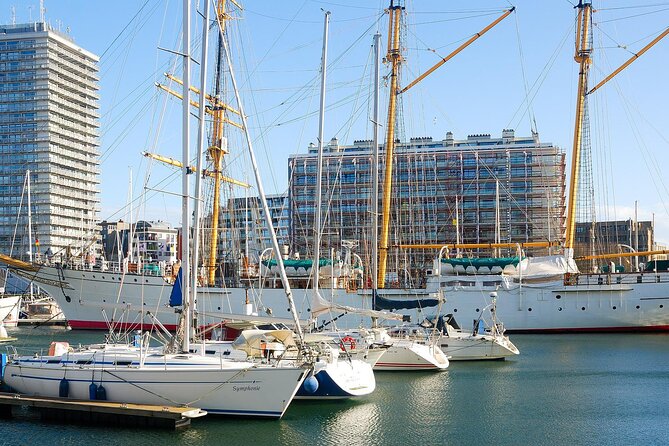
The hunt starts with one of Belgium’s best-known ships: the protected sailing ship Mercator. In Ostend, it has been moored for decades in the harbor, between the train station and the town hall.
This is a great first stop because it instantly gives you a sense of place. You are not just wandering streets in an abstract way. You are looking at a major landmark tied to the port side of Ostend, and the location makes it easy to get the route started without confusion.
A practical tip for the first part: take a moment to look at the ship and its surroundings before you start answering questions. Once you anchor your attention, the rest of the walk feels smoother.
Puzzle walks in other Belgian towns

Stop 2: Church of Saint Peter and Saint Paul, neo-Gothic on older ashes

Next up is the Church of Saint Peter and Saint Paul, the main Roman Catholic church in Ostend. It is described as a Neo-Gothic church built on the ashes of an earlier church that once stood on the site.
This stop is worth your time even if you are not a church person. Built-up sites like this are a reminder that cities keep rewriting themselves. The façade and style give you a clear visual, while the fact it sits on older foundations adds the kind of context you do not get from just passing by.
If you are short on time, try to pick one thing to focus on, like the overall shape or the style elements. The hunt questions help you do that, but you can also guide your own attention for a better payoff.
Stop 3: The spirit of James Ensor at the renovated Ensor House
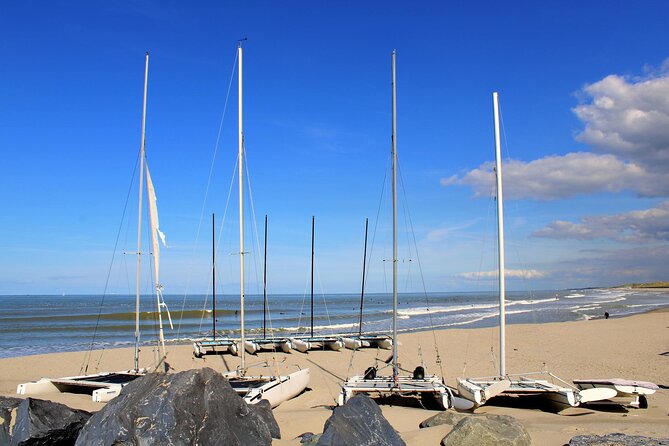
Then the hunt leans into Ostend’s artistic side with Ensor. You are directed to the renovated James Ensor House, where the idea is simple: if you want to wander into the spirit of James Ensor, Ostend is the right place to do it.
Ensor’s name matters because he is strongly associated with this region, so connecting him to real locations gives your sightseeing a focused thread. This is also a good contrast point after churches and harbor landmarks. You move from built heritage into personal, artistic identity.
One small caution: if you dislike art stops, this section might feel slower. But even then, it is short enough to be manageable, and the hunt is designed to keep it from feeling like a detour.
Stop 4: Zeeheldenplein and Arne Quinze’s red sculptures
On the way, you hit a major street-level visual: the red monumental sculptures by artist Arne Quinze on Zeeheldenplein. They are described as eye-catching for their monumental shape and red color.
This is the kind of stop that works even if you only have a quick moment. Bright public art makes it easy to spot where you are. It also helps break up the route so you do not feel like you are just doing one long monument-to-monument checklist.
If your group likes photos, this is a good place to stop and capture the color and scale. The hunt will keep you moving, but you will want a quick pause here.
Stop 5: A small baroque fishermen and seamen church

The next church is a small baroque church with two aisles in the town center. The key story is human: Capuchin monks worked among the fishermen, and later the church became known as the fishermen and seamen church in Ostend.
This is where Ostend’s coastal identity becomes less about scenery and more about work and community. Baroque churches often reward close looking with details, but the real payoff here is the social angle. You are seeing how the city served the people who made the port possible.
If your group is tired of large churches, this one may actually feel refreshing because it is smaller and more intimate.
Stop 6: The pier, 300m out for skyline views
Now you get a classic seaside moment: the longest pier of the coast from 2019, with a 300m walk to the end. The reward is clear, sea-air, and the chance to see Ostend’s skyline from out on the water.
This is one of my favorite types of stops for a hunt because it adds variety. You shift from buildings to open space and horizon views, and your legs get a bit of stretch after earlier sightseeing.
Plan for wind. Ostend can be breezy, and you will feel it more out on the pier than along the shore.
Stop 7: Casino-Kursaal (Kursaal Oostende), white stone by the sea
Then it is on to the Casino-Kursaal, also called Kursaal Oostende. It is built in 1950, made of white Portland stone, and tied to Ostend’s seaside resort image.
This is a good architecture stop, because you get a clear time period and a distinct look. If you like postwar European seaside architecture, this will feel especially satisfying. If you do not, it still works as a landmark to help orient your walk, and the hunt keeps it from being a random stop.
Stop 8: The bronze equestrian statue of King Leopold I
Next you find a bronze equestrian statue of King Leopold I, set on the dike of Ostend along the Albert I promenade.
Statues can feel like one more roadside object. Here, the equestrian theme and the elevated setting make it more memorable. You can also use this as a mental checkpoint, because it gives you a strong view corridor down the promenade.
It also helps you read the city layout. You start to understand where major streets, waterfront angles, and open spaces connect.
Stop 9: Ostend Station again, as a city hub marker
Ostend Station is listed as the terminus of railway line 50A, described as the most important station on the Belgian coast. In a hunt route, bringing the station into the flow makes sense. It is a natural reference point.
If you are ending the hunt soon after, this stop can help you transition from game mode to relaxed sightseeing mode. If you are still in the middle, it gives your brain a reset.
Stop 10: Heilig Hartkerk, plus a modern sea-dance sculpture
In the Westerkwartier district, the hunt takes you to the Heilig Hartkerk parish church on Heilig Hartplein.
Then you get a modern artistic beat from the artist Patrick Steen. The work is described as life-size on the boulevard, showing a fusion of two dancing people with the waves of the sea.
This pairing is fun because it mixes old and new in one neighborhood stretch. The church gives you the traditional landmark feeling. The sculpture gives you a playful reminder that Ostend is also a place where art meets everyday life.
If your group likes “a stop that feels different,” this is that section.
Beach time: use the hunt to justify a slow seaside break
The route explicitly ends with seaside downtime, including a sunbath or walk on the beach and ideas like water sports. Ostend’s well-maintained white sandy beaches are part of what makes the city feel like a real vacation.
Here is my practical advice: do not race toward the end. If the hunt is going well, you can time your final stretch so you land on the beach while you still have energy.
This is also where you can use the hunt’s flexible pacing. One of the best aspects is that you can pause the search for a snack and a drink. That means you do not have to treat every stop like it is a race.
Quick practical tips so the phone game does not trip you up
I love self-guided experiences, but you need a little prep. Here is what matters based on how this hunt behaves in real use:
- Bring a power bank. A dead phone is the fastest way to ruin momentum.
- Make sure you can access the game on your phone before you set off.
- If you get turned around, use your phone’s navigation as a backup. One reviewer noted the route map was not obvious at first.
- Some question sets can be done in different orders. That is flexible, but if you do not know the area well, it can mean extra backtracking in spots.
None of this is scary. It just means you travel with the right little safety net.
Should you book the e-Scavenger hunt Ostend?
Book it if you want a low-stress way to see Ostend’s best bits without spending your limited time doing planning. It is a great choice for families, friends, and anyone who likes interactive sightseeing. You also get strong value because pricing is per group, not per person, up to 6.
Skip it or think twice if your group hates phone-based activities or you know you will not keep your battery charged. Also, if your idea of sightseeing is strictly guided narration and fixed timing, this format is the opposite of that.
If you want to walk Ostend at your own pace while still feeling like you did something smart, this hunt is an easy yes.
FAQ
Where does the e-Scavenger hunt in Ostend start and end?
The start point is Oostend Station, Natiënkaai 1, 8400 Oostende, Belgium. The activity ends back at the same meeting point.
How long does the hunt take?
Plan for about 2 to 4 hours.
Is this experience guided by a person?
No. This is a self-guided experience using a mobile ticket and a phone game. Only your group participates.
What language is the game offered in?
The mobile game is offered in English.
Do I need to bring a smartphone?
Yes. Use of smartphone and data are not included, so you will need your own phone. The experience uses the phone as the game platform.
What places will we visit during the walk?
You will work through stops that include Mercator, the Church of Saint Peter and Saint Paul, James Ensor House, Arne Quinze’s red sculptures on Zeeheldenplein, a fishermen and seamen church, the 300m pier, Casino-Kursaal (Kursaal Oostende), King Leopold I’s equestrian statue, and Heilig Hartkerk, plus time for the beach.
Is the activity open all day?
The listed opening hours are 12:00 AM to 11:59 PM (for the availability period shown). The game also lets you begin at a time that fits your plans.
Every Belgium Review
City Games and Trails in Belgium
Zeebrugge, Ostend and the Coast
Newer Belgium reviews from the same corner of the country
- Ghent Walking Tour – City Highlights and Beyond Tradition
★ 4.5 · 3 reviews - Ghent: City Walk with Audio Guide in 7 Languages on your Phone
★ 4.5 · 3 reviews - Children’s escape game in the city of Ghent Marsupilami
★ 5.0 · 3 reviews - Ghent Running and Sightseeing Tour
★ 5.0 · 3 reviews - Ghent: Walking Tour from Friday Market to the Cathedral
★ 4.8 · 3 reviews
Zeebrugge, Ostend & the Belgian Coast, side by side.
 ★ 4.5Deluxe Bruges Shore Excursion from Zeebrugge Cruise PortFrom $8080 reviews
 ★ 4.5Bruges Tour with Canal Cruise from Zeebrugge Cruise PortFrom $8278 reviews
 ★ 4.5Unforgettable sea trip to the wind farms in the North SeaFrom $10644 reviews
 ★ 4.0Best Bruges Shore Excursion including Deluxe Canal CruiseFrom $7927 reviews
 ★ 4.56 Hour Bruges Shore Excursion from Zeebrugge Cruise PortFrom $8123 reviews
 ★ 4.0Top Highlights of Bruges from Zeebrugge PortFrom $14416 reviews
 ★ 4.0Discover Ostend while playing! Escape game – The Walter caseFrom $2416 reviews
 ★ 4.0Private shore excursion from Zeebrugge to Bruges with driver and guideFrom $33312 reviews
Browse the lists this tour appears in