
REVIEW · GHENT
Discover Ghent with a self-guided Outside Escape city game tour!
Puzzles turn Ghent into a hunt, one clue at a time. This self-guided Outside Escape city game tour sends you through historic Ghent with a story built around a deathbed confession and the quest for a missing panel from the painting Lamb of God.
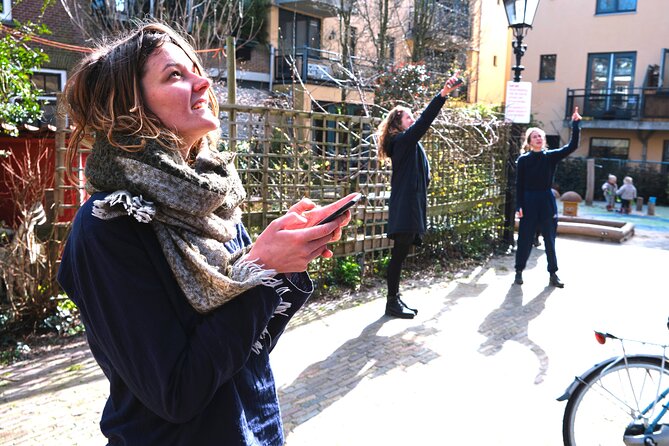
I especially like the flexibility. You can start when you want, and the route is designed for a simple walking rhythm. I also like the smart smartphone setup: you use a mobile ticket and solve prompts on your phone while you move between major sights.
One possible drawback: at $28.66 per group, the value depends on how much you enjoy puzzle solving. If you prefer clear guidance with minimal hints, you might find the experience a little too hint-dependent, and the ending may feel abrupt for some teams.
In This Review
- Key things to know before you play
- Price and logistics, the honest version
- How the game works as you walk Ghent
- Vrijdagmarkt: the old square where the hunt begins
- St. Veerleplein: where castles, rivers, and neighborhoods meet
- Sint-Niklaaskerk: Scheldt Gothic with a lantern tower
- Stadshal on Emile Braunplein: modern canopy in the historic core
- Geeraard de Duivelsteen: defense and trade at Ghent’s roots
- Sint-Lievenscollege Business campus Baudelo and the Bishop’s Palace
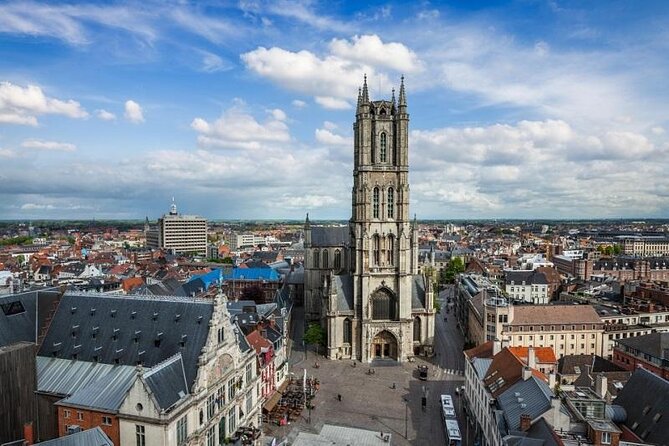
- St. Bavo’s Cathedral: the big finale near the center of it all
- What you’ll see, and why this style of tour is worth it
- Who should book this Ghent Outside Escape game tour
- Should you book it
- FAQ
- Where does the tour start?
- Where does the tour end?
- How long does the Ghent Outside Escape game tour take?
- How far do you walk?
- How much does it cost?
- Do I need a smartphone?
- Can I start at any time?
- What team size is it for?
- Are the stops free to enter?
- Can I cancel for a full refund?
Key things to know before you play
- Start anytime: you choose your start moment, so you can fit Ghent into your day
- Smartphone required: bring a smartphone plus a mobile data plan for the game
- Team size stays small: designed for up to 5 to 6 players (ages 15 and older recommended)
- A tight walking loop: about 2.5 km total, usually around 2 hours to finish
- Landmarks with story clues: each stop adds puzzle context, not just photos
- All stops are entry-free: the listed moments along the route are ticket free
Ghent keeps going, and so do we
- Ghent: 50-Minute Medieval Center Guided Boat Trip★ 4.5 · 5,637 reviews
- Historical Walking Tour: Legends of Gent★ 5.0 · 1,761 reviews
- Ghent: 40 Minute Medieval Center Guided Boat Tour★ 4.4 · 884 reviews
- Evening Tour of the Dark Side of Gent★ 5.0 · 646 reviews
Price and logistics, the honest version
Let’s talk value first. The tour costs $28.66 per group, not per person, and it’s set up for teams of up to 5. That can be a sweet deal if you’re traveling with friends and you actually want an activity that moves you from place to place without a guide leading you by the hand.
The tradeoff is that you are the “guide” to your own pacing. You’ll be reading clues, solving puzzles, and deciding where to go next. That is fun if you like a light challenge. If you just want to stroll and learn facts, you may feel the price is high for what is mostly self-directed.
Timing is also part of the deal. Expect roughly 1 hour 30 minutes to 2 hours 30 minutes, with about 2 hours being typical. Because the game relies on your phone, you should budget a little extra time if you expect slow starts or long discussions in a group.
Also, plan for a dead-simple technical reality: you need mobile data. If you’re the type who usually relies on offline maps only, this tour asks you to be a bit more connected.
How the game works as you walk Ghent
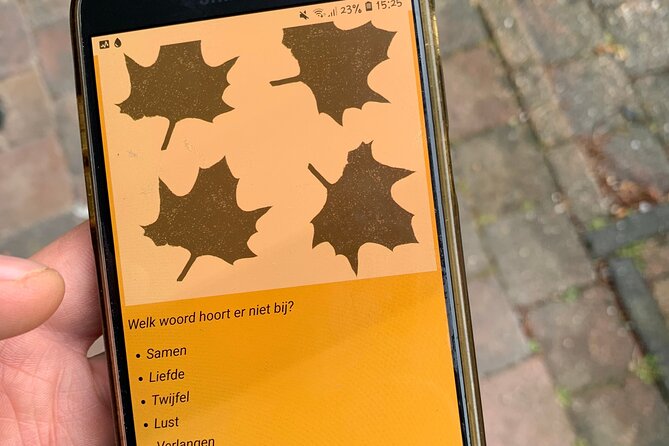
This tour is a story-driven city walk. You follow a sequence of stops around Ghent, and at each point you solve something that pushes the narrative forward. The plot centers on a deathbed confession pointing toward the location of a missing panel from Lamb of God. Your job is to figure out whether someone still alive knows where that panel is.
That storyline matters because it changes your attention. Instead of just admiring buildings, you start looking for details that match the game’s clues. It also explains why the route includes a mix of squares, Gothic church architecture, and major civic buildings, not just one single neighborhood.
For me, the biggest practical benefit is that you get structure without losing freedom. You can start at any moment you choose, walk at your own speed, and keep the group together by sharing clues out loud. It’s also easier for mixed-interest groups, because puzzle solvers and sight-likers both have a role.
Just be aware: puzzle games sometimes require hints. If your group likes to feel smart and self-reliant, that’s great. If you prefer steady guidance, you may want to go into this with a flexible mindset.
Vrijdagmarkt: the old square where the hunt begins
Your walk starts at Vrijdagmarkt (Vrijdag Market), one of Ghent’s oldest squares. The square is about one hectare in size, so it’s not a tiny “photo stop.” It’s big enough to set the tone and get your bearings.
This is a strong first stop for a game. You get an open space for regrouping, reading clues without rushing, and planning your next move. It’s also a good place to understand how Ghent spaces work. When you’re playing, you’re constantly moving between wide open public areas and more detailed architectural spots. Vrijdagmarkt gives you the “wide angle” start.
A practical tip: arrive ready to take out your phone right away. Starting here usually means you’ll want a clean signal and quick access to the game screen before you step into the narrower streets later.
St. Veerleplein: where castles, rivers, and neighborhoods meet
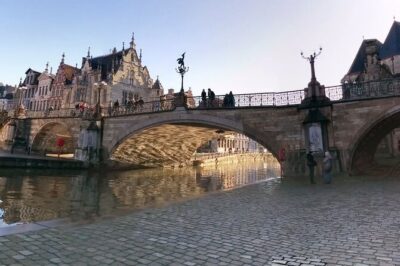
The next stop is St. Veerleplein. This square is tied to views you can’t fake with a guidebook. On the north side you have the Gravensteen area, while the Lieve runs west behind the buildings. To the south, the Leie river anchors the landscape.
To the east sits the Patershol district, which helps explain why people love this part of Ghent: you’re standing at a crossroads of water and older neighborhoods. Even if you’re not solving a puzzle, the geography is worth it. The game just makes you pay closer attention to how the waterways and built edges line up.
One thing I’d watch for during the game: orientation. When your clue refers to a direction, river, or “behind the buildings,” it helps to slow down for one minute and visually map what’s north, south, and east before you start guessing.
Puzzle walks in other Belgian towns


Sint-Niklaaskerk: Scheldt Gothic with a lantern tower
Next up is Sint-Niklaaskerk, dedicated to Nicholas of Myra. Architecturally, it’s a good example of Scheldt Gothic style. The standout feature for this stop is the crossing tower, specifically a lantern tower.
Why do you care? Because this tower illuminates the transept and the flying buttresses of the main choir. It’s not just decorative. It affects how the church reads from inside and around the crossing area. The tower height is 76 meters, so even from a distance it’s part of the skyline.
For puzzle-walkers, church architecture is perfect. There are lots of stable reference points: heights, window placements, and structural lines that are easier to match to a clue than, say, a modern street corner.
Practical note: churches can have variable lighting and crowds depending on the time of day. Since this is self-guided, your pace is your own, but you’ll enjoy it more if you give yourself a little time to look up and not just read the phone.
Stadshal on Emile Braunplein: modern canopy in the historic core
From the older church world, you move to Stadshal van Gent on Emile Braunplein. This building is described as a large, open canopy construction in Ghent’s historic center, and it is part of the KoBra project, a bigger urban development effort.
This stop is valuable because it shows Ghent isn’t frozen in time. The game brings you here for a reason, and that reason is usually contrast. If you’re spending only a couple of hours in town, it’s easy to get stuck in “old streets only.” Stadshal adds a civic, more contemporary feel without needing a separate detour.
For a game, open spaces also help. You can gather your group, compare answers, and reset mentally after a more detailed stop. It’s also a practical rest moment in the tour, even if you’re still solving.
If you like your city walks balanced, this is one of the best places to let the game slow down a bit.
Geeraard de Duivelsteen: defense and trade at Ghent’s roots
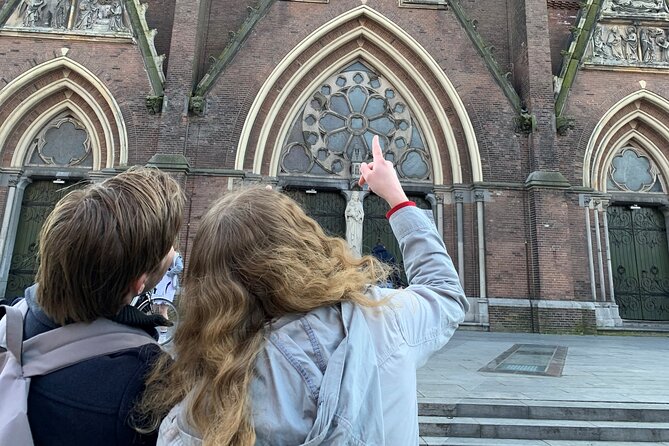
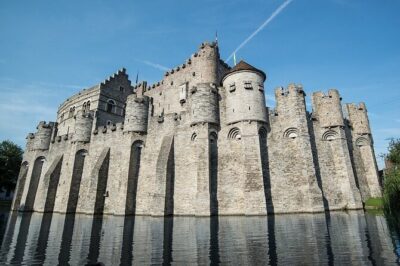
Next stop is Geeraard de Duivelsteen, often translated as the Castle of Gerald the Devil. This building played an important role in the defense of Portus aan de Reep, a trading settlement said to be at the cradle of Ghent’s birth.
That phrasing is the key. You’re not just looking at a dramatic building name. You’re standing on a reminder that Ghent rose as a trading hub with defensive needs, not only as a medieval art destination.
When you’re playing, think about how clues might reference older functions. Defense structures and trading zones often show up in puzzle prompts as words like settlement, port, defense, or “cradle.” Even if the exact wording is game-specific, the theme is clear: Ghent’s power came from commerce.
This stop is a good moment to make sure your group is synced. If one person is ahead solving faster, gently pause. Puzzle walks go best when everyone shares the same clue context.
Sint-Lievenscollege Business campus Baudelo and the Bishop’s Palace
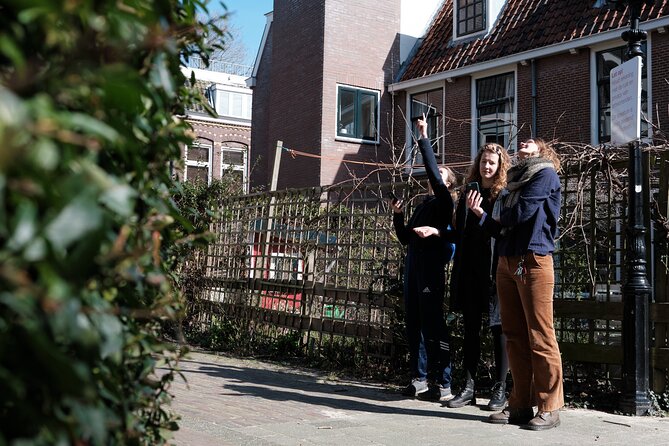
Stop six is listed at Sint-Lievenscollege Business campus Baudelo, and the focus is the Bishop’s Palace of Ghent. This palace is the administrative seat of the Diocese of Ghent and the residence of the bishop.
The current building sits on Bisdomplein in the East Flemish capital and is protected as a monument. That last detail matters because protected buildings tend to have preserved facades and a “fixed” sense of place. For a self-guided puzzle, stability helps. You can spot the right building more easily when the surroundings don’t shift every few meters.
Also, this is where the tour’s story angle can feel more grounded. The closer you get to the cathedral, the more you’re moving through the kinds of places tied to longstanding authority and major religious art.
If you’re the group type that loves a photo, this is a strong stop. Look for official-looking architectural cues and then match those visuals to what your phone prompts you to check.
St. Bavo’s Cathedral: the big finale near the center of it all
The tour ends at St. Bavo’s Cathedral (Sint-Baafsplein 1). Historically, the church started as a parish church dedicated to John the Baptist. In 942, Transmar, the bishop of Tournai, consecrated it as the Sint-Janskerk.
Your game finale connects to the story about Lamb of God and the missing panel, so even if you’re not there to tour the interior, this is the moment to pay attention. The cathedral is a natural ending point because it carries a sense of gravitas and scale.
One more thought, based on what some groups may experience: endings in puzzle tours can feel sudden. If your group prefers a fully explained wrap-up, give yourselves a minute at the end to check your final screen for closure. If you do not see one, that’s not you missing something. It’s sometimes just how story games pace their conclusion.
What you’ll see, and why this style of tour is worth it
This tour mixes classic Ghent landmarks with a narrative structure. That’s the big value. You’re not only seeing squares and church exteriors. You’re training your eyes to relate one place to another.
Because the total distance is about 2.5 km, you can fit it into a half-day plan. It’s also realistic for a walking activity, not a long-day hike. You’ll likely spend most of your time reading prompts, solving, and then walking short segments between the next decision point.
If you love cities where details reward you, this kind of game is extra satisfying. If you don’t care about puzzles and just want straightforward commentary, you might prefer a guided history walk.
But if you’re traveling with a group that likes problem solving, this tour has built-in teamwork. You can rally around the story. One person reads a clue, another checks the area, another solves the logic. It turns sightseeing into a shared activity.
Who should book this Ghent Outside Escape game tour
I think this tour is a great match for:
- Friends or families who want an active, social plan
- Groups who enjoy puzzles and don’t mind using hints
- People who want to cover several major sights in about 2 hours without committing to a fixed guided schedule
I think it’s a weaker match for:
- Solo travelers who want a purely reflective walk with no problem-solving pressure
- Groups who get frustrated when the clue is unclear and they need extra help
- Anyone who expects a full, text-heavy wrap-up at the end
If you’re somewhere in the middle, your best bet is to go in with the right expectations: you’re buying a structured walking game, not a lecture.
Should you book it
Book it if you want Ghent in short bursts, with a storyline that keeps you moving and looking. The route hits key places like Vrijdagmarkt, St. Veerleplein, Sint-Niklaaskerk, Stadshal, Geeraard de Duivelsteen, and it finishes at St. Bavo’s Cathedral, with ticket-free sights throughout.
Skip it or reconsider if puzzle difficulty is your weakness or if you dislike paying for an experience that depends on phone use and occasional hints. The price can feel steep if you end up needing lots of assistance.
If you do book, bring a charged phone, start with a good internet connection, and set a friendly group tone early. Puzzle walks go best when everyone is cheering for the team.
FAQ
Where does the tour start?
The tour starts at Vrijdagmarkt, 9000 Gent, Belgium.
Where does the tour end?
The tour ends at Saint Bavo’s Cathedral (Sint-Baafsplein 1, 9000 Gent, Belgium).
How long does the Ghent Outside Escape game tour take?
It takes approximately 1 hour 30 minutes to 2 hours 30 minutes, with about 2 hours to complete.
How far do you walk?
The route is approximately 2.5 kilometers long.
How much does it cost?
It costs $28.66 per group (up to 5).
Do I need a smartphone?
Yes. You need a smartphone with a mobile data plan to play, and the tour uses a mobile ticket.
Can I start at any time?
Yes. You can start your adventure at any moment you choose.
What team size is it for?
It’s suitable for a team of up to 5 to 6 players aged 15 and older (supervision is recommended for younger players).
Are the stops free to enter?
Each listed stop includes free admission.
Can I cancel for a full refund?
Yes, free cancellation is available. Cancel up to 24 hours in advance for a full refund. If you cancel less than 24 hours before the start time, the amount is not refunded.
Every Belgium Review
City Games and Trails in Belgium
Ghent, Continued
Newer Belgium reviews from the same corner of the country
- Ghent Walking Tour – City Highlights and Beyond Tradition
★ 4.5 · 3 reviews - Ghent: City Walk with Audio Guide in 7 Languages on your Phone
★ 4.5 · 3 reviews - Children’s escape game in the city of Ghent Marsupilami
★ 5.0 · 3 reviews - Ghent Running and Sightseeing Tour
★ 5.0 · 3 reviews - Ghent: Walking Tour from Friday Market to the Cathedral
★ 4.8 · 3 reviews
Ghent Tours, side by side.
 ★ 4.6From Brussels: Guided Day Trip to Bruges and GhentFrom $558,353 reviews
 ★ 4.7From Brussels: Bruges & Ghent Day Tour – 2 Fairytale CitiesFrom $578,242 reviews
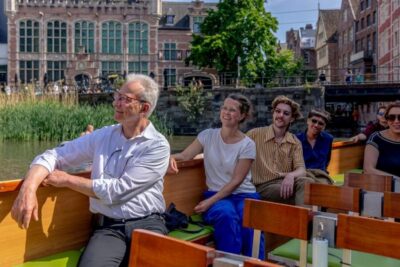 ★ 4.5Ghent: 50-Minute Medieval Center Guided Boat TripFrom $125,637 reviews
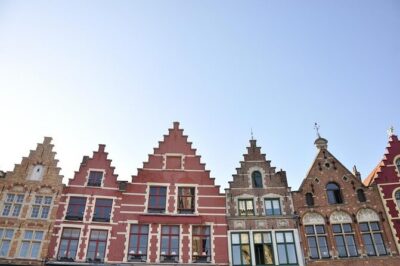 ★ 4.0Bruges and Ghent – Belgium’s Fairytale Cities – from BrusselsFrom $594,809 reviews
 ★ 5.0Historical Walking Tour: Legends of GentFrom $31,761 reviews
 ★ 4.6From Brussels: Full-Day Antwerp and Ghent Guided TourFrom $571,019 reviews
 ★ 4.4Ghent: 40 Minute Medieval Center Guided Boat TourFrom $12884 reviews
 ★ 4.5Bruges and Ghent Day Trip from BrusselsFrom $56784 reviews
Browse the lists this tour appears in