
REVIEW · GHENT
e-Scavenger hunt Ghent: Explore the city at your own pace
Ghent can feel big, until it turns into a game. I like that this e-Scavenger hunt gets you walking through top sights at your own pace, and I also like the smartphone app that turns plain sightseeing into clue-finding and quick challenges. One thing to consider: this is self-guided, so if you want lots of spoken history from a live guide, you will need to rely on what the app provides.
Here’s the practical pitch. You start at Sint-Baafsplein, you follow prompts on your phone, and you finish back where you began. The route focuses on major Ghent highlights, plus smaller stops like patershol streets and a graffiti-style alley, so you get variety without feeling stuck on one big monument.
If your group is up to 6, the pricing makes sense because you split the cost as a team. The tour is in English, designed to be family-friendly, and it runs all day (the booking window lists 12:00 AM to 11:59 PM), so it fits messy travel schedules.
In This Review
- Key things that make this e-Scavenger hunt work in Ghent
- Price and value for a 2 to 4 hour city adventure
- Starting at Sint-Baafsplein and handling the smartphone reality
- Vrijdagmarkt and Ghent’s town hall complex, seen like a maze
- Saint Bavo’s Cathedral and the story behind Gheeraert Vilain
- Gravensteen, the medieval castle you can actually feel
- Ghent city center loop: Korenmarkt, the Leie, and the right kind of wandering
- St-Michael’s Bridge and St-Michael’s Church: small stop, strong payoff
- Belfry of Ghent at 95 meters, plus a guild-and-merchant story
- Patershol and the graffiti street: the fun wandering zone
- Ghent Museum of Fine Arts, a pause that can still fit the hunt
- What you actually do during the game (and why it keeps you moving)
- Timing, comfort, and how to pack for a 2 to 4 hour route
- Should you book the e-Scavenger hunt Ghent?
- FAQ
- Where does the e-Scavenger hunt start?
- How long does the experience take?
- Is this a guided tour or self-guided?
- What language is the experience offered in?
- Do I need to bring a smartphone?
- Can I get a full refund if I cancel?
Key things that make this e-Scavenger hunt work in Ghent
- A clue-led route through Ghent’s core keeps you from wandering randomly.
- Ghent Town Hall, Belfry, and Saint Bavo’s Cathedral appear alongside less-obvious streets and squares.
- Family-friendly app game adds energy without taking over your day.
- Private for up to 6 people means you move together at your own speed.
- Leie river viewpoints land in the middle of the loop, so breaks feel natural.
Ghent keeps going, and so do we
- Ghent: 50-Minute Medieval Center Guided Boat Trip★ 4.5 · 5,637 reviews
- Historical Walking Tour: Legends of Gent★ 5.0 · 1,761 reviews
- Ghent: 40 Minute Medieval Center Guided Boat Tour★ 4.4 · 884 reviews
- Evening Tour of the Dark Side of Gent★ 5.0 · 646 reviews
Price and value for a 2 to 4 hour city adventure
At $37.24 per group (up to 6), you are paying for a ready-made game route plus an app. The math gets friendlier when you travel in a small team, because the cost does not scale per person. If you are traveling solo, it can feel more like a paid activity than a bargain walking tour, but it still may beat spending time figuring out a route yourself.
In terms of time, plan for about 2 to 4 hours depending on how often you pause for photos, read the prompts, or take detours for snacks. There’s even a note tied to the city center portion as roughly 2 hours, which tells you the core loop is doable without rushing. If you have only half a day, you can treat this as your backbone walk, then keep going afterward on foot.
This is also booked often. The schedule indicates an average booking lead time of 16 days, which is a small hint that this is a popular way to see Ghent without committing to a fixed walking group rhythm.
Starting at Sint-Baafsplein and handling the smartphone reality
Your hunt begins at Sint-Baafsplein, 9000 Gent, and it ends back there. That loop matters because it reduces stress. You do not need to plan a second transit step or worry about reaching a far endpoint.
But there is one practical constraint: you need a smartphone and data, and those are not included. That means you should come prepared. If your mobile signal is weak, download any necessary access the app asks for before you start, so you are not stuck mid-quest while trying to get a connection.
Good news: the tour is listed as mobile-ticket based and offered in English. It is also described as near public transportation and user-friendly for hearing impaired, with service animals allowed. Most people can participate, which usually means the pace and walking demands are not extreme.
Group size is capped at max 6, and the experience is private, so you are not sharing the app-driven route with strangers.
Vrijdagmarkt and Ghent’s town hall complex, seen like a maze
The first big atmosphere-maker is the Vrijdagmarkt, one of Ghent’s oldest squares. It’s described as about one hectare, which helps you understand the scale. This is the kind of open space where your phone prompts can keep you oriented, because it is easier to spot where you are meant to go next.
From there, you move into the orbit of Ghent Town Hall, described as a four-sided complex of buildings. What I like about this stop in a game format is that the town hall does not sit alone. It is wrapped by surrounding spaces like Botermarkt, Hoogpoort, Stadhuissteeg, and Poeljemarkt. The app can help you notice these edges and corners, which you might otherwise skim past on a casual stroll.
A possible drawback here: if you are trying to sprint through landmarks fast, square-and-street geometry can slow you down. The town hall area is gorgeous, but it rewards careful looking. If you treat the clues like checkpoints and give yourself a little patience, it turns into a fun navigation exercise.
Saint Bavo’s Cathedral and the story behind Gheeraert Vilain
Next up is Saint Bavo’s Cathedral, the oldest parish church in Ghent’s lively center. The site is built on the footprint of earlier churches, including a 10th century church and a Romanesque church, so even before you get to modern details, you are in layered time.
What makes this stop feel specific, not generic, is the naming story. The stone building is named after the builder knight Gheeraert Vilain, nicknamed the Devil. The information says it was sold to the city of Ghent around 1328.
Why this matters for you: in a self-guided hunt, you do not have a human guide steering the narrative. So you want the story beats to be clear. This one is. If you pay attention to the clue prompts here, you should come away with a memorable detail you can repeat later, not just a photo.
A small consideration: cathedrals can have quiet zones and changing access rules depending on events. Since the route depends on your timing, give yourself flexibility, especially if you want to pause inside and keep the game moving when it allows.
Puzzle walks in other Belgian towns


Gravensteen, the medieval castle you can actually feel
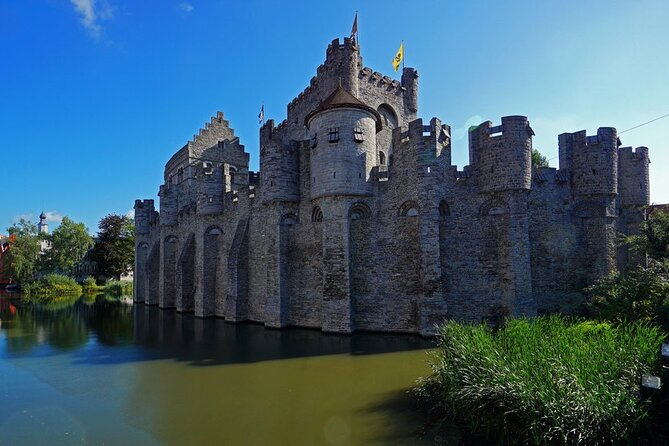
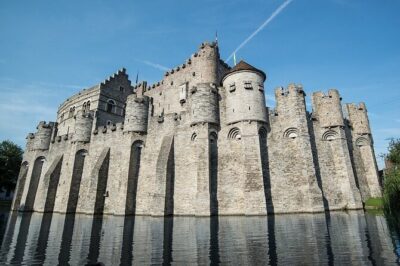
Then you hit Gravensteen, described as the only remaining medieval castle in Flanders with an almost intact defense system. That phrase is important: you are not just seeing a pretty ruin. You are seeing a fortress structure that still communicates defense, walls, and threat control.
In a clue hunt, castles can be tricky because they are big and your eyes want to jump everywhere. The game format helps here, because you are guided toward key angles and features instead of randomly circling.
If you are short on time, you might treat Gravensteen as the anchor stop where you spend your longer pause. This is the point where the overall walk shifts from “pretty city sights” into “medieval power in stone.” Even if you do not go deep into any museum-style elements, the defense-system concept makes this feel more than a background landmark.
One drawback to watch for: if you are traveling with kids who lose patience quickly, castles can take longer than expected. Give the app a set amount of time, then decide in advance whether you want a fuller look or a quick exterior pass.
Ghent city center loop: Korenmarkt, the Leie, and the right kind of wandering

The route’s spine is the medieval city center around Korenmarkt and the river Leie. The information calls this the main attraction and sets a rough expectation of about 2 hours for the city center segment, with the full experience stretching to 2 to 4 hours.
This is a smart design. The center area is compact enough to walk comfortably, but interesting enough that a game keeps you from skipping the best streets. Instead of thinking, Okay, what should I see next, you get guided momentum.
A key viewing set comes at Gentse Graslei and Korenlei. You are told to enjoy relaxation here: historic buildings, terraces, the water, boats, and more. I like this placement because it gives you a “breather” segment in the middle of a loop. You can slow down, stand still for a minute, and let the river views do their job.
St-Michael’s Bridge and St-Michael’s Church: small stop, strong payoff

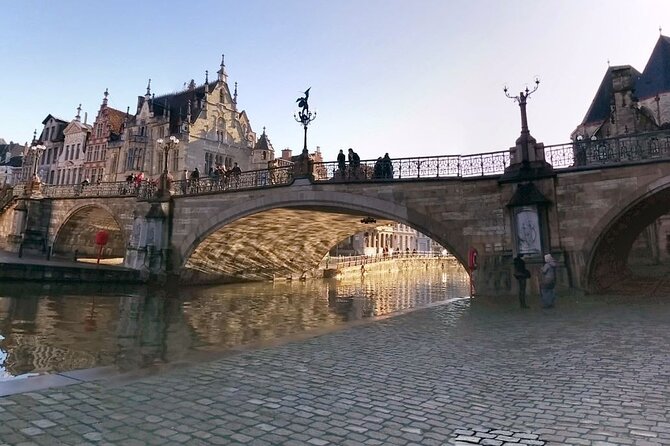
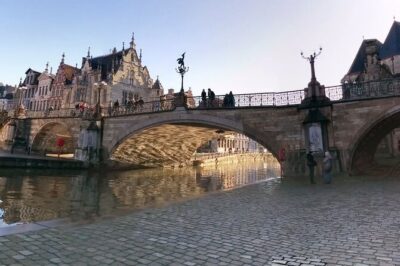
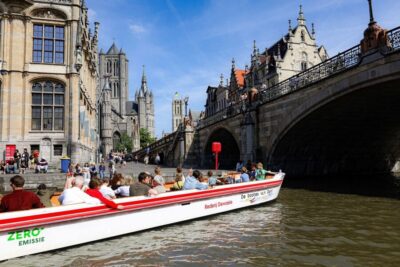
Next, look for St-Michael’s Bridge, positioned on the River Leie next to St. Michael’s Church, near Korenmarkt. This is the kind of spot where the bridge angle frames the city. It is also a natural photo pause because you can capture both the water and nearby architecture in one glance.
Why it works inside a scavenger hunt: bridges and church facades are easy visual targets. Your phone clues can pull your attention to a specific direction or detail, which makes your walk feel purposeful rather than sightseeing-by-accident.
If you want to keep energy up, consider doing St-Michael’s as your “reset moment.” Take a short look, then continue with the bigger vertical landmark coming next.
Belfry of Ghent at 95 meters, plus a guild-and-merchant story

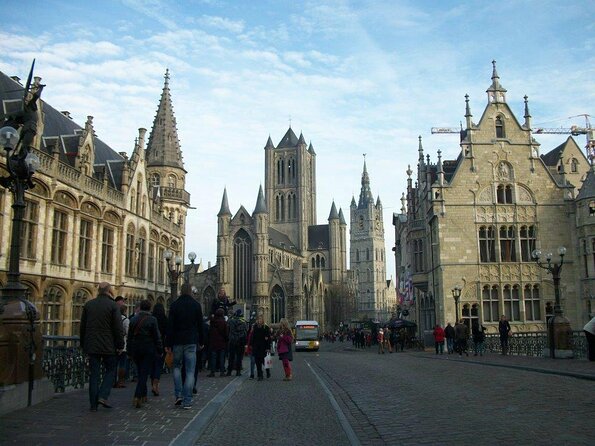
The Belfry of Ghent is listed as a 95-meter high tower, and it is described as the middle tower of the famous Ghent tower row. If you have never seen a tower row in person, put this on your to-see list even if you are not a tower person. Ghent’s skyline is one of the city’s signature textures.
Right after that, the route includes a church that has existed since the 11th century, and it is described as the church of wealthy merchants and of the guilds of Ghent. That is useful context. A scavenger hunt often gives you landmarks without explaining why they mattered. Here, the game route links religious buildings to civic power.
You also get another clue-driven square: the note says a square has been the place where grain entered Ghent via the Leie or Scheldt and was traded since the 10th to 11th century. That kind of detail changes how you read a city center. Suddenly, you stop seeing random pavement and start imagining trade routes and the smell of wet grain and river transport.
The one drawback: if you want a deep explanation of these economic and religious systems, a self-guided app will only go so far. Still, you will get enough to connect the dots while you walk.
Patershol and the graffiti street: the fun wandering zone
Now you get a change of pace. The patershol is described as an old neighborhood in the historic center, with numerous cafes and restaurants in narrow medieval streets. This is where you can turn your hunt into a mini food-and-stroll break.
Next comes the alley between the Hoogpoort and the Donkerstraat, also called the graffiti street because of its appearance. Even if you are not a street art fan, I like this stop in a hunt because it gives contrast. After towers, churches, and stone defense systems, you get a modern-looking texture that feels youthful.
How to use this part well: if you are the type who always wants one last wander, treat patershol and the graffiti alley as permission to slow down and look around. If you are racing toward a finish, this zone may feel like filler. Choose intentionally which kind of visitor you want to be for these final stops.
Ghent Museum of Fine Arts, a pause that can still fit the hunt
The route includes the Ghent Museum of Fine Arts, described as one of the oldest museums in Belgium. The collection is listed as paintings, sculptures, drawings, etchings, and tapestries.
Whether you can fit the museum depends on your pace and the time you spend outside. Since your experience is 2 to 4 hours total, the museum may work best if you treat it as a focused visit rather than a long browsing session.
In a self-guided app experience, museums can be a double-edged sword. On the upside, it gives you a structured cultural stop where you can focus on specific prompts. On the downside, if you are sensitive to museum fatigue, you might want to keep this as optional. If the museum is open and you can manage a short visit, it pairs well with the rest of the city’s medieval and civic storytelling.
What you actually do during the game (and why it keeps you moving)
This is positioned as a city trail and family-friendly game. Even with no live guide, the prompts do two big jobs.
First, they create a reason to walk. Without a game, people often miss streets that are just off the main view corridors. With clues, you end up in the right spots, like the river fronts, the tower area, and the side alleys.
Second, they add small tips that help you interpret what you see. The strongest praised aspect of this type of experience is that you walk through different parts of the city for clues, and the added tips make it feel smarter than random sightseeing. If you like guided structure but prefer freedom, this is a solid match.
The main consideration is mental, not physical. If you hate using your phone while walking, this may not feel enjoyable. But if you are fine checking your screen every few minutes, the game format can turn Ghent into a more memorable day.
Timing, comfort, and how to pack for a 2 to 4 hour route
This experience is listed as starting and ending at the same place, with a wide daily availability window. That makes it flexible. Still, I recommend choosing a time when you can enjoy the riverfront area without rushing, because Graslei and Korenlei are meant for slowing down.
Bring what makes the walk comfortable:
- A phone with enough battery
- Data access, since it is not included
- Comfortable shoes for medieval streets
- A water bottle or plan to stop in patershol for a break
Group-wise, it is designed for teams up to 6, and it is private to your group. That matters because your pace is your pace. If your group wants to move fast between clue points, it is possible. If someone needs breaks, the self-guided format usually makes that easier than a tight guided tour.
Also note the tour is in English. If your group includes non-English speakers, you may need to help translate occasionally, depending on what the app shows you.
Should you book the e-Scavenger hunt Ghent?
Yes, if you want a self-guided way to cover the main sights without feeling stuck in a rigid schedule. This is especially worth booking when you like two things: walking to see landmarks, and learning a few memorable details along the way. The route hits major anchors like Saint Bavo’s Cathedral, Ghent Town Hall, Gravensteen, and the Belfry, then balances them with riverfront relaxation and neighborhood texture.
It may not be the best fit if you want a live guide doing long-form storytelling, because the experience relies on what the app provides. It also might feel like extra work if you do not like phones while sightseeing.
For the money, I think it is fair for small groups. You get the app, a structured path, and a game that keeps the walking interesting for the whole team, not just the person who likes architecture.
FAQ
Where does the e-Scavenger hunt start?
It starts at Sint-Baafsplein, 9000 Gent, Belgium.
How long does the experience take?
Plan for about 2 to 4 hours.
Is this a guided tour or self-guided?
It is self-guided. You follow a mobile trail using a smartphone app.
What language is the experience offered in?
The experience is offered in English.
Do I need to bring a smartphone?
Yes. A smartphone and data are not included. The experience uses a smartphone app.
Can I get a full refund if I cancel?
Yes. You can cancel up to 24 hours in advance for a full refund.
Every Belgium Review
City Games and Trails in Belgium
Ghent, Continued
Newer Belgium reviews from the same corner of the country
- Ghent Walking Tour – City Highlights and Beyond Tradition
★ 4.5 · 3 reviews - Ghent: City Walk with Audio Guide in 7 Languages on your Phone
★ 4.5 · 3 reviews - Children’s escape game in the city of Ghent Marsupilami
★ 5.0 · 3 reviews - Ghent Running and Sightseeing Tour
★ 5.0 · 3 reviews - Ghent: Walking Tour from Friday Market to the Cathedral
★ 4.8 · 3 reviews
Ghent Tours, side by side.
 ★ 4.6From Brussels: Guided Day Trip to Bruges and GhentFrom $558,353 reviews
 ★ 4.7From Brussels: Bruges & Ghent Day Tour – 2 Fairytale CitiesFrom $578,242 reviews
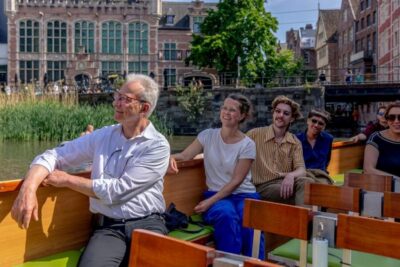 ★ 4.5Ghent: 50-Minute Medieval Center Guided Boat TripFrom $125,637 reviews
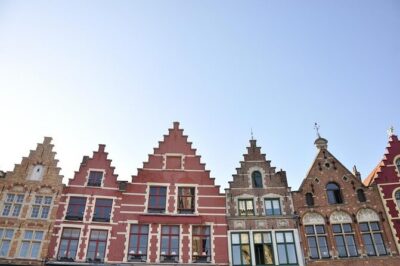 ★ 4.0Bruges and Ghent – Belgium’s Fairytale Cities – from BrusselsFrom $594,809 reviews
 ★ 5.0Historical Walking Tour: Legends of GentFrom $31,761 reviews
 ★ 4.6From Brussels: Full-Day Antwerp and Ghent Guided TourFrom $571,019 reviews
 ★ 4.4Ghent: 40 Minute Medieval Center Guided Boat TourFrom $12884 reviews
 ★ 4.5Bruges and Ghent Day Trip from BrusselsFrom $56784 reviews
Browse the lists this tour appears in