
REVIEW · GHENT
Ghent: Guided Walking Tour
Ghent moves at a medieval tempo. This guided walk strings together the city’s top sights in about 2 hours, with an English or Spanish guide who explains what you are actually looking at. I especially like the practical way it sets you up to explore on your own right after, plus the fact that you can ask questions as you go.
The main tradeoff is time: most big stops get around 15 minutes, so if you want slow photo time or long inside visits, you will need a follow-up stop of your own.
In This Review
- Key highlights you will feel on this walk
- A 2-hour sampler of medieval Ghent, from Saint Bavo to Gravensteen
- Price and timing, and what $17 gets you in real life
- Belfry and Ghent Town Hall: reading the city’s power in stone
- Saint Bavo Cathedral, Saint Nicholas’ Church, and the Van Eyck story you can remember
- The Charles V era and why Ghent got nicknamed noose-bearers
- Graslei embankment and the old market energy at Old Fish Market
- Patershol: wooden roof details and the feel of older alleyways
- Gravensteen, Gerald the Devil, and the fortress finale
- Food and beer ideas that actually help after the tour
- Guide quality, language options, and what to watch for
- Should you book the Ghent Guided Walking Tour?
- FAQ
- How long is the Ghent guided walking tour?
- What language is the guide available in?
- Where does the tour start, and where does it end?
- Are museum entrances included?
- Is food included?
- Are pets allowed?
Key highlights you will feel on this walk
- Belfry of Ghent plus the Town Hall, explained in plain language
- Saint Bavo Cathedral and the Van Eyck brothers, including The Adoration of the Mystic Lamb
- The Charles V era story behind Ghent locals as noose-bearers
- Graslei riverfront views and the medieval power behind the embankment
- Patershol lanes and the Great Butchers’ Hall roof structure you can spot from outside
- Gravensteen (Castle of Gerald the Devil) and why its battlements still matter today
Ghent keeps going, and so do we
- Ghent: 50-Minute Medieval Center Guided Boat Trip★ 4.5 · 5,637 reviews
- Historical Walking Tour: Legends of Gent★ 5.0 · 1,761 reviews
- Ghent: 40 Minute Medieval Center Guided Boat Tour★ 4.4 · 884 reviews
- Evening Tour of the Dark Side of Gent★ 5.0 · 646 reviews
A 2-hour sampler of medieval Ghent, from Saint Bavo to Gravensteen
If Ghent is new to you, this tour is a fast but thoughtful way to get bearings. You start in the cathedral quarter, then work your way toward the riverfront, the old market zones, and finally the big stone fortress that anchors the whole story of the city. The route is designed for a short visit, not a half-day museum binge.
You are not just walking from one postcard to the next. The guide links buildings to people and events you can remember. You also get suggestions for what to do next, including where to eat lunch outside the usual tourist drag, and where to try Belgian beer.
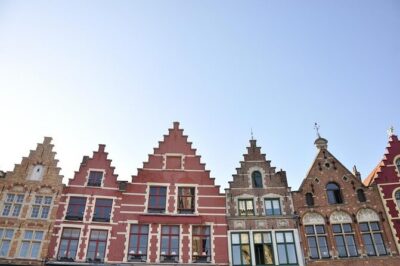
What makes it work is the mix: you get Gothic and Renaissance façades, riverfront medieval architecture, guild-era churches, and fortress views, all without needing tickets to museums during the walk.
Price and timing, and what $17 gets you in real life
At about $17 per person for a 2-hour walking tour, this is value-priced for a guided pass through the historic center. You are paying mainly for orientation and interpretation: the guide helps you see patterns, not just landmarks.
The structure is straightforward. Expect roughly a 15-minute focus at each main stop, then a walk to the next one. That means you will likely come out with a clear mental map, and a short list of what you want to go back for later, like Saint Bavo Cathedral proper or the museum spaces tied to specific buildings.
Two practical notes:
- Bring comfortable shoes because you are covering multiple neighborhoods on foot.
- If you are picky about interior time, plan to do at least one follow-up visit after the tour. The guided stops are meant to show you what to look for, not to replace your own exploration.
Belfry and Ghent Town Hall: reading the city’s power in stone
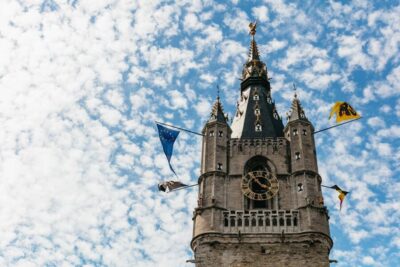
Your tour kicks off near Sint-Baafsplein, a convenient base for the walk. From there, the first major draw is the Belfry of Ghent. The belfry is not just a tall landmark. It is a symbol tied to municipal pride and civic authority, so the guide’s explanation helps you understand why it appears again and again in how Ghent markets its own identity.
Right after, you hit Saint Bavo Cathedral. Even if you do not go inside for a long time, the exterior and façade details are the kind that reward a second look later. The guide frames the place in the context of the Van Eyck brothers, including the painting The Adoration of the Mystic Lamb. If art is even a little your thing, this is one of the best segments to pay attention to, because it tells you what the cathedral connection means.
Then you move to the Ghent Town Hall. This is where you start noticing the blend of styles. Ghent’s civic buildings often carry layers of Gothic and later Renaissance touches, and the guide helps you spot what is from which era, so you do not have to guess.
Saint Bavo Cathedral, Saint Nicholas’ Church, and the Van Eyck story you can remember
Saint Bavo Cathedral is the emotional anchor for many visitors, and this tour gives you a reason to care before you ever read a plaque. You learn the big connection to the Van Eyck brothers, and you also get context around why this painting became such a landmark over time.
Then the route continues to Saint Nicholas’ Church and the nearby Masons’ Guild House. These stops are valuable because they shift your focus from kings and emperors to the people who built Ghent and maintained its social system. Guild-linked buildings can look similar if you are not sure what you are seeing. Here, the guide’s explanations help you notice the difference between a church as a religious site and a guild house as a civic and trade marker.
This is also a good moment to ask questions. If you want suggestions for what to see next, this segment is where your questions are most likely to lead to useful answers, because you have already seen the city’s big-stage buildings.
Belgium reads best on foot, here is more of it

The Charles V era and why Ghent got nicknamed noose-bearers
One of the most memorable parts of this tour is the way the guide connects Ghent’s medieval characters to later rulers. You hear about Charles V, who was a Ghent native and later became the Holy Roman Emperor and also King of Spain. That is the kind of fact that can feel distant if nobody explains it in a human timeline.
In this case, the guide also covers why Ghent locals were known as noose-bearers starting in the Charles V era. The point is not the nickname itself, it is what it signals about conflict, punishment, and power in the era you are touring. When you know that context, even the serious façades and gatehouse-like corners feel less random.
If you like history that connects to what you can see outside your window, this is a standout moment of the walk.
Graslei embankment and the old market energy at Old Fish Market
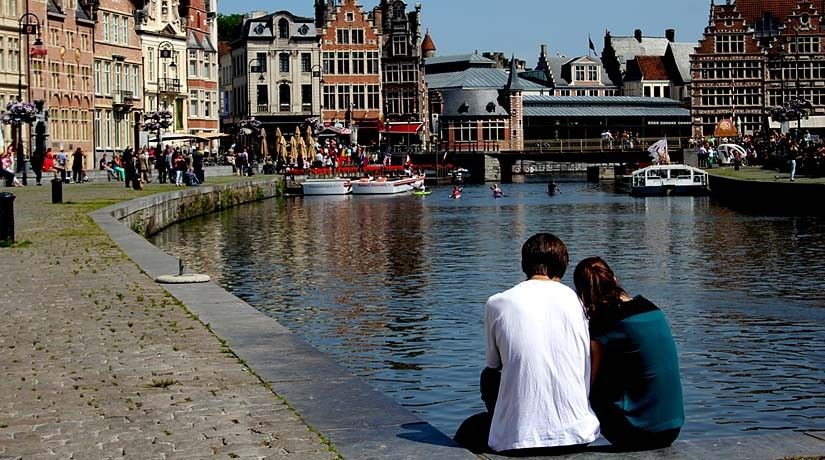
When you get to the river, Ghent shifts gears from “church and council” to “commerce and everyday life.” The Graslei embankment is a prime example. You see the look of medieval prosperity in the lines of the buildings and the sense of order along the water.
Then you reach the Old Fish Market area. This is one of those zones where you feel why Ghent was a trading hub. Even without a long stop, the guide’s notes help you understand that these markets were not just places to buy food. They were social nodes and a way to measure the city’s rhythm.
A short walk later, you are at Friday Market Square. Markets like this are the reason Ghent feels like a working city, not a preserved set. If you plan to return after the tour for a coffee or a longer stroll, this market area is a natural place to start.
Patershol: wooden roof details and the feel of older alleyways
After the open-air market zones, you head into Patershol, a neighborhood known for its medieval lane character. This part is worth slowing down for, because the charm is in the details.
One detail you get pointed out is the open wooden truss roof of the Great Butchers’ Hall. You may not think about roofs when you book a walking tour. Then you see the structure, and it suddenly makes sense why medieval buildings were engineered the way they were. The guide helps you understand the building’s original role, so it is not just a pretty exterior.
Patershol is also where you should start thinking about lunch timing. The tour includes food and beer recommendations, but food itself is not part of the ticket. Still, having those suggestions lined up before you reach a restaurant helps you avoid the usual decision fatigue.
Gravensteen, Gerald the Devil, and the fortress finale
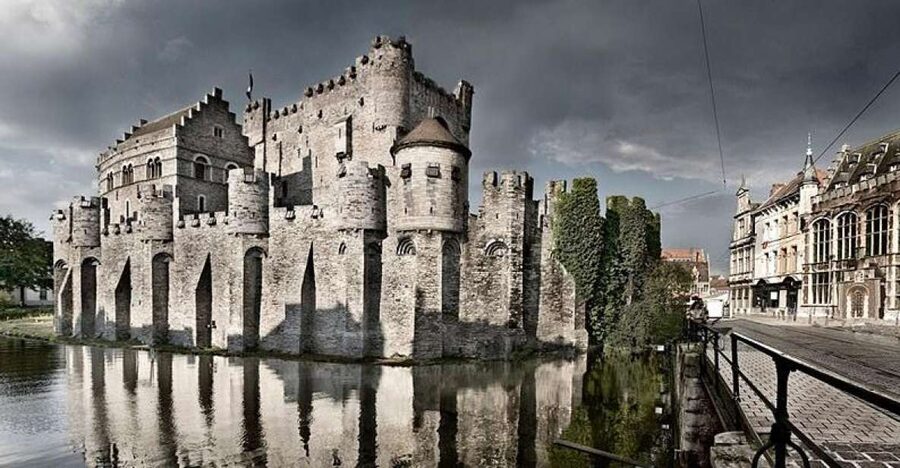
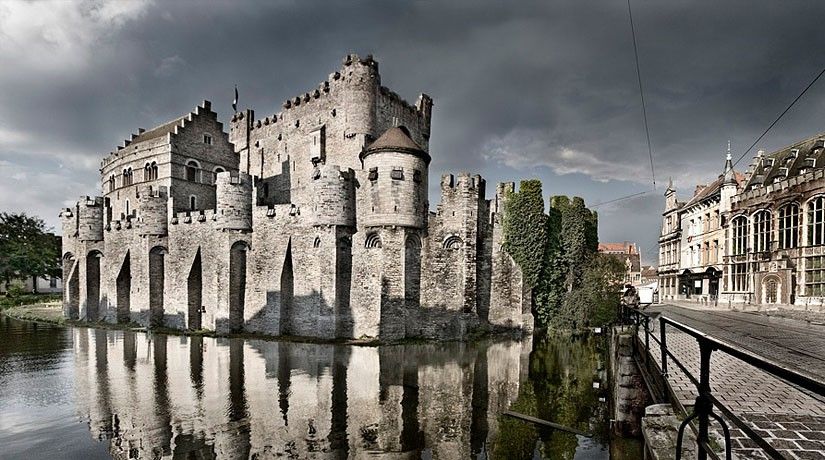
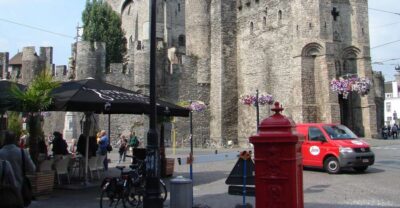
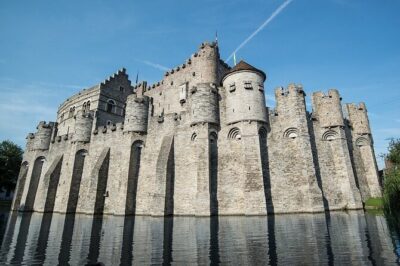
The last big stop is Gravensteen, often linked in descriptions as the Castle of Gerald the Devil. This is the finish point for the walking route, and it makes a strong final impression because the fortress is all mass and attitude.
Why does it matter? Because you can connect it to the city’s historical need for defense and control. The guide’s explanations give you a reason to look at the battlements and stonework instead of just taking photos. When you are standing in that location, you can also feel how the castle sits within the city’s geometry and movement.
This is also where the tour does its best job of creating momentum. You finish with a major landmark, so even if you are tired from walking, you still end on a clear high point.
Food and beer ideas that actually help after the tour
This tour does not include meals, but it is built to feed your next few hours in Ghent. The guide gives recommendations for typical Flemish food and also points you toward Belgian beer choices.
One highlight is the option to try a Kwak beer at De Dulle Griet, often nicknamed the shoe pub. Even if you do not do it on the same day, this is a useful recommendation because it is specific. You are not just told to find local beer, you get a named place and a style to look for.
For lunch, the guide’s advice is geared toward avoiding the most obvious tourist strip. That matters if you have only a limited amount of time, because you want food that fits the city, not food chosen for convenience alone.
Guide quality, language options, and what to watch for
The tour is offered with a live guide in English or Spanish. That is a big deal in Ghent, where signage and local stories often reward someone who can connect the dots for you. You will get opportunities to ask questions along the way, and the tour includes recommendations about the city, not just a script.
From the guide experiences people report, the best versions of the walk tend to include engaging, interactive delivery. Names you may hear include Pablo, Mark, and Bruno, each described as friendly and making the city story fun to follow. There is also an example of Lucas, mentioned for being inclusive with children on the route.
Two cautions that can affect your enjoyment:
- Accent clarity can vary, and a guide with a thicker accent can be harder for older listeners to follow.
- The scheduled pace is tight. Even though the walk is listed as 2 hours, some groups have seen it run slightly shorter, so you might feel the stop times as brief.
If you want to maximize the value, treat the guided walk as your orientation phase, not your entire itinerary. Pick one or two places you want to go deeper into after, like the cathedral art connection tied to the Van Eyck brothers.
Should you book the Ghent Guided Walking Tour?
Book it if you want a smart, time-efficient way to see medieval Ghent and understand what you are looking at. This tour is a good fit for:
- A first visit where you want a workable map of the center
- Short day trips, where you still want context and local guidance
- Art and architecture fans who want the Van Eyck link explained while you are standing in the right place
- Beer and food planners who want named recommendations before you pick a restaurant
Skip it or plan extra time if you are the type who needs long interior visits. The tour is designed around quick guided looks and then leave-you-to-it exploring.
My practical bottom line: for the price and the pace, this is a solid way to get your bearings fast, then spend the rest of your day in Ghent choosing your own route with confidence.
FAQ
How long is the Ghent guided walking tour?
The tour duration is listed as 2 hours. Starting times can vary, so it is best to check availability for the specific time you want.
What language is the guide available in?
The guide is available in English and Spanish.
Where does the tour start, and where does it end?
The meeting point can vary depending on the option booked. The tour itinerary lists the main starting location as Sint-Baafsplein 2, and it finishes at Gravensteen.
Are museum entrances included?
No. Entrance to museums is not included in the tour price.
Is food included?
No. Food is not included. However, you can get recommendations for where to eat lunch in Ghent, including typical Flemish food options.
Are pets allowed?
No, pets are not allowed on this activity.
More Belgian Tours
Every Belgium Review
Ghent, Continued
Newer Belgium reviews from the same corner of the country
- Ghent Walking Tour – City Highlights and Beyond Tradition
★ 4.5 · 3 reviews - Ghent: City Walk with Audio Guide in 7 Languages on your Phone
★ 4.5 · 3 reviews - Children’s escape game in the city of Ghent Marsupilami
★ 5.0 · 3 reviews - Ghent Running and Sightseeing Tour
★ 5.0 · 3 reviews - Ghent: Walking Tour from Friday Market to the Cathedral
★ 4.8 · 3 reviews
Ghent Tours, side by side.
 ★ 4.6From Brussels: Guided Day Trip to Bruges and GhentFrom $558,353 reviews
 ★ 4.7From Brussels: Bruges & Ghent Day Tour – 2 Fairytale CitiesFrom $578,242 reviews
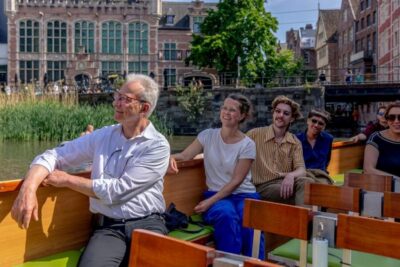 ★ 4.5Ghent: 50-Minute Medieval Center Guided Boat TripFrom $125,637 reviews
 ★ 4.0Bruges and Ghent – Belgium’s Fairytale Cities – from BrusselsFrom $594,809 reviews
 ★ 5.0Historical Walking Tour: Legends of GentFrom $31,761 reviews
 ★ 4.6From Brussels: Full-Day Antwerp and Ghent Guided TourFrom $571,019 reviews
 ★ 4.4Ghent: 40 Minute Medieval Center Guided Boat TourFrom $12884 reviews
 ★ 4.5Bruges and Ghent Day Trip from BrusselsFrom $56784 reviews
Browse the lists this tour appears in