
REVIEW · GHENT
Ghent Walking Tour with Audioguide on Your Smartphone
Ghent is prettier when you stroll it slowly. This self-guided route strings together the city’s top sights with a smartphone audio guide and offline map, so you can go at your pace.
I like the flexibility to follow the route your way, and I especially appreciate having the offline map so you are not stuck guessing streets.
What makes this tour work well is the on-phone storytelling. You get 31 audio recordings plus illustrations that help you spot landmarks, and the tour is available in English. It is also priced low enough that you can treat it like a value add to your day.
The main catch is simple: you need your own headphones and your phone has to download and run the app. If your device struggles, you will want to test it before you head into the historic core.
In This Review
- Key highlights before you set off
- How this self-guided audio walk makes Ghent feel simple
- What you are paying for, and what you are not
- St Michael’s Bridge to Grasbrug Drawbridge: your canal-side opener
- Old Meat Market Hall and Groentenmarkt: markets you can smell and taste
- Gravensteen Castle and Rabot: medieval power with dramatic views
- Inside Gravensteen Castle, plan for attitude and altitude
- Rabot gatehouse: short stop, strong atmosphere
- Patershol to Vrijdagmarkt: lanes, squares, and big-city views
- Ghent’s Belfry: the “climb if you can” moment
- Graffiti Street (Werregarenstraat): Ghent in a modern color palette
- St Bavo’s Cathedral plus Ghent churches: art and quiet corners
- St. Bavo’s Cathedral: the art spotlight
- St. Nicholas’ Church: Gothic style you can study
- St. Michael’s Church: a calmer finish
- Timing, distance, and how to make it work in real life
- What to bring so your day goes smoothly
- Price value check: is $8.42 worth it?
- Who should book this walk, and who should skip it
- Should you book the Ghent smartphone walking tour?
- FAQ
- How long is the Ghent walking tour with an audio guide?
- What language is the audio guide available in?
- Do I need a smartphone, and are headphones included?
- Is this tour guided by a person?
- What’s included in the app?
- Are entrance fees included for attractions like castles or churches?
- Where do I start, and does the tour end nearby?
- Is there free cancellation?
Key highlights before you set off
- Smartphone audio guide with offline map, built for easy GPS navigation on foot
- 31 audio recordings plus landmark illustrations to help you recognize what you are looking at
- Three-hour loop starting and ending at Sint-Michielsplein by St. Michael’s Bridge
- Iconic Ghent sights in one walk, from medieval bridges to Gravensteen Castle and the Belfry
- You control the order and pace, including time to linger for photos and viewpoints
- No entrance tickets included, so plan for any sites with paid entry
Ghent keeps going, and so do we
- Ghent: 50-Minute Medieval Center Guided Boat Trip★ 4.5 · 5,637 reviews
- Historical Walking Tour: Legends of Gent★ 5.0 · 1,761 reviews
- Ghent: 40 Minute Medieval Center Guided Boat Tour★ 4.4 · 884 reviews
- Evening Tour of the Dark Side of Gent★ 5.0 · 646 reviews
How this self-guided audio walk makes Ghent feel simple
I like when a tour removes friction, not adds it. This one is built around a self-guided route in central Ghent, with an app that provides the audio and an offline map route. That means you are not waiting for anyone, and you can slow down if a view grabs you or speed up if you are on a mission.
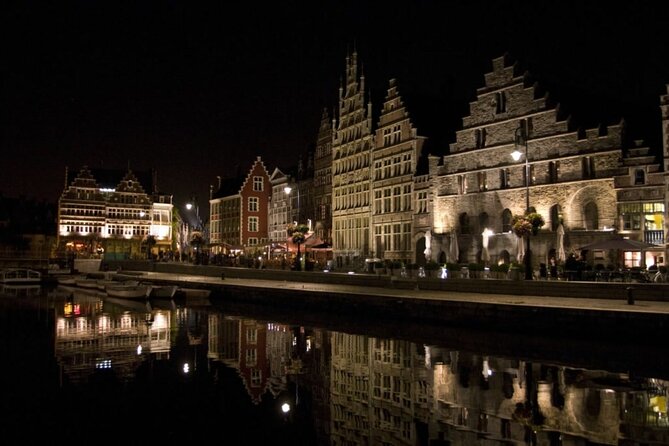
The practical benefit is that Ghent is made for walking. You will bounce between canals, squares, and medieval buildings without needing transit every few stops. The route also groups sights that naturally connect on foot, so you are not zigzagging all day.
One more thing I appreciate: the app gives you a small safety net for orientation. If you are the type who constantly second-guesses where you are in the city, the offline map and landmark illustrations help you get your bearings fast.
What you are paying for, and what you are not
The price is $8.42 per person, for about 3 hours of guided audio. That is strong value for a phone-based tour because it includes the content, not museum entries or transport.
What is not included is also clear. You bring your own headphones, and you pay any entrance fees on your own if a stop charges. There is no human guide, so you are relying on the app for narration.
St Michael’s Bridge to Grasbrug Drawbridge: your canal-side opener
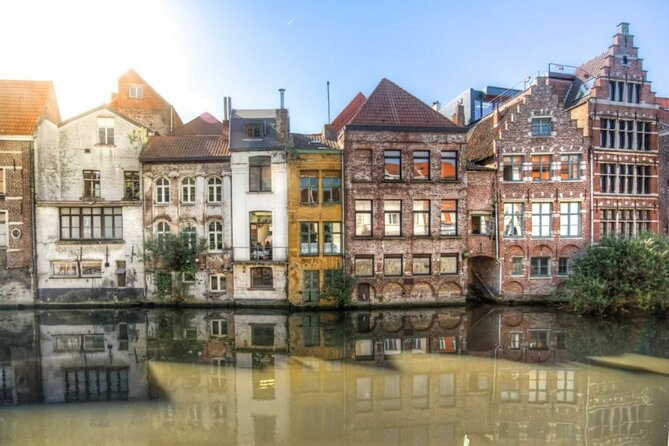
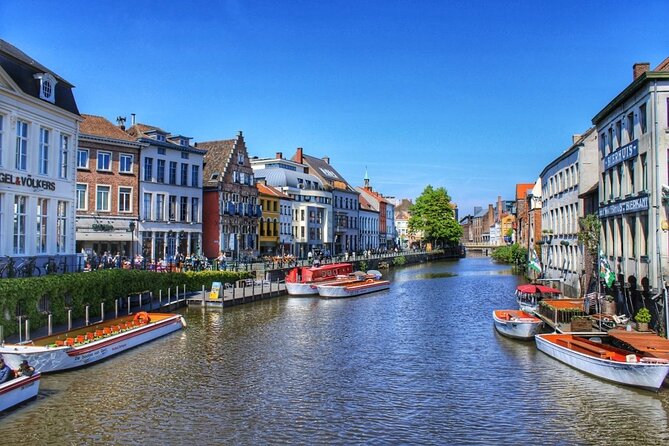
Your walk begins at St. Michael’s Bridge (Sint-Michielsplein). This is a great kickoff because the bridge gives you immediate postcard views, and you can orient yourself with major landmarks in sight. The medieval feel is front and center, with the Castle of the Counts and St. Nicholas’ Church mentioned as key visuals in this area.
Then you move on toward Grasbrug Bridge, the drawbridge over the Leie River. The cool part here is that you are not just looking at a pretty bridge. You are seeing medieval engineering in action as a concept: a drawbridge connecting the Graslei and Korenlei embankments. If you like architecture details, this is the sort of stop that rewards taking two extra minutes.
Practical tip: if you want the best photos, plan for a little time at each bridge. Bridges are where Ghent’s canals, facades, and church towers line up. The audio helps you see the story behind the view, but your eyes do the rest.
Old Meat Market Hall and Groentenmarkt: markets you can smell and taste
Next up is the Old Meat Market Hall. Today it functions as a cultural hub, but the medieval structure is still doing the heavy lifting visually. The appeal is that you get a mix of old architecture and modern everyday life, including food stalls and artisanal shops inside.
Then you walk to Groentenmarkt, Ghent’s historic vegetable market square. Even if you do not buy anything, this is a smart place to pause with a drink and watch the city move. The square is framed by historic buildings, and it has that “locals do this every day” feel that you cannot replicate in tourist-only streets.
A small caution: markets can be crowded, depending on timing. If you prefer quiet photos, give yourself a window outside peak hours, or be ready to take photos quickly and move on.
Belgium reads best on foot, here is more of it


Gravensteen Castle and Rabot: medieval power with dramatic views
After the market squares, the route shifts toward heavier medieval sites: Gravensteen Castle and Rabot.
Inside Gravensteen Castle, plan for attitude and altitude
Gravensteen Castle is Ghent’s medieval fortress that towers over the city. The narration points you toward highlights like the dark dungeons, the ability to climb the battlements, and the panoramic views from above. Even if you do not spend a long time underground, the castle’s position and bulk make it worth the trek.
Important value note: entrance fees are not included in the tour price. If you want to go inside and climb where you can, budget that separately.
Rabot gatehouse: short stop, strong atmosphere
Then there is Rabot, the medieval gatehouse that acts like a sentinel over its neighborhood. The idea here is contrast. You are not only seeing a monument, you are seeing the gatehouse’s role in a living urban area today. The narration also references Rabot’s past as a toll gate, now a symbol of Ghent’s endurance.
If you are tired, this can be a good “reset” stop. You do not need a long visit to get the point, and it gives your feet a brief breather before you head back toward the livelier central streets.
Patershol to Vrijdagmarkt: lanes, squares, and big-city views
Once the route brings you toward Patershol, you get a different kind of Ghent. Patershol is a historic quarter known for cobblestone streets, colorful buildings, and the mix of chic shops and cozy places to eat. The atmosphere is more intimate than the broad squares, so it feels like you are walking through a well-preserved neighborhood, not just ticking off landmarks.
After that, you reach Vrijdagmarkt (Friday Market Square). This is a key square in any Ghent day because it ties together major civic and religious landmarks:
- the Belfry
- St. Nicholas’ Church
- surrounding guild houses and café-lined edges
If you like when a city’s history shows up in multiple layers at once, this is one of the best places on the route.
Ghent’s Belfry: the “climb if you can” moment
The audio also includes specific attention to Ghent’s Belfry, a UNESCO site, including that you can ascend about 300 steps and enjoy panoramic views. It also points out the dragon weathervane and the carillon element, which is part of what makes the Belfry feel like a civic symbol rather than just a tall building.
Again, entrance or climb costs are not included, so treat this as an optional but memorable upgrade. If you are short on time or your legs are done, you can still appreciate the tower from the square and move on.
Graffiti Street (Werregarenstraat): Ghent in a modern color palette
No medieval walk stays purely medieval, and this route gets it right with Graffiti Street, officially Werregarenstraat. The idea is simple: you are walking a changing street art gallery where local and international artists add new murals over time.
This stop works because it breaks the pattern. After castles, churches, and market architecture, graffiti feels like a legitimate part of Ghent’s identity. It is also a fun place to stretch your eyes after focusing on details like stonework and church facades.
Tip: bring your phone camera readiness here. Street art is best captured quickly because light changes fast and murals can shift.
St Bavo’s Cathedral plus Ghent churches: art and quiet corners
The route then brings you to a cluster of major religious and cultural stops.
St. Bavo’s Cathedral: the art spotlight
St. Bavo’s Cathedral is introduced as a Gothic masterpiece, with a specific highlight: the Mystic Lamb altarpiece by the Van Eyck brothers. The audio also encourages you to look for the cathedral’s grandeur and, if you have the time and energy, to consider climbing for additional views where available.
If you are an art-first traveler, this is one of the most meaningful stops on the walk. The audio helps you know what to look for so you are not standing in front of something great with no idea why it matters.
St. Nicholas’ Church: Gothic style you can study
Next comes St. Nicholas’ Church. The narration points you toward the intricate facade and the chance to step inside to see the medieval beauty.
This is a good stop if you like churches for more than just interiors. You get both: exterior details and interior atmosphere. Just note that this is still an active religious space, so plan to behave like it matters because it does.
St. Michael’s Church: a calmer finish
Finally, the route includes St. Michael’s Church. The tone here is more quiet and reflective, with attention to things like stained glass, the elegant altar, and a serene atmosphere. It is a nice way to end the walk because you are coming down from squares and towers into something more still.
Timing, distance, and how to make it work in real life
The tour is about 3 hours. That is a good amount of time for Ghent because it gives you enough slack for:
- photos at bridges
- short pauses at squares
- a couple of indoor stops if you plan for entry fees
Most links between stops are described as 10 to 15 minutes walking. That means you are usually not stuck in long stretches with no payoff. Still, build buffer time. Ghent crowds are real, and you may want to linger by the canal lines or in market areas.
What to bring so your day goes smoothly
Based on the practical details of the experience, you should show up ready:
- Bring your own headphones since they are not included
- Charge your phone before you start, and ideally keep a power bank handy
- Download and test the app ahead of time if you can. One real risk with any smartphone tour is tech hiccups, and you do not want that to wreck your first hour
- Wear comfortable shoes, because you are walking between multiple cobbled streets, squares, and churches
Price value check: is $8.42 worth it?
For $8.42, you are buying a lot of guidance without paying tour-guide prices. You get:
- a mobile ticket
- an audio app for iPhone and Android
- an offline map route
- 31 audio recordings
- illustrations to recognize landmarks
- 1 year access in your chosen language
You are not buying transportation or food, and you are not paying entrance tickets through the tour price. That said, the tour is structured so you can enjoy most of the experience from the street view and public areas, and then add paid entries at your own discretion.
If you want a structured way to see Ghent without committing to a guide schedule, this is one of the more economical options in the city.
Who should book this walk, and who should skip it
This is a great match for you if:
- you like planning your own pace
- you want a guided feel without a group guide
- you enjoy architectural details in small pieces, not just big museum hits
- you have decent phone comfort, like downloading apps and using offline maps
It might not be the best match if:
- your phone battery is usually weak
- you dislike app-based instructions and prefer paper maps or a live guide
- you are hoping entrance fees are covered (they are not)
Should you book the Ghent smartphone walking tour?
Yes, if you want a low-cost, high-coverage Ghent day that runs on your schedule. The route hits the essentials in a walkable loop: bridges and canal views, market squares, medieval muscle with Gravensteen and Rabot, and the major civic and church highlights like Vrijdagmarkt, St. Bavo’s Cathedral, St. Nicholas’ Church, and St. Michael’s Church.
My only “think twice” advice is tech readiness. Download the app ahead of time, bring headphones, and make sure your offline map loads correctly. If you do that, the experience is a smart way to turn a simple walk into a story you actually understand as you go.
FAQ
How long is the Ghent walking tour with an audio guide?
It takes about 3 hours on average.
What language is the audio guide available in?
The audio guide is offered in English.
Do I need a smartphone, and are headphones included?
You will need your own smartphone. Headphones are not included, so bring your own.
Is this tour guided by a person?
No. It is self-guided with an audio guide app. There is no human guide.
What’s included in the app?
You get an audio guide app for iPhone and Android, an offline map with the route, 31 audio recordings, and illustrations to recognize the landmarks. You also have 1 year access to the tour in your chosen language.
Are entrance fees included for attractions like castles or churches?
No. Entrance fees or tickets are not included.
Where do I start, and does the tour end nearby?
You start at St. Michael’s Bridge (Sint-Michielsplein, 9000 Gent, Belgium) and the activity ends back at the meeting point.
Is there free cancellation?
Yes. You can cancel for free up to 24 hours in advance for a full refund.
More Belgian Tours
Every Belgium Review
Ghent, Continued
Newer Belgium reviews from the same corner of the country
- Ghent Walking Tour – City Highlights and Beyond Tradition
★ 4.5 · 3 reviews - Ghent: City Walk with Audio Guide in 7 Languages on your Phone
★ 4.5 · 3 reviews - Children’s escape game in the city of Ghent Marsupilami
★ 5.0 · 3 reviews - Ghent Running and Sightseeing Tour
★ 5.0 · 3 reviews - Ghent: Walking Tour from Friday Market to the Cathedral
★ 4.8 · 3 reviews
Ghent Tours, side by side.
 ★ 4.6From Brussels: Guided Day Trip to Bruges and GhentFrom $558,353 reviews
 ★ 4.7From Brussels: Bruges & Ghent Day Tour – 2 Fairytale CitiesFrom $578,242 reviews
 ★ 4.5Ghent: 50-Minute Medieval Center Guided Boat TripFrom $125,637 reviews
 ★ 4.0Bruges and Ghent – Belgium’s Fairytale Cities – from BrusselsFrom $594,809 reviews
 ★ 5.0Historical Walking Tour: Legends of GentFrom $31,761 reviews
 ★ 4.6From Brussels: Full-Day Antwerp and Ghent Guided TourFrom $571,019 reviews
 ★ 4.4Ghent: 40 Minute Medieval Center Guided Boat TourFrom $12884 reviews
 ★ 4.5Bruges and Ghent Day Trip from BrusselsFrom $56784 reviews
Browse the lists this tour appears in