
REVIEW · GHENT
Guided tour of Ghent
Ghent hits you fast, even on day one. This guided tour knits together the big sights and the canal views with fully narrated storytelling in Spanish, plus city tips to help you plan the rest of your time. I like the way the route feels efficient, because you’re moving through classic stops without long detours, and each one adds a piece of why Ghent looks and works the way it does.
Two things I especially appreciate: professional guides who keep the pace lively and clear, and the fact that the major sites on the route have free admission tickets built into what you’re doing. One possible drawback to consider is simple, it’s a walking tour, so if you prefer your sights on a couch with room service, this may feel like too much footwork for 2.5 hours.
In This Review
- Quick hits before you go
- Meeting at Sint-Baafsplein, ending near Castle of the Counts
- A strong first-day plan for Ghent
- Stadhuis (Ghent Town Hall) and why architecture tells stories
- Het Belfort and the dragon story mindset
- St. Bavo’s Cathedral, inside and out, plus The Adoration of the Mystic Lamb
- Churches, guild halls, and the working life behind the stone
- Korenmarkt, St Michael’s Bridge, and photo-ready perspectives
- Graslei and Korenlei along the Lys river: the canal part you came for
- OOOST meat house and Kleine Vismarkt, plus the cuberdon sweet stop
- Sint-Veerleplein: closing stories and practical tips for eating and souvenirs
- Price and value: what you actually get for about $17.36
- What it feels like on the ground, based on guide styles
- Who this tour suits best
- Should you book this Ghent guided tour?
- FAQ
- What time does the Ghent guided tour start?
- How long is the guided tour?
- Is the guide Spanish-speaking?
- Where do I meet and where does the tour end?
- Are any attraction admissions included?
- Are meals included in the price?
- Does the tour use a mobile ticket?
- What happens if the weather is bad?
Quick hits before you go
- Spanish guided, fully narrated tour with a friendly, professional approach that works well for first-time visitors.
- Land and water views built into the experience, including the Lys river banks at Graslei and Korenlei.
- Iconic landmarks with real stories, like the Belfort and the dragon legend.
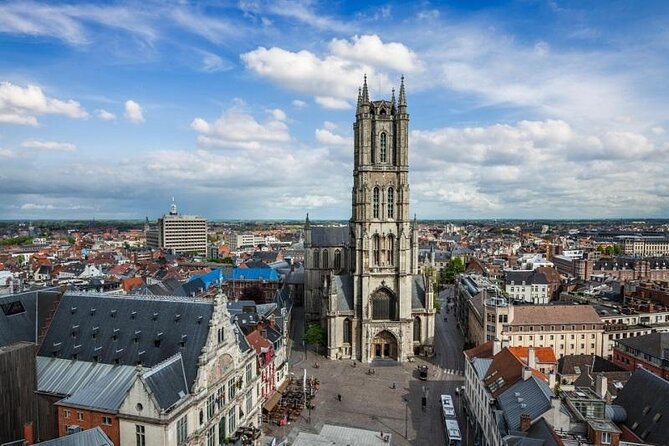
- St Bavo’s Cathedral highlights, including the exterior and interior tied to The Adoration of the Mystic Lamb.
- Food-adjacent stops, from the OOOST meat house area to a cuberdon sweet moment at Kleine Vismarkt.
- You end near the center, close to restaurants, bars, and public transport options.
Ghent keeps going, and so do we
- Ghent: 50-Minute Medieval Center Guided Boat Trip★ 4.5 · 5,637 reviews
- Historical Walking Tour: Legends of Gent★ 5.0 · 1,761 reviews
- Ghent: 40 Minute Medieval Center Guided Boat Tour★ 4.4 · 884 reviews
- Evening Tour of the Dark Side of Gent★ 5.0 · 646 reviews
Meeting at Sint-Baafsplein, ending near Castle of the Counts
The tour starts at Sint-Baafsplein 2 (9000 Gent). That’s a practical anchor point if you’re arriving by public transport, since the meeting area is near transit and you’re already in the heart of the historic center.
You finish at Sint-Veerleplein 11, near the Castle of the Counts. I like this ending because it puts you close to the action without forcing you into a late-night commute. It also makes it easier to extend the day on your own, grabbing a meal or a drink right where you wrap up.
There’s also a mobile ticket. That matters more than people think, because you don’t want to waste time hunting for paper tickets when you’re already on your schedule.
A strong first-day plan for Ghent
Ghent is gorgeous, but if you wander without a plan, it’s easy to miss what matters. This tour is built as an introduction, with a guide explaining what you’re seeing and why it’s there. I like that the pacing fits a first visit, because you get the big images people come for, and you also learn how Ghent’s different buildings connect to the city’s past.
The experience usually runs about 2 hours 30 minutes, and it’s capped at 25 travelers. A smaller group size keeps the tour from turning into a human traffic jam. It also helps the guide keep stories clear and moving at a good pace.
One more practical note, your tour may vary depending on what the guide thinks is best for the group. That’s not a bad thing. In a city like Ghent, a guide reacting to conditions and energy can improve the flow.
Stadhuis (Ghent Town Hall) and why architecture tells stories
The first stop is the Ghent Town Hall, Stadhuis, right in front of the building. Instead of treating it like just a pretty facade, the guide explains the different architectural styles. That’s a smart way to start, because you begin learning visual clues immediately.
When you understand that buildings often mix styles across time, you stop seeing the city as one single look and start seeing it as a timeline. In other words, it makes later stops easier to read with your own eyes.
Admission here is free, so you’re not mentally paying for something you don’t need. You’re paying for the guide’s explanations, and that’s exactly where a small-group tour shines.
Het Belfort and the dragon story mindset
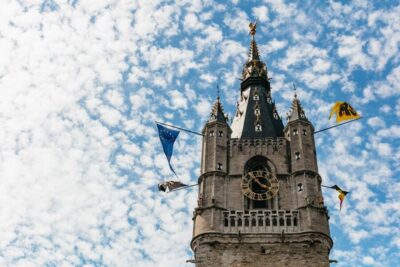
Next up is Het Belfort van Gent, the iconic tower tied to the famous dragon. The guide gives you the history surrounding that dragon, which is the kind of detail that turns a landmark from scenery into a story you’ll remember later.
I’m a big fan of towers on tours, because they train your brain to look for details you might otherwise ignore. Even if you don’t go up, knowing the legend and the surrounding context helps you understand why locals care so much.
Admission is free here too. That’s a great value angle because you’re getting a narrated “must-see” without extra ticket friction.
Other tours with a guide out front


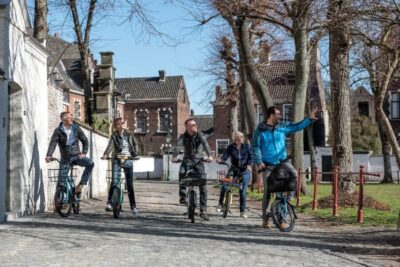
St. Bavo’s Cathedral, inside and out, plus The Adoration of the Mystic Lamb
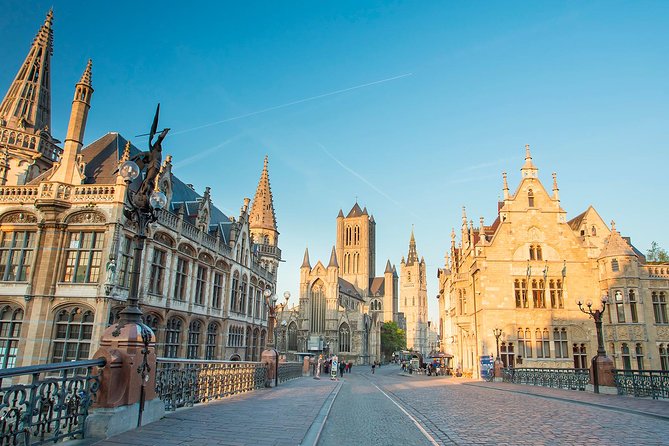
One of the most important stops is St. Bavo’s Cathedral. You’ll get both the exterior and interior, and the guide points you to what makes the cathedral essential to Ghent’s identity.
The highlight is the famous Van Eyck brothers painting, The Adoration of the Mystic Lamb. The guide also notes that it’s the most stolen painting in history. That’s one of those facts that makes art feel less like a museum label and more like a real object with a real, sometimes dramatic story.
I also like that this stop isn’t just “look at the building.” The guide connects what you see to the painting and to the cathedral’s role, so you leave with a mental snapshot that’s clearer than a quick photo.
Admission is free as part of the tour plan, so you’re not juggling extra costs while trying to stay focused.
Churches, guild halls, and the working life behind the stone
Saint Nicholas Church is a short stop, but it has a neat angle: the guide talks about how Belgian churches organize concerts and other events. It’s a quick reminder that these aren’t sealed-off historic backdrops. In many places, they still function, and that keeps the city feeling alive.
Then you’ll stand in front of the Masons’ Guild Hall facade. This is where the tour shifts from major monuments to the kind of detail that explains how Ghent ran. The guide explains what guild houses are and what’s peculiar about them.
I like these stops because guild halls and working organizations are a shortcut to understanding why medieval cities look the way they do. When you know that certain groups shaped the city’s buildings and finances, the architecture starts to feel intentional, not random.
Again, admission is free for the included stop points, so you’re spending your energy on listening, not planning.
Korenmarkt, St Michael’s Bridge, and photo-ready perspectives
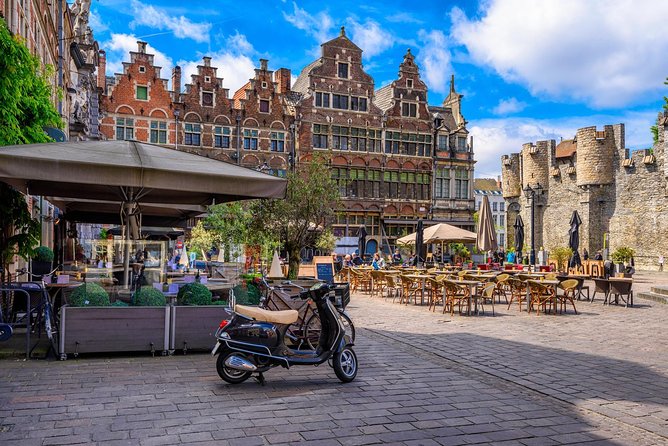
At Korenmarkt, the tour pauses for the history of a building where a post office used to be. That might sound like a small detail, but it’s exactly the sort of practical piece guides help you catch. Ghent, like many old cities, reused its spaces as needs changed. The result is that the city’s “old” parts often served ordinary functions too.
You then cross to St Michael’s Bridge, which the guide frames as a photography moment. Standing here gives you incredible photo views, plus the guide explains the history of the tower connected to the Church of San Miguel. It’s a nice mix of image and context, so you’re not just snapping shots, you’re learning how the scene formed.
Admission is listed as free for the stops, so you can focus on the moment without checking additional ticket rules.
Graslei and Korenlei along the Lys river: the canal part you came for
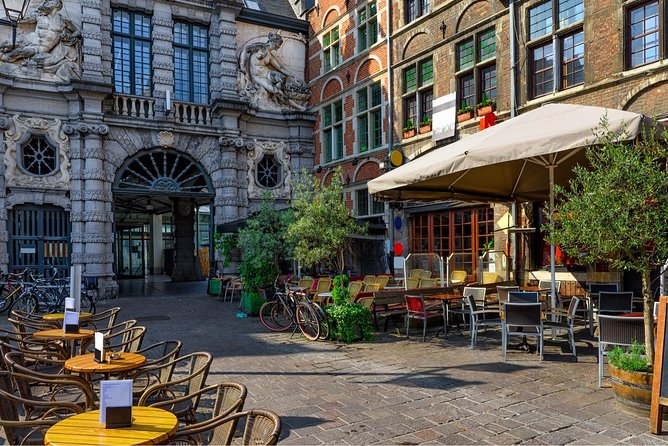
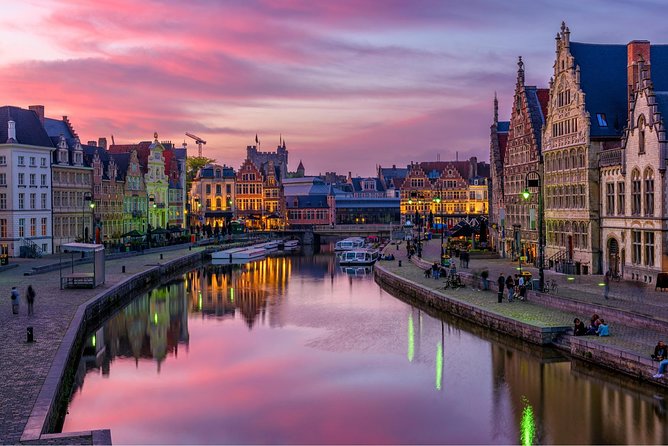
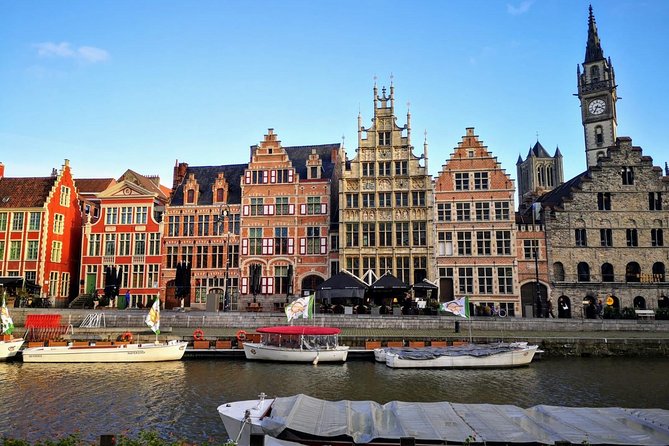
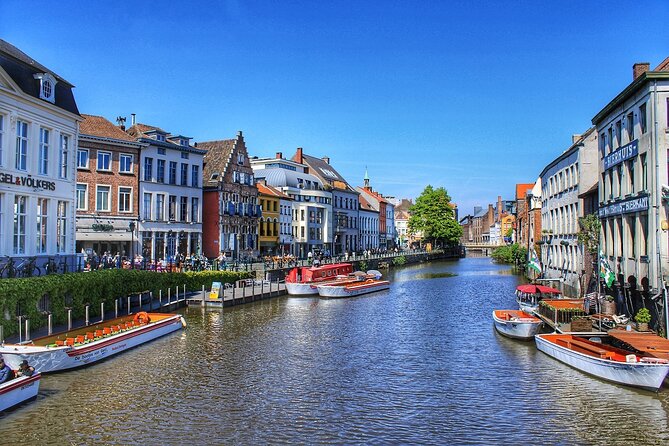
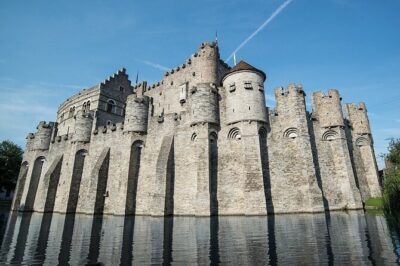
This is the canal and river portion of the tour, following the banks of the Lys river at Graslei and Korenlei. The guide walks you through the buildings lining the water, including a grain house and the current Marriott Hotel.
That detail about what sits along the river is useful because it helps you imagine how the city moved goods and people in earlier centuries. Canal life wasn’t just pretty scenery. It was how commerce happened, and that’s why the riverfront buildings matter.
You’ll also have the opportunity to take photos here. I’d plan on spending a little extra time with your camera mindset, because this is one of those Ghent scenes you’ll want to capture from multiple angles.
If you’re the type who loves learning just enough to make later wandering better, this section gives you the visual vocabulary for the rest of your time in town.
OOOST meat house and Kleine Vismarkt, plus the cuberdon sweet stop
The next stop is OOOST, the meat house. The guide explains it dates back to the 15th century and was originally a covered market. That’s a strong historical anchor, because it tells you how the area functioned long before it became a sightseeing theme.
From there, you make a small stop at Kleine Vismarkt in front of the meat house area. This is one of the more fun, human-scale moments. The guide introduces a traditional street stall, and the seller tells you about cuberdon, Ghent’s most famous sweet.
Even if you don’t buy anything, I like the idea of a short food-related pause because it turns the tour from pure monuments into everyday life. It’s also a helpful signal for what to seek later when you’re hungry and don’t know where to start.
The tour includes admission notes as free for these stops. It’s not marketed as a tasting tour, but this small street moment adds flavor to the route.
Sint-Veerleplein: closing stories and practical tips for eating and souvenirs
The final point is Sint-Veerleplein square. The guide explains the history of the square and points out different buildings around it.
More importantly, this is where you get practical help. The guide shares tips on where to eat and which souvenir shops are best. I really value this kind of guidance because it saves you from the trial-and-error phase when you want a good meal and you’re not sure which streets are worth the walk.
The tour ends here near the center, which also makes it easy to transition into self-guided exploring right away.
Price and value: what you actually get for about $17.36
At about $17.36 per person, this is a budget-friendly way to get a guided overview of Ghent’s key landmarks. The value angle is that you’re paying for narration and local context, not for a stack of paid museum tickets.
The included stops list free admission tickets for the sights on the route. That matters because it keeps the tour from feeling like you’re constantly adding costs while you’re already paying a fee to get through the city.
You also get city and travel tips included, and those can pay off quickly if you use them to plan where to eat and what to prioritize next.
One more value detail, the tour is delivered by a professional Spanish guide and is designed for a wide range of visitors. That shows up in the structure: it’s built to work as an introduction, not a specialist lecture for people who already know Ghent.
What it feels like on the ground, based on guide styles
Across the different guide names people have shared, there’s a common theme: the tour moves with energy and stays easy to follow. Guides like Bea and Melisa are described as dynamic and entertaining, with stories that make the history of Ghent and Belgium feel understandable.
You’ll also notice that the canal views are framed as story points, not just scenery. For example, the view from the San Miguel area and the muelle experience is often highlighted as a trip back in time. That’s exactly how I’d want the tour to feel: you look at the place, then you understand the logic behind it.
Another pattern you’ll benefit from, food tips show up at the end, and the route includes a sweet-related moment earlier. So you’re not left at the “now you’re hungry, good luck” stage.
Who this tour suits best
This guided tour fits best if you:
- Want an easy first pass through Ghent’s most famous sights in about 2.5 hours
- Enjoy learning stories behind landmarks, especially cathedrals, towers, and riverfront buildings
- Prefer a guided plan over figuring everything out map by map
- Are fine walking through the historic center and taking short photo breaks
It may not be the best fit if you want lots of free time at each stop to linger independently, or if you strongly prefer to experience Ghent at your own pace with minimal structure.
Should you book this Ghent guided tour?
Yes, I’d book it if this is your first or only short visit to Ghent and you want the “greatest hits” plus context. The tour is well sized for newcomers, the guide-led narration is the core value, and the included free admissions keep it from feeling like an add-on tax.
Book it especially if you’re drawn to the cathedral and the riverfront scenes, because the route is designed so those moments happen on schedule, not by accident. If you’re traveling with someone who needs structure, this format can be a helpful shared starting point.
If your schedule allows, go in ready to listen for 2.5 hours. You’ll get more out of the photos, and your future self-guided wandering will feel smarter, not just prettier.
FAQ
What time does the Ghent guided tour start?
The tour starts at 10:00 am.
How long is the guided tour?
It lasts about 2 hours 30 minutes.
Is the guide Spanish-speaking?
Yes, the tour includes a professional guide in Spanish.
Where do I meet and where does the tour end?
You meet at Sint-Baafsplein 2, 9000 Gent, Belgium, and the tour ends at Sint-Veerleplein 11, near the Castle of the Counts.
Are any attraction admissions included?
The tour notes free admission tickets for the included stops.
Are meals included in the price?
No. Food and drink are not included, but the guide will point you to good places to eat.
Does the tour use a mobile ticket?
Yes, you receive a mobile ticket.
What happens if the weather is bad?
The experience requires good weather. If it’s canceled due to poor weather, you’ll be offered a different date or a full refund.
More Belgian Tours
Every Belgium Review
Ghent, Continued
Newer Belgium reviews from the same corner of the country
- Ghent Walking Tour – City Highlights and Beyond Tradition
★ 4.5 · 3 reviews - Ghent: City Walk with Audio Guide in 7 Languages on your Phone
★ 4.5 · 3 reviews - Children’s escape game in the city of Ghent Marsupilami
★ 5.0 · 3 reviews - Ghent Running and Sightseeing Tour
★ 5.0 · 3 reviews - Ghent: Walking Tour from Friday Market to the Cathedral
★ 4.8 · 3 reviews
Ghent Tours, side by side.
 ★ 4.6From Brussels: Guided Day Trip to Bruges and GhentFrom $558,353 reviews
 ★ 4.7From Brussels: Bruges & Ghent Day Tour – 2 Fairytale CitiesFrom $578,242 reviews
 ★ 4.5Ghent: 50-Minute Medieval Center Guided Boat TripFrom $125,637 reviews
 ★ 4.0Bruges and Ghent – Belgium’s Fairytale Cities – from BrusselsFrom $594,809 reviews
 ★ 5.0Historical Walking Tour: Legends of GentFrom $31,761 reviews
 ★ 4.6From Brussels: Full-Day Antwerp and Ghent Guided TourFrom $571,019 reviews
 ★ 4.4Ghent: 40 Minute Medieval Center Guided Boat TourFrom $12884 reviews
 ★ 4.5Bruges and Ghent Day Trip from BrusselsFrom $56784 reviews
Browse the lists this tour appears in