
REVIEW · GHENT
Private Tour: The Dark Side of Gent
Ghent turns spooky after dark. This private evening walk strings together gothic landmarks and scary city stories so you see more than postcards.
I especially love the private pace, which means you can linger for photos or ask questions without fighting crowds. I also love that it ends in Patershol, right where you can keep the night going with bars and restaurants. One possible drawback: several stops are story-based viewing points with no entrance included, so if you’re hoping to go inside every famous building, you may want to plan extra visits.
In This Review
- Key Things That Make This Tour Worth Your Time
- Ghent After Sunset: Why the Dark-Side Theme Works
- Who this night walk is ideal for
- Price and Value: What You’re Really Paying For
- A fair heads-up from the reviews
- Where You Start and End, and Why It Matters
- Stop by Stop: What You’ll See and What the Stories Add
- Stop 1: St Michael’s Bridge and the Ghent skyline
- Stop 2: St Bavo’s Cathedral, and the Devil’s Tower tale
- Stop 3: Graslei and Korenlei, the medieval harbor power
- Stop 4: Appelbrugparkje and the father-and-son legend
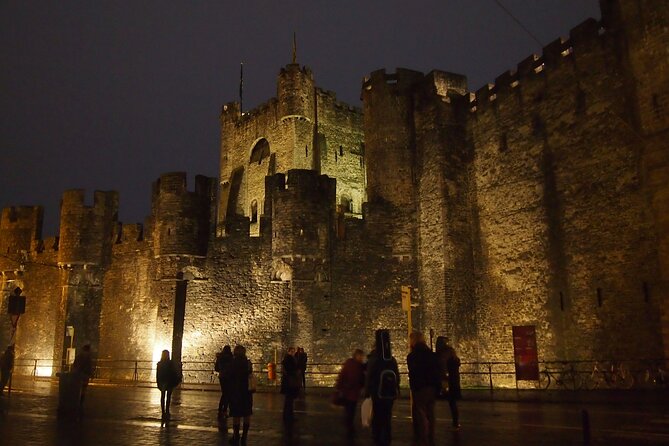
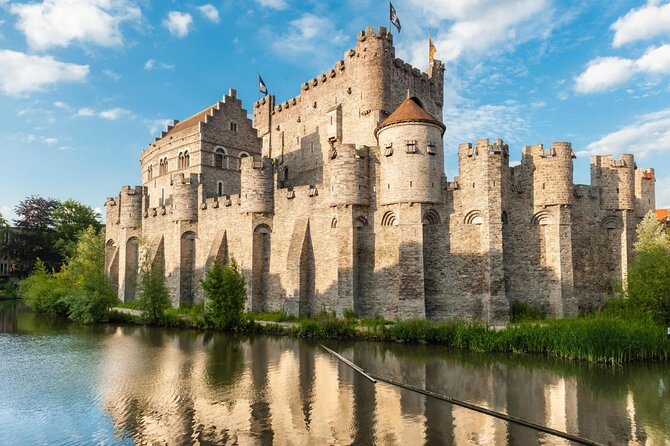
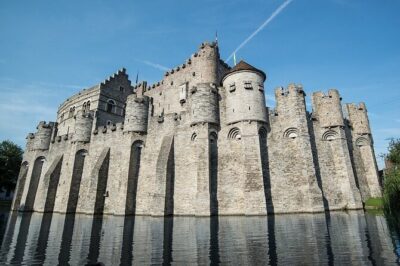
- Stop 5: Gravensteen, the Viking-protection fortress
- Stop 6: Prinsenhof, where imagination fills the gaps
- Stop 7: Rabot Sluice, the last tower of a long defense wall
- Stop 8: Keizer Karel V and the Charles V sculptures
- Stop 9: Augustijnenklooster and the Religious Wars impact
- Stop 10: Patershol, the “Monk’s hole” finishing act
- How Long It Takes, and the Walking Comfort Factor
- Guide Quality: The One Variable That Really Changes the Experience
- What to Bring, and How to Get More Out of Each Stop
- Should You Book the Dark Side of Gent?
- FAQ
- How long is the Private Tour: The Dark Side of Gent?
- Where does the tour start and where does it end?
- Is the tour private?
- What language is the tour offered in?
- Is St. Bavo’s Cathedral included for entry?
- Are any other stops included for entrance?
- Do I need a paper ticket?
- Is there free cancellation?
Key Things That Make This Tour Worth Your Time
- Night timing that feels calmer, so you can hear legends clearly and walk comfortably
- A private group only for your party, with time to ask questions and set your own pace
- Macabre storytelling tied to real locations, like the Devil’s Tower nickname and execution legend
- Big-picture Ghent context at each stop, from medieval trade to religious conflict and reinvention
- Fortress and defense remnants you do not usually spot, including the Viking-era Gravensteen and Rabot Sluice
- A strong finish near Patershol, handy for dinner after the walk
Ghent keeps going, and so do we
- Ghent: 50-Minute Medieval Center Guided Boat Trip★ 4.5 · 5,637 reviews
- Historical Walking Tour: Legends of Gent★ 5.0 · 1,761 reviews
- Ghent: 40 Minute Medieval Center Guided Boat Tour★ 4.4 · 884 reviews
- Evening Tour of the Dark Side of Gent★ 5.0 · 646 reviews
Ghent After Sunset: Why the Dark-Side Theme Works
Night changes Ghent. The streets feel quieter, the light softens the stone, and the stories you hear land better because you can actually picture what the place felt like in the past. This tour is built for that, and you will cover ground efficiently without the daytime crush.
It also helps that it is a private tour. You are not stuck with a set pace that suits strangers. If you want a slower walk, more questions, or a few extra minutes at a viewpoint, you can usually get it.
Who this night walk is ideal for
This is a great fit if you like city walking tours but want more than dates and facts. It also suits families with kids, since multiple guides in reviews were praised for keeping children engaged while still hitting the spooky notes.
If you want ticketed museum-style experiences with lots of interior time, you may find the “no entrance” stops a bit limiting. You can still get a lot out of it, but set your expectations as a guided street-level storytelling tour.
Price and Value: What You’re Really Paying For
The price is listed as $105.59 per person for about 1 hour 45 minutes, in English. For Ghent, that puts you in the “worth it if the guide is strong” category, not the bargain-bin category.
Where the value tends to show up is the combination of private time plus a tight route of high-interest locations. You do not just watch a guide point at buildings. You get linked stories about trade, executions, defenses, religious conflict, and social change, with time to ask things on the way.
A fair heads-up from the reviews
Most reviews are extremely positive and mention guide performance again and again, with names like Jerke, Kenny, Isabelle, Sébastien, Deborah, and Debra showing up as highlights. But there is at least one critical review calling it flat and not dark enough for the price. That does not mean the tour is bad, it means your enjoyment will depend on whether you like story-driven walking tours at night.
The grimmer half of the same streets
Where You Start and End, and Why It Matters
You meet at Hostel Uppelink, Sint-Michielsplein 21, 9000 Gent. The tour ends in Patershol, in the city center, an area known for cozy bars and restaurants.
This is practical. Starting at a defined spot keeps the first few minutes from feeling chaotic. Ending in Patershol is handy because you finish your walking time and can head straight to food without hunting for a plan.
Also, the tour uses a mobile ticket, so you are not dealing with paper tickets in the dark. The listing notes service animals are allowed and it is near public transportation.
Stop by Stop: What You’ll See and What the Stories Add
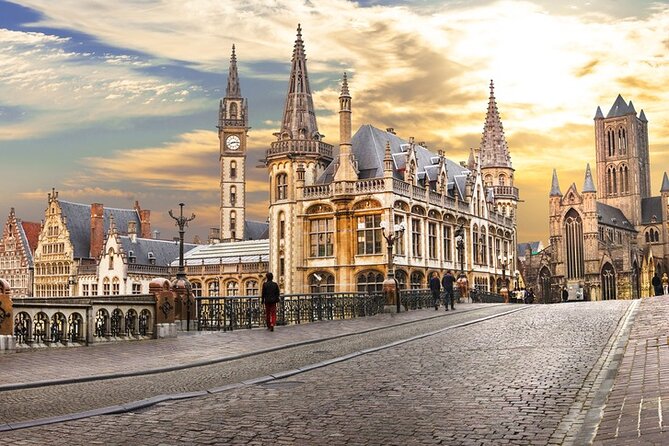
The route is a classic loop through Ghent’s medieval core, with a deliberate “dark side” theme. Many stops are designed around legends and nicknames, so you get context that makes the streets feel like a living story.
Stop 1: St Michael’s Bridge and the Ghent skyline
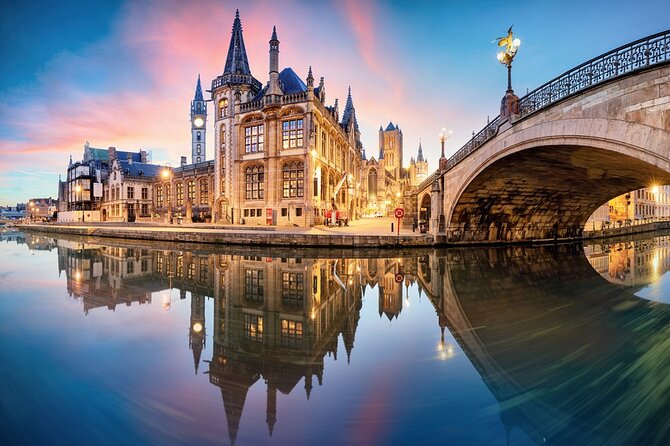
You start at St Michael’s Bridge. This is a smart opening because it gives you a first “big picture” view of Ghent and it sets up the medieval trading role of the city.
You will also get an introduction to the three towers of the Ghent skyline, which are best visible from here. It is the kind of orientation that helps the rest of the walk click into place.
If you are the type who likes visuals, give yourself a moment to look outward before you start walking. This is where the city first shows its structure.
Stop 2: St Bavo’s Cathedral, and the Devil’s Tower tale
Next is St. Bavo’s Cathedral, where you hear the gruesome story behind why it is linked with the nickname Devil’s Tower. You do not enter the cathedral on this tour, so you are mostly taking in the building from the outside.
That matters for expectations. This stop is about storytelling and atmosphere, not an interior visit. If you want to go inside, you should plan it separately, because the tour itself does not include entry.
Stop 3: Graslei and Korenlei, the medieval harbor power
You then move to Graslei and Korenlei, the heart of the old medieval harbor. This is where the narrative shifts from scary legends to economic muscle, because Ghent grew into a powerhouse through trade.
Even if you already know the harbor look, the guide’s job here is to give you a mental map of how commerce worked and why these locations mattered. It helps you connect the architecture to the people who used it.
Stop 4: Appelbrugparkje and the father-and-son legend
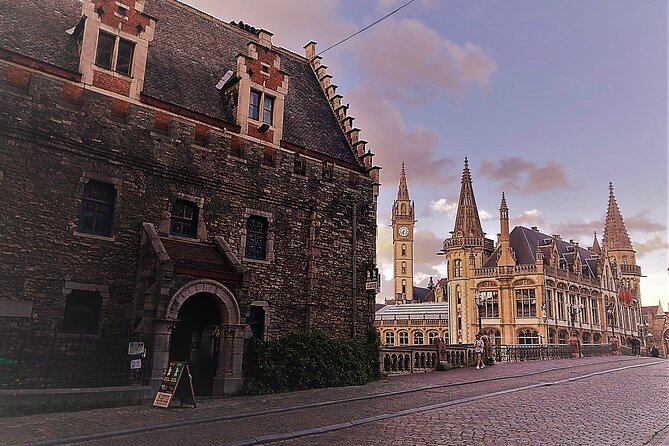
At Appelbrugparkje, you get a legend tied to the view over the Butchers’ Hall. The story involves an execution of a father and son and an unusual miraculous event that saved them.
This is one of those stops where the setting does half the work. You are looking at a place connected to power and punishment, and the story gives it emotional weight.
One thing to consider: if the “dark side” for you means action-packed horror, you will still enjoy this, but it plays more like myth and moral lesson than like a modern scare walkthrough.
Stop 5: Gravensteen, the Viking-protection fortress
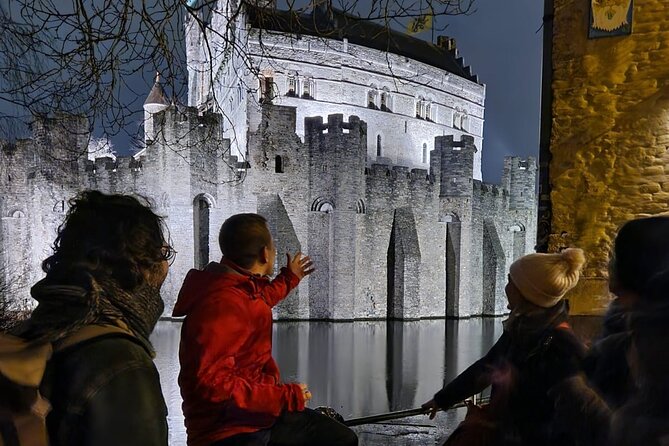
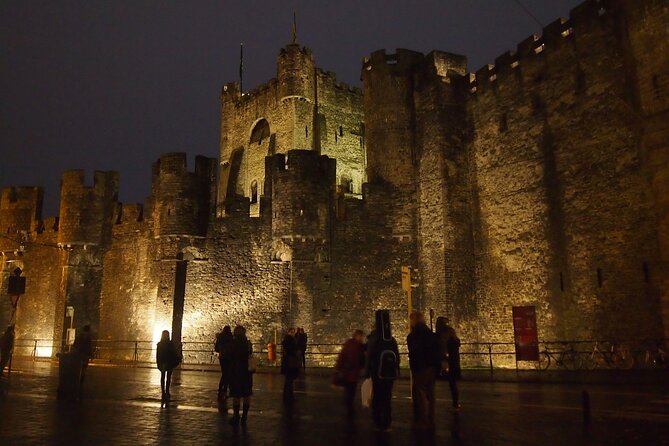
Then you reach Gravensteen. You hear that it was built by Count Baldwin in the 9th century to protect inhabitants from Viking raids. Around that kind of fortification, Ghent’s development accelerated.
This stop is great because it is not just legend. You get a clear historical reason for why the fortress exists, and that makes the rest of the route feel grounded.
Stop 6: Prinsenhof, where imagination fills the gaps
At Prinsenhof, you are shown what once was the Prince’s Court, a gigantic palace. Today, you will need a bit of imagination, and the guide does that part by explaining what it looked like and what the place was for.
No entrance is included here, so it’s a viewing-and-story stop. If you love architecture and visualizing lost buildings, this is the moment to lean in.
Stop 7: Rabot Sluice, the last tower of a long defense wall
Next is Rabot Sluice, where you see the only remaining tower of a 14 km long defense wall built around Ghent in the Middle Ages.
This is a particularly satisfying stop for anyone who likes “what’s left” history. You are seeing a remnant, not a reconstructed museum model, and it makes you think about how big the city’s defenses really were.
Stop 8: Keizer Karel V and the Charles V sculptures
You then walk to Keizer Karel V, described as the Bridge of Imperial Delights. It is flanked by four sculptures depicting legendary scenes from the life of Charles V.
This is one of the route’s more visual moments. Even if you are not a “sculpture person,” you will get the stories behind the figures, and that turns the bridge from decoration into a mini history lesson.
Stop 9: Augustijnenklooster and the Religious Wars impact
At Augustijnenklooster, the focus shifts to the Religious Wars and how Calvinist rule affected Ghent. You do not enter, so again, think of it as a history talk anchored to place.
This stop is for you if you like when a tour explains cause and effect. You are not just hearing “there was conflict,” you’re learning what it changed in the city’s trajectory.
Stop 10: Patershol, the “Monk’s hole” finishing act
Finally, the tour ends in Patershol, also described as the monk’s hole. The guide connects it to the social impact of the Industrial Revolution and how it helped revive the city’s economy.
Ending here is more than convenient. It closes the story arc by shifting from medieval defenses and religious conflict to modern change, and then you step into the neighborhood where that energy still shows up in food and nightlife.
How Long It Takes, and the Walking Comfort Factor
The tour is about 1 hour 45 minutes. That is long enough to feel like you understand the city’s main story, but short enough that night walking does not drag.
Because the itinerary includes many separate stops, you will spend a chunk of time standing and looking. Wear shoes you trust. Ghent’s center is walkable, but at night you want grip and comfort more than fashion.
Guide Quality: The One Variable That Really Changes the Experience
The strongest pattern in the reviews is guide performance. Multiple people mention guides by name, like Jerke, Kenny, Isabelle, Sébastien, Hamraz, and Deborah/Debra. The feedback repeatedly points to engaging storytelling, patience, and the ability to keep conversation flowing.
That is a good sign, but it also explains the one negative review. When a tour is built around stories, a good storyteller makes it feel like theater. A weaker storyteller can make it feel like a school presentation.
When you book, think about what you want most from a tour: if you like hearing the dark, character-heavy side of a city, this style is a good match.
What to Bring, and How to Get More Out of Each Stop
You do not need much, but a few practical items make this smoother:
- A charged phone for the mobile ticket
- Comfortable shoes for nighttime walking
- A willingness to pause, because many stories depend on your view of the exact spot
Also, ask questions. The private format makes questions part of the experience. If you want more detail on a legend, or you want the historical “why,” this is the moment to request it.
Should You Book the Dark Side of Gent?
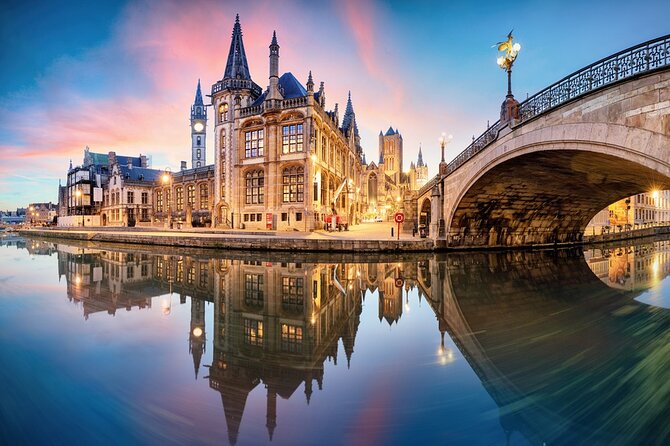
Book it if you want a private evening walk that mixes gothic legends with real place-based history. You will likely enjoy it most if you like scary stories, city orientation, and guides who can turn landmarks into characters.
Skip it, or at least temper expectations, if you expected lots of entrances and ticketed interiors. Several major stops are explicitly not included for entry, like St. Bavo’s Cathedral and Prinsenhof, so you are getting the “outside viewing plus story” version.
If your goal is to get oriented in Ghent fast, feel the atmosphere after sunset, and end in Patershol for dinner, this tour fits that plan nicely. For the price, you are buying guide-led storytelling plus an efficient route through the sites that make Ghent feel dark, dramatic, and surprisingly human.
FAQ
How long is the Private Tour: The Dark Side of Gent?
It’s listed as about 1 hour 45 minutes.
Where does the tour start and where does it end?
The tour starts at Hostel Uppelink, Sint-Michielsplein 21, 9000 Gent. It ends in the Patershol area in Ghent.
Is the tour private?
Yes. It is a private tour, and only your group participates.
What language is the tour offered in?
The tour is offered in English.
Is St. Bavo’s Cathedral included for entry?
No. The tour includes the story connected to St. Bavo’s Cathedral, but entering is not part of the tour.
Are any other stops included for entrance?
Some stops note entry is not included, such as Prinsenhof and Augustijnenklooster. Other listed stops are free to view as part of the tour.
Do I need a paper ticket?
No. A mobile ticket is provided.
Is there free cancellation?
Yes, free cancellation is available. You can cancel up to 24 hours in advance for a full refund.
Every Belgium Review
Belgium After Dark, on Foot
Ghent, Continued
Newer Belgium reviews from the same corner of the country
- Ghent Walking Tour – City Highlights and Beyond Tradition
★ 4.5 · 3 reviews - Ghent: City Walk with Audio Guide in 7 Languages on your Phone
★ 4.5 · 3 reviews - Children’s escape game in the city of Ghent Marsupilami
★ 5.0 · 3 reviews - Ghent Running and Sightseeing Tour
★ 5.0 · 3 reviews - Ghent: Walking Tour from Friday Market to the Cathedral
★ 4.8 · 3 reviews
Ghent Tours, side by side.
 ★ 4.6From Brussels: Guided Day Trip to Bruges and GhentFrom $558,353 reviews
 ★ 4.7From Brussels: Bruges & Ghent Day Tour – 2 Fairytale CitiesFrom $578,242 reviews
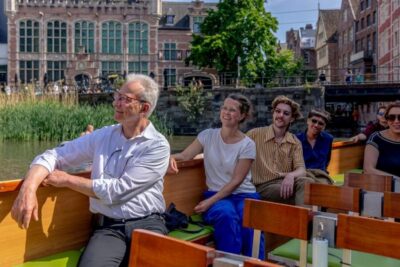 ★ 4.5Ghent: 50-Minute Medieval Center Guided Boat TripFrom $125,637 reviews
 ★ 4.0Bruges and Ghent – Belgium’s Fairytale Cities – from BrusselsFrom $594,809 reviews
 ★ 5.0Historical Walking Tour: Legends of GentFrom $31,761 reviews
 ★ 4.6From Brussels: Full-Day Antwerp and Ghent Guided TourFrom $571,019 reviews
 ★ 4.4Ghent: 40 Minute Medieval Center Guided Boat TourFrom $12884 reviews
 ★ 4.5Bruges and Ghent Day Trip from BrusselsFrom $56784 reviews
Browse the lists this tour appears in