
REVIEW · FLANDERS FIELDS & WWI BATTLEFIELD
PRIVATE Australian Western Front Battlefields 3-Day Tour Ypres to Amiens
WWI still has a pulse here. This private three-day Australian Western Front route between Ypres and Amiens focuses on the sites that mattered to Australians, guided by someone with family links to the battlefields. I love the personal guidance and the flexibility to tailor the route if you have an ancestor connected to a specific place.
I also like the emotional pacing, moving from Plugstreet Wood’s Christmas Truce story through the weight of Tyne Cot and the In Flanders Fields sites. One consideration: meals and accommodation are at your own expense, so you’ll want to budget and plan where you’re sleeping between days.
With pickup offered, a 9:00 am start, and the tour ending in Amiens (with the option to go the other way), it’s a very practical way to see a lot without feeling rushed.
In This Review
- Key things I’d highlight from this private Western Front experience
- Australian battlefields from Ypres to Amiens, with a personal lens
- What 9:00 am starts and a 3-day schedule feel like
- Day 1 in the Ypres Salient: mines, Plugstreet Wood, Tyne Cot, and the Menin Gate
- Messines Ridge to Passchendaele, focused on an Australian advance
- Plugstreet Wood and the Christmas Truce Memorial
- Spanbroekmolen Mine Crater and Hill 60, the underground war
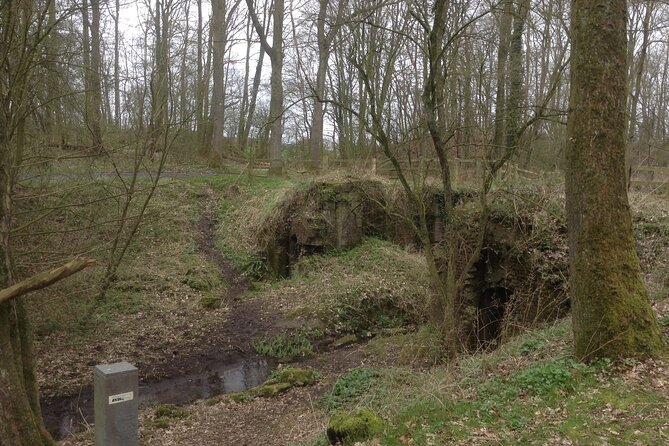
- Polygon Wood, bunkers, and an Australian division footprint
- Tyne Cot Cemetery and Essex Farm, where remembrance gets specific
- In Flanders Fields Museum: your hour of context
- Ypres Cloth Hall, quick town time, and the Last Post at Menin Gate
- Langemark Cemetery closes the day
- Day 2 from Fromelles to Bullecourt, plus Arras for a needed change of pace
- Fromelles Museum: the 2008 mass grave identification story
- Le Trou Aid Post Cemetery and Pompey Elliott
- Pheasant Wood, VC Corner, and trench line viewpoints
- Australian Memorial Park: German perspective and the Cobbers statue
- Arras for lunch break and open space at a UNESCO main square
- Bullecourt Digger and Slouch Hat Memorial
- Arrive in Amiens around 5:00 pm
- Day 3 near Albert and Le Hamel, ending with missing Australians and the Sir John Monash Centre
- Albert Basilica and the Leaning Virgin
- Lochnagar Crater: the mine blown on 1 July 1916
- Pozieres memorial, Windmill Memorial, and the tank era
- Le Tommy lunch stop, then École Victoria and Adelaide Cemetery
- Australian National Memorial and Sir John Monash Centre
- Australian Corps Memorial at Le Hamel, then you’re in Amiens
- Price and value: what makes this feel worth it
- Who should book this, and who should think twice
- Practical tips to get the most from the tour
- Should you book this private Australian Western Front tour?
- FAQ
- How long is the private tour?
- Where does the tour start and end?
- Is this a private tour?
- What is included in the price?
- Are meals included?
- Do you get admission to museums and memorial sites?
- What happens at the end of the tour in Amiens?
- Does the tour offer pickup?
- What about cancellation changes?
- Is the tour suitable for most travelers?
Key things I’d highlight from this private Western Front experience
- A private guide with family connections to the places you visit, plus genuine customization when possible
- A route built around Australian memory, including missing men and key division memorials
- Major stops with included admissions at the Museum of the Battle of Fromelles, In Flanders Fields Museum, and École Victoria
- Night-time history at the Menin Gate, including the Last Post ceremony at 8:00 pm
- Daily bottled water included, which matters when you’re spending long hours on the road
Other Flanders Fields and Ypres Salient tours we have reviewed
- From IEPER Private 4-hour Tour of the Ypres Battlefield★ 5.0 · 154 reviews
- In Flanders Fields and Passchendaele Half Day Morning Tour★ 5.0 · 117 reviews
- Ypres: An exploration of the deadly salient battlefields★ 5.0 · 76 reviews
- From Brussels: Flanders Fields Remembrance Full-Day Trip★ 4.4 · 65 reviews
Australian battlefields from Ypres to Amiens, with a personal lens
If you’re drawn to the First World War but want more than facts on a board, this kind of private route is the sweet spot. You’re not just driving past cemeteries. You’re visiting the places where Australians fought, hid, dug in, and were remembered, with a guide who can link the dots in a human way.
The route starts in Ypres and ends in Amiens. You can also choose the reverse direction, which is handy if your train or hotel plans point one way more than the other. Either way, the itinerary keeps returning to the same core idea: Australian stories in the landscape between these two cities.
And yes, it’s private. That means only your group, and that matters when you’re dealing with sites that can hit hard. You can pause when you need to. You can ask questions without feeling like you’re taking time away from a bigger tour.
What 9:00 am starts and a 3-day schedule feel like
This tour runs for about three full days, beginning at 9:00 am. It’s structured in a way that mixes long look-ands with shorter stops, so the day doesn’t become one endless blur. Some places give you two hours, others are 10 to 30 minutes, and the balance keeps the driving from swallowing the experience.
You’ll also get complementary bottled water each day. That may sound like a small detail, but it’s the kind of practical touch that keeps a long schedule comfortable, especially when you’re visiting multiple outdoor sites and memorials back-to-back.
Most importantly, transport and guided tours are included. Meals and accommodation are not, so you should plan around lunch breaks and the evening drop-off in Amiens. The good news is the tour ends with you dropped back to your lodging or railway station in Amiens, so you’re not stuck searching for your way after a very full day.
Day 1 in the Ypres Salient: mines, Plugstreet Wood, Tyne Cot, and the Menin Gate

Day 1 is the heaviest story arc, and it’s built to move from big battle mechanics to deep personal remembrance. You start with the Ypres Salient area, traveling from Messines to Passchendaele, covering the 1914 to 1918 span with a focus on what Australians faced, especially around the 1917 fighting.
Messines Ridge to Passchendaele, focused on an Australian advance
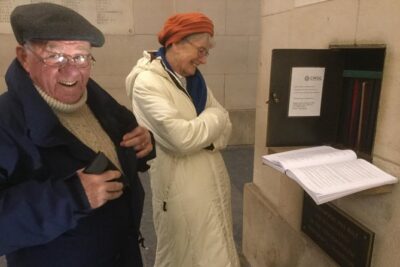
At Messines Ridge, you spend about two hours in the area tied to the Australian approach toward Passchendaele in 1917. This is one of the places where the tour’s “family-linked guide” angle really matters, because the storytelling isn’t just broad. If your ancestor fell in the battle, the guide can tailor the tour where possible to include them.
This is also the stop that sets your expectations for the whole trip: the goal isn’t to memorize dates. It’s to understand how the terrain shaped decisions, casualties, and the way soldiers were remembered afterward.
The same ground, just your own group
Plugstreet Wood and the Christmas Truce Memorial
Then you move to the Christmas Truce Memorial at Plugstreet Wood. You’ll stand and hear the story of the truce in 1914, with about 30 minutes at the stop.
Even if you think you already know the outline of the Christmas Truce, hearing it in the setting where it’s remembered changes the tone. It’s not a history headline. It’s a moment placed inside a larger war that kept grinding on.
Spanbroekmolen Mine Crater and Hill 60, the underground war
After that, it’s down to earth and under earth. At Spanbroekmolen Mine Crater, you hear about the massive mine explosion on 7 June 1917, with about 30 minutes to take it in.
Next comes Hill 60 for about 10 minutes, focused on one of the large mines and the tunnelling effort connected to the Australian units.
These stops do something useful: they show that “battle” wasn’t only a forward rush. It was also engineering, digging, and trying to control ground where you couldn’t see the enemy.
Polygon Wood, bunkers, and an Australian division footprint
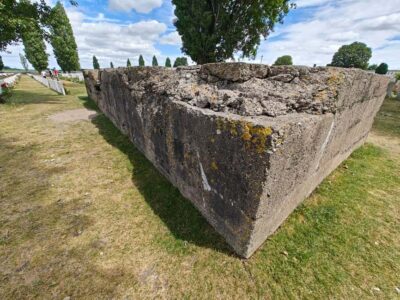
At the Battle of Polygon Wood, you do a walk through the woods and visit concrete bunkers that were there when Australians captured the area. You also see the cemetery and the Australian 5th Division monument, with about 25 minutes here.
This is where you’ll appreciate the blend of short walk plus structured viewing. Outdoor sites can be hard to read when you’re alone. With a guide, you get a map in your head fast, and the place starts making sense.
Tyne Cot Cemetery and Essex Farm, where remembrance gets specific
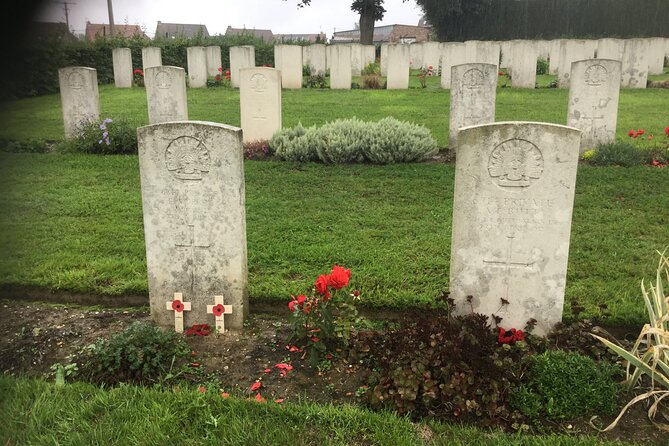
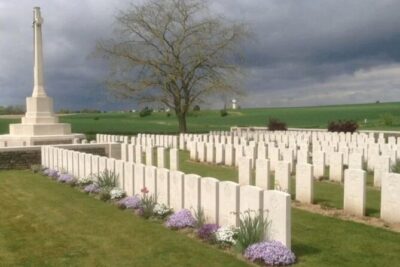
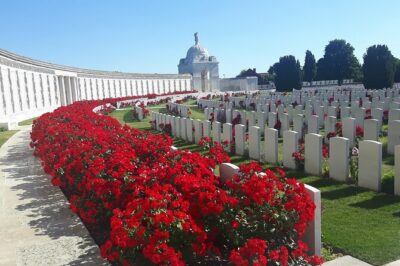
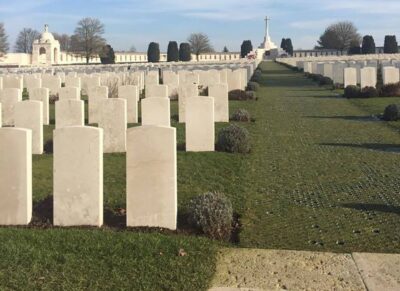
Day 1 then pivots toward remembrance. At Tyne Cot Cemetery, you’ll visit the world’s largest Commonwealth War Graves Commission cemetery, with 12,000 soldiers buried and only 3,000 with names. Two Australian VC recipients are buried here too.
That ratio, names versus not named, is why this stop tends to land so hard. It makes missingness and loss feel concrete, not abstract.
Shortly after, you visit Essex Farm Cemetery, with about 20 minutes, tied to the hospital site where Lt Col John McCrae composed In Flanders Fields.
In Flanders Fields Museum: your hour of context
You then get one hour at the In Flanders Fields Museum, with admission included. If you’ve felt emotionally slammed by outdoor stops, museums are where you can catch up without forcing yourself to “be okay.” This hour is valuable because it gives you the background you need to connect the memorial stones you’ve just been seeing.
Ypres Cloth Hall, quick town time, and the Last Post at Menin Gate
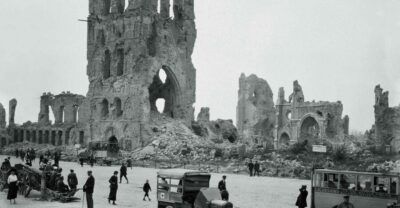
Back in Ypres, you take time at the Ypres Cloth Hall area and the cathedral in the main square. You also get a chance to grab a meal on your own, with Flemish stew mentioned as a local option. The stop is brief, about 10 minutes, but it helps you regain your bearings.
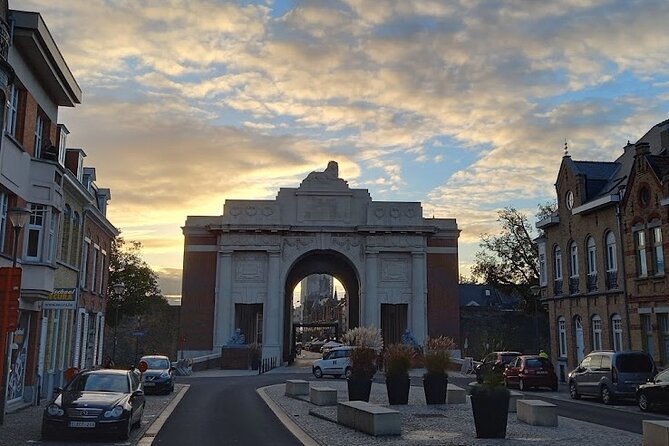
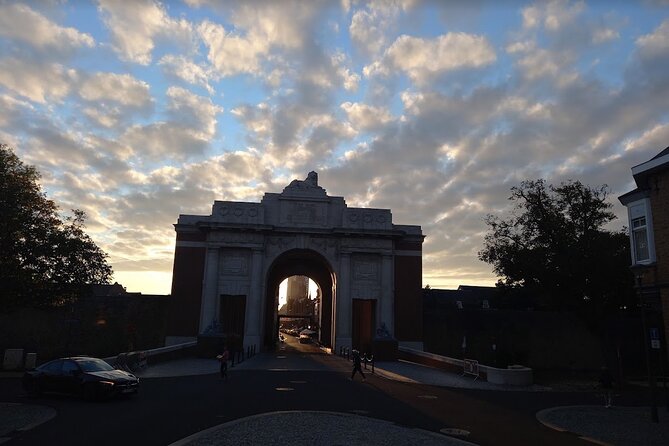
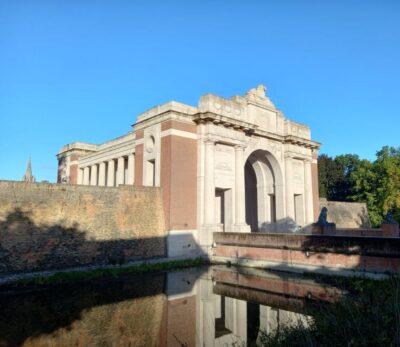
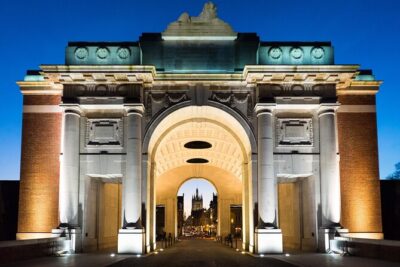
Then comes one of the most moving parts of the itinerary: Last Post at the Menin Gate. You’ll take part in the ceremony at 8:00 pm, carried out every night by local fire brigade buglers since 1927, with the note that it paused during Nazi occupation in WWII. Plan for about 30 minutes.
This is one of those “you feel the room go quiet” moments. Even if you’re not a ceremony person, the consistency over decades adds weight.
Langemark Cemetery closes the day
Day 1 ends at Langemark Cemetery, about 25 minutes. You’ll see how German war dead are commemorated here, with 44,000 German dead buried in the cemetery.
That choice of ending is smart. It reminds you that remembrance can be complex, and that the war’s human cost stretched across many national stories.
Day 2 from Fromelles to Bullecourt, plus Arras for a needed change of pace
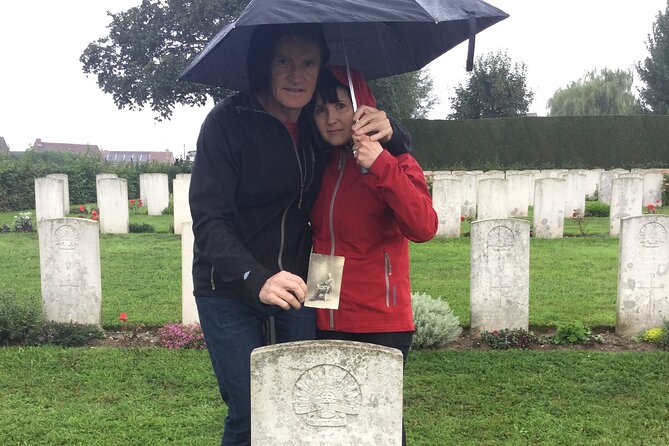
Day 2 keeps the Australian focus but adds more emphasis on recovery and identification, then shifts into a very heavy battle story in Bullecourt. Midway through, you also get Arras, which works like a reset.
Fromelles Museum: the 2008 mass grave identification story
At the Museum of the Battle of Fromelles, you spend about 45 minutes. This museum is dedicated to the battle and how researchers found and identified 250 Aussies after a mass grave was uncovered in 2008.
This is valuable because it tackles a question that often sits in the background for WWI visits: What happened to the missing, and how do we know? Here, the tour gives you a concrete answer: identification work can happen long after the war ends.
Le Trou Aid Post Cemetery and Pompey Elliott
Next is Le Trou Aid Post Cemetery, about 20 minutes. You’ll hear the story of Pompey Elliott and the massacre of the Australian 5th Division.
That stop makes the war feel less like “a chapter” and more like a series of events with named individuals and outcomes. The tour’s tone tends to stay respectful and direct, which is exactly how it should be at sites like this.
Pheasant Wood, VC Corner, and trench line viewpoints
You then visit Pheasant Wood Military Cemetery (about 20 minutes), focusing on the Australian soldiers connected to the mass grave story.
After that is VC Corner Australian Cemetery (about 20 minutes). You’ll see the mass grave there and also view the battlefields from Australian trench lines.
That viewpoint matters. Even short stops become more meaningful when you can stand where people once stood and look across the kind of ground that influenced attack and defense.
Australian Memorial Park: German perspective and the Cobbers statue
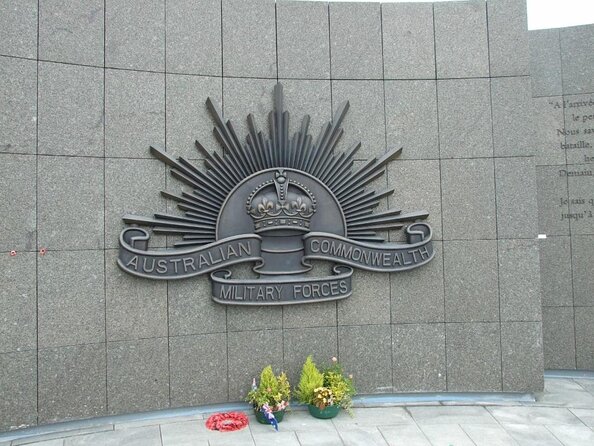
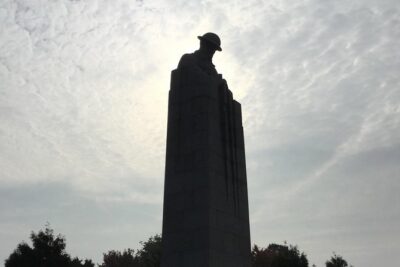
At the Australian Memorial Park, you get about 20 minutes, including the chance to look at the battlefield from the German perspective. You’ll also hear the story of the Cobbers statue.
This is a thoughtful inclusion. It doesn’t erase the Australian focus, but it nudges you to understand the wider context of what both sides saw.
Arras for lunch break and open space at a UNESCO main square
Then you head to Arras for about one hour. This is described as a stunning UNESCO world heritage site, and there’s time for a lunch break. Admission is free, and you’ll have time to walk the main square.
I like this insertion because it prevents the entire day from being one long procession of grief. Even if your schedule is full, a town like Arras gives you a place to regroup before the next battle sites.
Bullecourt Digger and Slouch Hat Memorial
After Arras, you visit The Bullecourt Digger (about 30 minutes). You’ll hear about the battle of Bullecourt and how it led to the deaths of 10,000 Australian soldiers in two weeks.
Then comes Slouch Hat Memorial (about 10 minutes). You’ll see remnants of tanks and the Australian slouch hat memorial.
These are short stops, but they serve an important function: they translate the broader battle story into a few memorable images that your brain can hold onto later.
Arrive in Amiens around 5:00 pm
You’ll reach Amiens around 5:00 pm. The guide helps you with where to eat and where the best views are, then drops you at your lodging so you can explore on your own.
For me, that timing is perfect. It means you can shower, eat, and still have a bit of evening energy left.
Day 3 near Albert and Le Hamel, ending with missing Australians and the Sir John Monash Centre
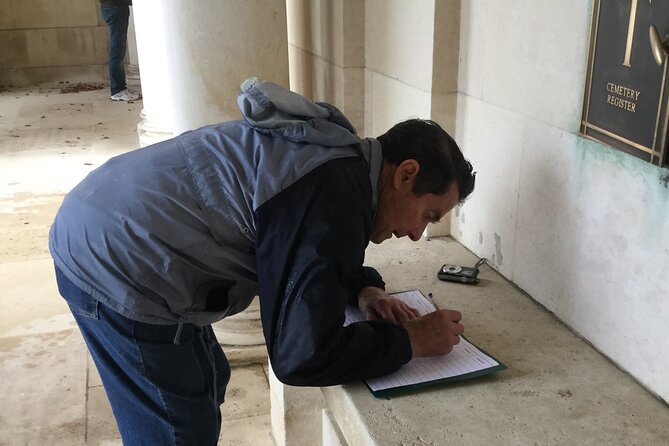
Day 3 reads like a final sweep through major sites tied to some of the most famous parts of the campaign, then lands on the long memorial story of Australians missing in action.
Albert Basilica and the Leaning Virgin
You stop at Albert for about 10 minutes, at the Basilica, hearing the story of the Leaning Virgin.
Even if a landmark is quick, it helps anchor you in the modern world sitting on top of WWI sites. That contrast can be useful, especially when your brain has been in 1916 and 1917 all day.
Lochnagar Crater: the mine blown on 1 July 1916
At Lochnagar Crater, you spend about 30 minutes. It’s a 30 meter deep crater from a mine blown on 1 July 1916, and you’ll hear the story of that day and how it led to the deaths of 20,000 British soldiers.
This is one of the places where a single feature in the ground tells a whole story. You don’t need technical language. The size itself does the talking.
Pozieres memorial, Windmill Memorial, and the tank era
You then visit a 1st Australian Division memorial (about 20 minutes), tied to the battle of Pozieres, where you’ll hear about a six-week slaughter and the deaths of 24,000 Australian soldiers for a one mile long ruined village.
Next is Windmill Memorial (about 20 minutes). You’ll see the site of German trenches known as OG1 and OG2, plus the mention of what was once a windmill.
Then you reach the Tank Corps Memorial (about 15 minutes), tied to the idea that tanks were first used in battle. You’ll hear how they came about and how developments and tactics evolved.
Even within the Australian focus, these stops help you see the war changing over time. Mines, trenches, then mechanical warfare. It’s not all the same kind of fighting.
Le Tommy lunch stop, then École Victoria and Adelaide Cemetery
For lunch, you stop at Le Tommy, a cafe described as a place full of love and respect for the Australian sacrifice. Lunch is at your own expense.
After lunch, you visit École Victoria (about 35 minutes), with admission included. You’ll hear the story of a French school paid for by pennies from Australian children in the 1920s.
Then comes Adelaide Cemetery (about 20 minutes), where you’ll hear the story of an unknown Australian soldier exhumed from this site in 1993.
Australian National Memorial and Sir John Monash Centre
Next, you visit the Australian National Memorial (about one hour), a memorial to 20,000 missing Australians in this area. This is the stop that turns everything you’ve seen into a single statement of absence and remembrance.
After that, you get one hour at the Sir John Monash Centre, with admission included. You’ll have time to explore it fully.
Australian Corps Memorial at Le Hamel, then you’re in Amiens
Finally, you visit the Australian Corps Memorial (about 30 minutes), tied to Monash’s masterpiece, the battle of Le Hamel. You’ll hear how it was rapid, cost fewer lives, and included many historical firsts, plus the value of how Monash’s approach is remembered.
At the end, you’re dropped back to your hotel in Amiens or the Amiens railway station.
Price and value: what makes this feel worth it
The tour price is $1,965.48 per person for a private 3-day experience. That’s not a casual spend, so you should look at what you’re actually getting for the money.
Here’s what your price covers based on the tour details: transport, guided tours, and complimentary bottled water each day. You also get major site admissions handled for several key stops like the In Flanders Fields Museum, the Museum of the Battle of Fromelles, and École Victoria.
It also matters that the tour is private, meaning you’re not sharing a guide with strangers. On memorial visits, that turns into a smoother pace, more room to ask questions, and easier emotional timing.
The main trade-off is the one you’re already aware of: meals and accommodation are on you. If you’re the type who likes fully packed, all-inclusive touring, this may feel like effort. If you’re happy to plan lunches and choose a hotel, the flexibility and guided depth can feel like better value than a larger group tour.
Who should book this, and who should think twice

I’d especially recommend this tour if you:
- Want an Australian-focused route, not a general Western Front overview
- Appreciate memorials, cemeteries, and museums where you can ask questions
- Prefer a private guide who can personalize the route, including attempts to include family-linked sites
- Are ready for an experience that is emotional, not just educational
You might think twice if:
- You want a lighter itinerary with more free time each day
- You strongly prefer tours where meals and hotels are included
- You’re not comfortable with ceremonies like the Last Post at the Menin Gate, which can be very moving
Practical tips to get the most from the tour
A few things will help you get the most value out of the structure.
- Start with the 9:00 am rhythm in mind. You’ll cover a lot each day, including long road segments and multiple stops.
- For meals, treat lunch and dinner as part of your planning. The tour covers guidance and transport, but you’ll pay your own way for food.
- Be ready for mixed pacing. Some stops are 10 minutes, others are an hour, like In Flanders Fields Museum, the Sir John Monash Centre, and the Australian National Memorial.
- If you have names or locations tied to family history, prepare them. The guide can tailor where possible, and it makes a real difference.
- If you’re the type who likes atmosphere, give yourself time around the 8:00 pm Menin Gate ceremony. Plan your evening energy around that.
Should you book this private Australian Western Front tour?
If you want a 3-day experience that feels personal, structured, and genuinely guided, this is the kind of tour I’d point you toward. The standout advantage is the guide approach, including Soren Hawkes, described as informative, reliable, and deeply heartfelt, plus the extra care taken each day.
I’d book it if your goal is to understand what Australians experienced between Ypres and Amiens, including the underground war, the cemeteries, the missing men memorials, and a museum stop or two that gives you solid context. The price is high, but when you factor in private guiding, transport, included admissions at major sites, and the daily water, it can feel like a lot less than it first appears.
If you hate planning meals, or if you want more casual sight-seeing than memorial time, look for a different style.
FAQ
How long is the private tour?
It’s approximately 3 days, starting at 9:00 am each day.
Where does the tour start and end?
It starts in Ypres and ends in Amiens. You can also opt for a vice-versa route.
Is this a private tour?
Yes. It’s a private tour/activity, and only your group participates.
What is included in the price?
Transport and guided tours are included, and complimentary bottled water is provided each day. Admission is included for specific stops listed as included.
Are meals included?
No. All meals are at your own expense.
Do you get admission to museums and memorial sites?
Many stops list admission as free, and a few have admission included, including the In Flanders Fields Museum, the Museum of the Battle of Fromelles, and École Victoria.
What happens at the end of the tour in Amiens?
You’ll be dropped back to your hotel in Amiens or to the Amiens railway station.
Does the tour offer pickup?
Yes, pickup is offered.
What about cancellation changes?
You can cancel for a full refund if you cancel up to 24 hours in advance of the experience start time.
Is the tour suitable for most travelers?
The tour notes that most travelers can participate. Service animals are allowed, and it’s near public transportation.
More Belgian Tours
Every Belgium Review
Flanders Fields and the Ypres Salient
Newer Belgium reviews from the same corner of the country
- Discover Tournai while playing! Escape game – The alchemist
★ 4.0 · 3 reviews - From LIlle or Bruges, Christmas Truce to Passchendaele Ypres 1 day WW1 private
★ 5.0 · 5 reviews - From Ypres 4hr Christmas Truce and Monster Mines of Messines PRIVATE Tour
★ 5.0 · 5 reviews - e-Scavenger hunt Ypres: Explore the city at your own pace
★ 4.5 · 6 reviews - Full Day Canadian WW1 Vimy and Somme Battlefield Tour from Ypres
★ 5.0 · 6 reviews
Flanders Fields & WWI Battlefield Tours, side by side.
 ★ 4.9From Bruges: Great War Flanders Fields Minibus Tour w/ LunchFrom $1301,257 reviews
 ★ 4.5Flanders Fields Remembrance Tour from BrusselsFrom $113334 reviews
 ★ 4.5Flanders Fields Remembrance Tour from BrugesFrom $95207 reviews
 ★ 5.0From IEPER Private 4-hour Tour of the Ypres BattlefieldFrom $399154 reviews
 ★ 5.0In Flanders Fields and Passchendaele Half Day Morning TourFrom $108117 reviews
 ★ 5.0Ypres: An exploration of the deadly salient battlefieldsFrom $8876 reviews
 ★ 4.8From Bruges: Flanders Fields Remembrance Full-Day TripFrom $9165 reviews
 ★ 4.4From Brussels: Flanders Fields Remembrance Full-Day TripFrom $10765 reviews
Browse the lists this tour appears in