
REVIEW · FLANDERS FIELDS & WWI BATTLEFIELD
From IEPER Private 4-hour Tour of the Ypres Battlefield
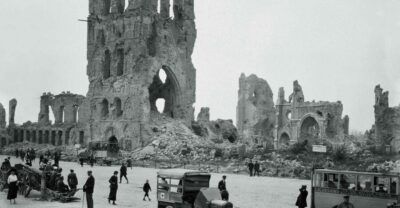
WWI hits different in Ypres. This private 4-hour battlefield loop strings together the key 1915-1917 sites with pickup and a guide who keeps the story clear. I also like the built-in pacing, with specific time blocks at each stop so you can look, read, and ask questions without feeling rushed.
The second big win is how personal it can get. Guides like Søren (and others such as Sabine and Saline) often tailor the route to your family connections, even helping sort out what to visit if you have a relative tied to the area. The one drawback to plan for is that this is a concentrated run through very heavy history, so it can feel emotionally intense in just half a day.
In This Review
- Key things you should know before you go
- Pickup and the comfort factor in Ypres battlefield day
- Stop 1, Hill 60 and the 7 June 1917 mines
- Stop 2, Sanctuary Wood Museum trenches and the tunnel experience
- Stop 3, Tyne Cot Cemetery and the scale behind the names
- Stop 4, Saint Julien Memorial and the first gas attack story
- Stop 5, Essex Farm Cemetery and John McCrae’s In Flanders Fields
- How your guide can turn a battlefield tour into a family story
- Time, pacing, and what a 4-hour loop really feels like
- Price and value for a private group up to 4
- Should you book this Ypres WWI private tour?
- FAQ
- How long is the IEPER Private 4-hour Tour of the Ypres Battlefield?
- How many people can be in a group?
- Is pickup included, and where does the guide meet?
- What language is the tour in?
- Is it a mobile ticket?
- Are there admission fees at the stops?
- Is it really a private experience?
- Can I cancel for a full refund?
- How far in advance is it commonly booked?
Key things you should know before you go
- Private group of up to 4 means the pace and focus stay on your questions, not a bus full of strangers.
- Pickup is built in from Ieper Train Station or your Ieper hotel or B&B, so you are not wrestling transit on arrival.
- A trench museum stop plus major cemeteries gives you both the human scale (names, graves) and the battlefield context (lines, attacks, and geography).
- Sanctuary Wood admission is included, while the other main memorial and cemetery stops are free, which helps keep costs predictable.
- Plenty of time at each site (15 to 45 minutes) makes it realistic to absorb what you are seeing instead of photo-whizzing.
- The guide style matters: maps and photos, a respectful tone, and room for questions, including for kids and people with walking limits.
Other Flanders Fields and Ypres Salient tours we have reviewed
- From IEPER Private 4-hour Tour of the Ypres Battlefield★ 5.0 · 154 reviews
- In Flanders Fields and Passchendaele Half Day Morning Tour★ 5.0 · 117 reviews
- Ypres: An exploration of the deadly salient battlefields★ 5.0 · 76 reviews
- From Brussels: Flanders Fields Remembrance Full-Day Trip★ 4.4 · 65 reviews
Pickup and the comfort factor in Ypres battlefield day

This is set up as a private, half-day experience, so you start with fewer hassles. If you arrive by train, your guide meets you at Ieper Train Station. If you’re already in town, you can arrange pickup from your Ieper hotel or B&B (and if your place isn’t listed, you message the details).
In the field, this practical choice matters. Ypres is not the type of place where you want to spend your limited time figuring out routes and parking. With pickup and a comfortable vehicle, you get right to the story, and you do it at a pace that fits your group.
One smart detail you’ll notice from how this tour runs: the guide is flexible about your starting point. If plans shift on the day, the experience is designed to adapt, which is a relief when you are traveling with kids, older relatives, or tight schedules.
Stop 1, Hill 60 and the 7 June 1917 mines
You start at Hill 60, and the focus is strikingly specific: the story of the massive mines blown there on 7 June 1917. Instead of treating Hill 60 like just another marker in the lineup, the guide turns it into a battlefield moment with cause and effect.
Why this stop works well at the beginning: it gives you an early sense of how WWI was fought beyond infantry lines. Mines, tunnels, and explosive engineering were part of the chess game, and Hill 60 is a clear example. Even if you come with only basic WWI knowledge, this kind of concrete starting point helps your brain lock onto the rest of the day.
You’ll typically have about 40 minutes here, with admission free. That length is enough to understand the narrative without feeling like the site is just a quick photo stop.
A consideration: if you are expecting a visitor center experience with lots of exhibits, Hill 60 is more about the guided explanation and what you can take from the location itself. The real payoff comes from listening closely and asking questions.
Stop 2, Sanctuary Wood Museum trenches and the tunnel experience
Next up is Sanctuary Wood Museum, where you see original WWI trenches and a small, focused museum. This is the stop that tends to land hardest, because you are no longer only hearing about strategy. You are looking at the physical reminders of how people lived and fought underground.
Time matters here. Plan on about 45 minutes, and since admission is included, you do not have to budget extra just to enter. If you have ever wondered what trench warfare actually looked like up close, this is where the day starts to feel real fast.
A detail I think you’ll appreciate: some guides guide you through more than just the open trench lines. There can also be moments like walking a tunnel among the trenches, which adds that eerie sense of how tight and enclosed conditions were.
The only downside to note is simple. Sanctuary Wood is emotionally heavy. If you are traveling with younger kids, ask your guide to keep answers age-appropriate. The best outcomes come when you match your pace to your group.
Stop 3, Tyne Cot Cemetery and the scale behind the names
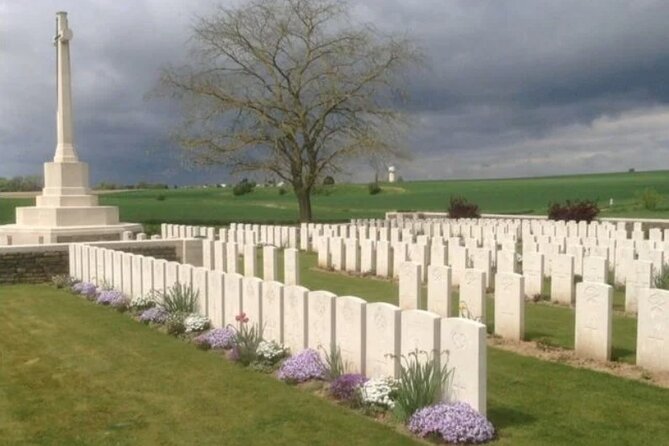
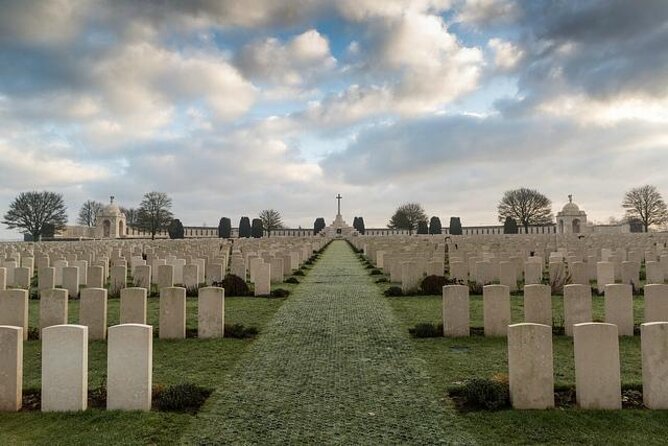
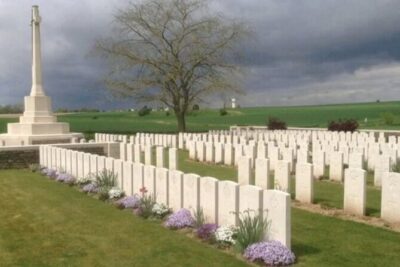
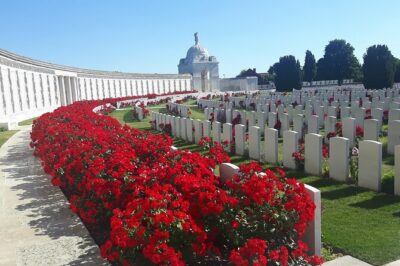
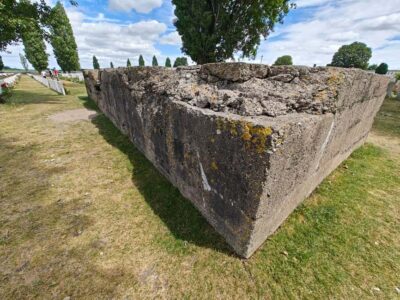
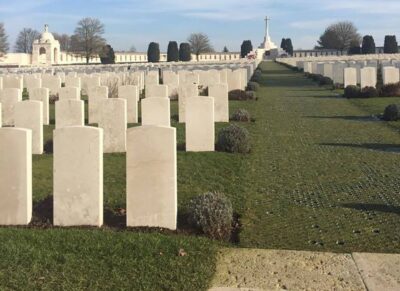
Then you reach Tyne Cot Cemetery, the world’s largest Commonwealth War Graves Commission cemetery. Here the numbers do the talking, but the guide helps you translate those numbers into people.
You’ll see around 12,000 soldiers buried there, with only about 3,000 named. That gap is one of the most unsettling things you’ll encounter in the Ypres area, because it turns history into absence as much as it turns it into a roll call. The guide also points out that the cemetery includes two Australian and one Canadian VC recipients.
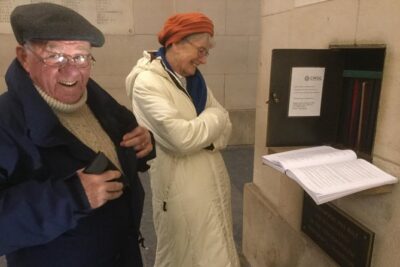
You’ll get about 45 minutes here, and the stop is admission free. That timing is key. Cemeteries like this do not reward speed. With enough time, you can read plaques, search for names connected to your family, and still step back to take in the wider layout.
One practical tip: if you know even one surname tied to your family story, bring it. A guide can help you aim your attention quickly, instead of spending the whole visit scanning rows blindly.
The same ground, just your own group
Stop 4, Saint Julien Memorial and the first gas attack story
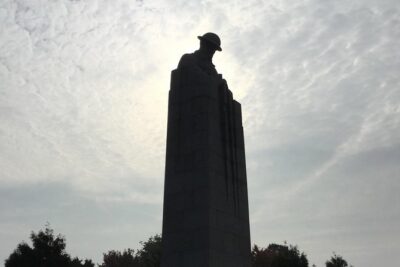
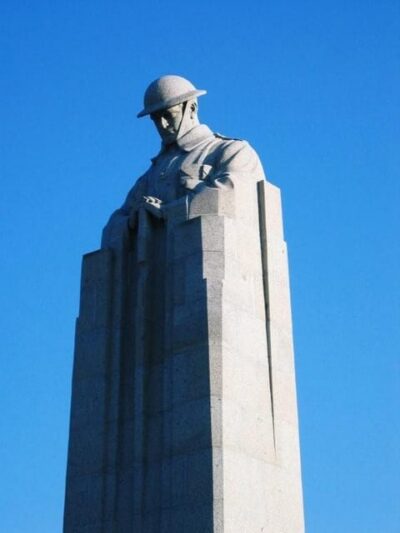
At Saint Julien Memorial, the narrative pivots to 22 April 1915, the first major German gas attack of WWI against French soldiers, and the way Canadians helped hold the line in the face of the chlorine gas cloud.
This stop is shorter at about 15 minutes, and it is also admission free. That works, as long as you are prepared to treat it as a key briefing stop, not a long reflection session. With this kind of concentrated memorial, the guided explanation is what gives it context quickly.
Why I think this stop is so valuable: it ties a specific weapon to a specific place and then links it to a national story many visitors want to understand. If you are Canadian, this part of the tour often becomes the emotional anchor of the whole day, because the account is not generic.
If you want to get the most out of the short time: come with at least a basic question. Even something like how the gas attack changed the fighting style can lead to an explanation you will remember.
Stop 5, Essex Farm Cemetery and John McCrae’s In Flanders Fields
The final site is Essex Farm Cemetery, and it comes with a literary and cultural connection that many people find surprising. The area is described as a hospital site where Lt Col John McCrae composed In Flanders Fields, and it’s also tied to the poppy becoming the iconic symbol of WWI remembrance.
You’ll have about 30 minutes, again with admission free. This stop is the closest thing to a “button” for the day, because it gives you a human voice attached to a broader tragedy.
If you’ve ever associated the poppy symbol with remembrance in Canada, the UK, Australia, or beyond, this is where the symbol gets its story. It’s one thing to know the poem exists. It’s another to connect it to a location tied to the author’s WWI experience.
A gentle caution: this ending can make people teary. If you want to keep the mood steady for the ride back, tell your guide ahead of time. A good guide will match the tone to your group without steamrolling the emotion.
How your guide can turn a battlefield tour into a family story
Here’s what makes this private format feel worth it: the guide does not just recite facts. They help you make meaning from the places.
Guides such as Søren have taken requests seriously, including asking for a relative’s service record so the tour can aim at the most relevant corners of the battlefield. That kind of preparation changes how you experience the sites. Instead of seeing a memorial as a historical object, you start seeing it as a map to someone’s final days.
It’s also where the maps and photos matter. Many people feel overwhelmed in WWI spaces because there is so much geography and so many dates. Visual aids help you get your bearings fast, so the story sticks.
You’ll also see the benefit of a guide who can handle different audiences. Some groups include kids as young as 6, and the guide can slow down and keep explanations clear without turning it into a watered-down version of history. Other groups include people with walking restrictions after surgery, and the pace can be adjusted so the visit stays comfortable.
Even the tone gets attention. This is a sombre subject, but it helps when a guide uses light humor in a respectful way, because it keeps the day from turning into one long emotional slog. Humor here is not disrespect. It’s a pressure valve.
Time, pacing, and what a 4-hour loop really feels like
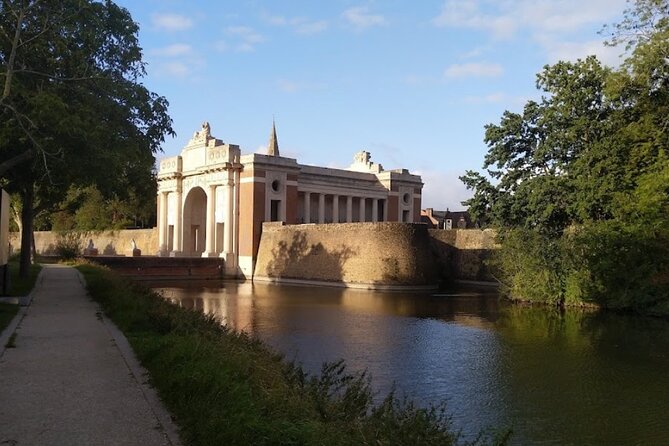
This tour is about 4 hours, and it runs as a smooth sequence rather than a random grab bag. The time at each stop is planned: 40 minutes at Hill 60, 45 minutes at Sanctuary Wood, 45 minutes at Tyne Cot, 15 minutes at Saint Julien Memorial, and 30 minutes at Essex Farm.
That adds up to enough time to do more than just stand in front of plaques. You can read, ask, and still have breathing room to take in the emotional weight of the spaces.
You also get a choice between morning or afternoon timing. If you’re connecting to other travel, think about your energy. Morning tours can be easier for kids and people who do better earlier in the day. Afternoon tours can work well if you want to sleep in or line things up with other Ypres plans.
What you should bring is mostly common sense: comfortable shoes and weather-ready layers. This part of Belgium can be changeable, and you will spend time outside even if your stops include covered museum bits.
Price and value for a private group up to 4
The price is $399.25 per group (up to 4). That’s the kind of pricing where value depends on whether you fill the seats.
If you have a full group of four, it works out to about $100 per person for a private guide, pickup, and transportation across several major WWI sites. If you’re a couple, it’s higher per person, but you still get something you cannot replicate on your own as easily: an order that makes sense, guided context that connects the dates, and the ability to tailor to your family story.
One cost detail that improves the math: Sanctuary Wood Museum admission is included, while the other major stops listed here are free. So you are not paying extra on the day for ticketed entry at every site.
Also consider what you save. A self-guided plan might work if you’re super organized, but you lose two big things: guided explanation that helps you understand why each place mattered, and flexibility. With a private tour, you can ask “Why here?” and “What changed?” without feeling like you are holding up a group.
This is a strong fit when:
- You care about WWI history and want the sites put in a clear timeline.
- You have a family connection and want help spotting what matters.
- You’re traveling with mixed ages or mobility needs and want a pace that adapts.
Should you book this Ypres WWI private tour?
If you want a half-day that feels structured but not rushed, I’d book it. The big strength is how the guide connects the battlefield geography to the human stories, and how the private format helps you focus on what you actually care about.
I would hesitate only if you are looking for a long museum crawl or a very light, casual sightseeing day. This route is efficient, and the subject is heavy. The best choice is matching the experience to your expectations: come ready to listen, ask questions, and take your time at the memorials.
If you’re the type of person who likes details like Hill 60 mines, the Sanctuary Wood trenches, Tyne Cot’s named and unnamed graves, Saint Julien’s gas attack moment, and McCrae’s poppy connection, this tour is built exactly for that.
FAQ
How long is the IEPER Private 4-hour Tour of the Ypres Battlefield?
It runs for about 4 hours.
How many people can be in a group?
The tour is private and supports a group size of up to 4.
Is pickup included, and where does the guide meet?
Pickup is offered. The guide meets at Ieper Train Station if you arrive by train, or at Ieper hotels and B&Bs if your accommodation is listed. If it is not listed, you can message the name so the guide can meet you there.
What language is the tour in?
The tour is offered in English.
Is it a mobile ticket?
Yes, you receive a mobile ticket.
Are there admission fees at the stops?
Sanctuary Wood Museum admission is included. The Hill 60, Tyne Cot Cemetery, Saint Julien Memorial, and Essex Farm Cemetery stops list admission tickets as free.
Is it really a private experience?
Yes. Only your group participates.
Can I cancel for a full refund?
Yes. You can cancel up to 24 hours in advance of the experience start time for a full refund.
How far in advance is it commonly booked?
On average, it is booked 61 days in advance.
More Belgian Tours
Every Belgium Review
Flanders Fields and the Ypres Salient
Newer Belgium reviews from the same corner of the country
- Discover Tournai while playing! Escape game – The alchemist
★ 4.0 · 3 reviews - PRIVATE Australian Western Front Battlefields 3-Day Tour Ypres to Amiens
★ 5.0 · 3 reviews - From LIlle or Bruges, Christmas Truce to Passchendaele Ypres 1 day WW1 private
★ 5.0 · 5 reviews - From Ypres 4hr Christmas Truce and Monster Mines of Messines PRIVATE Tour
★ 5.0 · 5 reviews - e-Scavenger hunt Ypres: Explore the city at your own pace
★ 4.5 · 6 reviews
Flanders Fields & WWI Battlefield Tours, side by side.
 ★ 4.9From Bruges: Great War Flanders Fields Minibus Tour w/ LunchFrom $1301,257 reviews
 ★ 4.5Flanders Fields Remembrance Tour from BrusselsFrom $113334 reviews
 ★ 4.5Flanders Fields Remembrance Tour from BrugesFrom $95207 reviews
 ★ 5.0In Flanders Fields and Passchendaele Half Day Morning TourFrom $108117 reviews
 ★ 5.0Ypres: An exploration of the deadly salient battlefieldsFrom $8876 reviews
 ★ 4.8From Bruges: Flanders Fields Remembrance Full-Day TripFrom $9165 reviews
 ★ 4.4From Brussels: Flanders Fields Remembrance Full-Day TripFrom $10765 reviews
 ★ 5.0Small Group Ypres Remembrance Day Filled With War HistoryFrom $41931 reviews
Browse the lists this tour appears in