
REVIEW · FLANDERS FIELDS & WWI BATTLEFIELD
Small Group Ypres Remembrance Day Filled With War History
This trip strings together WWI sites that go beyond photos, from preserved trenches at Sanctuary Wood to the Last Post at Menin Gate. It is built for a long, steady flow of remembrance, with enough time at each stop to actually take it in.
I especially like the small group size (max 8) and the way the route mixes intense history with human-scale moments in town. I also like that the day is paced to include key memorial stops and museum time, so you are not just rushing from one name to the next.
One consideration: this is a full 10 to 11 hour day, and several stops are solemn and physically active (walking outdoors, then through trench settings). If you need frequent breaks or prefer lighter themes, plan accordingly.
In This Review
- Key highlights you should care about
- From Ghent to Ypres: why this route hits harder on Remembrance Day
- Pickup and small group pacing for a 10 to 11 hour day
- Sanctuary Wood and Hill 62: walking trench lines, not just reading about them
- Lunch with a scenic break near Ypres, then back to memorial mode
- Ramparts Cemetery inside the old walls: names aligned with the city’s past
- Ypres Cloth Hall time: chocolate tasting plus a sense of place
- In Flanders Fields Museum: a reconstructed trench experience at Cloth Hall
- Menin Gate and the Last Post: the moment that turns sightseeing into remembrance
- Back to Ghent: finishing the day with time to decompress
- Price and value: what you’re paying for at $419.29 per person
- Who this tour suits best, and who should think twice
- Final call: should you book this Ypres remembrance day tour?
- FAQ
- What is the duration of the Ypres Remembrance Day tour?
- Where does the tour start, and when is it scheduled?
- Is pickup included?
- How many people are in the group?
- Is the tour in English?
- Are tickets included for the stops?
- What is the highlight ceremony at Menin Gate?
Key highlights you should care about
- Hill 62 trench setting at Sanctuary Wood, with preserved features and artifacts
- Ramparts Cemetery inside Ypres’ city walls, a close look at multinational burials
- Cloth Hall area time, including chocolate tasting and museum access at a historic site
- Menin Gate Last Post ceremony, with the yearly bugle call tradition at Menenpoort
- A guide known for humor and respect, including stories that keep you engaged without losing the tone
Still weighing it up? Here is what else we have reviewed around Belgium.
- Ghent: 50-Minute Medieval Center Guided Boat Trip★ 4.5 · 5,637 reviews
- Historical Walking Tour: Legends of Gent★ 5.0 · 1,761 reviews
- Ghent: 40 Minute Medieval Center Guided Boat Tour★ 4.4 · 884 reviews
- Evening Tour of the Dark Side of Gent★ 5.0 · 646 reviews
From Ghent to Ypres: why this route hits harder on Remembrance Day
If your only plan is to see war memorials, Ypres can feel heavy and repetitive. What makes this day different is the sequence. You start with the ground itself, preserved trenches and artifacts at Sanctuary Wood. Then you move into the city, where names and memory take over, from cemetery rows to museum rooms. Finally, you end at the Menin Gate, where remembrance is spoken and sounded out in public.
This structure matters because it gives your brain two ways to understand the same reality. First, you see how soldiers lived and moved in the trenches. Then you see how the world remembers them afterward. By the time the bugle call happens at Menenpoort, the sites do not feel like separate tourist stops. They feel like chapters in the same story.
Pickup and small group pacing for a 10 to 11 hour day
You start at 10:00 am, with pickup offered. The tour notes that your live location gets shared on WhatsApp during pickup, which is useful if you do not want to hunt around a meeting spot. The group is capped at 8 travelers, so you should expect a quieter experience than the classic big-bus approach.
That small group size changes how the day feels. You can ask questions, and the guide can adjust pacing if a stop runs longer or if someone needs an extra minute at a memorial. It also helps at the most crowded moment of the day, when everyone is converging around Menin Gate for the Last Post.
The day runs 10 to 11 hours including travel time. That is a long stretch, so bring the basics seriously: water, comfortable shoes, and a plan for weather. The tour includes some refreshment stops, but you still want to stay comfortable from Sanctuary Wood to the evening ceremony.
Sanctuary Wood and Hill 62: walking trench lines, not just reading about them
Sanctuary Wood is near Ypres, in a region famous for some of the most brutal fighting of the Great War. Here, the focus is preservation. You are walking on ground associated with fierce battles, and the museum grounds are dedicated to remembering the sacrifices of soldiers from around the world.
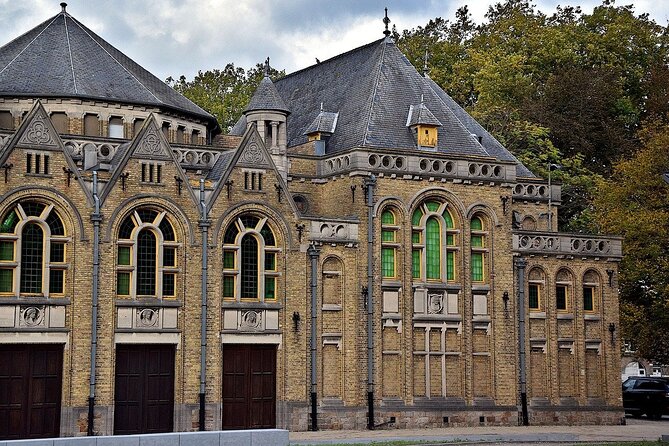
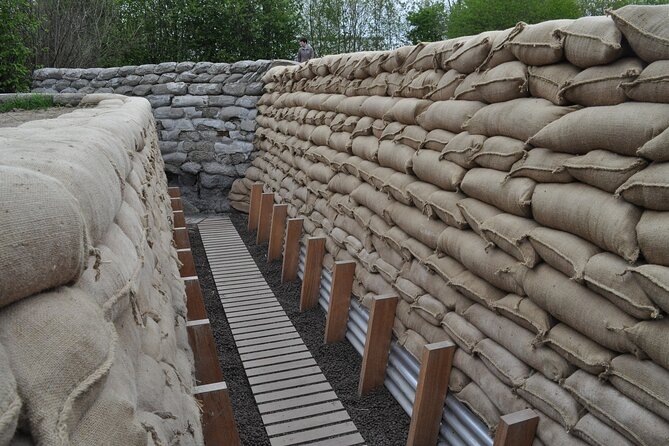
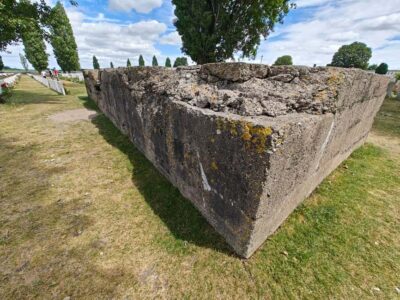
At Woodmuseum Hill 62, you get that rare feeling that history is not behind glass. The area includes preserved trenches, bunkers, and war artifacts. The museum setting is designed to transport you back in time, so expect a mix of outdoor walking and museum exhibits. It is the kind of stop where you will likely slow down naturally, because the layout encourages you to picture what soldiers faced.
How long you get matters. You have around two hours at this part, which is enough time to see the trench features, take in the artifacts, and not feel rushed. The drawback is also obvious: trench settings can involve uneven ground and walking in outdoor areas, so wear shoes you trust.
Lunch with a scenic break near Ypres, then back to memorial mode
After the trenches, the route drives to a spot in nature for lunch. You have about 1 hour 45 minutes at this lunch break, which is a real breath of air after the seriousness of the first stop.
One detail to note: while the lunch itself is part of the day flow, the exact style is not fully listed in the tour summary. Past guests have described lunch tied to a beer tasting setup at this stop, which hints that it might be more than a basic sandwich moment. Still, treat it as a meal plus a chance to reset rather than a guaranteed “food highlight,” and check with the operator when you book if you have dietary needs.
Once lunch ends, the day keeps moving. That is good because it prevents the emotional hangover that can happen if you do too much sacred space back-to-back without a pause. If you are sensitive to war themes, use the lunch time intentionally, not just as a snack stop.
Belgian history told on other streets

Ramparts Cemetery inside the old walls: names aligned with the city’s past
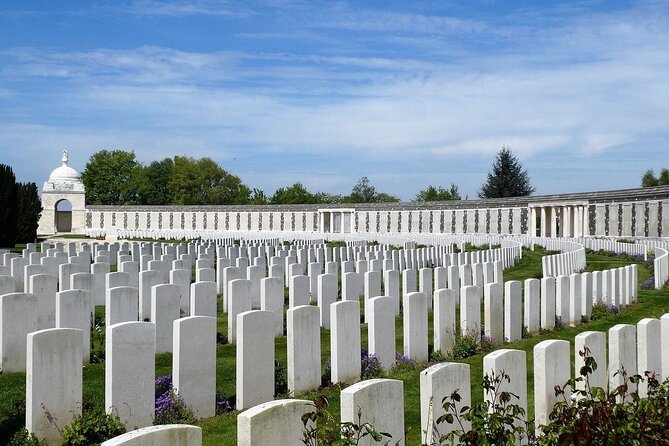
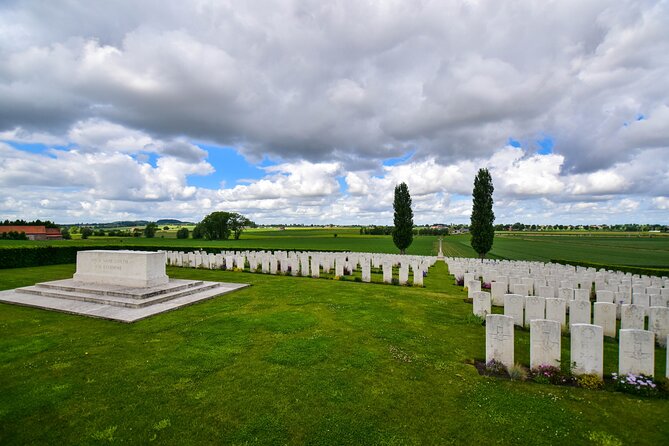
Next up is Ramparts Cemetery, located within Ypres’ historic city walls. This is one of those places where the setting does real emotional work. You are not outside a city, looking at a memorial from a distance. You are inside the historic defenses of Ypres, looking at graves that anchor the story back to this specific place.
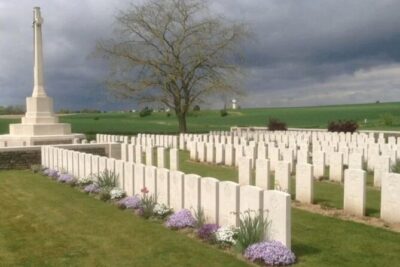
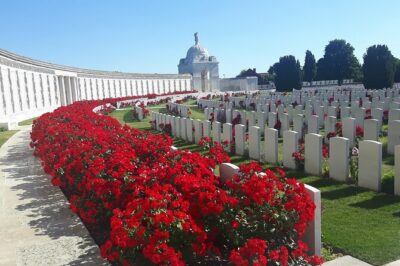
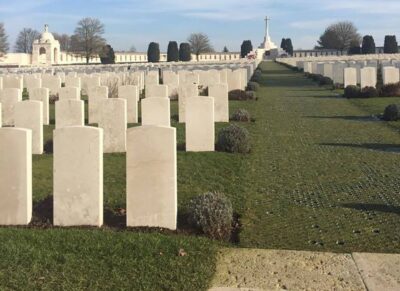
The cemetery has meticulously tended graves, with headstones bearing names and a sense of order. It is also notable for the multinational character of the conflict, with soldiers from different nations buried side by side.
You are there for about one hour, and admission is included. That time length is ideal for this kind of stop. You can walk the rows, read a handful of names without burning through your attention, then step back and let the scale settle. The walls add a layer of poignancy because they connect the city’s protective role to the reality that the area was still shattered by war.
If you get to this stop and feel overwhelmed, that is normal. This is remembrance designed for quiet, not for speed.
Ypres Cloth Hall time: chocolate tasting plus a sense of place
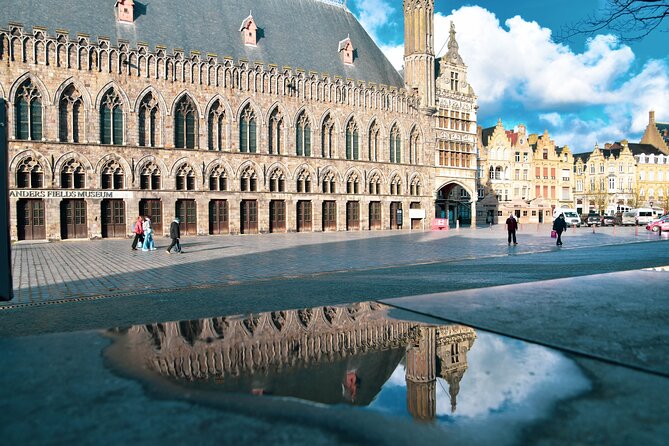
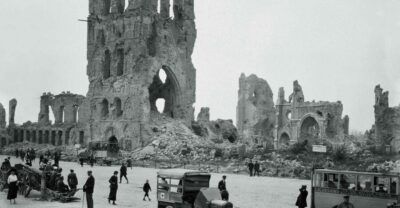
After the cemetery, you head into Ypres centre for a Cloth Hall break with chocolate tasting. Even in a day packed with war history, this matters. The Cloth Hall is a symbol of the town itself, not just the battlefield around it.
You have about one hour for this segment, with admission listed as included. This gives you a chance to see the city’s historic core up close, not only the memorial sites. It is also where the day starts to feel like it lives in real streets, real buildings, and real daily life, even though the theme stays serious.
This is a good time to do a small reset: a sweet taste, a short pause, and a few minutes looking at the architecture. It helps your brain reorganize between the museum part and the evening ceremony.
In Flanders Fields Museum: a reconstructed trench experience at Cloth Hall
Inside the historic Cloth Hall, you visit In Flanders Fields Museum. The museum focuses on the human stories behind the Great War, and one standout is a reconstructed trench setting. The display includes sandbags and barbed wire, and the setting is built to recreate the harsh front line reality.
This is also where the tone becomes most vivid. Trench settings can be hard to process because they are physical, and your body knows you are standing in a space that represents a life-and-death environment. The museum includes personal stories and artifacts, which helps connect the scale of the war to individual lives.
You get about 1 hour 30 minutes here, with admission included. That is long enough to move at a thoughtful pace. The main drawback is simply emotional intensity. If you prefer “facts and dates” over “human detail,” you might want to spend less time reading the personal stories and more time on the exhibits that match your comfort level.
Menin Gate and the Last Post: the moment that turns sightseeing into remembrance
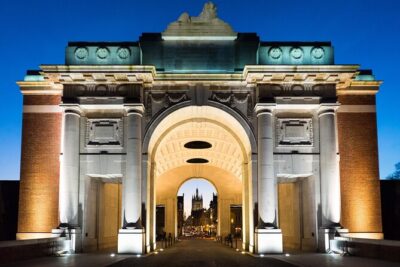
Then you head to Menin Gate. This is the ceremony heart of the day. Since 1928, the Last Post ceremony has taken place here each evening (with exceptions during German occupation in World War II). The ceremony is organized by the Last Post Association and centers on the traditional bugle call.
Even if you have heard of it, seeing it in place is different. Menin Gate, also known as Menenpoort, sits near the eastern entrance to Ypres, close to where countless soldiers passed through on their way to the front lines. That location makes the ceremony feel tied to movement and departure, not just a static memorial.
You have about 50 minutes allocated here, with admission free. That is a practical amount of time. It should give you room to find a comfortable spot and be there before the ceremony begins, which is important because the Last Post moment is the one that many people come to experience firsthand.
If you want a small practical tip, it is this: dress for the weather and keep your attention on the ceremony itself. It can be tempting to treat it like a “see it once” spectacle, but it works best when you let it land as remembrance.
Back to Ghent: finishing the day with time to decompress
After Menin Gate, you return to your hotel area with transport back to Ghent. This is included in the day flow, with about one hour of travel time.
This final transfer is more than just logistics. It is your off-ramp from the heaviest parts of the day. If you still feel emotional after the ceremony, that is normal. The drive back gives you a chance to calm down and think through what you saw while it is still fresh in your mind.
Price and value: what you’re paying for at $419.29 per person
At $419.29 per person for a 10 to 11 hour day, this is not a casual add-on. You are paying for several things that travel costs add up quickly: the full-day time commitment, the transportation between the sites, and admission time at multiple sites.
The value gets better when you look at the structure. You get time at Sanctuary Wood and Hill 62 (including museum grounds and trench setting), Ramparts Cemetery, In Flanders Fields Museum, plus the Menin Gate ceremony experience. Several admissions are listed as free or included in the day schedule, which reduces the “nickel-and-dime” feeling.
The small group limit (max 8) also counts. For many people, a guided WWI day is about clarity and context. When the group is small, you are more likely to get explanations that fit your questions, and the guide can keep everyone together at sensitive sites.
One more value point: English is included, and pickup is offered. If your Belgium itinerary already has a lot packed into one day, the convenience of pickup and return can be worth real money.
Who this tour suits best, and who should think twice
This is best for you if you:
- want a guided, coherent WWI day focused on meaningful sites
- like the idea of combining trenches, cemeteries, and a major remembrance ceremony
- prefer a small group atmosphere over large crowds
It might not be ideal if you:
- want a light, casual outing
- struggle with very solemn settings or want to avoid emotionally heavy content
- need a short day instead of a full 10 to 11 hour schedule
If you are on the fence about the emotional side, you can still do this tour, just go in with expectations. This route is designed for respect, reflection, and understanding, not for fast sightseeing.
Final call: should you book this Ypres remembrance day tour?
I would book it if you want an organized WWI remembrance day that actually moves through the main places that people connect with Ypres history. The mix of Sanctuary Wood trenches, Ramparts Cemetery, In Flanders Fields Museum, and the Last Post ceremony gives you a full circle of meaning, from ground-level reality to public remembrance.
I would think twice if you dislike long days, need lots of physical downtime, or get worn out by solemn memorial settings. For the right traveler, this is not just “important history.” It is a guided route that makes the human cost feel specific, close, and impossible to forget.
FAQ
What is the duration of the Ypres Remembrance Day tour?
The tour runs about 10 to 11 hours.
Where does the tour start, and when is it scheduled?
It starts at 10:00 am, with pickup offered. The tour summary also lists Ghent, Belgium as the location.
Is pickup included?
Yes, pickup is offered. The live location is shared on WhatsApp during pick-up.
How many people are in the group?
The tour has a maximum of 8 travelers.
Is the tour in English?
Yes, the tour is offered in English.
Are tickets included for the stops?
Admission is listed as free or included for multiple stops, including Sanctuary Woodmuseum Hill 62, Ramparts Cemetery, Ypres Cloth Hall, and In Flanders Fields Museum. Menin Gate and the Menin Gate Memorial are listed as free.
What is the highlight ceremony at Menin Gate?
The Last Post ceremony takes place every evening since 1928, with exceptions during German occupation in World War II. It is based at Menenpoort (Menin Gate).
History Walks Across Belgium
Every Belgium Review
Newer Belgium reviews from the same corner of the country
- Ghent Walking Tour – City Highlights and Beyond Tradition
★ 4.5 · 3 reviews - Ghent: City Walk with Audio Guide in 7 Languages on your Phone
★ 4.5 · 3 reviews - Children’s escape game in the city of Ghent Marsupilami
★ 5.0 · 3 reviews - Ghent Running and Sightseeing Tour
★ 5.0 · 3 reviews - Ghent: Walking Tour from Friday Market to the Cathedral
★ 4.8 · 3 reviews
Flanders Fields & WWI Battlefield Tours, side by side.
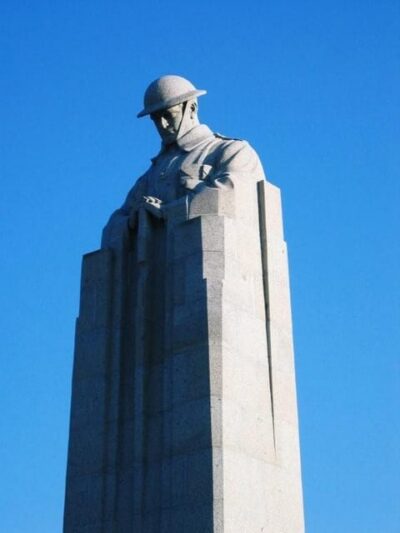 ★ 4.9From Bruges: Great War Flanders Fields Minibus Tour w/ LunchFrom $1301,257 reviews
 ★ 4.5Flanders Fields Remembrance Tour from BrusselsFrom $113334 reviews
 ★ 4.5Flanders Fields Remembrance Tour from BrugesFrom $95207 reviews
 ★ 5.0From IEPER Private 4-hour Tour of the Ypres BattlefieldFrom $399154 reviews
 ★ 5.0In Flanders Fields and Passchendaele Half Day Morning TourFrom $108117 reviews
 ★ 5.0Ypres: An exploration of the deadly salient battlefieldsFrom $8876 reviews
 ★ 4.8From Bruges: Flanders Fields Remembrance Full-Day TripFrom $9165 reviews
 ★ 4.4From Brussels: Flanders Fields Remembrance Full-Day TripFrom $10765 reviews
Browse the lists this tour appears in